Swan succeeds Bintou Keita of Guinea-Conakry, who stepped down on November 30, 2025, shortly before the end of her term.
Swan is an experienced diplomat with a long career in African countries facing complex political and security transitions.
Most recently, since March 2025, he has served as Special Representative of the Secretary-General for Somalia and Head of the United Nations Transitional Assistance Mission in Somalia (UNTMIS), a role he previously held in an acting capacity from May 2024 until his appointment to the position.
Earlier he was also Special Representative and Head of the United Nations Mission in Somalia (UNSOM) from 2019 to 2022.
Prior to that, Swan had a 32-year career in the United States Government, with multiple assignments related to the Democratic Republic of the Congo, including as Ambassador (2013-2016), Deputy Chief of Mission (2001-2004) and Desk Officer (1996-1998).
During his bilateral career, Swan also served as Special Representative for Somalia (2011-2013), Ambassador to Djibouti (2008-2011), Deputy Assistant Secretary of State for African Affairs (2006-2008) and Director of African Analysis in the United States Department of State’s Bureau of Intelligence and Research (2005-2006).
Earlier assignments included the Republic of Congo, Somalia, Cameroon, Nicaragua and Haiti.
Swan holds a Bachelor of Science degree from Georgetown University’s School of Foreign Service, a Master of Arts from Johns Hopkins University’s School of Advanced International Studies and a Master of Arts in security studies from the National War College, all in the United States.
American Swan is an experienced diplomat with a long career in African countries facing complex political and security transitions.
Dr. Patrick Karangwa, Director General for Agriculture Modernization at the Ministry of Agriculture and Animal Resources, said the country no longer relies on imported seeds because local production has increased significantly.
He made the remarks on March 5, 2026, during a preparatory meeting for an international seed trade conference that Rwanda will host for the third time from July 20–21, 2026.
Karangwa noted that between five and seven years ago, Rwanda imported seeds costing over Rwf 5 billion annually. Today, all seeds are produced domestically.
“There are no longer seeds being imported because of the efforts invested in research, including cross-breeding varieties to produce high-quality seeds and scaling up local production,” he said. “Some producers have even begun exporting seeds.”
He added that the global seed market is valued at Rwf 60 trillion, while Africa accounts for only about 2 percent, underscoring the need to strengthen the continent’s role in seed trade.
“To boost Rwanda’s position in the seed trade, we have been collaborating with international bodies that assess seed quality to obtain certification confirming that our products meet global standards,” he explained.
Innocent Namuhoranye, Chairperson of the National Seed Association of Rwanda (NSAR), said the conference will be a platform to accelerate efforts to position Rwanda as a regional hub for seed trade.
“This event will lay the foundation for continued innovation and strategic approaches to advance seed trade across Africa,” he said.
The conference aims to highlight the role of the private sector in seed production while promoting reforms to strengthen the industry and expand access to quality seeds.
Alex Bizimana, Head of Agribusiness at Bank of Kigali, said the bank continues to support agriculture through financing and is already seeing strong results.
“Since 2023, agricultural lending by the bank has grown by 245 percent. Previously, it doubled annually, and now we aim to scale it even further,” he noted.
The third International Seed Trade Conference in Rwanda will attract more than 300 participants from Africa, Asia, Europe, and Australia.
Currently, Rwanda hosts about 30 companies involved in the multiplication of improved seeds.
Stakeholders in seed multiplication value chain attended the meeting. Dr. Patrick Karangwa, Director General for Agriculture Modernization at the Ministry of Agriculture and Animal Resources speaking at the event. Alex Bizimana, Head of Agribusiness at Bank of Kigali, said the bank continues to support agriculture through financing.
Kinyera died on March 3, 2026, at Mulago National Referral Hospital in Kampala, where he had been receiving treatment.
According to the ministry, the funeral service will be held on Thursday, March 12, 2026 from 10:00 a.m. to 12:00, at Our Lady of Africa Church in Mbuya, followed by a vigil in Naalya, Wakiso District from 3:00 p.m. onwards.
On Friday, March 13, 2026, his body will be transported to his birthplace in Amuru District, where a vigil will take place in the evening.
His burial is scheduled for Saturday, March 14, 2026, in Akurukwe, within the same district.
Santa Mary Laker Kinyera had served in the Ministry of Foreign Affairs of Uganda since 1994.
In addition to his posting in Rwanda, he held diplomatic positions in Uganda’s embassies in Denmark, the United States, and Turkey.
Former Ugandan Deputy High Commissioner to Rwanda Kinyera died on March 3, 2026, at Mulago Specialised National Referral Hospital in Kampala.
The decision is contained in Presidential Order No. 011/01 of February 27, 2026, which revokes the legal tender status of several older series of these banknotes.
The measure will take effect 12 months after the order is published in the Official Gazette of the Republic of Rwanda, giving the public time to exchange the notes.
Among the banknotes to be phased out are the Rwf 500 and Rwf 1,000 notes introduced through a presidential order issued on September 20, 2004. The Rwf 500 note later introduced on September 10, 2013 will also be withdrawn.
The order further removes the Rwf 1,000 banknote introduced on October 15, 2015 and the Rwf 2,000 banknote issued on December 31, 2007. Also affected are two versions of the Rwf 5,000 banknote that were introduced through presidential orders dated June 5, 2004 and August 12, 2009.
Article four of the order states that the withdrawal will only become effective one year after the decree is officially published in the Official Gazette.
Newer versions of the Rwf 500 and Rwf 1,000 notes currently in circulation were introduced through a presidential order issued on July 2, 2019.
More recently, new designs for the Rwf 5,000 and Rwf 2,000 banknotes were introduced through a presidential order published on August 30, 2024.
At the time, the National Bank of Rwanda (BNR) explained that the redesign was necessary because the existing notes had been in use for many years. For example, the Rwf 2,000 note had last been issued in December 2014.
The central bank said the update was meant to incorporate modern technology that strengthens security features and reduces the risk of counterfeiting.
BNR also revised the material used to produce the banknotes to make them more durable while ensuring that their design reflects Rwanda’s current development and economic progress.
The old Rwf 5,000 and Rwf 2,000 banknotes will cease to be used after 12 months.
“Today, an Iranian drone carrier, roughly the size of a WWII aircraft carrier, was struck and is now on fire,” the command said in a post on the social platform X.
“U.S. forces aren’t holding back on the mission to sink the entire Iranian Navy,” said the post.
U.S. forces have sunk or destroyed more than 30 Iranian navy vessels since the start of the joint U.S.-Israeli military campaign against Iran early Saturday, said Adam.
Brad Cooper, commander of the Central Command, at a news conference together with U.S. Defense Secretary Pete Hegseth at the Command’s headquarters in Tampa, Florida, earlier on Thursday.
Over the last 24 hours, Iranian ballistic missile attacks have declined by 90 percent and drone attacks by 83 percent while U.S. strikes on Iran’s navy “have intensified,” he said.
In the past 72 hours, U.S. forces have struck nearly 200 targets deep inside Iran, including around Tehran, Cooper said, adding that U.S. B-2 bombers dropped dozens of 2,000-pound penetrative bombs on buried ballistic missile launchers.
The U.S. military has also struck Iran’s “equivalent of Space Command,” Cooper said.
Hegseth said the war with Iran will escalate in the coming days.
“The amount of firepower over Iran and over Tehran is about to surge dramatically,” Hegseth said. “When we say more to come, it’s more fighter squadrons, it’s more capabilities, it’s more defensive capabilities and it’s more bomber pulses more frequently.”
The U.S.-Israeli strikes on Iran have set off a regional exchange of fire that entered its sixth day on Thursday, leading to increasing casualties and major political and security consequences, with impacts rippling across the region.
The lower chamber voted 212-219 — largely along party lines — to reject the resolution, which is intended to prevent Trump from ordering further military strikes on Iran without congressional approval.
On Wednesday, the Republican-led upper chamber blocked the resolution by a 53-47 vote.
The latest votes in Congress showed that Democrats and Republicans remain sharply divided over the issue, with Democrats largely criticizing the military strikes against Iran, while Republicans predominantly defended the president.
“We cannot allow a wannabe King to drag us into an endless war in the Middle East. Republicans can find billions for bombs, but nothing to bring down your grocery bill or healthcare costs,” Hakeem Jeffries, the top Democrat in the House, wrote in a post on social media platform X.
Photo taken on Nov. 5, 2025 shows U.S. Capitol in Washington, D.C., the United States.
The U.S. artificial intelligence (AI) company said the model integrates recent advancements in reasoning, coding, and workflows, building on the capabilities of GPT-5.3-Codex.
OpenAI also introduced GPT-5.4 Pro, which it described as a more powerful version for complex tasks.
GPT-5.4 improves performance in spreadsheets, presentations, and documents, allowing for more efficient completion of professional work, said the company, adding the model also supports larger context processing and better web search integration.
The GPT-5.4 Thinking version in ChatGPT can outline its reasoning before providing a final answer, allowing users to adjust instructions during the response process. It also recognizes interface elements from screenshots, enabling it to perform mouse and keyboard operations across different software.
In benchmark tests, GPT-5.4 outperformed previous models. It matched or exceeded industry professionals in 83 percent of GDPval comparisons and achieved higher scores than its predecessor in coding ability tests, it said.
The model has improved factual accuracy and is less likely to produce incorrect information compared to GPT-5.2.
GPT-5.4 is available to ChatGPT Plus, Team, and Pro users, and to developers through the API. OpenAI plans to gradually retire GPT-5.2 Thinking in the coming months. Despite higher per-token costs, improved token efficiency may lower overall costs in some scenarios, it said.
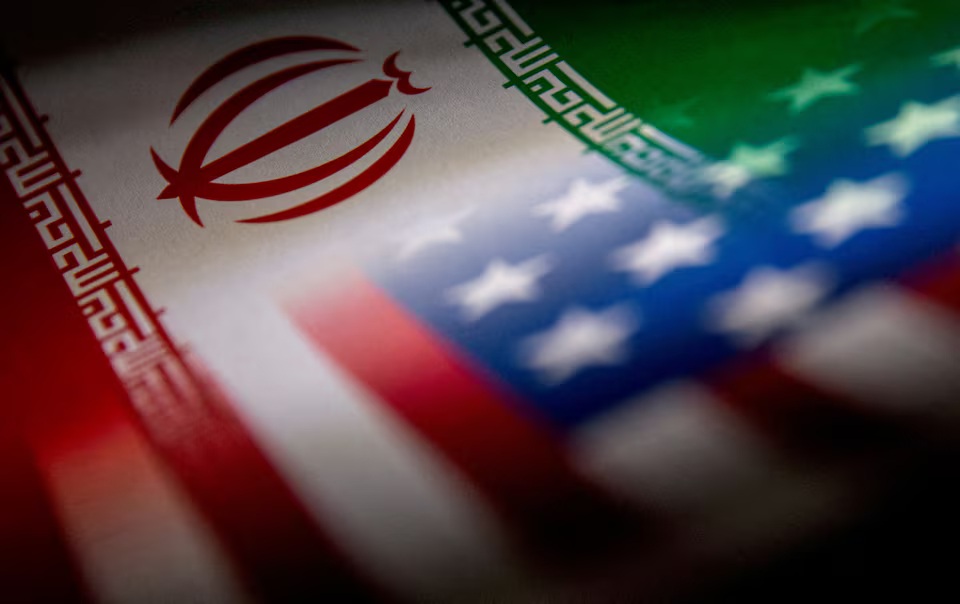
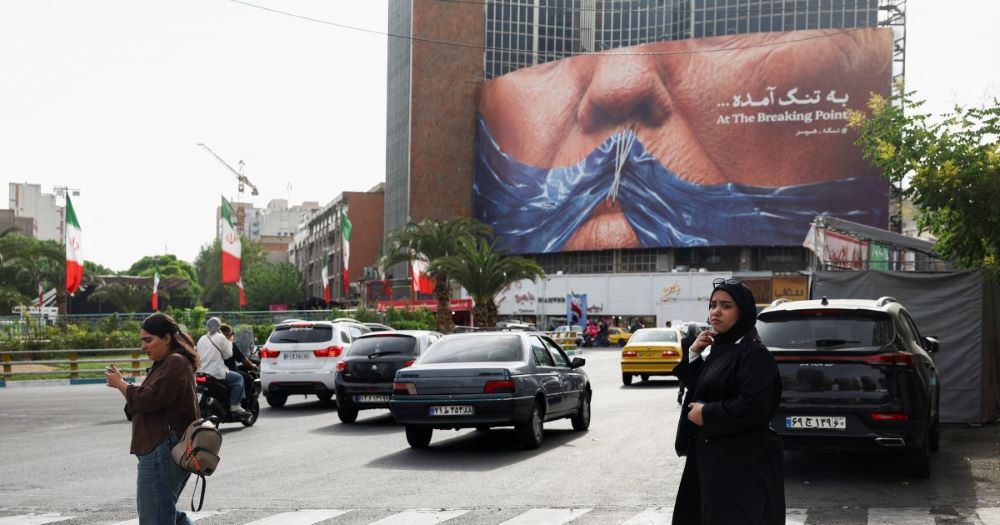
The press conference came as the Middle East entered the sixth day of a rapidly escalating regional war, triggered by massive joint U.S.-Israeli strikes on Iran that began on February 28.
The Strait of Hormuz is a shipping lane that handles about 20 per cent of the world’s traded oil.
The attacks, code-named Operation Roaring Lion by Israel and Operation Epic Fury by the U.S., targeted Iranian nuclear sites, missile infrastructure, and leadership, including the killing of Iran’s Supreme Leader, Ayatollah Ali Khamenei, in the opening strikes.
Iran’s counterattack, Operation True Promise IV, has involved waves of missiles and drones targeting U.S. bases across Iraq, Jordan, Bahrain, Qatar, Kuwait, and the UAE, as well as Israeli cities including Tel Aviv and Jerusalem.
The conflict has disrupted international trade, closed airspaces, and triggered mass evacuations of foreign nationals, creating both a humanitarian and economic crisis.
“Iran wants to close the Strait of Hormuz to drive oil prices up and force the international community into applying pressure to end Israel’s operations,” Ambassador Weiss said. “This is a desperate measure by a country under attack, but it also affects Africa. You are not out of this game.”
The Ambassador emphasised the strategic importance of the Strait of Hormuz, a shipping lane that handles about 20 percent of the world’s traded oil, and warned that disruptions could drive global oil prices higher. Recent data shows fuel prices have surged from $70 to over $85 per barrel, with global fuel costs increasing by more than 10 percent since the escalation of U.S.-Iran tensions.
File photo: Israeli air defence systems were activated to intercept Iranian missiles over the Israeli city of Tel Aviv.
Ambassador Weiss framed Israel-U.S. operations as preemptive measures designed to prevent Iran from acquiring capabilities to destroy Israel, stressing that strikes were carefully targeted at government and military infrastructure.
She described Iran’s support for proxy groups such as Hezbollah, Hamas, and Houthi forces in Yemen as a regional threat extending beyond the Middle East.
“Hamas, Hezbollah, the Houthis, and Iran – they are all linked. Iran funds, arms, and directs these groups. The impact is global, including Africa,” she said.
Beyond security concerns, Weiss highlighted Israel’s development and humanitarian cooperation in Rwanda. Initiatives in agriculture, renewable energy, STEM education, and vocational training for women were cited as lessons in resilience and self-reliance during times of crisis.
“The lesson from Israel is how to remain self-sufficient even under siege,” she said. “Rwanda can apply the same principles to ensure food security, energy independence, and stability for its people.”
The ambassador expressed hope for pragmatic engagement to prevent further escalation while advocating for regional stability.
The Ambassador concluded with a message emphasising peace and solidarity, clarifying that Israel’s conflict is with the Iranian regime, not its people. She expressed hope for pragmatic engagement to prevent further escalation while advocating for regional stability.
“We hope for peace and normal lives for all, but we cannot wait for Iran to become fully equipped to destroy Israel. Our actions are about defence, deterrence, and protecting not just Israel but also the stability of the wider region,” she said.
From Tehran’s viewpoint, the conflict is not seen as a defensive struggle against terror but as a response to what Iranian officials describe as “unlawful aggression” by the United States and Israel. Iran’s government has condemned the February 28 strikes as a “clear act of aggression” that violates international law and the United Nations Charter, asserting that it targeted sovereign territory without justification.
Watch our recent exclusive interview with the ambassador below:
The talks, held on Wednesday, March 4, 2026, were also attended by Nicholas Mutebi, NBA Africa’s Regional Partnerships and Sponsorships Lead, and journalist Andrew Mwenda, a close associate of Gen. Muhoozi.
Discussions focused on elevating basketball in Uganda to a professional level and creating pathways for young talent. Akamanzi highlighted NBA Africa’s initiatives across the continent, including partnerships with governments and private sector players to develop basketball-driven economic opportunities.
Gen. Muhoozi Kainerugaba held discussions with Clare Akamanzi, CEO of NBA Africa, on Wednesday.
As part of these efforts, NBA Africa plans to collaborate with Uganda’s Ministry of Sports and Education to launch the “NBA Junior League,” a youth competition aimed at nurturing talent from secondary schools and preparing players for professional leagues.
Gen. Muhoozi and Akamanzi also explored the development of basketball infrastructure in Uganda to further stimulate economic growth. Akamanzi’s visit comes as the country invests in sports facilities, including the newly completed Hoima Stadium and plans to renovate the basketball court in Lugogo.
Discussions between the two officials focused on elevating basketball in Uganda to a professional level and creating pathways for young talent.
Meloni revealed the planned expansion while speaking at the conference “Laying the groundwork for jobs in Africa” held at the Bank of Italy on Wednesday, where she outlined Italy’s broader strategy for economic partnership with African countries.
“The Matte Plan has involved 14 countries, and in 2026, we will extend it to another 4: Congo, Rwanda, Gabon, and Zambia,” Meloni said.
The Mattei Plan is a strategic initiative launched by the Italian government to promote what it describes as a “non-predatory” and equal partnership with African nations.
The programme focuses on key sectors such as energy, infrastructure, education, health, and agriculture.
Backed by more than €1.2 billion in funding, the plan aims to boost development in partner countries while also helping to address the root causes of irregular migration toward Europe.
Meloni also stressed that the success of cooperation with Africa should be judged by practical results.
“We believe that the effectiveness of cooperation is measured not by good intentions but by the concrete results it achieves in terms of jobs created, businesses supported, and investments mobilized.
“This is our approach, and we believe it should also be the approach Europe and the West adopt toward Africa: less fragmentation, more coordination, less rhetoric, more construction projects, fewer promises, more innovative and concrete financial instruments, less charity, more development,” she noted.
Currently, the initiative involves 14 partner countries. The initial pilot group includes Algeria, the Democratic Republic of Congo, Egypt, Ethiopia, Kenya, Côte d’Ivoire, Morocco, Mozambique, and Tunisia.
Additional partners later added to the programme are Angola, Ghana, Senegal, Mauritania, and Tanzania.
Italian Prime Minister Giorgia Meloni announced a plan to extend the ‘Mattei Plan’ to more African countries.