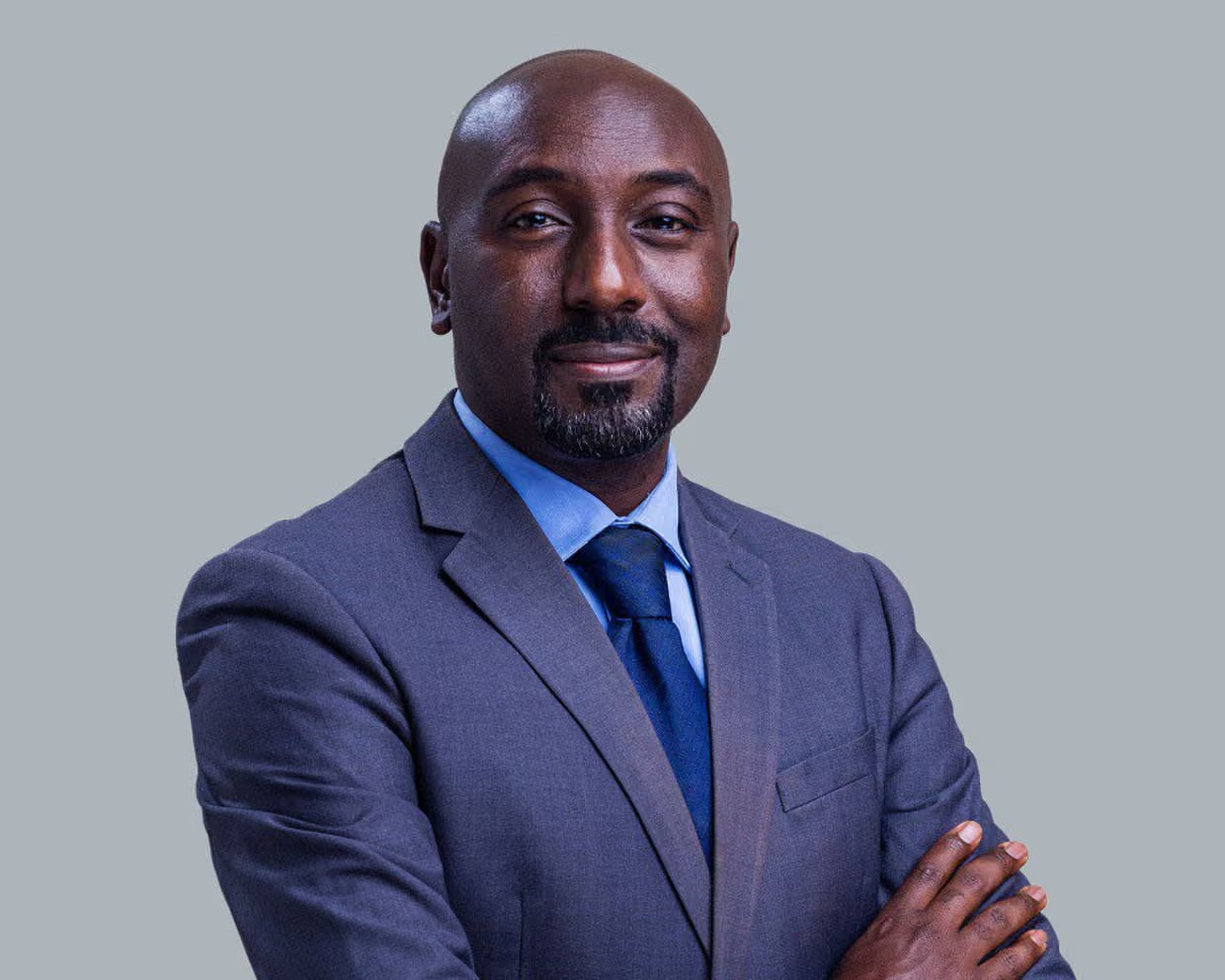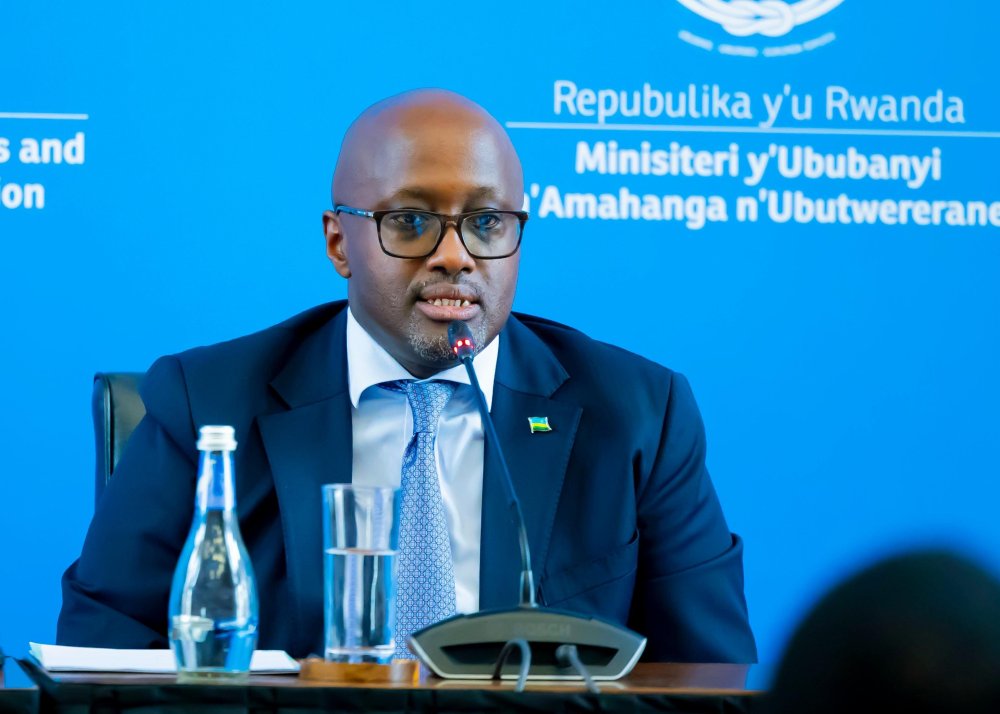
Murenzi announced the appointment through his social media platforms, expressing gratitude for the opportunity and his commitment to representing the interests of young people.
“I am delighted to share that I have been appointed to the Youth Sounding Board of the European Union Delegation in Rwanda,” he wrote.
He added that he looks forward to working closely with the EU Delegation and embassies of EU member states in Rwanda to strengthen cooperation and advocate for initiatives that address the aspirations, challenges and needs of Rwandan youth.
The Youth Sounding Board is a mechanism established by the European Union to ensure meaningful youth participation in the design and implementation of EU policies, programmes and partnerships. The platform enables young people to contribute their perspectives and help make development efforts more inclusive, responsive and impactful.
Murenzi’s appointment adds to a growing record of youth leadership and engagement in national and international development initiatives.
He founded Rwanda We Want in 2015 at the age of 17, creating a platform aimed at empowering young people and encouraging their participation in Rwanda’s development agenda. Under his leadership, the organization has grown into a prominent youth-focused movement that promotes civic engagement, leadership and sustainable development.
Murenzi holds a Bachelor of Science degree in Monetary Economics from the University of Rwanda and a Master’s degree in Design Management from Coventry University in the United Kingdom.
Over the years, he has also served in several regional and international roles focused on youth empowerment and sustainable development. These include membership on the policy team of the planning task force for the 12th Commonwealth Youth Forum and serving as Sustainable Development Goals (SDG) Coordinator for the United Nations Sustainable Development Solutions Network (UN-SDSN).
His new role on the EU Youth Sounding Board is expected to provide an additional platform for engaging with policymakers and development partners on issues affecting young people in Rwanda.
Murenzi’s appointment adds to a growing record of youth leadership and engagement in national and international development initiatives.
In an interview with state-run IRIB TV, Araghchi said that upon finalized, the MoU will be signed digitally by both sides in their respective countries and then announced.
He added that following the potential signing, both parties will commit not to initiate any other war, and will begin the second stage of negotiations, scheduled within a 60-day period, to reach a final agreement, focusing mainly on Iran’s nuclear program and sanctions removal.
He stressed that Tehran insists that the only acceptable way of dealing with its highly enriched uranium will be diluting it within Iranian territory.
Araghchi also said that the potential MoU would include provisions for ending the war on all fronts, including Lebanon, requiring Israel to withdraw from the occupied areas.
Other key issues in the MoU include the reopening of the Strait of Hormuz, the full lifting of the U.S. anti-Iran naval blockade, and the release of Iran’s frozen assets, he noted.
On the Strait of Hormuz, Araghchi said its management will definitely not to return the pre-war era. While Iran will retain sovereignty and a military presence, a legal system consistent with international law will be established, he said.
He ruled out tolls for passage but noted that charging service fees will be reasonable.
U.S. President Donald Trump said Thursday that the United States had “just made a great settlement of the war with Iran,” with an agreement expected “over the next few days.”
Over recent weeks, Iran and the United States have exchanged several peace proposals through Pakistan’s mediation, and have been working to finalize an MoU to end the war.
This photo taken with a mobile phone shows merchant vessels stranded in the waters of the Strait of Hormuz, near Khasab, a small town in northern Oman, May 29, 2026. (Xinhua/Wen Xinnian)Iran’s Foreign Minister Seyed Abbas Araghchi speaks at a weekly news conference in Tehran, Iran, on March 16, 2026. (Xinhua/Shadati)
The report shows that 1.6% of transaction attempts involving consumers in Rwanda were flagged as suspected digital fraud in 2025, down from 2.7% in 2024 and significantly below the global average of 3.8%.
While the decline suggests improved detection and stronger safeguards, analysts caution that fraud risk is shifting rather than disappearing.
“Despite recording lower digital fraud rates than global and regional averages, Rwanda is experiencing a structural change in fraud risk,” said Amritha Reddy, senior director of fraud product management at TransUnion Africa. She noted that criminals are increasingly targeting identity and trust at the earliest stages of digital interaction.
Money mule scams dominate reported losses
Among Rwandan consumers who reported losing money to digital fraud in the past year, nearly three in ten (29%) said the losses were linked to money mule scams — the highest single category of fraud impact in the country.
Other major fraud types reported include account takeover (24%), social engineering (22%), fraudulent credit card transactions (22%), and unemployment benefits-related fraud (22%). Third-party seller scams on e-commerce platforms accounted for 21%, while identity theft stood at 19%. Messaging-based scams such as smishing, phishing, and vishing each accounted for between 13% and 15% of reported cases.
Experts say money mule schemes are particularly concerning because victims are often unknowingly recruited to move stolen funds, making them a key link between consumer fraud and broader financial crime networks.
“Money mules often are the bridge between consumer fraud and broader financial crime,” Reddy said. “As these activities scale, isolated scams evolve into wider systemic risks.”
The report highlights a shift in when fraud is most likely to occur in the digital lifecycle. In 2025, Rwanda recorded its highest suspected fraud rate at the account creation stage, at 7.7%. This was followed by account login (1.6%) and financial transactions (0.5%).
This pattern suggests that fraudsters are increasingly targeting identity systems rather than attempting to breach transactions directly.
“Rather than attacking systems directly, fraudsters increasingly impersonate legitimate users, blending into digital ecosystems designed for speed and inclusion,” Reddy explained. “Once a compromised identity is onboarded, downstream fraud becomes significantly more complex and costly to prevent.”
Across sectors, retail recorded the highest suspected digital fraud rate involving Rwandan consumers in 2025 at 7.1%, followed by online communities such as forums and dating platforms (2.1%) and gaming or betting platforms (1.7%).
While retail remains the most exposed sector, the data also shows a sharp drop in attempted fraud volumes compared to 2024, including a 97% decline in retail-related attempts.
The findings also reveal that Rwandan consumers increasingly value digital safety when engaging online. Easy payment processes (73%), confidence in personal data security (70%), and simplified forms and applications (64%) were identified as the most important features influencing trust in digital services.
“Consumers are willing to accept friction when it clearly enhances protection,” Reddy said, noting that security is becoming a key factor in digital trust and brand choice.
Rwanda’s efforts to strengthen its digital ecosystem, including investments in digital public infrastructure under National Identification Agency (NIDA) and the country’s broader Vision 2050 development agenda, are expected to reinforce secure onboarding and electronic know-your-customer (eKYC) systems.
The introduction of a new digital identification number is seen as a key step toward improving identity verification and reducing vulnerabilities at the point of account creation.
Fraud evolving, not disappearing
Despite the decline in overall suspected fraud rates, experts caution that the threat is becoming more adaptive, subtle, and harder to detect. Fraudsters are increasingly relying on psychological manipulation and cross-channel scams that exploit trust rather than technical vulnerabilities.
“Fraud is becoming more automated, more targeted and more psychologically manipulative,” Reddy said. “The central challenge ahead is no longer simply preventing fraud but preserving trust in the digital economy.”
The report draws on a global survey of 12,730 consumers across 18 countries, including 308 respondents in Rwanda, conducted between November and December 2025, alongside TransUnion’s global fraud intelligence network.
While Rwanda continues to outperform global averages in controlling suspected digital fraud, the findings suggest that the next challenge will be addressing increasingly sophisticated identity-based scams at the earliest stages of digital engagement.
Analysts caution that fraud risk is shifting rather than disappearing.
The award was presented during the APEX Future Travel Experience (FTE) EMEA event in Dublin on June 12, and is based exclusively on independently verified passenger feedback from more than one million flights worldwide.
The recognition is therefore a direct reflection of the experience delivered to customers onboard RwandAir flights.
According to the airline, this recognition highlights RwandAir’s continued investment in service excellence, cabin crew training, and the delivery of a warm, attentive, and distinctly Rwandan onboard experience.
It also adds to the airline’s growing record of international recognition, including its Skytrax Best Regional Airline in Africa title in 2025 and its APEX Diamond Health Safety Status, which made RwandAir the first African airline to receive that designation.
Commenting on the development, Yvonne Manzi Makolo, CEO of RwandAir, said: “This award is a powerful recognition of the service our customers experience through the dedication of our cabin crew. As RwandAir positions itself as Africa’s gateway to the world, we are proud to showcase Rwanda’s warmth, professionalism, and hospitality across every journey. We remain committed to raising the standard of African aviation and delivering a world-class experience for our passengers.”
“RwandAir winning the 2026 APEX Best Cabin Service in Africa award based on the votes of verified passengers honors one of the most inspiring service ascents in aviation today, led by a national carrier that has elevated African hospitality with remarkable intention, discipline, and pride,” said Dr. Joe Leader, APEX Group CEO.
The APEX Awards, established by the Airline Passenger Experience Association, are among the aviation industry’s leading passenger experience benchmarks, assessing key areas including cabin service, entertainment, Wi-Fi, seat comfort, and food and beverage across airlines globally.
This recognition comes as RwandAir continues to strengthen its network, enhance its customer experience, and position itself as Africa’s gateway to the world, with service excellence remaining central to its brand promise.
RwandAir, Rwanda’s national carrier, connects Africa to the world from its Kigali hub, strategically located in the heart of Africa.
Founded in 2002, the airline operates a modern fleet of Airbus A330s, Boeing 737-800NGs, Bombardier Q400s and a dedicated freighter, serving 22 destinations across Africa, Europe, and the Middle East, with codeshare and interline partnerships extending connectivity to an additional 150 destinations worldwide.
Awarded Best Cabin Service in Africa at the 2026 APEX Awards and Best Regional Airline in Africa at the 2025 Skytrax World Airline Awards, RwandAir serves as a catalyst for trade, tourism and economic growth across Africa and beyond.
Meanwhile, the Airline Passenger Experience Association (APEX) is a global non-profit and one of the world’s largest international airline associations.
APEX accelerates the industry with the backing of nearly every major airline and valued supplier.
The award was presented during the APEX Future Travel Experience (FTE) EMEA event in Dublin on June 12, and is based exclusively on independently verified passenger feedback from more than one million flights worldwide. L–R: Simon Richman, Regional Commercial Manager (UK, Europe & North America), RwandAir and Dr. Joe Leader, APEX Group CEO during the APEX Awards ceremony in Dublin, June 2026.
Several attacks by U.S. forces on similar commercial vessels had been reported over the past three days.
The ministry once again conveyed its deep concern over the use of lethal and deadly force against civilian shipping.
Such actions are unacceptable and undermine the safety, security and stability of international maritime commerce in a sensitive region at a difficult time, said the official statement.
India’s Ministry of External Affairs on Friday summoned U.S. Chargé d’Affaires to India Jason Meeks to lodge a “strong protest” regarding the continued attacks by U.S. naval forces on commercial vessels carrying Indian mariners in the Gulf of Oman, said an official statement.
The listing of Space Exploration Technologies Corp. (SpaceX) on Friday marked one of the most significant moments in financial history, with the company pricing 555.6 million Class A shares at $135 each and raising about $75 billion in what is now the largest IPO ever recorded. The offering values SpaceX at approximately $1.77 trillion, positioning it among the most valuable publicly traded companies globally as it prepares to begin trading on the Nasdaq under the ticker “SPCX”.
Following the pricing, Musk’s wealth surged past $1 trillion on paper, driven largely by his dominant stake in the aerospace and satellite company.
Before the IPO, Musk was estimated to be worth about $813 billion, more than twice the fortune of Google co-founder Larry Page, who ranks as the world’s second-richest individual with an estimated net worth of $288 billion, according to Forbes.
At the IPO price, Musk’s SpaceX holdings alone are valued at about $866.5 billion, based on his expected post-offering stake of roughly 4.8 billion shares, or about 42 percent of the company, along with more than 350 million stock options exercisable at $8.39 per share. Those options add a further estimated $44.3 billion to his wealth.
When combined with his Tesla holdings, about 717.1 million shares worth roughly $286.2 billion at recent market prices, Musk’s total net worth is calculated at approximately $1.1 trillion on paper, according to filings and market estimates.
However, analysts stress that the figure remains largely theoretical, as it depends on post-listing share performance and the continued strength of Tesla’s stock. Any decline in either company’s valuation could push Musk back below the trillion-dollar mark, while gains could lift his wealth even further.
SpaceX’s filing also highlights the scale of Musk’s control over the company, with about 84.4 percent of combined voting power expected to remain under his influence after the listing. The IPO includes performance-based stock awards tied to ambitious milestones, including long-term targets such as establishing a permanent human settlement on Mars and developing off-Earth computing infrastructure.
Beyond Musk’s personal fortune, the listing is also expected to create significant wealth among employees and investors. Reports suggest that around 4,400 SpaceX employees could become millionaires as trading begins.
The IPO also underscores SpaceX’s transformation from a launch services company into a diversified space, satellite internet, and artificial intelligence group, with operations spanning rocket launches, Starlink broadband services, and advanced computing initiatives.
Despite its rapid expansion, SpaceX remains loss-making. The company reported revenue of $18.7 billion in 2025, up from $14 billion in 2024, while its net loss widened to $4.9 billion after posting a profit the previous year. The financial results also incorporate historical figures from related Musk-controlled entities, including xAI and X Holdings following internal restructuring.
The SpaceX listing surpasses Saudi Aramco’s 2019 IPO, previously the largest public offering in history, marking a new benchmark for global capital markets.
Elon Musk has become the world’s first trillionaire on paper after SpaceX priced its landmark initial public offering at $135 per share, a valuation that lifts the tech billionaire’s combined holdings above the trillion-dollar threshold for the first time.
Addressing 108 senior officers from 20 countries during a graduation ceremony at the college’s Nyakinama campus in Musanze District on Friday, Kagame said while military education provides knowledge and strategic skills, the most important qualities of leadership must be developed personally.
“This course was designed to enhance your ability to navigate complex and sometimes seemingly impossible situations. However, there are certain qualities that no course can give you — these you must personally cultivate,” Kagame said.
He identified courage as the ability to act decisively amid uncertainty and risk, warning that complexity can often lead to paralysis.
President Kagame also stressed the importance of sound judgment, noting that the consequences of decisions become greater as officers rise through the ranks.
“You must always remember what you are fighting for. For us, that purpose is anchored in protecting our sovereignty while advancing the continued transformation of our country,” he said.
The Head of State congratulated the graduates on completing the programme, saying they were leaving with broader knowledge, sharper strategic awareness and a greater sense of responsibility. He also acknowledged the support and sacrifices made by their families.
Highlighting the value of the course’s international character, Kagame said the relationships forged among officers from different countries help strengthen cooperation during future operations and regional engagements.
“The value of the connections you have made here cannot be overstated,” he said.
Kagame said the Rwanda Defence Force’s reputation had been built through years of discipline, professionalism and dedicated service, and urged the graduates to uphold those standards. He also called on them to embrace integrity, continuous learning and adaptability as security challenges and technologies evolve.
The graduation marked the completion of a 46-week Senior Command and Staff Course attended by officers from Rwanda and partner countries including Nigeria, Senegal, Somalia, South Sudan, Tanzania, Uganda and Zambia.
RDFCSC Commandant Brigadier General Andrew Nyamvumba said the graduates had completed rigorous training in operational planning, combined joint task force operations, peace support operations, research and strategic leadership.
“These officers arrived 46 weeks ago as promising military professionals. Today, they depart as refined operational and strategic-level commanders and staff officers, ready to serve their nations and contribute to international peace and security,” he said.
Nyamvumba said the growing diversity of participants reflects expanding military partnerships across the region and beyond, while the college’s collaboration with the University of Uganda enables eligible officers to earn a Master of Arts in Security Studies.
He urged the graduates to apply their training with humility and selflessness in service of peace and security.
The ceremony was attended by senior government officials, defence and security leaders, military representatives from partner countries, academic institutions and families of the graduating officers.
The ceremony was attended by senior government officials, defence and security leaders, military representatives from partner countries, academic institutions and families of the graduating officers.Addressing 108 senior officers from 20 countries during a graduation ceremony at the college’s Nyakinama campus in Musanze District on Friday, Kagame said while military education provides knowledge and strategic skills, the most important qualities of leadership must be developed personally.The Head of State congratulated the graduates on completing the programme, saying they were leaving with broader knowledge, sharper strategic awareness and a greater sense of responsibility. He also acknowledged the support and sacrifices made by their families.
At the same time, citizens have been urged to avoid activities that could trigger fires in the protected area, warning that such incidents consume large sums of money that could otherwise support other development priorities.
This was announced in Karongi District on June 11, 2026, during a meeting that brought together park management, representatives of security organs, and local government authorities.
The Chief Executive Officer of Nyungwe Management Company (NMC), Protais Niyigaba, said that after poaching, wildfires rank as the second most destructive threat to biodiversity in the park. He noted that it can take more than 100 years for ecosystems affected by fire to fully recover.
He explained that once fire affects an area, fast-growing invasive grasses quickly take over, replacing the original vegetation. Restoring such areas requires removing these invasive species and replanting indigenous trees and plants to rebuild the natural forest ecosystem.
This restoration work will cover more than 4,500 hectares affected by different fire incidents in Nyungwe over the years.
Niyigaba emphasized that the impact of wildfires should not only be measured in ecological damage but also in the high financial cost required to restore the ecosystem.
The project is funded by the Green Climate Fund and coordinated by the Rwanda Forest Authority (RFA), while implementation in Nyungwe National Park will be handled by NMC.
He said: “This project will restore 4,500 hectares over five years at a cost of 6.706 million US dollars, which is close to 10 billion Rwandan francs. We will work closely with districts surrounding Nyungwe so that 80 percent of this funding goes directly to local residents, since the activities are labour-intensive. We also urge citizens to avoid setting fires in the park, as the funds being used for restoration could have supported other development initiatives.”
The Vice Mayor of Karongi District in charge of economic development, Ntakirutimana Julienne, said the project will create employment opportunities and encouraged residents to apply for available jobs. She also urged them to save through cooperatives so their earnings can be more beneficial.
Workers recruited for the project will be provided with temporary accommodation inside Nyungwe National Park, along with food and water, and will return home once every two weeks. The project is expected to employ about 1,500 workers, each earning 3,000 Rwandan francs per day.
Nyungwe National Park covers an area of 1,020 square kilometres. It is known for its ancient montane forest that protects important water catchments.
The park hosts rich biodiversity, including 13 species of primates, 85 species of mammals, 300 species of birds, 40 species of reptiles, and 38 species of amphibians.
Located in south-western Rwanda, Nyungwe National Park spans 23 sectors across Karongi, Nyamasheke, and Rusizi districts in the Western Province, as well as Nyaruguru and Nyamagabe districts in the Southern Province.
The park’s rich flora is highlighted by towering indigenous trees and thick undergrowth that form a vital habitat for countless plant and animal species.Nyungwe National Park is home to one of the oldest and most biodiverse ecosystems in Africa.Nyungwe National Park is recognized as part of the world’s protected natural heritage areas, reflecting its global importance for biodiversity conservation and environmental protection.The canopy walk in Nyungwe National Park enhances visitors’ experience.
In a statement released late on June 11, 2026, Kabila, who led the country from 2001 to 2019, said the country was “heading towards a cliff” and risked instability or fragmentation unless urgent political reforms were undertaken.
The statement came two days after members of the Congolese Parliament approved by majority a proposal to initiate a referendum on constitutional reform, a process widely seen by critics as potentially paving the way for Tshisekedi to extend his stay in power beyond the constitutional two-term limit.
Kabila described the current governance system as marked by “arrogance,” discrimination, and disregard for fundamental freedoms.
“Our country is governed in an arrogant manner, one that suppresses freedoms, is corrosive, and marked by widespread discrimination against many categories of Congolese. What makes it worse is that it is governed in a way that does not respect established laws,” he said.
He argued that the parliamentary vote reflected a broader shift toward entrenching executive power, warning that the constitutional revision process had moved beyond political speculation into active implementation.
Kabila also warned that the Constitution, as the country’s foundational legal framework, should not be altered for political convenience, saying such a move would amount to a betrayal of national principles.
“A major step has already been taken toward entrenching an authoritarian regime and establishing a system of power whose end is unknown, with no guarantee of democratic political change,” he said.
“Our country is increasingly becoming like a boiling pot of water about to explode because it has been deprived of the oxygen of democracy, which is essential for stability and coexistence,” he added.
Kabila further called on Congolese citizens to take responsibility for defending constitutional order, arguing that external actors cannot be relied upon to resolve internal political challenges.
Citing Article 64 of the Constitution, he said citizens have a duty to resist any attempt to violate the country’s supreme law.
“When the government has taken the decision to amend the Constitution, and given the consequences this may have for the country, I must remind everyone that Article 64(1) of our Constitution states that every Congolese citizen has the responsibility to oppose any individual or group using their power to violate the Constitution. This is not just a right; it is a duty,” he said.
Kabila concluded by urging Congolese citizens to “wake up,” unite, and support all actions aimed at resisting the proposed constitutional changes.
In a statement released late on June 11, 2026, Kabila, who led the country from 2001 to 2019, said the country was “heading towards a cliff” and risked instability or fragmentation unless urgent political reforms were undertaken.Kabila described the current governance system, led by President Félix Tshisekedi, as marked by “arrogance,” discrimination, and disregard for fundamental freedoms.
The births come just a year after 70 southern white rhinos were relocated to Rwanda, marking a significant milestone in the country’s wildlife conservation programme.
According to Jean Paul Karinganire, Funding & Reporting Manager at Akagera National Park, three calves have already been born from the group of 70 white rhinos that arrived in 2025. He noted that more births are expected this year, as rhinos typically have a gestation period of between 15 and 16 months.
“The rhinos have also brought tourism benefits. Akagera National Park is now one of the easiest places in Africa where visitors can see rhinos in the wild,” Karinganire said.
He added that the white rhinos are helping to strengthen biodiversity in the park and represent an important conservation achievement for East Africa.
On June 10, 2025, Rwanda received 70 white rhinos, including 28 males, from South Africa. The relocation was the largest single translocation of animals ever carried out into the country.
The white rhinos joined Akagera’s existing black rhino population, pushing the total number of rhinos in the park above 145. With the recent births, the population has now reached 148.
White rhinos are nearly twice the size and weight of black rhinos. They are grazers that feed mainly on short grasses and are easily identified by their broad, wide mouths adapted for grazing. They also have a prominent shoulder hump and distinctive muscular features on their bodies.
Rwanda’s rhino population had completely disappeared by 2007, when the last remaining rhino in the country died. A decade later, in 2017, black rhinos were successfully reintroduced to Akagera National Park, and their numbers have steadily increased over the years. The arrival and reproduction of white rhinos mark another important step in restoring the country’s wildlife heritage.
The presence of rhinos in Akagera National Park highlights the progress made in restoring endangered species.Rhinos are among Africa’s most iconic wildlife species and play an important role in maintaining healthy ecosystems.Akagera National Park is home to both black and white rhinos, contributing to Rwanda’s wildlife conservation efforts.White rhinos are the largest rhino species and are known for their broad mouths adapted for grazing.