The directive was issued in a letter addressed to directors of finance across all government institutions on April 14, 2026.
The measure is part of Rwanda’s broader plan to reduce emissions by 38% by 2030. Vehicles are estimated to account for about 12% of the country’s total emissions.
Among the strategies already in place is the promotion of electric mobility in public transport. In the City of Kigali, the number of electric buses has been steadily increasing, alongside the growing use of electric motorcycles.


According to the letter, all public institutions are required to ensure that at least 30% of newly procured vehicles are electric, starting immediately. This is intended to help lower emissions, reduce dependence on fossil fuels, and promote sustainable, clean transport.
The Ministry emphasized that all institutions must comply with the 30% requirement. In cases where the calculated share results in less than one vehicle or requires rounding, priority should still be given to purchasing electric vehicles. Any deviation from the directive must be justified and approved in advance by the Ministry.
Data shows that 43% of vehicles imported into Rwanda are hybrid models.
In terms of buses, 2,084 units were imported in 2021, increasing to 2,287 in 2022, and 2,892 in 2023—reflecting an average annual growth rate of 17.8%.
Electric vehicles currently available in Rwanda include models from South Korean manufacturers Kia and Hyundai, as well as Chinese brands such as BYD and Dongfeng. Other models include those from Nissan and Toyota, particularly the RAV4 hybrid.
By 2024, Rwanda had 512 fully electric vehicles, alongside 7,172 hybrid vehicles. These figures do not include electric buses.
The government recently acquired 300 buses for use in Kigali’s public transport system, some of which are electric.
Meanwhile, the agency responsible for public transport has announced that upcoming shuttle services from Kigali International Airport to various hotels will soon be operated exclusively by electric vehicles.
Electric vehicles continue to increase on the Rwandan marketMost vehicles in Rwanda are hybridMany institutions are embracing the use of electric vehicles
Security reports circulating within the country and internationally painted a grim picture: the situation was rapidly deteriorating in multiple regions, yet any meaningful intervention still seemed far off.
That morning, Jacques-Roger Booh-Booh, the Special Representative of the UN Secretary-General and head of the United Nations peacekeeping mission in Rwanda (UNAMIR), issued an urgent appeal calling for the evacuation of most UN personnel.
In a letter addressed to Kofi Annan, he warned that large numbers of Tutsis were being killed, particularly in southern regions such as Gitarama, Butare, and Gikongoro.
He also reported intense fighting between government forces—formerly aligned with President Juvénal Habyarimana—and the Rwandan Patriotic Army (RPA), the military wing of the RPF, which was attempting to stop the killings.
He described a night marked by heavy gunfire, including the use of powerful weapons. Reinforcements had reportedly been seen moving from Ruhengeri toward Kigali, and communication with the outside world had become extremely difficult.
Efforts had been made to coordinate with airport authorities and the RPA to keep Kigali International Airport neutral, although this remained uncertain. By that time, a group of UN troops had already been evacuated to Nairobi.
Booh-Booh also indicated that government troops were unwilling to relinquish control of the airport. Instead, they proposed jointly managing it with UNAMIR, a move he suggested was aimed at maintaining strategic advantage.
There were concerns that control of the airport could be used to pressure the RPA into accepting a ceasefire without first addressing the ongoing mass killings.
He warned that the airport could become a major flashpoint, as both sides sought to control it and its surroundings. This, he noted, posed serious risks to UN operations, including the evacuation process, supply lines, and the safety of peacekeepers.
Booh-Booh further expressed doubts about the government forces’ willingness to pursue peace. He cited an earlier incident on April 19, when mortar shells were fired into Amahoro Stadium, a site under UN protection where many Tutsi civilians had sought refuge. The attack left several people dead and dozens injured, and additional shelling in surrounding areas caused further civilian casualties.
Given the worsening security situation, he warned that UN personnel themselves were at risk and recommended a rapid withdrawal. He suggested that a reduced force—around 250 personnel, both military and civilian—could remain to monitor humanitarian efforts and any potential ceasefire.
Despite advocating for a large-scale troop withdrawal, he stressed that civilians sheltering in locations such as Hotel des Mille Collines, Red Cross facilities, St. Michel, and other areas were in grave danger, as killings had already intensified across Kigali.
The UN Security Council had originally established UNAMIR on October 5, 1993, under the leadership of Lieutenant General Roméo Dallaire, to oversee the implementation of the Arusha Peace Accords between the government of Habyarimana and the RPF.
However, following Booh-Booh’s warning, the Security Council decided on April 21, 1994, to drastically reduce the UNAMIR force—from about 2,500 troops to just 270. The decision was largely influenced by pressure from member states, particularly after the killing of 10 Belgian peacekeepers.
Those Belgian soldiers had been assigned to protect Prime Minister Agathe Uwilingiyimana. They, along with the Prime Minister, were killed by government troops from the Kanombe military camp on the morning of April 7, 1994.
The withdrawal marked a critical moment in the genocide, significantly weakening international presence at a time when mass killings were escalating, and leaving countless civilians without protection.
The UN Security Council had originally established UNAMIR on October 5, 1993, under the leadership of Lieutenant General Roméo Dallaire, to oversee the implementation of the Arusha Peace Accords.Following Booh-Booh’s warning, the Security Council decided on April 21, 1994, to drastically reduce the UNAMIR force—from about 2,500 troops to just 270.
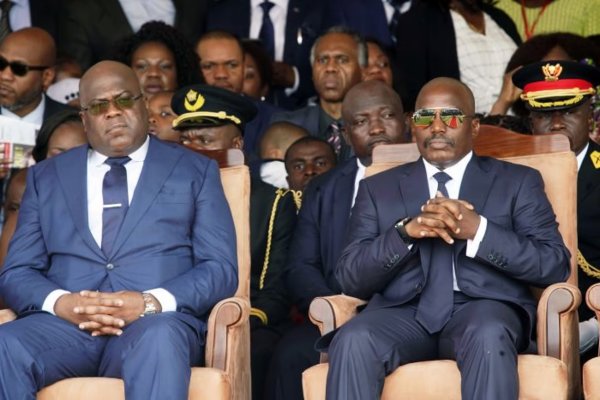
Lt Gen Yav previously commanded the DRC’s third defence zone. He was arrested in September 2022 after M23 rebels captured large parts of North Kivu Province.
The prosecution, represented by Lt Gen Lucien-René Likulia, alleged that Yav had been in contact with an official from the Rwandan government, claiming that messages found on his phone served as evidence of their collaboration.
However, testimony presented in court revealed inconsistencies. Among the witnesses were Lt Gen Constant Ndima, former governor of North Kivu, and Maj Gen Sylvain Ekenge Bomusa, former spokesperson of the Congolese army—but their accounts contradicted each other.
Lt Gen Ndima told the High Military Court that Yav had received a message from retired General James Kabarebe, a senior figure who previously held key roles in Rwanda’s military. When asked whether he had personally seen the message, Ndima admitted that he had not.
In a surprising turn, Maj Gen Ekenge, who also served in North Kivu, stated instead that the message had come from an aide to Gen (Rtd) Kabarebe—not from Kabarebe himself.
The prosecution was further questioned on whether it could present the alleged messages from Yav’s phone, which has been in custody for four years. It responded that accessing the device had been difficult due to multiple security passwords set by the officer.
When pressed to identify anyone who had actually seen the messages, the prosecution cited Maj Gen Peter Cirimwami, a former North Kivu governor. However, it acknowledged that he could not testify, as he died in January 2025. With the evidence still unverified, the court turned to experts from the national cyber security agency (CNC) to attempt to access the phone and retrieve the alleged messages.
Yav’s lawyer, Charles Ngwapitshi, argued that the inclusion of Gen (Rtd) Kabarebe in the case was intended to exaggerate its significance, given his prominence in Rwanda’s security establishment.
“After what was said by Gen Ndima, it is clear there is a problem from the outset,” Ngwapitshi told the court. “To strengthen their case against Gen Yav Irung Philémon, they had to inflate it by introducing the name of James Kabarebe. I want to understand why there are so many contradictions.”
Although the CNC had been expected to submit its findings after being granted additional time, it informed the court on April 21 that it had not retrieved the alleged messages and requested an open-ended extension.
Ngwapitshi maintained that the prosecution’s case lacked merit, urging the court to reach a swift decision so that his client—who has spent four years in detention—can reunite with his family.
Presiding judge Lt Gen Joseph Mutombo Katalayi ruled that the court could not grant an indefinite extension without a clear deadline. He ordered the CNC to return Yav’s phone, effectively halting the forensic examination.
The decision marked a significant blow to the prosecution. Ngwapitshi reiterated that the case was baseless, describing it as “an empty shell.”
The court set May 5, 2026, as the date when both the prosecution and the defense will present their final submissions, which will inform the final judgment.
Lt Gen Yav previously commanded the DRC’s third defence zone.
“Based on the fact that the Government of Iran is seriously fractured, not unexpectedly so and, upon the request of Field Marshal Asim Munir, and Prime Minister Shehbaz Sharif, of Pakistan, we have been asked to hold our Attack on the Country of Iran until such time as their leaders and representatives can come up with a unified proposal,” Trump wrote on Truth Social.
The U.S. president said he will “extend the ceasefire until such time as their proposal is submitted, and discussions are concluded, one way or the other.”
The U.S. military will continue the blockade against Iran and “remain ready and able,” Trump said.
Trump said on Monday that it was “highly unlikely” for him to extend the truce, and on Tuesday morning he told U.S. media that he doesn’t want to do that, expecting the United States to “end up with a great deal” with Iran while threatening to bomb Iran again if no deal is reached.
U.S. Vice President JD Vance, whose trip to Pakistan for talks with Iran has been put on hold, was at the White House for meetings on Tuesday, along with Trump’s envoy Steve Witkoff and son-in-law Jared Kushner, multiple media outlets reported.
U.S. Secretary of State Marco Rubio and Secretary of Defense Pete Hegseth arrived at the White House on Tuesday afternoon to join discussions over Washington’s next steps, according to the reports.
The United States violated the ceasefire by starting a naval blockade of Iran’s ports, Iranian Foreign Minister Abbas Araghchi said Tuesday on X.
Iran’s Foreign Ministry spokesman Esmail Baghaei told state TV late Tuesday that Iran has not yet decided whether to join fresh peace talks since it was upset about what he called mixed messages from Washington.
“It is not out of indecisiveness, it is because we are facing contradictory messages and behaviors, and unacceptable actions from the American counterpart,” Beghaei said.
As U.S. forces have intercepted and taken custody of an Iranian-flagged cargo ship on Sunday and Iran has not yet announced its decision to send a negotiating team for talks, the prospect of an expected second round of U.S.-Iran talks remains unclear, according to media reports.
U.S. President Donald Trump said Tuesday he will extend the ceasefire with Iran as the current two-week truce is set to expire on Wednesday night.
The bootcamp, running from April 20 to April 24, 2026, brings together finalists selected from more than 1,200 applicants aged between 18 and 35. All participants submitted technology-driven solutions aimed at improving agriculture.
During the training, the entrepreneurs are being equipped with practical skills to scale their businesses, attract investors, and manage finances. They are also engaging with leaders from various institutions who are providing mentorship and professional guidance.
In addition, participants are being coached on how to effectively present and refine their business ideas before a panel of judges, as they prepare for the competition’s final pitch.
The Country Director for Heifer International Rwanda, Verena Ruzibuka, said the bootcamp was designed to bridge gaps identified among the selected entrepreneurs, particularly in aligning their current progress with their long-term ambitions.
“We identified a gap between where the selected entrepreneurs are and where they need to be to grow their ventures effectively. This bootcamp is meant to close that gap,” she said.
Ruzibuka added that the goal is for participants to emerge as credible, investment-ready entrepreneurs and leaders in agri-tech, capable of transforming smallholder farming in Rwanda.
She noted that supporting these entrepreneurs goes beyond individual projects, contributing to broader goals such as strengthening the agricultural sector, creating jobs, supporting smallholder farmers, and safeguarding future food systems.
One of the participants, Abdu Usanase, founder of Agriresearch Unguka Ltd, described the bootcamp as a valuable opportunity.
“Being part of the AYuTE bootcamp is a major step for us. We are gaining mentorship, building networks, and taking part in activities that will help refine our projects to better support young farmers. We are excited to learn, grow, and compete in the next stage,” he said.
The Agriculture, Youth and Technology (AYuTE) Africa Challenge is a competition that promotes innovative agri-tech solutions to boost agricultural development.
Prize money for winners has increased from Rwf 50 million to Rwf 65 million. The initiative targets young people interested in investing in Rwanda, offering them an opportunity to gain practical skills while also competing for financial support to scale their businesses.
Young agri-tech entrepreneurs are undergoing training and mentorship to refine their innovations before pitching in the AYuTE Africa Challenge.Twelve finalists selected from over 1,200 applicants are taking part in an intensive bootcamp ahead of the AYuTE Africa Challenge finals.Participants engage in business training, investor readiness, and pitching sessions during a bootcamp preparing them for the AYuTE Africa Challenge final stage.
The messaging service, owned by Meta Platforms, is trialling a plan called WhatsApp Plus, similar in concept to subscription offerings on platforms like Instagram and Snapchat, where users pay for enhanced customisation rather than core functionality improvements.
The company confirmed the test in a statement to TechCrunch, describing WhatsApp Plus as an optional subscription designed to give users “more ways to organise and personalise their experience.”
“Premium features include expanded pinned chats, custom lists, new chat themes, and more,” a Meta spokesperson said. “We’re starting with a small test to gather feedback and ensure we’re building something people find genuinely valuable.”
Mostly cosmetic upgrades
Early details show that WhatsApp Plus is heavily centred on personalisation. Users would be able to access custom icons, themes, wallpapers, ringtones, and exclusive stickers. However, these upgrades do not significantly change the core messaging experience.
One of the more functional additions is the ability to pin up to 20 chats, compared to the current free-tier limit of three. Users may also be able to apply themes and notification tones across chat lists for a more customised interface.
Pricing has not been confirmed for African markets, including Rwanda, while early reports suggest it could be around €2.49 (approximately Rwf 4,300 ) per month in Europe.
Limited rollout and platform scope
The feature is currently being rolled out to a small number of Android users, with iOS support expected at a later stage. It is also limited to the standard WhatsApp Messenger app and does not extend to WhatsApp Business.
Meta emphasised that the subscription will not affect the core WhatsApp experience for non-paying users.
“The WhatsApp you know and rely on remains free, simple, reliable, private messaging and calling,” the company noted in its FAQ. “This subscription does not change your core experience.”
Part of a broader monetisation push
The test comes as Meta continues expanding paid features across its apps. The company has already explored similar subscription models under branding like Instagram Plus, focusing on exclusive social and customisation tools.
More broadly, Meta has been strengthening its monetisation strategy across messaging services. WhatsApp revenue has grown significantly in recent years, driven by business messaging and click-to-WhatsApp advertising tools. The company has previously said WhatsApp now generates over $2 billion in annualised revenue.
While WhatsApp Plus is still in early testing and limited to a small user base, it signals Meta’s ongoing effort to diversify revenue without disrupting the app’s free core messaging service.
For now, the experiment appears focused on one question: how much users are willing to pay just to make WhatsApp look and feel different.
The messaging service, owned by Meta Platforms, is trialling a plan called WhatsApp Plus, similar in concept to subscription offerings on platforms like Instagram and Snapchat, where users pay for enhanced customisation rather than core functionality improvements.
The country has consistently prioritised attracting investment as a means of improving livelihoods and expanding its industrial base. As a result, manufacturing sectors spanning metals, food processing, textiles, and other consumer goods continue to grow steadily, supported by ongoing construction of new industrial facilities.
Speaking on the initiative, Minister of Trade and Industry Prudence Sebahizi highlighted that Rwanda is exploring mechanisms to add value to textile inputs by processing African cotton into yarn, which will then be transformed into fabrics for local use. This approach is expected to significantly reduce dependence on imported textiles.
Sebahizi noted that nearly 40 percent of Africa’s cotton production is concentrated in just two countries, a factor that underscores the importance of leveraging regional resources.
He revealed that an investor is set to establish operations in the Bugesera Special Economic Zone, where cotton sourced from across Africa will be processed into yarn and subsequently into fabric, which will then be used in garment manufacturing within Rwanda.
“This will reduce reliance on imported fabrics, including those from countries such as China,” Sebahizi said.
Beyond textiles, Rwanda is also placing strong emphasis on value addition across its agricultural sector. Authorities are encouraging the transformation of raw agricultural products into a diverse range of processed foods before they reach the market.
This model, widely adopted in developed economies, enables a single crop such as rice or cassava to generate multiple food products, thereby increasing economic returns and market resilience.
The government is further investing in expanding domestic manufacturing capacity in other sectors. In the construction industry, efforts are underway to boost tile production using locally available minerals, with companies like Mountain Ceramic Company Ltd in Muhanga District contributing to increased local output.
Similarly, Rwanda’s metals sector is gaining momentum. A1 Iron and Steel, located in Musanze District, is producing steel from processed mineral resources, while a glass manufacturing plant in Kicukiro District has commenced operations using melted sand. Although the plant currently supplements production with imported materials, plans are in progress to fully localize the technology and raw material sourcing in the future.
In 2025, the Government of Rwanda reaffirmed its commitment to strengthening the domestic garment industry, setting an ambitious target of increasing access to locally produced clothing from just 5 percent of the population to full national coverage.
With more than 1,300 manufacturing industries currently operating across the country, Rwanda’s industrialisation drive continues to gain momentum, positioning the nation for greater economic self-reliance and sustainable growth.
Rwanda seeks to address the high cost of imported fabrics through local production.
One of the global concerns linked to the conflict has been the sharp rise in petroleum prices, driven by disruptions to supply routes and reduced oil processing in the Middle East.
These effects have reached many countries, including Rwanda, which imports a significant share of its food and other goods.
A survey of major Kigali markets, including Kimironko Market and Nyabugogo Market, shows mixed trends: while prices of some essential food items have remained unchanged, others have risen sharply, making them less affordable for many consumers.
At Kimironko Market, locally produced cooking oil has seen a notable increase. A five-liter container now sells between Rwf 14,000 and Rwf 15,000, up from Rwf 11,000–12,000 just two months ago.
However, staple foods such as rice and maize flour have remained stable. A 25 kg sack of rice imported from Tanzania still costs around Rwf 38,000, while higher-quality varieties range between Rwf 47,000 and 50,000—prices that have held steady since late last year.
The same applies to rice from India, Pakistan, and locally produced varieties, which continue to retail between Rwf 1,100 and Rwf 1,300 per kilogram.
Sugar prices have also remained unchanged, selling between Rwf 1,400 and Rwf 1,600 per kilogram, similar to prices recorded two months ago.
Traders say there has been no major shock in food prices so far, though some note reduced purchasing activity. One vendor explained that many families are currently focused on paying school fees, which has affected household spending on food.
Prices of rice have seen slight increase
Fruits record sharp increases
Despite stability in some staples, fruit prices have risen significantly. A kilogram of oranges, which cost Rwf 1,000 in January 2026, now sells for about Rwf 1,500. Lemons have increased from Rwf 1,200–1,500 to between Rwf 1,800 and Rwf 2,000 per kilogram.
Tree tomatoes have also risen to around Rwf 2,000 per kilogram, up from Rwf 1,500–1,800. Other items such as cooking bananas and passion fruits have followed a similar trend.
Traders attribute these increases mainly to high transport costs, as most fruits are sourced from rural provinces or neighboring countries. The higher prices have also reduced the number of customers.
Potatoes have also gone up. At Kimironko Market, Irish potatoes from Kinigi now cost between Rwf 700 and Rwf 800 per kilogram, up from Rwf 650 six months ago. White potatoes have increased from Rwf 400 to around Rwf 600 per kilogram.
Cooking bananas have risen from Rwf 400 to between Rwf 500 and Rwf 600 per kilogram.
Meat prices, however, have remained relatively stable. Mixed beef cuts still sell between Rwf 6,500 and Rwf 7,000 per kilogram, with only slight fluctuations. Chicken prices vary but have not seen a major increase.
Meat prices have slightly gone up
Nyabugogo market shows similar trends
At Nyabugogo Market, where slaughtering facilities are also available, beef prices have remained steady at around Rwf 6,500 per kilogram.
Other meat prices have not changed significantly, except for chicken, which fluctuates and can exceed Rwf 5,000.
Rice prices remain stable as well, with Tanzanian rice selling between Rwf 1,800 and 2,100 per kilogram.
However, locally produced cooking oil has increased from Rwf 2,500 to about 3,200 per liter.
White potatoes now cost around Rwf 650 per kilogram, up from 400, while Kinigi potatoes have risen to Rwf 800 from 500 in just two months.
Tomatoes have doubled in price from Rwf 500–600 per kilogram, while fruits have increased by Rwf 200–500 per kilogram, raising the overall cost of doing business.
One fruit trader said the rising prices have made it harder to operate, as capital requirements have doubled in some cases while supply remains inconsistent.
Most traders agree that rising fuel prices are the main driver behind these increases. However, they note that relatively stable diesel prices have helped prevent even steeper hikes in other goods.
A kilogram of tomatoes has increased from Rwf 600 to Rwf 1200
Construction materials also affected
Traders dealing in construction materials report that cement and electrical cables have been among the most affected.
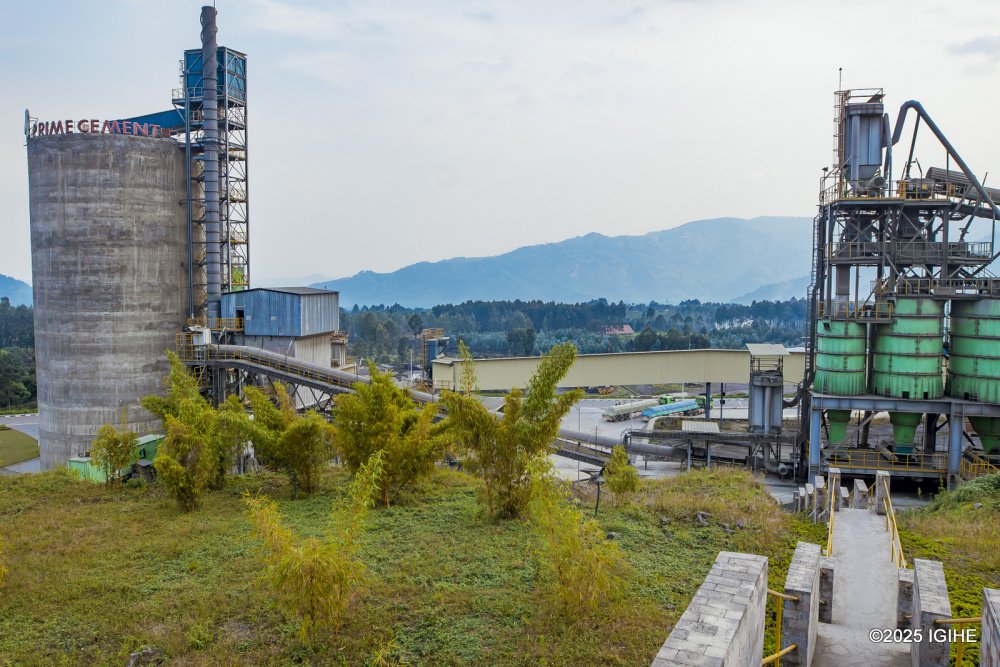
A 50 kg bag of Cimerwa cement, which cost around Rwf 9,500 two months ago, now sells for nearly Rwf 15,000. Meanwhile, Tanzania’s Twiga cement has increased from Rwf 14,000 Frw to between Rwf 16,000 and 16,500.
Electrical cables have also surged. A 100-meter roll of Alpha cables now costs between Rwf 65,000 and Rwf 70,000, up from Rwf 40,000–45,000.
Other materials have seen moderate or no changes. For example, 12-meter steel rods (12 mm thickness) still cost around Rwf 16,000, while roofing sheets (gauge 30)have increased from Rwf 9,500 to about 12,000.
According to the National Institute of Statistics of Rwanda, consumer prices in Rwanda rose by 9.2% in March 2026 compared to the same period in 2025, reflecting broader inflationary pressures in the economy.
Traders dealing in construction materials report that cement and electrical cables have been among the most affected.Rice prices have been reportedly remained stablePineapples have also been affacted by change in prices.
The change will take effect on September 1, 2026, marking the end of one of the most consequential leadership periods in the tech giant’s history. Cook will remain CEO until then to oversee a smooth handover before assuming a more strategic position focused on governance and engagement with policymakers.
John Ternus, Apple’s senior vice president of hardware engineering, has been appointed as Cook’s successor. The appointment, approved unanimously by Apple’s board, makes Ternus the company’s next chief executive and signals the first leadership change since Cook succeeded Steve Jobs in 2011.
Apple said the transition reflects long-term succession planning rather than a dramatic strategic shift, with continuity expected across its core operations and business model.
A defining Cook era
Cook, only the second CEO in Apple’s history, took over following Steve Jobs’ resignation in 2011. Over his tenure, Apple evolved into one of the world’s most valuable companies, expanding its reach to more than 200 countries and territories and growing its active device base to over 2.5 billion.
Under his leadership, Apple’s market value surged from around $350 billion to approximately $4 trillion, while annual revenue rose from $108 billion in fiscal 2011 to more than $416 billion in fiscal 2025.
Cook is widely credited with strengthening Apple’s global supply chain, scaling its operations, and reshaping its business model through a major shift toward services. Products such as iCloud, Apple Music, Apple TV, and Apple Pay helped build a services division generating over $100 billion annually, providing stable, high-margin revenue beyond hardware sales.
Apple also expanded into new product categories, including the Apple Watch, AirPods, and Apple Vision Pro during his tenure, while increasing its retail footprint to more than 500 stores globally. The company also reported a significant reduction in its carbon footprint, cutting emissions by more than 60% compared to 2015 levels.
Ternus takes over as Apple’s hardware leader
John Ternus, who has spent more than two decades at Apple, brings a deeply technical and engineering-focused background to the top role. Joining the company in 2001, he rose through the hardware engineering ranks before becoming vice president in 2013 and joining the executive team in 2021.
Ternus has overseen development across Apple’s major product lines, including the iPhone, iPad, Mac, Apple Watch, and AirPods. He has also been associated with key innovations in materials, durability, and performance.
Recent product milestones under his leadership include the MacBook Neo and the iPhone Air, as well as improvements to AirPods featuring advanced noise cancellation technology. Apple also credits him with driving efforts in sustainability, including the use of recycled materials and extended product durability.
His appointment is widely viewed as a move toward reinforcing Apple’s engineering and product-led culture.
Balancing services growth with product innovation
Ternus takes over at a time when Apple faces growing pressure to accelerate innovation. While Cook’s tenure transformed Apple into a services-powered ecosystem, critics have argued that the company has recently relied on incremental product updates compared to earlier breakthrough eras.
At the same time, competitors such as Google and Microsoft are advancing rapidly in artificial intelligence, intensifying pressure on Apple to respond more aggressively in the AI space. The company is reportedly exploring partnerships, including integrating Google’s Gemini model into its next-generation Siri assistant.
Slower consumer upgrade cycles and global supply chain risks also present challenges. Apple has already begun diversifying manufacturing away from China to markets such as Vietnam in response to geopolitical uncertainty.
Analysts expect Ternus to emphasise hardware innovation while maintaining Apple’s highly profitable services ecosystem, striking a balance between product reinvigoration and stable recurring revenue.
Cook described the transition as “the greatest privilege of my life,” while praising Ternus as a leader with a strong engineering mindset. Ternus, in turn, expressed gratitude for the opportunity and pledged to build on Apple’s long-standing values.
As Apple prepares for this leadership shift, the company enters a new chapter shaped by continuity at the top, but with renewed expectations around innovation in an increasingly competitive global tech landscape.
Tim Cook (right) and John Ternus at Apple Park. Apple has appointed Senior Vice President of Hardware Engineering John Ternus as CEO effective September 1, 2026. The board is handing the 25-year company veteran control of Apple as Tim Cook exits the top operating role after 15 years.
The meeting took place on the afternoon of April 20, 2026, according to a statement from the Office of the President.
The statement noted that their discussions centered on strengthening ties between Rwanda and the Ashanti Kingdom, with a particular focus on expanding opportunities in trade, investment and mineral trading.
The Ashanti Kingdom is one of around 16 traditional kingdoms in Ghana and is among the most historically influential in both Ghana and West Africa.
It rose to prominence in the 18th and 19th centuries. Located in central Ghana, the kingdom covers an area of more than 24,000 square kilometers.
The Ashanti people belong to the Akan ethnic group, which established the kingdom around the 1600s under King Osei Tutu.
Kumasi serves as the capital of the Ashanti Kingdom and is widely regarded as a major center of culture and history in Ghana.
Today, the kingdom is led by King Otumfuo Nana Osei Tutu II, the 16th ruler, known as the Asantehene. He serves as both a political and spiritual leader of the Ashanti people, although he does not hold an official role within Ghana’s government.
King Otumfuo Nana Osei Tutu II ascended to the throne on April 26, 1999, following the passing of his uncle, Otumfuo Opoku Ware II. He is widely respected in Ghana for his cultural leadership and is seen as a symbol of unity among the Ashanti people.
The Ashanti Kingdom’s economy is largely driven by gold mining, agriculture, trade, and tourism.
Cooperation between Rwanda and the Ashanti Kingdom adds to Rwanda’s already strong bilateral relations with Ghana. The two countries maintain partnerships in areas such as air transport, defense, and security.
They also collaborate in the private sector, tourism, culture, finance, and trade.
Rwanda opened its High Commission in Ghana in 2020, while Ghana established its High Commission in Rwanda in 2024.
President Paul Kagame has received a delegation led by Prince Oheneba Yaw Otchere, Royal Ambassador of the King of the Ashanti Kingdom in Ghana.The meeting took place on April 20, 2026. President Kagame and Prince Oheneba Yaw Otchere held discussions centered on strengthening ties between Rwanda and the Ashanti Kingdom