Dr. Nsanzimana made the call on Thursday during a two-day working visit to the Southern Province, where he is assessing the quality of healthcare services at primary and secondary health facilities while also engaging communities and young people on health and wellbeing.
In Nyanza District, the minister visited Nyamiyaga Health Centre, Gati and Gasoro Health Posts, as well as Nyanza District Hospital, assessing the delivery of health services from the community level to specialised care.
The facilities form part of Rwanda’s decentralised healthcare network, which includes Community Health Workers (CHWs), health posts and health centres.
According to the Ministry of Health, these services have helped reduce travel time for patients by up to 45 minutes and can manage up to 95% of healthcare service demand, bringing care closer to communities.
During the visits, Dr. Nsanzimana engaged with frontline health workers, particularly Community Health Workers, whom he described as the backbone of Rwanda’s health system.
He stressed the importance of ensuring that increased access to healthcare is matched by quality services, reaffirming that “decentralized, quality care remains a top priority.”
The minister also met students from different schools in Nyanza as they marked the start of the new academic year.
Following a friendly volleyball match, he encouraged the students to make physical activity part of their lives and to resist peer pressure that could lead them to substance abuse.
Reminding them that they “only have one body,” Dr. Nsanzimana urged the students to make responsible choices that would protect their health and support their education and future.
Artists DJ Ira, Nel Ngabo and Tom Close also took part in the event, performing for the students while reinforcing the message on sobriety, healthy living and commitment to education.
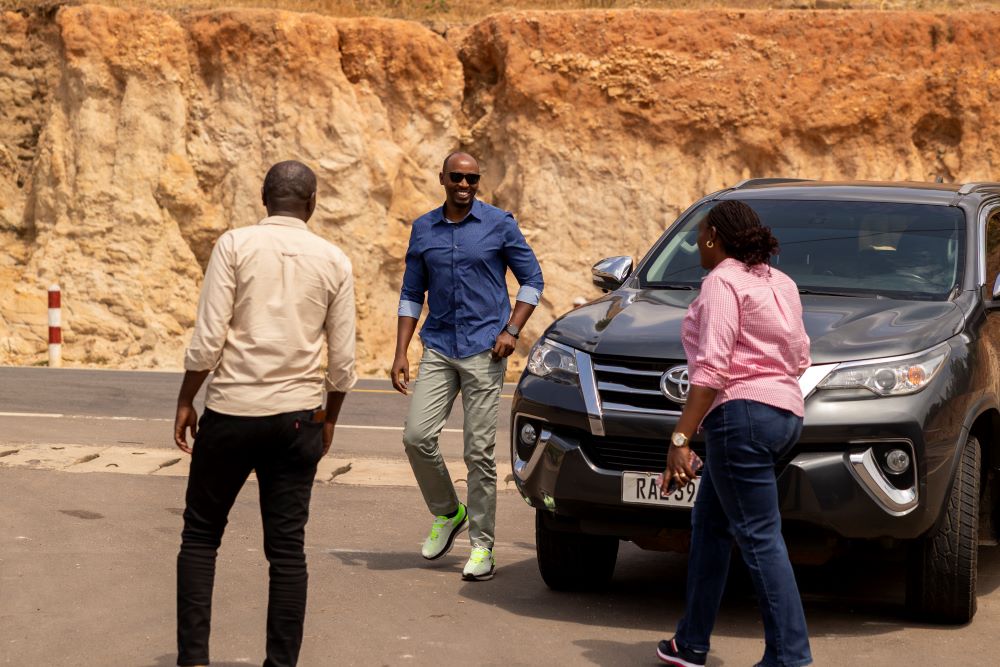
The Health Minister tours a health facility in Nyanza as part of his two-day visit to the Southern Province.Health Minister Dr. Sabin Nsanzimana engaged with frontline health workers during his visit to Nyanza District.Health Minister Dr. Sabin Nsanzimana (second left) engages with frontline health workers during his visit to Nyanza District.Dr. Nsanzimana assessed healthcare services at Gati Health Post in Nyanza District.The Health Minister , Dr. Nsanzimana was welcomed by Southern Province Governor during his visit. Health Minister Dr. Sabin Nsanzimana interacts with healthcare personnel in Nyanza District. Community Health Workers engaged with Health Minister Dr. Sabin Nsanzimana during his visit to Nyanza District.
According to data from Chinese Customs, Rwanda’s exports to China increased from USD 28.7 million in 2021 to a record 227 million in 2025, representing an approximately 691 percent increase within five years.
The rapid growth has positioned China among Rwanda’s top three export markets, reflecting increasing demand for Rwandan products and expanding opportunities for local businesses seeking access to one of the world’s largest consumer markets.
China has also become one of Rwanda’s largest trading partners and remains the country’s leading source of Foreign Direct Investment (FDI), with Chinese companies increasingly exploring opportunities in sectors including manufacturing, infrastructure, energy, agriculture, technology, transport and services.
At the same time, Rwandan businesses have continued to explore the Chinese market, particularly for agricultural and high-value products such as coffee, tea, chili, macadamia nuts and locally produced handicrafts.
As part of efforts to deepen economic cooperation with China, Rwanda is participating in the 2026 China International Fair for Trade in Services (CIFTIS), taking place from September 9 to 13, 2026 at Shougang Park in Beijing.
The international exhibition, hosted by the Ministry of Commerce of the People’s Republic of China and the People’s Government of Beijing Municipality, brings together countries, international organisations, companies and institutions to explore cooperation in services trade, technology, investment and emerging sectors of the global economy.
Held under the theme “Global Services, Shared Prosperity,” CIFTIS has developed into one of the world’s largest comprehensive exhibitions focused on trade in services since its establishment in 2012.
The 2026 edition is attracting participation from approximately 90 countries and international organisations, with more than 1,800 companies exhibiting, including 456 Fortune Global 500 companies and industry leaders.
More than 90 companies and institutions are expected to present new products, technologies and services, with several innovations making their global debut or first presentation in China.
The exhibition covers key service sectors including telecommunications, computer and information services, financial services, cultural and tourism services, healthcare, education, sports, engineering consulting, construction services, supply chains and business services.
Rwanda’s participation comes at a time when CIFTIS is placing greater emphasis on digital transformation, artificial intelligence, green development and cross-border cooperation.
Rwanda’s Ambassador to China, Lt Gen (Rtd) Emmanuel Karenzi Karake, said China represents a market with significant potential for Rwanda and that continued participation in major exhibitions is helping connect Rwandan businesses with Chinese consumers and investors.
“Our continued participation in major exhibitions across China is helping to increase the visibility of Rwandan products, tourism and other investment opportunities, while connecting our businesses directly with Chinese consumers and investors,” the Ambassador said.
The 2026 exhibition focuses on three major priorities: expanding opening-up, deepening cooperation and driving innovation.
Key areas of discussion include artificial intelligence and intelligent technologies, digital trade, green services, sustainable finance, healthcare, tourism, education and the integration of services with manufacturing.
Nearly 40 percent of innovation cases presented in the “China Services” exhibition zone involve artificial intelligence, large language models or intelligent agents, highlighting the growing role of technology in reshaping global services.
For Rwanda, the platform provides an opportunity to showcase its growing digital ecosystem, investment climate and ambition to become a regional hub connecting African markets with global businesses.
Rwanda’s participation at CIFTIS follows its recent presence at Café Show China, where premium Rwandan coffee brands were presented to Chinese consumers, buyers and industry stakeholders.
Beyond coffee, Rwanda continues to promote other export products including tea, chili, minerals, agricultural commodities and handcrafted products.
The country is also using these platforms to highlight its tourism potential, including mountain gorilla trekking, wildlife experiences, cultural attractions and Rwanda’s natural landscapes.
Coffee is among Rwanda’s key exports to China, with the country seeking to expand its presence in the growing Chinese market.
Rwanda to participate in China International Import Expo
Rwanda is also scheduled to participate in the ninth China International Import Expo (CIIE), which will take place in Shanghai from November 5 to 10, 2026.
Rwanda will organise an investment promotion programme bringing together Chinese business leaders, investors and institutions to explore opportunities in priority sectors.
The CIIE will provide another platform for Rwanda to promote its export products while strengthening awareness of investment opportunities available in areas such as agriculture, tourism, technology, manufacturing and infrastructure.
Amb Lt Gen (Rtd) Karake confirmed that the growing demand for Rwandan specialty coffee and other high-quality products, alongside increasing interest from Chinese companies investing in Rwanda, demonstrates the expanding opportunities created by the partnership between the two countries.
The Ambassador noted that Chinese investors in Rwanda benefit from the country’s strategic location, which provides access to the wider East African market and the African continent through the African Continental Free Trade Area (AfCFTA).
Rwanda’s engagement with China is supported by broader frameworks aimed at increasing market access, encouraging investment and strengthening commercial partnerships.
With exports to China reaching record levels and growing interest from businesses on both sides, Rwanda continues to position its relationship with China as a pathway for expanding trade, investment and economic cooperation.
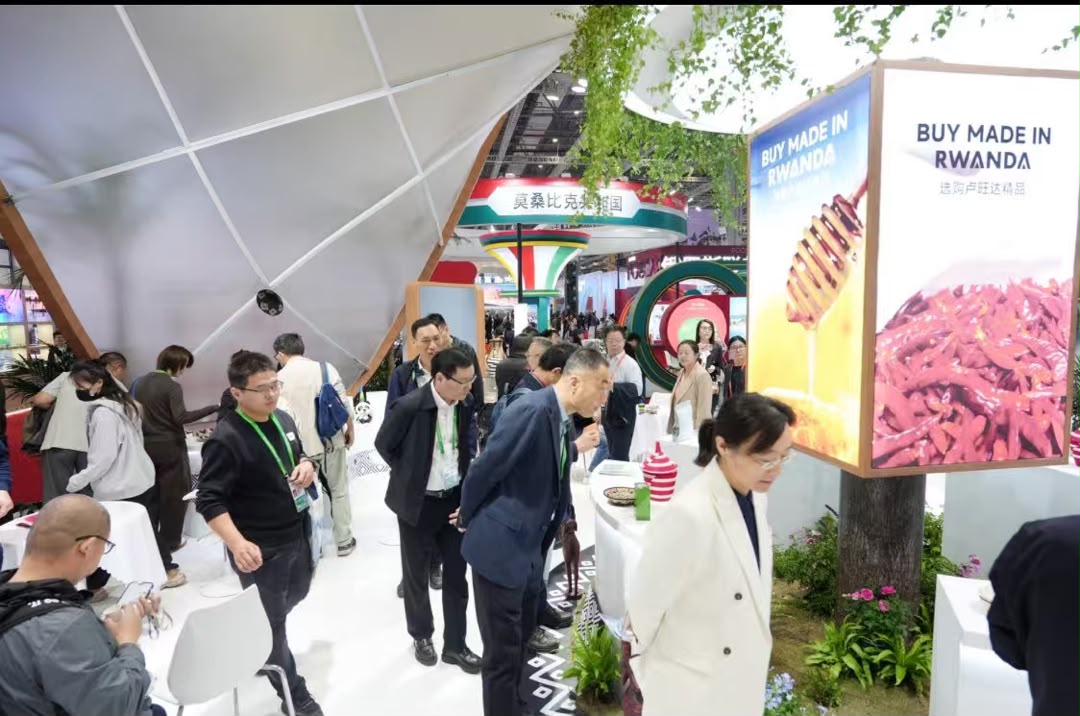
The CIFTIS exhibition provides Rwanda with a platform to showcase its products, services and investment opportunities to a global audience.Rwanda is highlighting opportunities in agriculture, tourism, technology and manufacturing as it seeks to attract more Chinese investment at the fair.Rwanda’s participation in CIFTIS comes as exports to China reached a record USD 227 million in 2025.Rwandan businesses are exploring new opportunities in China as demand for the country’s specialty and high-value products continues to grow.Robots and advanced technologies are among the innovations showcased at CIFTIS, highlighting the growing role of automation and artificial intelligence in global services.
According to the Office of the President, during the talks on Thursday, the two leaders reaffirmed the strong and longstanding relations between Rwanda and Congo-Brazzaville and exchanged views on challenges facing the African continent.
They also discussed the need to advance effective and sustainable solutions led by African countries.
The meeting came as the two countries continue to strengthen diplomatic and political relations and cooperation across several areas.
Rwanda opened its embassy in Congo-Brazzaville in August 2016, further formalising diplomatic engagement between the two countries.
In November 2021, Rwanda and Congo-Brazzaville signed a series of agreements covering military cooperation, collaboration in improving teaching and learning at universities, land management, sustainable development and environmental protection.
The agreements also covered the promotion of bilateral trade and expansion of cooperation in air transport development.
According to the Office of the President, during the talks on Thursday, the two leaders reaffirmed the strong and longstanding relations between Rwanda and Congo-Brazzaville and exchanged views on challenges facing the African continent.
“So far, despite six months of war in the Middle East, the global economy has been resilient. It has weathered the shocks, the energy shocks in particular, better than feared,” IMF spokesperson Julie Kozack said at a news briefing.
“But uncertainty, as we’ve been saying for quite some time, continues to remain high,” said Kozack.
She noted that the global economy is being pulled in two directions: a negative supply shock from higher energy and commodity prices, and a positive demand shock from the AI-driven technology cycle.
She added that there are “significant differences” in how these forces are impacting individual economies.
Kozack also noted that several risks to the global economic outlook remain high, including a persistent energy shock, mounting public debt, and a stalled disinflation process.
The 2026 Annual Meetings of the IMF and the World Bank Group are scheduled to take place in Bangkok, Thailand, from October 12 to 18. IMF Managing Director Kristalina Georgieva said in late August that resilience and dynamism are the two main topics.
IMF spokesperson Julie Kozack said Thursday that the global economy has been resilient despite six months of war between the United States and Iran, but uncertainty remains high.
Musonye made the call in Kigali on the sidelines of the SportsBiz Africa Forum, where he outlined a vision of AFCON 2027 as a regional event extending beyond the three host countries.
“We are preparing AFCON for the region, not for Kenya, Uganda and Tanzania alone. We are preparing AFCON to cover the entire region. We want Rwanda to be part of it because Rwanda has played a big role in changing football in this region,” Musonye told IGIHE on Thursday.
He identified Rwanda’s qualification as his first priority, but also wants the country to benefit from the tournament by hosting teams for training camps.
“I want Rwanda to qualify for AFCON 2027. That’s number one. Number two, I want to see many teams coming to train in Rwanda here even if Rwanda doesn’t qualify,” he explained.
Rwanda is yet to begin its qualification campaign. The Amavubi were drawn in Group K alongside Mali, Cape Verde and Liberia, with the first two matchdays scheduled for September 24 to October 6.
Rwanda will open its campaign against Liberia before facing Cape Verde away. The remaining group matches against Mali, Cape Verde and Liberia will be played across the November 2026 and March 2027 international windows.
Under CAF’s qualification format, the top two teams in groups without a co-host qualify for the finals. Kenya, Uganda and Tanzania already have places secured as hosts, meaning the highest-ranked team alongside each host will advance from those groups.
Rwanda therefore faces a competitive route, with Mali and Cape Verde both in its group. But Musonye believes the country’s contribution to the tournament should not depend solely on whether the Amavubi secure a place on the pitch.
Kenya’s AFCON 2027 Local Organising Committee chairman Nicholas Musonye during an exclusive interview with IGIHE on the sidelines of the SportsBiz Africa Forum in Kigali on Thursday, September 10, 2026.
Infrastructure remains key
Musonye also expressed confidence that Kenya, Uganda and Tanzania will have their infrastructure ready for the tournament, dismissing concerns over stadium preparedness as the main remaining risk.
“The risks were the infrastructure. Now we are working to mitigate it. That is the only risk,” he said.
He noted that the three hosts are working together to ensure the venues meet the required standards.
“We are ready. The stadiums will be ready. Uganda, Tanzania, we are working as a team of Pamoja to make sure that the venues are ready for AFCON,” he added.
AFCON 2027 will be played from June 19 to July 17, with East Africa hosting the tournament for the first time in more than five decades. The competition will feature 24 teams.
Musonye sees the tournament as an opportunity to leave a lasting infrastructure and football development legacy across the region.
He projects that Kenya, Uganda and Tanzania could generate about $20 billion from the wider tournament, with the ambition of reinvesting the proceeds in infrastructure and grassroots football.
“We don’t want to make money and drop it. We want to make money and put it back in society to improve the infrastructure further and also to develop youth football from the grassroots,” he stressed.
‘An authentic African AFCON’
Beyond infrastructure and investment, Musonye wants the tournament to offer a different experience from previous editions by making movement around the region easier for fans.
“We want to make it open. We want people to come free in our region to watch football. There will be no restrictions about visa or what. We want to make it open. You come and enjoy football. You enjoy tourism and enjoy yourself,” he said.
He described the planned tournament as an “authentic African AFCON”, with East African hospitality at its centre.
For Rwanda, Musonye believes the tournament provides an opportunity to deepen regional cooperation in football, whether the Amavubi qualify or not.
Kagame made the remarks while addressing the International Space Summit in Paris, a two-day gathering convened by French President Emmanuel Macron that brought together Heads of State and Government, space agency leaders, and industry representatives to discuss governance, security and sustainable development frameworks for the space sector.
Thanking President Macron for convening the summit, Kagame said the space economy is evolving rapidly, driven by lower costs, new technologies and greater private sector engagement, and that Africa intends to be a contributor to science, research and global decision-making, not only a user of space capabilities.
“For a continent with a young and increasingly connected population, this sector offers enormous potential,” he said, adding that with the right support, African talent can develop the relevant expertise and build businesses that create real value for the continent.
Kagame pointed to Rwanda’s national space policy as an example of how the country is positioning itself in the sector, saying it was designed to foster investment and innovation.
He told the delegates that Rwanda is currently using space technologies and artificial intelligence to strengthen agriculture, infrastructure, disaster management and other critical areas, and that the country also hosts satellite ground infrastructure serving global operators.
On the growing competition for spectrum and orbital resources as satellite constellations expand, Kagame warned that developing countries risk losing access.
He noted that Rwanda, alongside other partners, supported the African Telecommunications Union’s efforts to regain several orbital slots for the continent, describing the experience as proof of how coordinated African action can protect the continent’s interests.
Kagame called for the pace of change in the space sector to be matched by clear international rules, saying frameworks should recognize both the civilian and security applications of space technologies and enable responsible collaboration. He said this requires an inclusive process that gives developing countries a meaningful voice and ensures their priorities are fairly represented.
He also raised the issue of technology transfer, saying export restrictions continue to limit access to knowledge and modern technologies, and welcomed partnerships that advance research and build local capacity. He cited the company E-Space as an example, saying it is working with a growing number of African countries to develop and deploy satellite-based solutions.
“Ultimately, we should avoid reproducing in space the inequalities that exist in other domains,” Kagame said, adding that Rwanda stands ready to work with France, Europe and other partners to deepen space cooperation.
Christian Gakwaya, Chief Executive Officer of Rwanda Events Group, announced the shift as the third SportsBiz Africa Forum opened in Kigali on September 10, arguing that Africa needs to move beyond discussions about sporting talent and trophies to capturing more of the economic value generated by the sector.
“It’s time for a shift,” Gakwaya told delegates at the Kigali Convention Centre.
The event, which runs from September 10 to 11, is bringing together policymakers, investors, sports administrators, business leaders, entrepreneurs, athletes and development partners to discuss investment, innovation, governance and business opportunities in sport.
Gakwaya argued that Africa has long supplied talent, coaches, stories and other resources to the global sports industry, while much of the economic value has been captured elsewhere.
He challenged stakeholders to consider who owns the media rights, intellectual property and data generated by African sport, as well as who manufactures the apparel, technology and other products used by athletes and fans.
“Who owns our needs? Who owns the media rights to our needs? Who owns the intellectual property in the sports sector on the continent?” he asked.
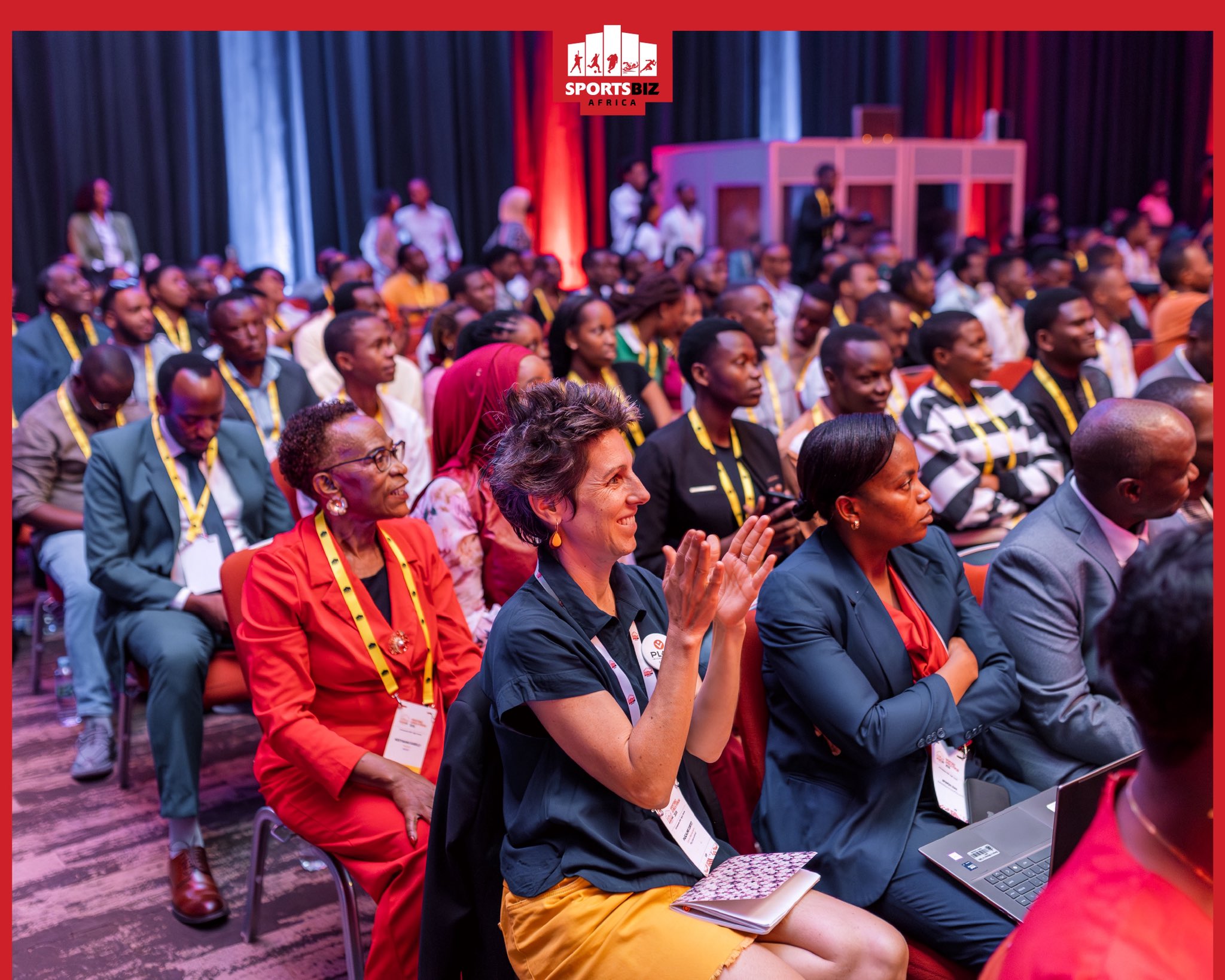
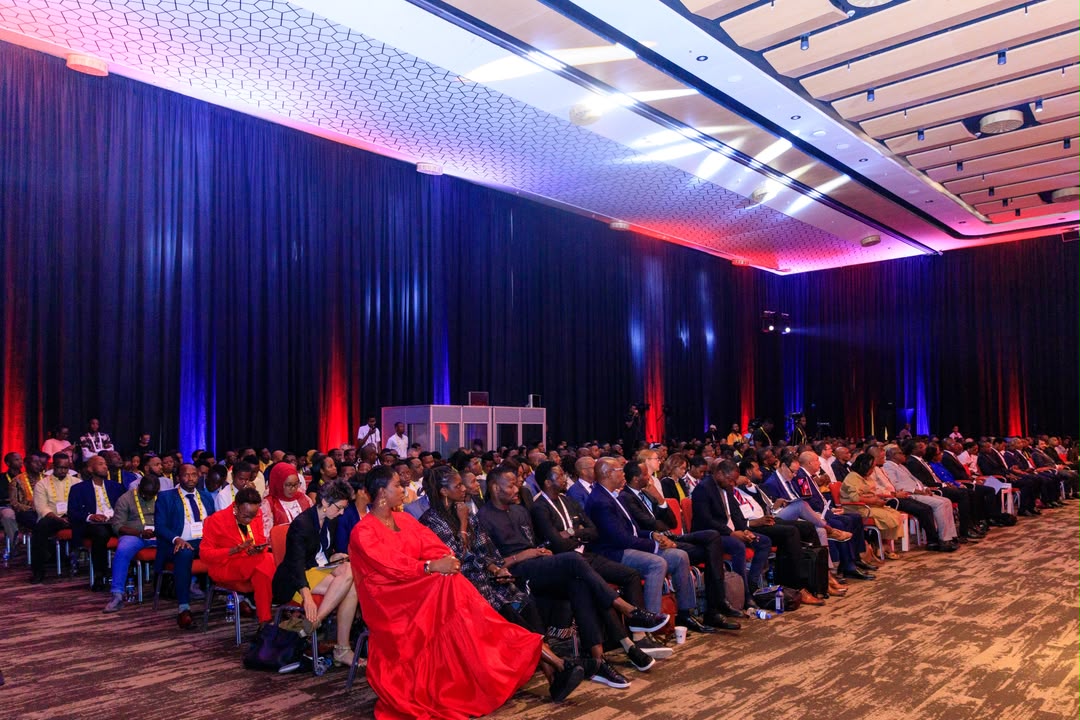
The two-day SportsBiz Africa Forum brings together policymakers, investors, sports leaders, entrepreneurs and athletes to explore ways to grow Africa’s sports economy.
The new SportsBiz Africa Platform is intended to address some of these gaps by focusing on investment facilitation, business development, market intelligence, entrepreneurship, policy engagement, talent development and cross-border participation.
Unlike the forum, which brings stakeholders together for a few days each year, the platform is designed to operate throughout the year.
“A forum brings people together. A platform will help them to do something together,” Gakwaya explained. “A forum can last three days… But we want a platform that will create value throughout the 365 days.”
The initiative will seek to connect startups with investors, leagues with technology companies, brands with communities and African athletes and entrepreneurs with global opportunities.
Gakwaya acknowledged that significant barriers remain, including limited sports data, difficulties commercialising sports assets and events, and inadequate access to structured financing.
“Too many promising ideas remain disconnected from institutional investors and markets that can help them grow,” he noted.
Rwanda’s Minister of Sports, Nelly Mukazayire, also called for a stronger focus on the commercial side of sport, arguing that Africa’s share of the global sports economy remains disproportionately small despite its large pool of talent and young population.
Mukazayire estimated the global sports industry at between $2.3 trillion and $2.65 trillion, while Africa accounts for about 0.5% of the sector.
She identified data, people and the commercialisation of sport as three areas requiring greater attention if Africa is to close the gap.
The minister called for more African-owned data on athletes and sports markets, greater investment in athletes’ physical and mental wellbeing, and stronger commercial structures around broadcasting rights, merchandise, manufacturing and sports infrastructure.
She also argued that sports facilities should be designed as broader commercial and community hubs rather than simply venues for talent development.
“By building pitches you’re creating community. By adding all those services you’re creating value,” Mukazayire said.
Minister Mukazayire estimated the global sports industry at between $2.3 trillion and $2.65 trillion, while Africa accounts for about 0.5% of the sector.
Her remarks echoed the broader objective of the SportsBiz Africa Platform, which is to create an ecosystem around sport rather than focus solely on competition.
Dr Decius Hikabwa Chipande, Coordinator and Head of the African Union Sports Council, backed greater collaboration between governments, the private sector, sports organisations and development partners to expand the continental sports economy.
He urged participants to move from dialogue to investment and measurable outcomes, noting that sport can contribute to youth employment, entrepreneurship, innovation and social development.
Félicité Rwemarika, an International Olympic Committee member, similarly stressed that Africa’s sporting potential will require investment in organisations, skills and people alongside physical infrastructure.
She pointed to the Dakar 2026 Youth Olympic Games as an example of how major sporting events can leave a legacy through skills development and professional training.
Meanwhile, Sir Paul J. Foster, President and CEO of the Global Esports Federation, urged African stakeholders to build stronger connections between local talent and global markets.
He argued that technology can connect African creators, entrepreneurs and intellectual property to international audiences and capital, but warned that connectivity alone is insufficient without the systems and infrastructure to support it.
Sir Paul J. Foster, President and CEO of the Global Esports Federation, urged African stakeholders to build stronger connections between local talent and global markets.
The SportsBiz Africa programme also includes a Dealroom designed to match investors with sports-related ventures, alongside a career fair, Gamers Garage and the SportsBiz Africa Esports Cup.
Gakwaya said the ambition is for the platform to demonstrate measurable progress by the time stakeholders reconvene next year.
“We want to make sure that next year, around the same date as we host SportsBiz Africa again, we will be able to say that we have constructed an ecosystem,” he said.
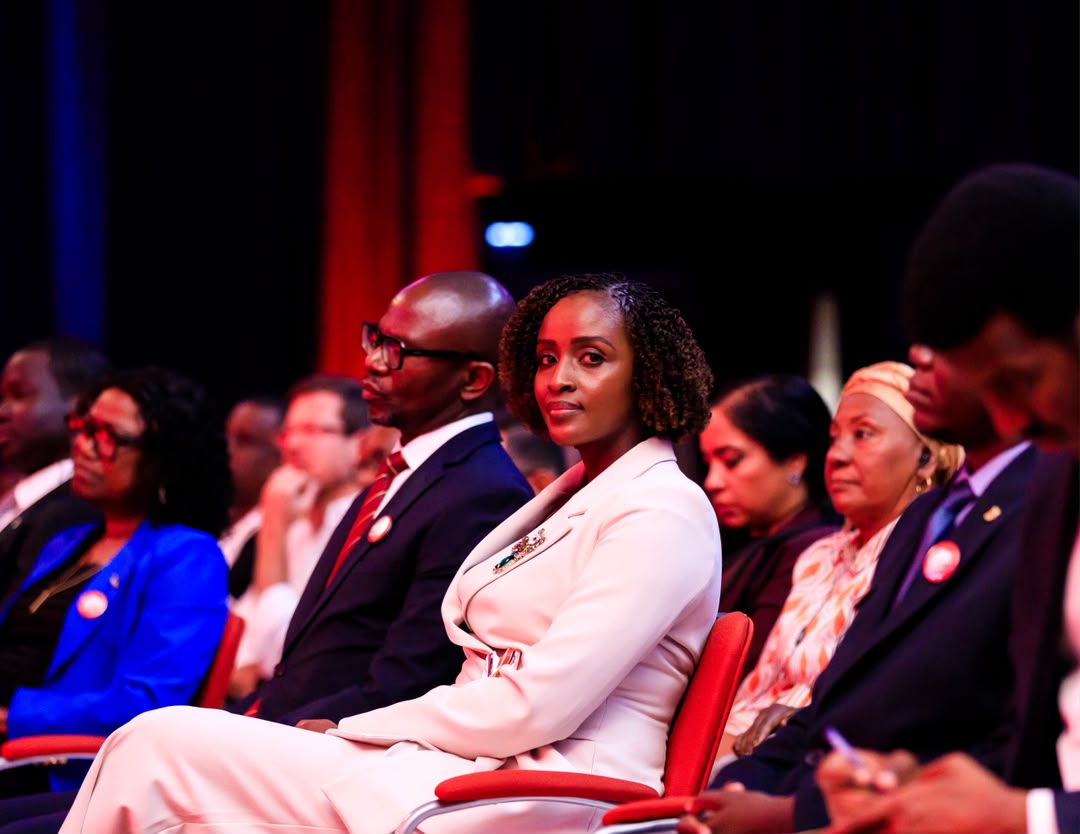
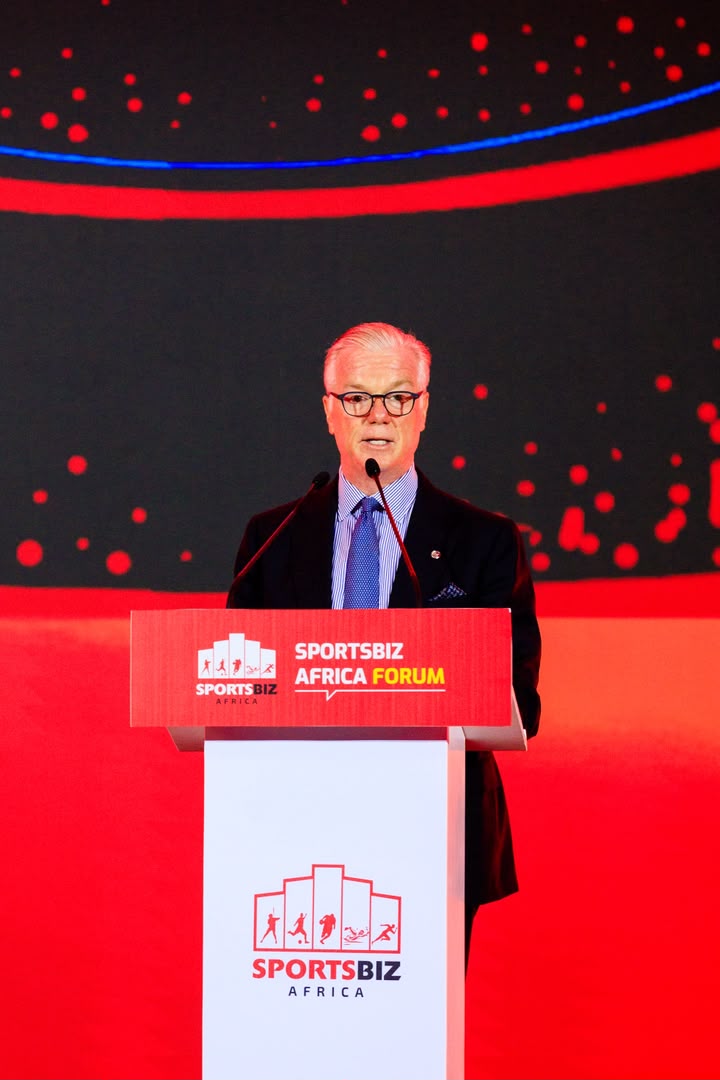
The third edition of the SportsBiz Africa Forum opened in Kigali on Thursday, September 10, 2026.Christian Gakwaya, Chief Executive Officer of Rwanda Events Group, told delegates that Africa needs to move beyond discussions about sporting talent and trophies to capturing more of the economic value generated by the sector.
Opening the third SportsBiz Africa Forum in Kigali on September 10, Mukazayire noted that the global sports industry was valued at between $2.3 trillion and $2.65 trillion, while Africa accounted for only about 0.5% of the global market.
The gap, she argued, was difficult to ignore given the continent’s youthful population and its long record of producing athletes whose talent has helped drive sports industries elsewhere.
“What are they doing that we are not doing?” Mukazayire asked as she outlined three areas she believes Africa must address to unlock more value from its sporting potential: data, people and the commercial side of sport.
The first is data.
Mukazayire argued that Africa needs to collect and use more data suited to African athletes, markets and conditions rather than relying entirely on research and systems developed elsewhere.
Science and technology, she explained, must also reflect the realities of African athletes, including factors such as altitude, climate and local environments.
The minister pointed to the limited availability of data on women in sport, noting that much of the research developed over the years has been based largely on men despite the growing participation and performance of women athletes across Africa.
“We need to discuss how we start looking at data, collecting data that is meant for African athletes and that is going to be created, put together by African companies, entrepreneurs and interpreted in that way,” she said.
The two-day SportsBiz Africa Forum brings together policymakers, investors, sports leaders, entrepreneurs and athletes to explore ways to grow Africa’s sports economy.
The second priority is people.
Mukazayire stressed that African sports systems need to look beyond an athlete’s natural ability and understand the wider factors that determine high performance and long-term success.
Health, mental wellbeing, nutrition, sleep, recovery and the environment surrounding athletes all require greater attention, she argued.
She also highlighted fan engagement as an increasingly important part of the sports economy. Sport, she noted, can create opportunities beyond competition by supporting entertainment, fashion, creative industries and other businesses.
The third priority is commercial value.
Mukazayire questioned who benefits from broadcasting rights, merchandising and other revenue streams generated by African sport, arguing that the continent needs to take a greater role in building businesses around its sporting assets.
She also called for a different approach to investment in sports infrastructure. Stadiums, pitches and arenas should not be viewed only as facilities for developing athletes, but as centres around which businesses and communities can grow.
“By building pitches you’re creating community. By adding all those services you’re creating value,” she told delegates.
Her message was echoed by Christian Gakwaya, Chief Executive Officer of Rwanda Events Group, who argued that Africa has spent years supplying talent to the global sports economy without capturing a proportionate share of the value created.
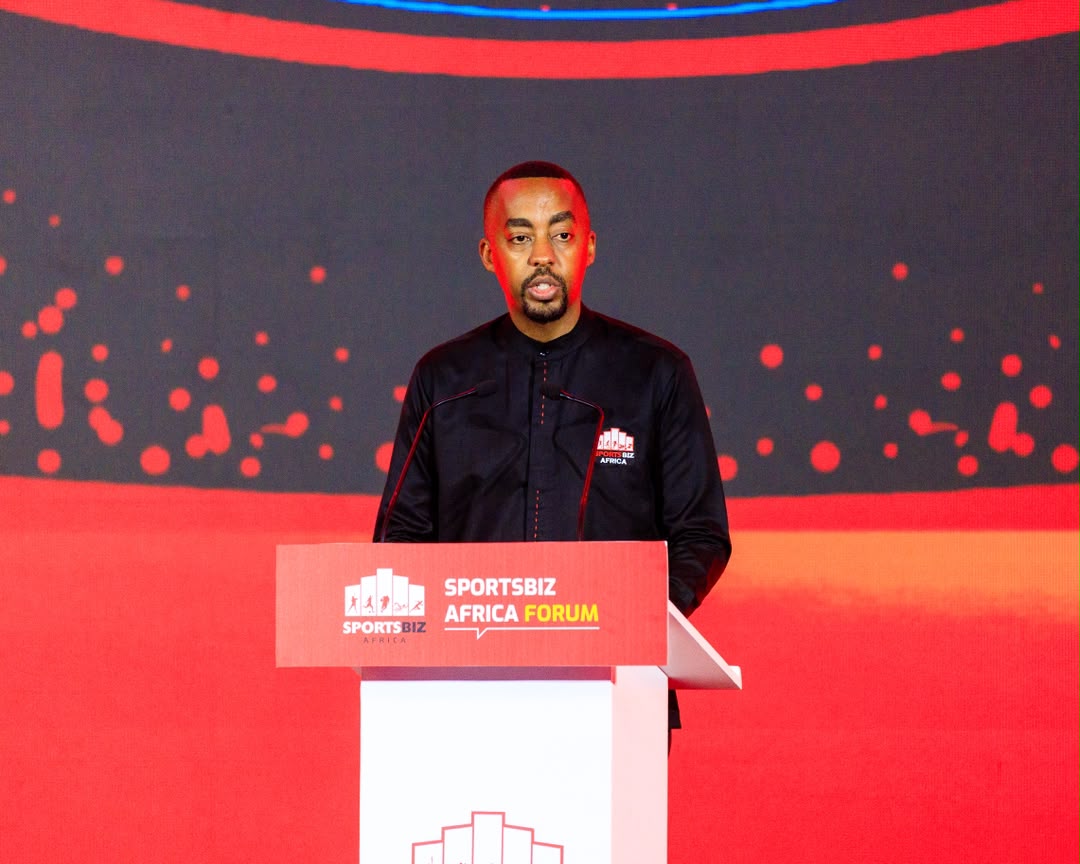
Christian Gakwaya, Chief Executive Officer of Rwanda Events Group, speaks during the forum held at the Kigali Convention Centre (KCC) on Thursday.
Africa has produced athletes, coaches and stories that have helped shape global sport, Gakwaya observed, but much of the economic value generated from those contributions has been captured elsewhere.
He urged the continent to move beyond measuring sporting success solely through participation, performance and trophies and instead confront questions around ownership.
“Who owns our media rights?” he asked. “Who owns the intellectual property in the sports sector in the continent?”
Gakwaya also questioned who manufactures sports apparel and technologies used on the continent, manages African athletes, collects sports data and builds African sports brands.
For him, the next phase should focus on ensuring that more of the economic value generated by African sport remains in Africa.
The SportsBiz Africa Forum, now in its third edition, he announced, is evolving into the SportsBiz Africa Platform, a shift intended to move beyond periodic discussions towards investment facilitation, business development, market intelligence, entrepreneurship, policy engagement and talent development.
“A forum brings people together. A platform will help them to do something together,” Gakwaya said.
The call for stronger African participation in the global sports economy was also reinforced by Sir Paul J. Foster, President and Chief Executive Officer of the Global Esports Federation.
Foster described connectivity as a form of infrastructure capable of creating economic opportunity, particularly for young people, entrepreneurs and creators who can use technology to access global markets.
Sir Paul J. Foster, President and Chief Executive Officer of the Global Esports Federation, was among the leaders who graced the event.
Rather than focusing on bringing the world to Africa, he argued that the continent should concentrate on connecting African talent, businesses, intellectual property and ideas directly to global opportunities.
“For too long, the conversation has been about bringing the world to Africa. I’m much more interested in the reverse. Africa to the world,” Foster told the forum, describing it not simply as a slogan but as an economic proposition.
He urged African governments, universities, entrepreneurs, investors and sports organisations to build the infrastructure, competitions, academies, investment pathways and commercial networks needed to support that ambition.
Foster noted that the global gaming industry had grown into a major economic force, placing esports at the intersection of technology, artificial intelligence, entertainment, media, education, commerce and youth.
The challenge, he suggested, was to build systems that allow young Africans to move from being players to developers, fans to creators, students to entrepreneurs, and local businesses to global companies.
Dr Decius Hikabwa Chipande, Coordinator and Head of the African Union Sports Council, similarly framed sport as a strategic sector for economic growth, youth empowerment, job creation and innovation.
He urged stronger partnerships between governments, the private sector, sports organisations, development partners and communities to unlock opportunities across the sports value chain.
The African Union, he noted, sees sport as more than recreation and competition, with potential to support entrepreneurship, employment, skills development and continental integration.
Félicité Rwemarika, an International Olympic Committee member, also emphasised that talent and passion alone would not be enough for Africa to realise its sporting potential.
The continent needs strong institutions, good governance, investment, skills and expertise, she conveyed in a message from IOC President Kirsty Coventry.
Investment in sport, the message argued, should ultimately be understood as an investment in people, creating opportunities for young people through education, skills development and employment.
Together, the speakers returned repeatedly to a similar question: how can Africa retain more of the value generated by its sporting talent?
For Mukazayire, the answer begins with understanding African athletes through African data, investing in the people around sport and building stronger commercial ecosystems capable of creating value at home.
The task now, she told delegates, is to move beyond recommendations and develop practical measures that can create jobs, businesses and investment for future generations.
“We have to be intentional in terms of what is the legacy we are leaving for the next generations,” she said.
The two-day SportsBiz Africa Forum brings together policymakers, investors, sports administrators, business leaders, entrepreneurs and athletes to discuss ways of strengthening Africa’s sports economy through investment, innovation and collaboration.
Opening the third SportsBiz Africa Forum in Kigali on September 10, Mukazayire noted that the global sports industry was valued at between $2.3 trillion and $2.65 trillion, while Africa’s share remained at about 0.5%.The two-day SportsBiz Africa Forum brings together policymakers, investors, sports leaders, entrepreneurs and athletes to explore ways to grow Africa’s sports economy.
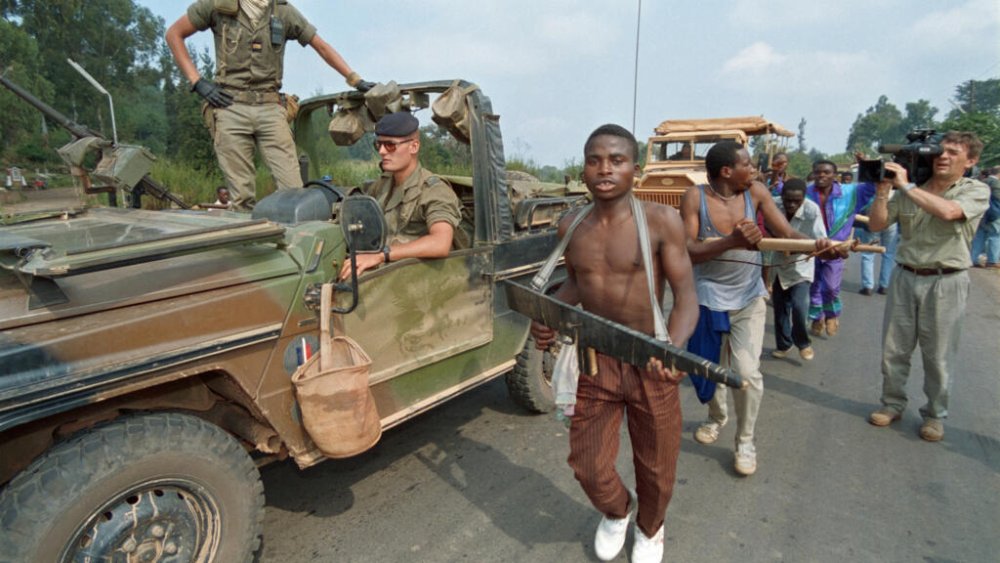
In a ruling on September 9, 2026, the country’s highest court rejected an appeal seeking to reopen an investigation into the possible complicity of French soldiers in the massacres of Tutsi at Bisesero in western Rwanda.
The case was brought in 2005 by six Genocide survivors and human rights organisations including Survie, Ibuka, the International Federation for Human Rights (FIDH), the French League of Human Rights (LDH) and Licra.
The complainants accused French soldiers serving under Opération Turquoise of knowingly failing to protect Tutsi civilians who had sought refuge in the Bisesero hills, where hundreds were killed between June 27 and 30, 1994.
They argued that the soldiers were aware of the killings but did not intervene despite having the capacity to do so.
The investigation was halted in 2018, and the decision was subsequently upheld by investigating judges in October 2023 and by the Paris Court of Appeal in December 2024. The civil parties then appealed to the Court of Cassation.
The court has now confirmed the dismissal, bringing the long-running legal case to an end.
Eric Plouvier, a lawyer representing Survie, had argued that the French court decisions denied justice to those killed in Bisesero and the survivors, and called for the investigation to continue to establish the role of the French soldiers.
However, the Court of Cassation found that the French soldiers could not be expected to act without precise orders from their chain of command, particularly the Ministry of Defence.
The judges also found no evidence showing that the officers intended to facilitate crimes against Tutsi civilians.
According to the court ruling, the three-day delay before the rescue operation reflected the time needed to clarify a situation that remained confused, while the soldiers had limited information about what was happening and the nature of the Genocide against the Tutsi.
The court also noted that the force led by Lieutenant-Colonel Jean-Rémi Duval was too small to conduct a secure intervention at the time.
Regarding General Jean-Claude Lafourcade, who commanded Opération Turquoise, the judges found that he had sought additional information before deciding on possible action and that doubt remained over his knowledge of what was taking place.
France’s top court has upheld dismissal of case against soldiers accused of failing to protect Tutsi in Bisesero.
Figures released on Thursday, September 2026, indicate that food and non-alcoholic beverages recorded a 16.3% annual increase in August and rose by 3.7% compared with July.
Housing, water, electricity, gas and other fuels increased by 20.4% year on year, while prices in the category rose by 0.2% on a monthly basis.
Transport prices increased by 24.2% annually and by 0.2% compared with the previous month.
Prices in restaurants and hotels rose by 15.6% year on year and increased by 2% on a monthly basis.
The data show that prices of local products increased by 17.4% year on year and by 2.1% month on month. Prices of imported products increased by 10.8% annually and by 0.7% monthly.
Fresh product prices increased by 20.9% year on year and by 5.8% compared with July.
Energy prices recorded the largest annual increase, rising by 45.4%, while increasing by 0.2% on a monthly basis.
Meanwhile, the general CPI excluding fresh products and energy increased by 11.5% year on year and by 0.7% month on month.
Transport prices rose by 24.2% year on year in August 2026, contributing to Rwanda’s overall inflation rate of 15.7%.