Many cancer treatments work by damaging the DNA of cancer cells. However, some tumors survive because they have powerful DNA repair systems that allow them to fix the damage and continue growing. This ability often makes cancers resistant to drugs over time.
A team of researchers has now found a way to disrupt those repair systems. Their study focused on a small molecule called UNI418, which reduces the levels of key proteins that cancer cells need to repair damaged DNA.
Without these proteins, cancer cells struggle to recover from DNA damage, making them more vulnerable to treatment.
The researchers found that UNI418 activates a natural process inside cells that removes specific proteins. As a result, important DNA repair proteins are broken down, effectively shutting down one of the cancer cell’s main defense mechanisms.
The discovery could be particularly important for improving the effectiveness of PARP inhibitors, a group of cancer drugs used to treat certain tumors. While these drugs can be highly effective, many cancers eventually become resistant to them.
In laboratory tests, UNI418 made cancer cells far more sensitive to PARP inhibitors. The effect was especially noticeable in cancer cells that had already stopped responding to treatment. In those cases, the molecule helped restore the drugs’ effectiveness.
The approach also showed encouraging results in animal studies, where tumor growth slowed significantly when UNI418 was combined with the PARP inhibitor Olaparib.
Researchers say the findings reveal a new way of fighting cancer—not by altering genes, but by dismantling the repair systems that help tumors survive treatment. While more research is needed before the approach can be tested in patients, the study offers fresh hope for developing treatments against drug-resistant cancers.
DNA repair proteins inside cells are constantly being produced and removed to maintain a healthy balance.
The new brand was officially launched in Rabat, Morocco, during the bank’s 45th Annual Meetings, marking a major milestone in the institution’s evolution and long-term strategic repositioning within Africa’s development finance landscape.
Speaking at the unveiling, Thierno-Habib Hann, Managing Director and Chief Executive Officer of Shelter Afrique Development Bank, said the rebranding represents far more than a cosmetic change.
“Rebranding means more than a name change. It is not only changing the institution’s framework of operations. The transition is expanding the role of the institution into a development bank, making it more nimble and impactful across the housing value chain while creating jobs,” he said.
The bank has in recent years pursued a deliberate strategy to expand its financing capacity in response to rising demand for affordable housing and urban infrastructure across the continent. With a membership of 44 African states and institutional shareholders including the African Development Bank and the African Reinsurance Corporation, Shelter Afrique says it is increasingly aligning its operations with Africa’s broader development priorities.
Board Chairman Lionel Zinsou said the institution’s success will be measured by its tangible impact rather than policy declarations or strategic plans.
“Our success will not ultimately be measured by strategies adopted, policies approved or meetings held. It will be measured by homes financed, cities improved, jobs created and lives transformed. The reform phase of the institution must now become the delivery phase,” he said.
The transition to a Multilateral Development Bank is expected to place Shelter Afrique in the same category as other pan-African lenders, strengthening its ability to mobilise capital for large-scale housing and urban development projects.
The institution is now targeting Africa’s estimated 53 million housing deficit, which requires approximately $1.3 trillion in investment to address, according to the bank.
Hann said the next phase of the bank’s strategy will focus on scaling impact across the housing ecosystem.
“Our vision for the next five years and beyond is to lead the transformation of the African housing sector to address urban infrastructure challenges and create jobs,” he said.
The rebranding also comes amid increased collaboration among African multilateral development banks aimed at unlocking greater pools of capital for infrastructure and housing.
This year’s Annual General Meeting was held under the theme: “The Future of Cities: Financing Inclusive, Green, and Resilient Urban Development,” reflecting the growing urgency around sustainable urbanisation across Africa.
Established in 1981 in Lusaka, Zambia and headquartered in Nairobi, Kenya, Shelter Afrique Development Bank is a Pan-African MDB dedicated to financing sustainable housing, urban development, and related infrastructure. It is owned by 44 African governments alongside institutional shareholders including the African Development Bank and Africa-Re.
The institution, of which Rwanda is a member, operates through four business lines: the Financial Institutions Group (FIG), the Project Finance Group (PFG), the Sovereign and Public-Private Partnerships (PPP) Group, and the Fund Management Group (FMG).
Speaking at the unveiling, Thierno-Habib Hann, Managing Director and Chief Executive Officer of Shelter Afrique Development Bank, said the rebranding represents far more than a cosmetic change.The new brand was officially launched in Rabat, Morocco, during the bank’s 45th Annual Meetings, marking a major milestone in the institution’s evolution and long-term strategic repositioning within Africa’s development finance landscape.The rebranding also comes amid increased collaboration among African multilateral development banks aimed at unlocking greater pools of capital for infrastructure and housing.
The Urban Consumer Price Index (CPI), which serves as the headline measure for monetary policy purposes, increased by 12.9 percent compared to May 2025 and by 0.5 percent compared to April 2026. The annual average inflation rate between May 2025 and May 2026 stood at 8.7 percent.
The report also showed that overall inflation across Rwanda reached 12.3 percent on an annual basis, while rural inflation stood at 11.8 percent.
The latest figures indicate that inflationary pressures remain elevated after a sharp acceleration in recent months. Urban inflation rose from 8.9 percent in January to 9.2 percent in February and March before surging to 13.0 percent in April and remaining high at 12.9 percent in May.
Transport, housing and health costs were among the biggest drivers of the increase in consumer prices.
Urban transport prices rose by 24.5 percent compared to May last year and increased by 1.1 percent on a monthly basis. Housing, water, electricity, gas and other fuels increased by 19.4 percent annually, although the category declined by 0.9 percent compared to April.
Health services recorded the steepest increase among major expenditure categories, rising by 71.6 percent over the past 12 months. Restaurants and hotels also registered a significant increase of 16.6 percent, while prices for alcoholic beverages, tobacco and narcotics rose by 16.1 percent.
Food and non-alcoholic beverages, which account for 27 percent of the urban consumer basket, increased by 6.2 percent annually and 0.9 percent monthly. Within the category, vegetable prices rose by 9.0 percent, meat prices increased by 12.9 percent and non-alcoholic beverages climbed by 11.0 percent compared to May 2025.
The report shows that transport and housing costs made the largest contributions to annual urban inflation, adding 3.2 and 3.1 percentage points respectively to the overall 12.9 percent inflation rate. Food and non-alcoholic beverages contributed a further 2.3 percentage points.
NISR also reported strong inflationary pressures in energy-related products. The urban energy index increased by 44.4 percent compared to May 2025, making it one of the fastest-rising components of household expenditure. However, the energy index declined by 0.5 percent compared to April 2026.
Meanwhile, the local goods index increased by 13.7 percent on an annual basis,
outpacing the imported goods index, which rose by 10.5 percent.
Underlying inflation, which excludes fresh food and energy prices and is considered a key indicator of broader price trends in the economy, rose by 12.0 percent year-on-year and 0.7 percent on a monthly basis. The annual average underlying inflation rate reached 9.2 percent.
The CPI is compiled using a basket of approximately 1,622 goods and services monitored across urban and rural areas of Rwanda. Each month, NISR collects more than 40,000 prices from markets, shops, schools, hospitals and other outlets to track changes in the cost of living.
Rwanda’s inflation rose to 12.9 percent in May 2026, driven by sharp increases in transport, housing, energy and health-related costs, according to the latest Consumer Price Index (CPI) report released by the National Institute of Statistics of Rwanda (NISR).
As Mushikiwabo explained to the media in February 2026, her decision to seek re-election followed consultations with the Rwandan government.
In November 2025, she had received requests from several member states encouraging her to run again, citing the achievements recorded during her two terms in office.
Although observers believe the election, scheduled for November 2026 in Phnom Penh, may favor Mushikiwabo due to the support she has received from many member states, she has emphasized that the race will be competitive. She noted that all candidates possess the qualifications required for the role, but none has given her reason to doubt her own prospects.
Winning the position of OIF Secretary-General requires broad support from member states, a factor often influenced by a candidate’s accomplishments both at home and on the international stage, as well as within the organization itself.
When Mushikiwabo assumed office in January 2019, she pledged to strengthen the OIF’s role in global affairs, positioning it as a platform for dialogue among nations and a promoter of human values.
She stressed that solidarity and cooperation remain the organization’s most important principles.
At the time, the OIF comprised 88 states and governments, including 54 full members and 34 associate or observer members.
French speakers worldwide numbered around 300 million, more than half of whom lived in Africa.
Mushikiwabo inherited an organization facing significant financial challenges and internal tensions linked to concerns over financial management during the tenure of former Secretary-General Michaëlle Jean.
The former Canadian leader had faced criticism over spending that reportedly included $500,000 on renovations to her official residence in Paris and $20,000 on a piano.
One of Mushikiwabo’s first priorities was to reform the institution internally and restore cohesion within the organization.
However, the COVID-19 pandemic, which disrupted the global economy and international cooperation, affected many of the OIF’s planned initiatives.
Countries became increasingly focused on addressing domestic challenges as travel restrictions and the suspension of international meetings hampered collaboration.
Like many international organizations, the OIF also struggled with delayed or insufficient contributions from member states.
While operational needs continued to grow, particularly in areas such as youth empowerment, women’s development, and education, available resources often failed to keep pace.
During her second term, member states agreed to increase their contributions to strengthen the organization’s capacity to fulfill its mandate.
Outstanding arrears were reduced, while countries including Rwanda, Egypt, Vietnam, and Djibouti decided to double their annual contributions.
The increase in member contributions paved the way for a larger organizational budget.
During a ministerial meeting held in Yaoundé, Cameroon, in November 2023, ministers approved a gradual increase in the OIF budget, allocating €45.7 million for 2024, €46.1 million for 2025, €46.5 million for 2026, and €46.9 million thereafter.
At the OIF Ministerial Conference held in Kigali in November 2025, member states approved a substantial increase in the 2026 budget to €71.7 million to support expanded programming across the organization.
Despite the increase, Mushikiwabo noted that available resources still fall short of meeting all the organization’s ambitions.
As a result, member states granted her exceptional authority during the Kigali meeting to seek external funding from major international partners and corporations, including companies such as TotalEnergies.
Leveraging this mandate, the OIF has planned partnerships with institutions such as the African Development Bank to support digital skills training initiatives, including the D-Clic programme. The objective is to increase the number of young people benefiting from digital training from 20,000 to 100,000 by 2026.
According to the OIF’s annual report, 1.7 million people benefited from the organization’s programmes in 2025. Around 90,000 women across member states received capacity-building support, while 300 women-led projects were funded. In 2024 alone, 50 projects received support worth €3.7 million.
The number of states and governments within the OIF reached 90 in 2025. Meanwhile, the French-speaking population continues to expand, reinforcing the organization’s global influence. Today, more than 396 million people speak French worldwide, while over 170 million are learning the language.
As Mushikiwabo prepares to seek another mandate, supporters point to the transformation of an organization once facing financial strain and internal divisions into one with stronger finances, broader membership, and expanding development programmes across the Francophone world.
The OIF has undergone significant reforms under the leadership of Louise Mushikiwabo.
Hundreds of supporters, government officials and members of Somalia’s football community gathered from early morning at Aden Adde International Airport, waving Somali flags and chanting as they waited for Artan’s arrival.
When he finally landed at about 8:30 a.m. local time, the crowd surged forward, draping him in the national flag and escorting him through the airport amid cheers.
Artan had been set to become the first referee from Somalia to officiate at a World Cup after earning a place on FIFA’s final list for the tournament. Widely regarded as one of Africa’s top referees, he was named the continent’s best male referee in 2025, marking a rapid rise in his international career.
His journey to the United States was cut short on Saturday when he was denied entry at Miami International Airport over what U.S. Customs and Border Protection described as “vetting concerns,” without providing further details.
FIFA subsequently removed him from its list of referees for the tournament. The decision came despite Artan having been issued a visa last week, according to the Somalia Embassy in Kenya, which processed the travel documents. He had been expected to join other selected referees at a training base in Miami ahead of the tournament, which is being co-hosted by the United States, Mexico and Canada.
Back home, his arrival transformed into a public show of support and national pride. After being escorted by police to the VIP terminal, Artan was welcomed by Somalia’s Minister of Youth and Sports, officials from the Somalia Football Federation and other dignitaries before addressing the media.
“It is up to all of us to defend the Somali name,” he said. “Somalia belongs to us, whether it is in a bad state or a good state. That flag belongs to us, and that passport belongs to us.”
He also struck an optimistic tone despite the setback, telling supporters: “I promise you, God willing, that I will attend the next one. I want the Somali public to take comfort in this and remain confident.”
The incident has drawn international attention, with questions raised about the circumstances surrounding his denial of entry. Somalia is among nearly 40 countries affected by recent travel restrictions under the Trump administration’s immigration policy overhaul.
The controversy also sparked wider reactions in the football world. World Health Organization Director-General Tedros Adhanom Ghebreyesus praised Artan’s achievement, saying his World Cup selection “stands no matter what” and that being kept off the pitch did not erase the milestone he had already reached.
Omar Artan is draped in a Somali flag upon his arrival in the capital, Mogadishu.Hundreds of supporters, government officials and members of Somalia’s football community gathered from early morning at Aden Adde International Airport, waving Somali flags and chanting as they waited for Artan’s arrival.
The initiative, titled “Soil & Water: Kigali Crossings,” is being launched by the NIROX Foundation, an independent non-profit organisation dedicated to environmental and contemporary art, in partnership with QA Venue Solutions Rwanda, the company that manages the park alongside BK Arena and Amahoro Stadium.
Scheduled to run from August 2026 to March 2027, the long-term programme will merge art, ecology, and public engagement within the park’s boundaries.
The event will feature public exhibitions, artist residency programmes, performances, concerts, and research-driven creative installations. Participating creators will develop works responding directly to environmental challenges, utilizing both technology and sustainable materials.
According to Benji Liebmann, founder and director of the NIROX Foundation, the project builds on more than two decades of using art to connect people with nature and conservation. He believes that art speaks to people differently, emotionally and intuitively, creating a deeper connection with the earth that inspires humanity to fall in love with nature again so they can protect it.
This marks the first time the programme will be hosted in Rwanda. Having previously been held in Europe and South Africa, Rwanda becomes only the second African country to host the initiative.
Liebmann noted that discussions to bring the project to Kigali emerged through a connection with Nyandungu Eco-Park Manager Ildephonse Kambogo, who visited the NIROX Sculpture Park in South Africa, a landscape famous for integrating open-air sculptures made of natural and recycled materials into the environment.
Liebmann recalled visiting about four years ago to assess its feasibility and realizing that the concept was more than feasible, describing it as both necessary and desirable.
“It has taken this long to reach the first stage, which is a pilot exhibition project,” he said, adding, “Art speaks to people differently, emotionally and intuitively, and we believe that creates a deeper connection with the earth. Humanity needs to fall in love with nature again.”
The programme is expected to feature some of Africa’s leading contemporary artists, including Ibrahim Mahama and Serge Attukwei Clottey from Ghana, alongside Willem Boshoff from South Africa. They will be joined by additional participants from France, Spain, and Austria, while local Rwandan artists, including creators from the Inema Arts Center, will also take part in the initiative.
Nyandungu Eco-Park Manager Ildephonse Kambogo welcomed the partnership, stating that it will expand the park’s role by integrating cultural and artistic engagement into its core conservation mission.
He explained that the wetland’s primary role is to filter polluted water and improve its quality, and through art, they hope to find creative ways of showcasing this water purification process.
This will make the process easier for people to understand while supporting the wetland’s conservation mission.
Kambogo added that the residency will allow local Rwandan artists to collaborate with international practitioners, helping to further scale local creative talent.
“Visitors usually come to enjoy the natural beauty, but there has been something missing, art that connects them to the park, culture, and creativity. These artists will create works displayed across the park so that every visitor can enjoy them,” he said.
Nyandungu Eco-Park officially opened in 2022 following a massive ecological restoration of the local wetland. Since its opening, visitor attendance has experienced sharp exponential growth, rising from 48,813 in its inaugural year to 67,222 in 2023. This steady upward trajectory solidified in 2024 when the park recorded 76,754 visitors.
By late 2025, attendance experienced its strongest growth spike yet, surging past 100,000 visitors to register a growth rate of over 30% compared to the previous year. The incoming art installations will be distributed throughout the park’s 121 hectares, establishing a permanent creative layer for future visitors to experience.
Nyandungu Eco-Park officially opened in 2022 following a massive ecological restoration of the local wetland. Organisers of the upcoming event at Nyandungu Eco-Park.Nyandungu Eco-Park Manager Ildephonse Kambogo welcomed the partnership, stating that it will expand the park’s role by integrating cultural and artistic engagement into its core conservation mission.Benji Liebmann (left), founder and director of the NIROX Foundation visiting Nyandungu.
He made the remarks on June 9, 2026, while appearing before members of the Parliamentary Committee on Education, Technology, Culture, Sports and Youth to discuss the implementation of Law No. 010/2021 governing the education structure.
Dr. Kadozi explained that the law has enabled higher learning institutions to introduce new academic programmes, contributing to improved education quality and attracting more international students to Rwanda.
“The introduction of programmes has created many opportunities for a wide range of new programmes to be launched. This law gave us that opportunity, and as we speak, we have about 13,000 international students, a number that continues to increase,” he said.
As of the 2024/25 academic year, Rwanda had 39 higher learning institutions and universities, up from 37 in the previous year.
Rwanda now hosts 13,000 international students as higehr education expands.
According to a statement released by the Commission, the proposed measures include suspending the automatic adjustment mechanism of the oil price cap until next January, which would allow oil markets to stabilise while maintaining pressure on Russian revenues.
Thirty additional vessels would be added to the sanctions list, on top of the 632 already designated. For the first time, sanctions would also target vessels providing support services to the “shadow fleet,” including bunkering operations.
In addition, the proposal includes restrictions on ports, airports and refineries involved in trading or processing Russian oil. The sale of liquefied natural gas (LNG) tankers to Russia would also be restricted.
On financial and crypto-related measures, the Commission would expand transaction bans to 31 additional Russian banks, as well as to 20 banks, crypto firms, platforms and oil traders in third countries.
On trade, the proposed package introduces new export restrictions on goods and technologies used by Russia’s military-industrial sector, as well as drone-related equipment.
The Commission also proposed import bans on goods worth around 60 million euros (69.4 million U.S. dollars), including certain metals and automotive parts, as part of efforts to reduce dependence on Russian imports.
For the first time, the EU would also target Russia’s fisheries sector, proposing substantial restrictions on imports of certain fish products and a complete ban on others, including cod.
Von der Leyen also announced a new measure under the package to ban entry into the EU of individuals who have served in the Russian armed forces since the start of the Ukraine conflict.
The proposal still requires approval by all EU member states before it can enter into force.
European Commission President Ursula von der Leyen talks to the press on the 21st sanctions package against Russia in Brussels, Belgium, June 9, 2026. The European Commission has proposed the 21st package of sanctions against Russia, targeting key sectors including energy, financial services and crypto, trade and, for the first time, fisheries, European Commission President Ursula von der Leyen said Tuesday.
The delegation was led by Rogelio Romero, Chapter Representative of YPO Gold Panama and Chief Executive Officer of Concretex Panama.
According to the Office of the President, the meeting explored Rwanda’s development journey, the country’s growing entrepreneurship ecosystem, and prospects for strengthening business and economic partnerships between Rwanda and Panama.
YPO is a global leadership community that connects more than 38,000 business leaders across over 130 countries. Its members include chief executives, entrepreneurs, and senior executives who lead companies and organizations across a wide range of sectors.
The Panama Chapter brings together senior executives from some of the country’s leading firms and investment groups, creating a platform for business networking and investment opportunities.
The visit reflects growing international interest in Rwanda as a destination for investment and innovation, driven by the country’s business-friendly environment, economic reforms, and expanding private sector.
The discussions also highlighted the potential for increased cooperation between Rwandan and Panamanian businesses, particularly in areas that support entrepreneurship, trade, and investment.
Rwanda has continued to position itself as a hub for business and innovation in Africa, attracting investors and business leaders from around the world seeking new opportunities and partnerships.
In 2025, Rwanda recorded a significant increase in investor commitments, underscoring the country’s growing appeal as a destination for business and investment. According to official figures, total registered capital reached $2.62 billion (approximately Rwf 3.8 trillion) across 799 pipeline projects, a substantial increase from the 612 projects registered the previous year.
Once fully implemented, these projects are expected to create more than 38,000 jobs, further supporting Rwanda’s economic growth and employment objectives. The real estate, manufacturing, and mining sectors attracted the largest share of the registered capital, highlighting the diversity of opportunities available to investors.
President Paul Kagame on Tuesday received a delegation of 19 members of the Young Presidents’ Organization (YPO) and their spouses at Urugwiro Village.According to the Office of the President, discussions focused on Rwanda’s economic transformation, entrepreneurship, and opportunities for business collaboration with Panama.The delegation was led by Rogelio Romero, Chapter Representative of YPO Gold Panama and Chief Executive Officer of Concretex Panama.The meeting explored Rwanda’s development journey, the country’s growing entrepreneurship ecosystem, and prospects for strengthening business and economic partnerships between Rwanda and Panama.
Through these engagements, the bank convenes clients operating in a particular sector alongside industry experts to assess prevailing challenges and identify opportunities for collaboration that can drive growth.
According to BPR Bank Rwanda PLC’s Chief Finance Officer, Vincent Ngirikiringo, the initiative was conceived as a platform for dialogue between the bank and stakeholders across different sectors of the economy.
“We designed these discussions as a forum for exchanging ideas with our partners in various sectors of the economy. It is an ongoing initiative that will also cover industries such as construction, agriculture and others,” he said.
The first edition brought together players from the energy, transport and manufacturing sectors, all of which depend heavily on petroleum products and have been significantly affected by recent global market disruptions.
The challenges stem largely from the conflict involving Iran, which disrupted global oil markets following the closure of the Strait of Hormuz, a critical shipping route through which more than 20 million barrels of oil pass each day, representing around 20% of global consumption.
As a result, petroleum prices surged, rising by about 45% since the Middle East conflict began in late February 2026.
A barrel of petroleum products that had been trading between $65 and $70 climbed to around $130 in April before easing slightly. By early June 2026, prices were fluctuating between $90 and $95 per barrel.
The Iran conflict also led to the loss of approximately 1.5 billion barrels of unprocessed petroleum products that never reached the market.
Globally, the sector is estimated to have incurred losses exceeding $50 billion as a consequence of the crisis.
Representatives from the public and private sectors discussed possible solutions to the challenges posed by rising petroleum product prices.
Rwanda among the affected countries
The impact was also felt in Rwanda. On August 5, the price of diesel increased by Rwf722 per litre, reaching Rwf2,927 from Rwf2,205, while petrol remained unchanged at Rwf2,938 per litre.
Earlier, on April 16, 2026, petrol prices rose by Rwf635 per litre, increasing from Rwf2,303 to Rwf2,938, while diesel remained at Rwf2,205.
The previous adjustment had been made on April 3, 2026, when petrol prices increased by Rwf314 to reach Rwf2,303 per litre, while diesel rose by Rwf257 to Rwf2,205.
The increases contributed to broader inflationary pressures. According to the National Institute of Statistics of Rwanda (NISR), consumer prices in April 2026 were 13% higher than April 2025. In March 2026, annual inflation stood at 9.2%.
The root cause, according to Eric Mutaganda, Chairperson of the Petroleum Traders Association of Rwanda and Managing Director of Merez, is the disruption caused by the Iran conflict.
“The Iran conflict had a significant impact on us, but together with the Government of Rwanda we managed to reduce its severity. The government provided subsidies to ensure Rwandans did not face the full burden that would otherwise have occurred. Although oil prices increased by 45%, the actual procurement costs multiplied five times,” he explained.
The figures illustrate the point. Before the conflict began in early February, a tonne of petroleum products cost around $300. Today, the same quantity costs approximately $1,650.
Mutaganda noted that addressing such shocks requires substantial strategic storage capacity that can shield the country during supply disruptions, with financial institutions playing a key role in supporting such investments.
Rwanda currently has storage facilities capable of holding about 110 million litres of petroleum products, enough to cover roughly one and a half months of demand. However, experts estimate that the country would need storage capacity of around 400 million litres to comfortably sustain supplies for four months during a global crisis.
Rwanda imports approximately 60 million litres of fuel every month. Of this, aviation fuel accounts for about 10 million litres, diesel 30 million litres and petrol 20 million litres.
Mutaganda said that while March and April were particularly challenging, the situation has since improved.
“We experienced difficulties in March and April, but things have started returning to normal. Some of our suppliers also faced disruptions. We have not yet reached the volumes we used to import, but supply conditions have improved and all fuel products are now available. We hope the Iran conflict comes to an end soon,” he said.
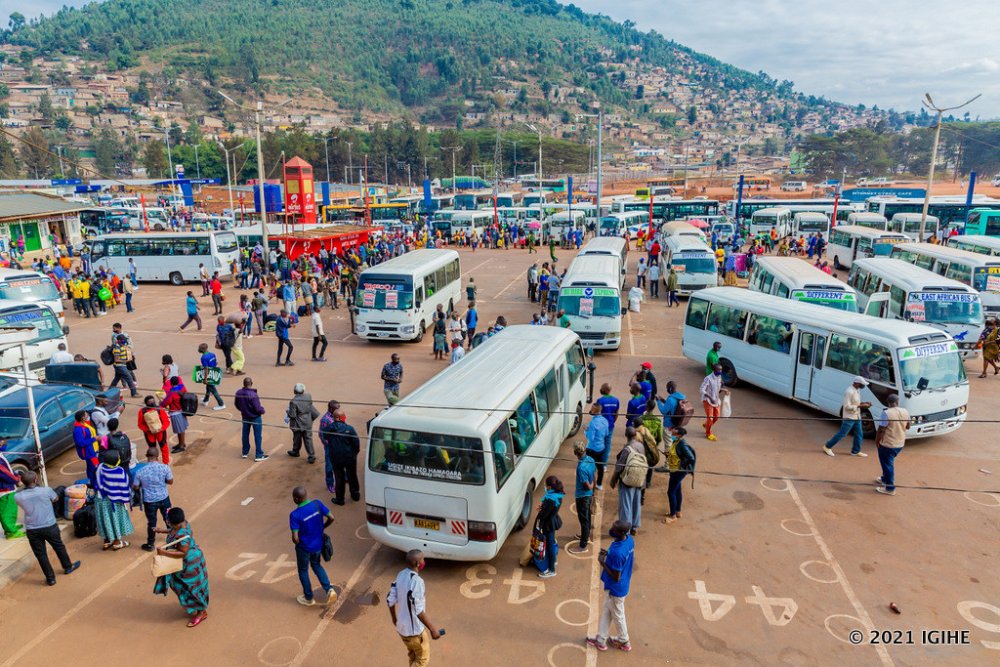
Most of Rwanda’s petroleum products are imported through Tanzania’s Port of Dar es Salaam, which handles between 90% and 95% of the country’s fuel imports. The remaining 5% to 10% comes through Kenya’s port system.
Fuel imports are handled by between 10 and 15 companies, including Merez, a Rwandan-owned company that has operated for 25 years. It employs more than 300 people and operates 19 fuel stations across the country.
“Our target is to end this year with 20 fuel stations. We employ Rwandans, and the company is 100% Rwandan-owned,” Mutaganda said.
He added that private sector operators are also working alongside the government to expand national storage capacity. Merez, for example, plans to construct a 20-million-litre fuel storage facility in Nyacyonga, Gasabo District.
“We are currently seeking the necessary approvals from the City of Kigali so construction can begin. Other companies are also planning similar projects to increase the country’s storage capacity,” he said.
In addition to Merez, Société Pétrolière (SP) is building liquefied petroleum gas storage facilities valued at more than Rwf60 billion. The facilities will have the capacity to store 9,000 tonnes of cooking gas, enough to supply the country for about two months.
Eric Mutaganda, Chairperson of the Rwanda Association of Petroleum Product Traders and Managing Director of Merez, said the sector imports about 60 million litres of petroleum products each month.
BPR Bank Rwanda steps in
BPR Bank Rwanda is among the country’s largest banks. In 2025, it recorded profits exceeding Rwf40.8 billion. The bank also extended loans worth Rwf666 billion in 2024, underscoring its contribution to Rwanda’s economic development.
It is against this backdrop that the bank decided to convene stakeholders in the petroleum sector to explore practical solutions, particularly given its capacity to provide financing that can help businesses weather the crisis.
Mutaganda said the role of banks has become even more critical as import costs have multiplied.
“If fuel costs increase fivefold, it means you need five times more capital than before to purchase the same quantity of products. That is where banks come in by increasing financing capacity. Banks have supported us, and when support continues during difficult periods, it helps businesses stay afloat until conditions improve,” he said.
Ngirikiringo reassured industry players that BPR remains committed to engaging with stakeholders because petroleum products are fundamental to economic activity.
“We cannot achieve sustainable development if these challenges are not properly addressed. Given the impact of the Iran conflict on global fuel prices, there are consequences for both livelihoods and the economy. We are discussing what can be done to ensure Rwanda remains economically resilient despite these challenges,” he said.
He explained that BPR is exploring ways to facilitate fuel imports by providing financing mechanisms that enable importers to secure supplies without having to make immediate full payments.
“We provide facilities that allow importers to bring petroleum products into the country and settle payments once the products arrive. Instead of sending money in advance and waiting for delivery, we can support them. Because we have established relationships with international banks and suppliers, our clients can access products without excessive pressure and with greater certainty,” he explained.
Ngirikiringo added that BPR also provides conventional loans that support infrastructure investments, including the construction of fuel storage facilities that can help expand national reserves.
BPR Bank Rwanda PLC’s Chief Finance Officer, Vincent Ngirikiringo, reassured petroleum traders facing capital constraints amid rising fuel costs.
Reassurance from the National Bank of Rwanda
The Chief Economist at the National Bank of Rwanda (BNR), Dr. Thierry M. Kalisa, said the Iran conflict had shaken global petroleum markets because of disruptions linked to the closure of the Strait of Hormuz.
“Rwanda imports petroleum products because we do not produce them locally. As a result, domestic prices increased. Transport is one of the largest components of household expenditure in Rwanda. About 12% of household income is spent on transportation. When transport costs rise, the prices of many other goods and services also increase,” he said.
To illustrate that the issue extends far beyond Rwanda, Dr. Kalisa noted that global inflation had initially been projected at 4.4% in 2026 and 3.7% in 2027, although those projections could be revised upward depending on global economic conditions. Meanwhile, global economic growth is forecast at 3.1% in 2026 and 3.2% in 2027.
“What is happening is not unique to Rwanda. It is a concern shared by countries around the world, though it affects them through different channels,” he said.
He explained that Rwanda has already put in place measures to help cushion the economy, including efforts to narrow the trade deficit through increased exports such as coffee, minerals and other products.
Dr. Kalisa noted that despite these efforts, Rwanda will continue importing essential commodities that cannot be produced locally, including petroleum products, which account for imports worth more than $650 million annually.
He highlighted the stability of the Rwandan franc against the US dollar as another factor helping fuel importers manage costs.
This was evident during the first quarter of the year, when the franc depreciated by only 0.5%.
“Compared to previous years, that is a very low level. This is extremely important for importers because exchange-rate movements have remained relatively stable. It allows them to continue importing goods without facing major increases in the value of their import bills,” he said.
If current economic performance is maintained, Rwanda’s economy is expected to grow by 6.8%, lower than the 9.4% growth recorded in 2025 but still reflecting continued expansion despite global headwinds.
Dr. Thierry M. Kalisa, Chief Economics at the National Bank of Rwanda, outlined measures being taken to mitigate the impact of rising prices.Speakers who shared insights on addressing rising fuel prices were recognized with awards following the discussions.BPR Bank Rwanda PLC brought together stakeholders from the energy sector to explore solutions to the challenges currently affecting the industry.