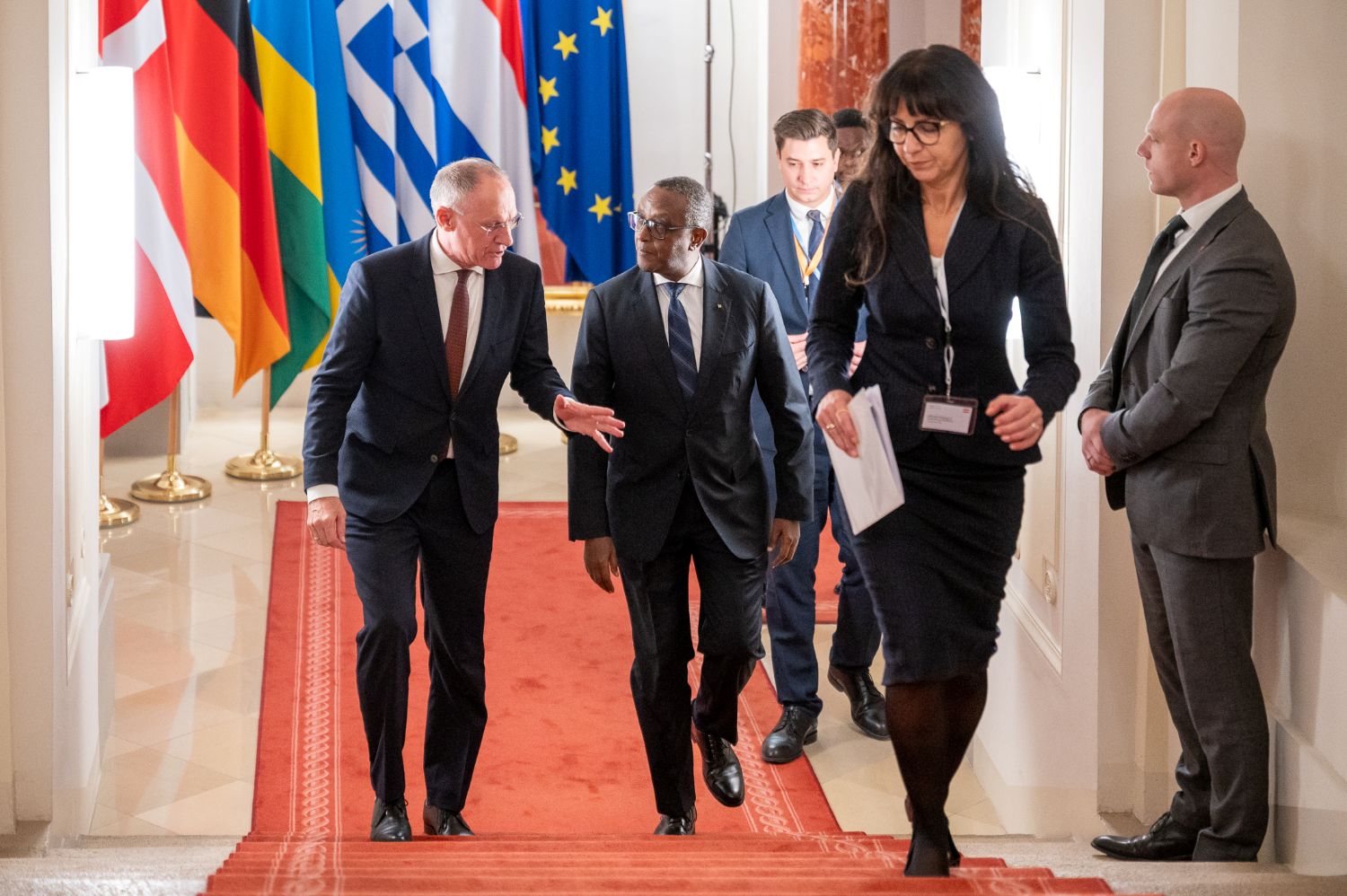
Minister of Interior Vincent Biruta said European partner countries would support programmes to help migrants transferred to Rwanda integrate into society, acquire skills and find employment, with the initiatives also benefiting Rwandans.
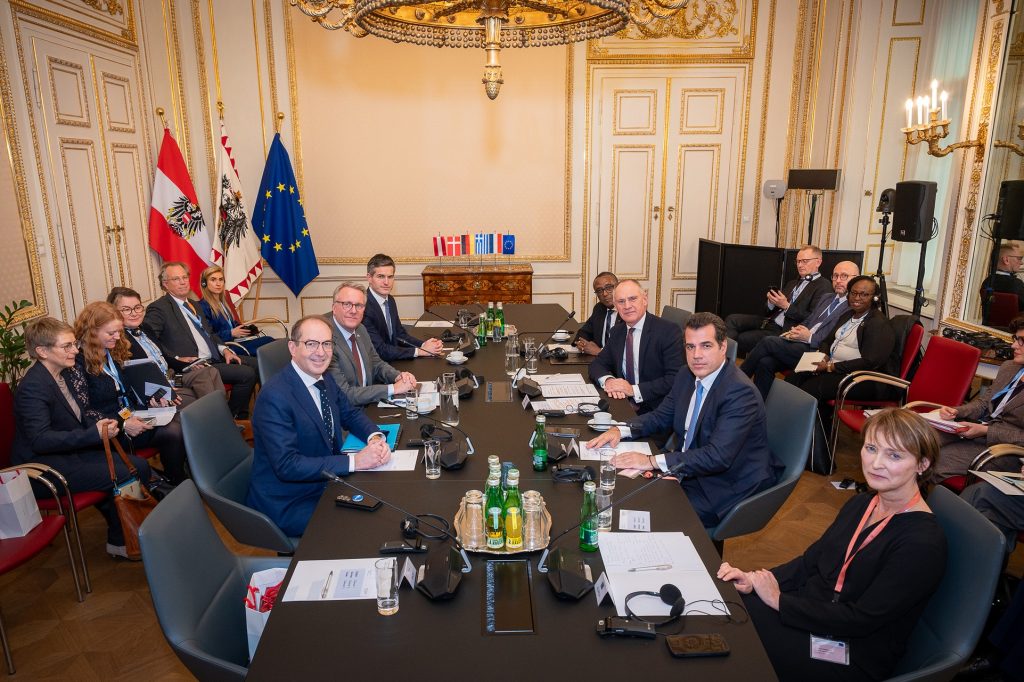
Biruta was speaking at a joint press conference with ministers from Austria, Denmark, Germany, Greece and the Netherlands in Vienna, Austria, on November 16, following discussions on establishing a migrant return hub in Rwanda.
Under the proposed arrangement, the five European countries would transfer people who are staying illegally in their territories and are subject to enforceable return decisions, but cannot be returned to their countries of origin.
Those transferred to Rwanda would have the option of voluntarily returning to their countries of origin, integrating into Rwandan society or relocating to another country where they have the legal right to settle.
Explaining what Rwanda expects to gain from the partnership, Biruta said the country was interested in addressing irregular migration while creating opportunities for development through the programmes established to support those received.
“Partner countries will meet the costs of the relocation of the migrants. They will be working with us to pay for their integration,” he said.
He added that Rwanda would work with the European partners on programmes to equip migrants with skills and create employment opportunities to enable them to become self-reliant.
“We will develop programmes to equip them with skills and ensure they have opportunities to work. We will also work on projects to create jobs for these people,” Biruta explained.
The minister emphasised that the initiatives would not be restricted to migrants, saying Rwandans would also benefit from the skills development and employment programmes.
“Those training centres will also benefit our own people,” he said, adding that the same approach would apply to employment creation.
He ruled out plans to accommodate transferred migrants in separate camps, saying they would instead be integrated into local communities.
“They will be integrated into our society. When we talk about creating jobs for them and equipping them with the skills they need to become part of our economy, it means they will not have separate schools or training centres,” he stressed.
Biruta also dismissed suggestions that Rwanda’s participation was primarily motivated by financial incentives.
“We are not looking at getting money or being paid for us to participate in this partnership. We are looking for a sustainable solution to a global challenge, which is illegal migration,” he said.
However, he clarified that European partner countries would be responsible for meeting the costs associated with relocating migrants and supporting their integration.
Rwanda draws on refugee reception experience
Biruta cited Rwanda’s experience hosting refugees and migrants through international partnerships as evidence of its capacity to implement the proposed arrangement.
He pointed to the Emergency Transit Mechanism, established in 2017 in partnership with the United Nations High Commissioner for Refugees (UNHCR) and the African Union, to receive asylum seekers stranded in Libya.
Rwanda has received more than 3,000 people through the programme, many of whom have subsequently been relocated to countries including Canada, the United States, Germany and Finland.
The minister said the experience had informed Rwanda’s willingness to participate in another initiative aimed at addressing migration challenges.
He also said Rwanda did not envisage receiving thousands of migrants under the proposed European arrangement, noting that some could choose to return voluntarily to their countries of origin.
European countries outline expectations
The European ministers described the proposed return hub as part of broader efforts to improve the implementation of return decisions for people who no longer have the legal right to remain in their countries.
Dutch Deputy Prime Minister and Minister of Asylum and Migration Bart van den Brink said the partnership was intended to offer migrants an opportunity to establish a new life while helping European countries address challenges in their asylum systems.
“Those transferred to Rwanda will have the opportunity to settle, integrate into Rwandan society and build a new future,” he said.
He added that the partners would continue working with Rwanda, the European Commission, the International Organization for Migration (IOM) and UNHCR to develop the arrangement.
Denmark’s Minister of Immigration and Integration, Morten Bødskov, said migrants transferred to Rwanda would receive support with housing and education.
He stressed that the proposed facility would not be a prison or detention centre, but an arrangement intended to give people another opportunity to build their lives.
The five European countries and Rwanda aim to conclude negotiations and begin the first transfers by 2027. However, the operational details, including the scale of transfers and the full financial arrangements, are yet to be finalised.
Leave a Reply