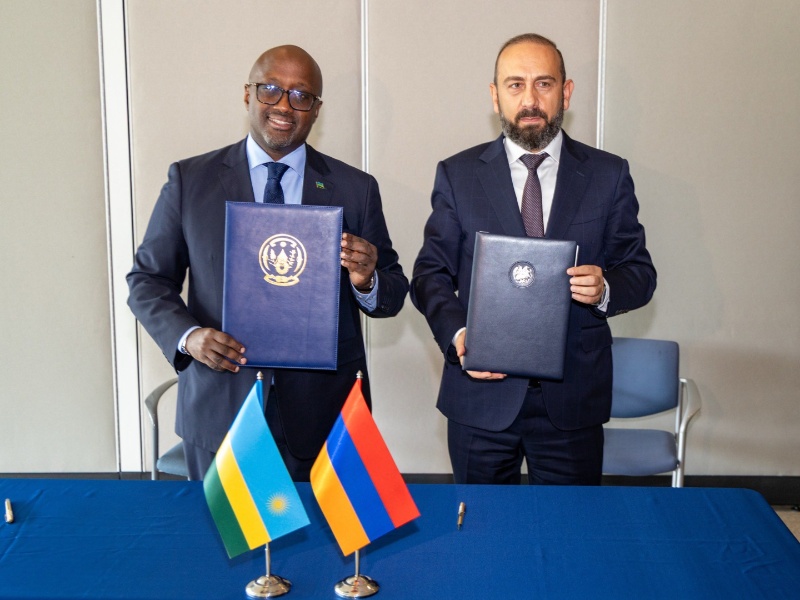
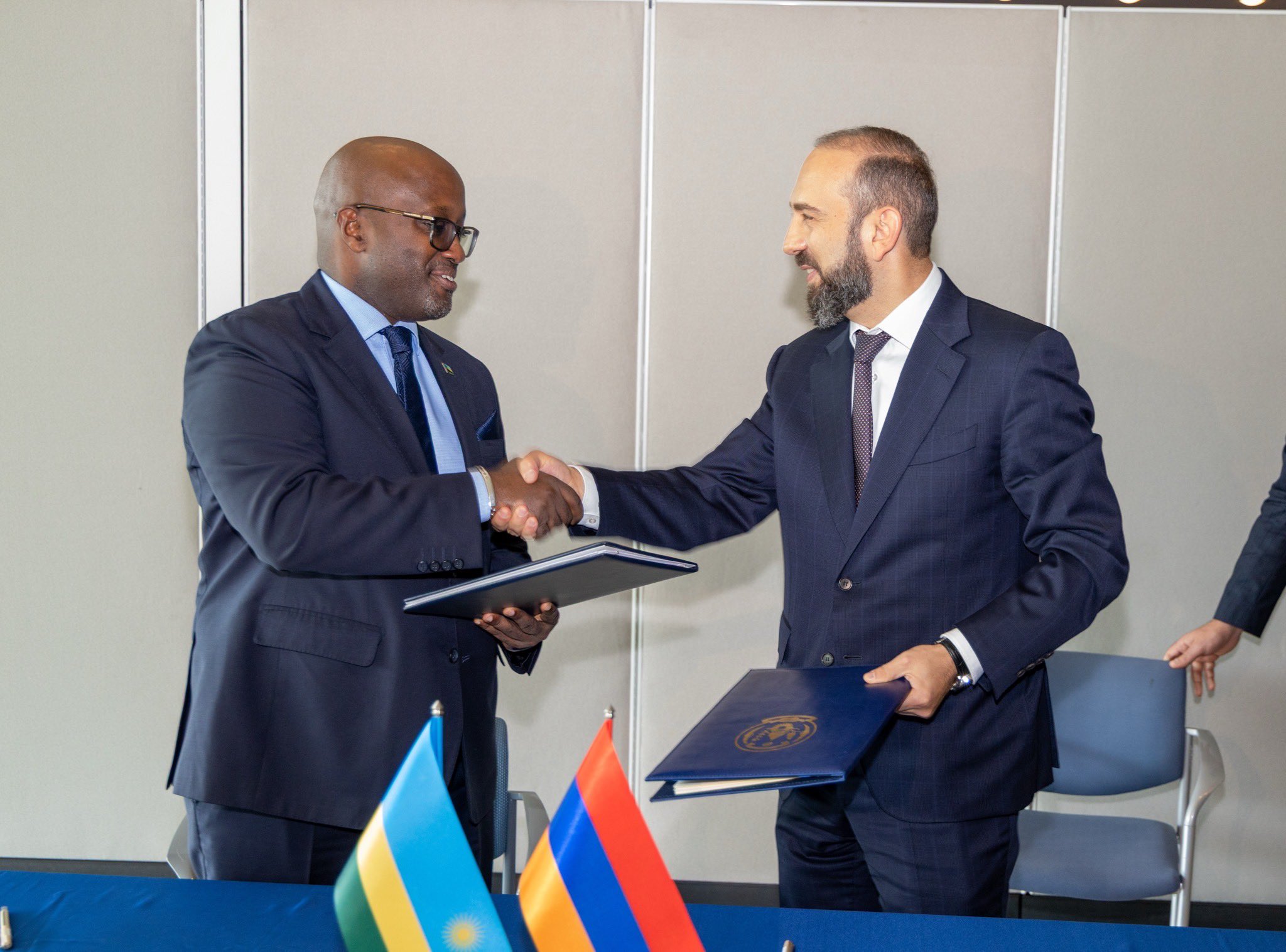
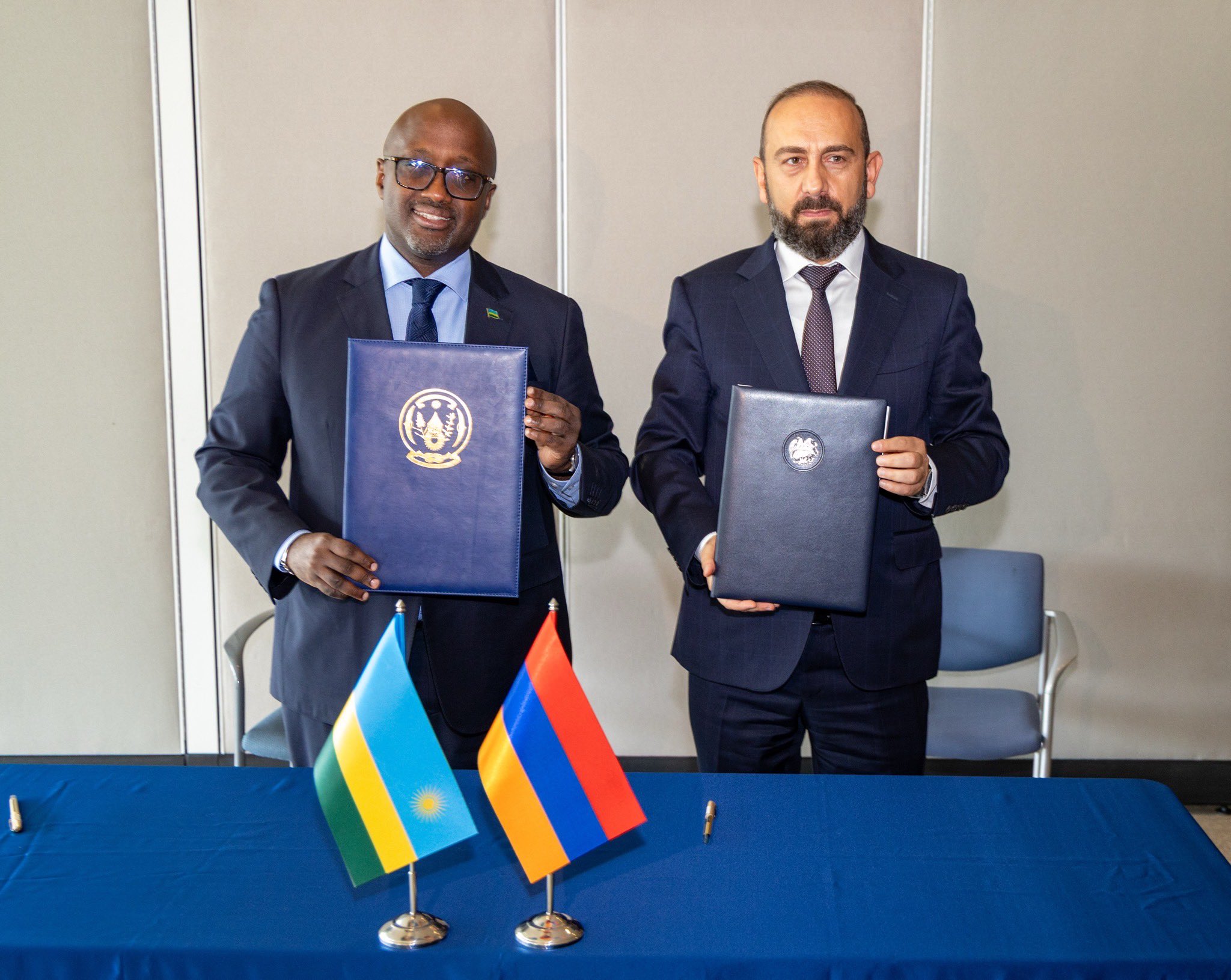
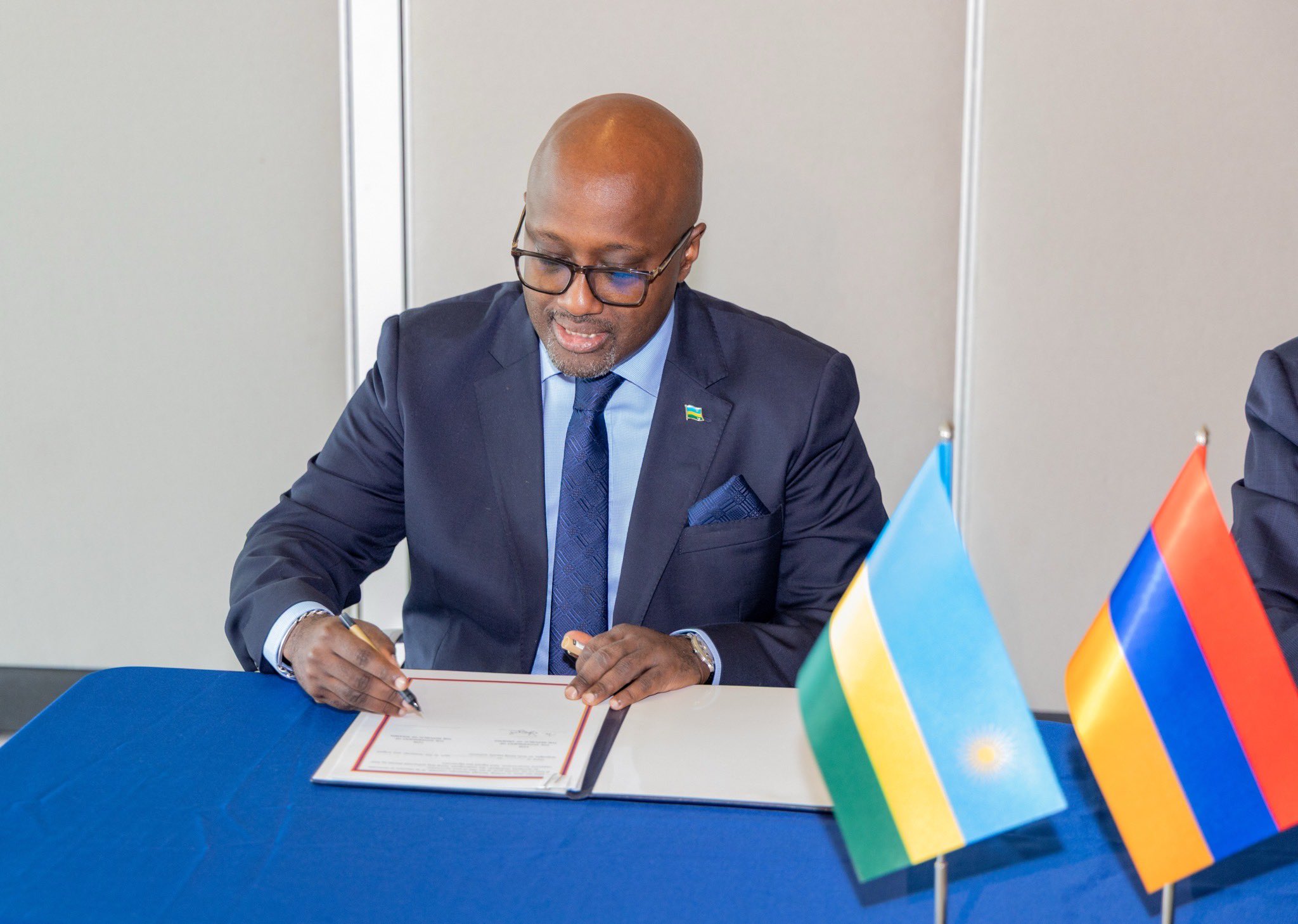
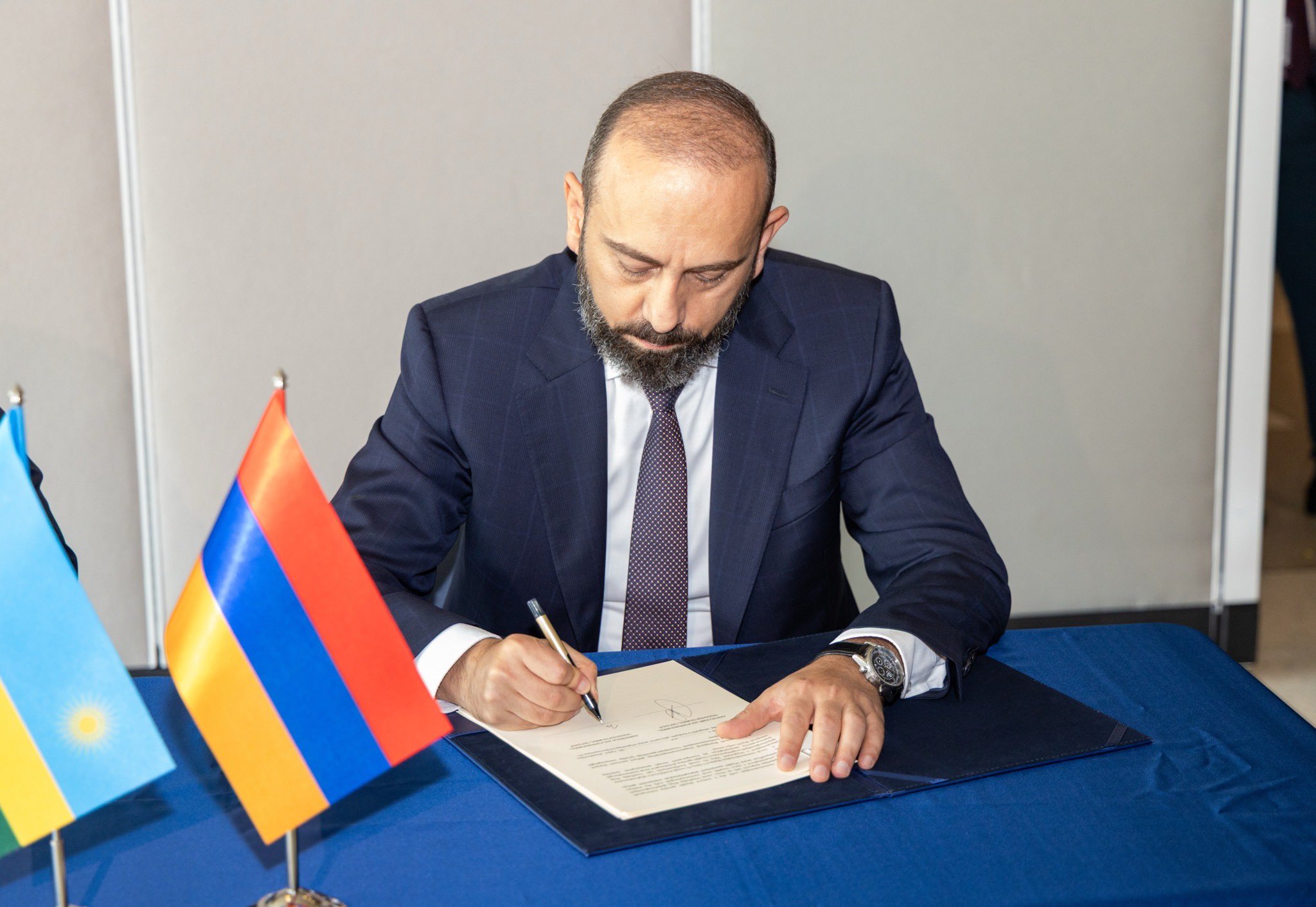
The agreement was signed in New York on the sidelines of the 81st session of the United Nations General Assembly (UNGA) by Rwanda’s Minister of Foreign Affairs and International Cooperation, Olivier Nduhungirehe, and his Armenian counterpart, Ararat Mirzoyan.
Following the signing ceremony, the two ministers held bilateral talks focusing on expanding diplomatic engagement, economic ties, and mutual cooperation across shared multilateral platforms.
Rwanda and Armenia share key structural and historical characteristics, including relatively compact geographic sizes, limited natural resource bases, and national histories shaped by severe atrocities, specifically the 1915 Armenian Genocide in the Ottoman Empire and the 1994 Genocide against the Tutsi in Rwanda.
Located in the South Caucasus region at the crossroads of Eastern Europe and Western Asia, Armenia spans 29,743 square kilometres. It shares borders with Türkiye, Georgia, Azerbaijan, and Iran. Although geographically situated in Western Asia, Armenia maintains deep political, cultural, and institutional ties with Europe.
Home to a population of approximately 3.1 million people, Armenia has a rich history extending to antiquity. Economically, it is classified as an upper-middle-income nation, with a gross domestic product (GDP) of approximately $31.8 billion.
Leave a Reply