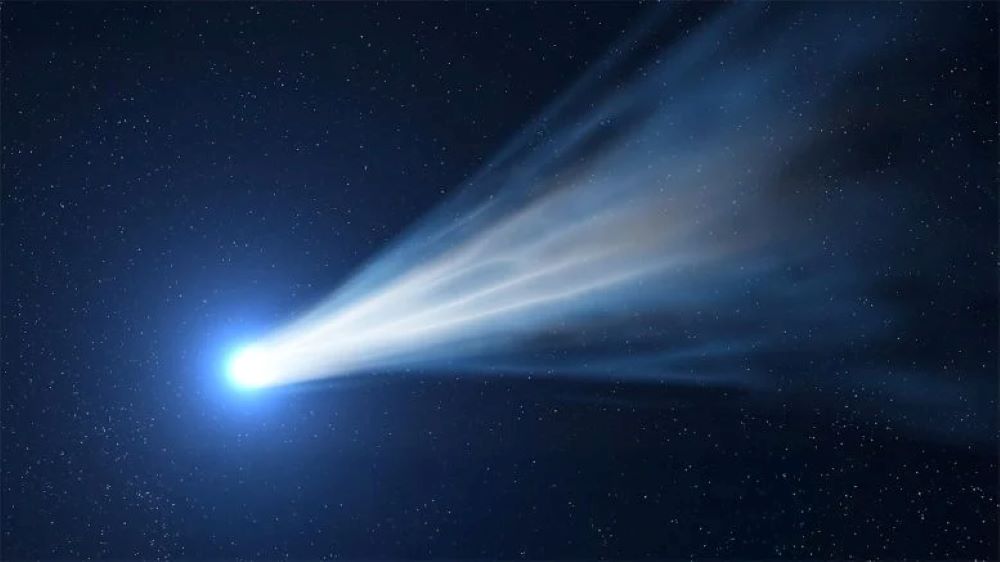
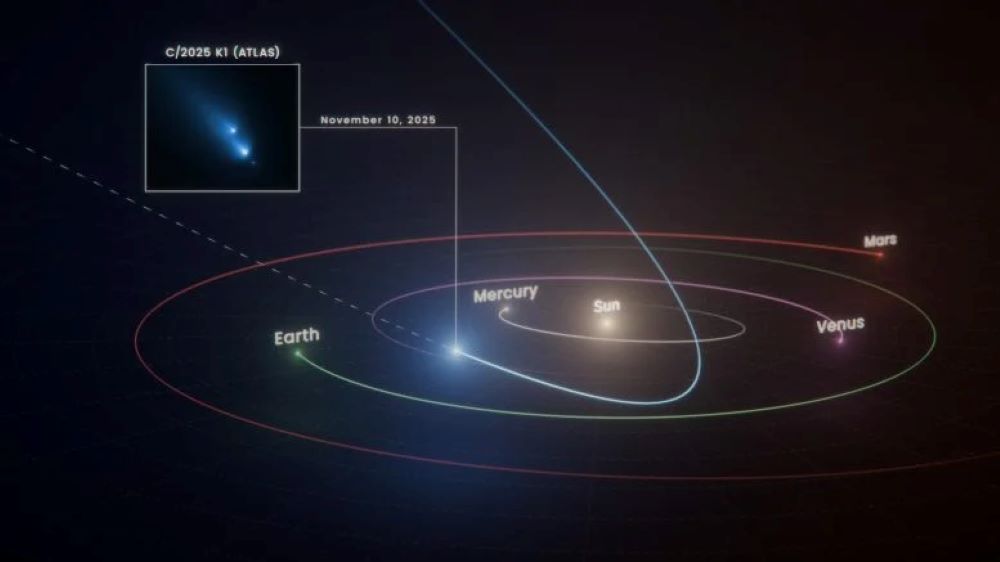
The comet, officially named C/2025 K1 (ATLAS), was not the original object researchers intended to observe. According to researchers from Auburn University, technical challenges forced them to switch to another target, only for the comet to suddenly split during observation.
A comet is a giant icy object made of frozen gases, dust and rock that travels through space. Scientists consider comets to be ancient remains from the birth of the solar system billions of years ago. When they move close to the Sun, heat causes their ice to melt, creating bright glowing tails visible from Earth.
Research professor John Noonan said the team only realized what had happened after reviewing Hubble’s images the next day. Instead of seeing one comet, they found four separate pieces.
The researchers explained that the comet likely broke apart after passing very close to the Sun, where extreme heat and pressure weaken such icy bodies. Before splitting, the comet was estimated to be about eight kilometers wide.
According to the scientists, the breakup may help reveal ancient material hidden inside the comet for billions of years, giving researchers a better understanding of how the solar system formed.
The study also revealed another mystery. Scientists expected the comet to brighten immediately after splitting, but the increase in brightness happened more slowly than expected.
The comet fragments are now drifting farther away from Earth and are unlikely to ever return to the solar system.
Leave a Reply