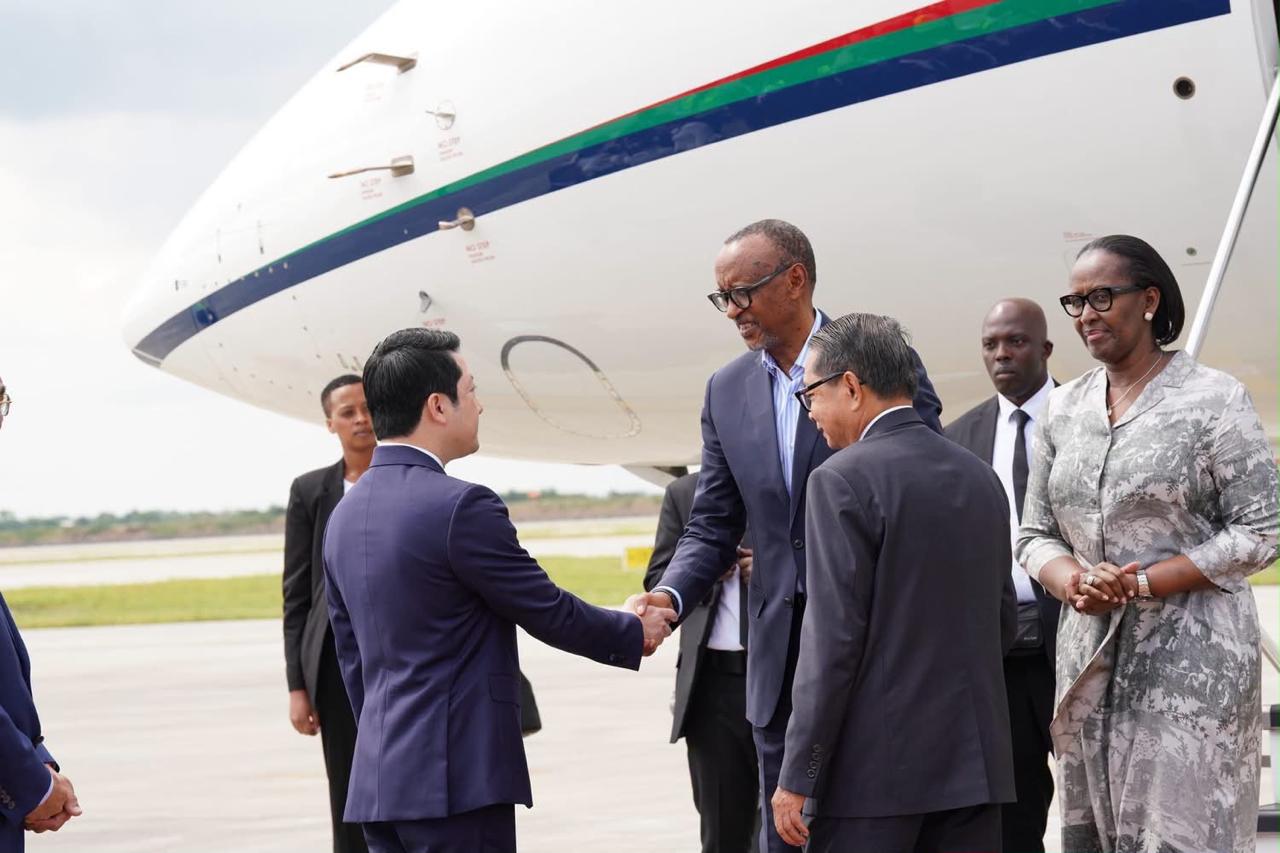
The summit, held under the theme “Reinvest in Peace for Shared Prosperity and Lasting Stability”, marks only the second time the Francophonie’s main gathering has been hosted in Asia, following the 1997 edition in Hanoi, Vietnam.
The programme includes a ministerial conference on November 14, followed by meetings of heads of state and government on November 15 and 16. Discussions are expected to focus on political and economic cooperation, peace, stability and shared development among member states.
The gathering will also feature the Village de la Francophonie and FrancoTech, an exhibition showcasing economic cooperation, digital innovation and business opportunities across the French-speaking world.
One of the summit’s major agenda items will be the election of the Secretary-General of the International Organisation of La Francophonie (OIF) for the 2027–2030 term.
Four candidates are competing for the position, including incumbent Secretary-General Louise Mushikiwabo, who is seeking a third four-year mandate after leading the organisation since 2018.
The other contenders are Juliana Amato Lumumba of the Democratic Republic of Congo, former Mauritanian minister Coumba Bâ, and former Romanian Prime Minister Dacian Cioloș.
Mushikiwabo is seeking re-election with a programme centred on artificial intelligence, youth employment, digital transformation and institutional governance reforms.
Presenting her vision to foreign ministers in Paris on June 30, she argued that the organisation must adapt to rapid technological changes, economic uncertainty and growing disinformation.
“We must prepare our societies for the era of artificial intelligence,” she told ministers, calling for technology to become a cross-cutting priority in the OIF’s education, governance and development programmes.
She also called for greater investment in youth entrepreneurship, skills development and startup support, arguing that partnerships with development banks and the private sector would be essential to expanding employment opportunities across Francophone countries.
The 2026 leadership contest is particularly significant because it will be the first genuinely competitive election in the organisation’s 56-year history.
Unlike previous selections, the 2026 election will be conducted under a reformed voting procedure involving the 53 full members of the organisation, each entitled to one vote. The reform marks a shift from the long-standing consensus-based approach and is intended to make the leadership selection more transparent and competitive.
Rwanda endorsed Mushikiwabo’s candidacy, following encouragement from several member states during the Ministerial Conference of La Francophonie held in Kigali in November 2025.
Her record in office, particularly reforms to financial management, institutional governance and cooperation programmes, has strengthened her position in the race.
The OIF comprises 90 member states and governments, with African countries accounting for the majority of its voting membership, making their support particularly important in determining the next Secretary-General.
Leave a Reply