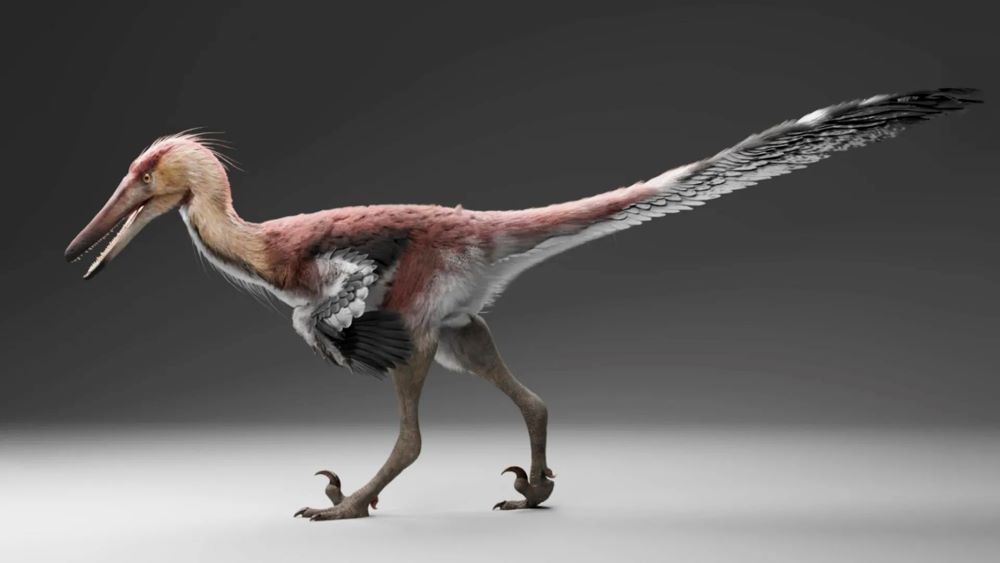
The dinosaur, named Kank australis, lived around 70 million years ago during the Late Cretaceous period. Fossils including teeth, vertebrae and toe bones were found near El Calafate in Argentina’s Santa Cruz Province.
Researchers say the animal belonged to a group of dinosaurs known as unenlagiids, relatives of the famous Velociraptor. Unlike the fast land predators often shown in movies, Kank may have spent much of its time catching fish in rivers and ponds.
Paleontologist Dr. Matías Motta, who led the study published in the Journal of Vertebrate Paleontology, said the dinosaur lived in a humid environment filled with winding rivers, seasonal ponds, fish, insects and aquatic plants.
Scientists estimate Kank reached between 2.5 and 3 meters long. Its neck bones showed unusual features linked to strong and flexible neck movements, similar to those seen in modern herons that strike quickly to catch prey.
Researchers also found fish fossils alongside Kank remains, strengthening the idea that it specialized in fishing. However, it likely also hunted frogs, lizards and small mammals while sharing its habitat with giant predators such as the 10-meter-long Maip macrothorax.
The dinosaur’s name comes from Aonikenk Indigenous mythology. “Kank” refers to a giant rhea whose footsteps were believed to form the Southern Cross constellation, while “australis” means “from the south.”
The first fossils were discovered in 2018, but additional remains found in later excavations helped scientists confirm it as a new species.
Leave a Reply