According to the Office of Rwanda’s President, their discussions held on March 31, 2026, centered on deepening the already strong bilateral ties between Rwanda and Tanzania.
Rwanda and Tanzania maintain a robust partnership in areas such as technology and communications.
The two countries also have existing cooperation agreements covering media, education, ICT, and internet infrastructure among others.
In July 2025, Rwanda and Tanzania on Saturday signed two memoranda of understanding to facilitate cooperation in agriculture and the establishment of a Tanzania Ports Liaison Office in Kigali, the capital of Rwanda.
The agreements were signed by Rwanda’s Minister of Foreign Affairs and International Cooperation Olivier Nduhungirehe and Tanzanian counterpart Mahmoud Thabit Kombo during a ministerial session of the 16th Joint Permanent Commission (JPC) between the two countries in Kigali.
Trade also forms a cornerstone of the Rwanda-Tanzania partnership, with Rwandans regularly using the port of Dar es Salaam and Rwandan goods frequently exported to Tanzania.
Tanzania’s Minister of Foreign Affairs and East African Cooperation, Mahamoud Thabit Kombo was hosted at Urugwiro Village along with his delegation. President Paul Kagame on March 31, 2026 received Tanzania’s Minister of Foreign Affairs and East African Cooperation, Mahamoud Thabit Kombo, at his office in Village Urugwiro.
Premier Dr. Nsengiyumva, representing President Paul Kagame, is among dignitaries who attended the inauguration ceremony of Touadéra at at the Barthelemy Boganda Sports Complex on Monday.
The development was confirmed by the Office of the Prime Minister of Rwanda without disclosing further details of their discussions.
President Faustin-Archange Touadéra was re-elected in December 2025 with 76.15% of the vote.
Rwanda and the Central African Republic (CAR) maintain cooperation particularly in the areas of security, mineral resources, and other sectors.
Security cooperation is central to the partnership, with Rwandan Defence Forces (RDF) and police contributing to the UN peacekeeping mission, MINUSCA, since 2014. In 2020, Rwanda deployed 1,200 troops under a bilateral agreement to neutralize rebel groups loyal to François Bozizé that were threatening Bangui.
Beyond peacekeeping, Rwandan forces provide security for the President, government officials, and key infrastructure, including M’Poko International Airport.
They also support the development of the Central African Armed Forces (FACA), helping the country build its capacity to maintain security independently. Since 2023, RDF has trained over 2,400 soldiers and 300 officers, with several cohorts integrated into FACA between 2023 and 2025.
Currently, around 1,200 Rwandan personnel operate in CAR under bilateral arrangements separate from the UN mission. Their duties include restoring peace, safeguarding Bangui and its surroundings, ensuring the smooth functioning of daily life, and securing President Touadéra’s residence in Damara, Ombella-M’Poko Prefecture.
It was glamour at the inauguration of CAR President Faustin-Archange TouadéraTouadera took the oath of office at the Barthelemy Boganda Sports Complex, with heads of state and diplomats in attendance.President Faustin-Archange Touadéra was re-elected in December 2025 with 76.15% of the votePrime Minister Dr. Justin Nsengiyumva met with CAR President Faustin-Archange Touadéra following the President’s inauguration on March 30, 2026.
Touadera took the oath of office at the Barthelemy Boganda Sports Complex, with heads of state and diplomats in attendance.
Following the ceremony, Touadera expressed gratitude to the citizens for their trust and emphasized that his mandate would focus on women, youth, and national development.
He also reaffirmed his commitment to restoring peace and stability in the war-torn country.
The Central African Republic held its presidential election on Dec. 28, 2025, with Touadera winning 77.9 percent of the vote, according to the Constitutional Council.
The inauguration ushered in a seven-year mandate for Touadera, 68, who has served as president since 2016. This will be his third term in office.
Faustin-Archange Touadera (C) takes the oath of office at the Barthelemy Boganda Sports Complex in Bangui, capital of the Central African Republic, on March 30, 2026.
“Today, we are formally resuming operations at the U.S. Embassy in Caracas, marking a new chapter in our diplomatic presence in Venezuela,” the U.S. Department of State said in a statement, adding that the reopening of the embassy “is expected to strengthen direct engagement with the interim government, civil society and the private sector.”
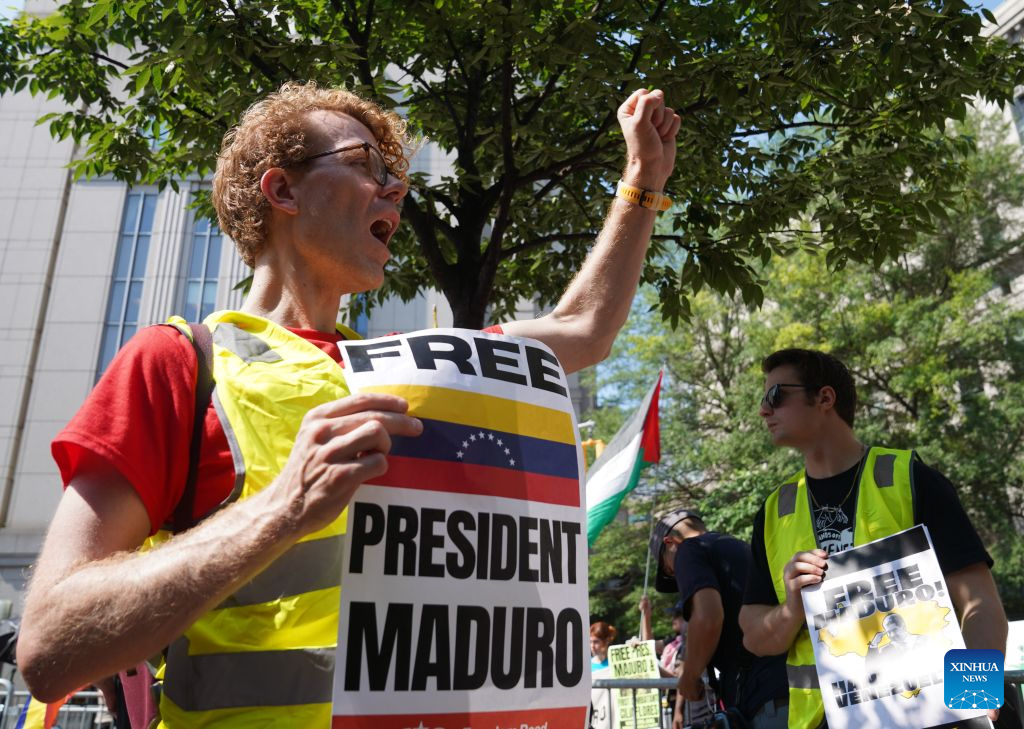
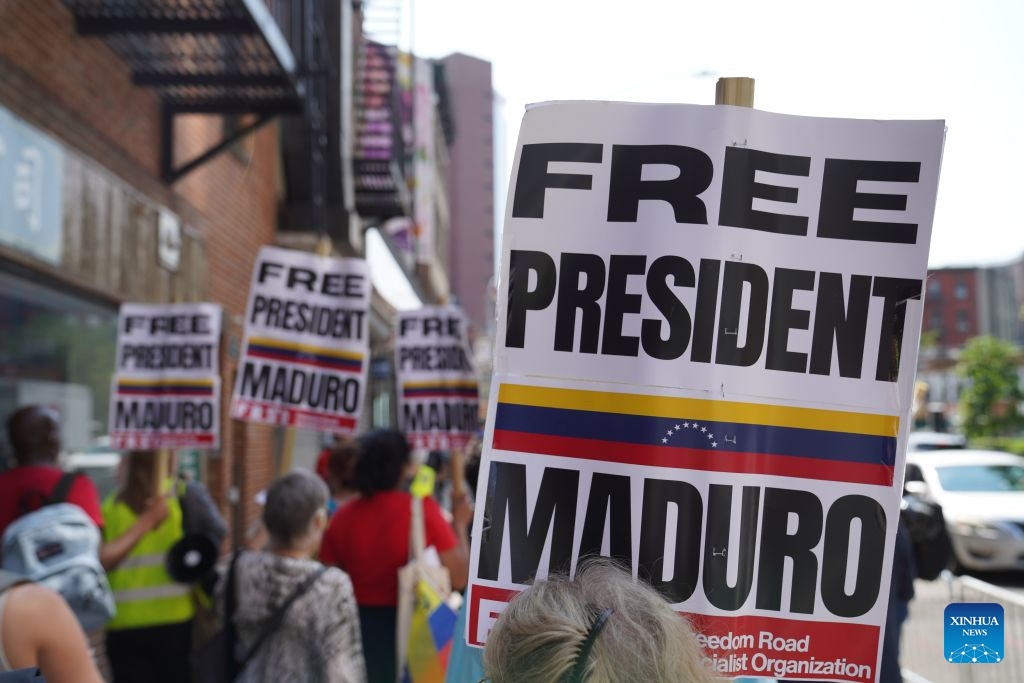
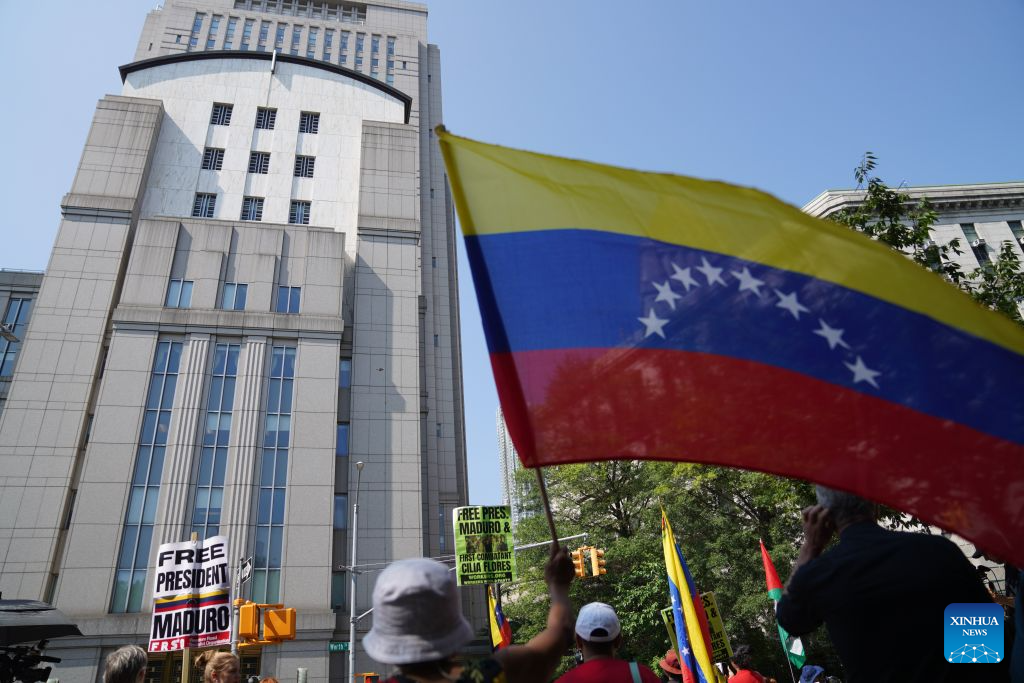
The United States gradually resumed ties with Venezuela after Venezuelan Vice President Delcy Rodriguez took over as acting president in the wake of Maduro’s capture on Jan. 3.
The United States and Venezuela broke off diplomatic relations in 2019, when U.S. President Donald Trump, during his first term, recognized then opposition leader Juan Guaido as the interim president of Venezuela, accusing Maduro of rigging the presidential election.
The U.S. flag flutters at the U.S. Embassy in Caracas, capital of Venezuela, on March 30, 2026.
According to the Prime Minister’s Office, Dr. Nsengiyumva arrived in Bangui on the morning of March 30, 2026.
President Touadéra was re-elected in the December 2025 elections, securing 76.15% of the vote. His 2026–2032 agenda emphasizes building lasting peace in the country, implementing political reforms, and investing in initiatives that promote economic growth and improve the well-being of citizens.
Rwanda and the Central African Republic share strong bilateral relations in several areas, particularly in security, mineral resources, and other sectors.
Security cooperation is a key pillar of the relationship. Since 2014, Rwandan Defence Forces (RDF) and police have contributed to the United Nations peacekeeping mission in the Central African Republic, MINUSCA.
In 2020, the two countries signed a bilateral agreement under which Rwanda deployed around 1,200 troops to help neutralize rebel groups loyal to François Bozizé, which were threatening Bangui.
Beyond this, Rwandan forces provide security for the President and the capital city of Bangui, while also helping to build the capacity of the Central African Armed Forces (FACA) so they can maintain security independently once the Rwandan mission ends.
To date, the RDF has trained over 2,400 new Central African soldiers and 300 officers. The first cohort of 512 soldiers joined FACA in November 2023, followed by 634 in August 2024, 438 in March 2025, and 545 in November 2025.
Rwandan troops and police in CAR perform a wide range of duties, including protecting civilians and their property, high-level government officials including President Touadéra, UN personnel and assets, and critical infrastructure such as M’Poko International Airport.
Currently, around 1,200 Rwandan personnel are deployed in CAR under these bilateral arrangements, separate from the UN mission. Their responsibilities include restoring peace and security, safeguarding Bangui and its surroundings, and ensuring that daily life continues smoothly for local residents.
Another key responsibility is securing President Touadéra’s residence in the Damara area of Ombella-M’Poko Prefecture.
Rwanda’s Prime Minister, Dr. Justin Nsengiyumva was warmly welcomed upon arrival in Bangui, the capital of CARDr. Nsengiyumva arrived in Bangui on the morning of March 30, 2026.
Despite its ongoing presence, there are those who downplay its significance, particularly in the international community. Often, it is portrayed as an organization no longer a threat to Rwanda, to the Congolese civilians, or to the Great Lakes region in general.
The first mistake made by those who hold such views is the neglect of the fact that the FDLR is rooted in genocide ideology. The extremists within this group continue to wreak havoc in eastern Congo while seeking to destabilize Rwanda.
Although the group remains under UN and U.S. sanctions, this has not stopped it from continuing its operations, even receiving occasional political, military, and logistical support from the Kinshasa government over the years.
Congolese authorities have repeatedly claimed that the FDLR is no longer a formidable force and is merely composed of elderly individuals fleeing justice. However, this claim is far from the truth. The FDLR remains active in politics, military actions, and the propagation of its genocidal ideology.
This has been further demonstrated in the ongoing conflict between the Congolese government and the M23 rebel group.
Reports from UN experts in 2024 and 2025 revealed that the administration of President Félix Tshisekedi has utilized the FDLR and other groups such as Wazalendo as auxiliary forces to support government troops against M23. These developments should decisively eliminate any confusion or misinformation about the group being a mere historical relic.
Who are the current leaders of the FDLR?
The FDLR is currently led by Lt Gen Iyamuremye Gaston, also known as Byiringiro Victor or Rumuri, who serves as the group’s president.
Iyamuremye, born in 1948 in the current Musanze District, now resides in Hembe, Bashali-Mokoto, in Masisi, eastern DRC. He is under both UN and U.S. sanctions.
During the 1994 genocide against the Tutsi, Iyamuremye held the rank of major and led an armoured battalion.
His continued leadership of the FDLR underscores the fact that the group is still directed by individuals with direct involvement in the genocide.
Iyamuremye has close associates in both political and military operations within the FDLR. These include Moïse Izabayo, who is in charge of foreign relations and also based in Hembe, and Maj Gen Bunani Daniel, also known as Busogo Ukwishatse, responsible for security.
Another key figure is the FDLR’s spokesperson, Augustin Maniragaba, known as Cure Ngoma, who also operates from Hembe. Maniragaba, who hails from Nyamutera in Ruhengeri, Rwanda, was a teacher during the 1994 genocide against the Tutsi and has been a prominent advocate for the group’s genocidal ideology.
FDLR continues to pose a significant threat to both the region and Rwanda
Military backbone of the FDLR
The FDLR’s military wing, the Forces Combattantes Abacunguzi (FOCA), is led by Maj Gen Pacifique Ntawunguka, known as Omega. Ntawunguka was born in 1964 in Gisenyi (now Rubavu) and resides in the Kirama forest in the Rutshuru area of North Kivu. He was a lieutenant in the FAR (Rwandan Armed Forces) during the 1994 genocide against the Tutsi and later fled to Congo after the defeat of the genocidal regime.
Ntawunguka, with his extensive military training, remains a senior leader within the FDLR, having undergone military education in Egypt, Greece, and France. His role and leadership show that the FDLR is not a random or ill-trained group, but one with substantial military expertise. He continues to express his defiance, stating that he will not return to Rwanda until no Tutsi is left.
Intelligence and propaganda within the FDLR
The FDLR also has an intelligence division led by Brig Gen Uwimbabazi Sebastien, known as Kimenyi Gilbert Nyembo. Uwimbabazi was sanctioned by the U.S. in 2023 for his involvement in the ongoing conflicts in eastern DRC. He was a lieutenant colonel in the Rwandan gendarmerie during the genocide and is closely linked to the group’s propaganda efforts.
FDLR also runs a military academy, headed by Brig Gen Hitimana Bernard, who has been instrumental in training the group’s forces. Hitimana was involved in the FDLR’s operations in 2008-2009 and has served in various leadership capacities in the group.
Ntawunguka, with his extensive military training, remains a senior leader within the FDLR, having undergone military education in Egypt, Greece, and France.
Elite forces
Among the most notorious commandos within the FDLR is Lt Col Rurakabije Pierre Célestin, known as Samba Guillaume, who leads an elite unit called CRAP (Commandos de Recherche et d’Action en Profondeur).
Rurakabije is listed on four international sanctions lists due to his involvement in promoting violence and insecurity in eastern DRC.
Another prominent figure is Col Kubwayo Gustave, known as Sircof Modeste, who leads operations under the name SINAI in many areas of Rutshuru, including Kahumiro, Kazaroho, Katanda, and Mayamoto.
Additionally, there is Col Oreste Ndatuhoraho, who uses the names Uwikunda Oreste or Issa Pierre. He leads CANNAN/JERICHO, which is considered the main headquarters of the FDLR.
Ndatuhoraho was born in Rutobwe in 1970 and worked as a secondary school teacher before joining armed groups. In 1994, he participated in military training for the Interahamwe militia to use weapons aimed at killing the Tutsi during the Genocide.
FDLR is not a group to underestimate
The FDLR is a highly organized and skilled group, with a clear political, military, and ideological agenda. It is not a group of displaced individuals without power, as some would suggest. On the contrary, the FDLR continues to pose a significant threat to both the region and Rwanda, bolstered by military expertise, political ties, and a genocidal ideology that remains influential.
To dismiss the FDLR as a mere historical artifact is to ignore the real threat it still poses today. The international community must recognize the continued existence of this threat and work together to address it. Military action alone is not enough to dismantle the FDLR; a coordinated and sustained international effort is necessary to address the root causes of this violent group.
The FDLR is currently led by Lt Gen Iyamuremye Gaston, also known as Byiringiro Victor or Rumuri, who serves as the group’s president. The FDLR remains active in politics, military actions, and the propagation of its genocidal ideology.
In an interview with the Financial Times, Trump said, “To be honest with you, my favourite thing is to take the oil in Iran,” comparing the U.S. move to Venezuela, where Washington intends to control the oil industry “indefinitely” after it forcibly seized President Nicolas Maduro in January.
Taking Iranian oil would involve seizing Kharg Island, through which over 90 percent of Iran’s oil is exported, the Financial Times reported, warning that such “an assault” risks raising casualties and prolonging the war.
“Maybe we take Kharg Island, maybe we don’t. We have a lot of options,” it quoted Trump as saying. “It would also mean we had to be there for a while.”
He added that he believed Iran had little or no defense on the island. “We could take it very easily,” he said.
Trump’s remarks came as he steps up the U.S. military buildup in the Middle East while weighing a military operation to extract nearly 1,000 pounds of uranium from Iran, according to U.S. officials.
He has also encouraged his advisers to press Iran to agree to surrender the material as a condition for ending the war, The Wall Street Journal reported, citing an anonymous source familiar with Trump’s thinking.
The Pentagon is reportedly deploying up to 10,000 additional ground troops to the region, with the U.S. Central Command announcing Saturday that over 3,500 troops, including 2,500 Marines, had arrived in the Middle East.
Despite the threat, Trump noted that indirect talks between the United States and Iran via Pakistani “emissaries” were making progress. “A deal could be made fairly quickly,” he said.
Oil prices have surged since the United States and Israel launched massive attacks on Iran on Feb. 28, with Brent crude rising as high as 119.5 U.S. dollars a barrel in March, the highest since June 2022.
US President Donald Trump speaks before signing executive orders in the Oval Office in the White House in Washington, DC, on January 30, 2026. (Photo by ANNABELLE GORDON / AFP)
Earlier this week, media outlets in DRC began reporting that AFC/M23 was withdrawing fighters from areas in the Lubero, Lunyasenge, Bukununu, Musiya, Katondi, and Kipese territories, relocating them to Alimbongo, Kirumba, and Kanyabayonga.
These reports suggested that the move was prompted by pressure from the United States government on AFC/M23.
In a statement released by the Governor of North Kivu Province, Erasto Bahati, these reports were dismissed, with the governor clarifying that what is happening is simply a routine rotation of troops.
The statement read: “The leadership of North Kivu Province reassures all citizens that the activities occurring along the battlefront are part of the regular military troop rotations within AFC/M23.”
“It is completely different from the rumors fueled by social media and the Kinshasa government, which aim to confuse and frighten people who are living in peace and security. AFC/M23 remains committed to protecting all citizens from harm, regardless of its origin.”
Governor Erasto Bahati also urged citizens to continue their daily activities as usual.
AFC/M23 has dismissed reports suggesting withdrawal from occupied positions
“We are concerned about the Houthi missile strikes against Israel earlier today. These attacks risk further expanding the military conflict in the region,” Stephane Dujarric, spokesperson for UN Secretary-General Antonio Guterres, said in a note to correspondents.
“We emphasize that international law, including international humanitarian law as applicable, must be respected by all parties at all times,” he said. “UN Security Council resolution 2768 (2025) and subsequent resolutions related to Houthi attacks against merchant and commercial vessels must be fully respected.”
Yemen’s Houthi armed forces said on Saturday that they had launched a barrage of ballistic missiles targeting “sensitive Israeli military sites” in southern Israel, which marked the group’s first such attack since Israel and the United States started massive attacks on Iran a month ago.
The group signaled readiness for further military action, framing its recent military strikes on Israel as “legitimate right” to confront what it called “brutal American-Israeli aggression” against Iran and the wider region.
In a statement, the group’s foreign affairs authority said that its intervention was part of a broader regional strategy tied to Iran, Palestine, Iraq and Lebanon.
He was speaking on Saturday at the 11th Summit of OACPS in Malabo, Equatorial Guinea where he represented President Paul Kagame.
Dr. Nsengiyumva highlighted the importance of aligning the organization’s financing model with global changes.
“As the global context evolves, it is natural that our approach to financing must also adapt,” he said.
He urged member states to rethink traditional financing approaches and to leverage OACPS as a platform not just for cooperation, but also for investment and economic transformation.
To achieve sustainable financing, Dr. Nsengiyumva outlined three essential priorities for the OACPS.
First, he emphasized the need to strengthen domestic resource mobilization across member states as a foundation for greater financial ownership of the organization. He pointed out that ensuring timely and predictable contributions would be crucial for sustainability.
The second priority was promoting the scale and bankability of regional projects to attract long-term institutional investment. Dr. Nsengiyumva noted that OACPS needs to promote the scale and bankability of projects, particularly at the regional level, as key to attracting long-term and institutional investment.
This, he explained, requires stronger projects, risk mitigation, and coordinated efforts to unlock viable investment opportunities across our countries.
The third priority was deepening partnerships for co-investment, which would involve both traditional and emerging partners in a spirit of mutual benefit and shared responsibility.
Dr. Nsengiyumva also referred to the Samoa Agreement, noting that it provides a valuable framework for supporting sustainable financing efforts.
However, he stressed that its success would depend on member states’ ability to translate commitments into concrete, measurable outcomes. “The impact [of the Samoa Agreement] will depend on our collective ability to translate commitments into concrete and measurable outcomes,” he remarked.
Premier Nsengiyumva also reaffirmed Rwanda’s commitment to timely contributions.
“Rwanda has consistently continued to pay its assessed contributions on time, and Rwanda commits again to continue to honor its commitments and its assessed contributions to this great organisation and that will be done on time,” he stated.
The Organisation of African, Caribbean and Pacific States (OACPS) is a group of countries in Africa, the Caribbean, and the Pacific that was created by the Georgetown Agreement in 1975. Formerly known as African, Caribbean and Pacific Group of States (ACP), the organisation’s main objectives are sustainable development and poverty reduction within its member states, as well as their greater integration into the world’s economy.
Premier Dr. Nsengiyumva has called for sustainable financing at OACPS Summit.Premier Dr. Nsengiyumva represented President Paul Kagame at the summit. The 11th Summit of OACPS took place in Malabo, Equatorial Guinea.