Xi visited a village and an international trade market in Yiwu City of Jinhua to learn about the development of local distinctive industries, and the efforts in promoting rural revitalization and boosting foreign trade and high-quality development.


Xi visited a village and an international trade market in Yiwu City of Jinhua to learn about the development of local distinctive industries, and the efforts in promoting rural revitalization and boosting foreign trade and high-quality development.


Xi visited an exhibition hall featuring the “Fengqiao model” for promoting community-level governance to review the evolution of the dispute resolution mechanism and learn about its innovative development in the new era.
Xi also went to a canal culture park to learn about the history of ancient canals, the preservation of the Grand Canal, and the construction progress of a national cultural park featuring the Grand Canal.


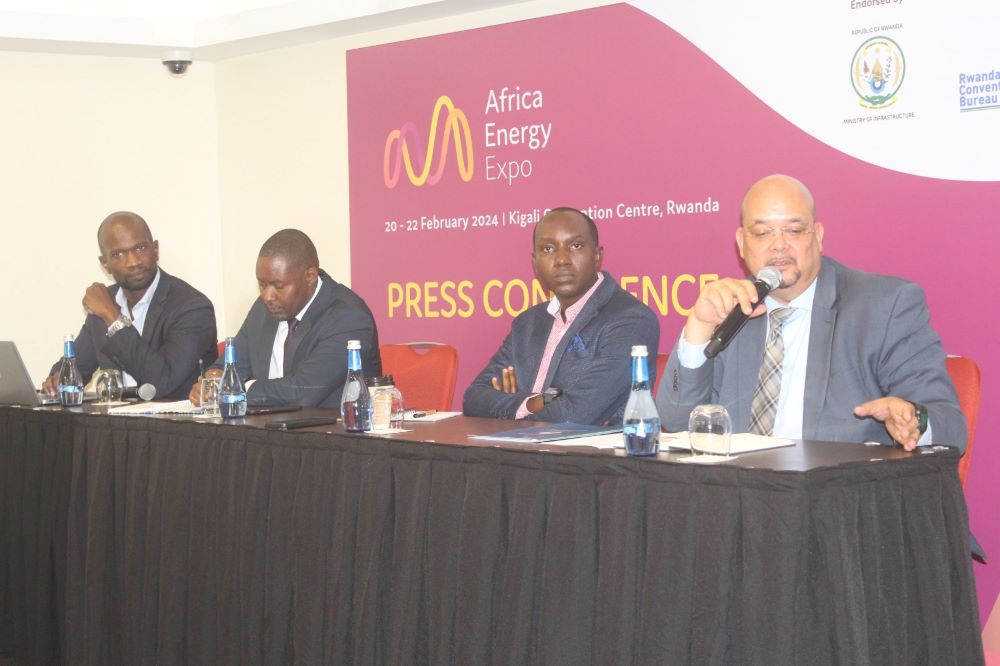
This relocation effort is a proactive response to the heavy rains and landslides that tragically took the lives of 135 Rwandans earlier this year in May. These disasters also resulted in the destruction of 5,963 houses and infrastructure, including roads.
Kigali City Mayor, Pudence Rubingisa emphasized that the relocation process has been ongoing but stressed the urgency of expediting the resettlement of residents from high-risk zones.
He also urged residents to adhere to recommended proactive measures, especially considering the current heavy rainfall predictions.
As of now, a total of 4,230 families have been relocated since April and May. Rubingisa disclosed that an additional 2,809 families, primarily from Gisozi and Gatsata in Gasabo District, require immediate relocation.
The press conference was held the day following a rain-related disaster in Gisozi, where a house collapsed, resulting in the tragic loss of four family members.
Additionally, the heavy rain caused the roofs of six houses to be blown away.
Efforts are ongoing to more residents within Kigali to prevent further loss of lives.


Discussions with Guterres revolved around productive cooperation with various UN agencies contributing to Rwanda’s progress. They also exchanged on the security situation in the region and on topics of continental and global impact.
Meanwhile, Kagame and Infantino discussed FIFA’s partnership with Rwanda in football development.
Infantino was in Rwanda early this year during the 73rd FIFA Congress at BK Arena in Kigali.
Among others, Kagame held talks with James Manyika, Senior Vice President of Technology and Society at Google for a conversation on furthering partnerships towards harnessing the power of technology, such as Artificial Intelligence, to accelerate economic growth.
Google entered agreements with Rwanda aimed at helping the country to accelerate digital transformation. This initiative is in line with Rwanda’s ambition to drive inclusive economic development leveraging technology.
The President also met with Under-Secretary-General United Nations Development Programme (UNDP) Administrator, Achim Steine for a discussion on the status of implementation of the Sustainable Development Goals (SDGs), and the UNDP-Rwanda partnership, including the agency’s role in the country’s development.


This concern came to light from 18th to 20th September, 2023, when members of the Rwanda Association of Professional Environmental Practitioners (RAPEP) received the first session of environmental protection training on Environmental and Social and Governance (ESG) from the International Finance Corporation (IFC).
The IFC, a firm dedicated to fostering business growth, recognizes the significance of addressing environmental concerns. The global community and organizations are increasingly united in their commitment to preventing human activities that exacerbate climate change and cause natural ecosystem degradation.
Leading institutions like the World Bank, in partnership with entities such as IFC, have pledged to prioritize sustainable practices when providing financial support to institutions worldwide. Under this framework, financial institutions will conduct thorough environmental and social analyses before granting loans. These assessments will gauge not only project feasibility but also their environmental impact and potential repercussions on local communities.
Moreover, given that both corporations and non-governmental organizations funnel their development assistance through the Development Bank of Rwanda (BRD), there is a growing consensus that this bank should serve as a role model.
BRD, since its cooperation with International Development entities, has been encouraged to demonstrate its project analysis techniques to ensure environmental and social integrity. In this pursuit, the adoption and effective implementation of a Environmental and Social Management Systems (ESMS) was achieved.
An ESMS empowers companies to conduct comprehensive environmental analyses for projects seeking loans and helps companies to integrate the rules and objectives promoting effective environmental and social management into core business operations, through a set of clearly defined, and repeatable processes.
In a forward-thinking move, even financial institutions seeking funding from BRD are now required to adopt and implement an ESMS, thereby extending the commitment to environmental and social protection across the financial sector.
Since the inception of this program in 2021, progress has been made, with seven banks, and 96 microfinance institutions having successfully adopted an ESMS into their operations. However, more efforts are needed to increase financial institutions ownership and full implementation of adopted Environmental and Social Management System.
BRD’s Environmental and Social Safeguard Specialist, Kanangire Ruti Rubis, highlights a critical issue: the lack of qualified personnel to effectively operate adopted ESMSs.
“We’ve assisted in establishing ESMSs, but the system itself requires skilled users to maximize its potential for environmental and social protection initiatives. This is a pressing challenge. While the system exists, our banks lack the trained personnel to wield it effectively,” remarked Kanangire.
In response to this persistent issue, BRD is urging financial institutions to appoint dedicated staff responsible for environmental and social analysis and provide them with essential training. However, despite these efforts, productivity remains low, with an average compliance rate of less than 50%.
{{The way forward}}
Recognizing the urgency of this matter, in March 2023, the IFC forged agreements with several institutions, including the Rwanda Banking Association (RBA), the Rwanda Capital Market (CMA), and RAPEP. These agreements were made possible through generous funding from the Japanese Government, amounting to over Rwf400 million.
Beginning on September 18, 2023, IFC Rwanda and RAPEP jointly initiated specialized training for environmental experts. These experts will play a pivotal role in guiding financial institutions in the proper implementation of ESMS and associated environmental and social initiatives.
Rose Lumumba, Head of the Environmental Department at IFC Rwanda, emphasized the collaborative approach taken before signing these agreements.
She stated, “Climate change and Natural ecosystem protection is a global issue, and Rwanda has developed comprehensive plans to address it. Our collaboration with various companies aims to collectively combat this challenge.”
Richard Ngendahayo, Chairman of RAPEP, reiterated the importance of RAPEP building capacity of its experts, playing its role and concerted efforts in environmental and social preservation. “From project inception to completion, multiple agencies must unite to ensure proper environmental and social management. Our current focus is on fostering collaboration among various institutions to safeguard the environment comprehensively.”
Kanangire anticipates that following this training, banks will have two options for complying with key environmental and social requirements. They can either engage RAPEP members with expertise in environmental and social matters or hire permanent staffs with a professional background on Environmental and Social aspects to bridge the gap.


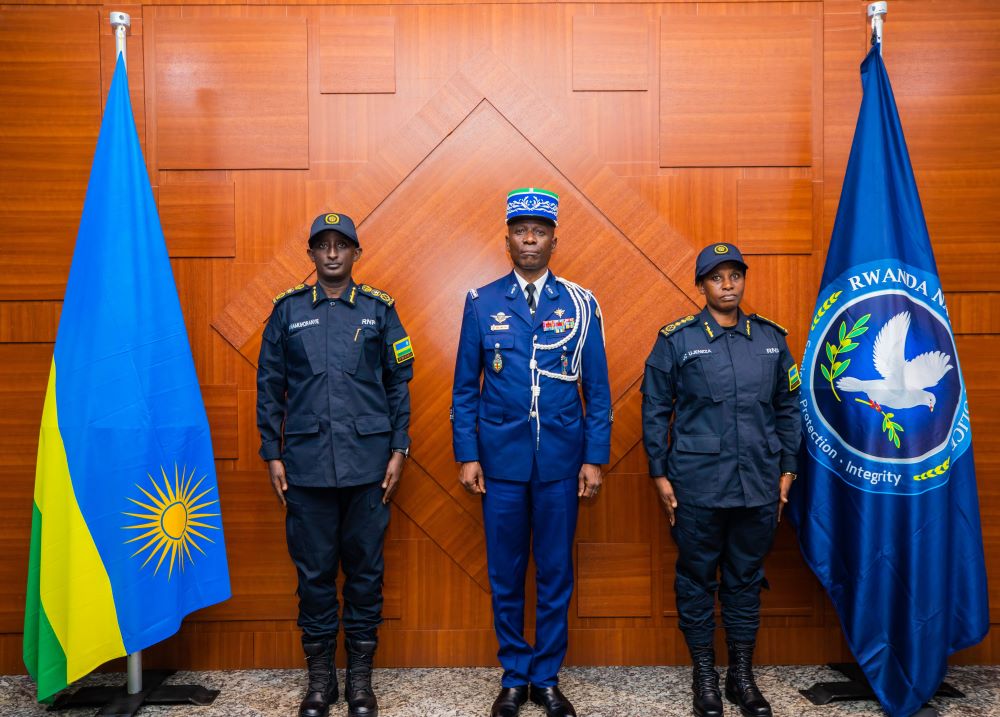
While addressing the RYVCP district coordinators on Thursday, September 21, at the Rwanda National Police (RNP) General Headquarters in Kacyiru, IGP Namuhoranye urged them to have an effective orientation in the implementation of the national security and development programmes.
“Have an effective strategy in your volunteerism work. Be proud to contribute to the security of your country without involving in crime but as the front face of crime prevention,” IGP Namuhoranye said.
He added: “It is not about the big number of youth volunteers but the impact of your actions in preventing and responding to disasters, anti-crime awareness and having a collective understanding and implementation of the national security and development agenda as a result-oriented group.”
He also hinted on effective planning, innovation, coordination, collaboration with grassroots leaders and other entities, and communication to unlock challenges affecting communities.
Formed in 2013, Rwanda Youth Volunteers in Community Policing with about 1.5 million members across the country, who engage in community development activities, including construction and renovation of houses for the disadvantaged families, roads, organic gardens, planting trees and supporting other human security activities.


The meeting was chaired by Dr. Vincent Biruta, Minister of Foreign Affairs and International Cooperation of Rwanda, as Rwanda is the current Commonwealth Chair-in-Office.
In her report to ministers, Commonwealth Secretary-General, Patricia Scotland, underscored the unique nature of the challenges facing the world today.
She acknowledged the profound economic challenges exacerbated by the COVID-19 pandemic and the conflict in Ukraine, as well as the growing pressure on democratic processes and the escalating impacts of climate change.
Scotland emphasised that these crises are interconnected, amplifying social, political, and economic inequalities.
In her opening remarks, Scotland said: “I stress the importance of multilateralism in addressing these global challenges, even as it appears to be under strain. The reality of the world today is that it is more connected, more complex and yet more challenged than ever before.
We must work together or we suffer in isolation. The Commonwealth’s distinctive advantage in this regard, through its diverse membership, spanning Africa, Asia and the Pacific, the Caribbean, Europe, and North America offers a unique platform to defend shared values and advance common interests.”
Ministers heard from Hon Fiamē Naomi Mata’afa, Prime Minister and Minister for Foreign Affairs, Trade and Tourism, of Samoa about preparations for the next Commonwealth Heads of Government Meeting (CHOGM), taking place in Samoa in 2024.
She also announced the theme of CHOGM 2024 as “One Resilient Common Future: Transforming our Common Wealth”.
Ministers also heard a report on the Commonwealth Secretariat’s work and progress on implementing mandates from CHOGM2022. Ministers also received a report on the outcomes of the Commonwealth Ministerial Action Group (CMAG) which was held on Monday 18 September 2023 and on the resulting decision to partially suspend Gabon.
Among others, ministers requested the Secretary-General to persist with her Good Offices engagement to help the country return to democracy as soon as possible.
They also noted specific challenges in the territories of some member countries, namely Bangladesh, Belize, Cyprus and Guyana. The CFAMM 2023 serves as a vital platform for member states to reaffirm their commitment to the Commonwealth’s shared values and chart a path forward to address the world’s most pressing challenges.


The event was held on 20th September 2023 at Bria, Sector East, Haute-Kotto Province, Central African Republic.
The ceremony was presided over by MINUSCA Force Commander, Lt Gen Humphrey Nyone who congratulated Rwandan peacekeepers for the good work done.
The senior contingent commander, Col Dr. Osee Robert Karangwa appreciated the good cooperation of the local leadership, the MINUSCA leadership and friendly forces.
The ceremony was attended by Head Office Bria, Mr Dieng Bara with other Sector officials, local leadership and other MINUSCA contingents.
Rwanda and CAR maintain robust bilateral and multilateral cooperation, particularly in matters of security.
Rwanda has played a crucial role in stabilizing the Central African nation, with its forces serving as one of the largest contributors to MINUSCA since 2014.


The ENDF said in a press release that the fighters were killed in Rabdhure town in southwestern Somalia after they tried to attack an ENDF contingent that was present in that area.
The ENDF disclosed the militant group had tried to use 12 suicide bombers and three explosives-laden vehicles in the failed attack.
The Ethiopian army has previously foiled multiple al-Shabab attempts to infiltrate eastern Ethiopia to carry out cross-border attacks, read the statement.
Al-Shabab is a militant Islamic rebel group mainly operating in conflict-wracked Somalia but has also been implicated in terrorist attacks in several other East African countries.
Ethiopia has several thousand troops in Somalia as part of the African Union Transition Mission in Somalia (ATMIS) tasked with countering the al-Shabab threat.

In Africa over this period attacks were detected on 40,3% of ICS computers, placing it in first place among the other regions. The top industries under attack were energy (45,9%), engineering & integration (44%) and building automation (40%). All these attacks were blocked after detection.
ICS computers are used in oil & gas, energy, automotive manufacturing, building automation infrastructures and other spheres to perform a range of operational technology (OT) functions – from the workstations of engineers and operators to supervisory control and data acquisition (SCADA) servers and Human Machine Interface (HMI).
Cyberattacks on industrial computers are considered to be extremely dangerous as they may cause material losses and production downtime for the controlled production line and even the facility as a whole. Moreover, industrial enterprises put out of service can seriously undermine a region’s social welfare, ecology and macroeconomics.
An analysis of the most significant and targeted threats detected on ICS computers in selected countries of Africa in the first half of 2023 shows that the threat landscape can vary between countries and between industries due to the differences in the security maturity of different countries/industries and the current focus of threat actors. In South Africa in the first half of 2023 malware was detected and blocked on 29,1% of ICS computers, in Nigeria on 32,6%, in Kenya on 34,5% of machines.
There are different types of cyberthreats that OT-related computers face – malicious scripts, spy trojans, worms, ransomware, and others. In the first half of 2023 Africa had the highest percentage of ICS computers on which spyware was blocked (9,8%). The Middle East and Southeast Asia had similarly high percentages (8,3% and 8,1%). The global average stands at 6,1%.
Africa was also the region with the highest percentage of ICS computers (14,8%) on which attacks from denylisted Internet resources were blocked (these are web resources associated with distributing or controlling malware). The global average is 11,3%.
Viruses and worms spread across ICS networks by means of removable media, shared folders, infected files, such as backups, and network attacks on outdated software. The percentage of ICS computers on which worms were detected was very high in Africa (7% vs. 2,3% global average), making this region the leader by percentage of ICS computers on which threats were detected after removable devices were connected.
“Africa’s industrial landscape is diverse, ranging from large-scale mining operations to small-scale agriculture. This means that ICS cybersecurity solutions need to be adaptable to various sectors and technologies. In some regions, legacy ICS systems that lack modern security features are still in use. These systems are often more vulnerable to cyberthreats and require significant upgrades.
Lastly, some critical infrastructure in Africa is located in remote areas with limited connectivity, which can make it difficult to monitor and secure ICS assets effectively,” comments Evgeny Goncharov, Head of Kaspersky ICS CERT.
“By understanding these risks, organisations can make informed decisions, allocate resources wisely, and efficiently fortify their defenses. In doing so, they not only protect their bottom line but also contribute to a safer and more secure digital ecosystem for all.”