The event brought together more than 100 delegates from accreditation and standard regulators across Africa to review ways to roll out the mutual recognition of product standards in the continent.
In his opening remarks during the 14th General Assembly and Meetings of African Accreditation Cooperation, Juma Mukhwana, principal secretary in Kenya’s State Department for Industry, said that the existence of different product standards in Africa is one of the key impediments to intra-Africa trade. “A unified product standards regime will foster trust in products made in Africa and facilitate trade not only within our borders but across the continent.”
Celestine Okanya, director general of Nigeria National Accreditation System, revealed that the continent has prioritized the harmonization of product standards in the region because it will enable enterprises, including small and medium-sized enterprises, to participate actively in the African Continental Free Trade Area and contribute to the economic transformation of the region.
Okanya added that joint product standards will be the catalyst that ensures the quality and safety of the products and services that flow within the expanded African market.
Mpho Phaloane, acting chief executive officer of the South African National Accreditation System, observed that the African quality policy, which aims at enhancing the quality of standards of goods produced in the continent will also strengthen the competitiveness of the continent’s products. He said that consistent product standards will lead to better integration into regional and international value chains that enhance trade and ensure sustainable development for the continent as a whole.
Robin Neeren Gopee, director of the Mauritius Accreditation Service, said that coordinated product standards will enhance Africa’s competitiveness by offering proof that products and services adhere to the requirements of consumers, governments, and trade treaties.
The development of product standards in Africa on a mutual recognition arrangement is a growth point as the mutual evaluation and acceptance of each other’s goods and services is based on agreed standards and quality, he said, adding that the alignment with international standards and recommended practices will also enhance the mobility of goods and services across borders.
He said during a press briefing that “institutional reforms” must be carried out before the announcement of the new date which will be set in consultation with the Independent Electoral Management Authority as soon as possible.
This presidential election should, if necessary, be held over two rounds in February 2024, according to the timetable set by Malian transitional president Assimi Goita.
The motorcycle was stolen the previous night when thieves broke into a house in Rugerero cell, Kivu sector and locked the victim inside the house before fleeing.
“The victim managed to find a way to unlock the door only to realize that his motorcycle had been stolen from another house, where it was kept. He immediately called the Police, which promptly started the search,” Superintendent of Police (SP) Emmanuel Habiyaremye, the Police spokesperson for the Southern region, said.
He added: “Two prime suspects were later located in Kivu sector, Kivu cell in Kivu village, where they were arrested red-handed on Saturday at about 6p.m, with the same stolen motorcycle. They were handed over to RIB at Kivu station for further management.”
Article 166 of law determining offences and penalties in general states that; any person convicted of theft is liable to imprisonment for a term of not less than one (1) year and not more than two (2) years and a fine of not less than Rwf1 million and not more than Rwf2 million, community service in a period of six (6) months or only one of these penalties.
In article 167, the penalty for theft doubles if the offender committed the crime through burglary, climbing or possession of keys other than the owner; the theft is carried out during the night or the theft is carried out by more than one (1) person.
Golf is renowned for promoting a healthy lifestyle and enhancing cognitive abilities. In line with this, the Kigali Golf Resort & Villas Academy was founded to facilitate the exploration of this sport for interested individuals.
The competition took place on Sunday, September 24th, 2023, at the Kigali Golf Resort & Villas golf course, featuring participants from different age categories, including those below five years old, aged 6 to 12, and aged 12 to 17.
The event commenced in the afternoon as the kids arrived with their parents and coaches, who had been guiding them in preparation during the school break.
Before competing, the kids engaged in practice, refreshing their memories with important golfing tips they had been learning. Subsequently, they were divided into teams based on their age groups.
All the teams competed for two hours, and following the competition, awards were presented to the winners and outstanding performers. The rest received medals as motivation to excel in future competitions.
Currently, golf coaching sessions are offered from Friday to Sunday by Golf Coaches.
Nicolas Raoul, the Director of Golf at Kigali Golf Resort and Villas, expressed optimism about the future and growth of the sport since the introduction of these training sessions.
“This competition was a success, and the kids were enthusiastic. We organize this event every month to promote golf in Rwanda. Our goal is being achieved as we see an increasing number of trained kids, many of whom have the potential to become professional golfers,” he remarked.
Jules Dusabe, a coach for these young athletes, noted significant improvements in their skills and explained that they have established methods to assess these advancements. According to him, when a child begins, their understanding of the game is limited, but with time, their ability to strike the ball noticeably improves.
David Mutangana, a parent who enrolled his children in golf lessons, attested to the sport’s benefits. He believed that golf not only helps kids relax but also enhanced their academic performance.
Golf comprises two fundamental components: Putting and Range. Putting is essential when the player is near the hole, requiring a delicate touch to guide the ball in. Range, on the other hand, involves expending significant energy to achieve maximum distance when striking the ball.
The golf course operates from 6 am to 6 pm, providing ample opportunities for players and enthusiasts to enjoy the sport.
Kigali Golf Resort actively nurtures young talent through a year-long training program designed for children aged 5 to 17. The annual subscription fee for this program is Rwf250,000.
This initiative is just one of the many ways to make sports accessible to everyone, fostering awareness and interest in golf as both a recreational activity and a potential profession.
Beyond its appeal to tourists and investors, golf also generates employment opportunities, benefiting coaches and young individuals who assist with various tasks, such as handling players’ equipment and more.
These accidents have been predominantly attributed to various factors, including drivers’ inattention, failure to maintain a safe following distance, and overspeeding, accounting for 31%, 15%, and 13% of the accidents, respectively.
Furthermore, incidents involving obstructing vehicles attempting to overtake or violating zebra crossings made up 12% of the accidents, while 9% resulted from a failure to stay within designated lanes. Illegal overtaking contributed to 8% of the accidents, and a significant 7% and 5% were linked to drunk driving and the non-use of wing mirrors, respectively.
Looking back to 2018, just a year before the launch of the Gerayo Amahoro campaign by the Police aimed at enhancing road safety, the country reported a staggering 5,000 accidents that tragically claimed the lives of 700 individuals and left 2,000 injured. During the same period, over Rwf 200 billion were disbursed in insurance claims to compensate for more than 3,000 properties damaged in these accidents.
However, the launch of the Gerayo Amahoro campaign in the subsequent year yielded encouraging results. Between May and December of that year, road accidents saw a significant 25% reduction when compared to the preceding year.
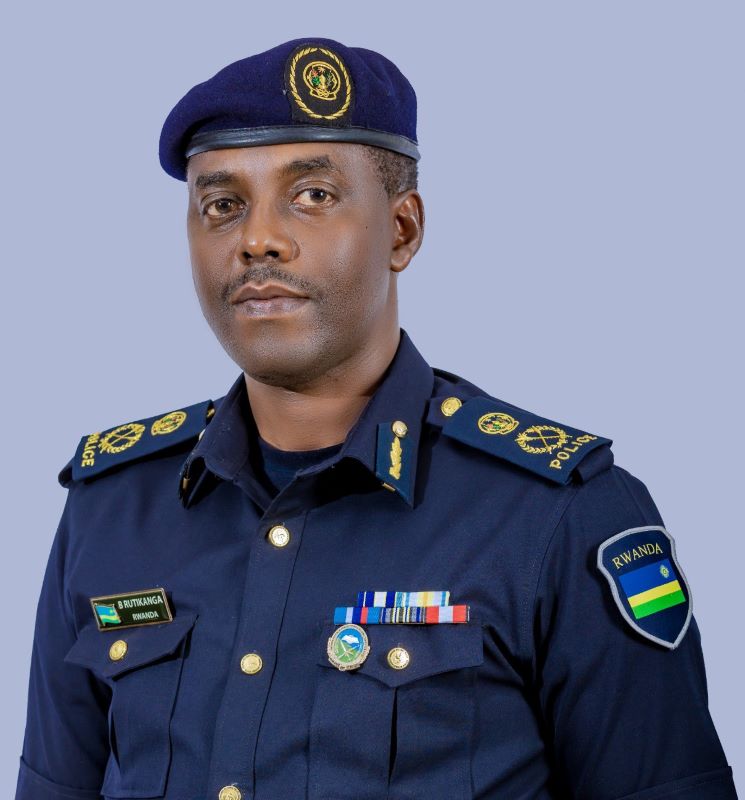
Speaking to IGIHE, RNP Spokesperson ACP Boniface Rutikanga emphasized that preventing accidents lies within the power of drivers, who can make safer choices by strictly adhering to traffic regulations.
“Road accidents are preventable. They primarily occur due to poor decisions made by some drivers. Operating a vehicle entails not only its physical movement but also the responsible observance of all traffic rules, consideration for fellow road users, and the avoidance of behaviors that may contribute to accidents,” Rutikanga affirmed.
Furthermore, it is crucial to note that bicycles and motorbikes collectively accounted for a substantial 53% of these accidents, with bicycles being responsible for 41% of all recorded accidents.
The earthquake occurred on Sunday, September 24, at 4:21 pm local time in Kigali and was felt in neighboring countries such as Burundi, Tanzania, Uganda, and the Democratic Republic of Congo.
The Rwanda Mines, Petroleum, and Gas Board (RMB) reported that the earthquake was most strongly felt in Karongi District.
While this earthquake had a magnitude of 5.1, which is considered moderate and typically not associated with severe damage, its effects could vary depending on several factors.
Vestine Mukarutesi, the Mayor of Karongi District, told RBA that the earthquake was felt across different sectors, including Rugabano and Gashari. It resulted in the destruction of five houses, with one house suffering structural damage, and the roofs of two classrooms were also damaged.
Another moderate earthquake with a magnitude of 4.9 was recorded in Rwanda on March 27, 2023, affecting some areas in the Western Province and Kigali City.
Additionally, Kagame had a meeting with Don Peebles, the founder, chairman, and CEO of The Peebles Corporation, a prominent private real estate investment and development company.
Their conversation centered around potential investment opportunities in Rwanda. The Peebles Corporation is headquartered in New York, Miami, and Washington DC and was established in 1983. The company has been involved in various infrastructure projects in the United States, including hotels and roads, with one notable project being the 90-storey Affirmation Tower.
Among others, President Kagame engaged in talks with Barry Segal, the founder of the Segal Family Foundation (SFF), alongside Dolly Segal and Martin Segal, SFF’s Board Chair. These discussions followed the 10th Annual Meeting of the Segal Family Foundation, which took place in Kigali in July of this year. They deliberated on the ongoing investments that SFF has made, impacting organizations worldwide, including 60 in Rwanda.
While the Segal Family Foundation is based in the USA, it operates in over 20 Sub-Saharan African countries, supporting approximately 200 community development projects. SFF provides training and financial support.
Established in 2004, the foundation expanded its presence to Rwanda after Barry Segal’s visit to the country in 2007. In Rwanda, the Rwanda Segal Family Foundation collaborates with other organizations, such as iDebate, which organizes debates to enhance students’ skills, and Solid’Africa, an organization that assists patients at various hospitals across Rwanda.
Through epochs known and unknown, these masterpieces have enthralled generations, encapsulating the very essence of their eras.
Whether hewn from primitive rocks in the prehistoric past or chiseled from colossal monoliths during medieval times, these iconic sculptures have not only captured the imaginations of tourists and archaeologists but have also etched their names indelibly in the annals of fame.
{{Seventeen Sculptures That Transcend Time}}
Each of these statues, a triumph of craftsmanship, tells a unique story and stands as a symbol of the place it graces today. They are the stuff of dreams and deserve a place on every traveler’s bucket list. Without further ado, let’s embark on a journey to discover the magnificence of the 17 most famous statues in the world.
{{1. Statue Of Liberty, New York}}
The embodiment of freedom and democracy, Lady Liberty stands tall in New York Harbor, a beacon of hope to immigrants seeking a new life in the United States.
{{2. Christ The Redeemer, Rio De Janeiro}}
Perched atop the Corcovado Mountain, this colossal statue of Jesus Christ watches over the vibrant city of Rio de Janeiro, offering solace and inspiration to all who behold it.
{{3. Moai, Easter Island, Chile}}
The mysterious Moai statues of Easter Island, with their enigmatic expressions and colossal proportions, have baffled historians and archaeologists for centuries.
{{4. Little Mermaid, Denmark}}
Hans Christian Andersen’s beloved character comes to life in the form of the Little Mermaid statue, captivating visitors with her wistful gaze in Copenhagen’s harbor.
{{5. The Thinker, Paris}}
Auguste Rodin’s iconic sculpture, The Thinker, invites contemplation as it sits in silent reflection at the entrance to the Musée Rodin in Paris.
{{6. David Statue, Italy}}
Michelangelo’s David, a symbol of human potential and beauty, stands as a testament to the artistic genius of the Italian Renaissance in Florence.
{{7. Terrace Of The Lions, Delos, Greece}}
On the sacred island of Delos, the Terrace of the Lions stands as guardians of ancient Greek mythology, preserving the legacy of this ancient civilization.
{{8. The Statues Of Mount Nemrut, Turkey}}
The colossal stone heads at Mount Nemrut, surrounded by an air of mystery, pay tribute to a once-mighty kingdom that has long since faded into history.
{{9. The Motherland Calls Statue, Russia}}
This colossal statue in Volgograd, formerly Stalingrad, commemorates the sacrifices of the Soviet soldiers during the Battle of Stalingrad in World War II.
{{10. The Statue of Unity, India}}
The imposing figure of Sardar Vallabhbhai Patel, the Iron Man of India, stands as a symbol of national unity in the Indian state of Gujarat.
{{11. The Manneken Pis, Belgium}}
Brussels’ cheeky icon, the Manneken Pis, has delighted visitors for centuries with its irreverent sense of humor.
{{12. Great Sphinx Of Giza, Egypt}}
The enigmatic Sphinx, guardian of the pyramids, continues to captivate the world with its timeless allure, shrouded in tales of ancient Egypt.
{{13. Spring Temple Buddha, China}}
The world’s tallest statue, the Spring Temple Buddha, exudes serenity and grace as it towers over the lush Chinese landscape, embodying the essence of Buddhism.
{{14. The Pieta, Tuscany}}
One of the oldest and largest statues in the world is The Pieta located in Italy. Every year thousands of tourists come to visit this masterpiece which is known for its unique architecture and culture. The statue depicts mother Mary holding Jesus after the crucifixion
{{15. The Terracotta Army, Xian}}
One of the world famous statues is none other than The Terracotta Army located in China which is carved out of Terracotta clay. Legends say that more than 700,000 labourers worked day in and out to built this masterpiece which is an army where every soldier has a different facial expression.
{{ 16. Olmec Colossal Heads, San Lorenzo}}
Olmec Colossal Heads located in Mexico is indeed one of the famous statues around the world. The statue is sculpted out of enormous basalt bounders and the heads have a mysterious history. A total of 17 heads have been discovered till date and each head expressing differently.
{{17. The Leshan Giant Buddha, Sichuan}}
In Lushan, the Leshan Giant Buddha is one of the most popular and tallest statues in China. It is considered to have been carved out of a cliff of Qifeng Peak which is regarded as the largest stone statue of Maitreya. The statue is built over the meeting point of the three rivers which was to calm down the turbulence which occurred due to falling of stones in the river.
These 17 statues, scattered across the globe, are more than mere works of art; they are living witnesses to the passage of time, reflecting the spirit and ethos of their respective cultures.
Each one tells a story, carries a message, and leaves an indelible mark on all who are fortunate enough to behold them. So, as you plan your travels, remember to include these marvelous sculptures in your itinerary, for they are not just monuments; they are testaments to the enduring power of human creativity and expression.
She was received at the Centre by the Deputy Inspector General of Police (DIGP) in charge of Administration and Personnel, Jeanne Chantal Ujeneza.
DIGP Ujeneza reiterated the RNP’s commitment to work with all entities and to ensure that the centre becomes a central hub in addressing gender based violence and child abuse issues, collectively.
Minister Uwamariya emphasized the importance of the Centre to create impact in gender and child abuse related matters.
“I came here to know how this Regional Centre of Excellence on GBV and Child Abuse operates, and how to ensure its sustainability through partnerships and having long term projects.
A lot has been done by this centre but we can do more better together as the Ministry, Gender Monitoring Office, the Police and other entities charged with gender and child abuse issues, through more research and availing more necessities to achieve its purpose,” Minister Uwamariya said.
The Minister emphasised on having a comprehensive working framework that will define all partnerships to enable the Center to sustain what has been achieved.
Launched by the government in November 2016, the Centre serves as a regional hub in addressing capacity issues in the gender sector.
It is the brain of the 2010 Kigali International Conference Declaration (KICD).
This was in response to the UNiTE global campaign to end violence against women and girls.
In 2017, it was adopted by the Eastern Africa Police Chiefs Cooperation Organization (EAPCCO) as the Regional Centre of Excellence on GBV and Child Abuse .
It hosts the Permanent Secretariat of KICD to coordinate security organs and law enforcement agencies in Africa in GBV and Child Abuse management.
It is a national training centre for stakeholders and partners in the area of gender, GBV and child protection.
It was established mainly to conduct research, build capacity of security organs and civilian personnel, promote regional initiatives and share good practices on ending Gender based Violence and Child Abuse.
It has since hosted international meetings and capacity building programmes for national and international law enforcement agencies, including Field Training Exercise (FTX) and Command Post Exercises (CPX) as well as training of about 700 nationals.
This funding is specifically designed to empower organizations and institutions to embark on practical initiatives, projects, and programs that bolster community resilience against the adverse effects of climate change.
This remarkable opportunity has been made possible thanks to the support of the Adaptation Fund’s Rwanda Subnational Adaptation Fund Enhanced Direct Access Project, currently being executed by the Ministry of Environment (MINEMA) in partnership with the Rwanda Green Fund.
Projects eligible for funding range from Climate Smart Agriculture, Sustainable Land-Use Management, Integrated Water Resource Management to Small-Scale Irrigation.
It’s imperative that proposed projects demonstrate sustainability beyond the conclusion of the funding, provide an exceptional return on investment, reach a substantial number of beneficiaries, advocate for gender and social inclusivity, and align with the Rwanda Green Fund’s Environmental and Social Management Framework.
The application window is now open and will remain so until 5:00 PM on Friday, October 20, 2023.
Applications can be submitted at www.greenfund.rw while prospective applicants are encouraged to reach out to application@greenfund.rw for any inquiries or clarifications.