As he delivered a speech at the United Nations General Assembly, Tshisekedi emphasized the need for his country to regain control over its stability.
The mission, consisting of 15,000 peacekeepers, has struggled to address rebellions and protect civilians.
Originally scheduled for withdrawal in December 2024, DR Congo now seeks an earlier departure, starting this year.
While the US expressed concerns about a hasty exit, Tshisekedi stressed that maintaining Monusco was counterproductive amid growing tensions and protests against the mission.
The ongoing militia violence in eastern DR Congo has plagued the region for decades. The United Nations Organisation Stabilisation Mission in the Democratic Republic of the Congo (Monusco), in place since 1999, is one of the world’s largest and most expensive UN peacekeeping efforts, with an annual budget of around US$1 billion.
However, its effectiveness has been questioned by many in the DRC.
The vehicle, RAV4 registration number RAE 326Y, was intercepted on Wednesday, September 20, at about 05a.m, in Nshuri village, Gatengure cell of Tabagwe sector.
Two men, who were on board; the driver and the alleged owner of the polythene bags, were also arrested.
The suspects told the Police that they had smuggled the outlawed packaging products into Rwanda from Uganda, through a porous border point in Nyagatare District.
They added that they were at the time trafficking the non-biodegradable products to Kayonza District.
Superintendent of Police (SP) Hamdun Twizeyimana, the Police spokesperson for the Eastern region, said that the vehicle was intercepted during operations against smuggling.
“Police had information about smugglers and drug traffickers, who operate mainly at night.
The vehicle was stopped, searched and Police officers recovered boxes containing 540,000 pieces of polythene bags leading to the arrest of the two people on board,” SP Twizeyimana said.
He commended the role of the public in fighting smuggling and other unlawful acts, through information sharing.
Manufacturing, use, importation or sale of plastic carry bags and single-use plastic items are prohibited under article 3 of law N? 17/2019 of 10/08/2019 relating to the prohibition of manufacturing, importation, use, and sale of plastic carry bags and single-use plastic items in Rwanda.
In article 10, any person, who imports plastic carry bags and single-use plastic items is liable to the dispossession of those plastic carry bags and such items, and to an administrative fine equivalent to ten times the value of those plastic carry bags and single-use plastic items.
In article 11, a wholesaler of plastic carry bags and single use plastic items is liable to an administrative fine of Rwf700, 000 and dispossession of those plastic carry bags and such items.
In article 12, a retailer of plastic carry bags and single-use plastic items is liable to an administrative fine of Rwf300,000 and dispossession of those plastic carry bags and such items.
The announcement was made by President Paul Kagame as he addressed delegates at the 78th United Nations General Assembly in New York on 20, September, 2023.
In his speech, Kagame expressed concerns about the slow pace of developing countries towards the Sustainable Development Goals (SDGs) a thing he attributed to the debt crisis, as a result of ‘higher costs of borrowing’.
“The primary cause of this crisis is high interest rates in developed economies, at the same time, developing countries face exaggerated risk premiums for both currency and political risk, which are simply unjustified,” he explained.
Additionally, Kagame stressed the necessity for developing countries to be responsible and accountable for the quality of their financial governance and management of their natural resources.
Welcoming the proposals of the ‘Bridgetown Initiative’ and the ‘Paris Summit for a New Global Financing Pact’, Kagame hinted on Rwanda’s support for the second retrieval of the ‘Green Climate Fund’ to create a fiscal space for “vulnerable” nations to tackle climate change.
Furthermore, he pronounced the country’s commitment to providing a solution to conflicts in developing countries.
“We must not only cool down on climate, we must also cool down on conflict. Today, there is no sign of ongoing conflicts ending anytime soon. We do not even see hope from those with the most influence that an end is in sight.”
“Every year, migrants and refugees undertake dangerous journeys in search of a better future. Rwanda remains committed to working with partners, including the United Nations High Commissioner for Refugees, to contribute to a durable solution,” he stretched.
The United Nations General Assembly held in NewYork brought together world leaders with a goal to get the SDGs on track.
According to the UN secretary General-Antonio Guterres, the SDGs are, “a list of goals that carry hopes, dreams, rights and expectations of people everywhere, yet to date, only 15% of the targets are on track and many are going in reverse.”
“Instead of leaving no one behind, we are leaving the SDGs behind,” he stated, therefore calling on all excellencies available to come up with a rescue plan for the SDGs.
“I am deeply encouraged by the detailed and wide ranging drafts, political declaration and consideration here today, especially its commitment to improving developing countries’ access to the fuel required for SDG progress (finance), which includes at least 500 billion US dollars a year as stimuli to developing countries in addition to an effective debt relief mechanism”, added the UN Secretary-General.
UNESCO made this significant announcement on Wednesday, 19th September 2023, through its official X account, formerly Twitter.
These memorials bear witness to one of the darkest tragedies on the African continent. They not only serve as places for families to reflect upon the victims but also as a universal reminder of the atrocities that humanity must never allow to recur.
Dr. Bizimana Jean Damascène, the Minister of National Unity and Civic Engagement, representing the Rwandan government during this momentous occasion, underscored the unique importance of this day for Rwanda and the global fight against genocide denial and revisionism related to the 1994 Genocide against the Tutsi in Rwanda.
He expressed gratitude to the countries supporting Rwanda, emphasizing how their assistance bolsters the battle against denial and its ideology.
“The historic inscription of the Bisesero, Gisozi, Murambi and Nyamata Sites on the World Heritage List increases international visibility, and also honours the memory of the victims they represent throughout the world. This recognition strengthens the fight against Genocide denial and will serve to educate present and future generations,” said Dr. Bizimana .
These four sites received approval shortly after Nyungwe National Park in the Southern Province was also granted UNESCO World Heritage status yesterday.
Other representatives noted that the inclusion of these memorials in the world heritage list could serve as an inspiration to other nations, particularly those affected by turmoil in Africa. The Rwandan government has committed to preserving and maintaining these memorials, with an annual budget allocated for this purpose.
“Rising inflation has been putting pressure on the Global economy as we know, just as we rebuild from the pandemic. The result has been a tightening of monetary policy disproportionately impacting low and middle income countries.
Now is the time to come together to make the international financial system fit for purpose,” he stressed.
Kagame made the remarks during the High-Level Roundtable on International Financial Architecture on 19th, September, 2023, adding that it is a matter of real substance for Africa’s future, not a competition for geo-political influence which has been going on.
“We simply need fiscal space to finance our development and protect ourselves against climate and health shocks,” he explained.
Kagame further shared four examples on how ‘things can be done differently and better moving forward’.
Essentially, “we must accelerate the debt management process through the G20 common framework”.
Additionally, he encouraged rich countries to honour the commitment to allocate part of their special drawing rights to low income and developing countries on a need basis and not wealth.
Similarly, “international financial institutions need to significantly simplify and speed up the process of approving loan disbursements to enable private investments and financing as means of bridging the financing gap from multilateral banks,” he explained.
Ultimately, Kagame urged collaboration in addressing the ‘unfair’ payment of high risk premiums for developing countries which he termed as “extra costs that come on top of the ‘already high’ interest rates.”
Highlighting that the given examples are not forms of charity, Kagame applauded the efforts already in place that Rwanda has benefited from.
“Fortunately, the political will to change seems to be slowly emerging and we hope this trend gives us faster results. The bridgetown initiative and the Paris summit for a new Global financial pact are important examples.
Another important example is the IMF’s resilience and sustainability trust which happily Rwanda was among the first to benefit from,” he remarked.
The International Financial Architecture was crafted in 1945 after the Second World War designed by and for the industrialised countries of the post war period.
According to the United Nations (UN) Secretary-General, it is ‘failing the test’ as “halfway to the 2030 deadline, the Sustainable Development Goals (SDGs) are drifting further away by the day.
In May, the Secretary-General published a policy brief: Our Common Agenda (OCA) outlining recommendations on reforming the international financial and tax architecture.
To achieve this, the policy brief offers recommendations in six areas ; to reform and strengthen global economic governance, deliver debt relief and lower the cost of sovereign borrowing, scale up international public development and climate financing, strengthen the global financial safety net and provide liquidity to countries in need, reset the rules for the financial system, and to redesign the global tax architecture for equitable and inclusive sustainable development.
The envoy made the revelation at the celebration of the 74th anniversary of the founding of the ‘People’s Republic of China’ (PRC).
“Our economic cooperation bring tangible benefits. Our bilateral trade is booming. More and more Chinese business are coming to Rwanda.
When addressing the inauguration ceremony of a Chinese cement plant, His Excellency President Paul Kagame pointed out the importance of this cooperation. The embassy will continue to promote this business friendly country to more investors,” he said.
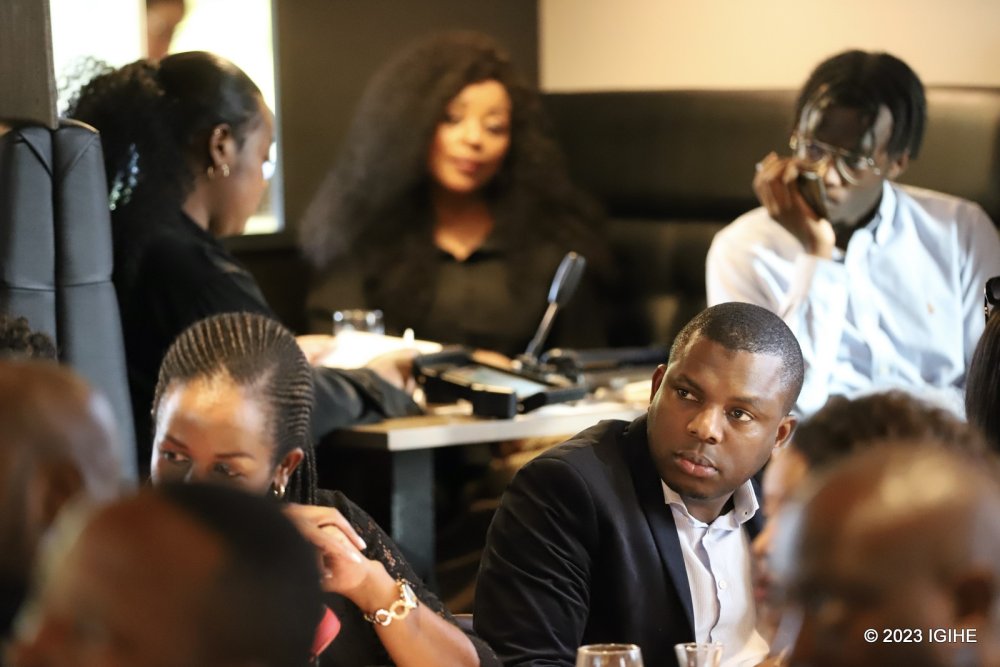
Amb. Wang added that China admires Rwanda over thinking big and its envious aptitude on the future development of mankind.
China and Rwanda established diplomatic relationships on 12th, November, 1971 and since then, the breadth and depth of the two countries bilateral relations continue to expand.
According to Prof. Nshuti Mannaseh, Rwanda’s State Minister for EAC Affairs who graced the event, this journey has led to cooperation that spans across various domains; from Trade and Investments, Health, Education, Technology, Infrastructure development, and more.
According to the minister, China’s investments in Rwanda are valued at over US$1 billion creating an enormous impact on the economy in addition to job creation.
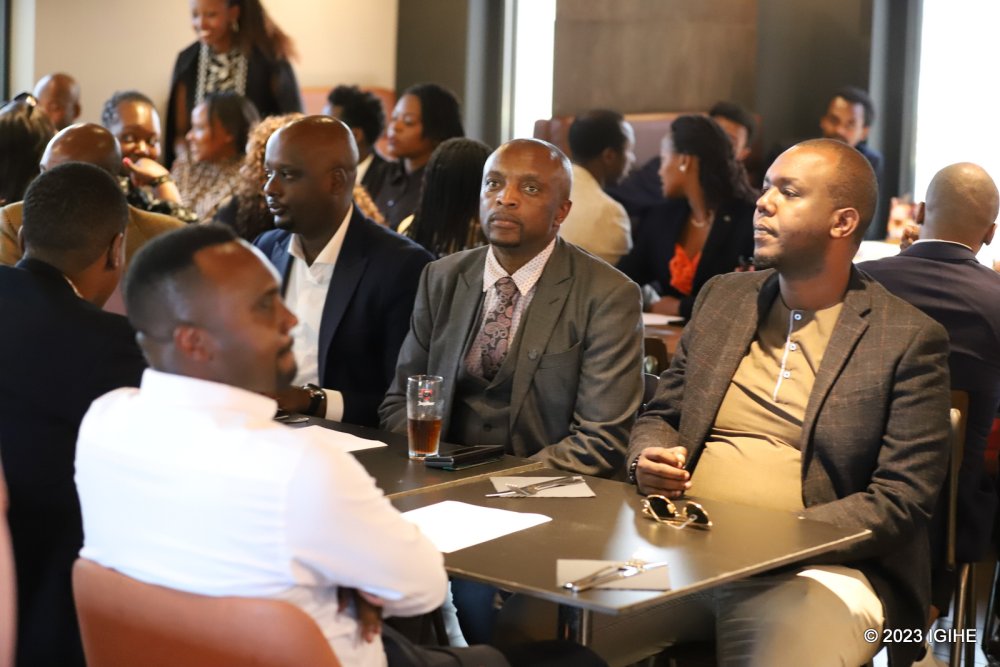
“China is one of Rwanda’s leading trading partners, with a bilateral trade volume of exports to china estimated at 537 US dollars, while imports stand at over 1 billion US dollars,” he said.
Additionally, in 2022, China granted ‘duty free’ privileges for imported goods originating from Rwanda to farther increase trade between the two nations.
Attributing the two countries ‘brotherly friendship’ to respect, Amb. Wang said the embassy will continue to promote existing ‘brotherly friendship’ based on mutual respect.
“We respect each other, treat each other as equals and good partners. With the guidance of our leaders, the bilateral relations have become increasingly close,” he stated.
The PRC’s work in Rwanda is a testament to projects like; the Nyabarongo Hydropower plant II, Musanze Polytechnic College, the expansion of Masaka Hospital, among others.
“Our cooperation has also extended to the field of education, MOUs between Jinhua Polytechnic and MINEDUC have led to the launch of programs in Electrical Automation and E-commerce at IPRC Musanze”, remarked Prof. Nshuti.
“This commitment to education underscores our shared belief in the power of knowledge and the importance of investing in the future of our nations”, he added.
Notably, a substantial number of Rwandan students are awarded masters scholarships in various fields every year to study in China in addition to training Rwandan teachers and supporting curriculum development within the country.
According to Amb. Wang, China will host FOCAC (Forum on China-Africa Cooperation) in supporting Africa’s development meeting which may draw up new plans for further development between the two countries.
“In August 2022, Chinese President Xi Jinping put forward three plans aimed at supporting Africa’s talent development, Agricultural modernization and Industrialization, China and Rwanda could seize those opportunities to enhance our cooperation,” he remarked.
The PRC 74th anniversary was marked on 19th, September, 2023 at Marriot Hotel in Kigali, the capital of Rwanda.
The event was graced by other dignitaries including Wellars Gasamagara, the Secretary-General of RPF; Sandrine Umutoni, Minister of State in the Ministry of Youth and envoys accredited to Rwanda among others.
Belgium’s request to replace Ambassador Karega emerged after Rwanda had awaited his approval for long, according to Kagame.
While Rwanda respects Belgium’s right to reject a proposed ambassador, Kagame emphasized the importance of receiving clear explanations in such situations. He pointed out that Belgian officials provided unconvincing reasons for their decision.
The Rwandan President also revealed that it later became apparent that Belgium’s decision was influenced by the Democratic Republic of Congo (DRC) and not other undisclosed reasons.
Kagame connected this decision to the expulsion of Ambassador Karega by the DRC, stressing that it had nothing to do with Ambassador Karega’s character, as he was representing national interests during a period of tension between Rwanda and its neighboring country.
Kagame firmly stated that Rwanda would not replace Ambassador Karega with another ambassador in light of these circumstances.
Ambassador Karega left the DRC within 48 hours after being ordered to do so on December 31, 2022, but chose to depart before the deadline, exiting through Congo Brazzaville. On the same day, the DRC recalled its Chargé d’Affaires in Rwanda, Alice Kimpembe Bamba.
Belgium did not publicly announce the reasons for rejecting Ambassador Karega’s appointment.
The decision was leaked by Jambo News, an outlet associated with Jambo ASBL, a group consisting of children born to extremist Rwandan exiles accused of involvement in the 1994 Genocide against the Tutsi. This leak sparked criticism on social media, with some users questioning whether Jambo News had become a communication channel for Belgium’s Ministry of Foreign Affairs.
Belgium’s rejection of Ambassador Karega’s appointment marked another setback in the bilateral relationship between Rwanda and Belgium. This came after a previous misunderstanding in September 2021 regarding the case of Paul Rusesabagina, who was convicted of terrorism.
Rwanda had canceled a scheduled bilateral meeting with Belgium at the ministerial level during the United Nations General Assembly in New York in response to criticism from Sophie Wilmes, the Deputy Prime Minister and Minister of Foreign Affairs of Belgium, regarding Rusesabagina’s 25-year jail term.
Wilmes had expressed concerns about Rusesabagina’s trial, citing perceived flaws in the right to defense and the presumption of innocence. In response, the Rwandan Government accused Belgium of showing contempt toward Rwanda’s judicial system during the trial and highlighted the significant contribution of relevant Belgian institutions to the investigation. Rwanda emphasized that the victims of FLN’s terrorist acts deserved justice as much as Rusesabagina and his co-defendants, leading to the cancellation of the ministerial-level talks.
Rusesabagina was subsequently released on presidential clemency this year.
Following the rejection of Ambassador Karega’s appointment, Yolande Makolo, the government spokesperson, expressed regret over the decision and its potential negative implications for the bilateral relations between Rwanda and Belgium.
She criticized the Belgian government for appearing to capitulate to pressure from the DRC government and propaganda from negationist organizations and activists, through whom they chose to leak the decision.
In his reply dated Sept. 12, Xi said he hopes that the spirit of Flying Tigers will be carried on from generation to generation among Chinese and American peoples.
“I was heartened by the great enthusiasm of the Sino-American Aviation Heritage Foundation and the veterans of Flying Tigers in letting more Chinese and Americans know about the stories of the Flying Tigers over the years. Inspired by this, more and more young Americans have joined the Flying Tigers Friendship Schools and Youth Leadership Program, and nearly 500 Flying Tigers veterans and several hundred of their family members have visited China. I wish to pay tribute to you for all this,” Xi said.
“In the past, our two peoples fought the Japanese fascists together, and forged a deep friendship that withstood the test of blood and fire,” Xi said. “In the future, the two major countries shoulder even more important responsibility for world peace, stability and development.”
“We therefore should, and we must, respect each other, coexist in peace and pursue win-win cooperation,” he said.
Noting that “in growing China-U.S. relations, the hope lies in the people, the foundation lies among the people, and the future lies with the youth,” Xi said that “a sound and steady development of the relationship in the new era requires the input and support of a new generation of Flying Tigers.”
Founded in 1998, the Sino-American Aviation Heritage Foundation is an American civil friendship group aimed at promoting the study and commemoration of China-U.S. historical aviation events.
Recently, Greene, Moyer and McMullen jointly wrote a letter to Xi, in which they introduced the efforts of the foundation and Flying Tigers veterans in helping promote China-U.S. friendly exchanges, and expressed their willingness to inherit and carry forward the precious spirit of China-U.S. cooperation.
The delegation led by the Deputy Commandant and Director of Studies, Mr DE. Egbeji, is in Rwanda for a study tour from 17 to 24 September 2023.
The course participants are drawn from different agencies in Nigeria and African countries including Tchad, Niger, Gambia and Rwanda.
At RDF Headquarters, they were received by the RDF Spokesperson, Brig Gen Ronald Rwivanga on behalf of the Chief of Defence Staff. He briefed them on the theme of the course ” Globalization and Regional Economic Integration: Implications for Sustainable Development in Africa”.
While talking to the Media after the briefing, Mr DE Egbeji emphasised that the participants came to interact and share knowledge and experience on Economic Integration and its implications on sustainable development in Africa.
“We need to find out what Rwanda is doing differently that we can learn and what Rwanda can learn from Nigeria,” he said.
The inscription of Nyungwe National Park serves as a vital step in ensuring its long-term conservation, preserving its natural heritage for future generations, and promoting sustainable development for neighbouring communities.
Established as a natural reserve in 1933, the forest became a national park in 2005 in a bid by the government to bolster its protection and safeguard the thousands of endangered and endemic species it harbours.
Covering an expanse of 101,900 hectares, Nyungwe National Park stands as the largest block of natural forest in the region. Boasting remarkable biodiversity, it is home to over a dozen species of primates, 322 bird species, 200 identified orchids, and nearly 300 butterfly species, including several endemic to the park.
The management of the park falls under the hands of the African Parks Network, a non-governmental organisation specialising in conservation, in partnership with the Rwandan Government.
Speaking after the inscription, Dr. Jean Damascene Bizimana, Minister of National Unity and Civic Engagement who was representing the Government of Rwanda, welcomed the development highlighting that it is not only a contribution to the preservation of Rwanda’s natural heritage, but also of particular significance to the Rwandan people, ‘for whom it is the first site inscribed on this universal list’.
The inscription of Nyungwe National Park into the UNESCO World Heritage list follows the inclusion of Gishwati-Mukura National Park in the World Network of Biosphere Reserves in 2020.
This recognition builds upon the long-established presence of the Volcanoes Biosphere Reserve in northwest Rwanda, which has been a part of the network since 1983.
Together, these designations underscore Rwanda’s commitment to conserving its natural heritage and contributing to global conservation efforts.