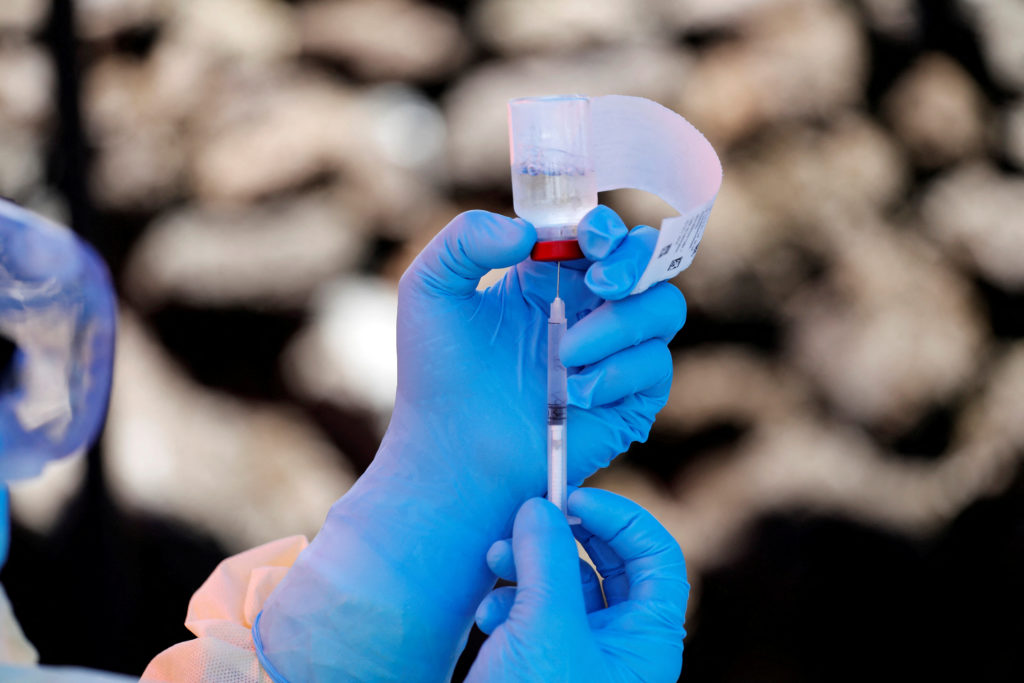
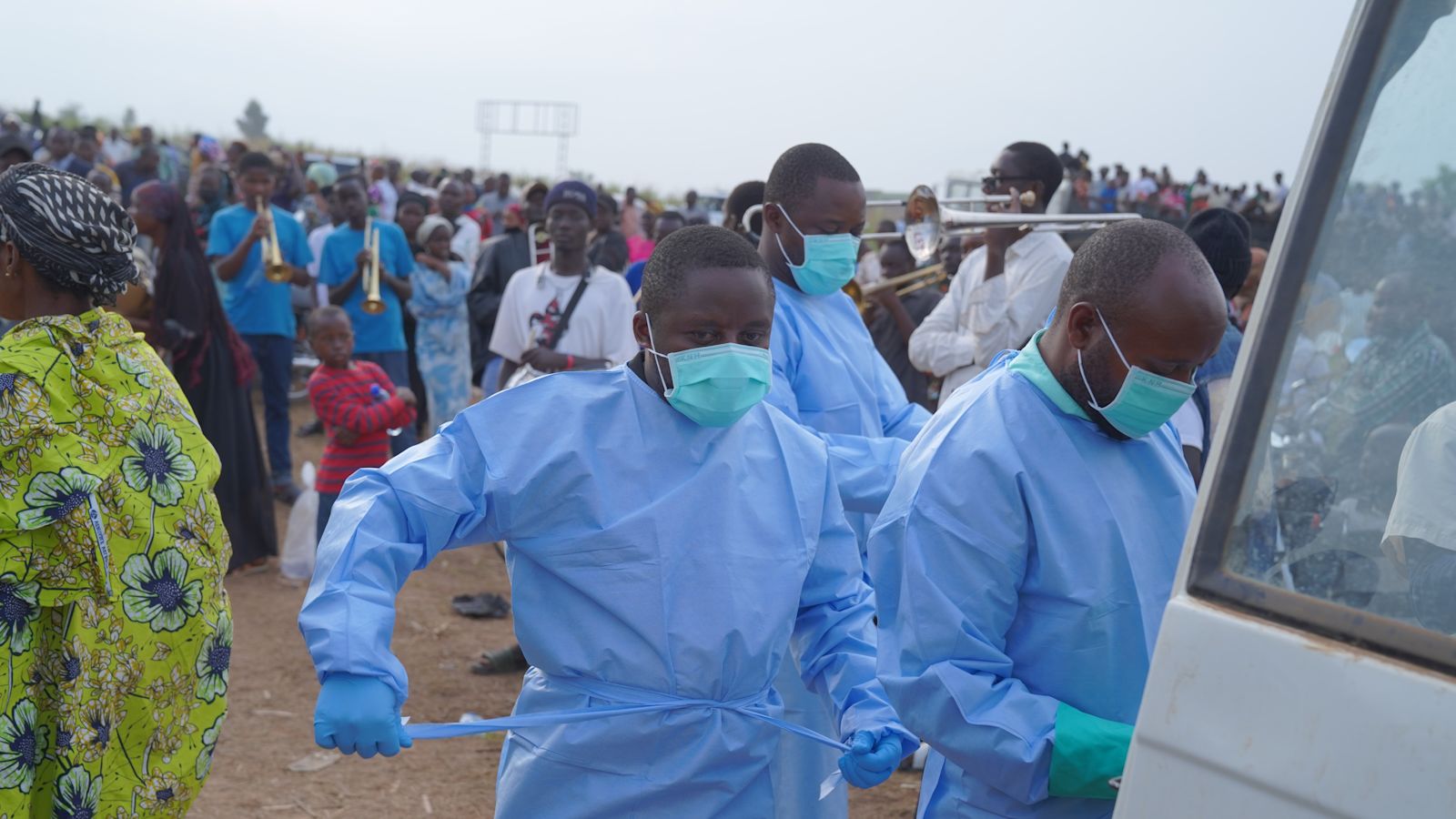
A total of 16,520 doses of the Ervebo vaccine arrived at the N’djili International Airport in the capital Kinshasa, according to the DRC health ministry.
A total of 50,120 doses are expected to arrive between Aug. 21 and 24, the ministry said.
The World Health Organization and the Africa Centers for Disease Control and Prevention said Thursday that the International Coordinating Group on Vaccine Provision had approved an immediate initial release of 70,000 doses of Ervebo following a request from the DRC government.
Ervebo is licensed and recommended for outbreaks caused by Zaire ebolavirus, but its effectiveness against the Bundibugyo virus, which is responsible for the current outbreak, remains uncertain.
Of the allocation, 20,000 doses will be used in a Phase 3 clinical trial to assess the vaccine’s impact against the Bundibugyo virus, while 50,000 doses are intended for frontline and health workers.
The vaccines arrived as transmission remains active across the country.
As of Aug. 19, the DRC had recorded 5,290 confirmed cases and 2,516 deaths, with a case fatality rate of 47.6 percent, according to the latest government situation report released on Friday.
The DRC declared the current Ebola outbreak on May 15. It has since become the country’s largest and deadliest Ebola epidemic on record and the second-largest globally.
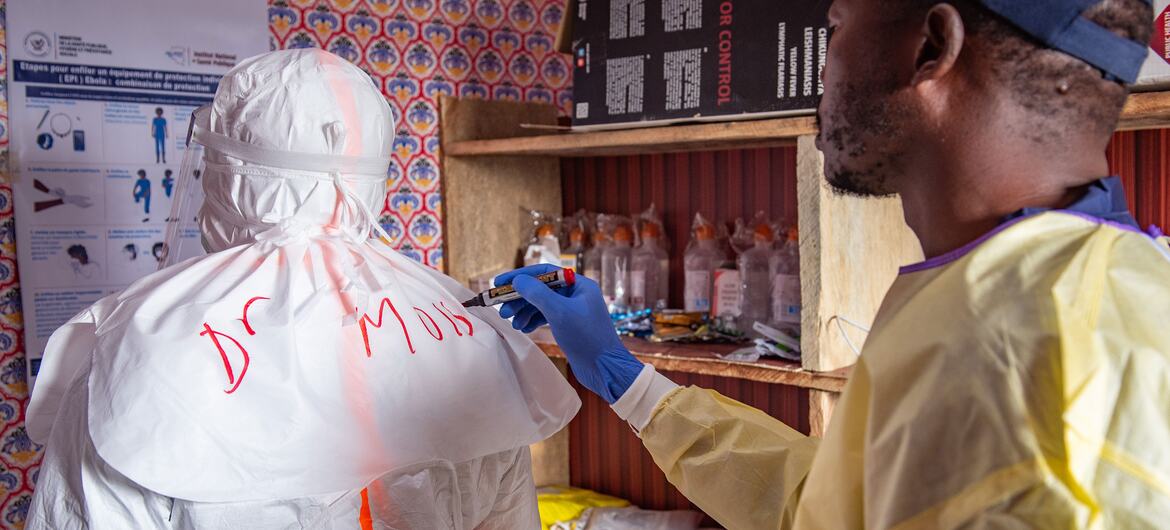
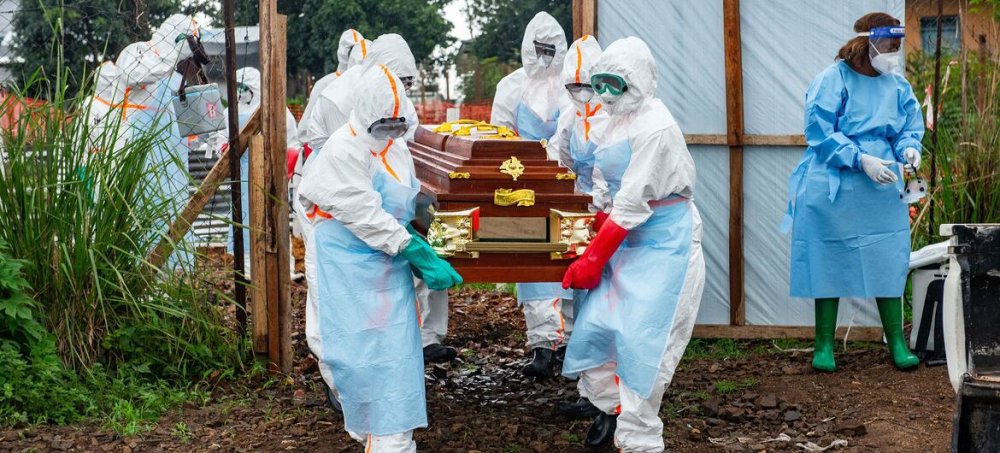
A doctor treating Ebola patients in the eastern DR Congo has his named written on his back for identification purposes.
The warning came as the DRC government launched an emergency initiative Thursday to reinforce surveillance along the Congo River, seeking to prevent one of Central Africa’s busiest transport corridors from carrying the virus toward major cities, including the capital Kinshasa.
According to the latest figures from the DRC’s health authorities, as of Aug. 18, 5,208 confirmed cases, including 2,476 deaths, had been reported across six provinces, with a case fatality rate of 47.5 percent. Another 1,115 patients had recovered.
Hidden casses, missing transmission chains
The Africa Centers for Disease Control and Prevention (Africa CDC) said Thursday that modeling conducted jointly with the DRC’s National Institute of Biomedical Research and other partners suggested that the actual burden was substantially higher than confirmed figures indicated.
“We are detecting just 30 to 40 percent,” Kyeng Mercy, an Africa CDC official, said at an online press briefing Thursday. “If you have to look at the real burden, we should be over 10,000 to 15,000 cases.”
Mercy cautioned that the figures were model-based estimates and therefore subject to uncertainty, but said multiple indicators consistently pointed to significant under-detection.
“Models also have their caveats in terms of uncertainty,” said Mercy. “We are just saying that we are not detecting as much as we should, based on certain indicators.”
Yap Boum II, head of emergency preparedness and response at Africa CDC, said Thursday at the online briefing that based on the assessment, the outbreak could be three times the current size in terms of the number of confirmed cases.
He also said that fewer than 10 percent of detected cases are currently among known contacts, while fewer than 40 percent of cases have an epidemiological link to another confirmed infection.
The relatively milder and less typical clinical presentation of Bundibugyo Ebola, compared with disease caused by the Zaire ebolavirus, may also discourage some infected people from seeking treatment, further obscuring the outbreak’s true scale, he added.
Jean Kaseya, director-general of Africa CDC, told Congolese media Wednesday that the epidemic “is not under control,” warning that the outbreak could eventually surpass the scale of the 2014-2016 West Africa epidemic unless major changes were quickly made to the response.
“We may go further than what we’ve seen in West Africa,” Boum also warned, while stressing that a shift in response strategy could still bend the epidemic curve.
Kaseya has also said evidence suggests transmission may have begun around February, months before the outbreak was formally declared on May 15. The number of infections and deaths during that undetected period remained unknown and could substantially add to the current official tally, he added.
Congo River becomes new front line
Against that backdrop, the DRC government on Thursday launched the “Congo River Without Ebola” initiative, aimed at preventing the country’s main river transport artery from becoming another route for the virus to spread.
The plan is designed to block transmission toward major riverside population centers, particularly Kinshasa, a megacity of nearly 20 million people where no Ebola case has been confirmed, while reducing the risk of cross-border spread to the Republic of the Congo and the Central African Republic.
The Congo River is one of Central Africa’s main economic and transport arteries, carrying thousands of passengers, traders and transport operators each day, according to the regional bureau of the WHO.
Health officials fear that such intense mobility could allow undetected infections to travel long distances before symptoms are recognized.
Measures under the initiative include reinforced screening and surveillance at ports and along river routes, community early-warning networks, expanded isolation and treatment capacity in key hubs, as well as mobile floating laboratories and preparations for the possible quarantine of vessels.
The initial intensive phase will last three months, focusing on equipping control points, strengthening local response capacity and raising awareness among riverside communities.
Body Ilonga, secretary-general of the DRC’s health ministry, said Thursday the priority is to rapidly identify suspected infections and break chains of transmission.
The initiative is supported by an inter-agency mechanism involving the WHO and several other UN agencies, with 9 million U.S. dollars in catalytic funding mobilized through the UN Office for the Coordination of Humanitarian Affairs.
The river plan adds a new geographic layer to an outbreak that has already expanded rapidly overland. Africa CDC said Thursday that growing transmission in the DRC’s northern Bas-Uele province, near the Central African Republic, has also made cross-border surveillance increasingly urgent.
“The entire continent has to be on high alert,” Mercy said, adding that the highest risks were currently concentrated in parts of East and Central Africa.
Response shifts to villages, vaccines
Health authorities are meanwhile seeking to overhaul the response after Kaseya acknowledged Wednesday that “the approach has not been the best.”
Africa CDC and the DRC government are increasingly shifting from conventional contact tracing toward what they call a “village-centered response,” particularly in hotspots where transmission has become too widespread for individual contact lists to capture.
Under the approach, village chiefs and community health workers would help conduct house-to-house searches, report alerts, identify suspected infections and link families directly with health facilities and response teams.
The strategy is also intended to address persistent distrust that has partly led to delayed treatment, community deaths and resistance to response teams.
Vaccination is also set to become a larger part of the response. An initial 70,000 doses of Ervebo vaccine would be allocated to the DRC, although the vaccine is licensed against Zaire ebolavirus rather than the Bundibugyo strain.
According to the WHO, the International Coordinating Group on Vaccine Provision informed the DRC government of the immediate release of an initial 70,000 doses.
The DRC authorities plan to use the doses both for research and among frontline and at-risk populations, based on emerging evidence that the vaccine may offer some cross-protection.
Kaseya said Wednesday that the first doses were expected to arrive within days.
“The current trajectory must change, and it should change,” Kaseya said.
“I think the population can hope that, with all the measures we are going to put in place, we will be able to stop this outbreak,” Kaseya added.
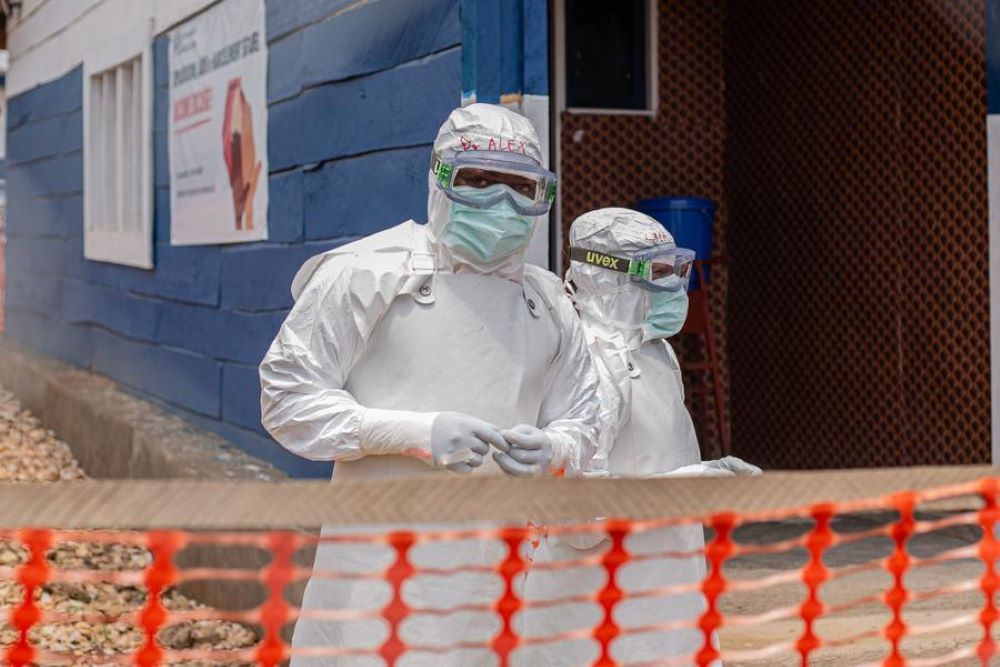
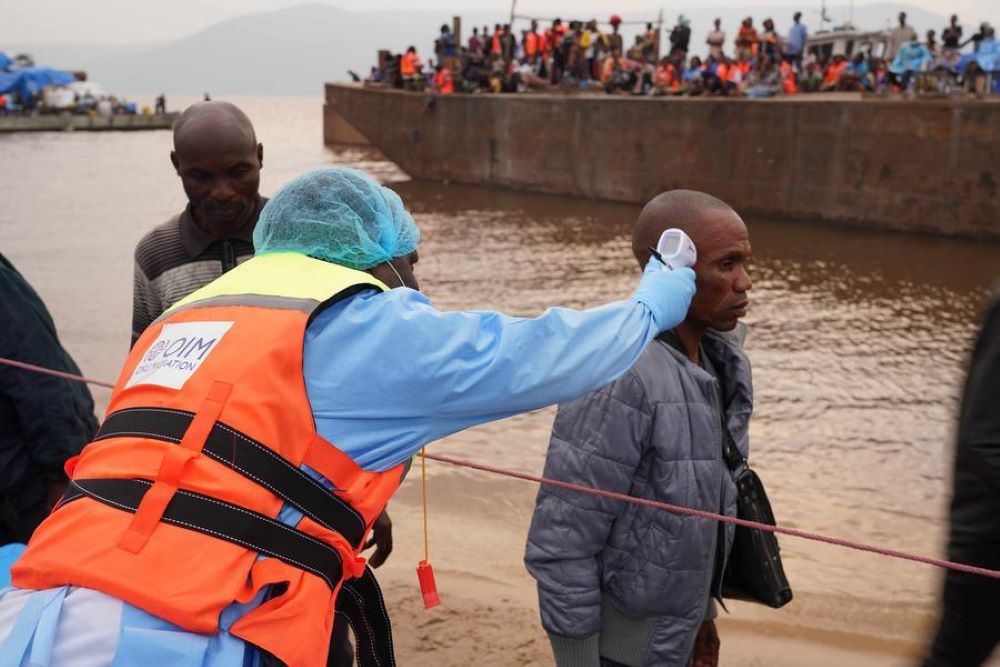
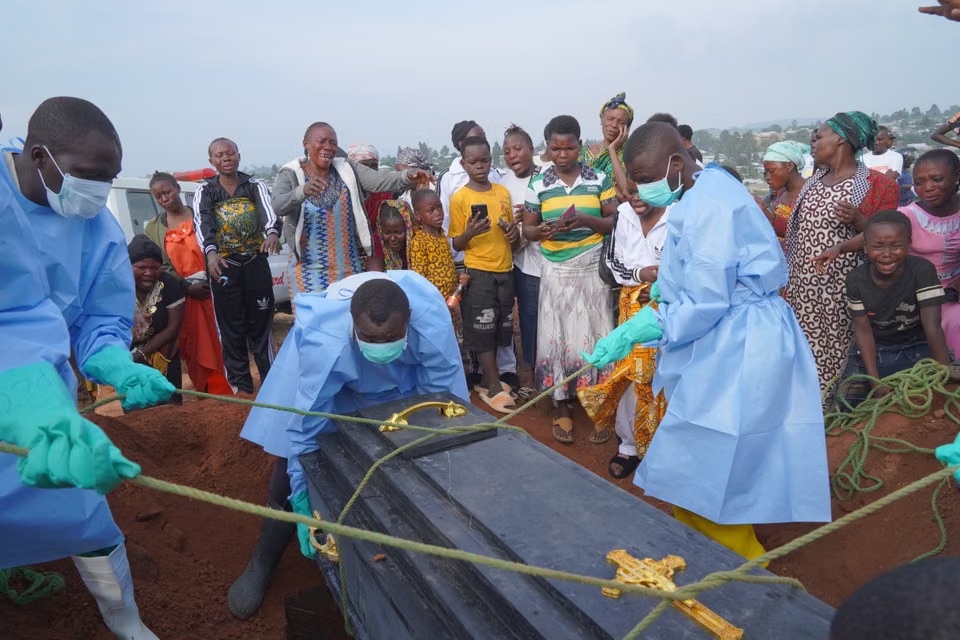
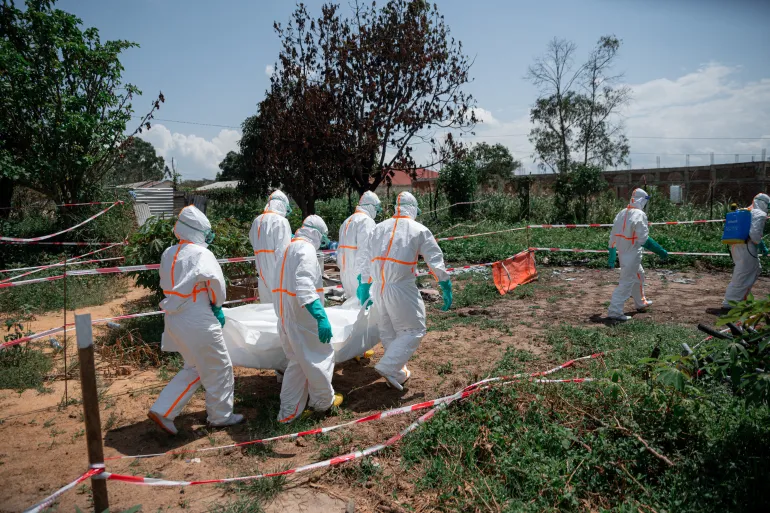
A staff member of the International Organization for Migration (IOM) takes temperature of a passenger from an intercepted boat outside Kinshasa, capital of the Democratic Republic of the Congo (DRC), Aug. 6, 2026. (Xinhua)Medical workers are pictured at an Ebola treatment center in Beni, North Kivu Province, the Democratic Republic of the Congo, Aug. 16, 2026. (Xinhua)
Researchers from SWPS University and the Nencki Institute of Experimental Biology studied 180 young adults aged 18 to 35 who experienced fear of failure.
The participants took part in four therapy sessions over two weeks, focusing on difficult childhood experiences involving criticism.
The researchers tested different imagery based techniques. One group recalled situations that had caused fear or anxiety.
Another used a technique called Imagery Rescripting, in which participants recalled a painful childhood experience and imagined a supportive defender entering the situation, confronting the person who was criticizing them and protecting the child.
A third group received a similar treatment but included a 10 minute delay designed to strengthen the intervention’s effect.
The researchers found that all the imagery based approaches led to significant and lasting reductions in fear of failure.
Participants also experienced lower levels of sadness and guilt. Their physical stress responses when recalling childhood criticism also decreased.
Importantly, the improvements were still visible three and six months after the therapy sessions, suggesting that the effects were not temporary.
The researchers also discovered that imagery rescripting appeared to work particularly well when participants experienced a moment of surprise.
They explained that this may happen when what a person expects differs from what actually happens in the new imagined experience.
This mismatch, known as prediction error, may help the brain loosen established emotional patterns and create new responses to painful memories.
The researchers say the findings suggest that difficult childhood memories do not necessarily have to remain emotionally painful forever.
By creating safer and more supportive endings to distressing experiences, therapy may help people respond differently to challenges in their lives.
Rewriting painful childhood memories may help people overcome fear of failure
In a statement issued on August 16, 2026, the authorities said the outbreak is currently affecting six provinces, although its spread remains limited to 55 health zones.
The affected provinces are Bas-Uélé, Haut-Uélé, Ituri, North Kivu, South Kivu and Tshopo. Among them, Ituri remains the province most affected by the outbreak.
Since the outbreak began, a total of 4,843 people have been confirmed to have contracted Ebola.
Of those, 777 people are currently in isolation or receiving treatment in health facilities, according to the latest update.
The death toll stands at 2,272, representing 46.9 percent of the confirmed cases. Meanwhile, 1,006 people have recovered from the disease.
Health authorities have continued efforts to identify and monitor people who may have been in contact with confirmed Ebola patients.
Contact tracing activities have so far reached 83.2 percent, as health teams continue surveillance in affected communities.
The authorities are also maintaining efforts to identify potential contacts and monitor them as part of measures aimed at containing the outbreak and preventing further transmission.
Ebola deaths account for 46.9% of confirmed cases in DR Congo.
Tom Fletcher, the UN under-secretary-general for humanitarian affairs, issued the warning on Friday, August 14, as the international response to the outbreak was being stepped up.
“Ebola is winning in the Democratic Republic of the Congo,” Fletcher said, urging countries and humanitarian organisations to act before the virus spreads further. “We need speed, scale and solidarity before this virus gets even further ahead of us.”
The outbreak, caused by the Bundibugyo strain of Ebola, was declared by DRC authorities on May 15. More than 4,600 cases have since been reported, with more than 2,100 deaths, according to figures cited by the UN.
Six of the DRC’s 26 provinces have reported cases, while Uganda has also recorded infections. Cases have additionally been reported close to the border with South Sudan, raising concerns about further regional transmission.
UN calls for a major expansion of response
Fletcher announced an additional $30.5 million from the UN’s Central Emergency Response Fund to support efforts to contain the outbreak. This comes on top of $24 million previously allocated to the DRC and neighbouring countries.
The UN humanitarian office has also deployed an additional 20 staff members to the Ebola response, but Fletcher said the scale of the crisis requires a much larger effort.
The UN is calling for the number of teams conducting safe and dignified burials to be doubled, treatment capacity to be tripled and contact-tracing efforts expanded. More experienced managers are also being deployed to help coordinate the response.
“We cannot let the virus outrun our response,” Fletcher said.
The outbreak is centred largely in Ituri province, which has recorded more than 3,400 of the reported cases. The province is also facing a severe humanitarian crisis, with widespread food insecurity and malnutrition adding to the challenges of containing the disease.
Across eastern DRC, about 2.6 million people are described as seriously malnourished, with more than half of them in Ituri.
Conflict complicates Ebola response
Humanitarian agencies are working in an environment already destabilised by years of conflict. Civilians in North Kivu and South Kivu provinces are simultaneously facing Ebola and battling instability.
The conflict, the UN has maintained, makes it more difficult for health workers to reach communities, trace contacts and provide treatment and other essential services.
The World Food Programme is also expanding assistance at Ebola treatment and isolation centres. Since late May, it has provided more than 260,000 hot meals at facilities in Ituri, North Kivu and South Kivu, with plans to extend the programme to additional treatment centres.
UN officials say the humanitarian needs extend well beyond the Ebola response. Food-security assistance in the region remains significantly underfunded, while communities continue to require access to clean water, sanitation, healthcare and food.
Global response urged
Following a meeting of senior UN agencies on Friday, humanitarian leaders agreed to increase international efforts to contain the epidemic.
Fletcher said the scale and speed of the outbreak required a stronger global response, warning that delays could allow the virus to spread further across the region.
“This is a wake-up call,” he said. “The world needs to wake up and show up.”
Ebola has killed more than 15,000 people in Africa over the past five decades. The previous deadliest outbreak, which occurred in the DRC between 2018 and 2020, killed nearly 2,300 people.
The UN has warned that the current epidemic is on course to surpass that toll, making the speed of the international response increasingly critical.
The outbreak, caused by the Bundibugyo strain of Ebola, was declared by DRC authorities on May 15. More than 4,600 cases have since been reported, with more than 2,100 deaths, according to figures cited by the UN.
Authorities reported 62 new cases in the 24 hours leading up to August 13, 2026, bringing the total number of confirmed cases since the beginning of the outbreak to 4,727.
The outbreak continues to affect six provinces, with cases reported in 55 health zones as authorities step up efforts to contain the spread of the virus.
The affected provinces are Bas-Uélé, Haut-Uélé, Ituri, North Kivu, South Kivu and Tshopo. In Tshopo, another health zone has recently reported cases, bringing the total number of affected health zones in the province to seven.
Of the 4,727 confirmed cases, 749 people are currently in isolation or receiving treatment in health facilities.
Meanwhile, 976 patients have recovered from the disease, including 11 people who were declared recovered in recent days.
The 2,214 deaths represent a case fatality rate of 46.8 percent among confirmed cases.
Contact tracing efforts have reached 82.6 percent, with health authorities continuing to identify and monitor people who may have come into contact with confirmed Ebola patients.
Authorities are also maintaining surveillance and response measures in the affected areas as they work to detect new infections, trace contacts and prevent further transmission of the virus.
Ebola outbreak in DRC claimed more than 2,214 lives.
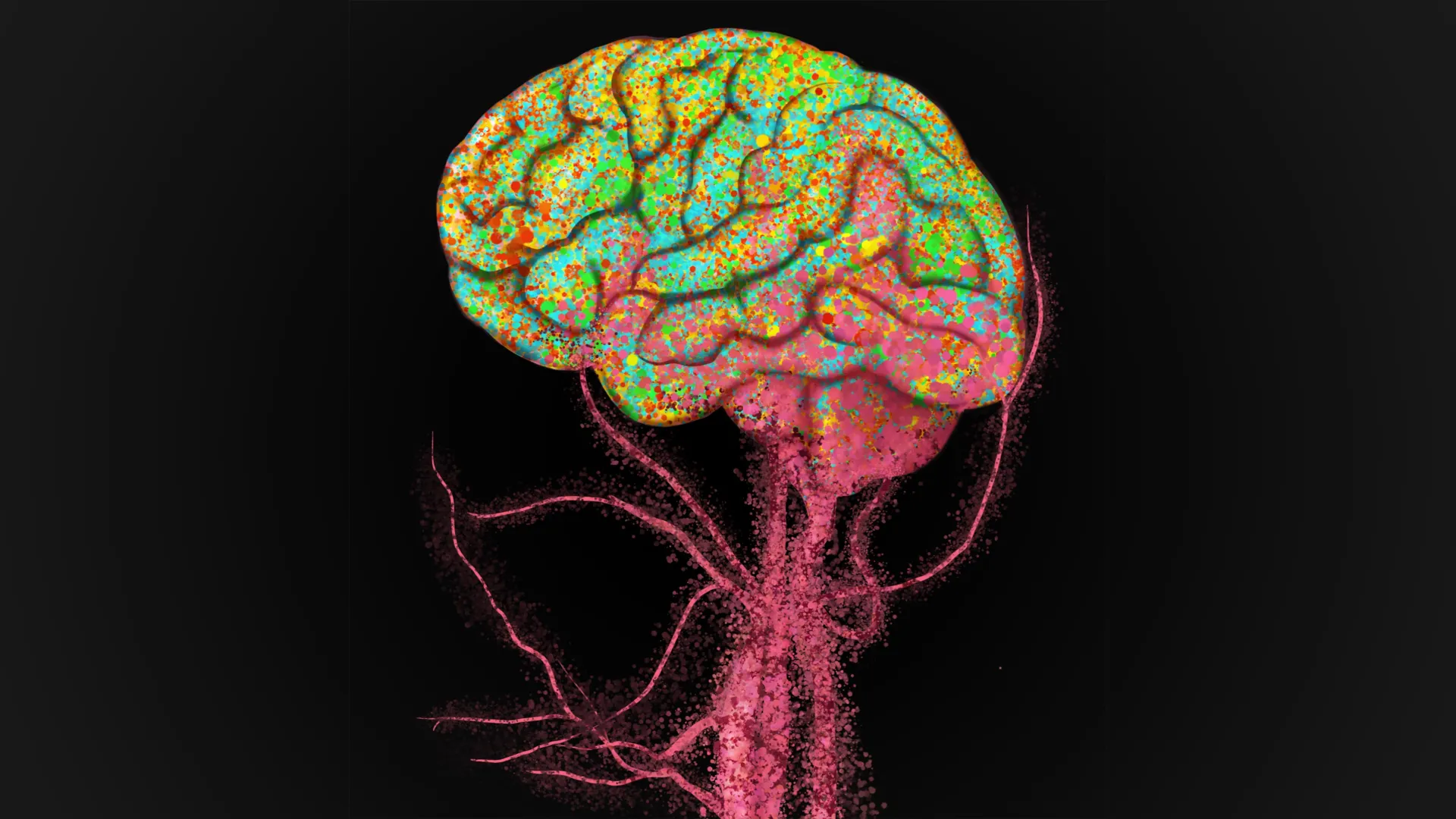
A new study has found that large numbers of immune cells from the blood can enter the brain as people grow older. Some of these cells can then transform into microglia, specialised immune cells that help protect and maintain the brain.
The discovery challenges a long held belief that the brain’s immune system remains largely separate from the rest of the body throughout a person’s life.
Researchers say the finding could change how scientists understand brain ageing and may eventually open new possibilities for treating neurological diseases. The study was published in the journal Nature.
For many years, scientists believed that microglia were established early in life and remained largely self sustaining. Unlike many immune cells elsewhere in the body, they were thought to renew themselves without receiving new cells from the bone marrow.
However, Stanford researchers found evidence that this may not be the case in ageing humans.
To investigate, the researchers examined human blood and brain tissue collected from people with and without Alzheimer’s disease. They compared the genetic characteristics of immune cells found in the blood with those found in the brain.
The researchers used mutations in the DNA of the cells as markers to trace where the cells came from.
When the same mutations were found in immune cells in both the blood and brain, the scientists were able to determine that the cells shared the same origin.
Their analysis showed that immune cells originating outside the brain can enter the human brain, with this process beginning as early as middle age.
Once inside the brain, some of these cells can take on the characteristics and functions of microglia.
The researchers said the finding appears to be different from what is seen in some other animals, including mice and non human primates.
The discovery could also have important implications for the study of diseases such as Alzheimer’s.
Scientists believe it may eventually be possible to use blood based immune cells as part of new treatments for brain diseases.
One possible approach could involve modifying immune cells so that they can enter the brain and help remove harmful substances associated with neurodegenerative diseases, including amyloid and tau proteins.
Researchers also believe the health and history of blood stem cells could influence brain health as people age.
Changes in these cells may affect the microglia that develop in the brain and, in turn, potentially influence the risk of neurological diseases.
The Stanford team says the findings provide a new understanding of how the immune system and the ageing brain interact and could lead to further research into ways of protecting brain health later in life.
Scientists Uncover a New Link Between the Blood and Aging Brain.
A study led by researchers from the Hebrew University of Jerusalem found that neurons in the human cortex can process information in remarkably sophisticated ways.
The findings suggest that individual brain cells function more like tiny biological computers than simple on and off switches.
For decades, scientists have focused largely on the number of neurons in the human brain and the vast networks connecting them when trying to understand human intelligence.
The new research suggests that the complexity of individual neurons may also play an important role in explaining abilities such as language, imagination, mathematics and invention.
The research was led by Professors Idan Segev and Mickey London, together with PhD students Ido Aizenbud and Daniela Yoeli at the Edmond and Lily Safra Center for Brain Sciences.
The team also collaborated with Professor Chris de Kock of the Free University in Amsterdam.
To measure the computing power of individual neurons, researchers developed a new approach combining computer modelling and artificial intelligence.
They examined how difficult it would be for an artificial neural network to reproduce the relationship between information entering a biological neuron and the response it produces.
The researchers found that human cortical neurons have highly complex branching structures known as dendritic trees, along with distinctive electrical properties that allow them to perform sophisticated computations.
These abilities enable individual neurons to process complex information, including visual signals.
The findings challenge the traditional view of neurons as relatively simple components whose main role is to transmit signals through the brain.
Instead, the researchers suggest that a single human cortical neuron can operate as a powerful computing unit, with capabilities comparable to those of a deep neural network.
Professor Segev said the findings show that a single human neuron is an “extraordinarily sophisticated computing device,” highlighting how much processing power may exist within individual brain cells.
The discovery could also influence the development of artificial intelligence. Modern AI systems generally rely on simplified artificial units inspired by neurons.
The researchers suggest that future brain-inspired AI could instead use artificial units designed to reproduce some of the deeper computational abilities found in biological neurons.
The study, published in the Proceedings of the National Academy of Sciences, provides a new perspective on the biological foundations of human intelligence.
It also gives scientists a framework for studying how the physical structure of individual brain cells is connected to their ability to process information.
The researchers believe this approach could contribute to a better understanding of how the human brain produces thought, learning and other complex cognitive abilities.
Scientists have uncovered extraordinary computing power in individual human brain cells
According to the 2025 Rwanda Demographic and Health Survey (RDHS), 54% of unmarried women aged 15 to 49 use a contraceptive method.
The survey shows that 52% of unmarried women use modern contraceptive methods, while 2% rely on traditional methods.
The findings mean that more than half of unmarried women in the country are taking steps to prevent unintended pregnancies.
Although contraceptive use remains higher among married women, the difference between the two groups is relatively modest.
Among married women aged 15 to 49, 69% use contraception. Of these, 64% use modern methods, while 5% use traditional methods.
The figures suggest that family planning is no longer viewed solely as a concern for married couples. Unmarried women who are sexually active are also increasingly using contraceptive methods as part of efforts to prevent unintended pregnancies.
Condoms remain the most widely known method
The RDHS 2025 indicates that awareness of contraception is nearly universal among Rwandans aged 15 to 49.
About 99% of both women and men reported knowing at least one modern contraceptive method. Traditional methods were known by 94% of women and 89% of men.
Women generally demonstrated slightly higher levels of knowledge about contraceptive methods than men.
The male condom was the most widely known contraceptive method, with 98% of both women and men reporting that they were familiar with it.
Emergency contraception, which is used after unprotected sexual intercourse to reduce the risk of pregnancy, was the least widely known method among those included in the survey.
Nevertheless, awareness of emergency contraception remained relatively high, with 71% of women and 66% of men reporting that they knew about the method.
The findings provide an insight into changing attitudes and practices surrounding contraception in Rwanda, showing that awareness and use of family planning methods extend beyond married couples.
Unmarried women are increasingly turnig to family planning in Rwanda.
Gaps persist in reproductive health knowledge
Despite widespread awareness of contraception in Rwanda, the 2025 Rwanda Demographic and Health Survey (RDHS) shows that important gaps remain in women’s understanding of reproductive health, particularly when it comes to fertility and the timing of ovulation.
Only 24% of women were able to correctly identify the period during the menstrual cycle when they are most likely to become pregnant. In other words, only about one in four women have an accurate understanding of their most fertile period.
The survey also identified misconceptions among women who rely on fertility awareness methods to prevent pregnancy. About 44% of users believed that the fertile period occurs after menstruation has ended, which is not correct.
Contraceptive use is particularly low among married adolescent girls. Only 38% of married women aged 15 to 19use a contraceptive method, representing the lowest rate among married women across all age groups.
When women aged 15 to 49 are considered regardless of marital status, adolescents aged 15 to 19 again record the lowest level of contraceptive use, at just 4.9%.
Among married women aged 20 to 24, 66.8% use at least one contraceptive method, while 65.8% use modern methods.
The highest level of contraceptive use is recorded among married women aged 25 to 29, with 74.6% using any contraceptive method and 73.1% using modern methods.
Among married women aged 30 to 34, 72.9% use any contraceptive method, while 70.3% use modern methods.
Women aged 35 to 39 record a contraceptive use rate of 74%, including 68.8% who use modern methods.
Among married women aged 40 to 44, 71.1% use contraception. The rate declines to 52.6% among those aged 45 to 49.
Implants remain the most popular method
Among married women who use modern contraceptive methods, implants are the most widely used option in Rwanda.
According to the survey, implants account for 34.3% of modern contraceptive use among married women, making them the leading modern method.
Injectable contraceptives rank second, accounting for 14.3%, followed by contraceptive pills at 6.6%.
Male condoms and intrauterine devices (IUDs) each account for 2.4% of modern contraceptive use among married women.
Implants are also the most commonly used contraceptive method among unmarried women, accounting for 25% of contraceptive use in this group.
Injectable methods account for 13.7%, while male condom use among unmarried women stands at 7.5%, significantly higher than the 2.4% recorded among married women.
Overall, 2% of women have undergone sterilisation as a permanent method of contraception. The average age of women who have undergone the procedure is 35.
The findings highlight both the progress Rwanda has made in expanding access to contraception and the need to strengthen accurate reproductive health information, particularly among adolescents and young women.
Implants are the most widely used contraceptive method in Rwanda.
Rwanda’s three decades of progress in family planning
Rwanda has made significant progress in expanding access to family planning over the past three decades, with the latest figures showing a substantial increase in the use of modern contraceptive methods among married women.
The findings of the 2025 Rwanda Demographic and Health Survey (RDHS) come after more than 33 years of sustained efforts to strengthen family planning programmes and improve access to reproductive health services across the country.
The proportion of married women using modern contraceptive methods increased from 12.9% in 1992 to 64.2% in 2025, marking a major change in contraceptive uptake over the period.
The most significant increase occurred after 2000. At the time, only 5.7% of married women were using modern contraceptive methods.
By 2005, the figure had risen to 10.3%, before increasing sharply to 45.1% in 2010.
The rate continued to rise, reaching 47.5% in 2014–2015, 58.4% in 2019–2020, and 64.2% in 2025.
The progress has also been reflected in the decline in unmet need for family planning, referring to women who want to use contraception but are not accessing a method that meets their needs.
In 1992, the unmet need stood at 38%. By 2025, it had fallen to 9%, indicating a substantial improvement in access to family planning services.
Northern Province leads in modern contraceptive use
The Northern Province records the highest proportion of married women using modern contraceptive methods, at 72.1%, according to the survey.
The Eastern Province follows at 64%, while the Southern Province records 63.7%.
In Kigali City, modern contraceptive use among married women stands at 61.3%, while the Western Province records 61%.
The figures show that the use of modern contraception remains relatively high across all parts of the country, although the Northern Province records the highest rate.
Public health facilities remain the main source
Government health facilities continue to play a central role in providing family planning services in Rwanda.
Overall, 91% of users of modern contraceptive methods obtain their methods through public-sector facilities.
Public health centres account for the largest share, providing services to 67% of users, while district and provincial hospitals account for 13%.
Private medical facilities account for only 6% of users, while 3% obtain contraceptive methods from other sources.
The role of public facilities is particularly pronounced in the provision of long-acting and permanent contraceptive methods.
According to the survey, public facilities provide 99% of implants, 91% of injectable contraceptives, and 80% of IUDs used by women. They also account for 97% of permanent contraceptive procedures.
Among women who use contraceptive pills, 84% obtain them from public health facilities.
Male condoms, however, follow a different distribution pattern. About 40% are obtained from public-sector sources, while 18% come from private medical facilities and 42% are obtained from other sources.
Among condoms obtained outside health facilities, shops and bars account for approximately 40% of those sources.
Microgynon, Microlyte, Prudence and Love dominate commonly used brands
The survey also provides insight into the contraceptive brands most commonly used in Rwanda.
Among women who use contraceptive pills, 97% use either Microgynon or Microlyte, making the two brands the dominant choices in this category.
For male condoms, 92% of users report using Prudence, Plaisir or Love.
The figures reflect Rwanda’s substantial progress in expanding access to modern family planning methods over more than three decades. They also show the continued importance of public health facilities, which remain the primary source of contraceptive services for the vast majority of users.
Plaisir condoms rank among the most widely used brands in Rwanda.
Emergency contraception remains limited
Overall, 3% of women aged 15 to 49 reported using emergency contraception during the 12 months preceding the survey.
Emergency contraception is used after unprotected sexual intercourse to reduce the risk of an unintended pregnancy.
Its use is most common among women living in Kigali City and those with education beyond secondary school.
The survey also examined why women discontinue contraceptive methods. The leading reason is the desire to have another child, accounting for 32% of women who stop using contraception.
Another 28% discontinue a method because of side effects or concerns about their health, while 15% stop because they want to switch to a method they consider more effective.
Radio remains a leading source of family planning information
The 2025 Rwanda Demographic and Health Survey examined a range of channels through which people receive information about family planning, including radio, television, newspapers, mobile phones, social media, community meetings, health facilities, schools, religious institutions and workplaces.
Among women, radio is the most widely reported source of family planning information, reaching 57%, compared with 67% among men.
Health facilities are another major source of information for women, reaching 55%.
Other important sources for women include information received at workplaces, from friends or family members, reaching 53%, while community meetings and activities reach 47%.
Among men, community meetings and other community-based activities are also an important source of information, reaching 60%.
Social media, however, has a relatively limited reach. Only 10% of women reported receiving family planning information through social media.
Mobile phones also recorded a low reach, with family planning messages reaching 7% of both women and men through this channel.
The survey further found that 20% of women and 14% of men had not been exposed to any family planning messages through any of the eight main communication channels assessed during the 12 months preceding the survey.
The findings highlight the continued importance of traditional communication platforms, particularly radio and health facilities, in delivering family planning information, while newer channels such as social media and mobile phones remain less widely used for this purpose.
Family planning continues to gain ground across Rwanda.
According to data from Congo’s public health institute seen by Reuters, 2,011 people have died, while 4,381 confirmed cases have been recorded across five provinces.
The outbreak, Congo’s 17th, is caused by the Bundibugyo species of Ebola, for which there are currently no approved vaccines or treatments.
Delayed detection, insecurity and strained health services have complicated efforts to trace contacts, isolate patients and contain transmission.
The World Health Organization has declared the outbreak, which has also spread to neighbouring Uganda, a public health emergency of international concern.
The speed of the outbreak has raised concern among health officials. Deaths doubled from 1,000 to more than 2,000 in less than a month, compared with more than 12 months during Congo’s 2018–2020 outbreak.
Community mistrust and resistance have also complicated containment efforts.
A total of 2,011 people have died, while 4,381 confirmed cases have been recorded across five provinces in DRC.