RTDA shared the update on May 25, 2026 via its official X account, highlighting steady progress on the project aimed at restoring and upgrading the long-serving highway, which had deteriorated after years of heavy use.
The agency also confirmed that works on the Rubengera–Rambura–Nyange section have already been fully completed.
The Muhanga–Karongi road stretches for 128 kilometres and was constructed in phases, with the first section completed in 2000 and the second in 2002.
RTDA notes that roads built to standard in Rwanda are generally designed to last at least 20 years, although many exceed this lifespan and can remain in good condition for up to 30 years when properly maintained.
The highway remains an important transport corridor linking Rwanda’s Western and Southern regions with Kigali, while also serving tourism traffic heading to destinations such as Karongi, Rutsiro, and Nyamasheke.
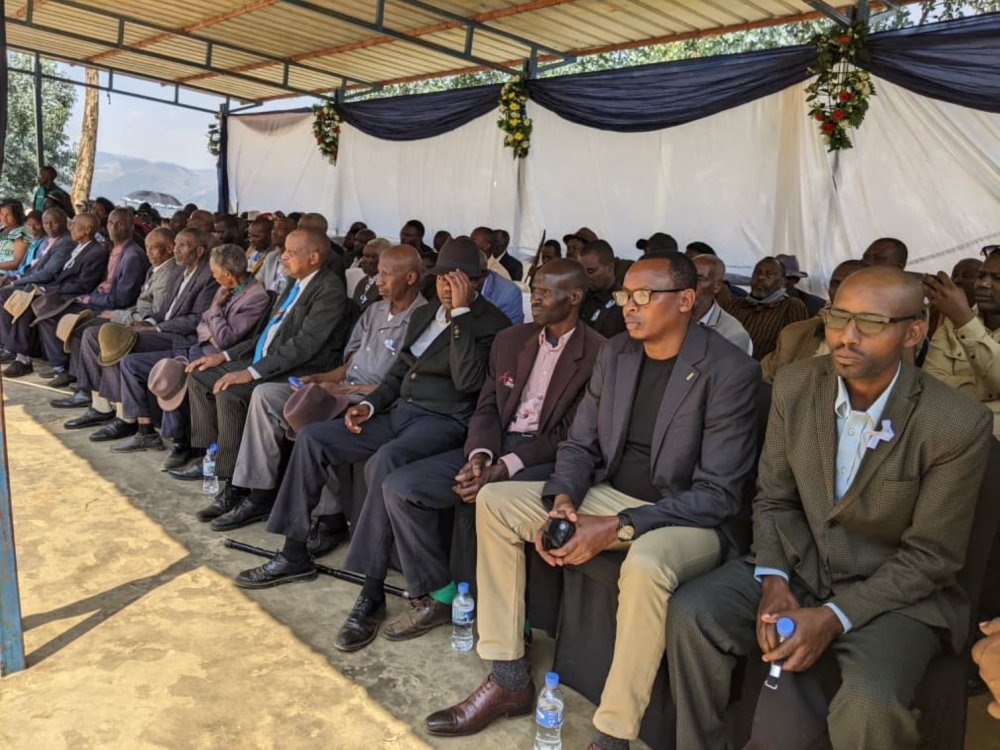
Road users and residents along the route have welcomed the progress, saying travel has become easier and the road more passable compared to previous years, when movement was slower and conditions were more challenging.
Road users along the Muhanga–Karongi corridor report improved travel conditions as rehabilitation works near completion.The rehabilitation of the Muhanga–Karongi road has reached 91.5% completion.
Rift Valley Regional Police Commander Samuel Ndanyi said the inferno broke out at around 1:00 a.m. (2200 GMT Wednesday) in a student dormitory.
“At least 10 students are confirmed dead, and the injured have been rushed to the hospital,” Ndanyi said, noting that firefighters were deployed to the scene to contain the blaze and evacuate students from the affected dormitory.
“Some students remain missing, and counting is underway to establish the exact number,” he added.
The cause of the blaze remains unclear, and criminal investigators and forensic experts are at the scene.
The Kenya Red Cross Society confirmed that the fire was reported at around 3:30 a.m. (0030 GMT), prompting an immediate rescue deployment.
Firefighters attempot to extinguish fire at a commercial depot used for oil barrels and flammable drums near Muthurwa settlement in Nairobi, on January 30, 2024. Photo by Reuters
Experts, researchers, forensic pathologists, scientists, and institutional representatives from around the world gathered in the Bulgarian capital to exchange ideas on scientific, technological, and human advancements in modern criminalistics.
Early in the morning, the official opening ceremony was conducted by Bulgarian military officers, setting a solemn and prestigious tone for the 2026 edition of the global congress.
During the ceremony, four forensic researchers and experts received honorary awards recognizing their exceptional contributions to the field. Among them was the prestigious IAFS 2026 Human Rights Award, presented to South African expert Mr. Stephen Fonneska.
The recognition generated strong emotions among African delegations, symbolizing the continent’s growing role in the development of forensic sciences at the international level.
In his welcoming address, the President of the IAFS, Professor Yankov, emphasized the importance of international scientific cooperation in addressing contemporary challenges related to justice and criminal investigations.
He also highlighted the essential role of new technologies and multidisciplinary research in the evolution of forensic sciences.
The sessions continued with keynote presentations delivered by renowned speakers from the United States and Europe, including Professor Dr. Niamh Nic Daeid and Dr. Sheila Wills, who addressed participants as keynote speakers.
Their presentations focused on scientific innovation, ethics in forensic investigations, and the challenges surrounding the use of scientific evidence within modern judicial systems.
During the break, visitors and participants had the opportunity to tour exhibition stands from various countries and institutions participating in the congress.
The Rwanda stand particularly attracted significant attention from visitors, alongside those of the United Kingdom, Mexico, Brazil, and the United Arab Emirates.
The Rwandan delegation, notably composed of Lieutenant Colonel (Rtd) Dr. Charles Karangwa, and Dr. Antonel Ocklers, showcased the country’s progress in forensic sciences, particularly in DNA analysis, laboratory management, and international scientific cooperation.
The afternoon marked the official beginning of parallel scientific sessions, transforming the conference halls into dynamic spaces for academic exchange and technical debate.
Researchers and experts presented studies on forensic genetics, digital forensic analysis, advanced identification techniques, and innovations in scientific investigations.
The Rwandan delegation stood out particularly during this first day. During the event, Dr. Antonel Ocklers delivered a scientific presentation entitled: “A Systems Engineering Approach to Managing DNA Production Backlogs.” Through this presentation, she proposed an innovative framework aimed at improving the efficiency of forensic laboratories through sustainable systemic solutions adapted to contemporary institutional realities.
Beyond her own presentation, Dr. Antonel Ocklers also chaired the session dedicated to “DNA and Forensic Genetics.” In this role, she skillfully moderated scientific discussions among international experts and guided conversations surrounding various technical presentations, further confirming Rwanda’s growing place in major global forensic science discussions.
From the international recognition granted to African experts to the active participation of Rwandan researchers in high-level scientific debates, the first day of IAFS 2026 in Sofia was marked by a strong spirit of collaboration, innovation, and scientific excellence.
Congress activities will continue until Thursday, featuring several panels, workshops, and scientific presentations bringing together specialists from around the world.
Dr. Antonnel Olckers, head of AFSA, delivers a panel presentation on advancing forensic science in the justice sector.Each day, one of the competition winners receives a prize featuring gifts from Rwanda.Dr. Charles Karangwa during an interview with IGIHE journalist in Sofia, Bulgaria.Dr. Charles Karangwa, Director General of the Rwanda Forensic Institute (RFI), speaks to participants during the IAFS 2026 conference.The opening ceremony was presided over by Prof. Yanko Kolev, who has served as President of the IAFS for the past three years, since 2023.Libargachew Mihretu of RFI delivering a presentation.Mehdi Ben Khalil and AFSA President, Dr. Antonel Olckers.Lt Col (Rtd) Dr Charles Karangwa, who led the delegation from Rwanda, follows the opening discussions of the conference.
He made the remarks on Wednesday during a ceremony held at the Police Training School (PTS) Gishari, where 436 junior officers were commissioned with the rank of Assistant Inspector of Police (AIP). The event coincided with celebrations marking the 25th anniversary of the Rwanda National Police.
Among the graduates were 109 women and 327 men. Some were serving officers undergoing professional advancement training, while others were newly recruited into the force.
The Rwanda National Police was established in June 2000 following the merger of three former security institutions: the Gendarmerie Nationale under the Ministry of Defence, the Communal Police under the Ministry of Local Government, and Judicial Police Inspectors who operated under the Ministry of Justice.
President Kagame noted that the achievements registered by the police force over the past 25 years were also the result of strong cooperation between citizens and security institutions.
“We all share the commitment to continue working together to safeguard our security and the development that unites us. The security landscape continues to evolve, while criminal activities are becoming more sophisticated, mobile, and transnational. That is why the Rwanda National Police must continue adapting to emerging realities,” he said.
Addressing the newly commissioned officers, Kagame stressed that the training they received should be reflected not only in their professionalism but also in their values and conduct, particularly in rejecting corruption.
“The training you have completed was not only intended to equip you with professional skills, but also to instill values that help you understand the true meaning of serving the country and its citizens. We expect you to reject corruption, demonstrate sound judgment in decision-making, and carry out your responsibilities with integrity,” he said.
The Head of State added that the silver jubilee of the police force should also serve as a moment of reflection and renewed commitment to the institution’s core values and standards of professionalism.
“Continue to uphold professionalism and humility in the service you provide to your country and its people. These values are essential. They are what will continue strengthening the trust and confidence that Rwandans place in you and in your work,” Kagame added.
President Kagame urged anti-corruption and humility as Rwanda National Police marked 25 yearsThe Inspector General of the Rwanda National Police, CG Felix Namuhoranye, said the police maintain strong cooperation with citizens in the fight against crime.Police officers performed a motorcycle drill paradeThe passout ceremony was held in Gishari.
The changes were announced in a statement released by the Rwanda Correctional Service, which indicated that those promoted include senior officers, junior officers, non-commissioned officers, and warders.
Among senior officers, 46 officers who previously held the rank of Superintendent were promoted to the rank of Senior Superintendent.
For junior officers, 37 officers holding the rank of Chief Inspector were promoted to Superintendent, while 18 Inspectors were elevated to Chief Inspector. In addition, 10 Assistant Inspectors were promoted to the rank of Inspector.
Among non-commissioned officers and warders, 188 Senior Sergeants were promoted to Chief Sergeant, 67 Sergeants were promoted to Senior Sergeant, 48 Corporals advanced to Sergeant, and 328 Warders were promoted to the rank of Corporal.
The statement also noted that the President placed several RCS officers into retirement, including Assistant Commissioner Moses Ntawiheba, Senior Superintendent Christine Aloys Gakuba, and Superintendent Josephine Nyiranteziryayo. Another 22 officers, including non-commissioned officers, were also retired.
The statement further revealed that 296 RCS personnel were dismissed from the institution. Those dismissed include six senior officers, 13 junior officers, and 277 non-commissioned officers and warders.
President Paul Kagame has promoted 742 personnel from the Rwanda Correctional Service.
In a statement released on the evening of May 18, AFC/M23 spokesperson Lawrence Kanyuka said several densely populated parts of Minembwe had come under heavy attack from armed drones.
“Drone strikes are currently targeting populated neighborhoods in Minembwe, spreading panic among civilians,” Kanyuka said. “Homes are being destroyed and families are fleeing as explosions and fires continue across the area.”
The coalition claimed the attacks are part of a broader campaign targeting communities in Minembwe and neighboring areas, particularly members of the Banyamulenge community. AFC/M23 accused Burundian troops, FDLR terrorist group and Wazalendo militias of taking part in the operations alongside Congolese government forces.
On the same day, Col Fidèle Rugabo of the MRDP-Twirwaneho armed group, which operates in Minembwe, condemned what he described as a violation of the ceasefire.
“We are alerting both the international community and the Congolese population about these attacks,” Rugabo said. “We will continue defending ourselves until the very end.”
According to AFC/M23, further strikes were carried out on May 19 and 20 in areas including Kalingi, Bidegu and Gakenke, allegedly using Chinese-made KT-6 and CH-4 drones.
The renewed fighting is also said to be disrupting humanitarian activities that had recently resumed in Minembwe. Since late April 2026, teams from the International Committee of the Red Cross had restarted deliveries of medicines and medical supplies to the area.
AFC/M23 further alleged that humanitarian aid vehicles heading to Minembwe on May 19 were intercepted by Wazalendo fighters at Point-Zéro and forced to turn back.
“Kinsasha and its allied forces continue blocking access routes to Minembwe, worsening an already critical humanitarian situation and putting thousands of civilians at risk,” Kanyuka stated.
The coalition also reported fresh overnight attacks between May 20 and the morning of May 21 in Gakenke, Kalingi, Kalonge and Bidegu, again involving suicide drones.
In North Kivu Province, AFC/M23 said Congolese forces also launched attacks around Katoyi center in Masisi Territory.
Despite the continued clashes, AFC/M23 said it would keep fighting to protect civilians and their property.
The AFC/M23 coalition has accused the Democratic Republic of Congo’s army of intensifying military operations in Minembwe and nearby areas of South Kivu Province,
This major international scientific gathering will bring together researchers, forensic pathologists, scientists, investigators, magistrates and forensic experts from around the world to discuss key issues related to forensic sciences, legal medicine and technologies applied to justice.
The Rwandan delegation will be represented by the Rwanda Forensic Institute (RFI) in collaboration with the African Forensic Sciences Academy (AFSA), whose continental headquarters has been based in Kigali since 2022.
Founded in 1957, the IAFS is today regarded as the world’s leading platform dedicated to forensic sciences. Since its establishment, the conference has been held in Europe, North America, Asia and Oceania, but never on the African continent.
Rwanda’s growing presence in forensic sciences
Over the years, Rwanda has strengthened its participation in major international forensic science conferences. The country has notably taken part in the International Association of Forensic Sciences (IAFS) 2023 conference held in Sydney, Australia, as well as the American Academy of Forensic Sciences (AAFS) 2025 meeting in Baltimore, United States. Rwanda has also participated in the European Academy of Forensic Science (EAFS) 2025 conference held in Dublin, Ireland.
Rwanda continues to highlight the rapid development of its forensic science sector, its modern infrastructure, secure environment and strong experience in hosting international conferences.
Kigali already hosts several African scientific initiatives, including the African Forensic Sciences Academy (AFSA), whose inaugural conference was held in Rwanda in 2024.
Sofia 2026: A strategic meeting for the future
The IAFS 2026 meeting in Sofia will also provide an important opportunity for member countries and partners to discuss the future of forensic sciences, international cooperation and the strengthening of scientific capacities across Africa.
Among the topics to be discussed will also be the selection of the host country for the 2029 edition of the IAFS. Rwanda is among the countries interested in hosting this prestigious international scientific congress in the future.
The official announcement of the country selected to host the 2029 edition is expected on May 29, 2026, in Sofia, Bulgaria.
The Rwanda Forensic Institute is a Rwandan institution specializing in forensic sciences and medico-legal analysis.
It supports criminal investigations through DNA analysis, forensic medicine, victim identification, and other scientific expertise that aids justice and public security.
The institute also contributes to building national capacity by training professionals and strengthening forensic and medico-legal systems in Rwanda.
The meeting will take place in Sofia, Bulgaria.Lt Col (Rtd) Dr Charles Karangwa, Director General of the Rwanda Forensic Institute (RFI), and Dr Antonel Olckers, President of the African Forensic Sciences Academy (AFSA).The IAFS 2026 meeting in Sofia will also provide an important opportunity for member countries and partners to discuss the future of forensic sciences.
He made the remarks on May 16, 2026, during a two-day consultative meeting organized by the institution in partnership with the United Nations Economic Commission for Africa.
The forum, which started on May 15, focused on strategies to support industrial development in Rwanda and advance plans to generate electricity using nuclear energy.
Dr. Ndahayo said the discussions were necessary because developing a nuclear power plant requires extensive planning, investment, and coordination.
“The objective is to ensure that as many local resources as possible contribute to implementing the nuclear energy project. When such projects are managed effectively and at a high standard, they can significantly boost the country’s economy,” he said.
On May 16, experts and representatives from several African countries met to discuss how large-scale nuclear energy projects could be financed and implemented across the continent.
Dr. Ndahayo noted that many African countries face financial constraints when pursuing projects of this scale, as the investment required can sometimes exceed national budgets or even a country’s gross domestic product.
He explained that UNECA has conducted studies exploring financing mechanisms that could help developing countries mobilize the resources needed to build nuclear power infrastructure.
According to Dr. Ndahayo, an assessment conducted by experts from the International Atomic Energy Agency found that Rwanda has made significant progress in building the institutional and technical capacity needed to adopt nuclear energy.
He said the findings indicate that the country is on track to begin implementation works by 2028.
“Our target is that by 2028, construction of a nuclear power plant should begin,” he said.
However, he acknowledged that a number of major requirements still need to be completed within the next two years, including selecting the technology to be used, securing financing, and identifying contractors.
“There is still a lot to be done within that timeframe. We must finalize the technology, secure funding sources, identify the companies that will build the plant, and ensure everything is ready so that the foundation stone can be laid in 2028,” he added.
Dr. Ndahayo also said Rwanda’s hosting of Nuclear Energy Innovation Summit on Africa, scheduled for May 18–21, 2026, will provide an important opportunity to attract potential partners for the project.
He revealed that six potential sites across Rwanda have already been identified for the construction of the plant, though detailed feasibility studies are still ongoing.
The selected locations were chosen based on several criteria, including access to water, relatively flat terrain, low seismic risk, and limited human activity nearby.
“We have identified six possible locations that meet the initial requirements, such as water availability, absence of high mountains, low exposure to earthquakes, and limited population activity,” he said.
Despite this progress, Dr. Ndahayo stressed that further in-depth geological and environmental studies are still required before a final site can be selected.
“Identifying the sites is only the beginning. The next step is conducting detailed studies. Even for a seven-story building, engineers first examine the ground conditions carefully. Imagine the level of assessment needed for a nuclear power plant,” he explained.
“You have to go as deep as 100 meters underground to confirm whether the site is suitable. That is why we cannot yet disclose the exact locations, because the studies are still ongoing.”
Rwanda aims to have a nuclear power plant operational by 2030 as part of its long-term strategy to expand electricity generation and diversify energy sources.
The two-day consultative meeting was organized by the institution in partnership with the United Nations Economic Commission for Africa. Dr. Ndahayo disclosed that an assessment conducted by experts from the International Atomic Energy Agency found that Rwanda has made significant progress in building the institutional and technical capacity needed to adopt nuclear energy. Rwanda plans to begin construction of its first nuclear power plant within the next two years.
“Mr. Félicien Kabuga passed away today while hospitalized in The Hague, The Netherlands,” the Mechanism said in a statement released on Saturday, adding that the Medical Officer of the United Nations Detention Unit (UNDU) was immediately notified and that Dutch authorities had launched the standard procedures and investigations required under Dutch law.
The President of the IRMCT, Judge Graciela Gatti Santana, has also ordered a full inquiry into the circumstances surrounding Kabuga’s death. The statement said Judge Alphons Orie had been assigned to conduct the inquiry.
Kabuga had been held at the United Nations Detention Unit in The Hague since October 2020 after being arrested in France earlier that year. At the time of his death, he was awaiting provisional release to a country willing to receive him.
Kabuga faced charges of genocide, conspiracy to commit genocide, incitement to genocide, and crimes against humanity including persecution, extermination, and murder committed during the 1994 Genocide against the Tutsi in Rwanda.
An arrest warrant against Kabuga was issued by the International Criminal Tribunal for Rwanda (ICTR) on 29 April 2013. He remained a fugitive for many years before his arrest on May 16, 2020 in France, where he had reportedly been living under a false identity.
Following his arrest, Kabuga was transferred on October 26, 2020 to the Hague branch of the Mechanism, the UN body established to carry on the remaining functions of the ICTR and the International Criminal Tribunal for the former Yugoslavia (ICTY).
His trial officially began on September 29, 2022. However, proceedings were later suspended after judges found that his deteriorating health made him unfit to stand trial.
According to the IRMCT statement, the Trial Chamber issued a decision on 8 September 2023 indefinitely staying proceedings following an Appeals Chamber ruling delivered a month earlier. The Chamber also ordered that Kabuga remain detained at the UNDU pending a decision on his provisional release.
After the suspension of his trial, discussions focused on finding a country willing to receive him. Rwanda had previously indicated that it was prepared to host him, arguing that it would guarantee his rights and medical care.
However, Kabuga’s lawyers and relatives opposed a transfer to Rwanda, citing his fragile health condition and arguing that long-distance travel would pose serious risks.
Kabuga had reportedly hoped to settle in a European country, including France, but no State agreed to receive him. Dutch authorities also opposed his release into the Netherlands.
Prosecutors before the Mechanism had argued that Kabuga’s genocide-related charges significantly limited his chances of being accepted by European countries under refugee protection frameworks and immigration laws.
They also pointed to the fact that he had spent years evading arrest while allegedly relying on false identities and support networks to remain hidden.
The IRMCT was established by the United Nations Security Council through Resolution 1966 adopted in December 2010. The Mechanism began operations in Arusha, Tanzania, in July 2012 and in The Hague in July 2013.
Following the closure of the ICTR in 2015 and the ICTY in 2017, the IRMCT continued operating as a stand-alone institution responsible for handling remaining judicial functions, including appeals, enforcement of sentences, and the tracking of fugitives.
Kabuga had been held at the United Nations Detention Unit in The Hague since October 2020 after being arrested in France earlier that year.
“Abu-Bilal al-Minuki, second in command of ISIS globally, thought he could hide in Africa, but little did he know we had sources who kept us informed on what he was doing,” Trump said in a post on Truth Social.
“He will no longer terrorize the people of Africa, or help plan operations to target Americans,” Trump said. “With his removal, ISIS’s global operation is greatly diminished.”
Trump thanked the Nigerian government for its “partnership” in the operation.
U.S. President Donald Trump said on Friday that Abu-Bilal al-Minuki, second-in-command of ISIS globally, was eliminated by U.S. and Nigerian forces.