The defending champions looked destined for defeat after Anthony Gordon gave England the lead early in the second half, but Argentina produced another dramatic comeback, with Enzo Fernández equalising in the 85th minute before Lautaro Martínez headed home the winner in stoppage time.
The victory sends Lionel Scaloni’s side into Sunday’s final against Spain, who secured their place by defeating France 2-0 in the other semifinal.
Argentina had already survived a series of tense knockout encounters, edging Cape Verde after extra time, overturning a two-goal deficit against Egypt, and overcoming Switzerland despite being pushed into extra time. Against England, they once again demonstrated their resilience.
England broke the deadlock in the 55th minute when Gordon finished from close range after Morgan Rogers’ cross found him unmarked at the back post.
The Three Lions appeared in control for much of the contest, but their inability to retain possession after taking the lead allowed Argentina to build sustained pressure.
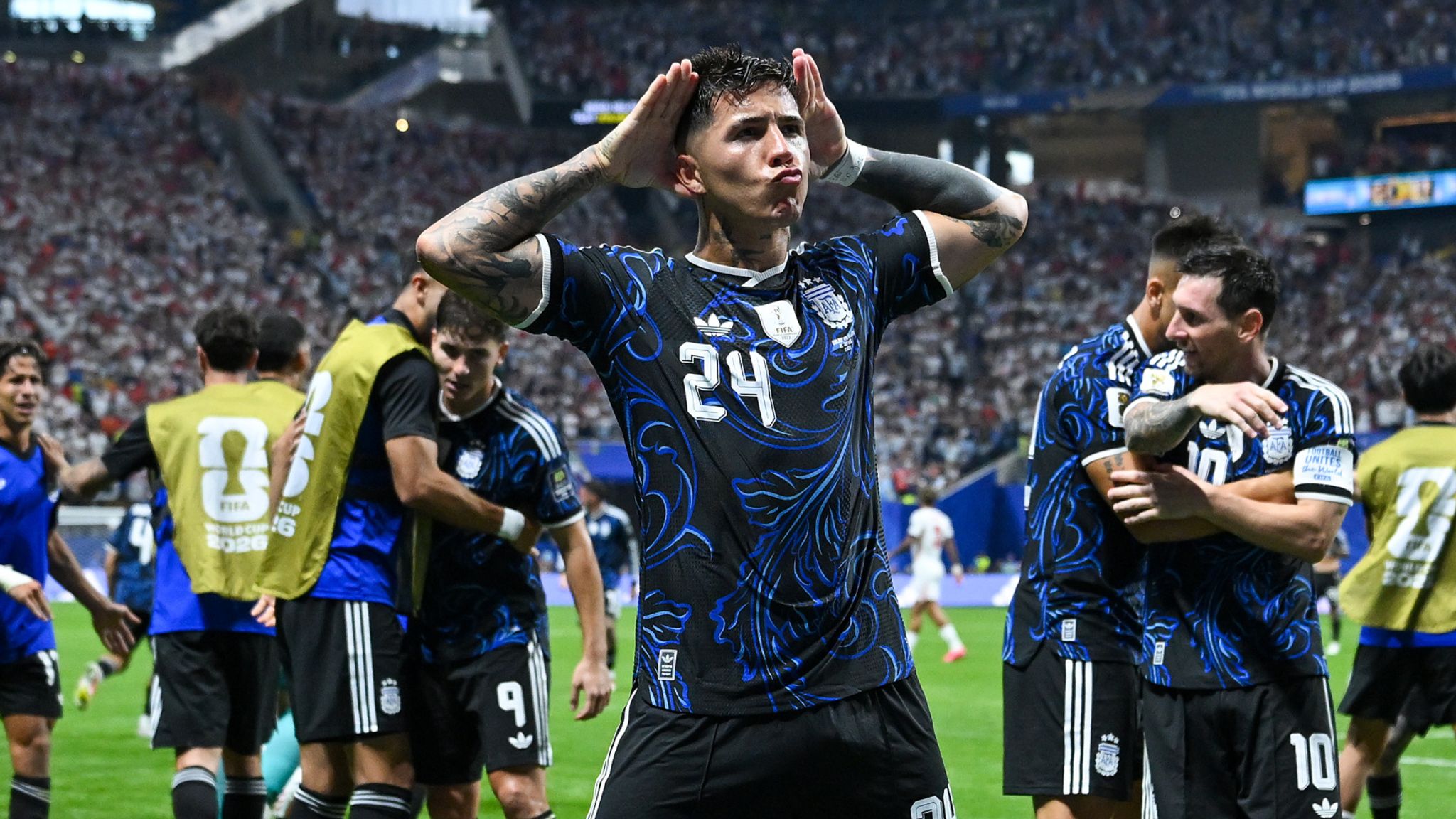
That pressure finally paid off five minutes from time. Messi picked out Fernández on the edge of the penalty area, and the midfielder fired a powerful low strike past Jordan Pickford to restore parity.
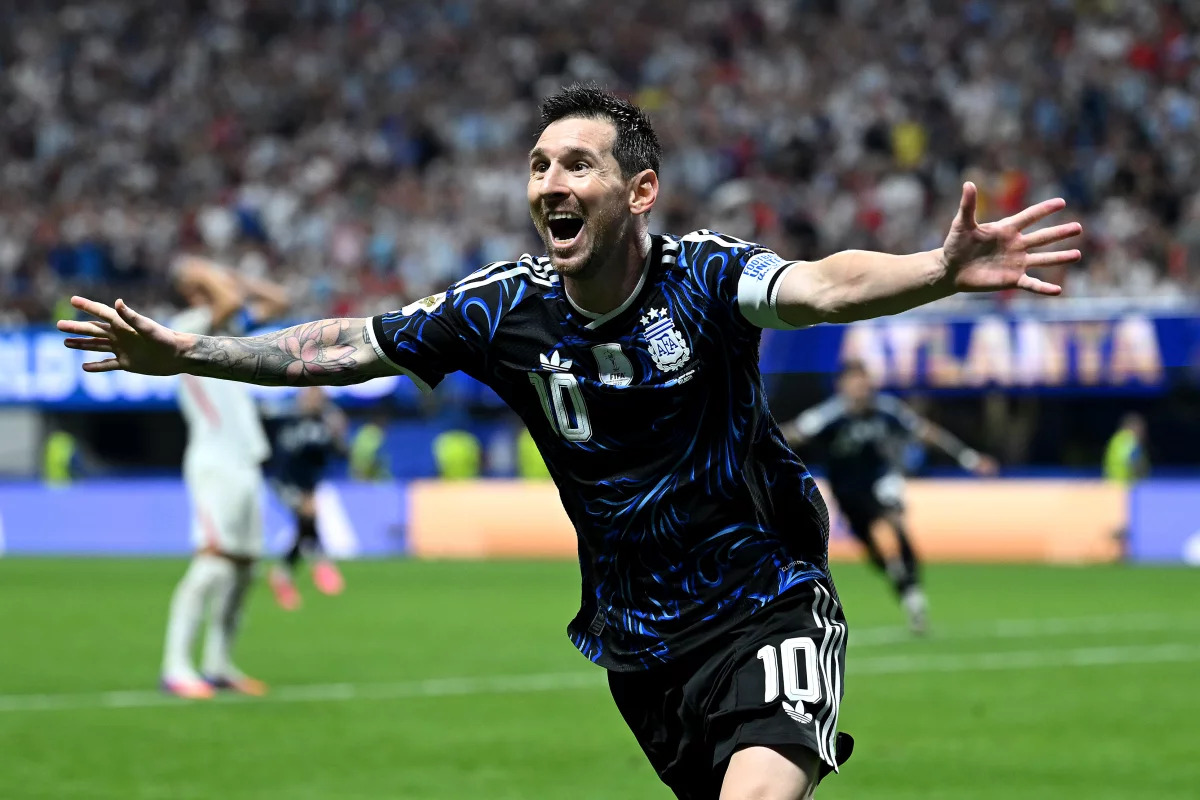
The decisive moment came deep into stoppage time. After Alexis Mac Allister’s effort rebounded off the post, Messi recovered the loose ball on the right before delivering a pinpoint cross that Martínez headed into the net, sparking wild celebrations among the thousands of Argentina supporters inside Atlanta’s Mercedes-Benz Stadium.
“I think this team plays its best football when we are facing adversity,” Argentina coach Lionel Scaloni said after the match.
“We had a challenging game and a difficult situation. There was blood in the water, and we went for it.”
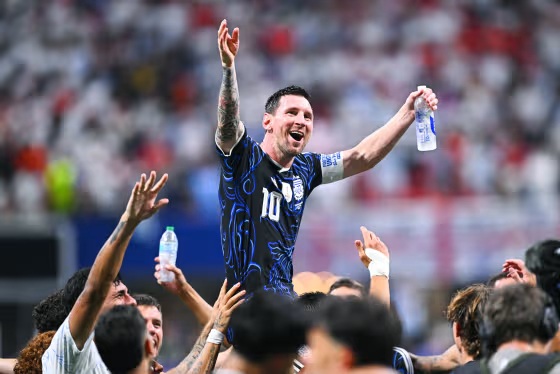
Messi, playing what is widely expected to be his final World Cup, was again at the heart of Argentina’s success, providing both assists to move the reigning champions within one victory of retaining their title.
Martínez described the winner as the fulfilment of a lifelong dream.
“The first time my dad bought me a pair of boots, I dreamed of scoring a goal like this,” he said. “It was really tough today, but this team continues to show what it’s made of.”
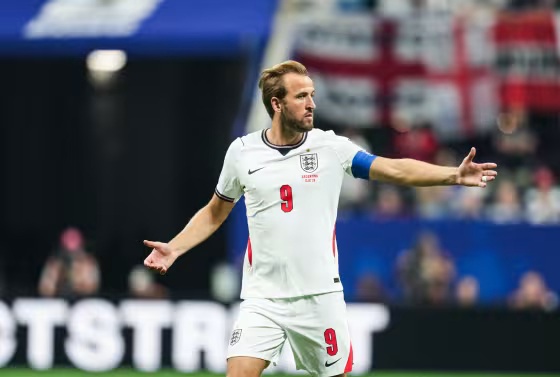
For England, the defeat extended decades of heartbreak at major tournaments. Captain Harry Kane admitted his side became too passive after taking the lead.
“We’re gutted,” Kane said. “We played a good game for the large majority of it. Once we went 1-0 up, we seemed to just try and hold on, and at this level that’s just not enough.”
England manager Thomas Tuchel echoed that assessment, saying his team struggled to maintain their intensity after Gordon’s goal.
“We got too passive after we scored,” Tuchel said. “We conceded too many chances and couldn’t keep the ball. We were very close, but we couldn’t bring it over the line.”
The semifinal added another memorable chapter to one of football’s fiercest rivalries, with both teams producing a physical, high-intensity contest before Argentina’s late surge settled the outcome.
Argentina will now face Spain in the World Cup final as they seek to become back-to-back world champions, while England will meet France in the third-place playoff.
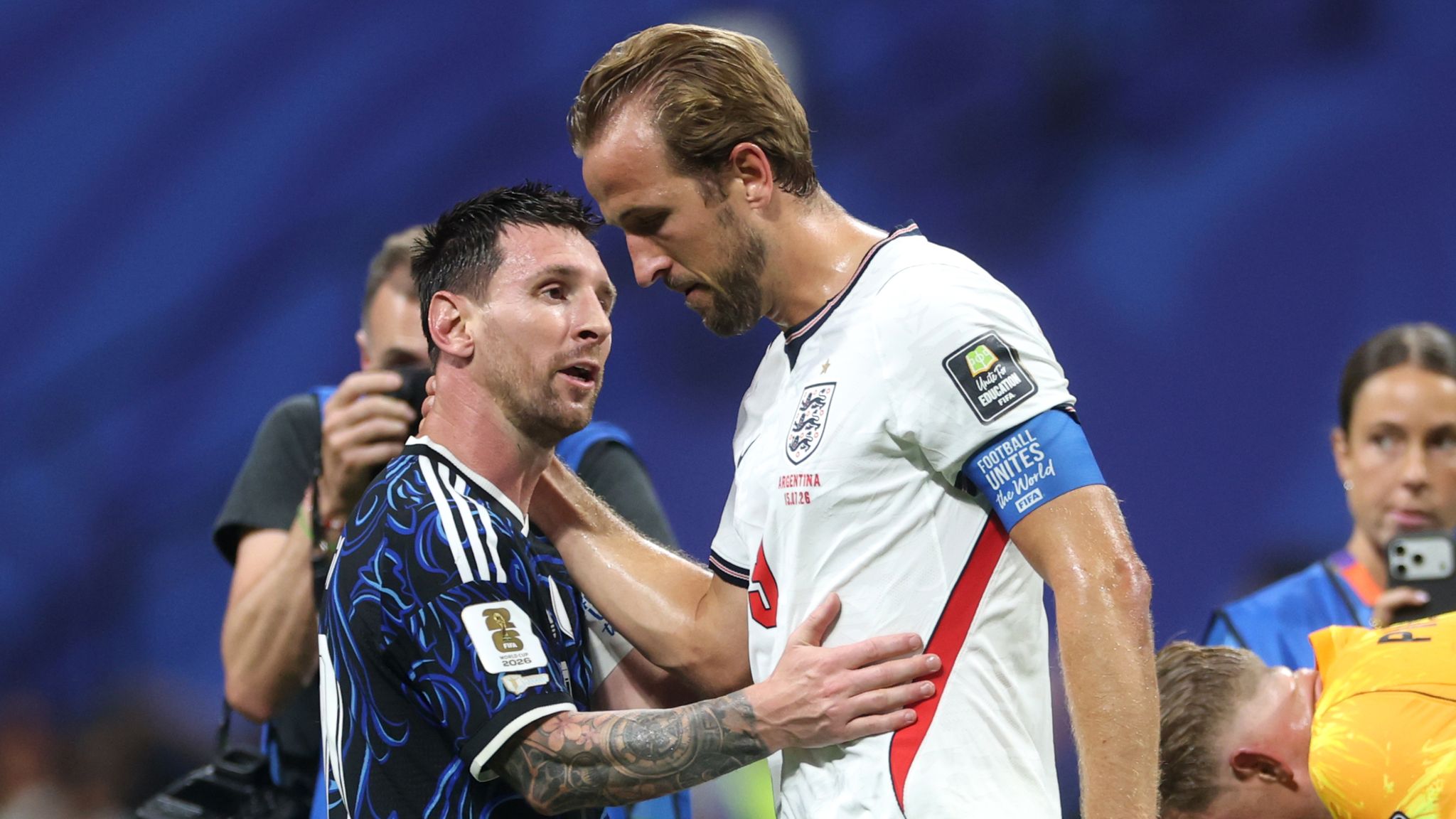
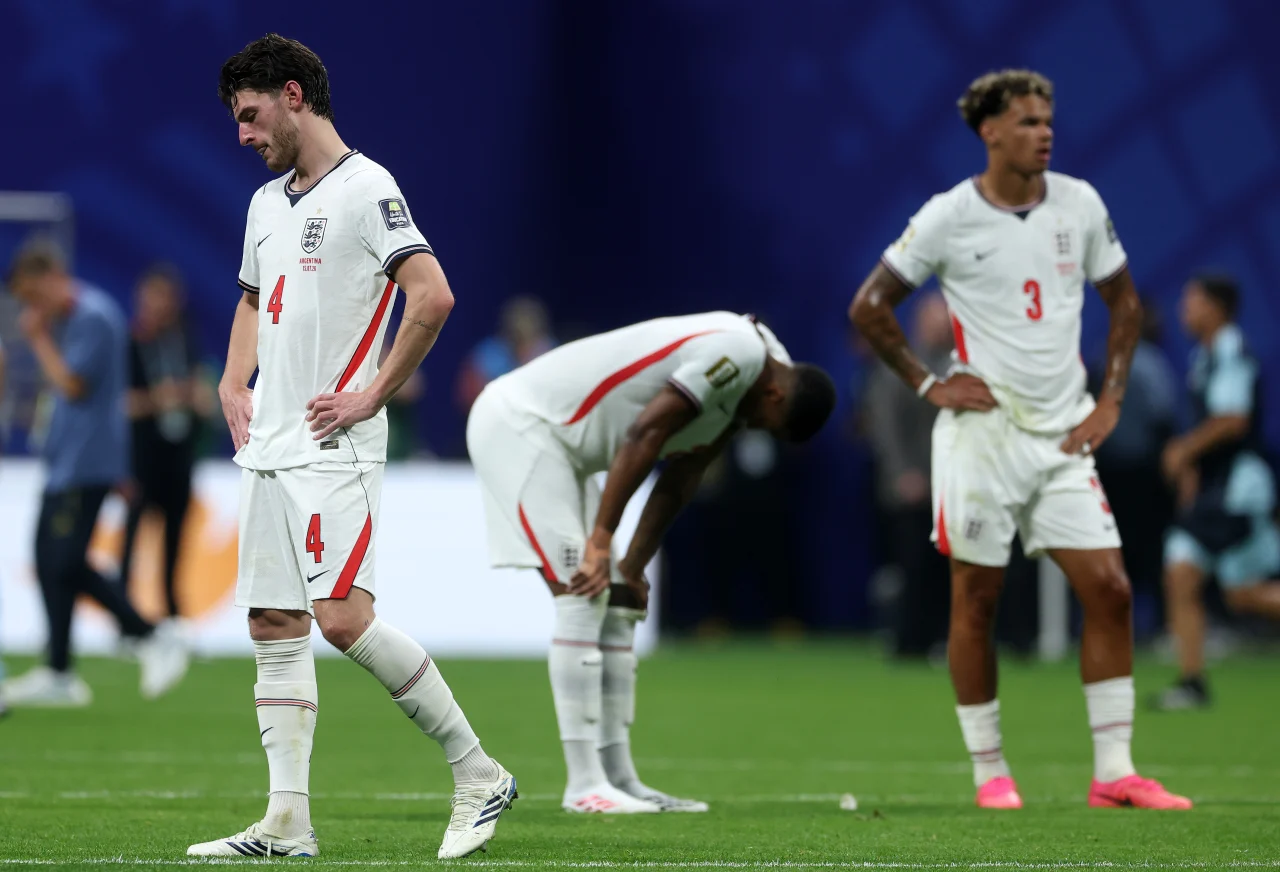
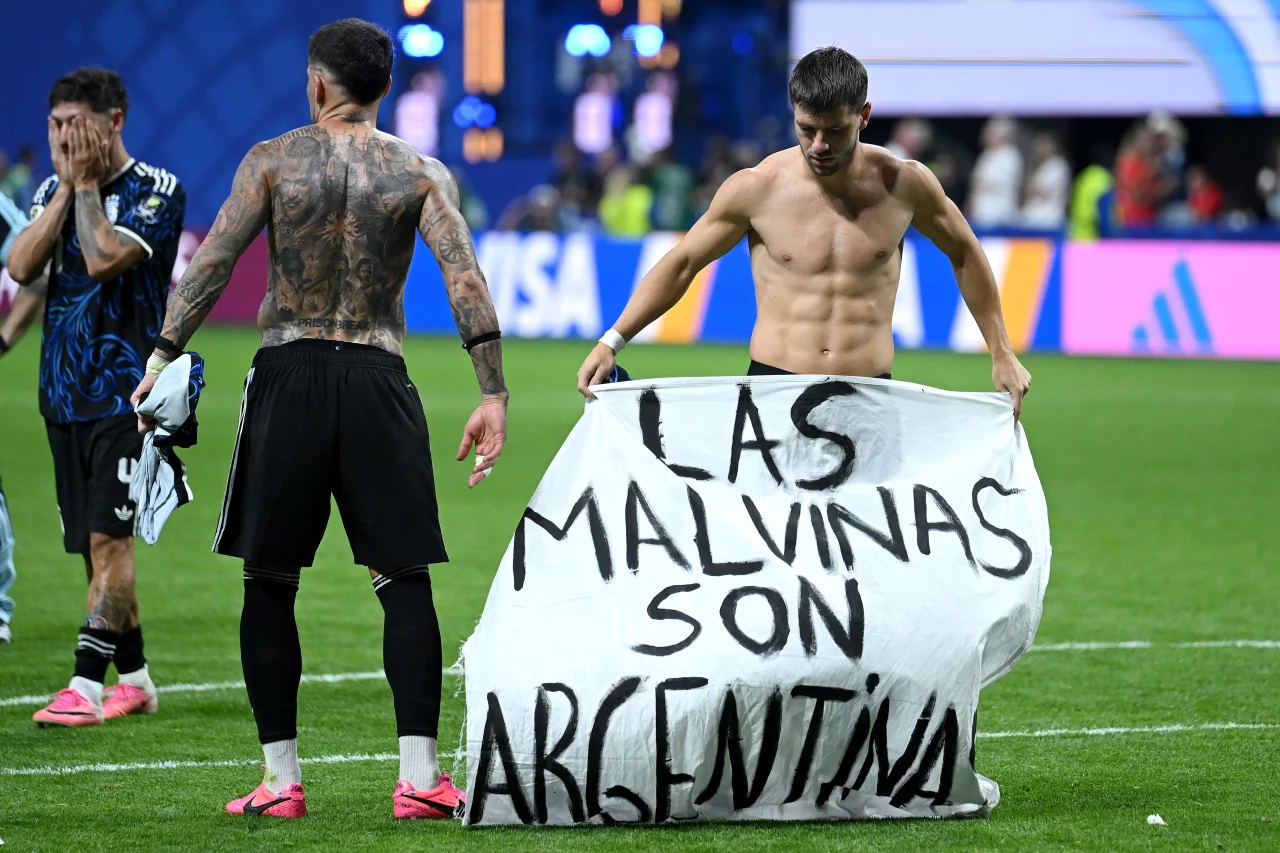
Enzo Fernandez celebrates his equaliser for Argentina against England.Argentina’s Lionel Messi celebrates the team’s second goal by Lautaro Martínez during their World Cup semifinal against England on Wednesday in Atlanta. Argentina defeated the English 2-1 to advance to Sunday’s final against Spain.Lionel Messi celebrates Argentina’s victory over England.Captain Harry Kane admitted his side became too passive after taking the lead.Lionel Messi is congratulated by Harry Kane at full time.England players react after the loss. Argentina’s Giovani Lo Celso holds a banner in the postmatch celebrations.
The sponsorship is the culmination of years of discussions and longstanding ties between Rwanda and senior figures at the Premier League club.
Under the partnership, the Visit Rwanda brand will appear on the playing shirts of Aston Villa’s men’s, women’s and youth teams in all competitions, including the Premier League and European tournaments.
According to a source familiar with the negotiations, the agreement was the result of extensive discussions involving multiple stakeholders.
“You don’t simply wake up one morning and sign a partnership like this,” the source told IGIHE. “These deals are built over time. For example, Visit Rwanda’s visibility in the United States was largely made possible through the existing relationship between Rwanda and Arsenal’s owners.”
Existing ties with Rwanda
Janet Karemera, Chief Executive Officer of the Rwanda Convention Bureau (RCB), which oversees the Visit Rwanda brand, said Aston Villa’s leadership already has a strong understanding of Rwanda and its long-term vision.
Speaking to The Athletic, Karemera revealed that one of the club’s investors has business interests in Rwanda, giving the club’s leadership firsthand knowledge of the country.
“They’re (Villa) going to come to Rwanda,” she said. “They’re going to visit. We have in our partnership the men’s team, women’s team are coming to visit. Also the executive leadership (team). On their board, they have a board member who’s already invested in Rwanda. So I think they’re very much aware of the country and its ambitions.”
The investor she referred to is American billionaire Wesley “Wes” Edens, whose fortune is estimated at approximately $2.5 billion.
Edens is a co-owner of Aston Villa through V Sports, the investment company he owns alongside Egyptian billionaire Nassef Sawiris. Besides Aston Villa, V Sports also holds a 46 percent stake in Portuguese top-flight club Vitória S.C.
His sports portfolio extends beyond football. Edens is also a co-owner of NBA franchise Milwaukee Bucks.
Longstanding connection through basketball
Edens has maintained links with Rwanda through basketball. His energy company, New Fortress Energy, became an official partner of the Basketball Africa League (BAL), supporting efforts to promote affordable and renewable energy solutions while raising environmental awareness across the continent.
As part of the initiative, the company pledged to plant three trees for every three-point shot made during BAL games, with a target of planting 100,000 trees.
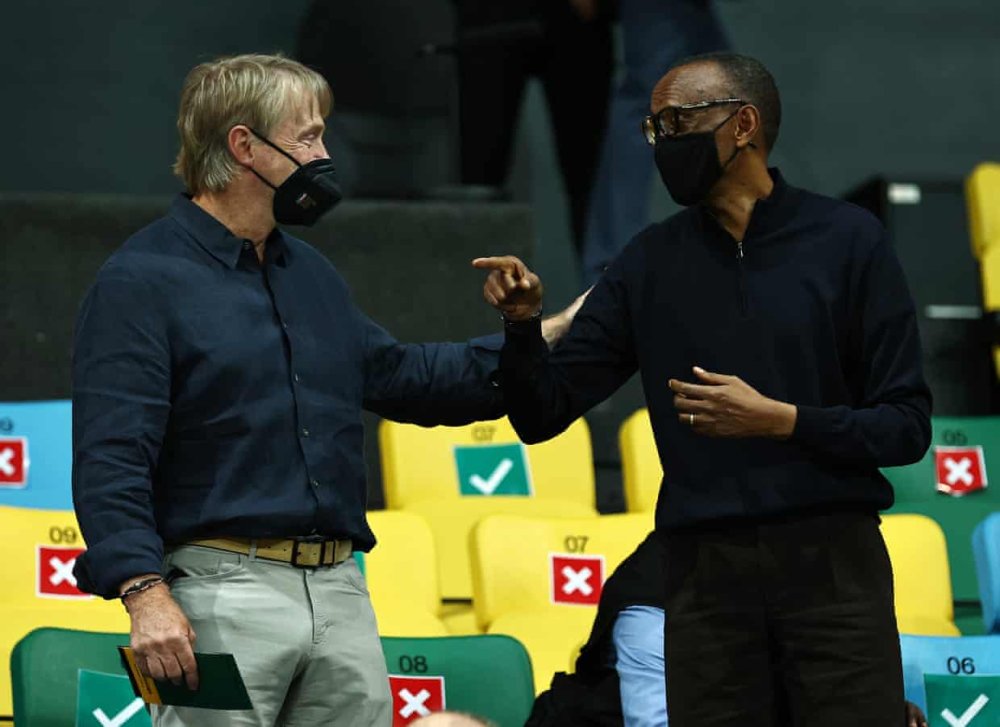
During the 2021 BAL season in Kigali, Edens attended matches at BK Arena alongside President Paul Kagame.
Speaking during that visit, he said his investments in sports combine personal passion with commercial opportunity.
“I am a sports nerd, I am still active in various activities. I think sports investment is the perfect marriage with business opportunities. I do not collect art, I do not do other activities. This is what I love, and these are serious business investments,” Eden stated.
Edens attended matches at BK Arena alongside President Paul Kagame during the 2021 BAL season in Kigali.
Confidence in Rwanda’s investment climate
Edens also praised Rwanda as one of Africa’s most attractive investment destinations, pointing to its governance and long-term vision.
“I think that Rwanda is extraordinary. This is not only one of the cleanest cities on the continent but in the world. If you look back in the 1960s, the GDP of Singapore and Jamaica were roughly the same; in 60 years, things have changed dramatically. That is largely an effect of leadership.”
He credited President Kagame’s leadership for the country’s progress, arguing that Rwanda’s greatest resource is its people.
“For an economy that is not rich in mineral resources, people have been the resource, and there is an ambition for growth.”
Aston Villa is the latest European football club to partner with Rwanda through the Visit Rwanda tourism campaign, following an agreement that was officially announced on Tuesday.
Global exposure for Visit Rwanda
The partnership is expected to significantly boost Visit Rwanda’s international visibility.
Aston Villa’s home ground, Villa Park, has a capacity of 42,640 spectators. Across the club’s 19 Premier League home fixtures alone, more than 810,000 fans could attend matches in a single season if every game sells out, excluding domestic cup competitions and European fixtures.
The club is also expanding Villa Park, with plans to increase its capacity to more than 50,000 seats.
As part of the agreement, Rwandan coffee will be the exclusive coffee served at the stadium.
The club’s television reach also offers considerable exposure. Aston Villa’s FA Cup victory over Tottenham Hotspur during the 2025/26 season attracted 6.5 million viewers in the United Kingdom, while its UEFA Europa League final against Freiburg drew 3.5 million viewers on TNT Sports.
More broadly, Aston Villa competes in the Premier League, the world’s most-watched domestic football competition, which is broadcast in 189 countries and reaches an estimated global audience of 1.87 billion people.
The Aston Villa agreement further expands Visit Rwanda’s sports sponsorship portfolio, which already includes partnerships with French champions Paris Saint-Germain, Spanish club Atlético de Madrid, the Basketball Africa League, NBA franchise the Los Angeles Clippers and NFL team the Los Angeles Rams.
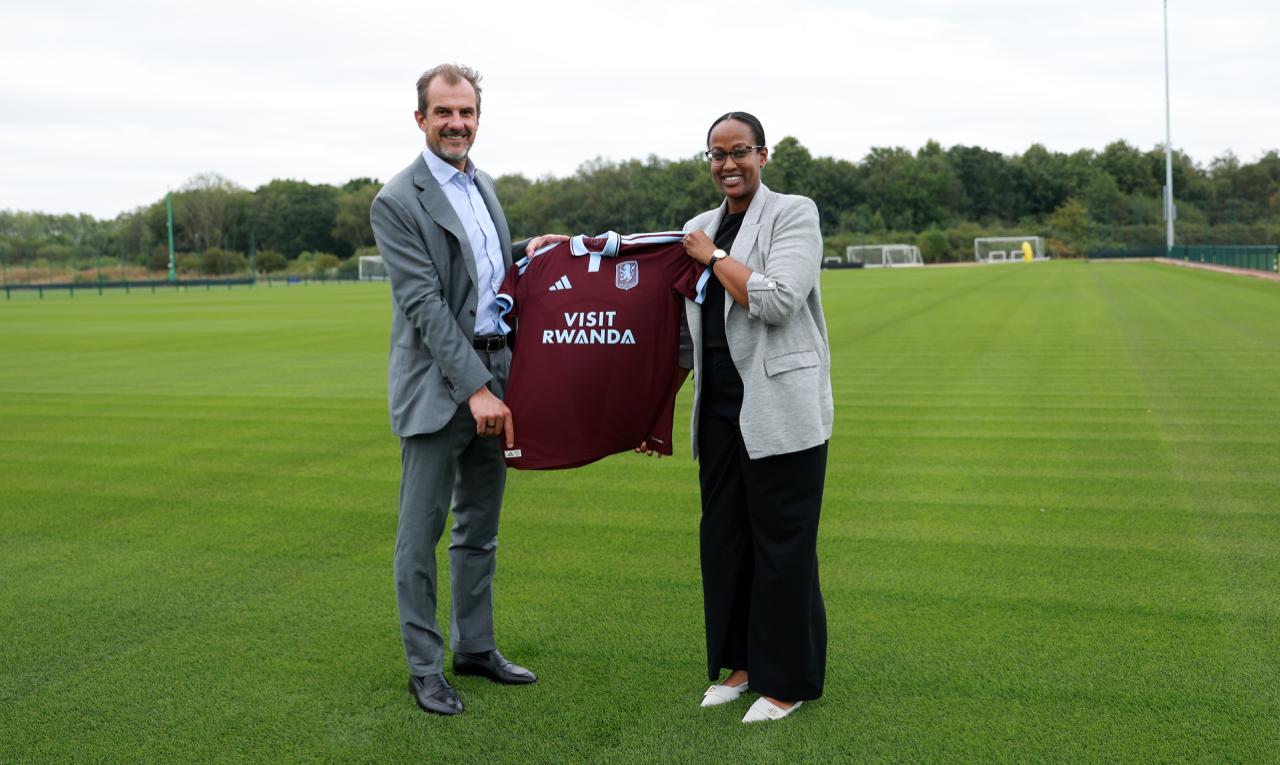
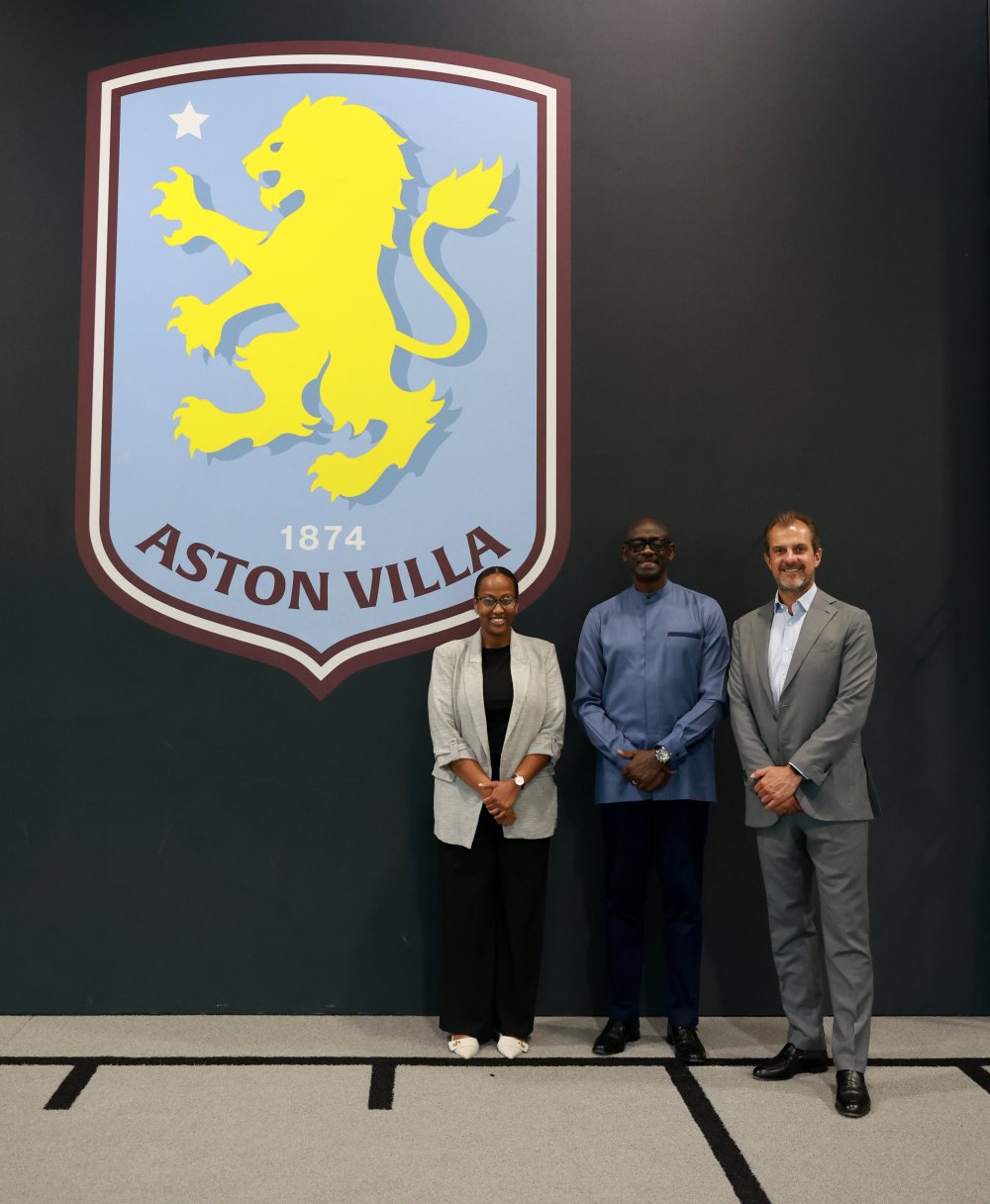
Rwanda Convention Bureau Chief Executive Officer Janet Karemera is pictured with Rwanda’s High Commissioner to the United Kingdom, Johnston Busingye, and Aston Villa President of Business Operations Francesco Calvo.
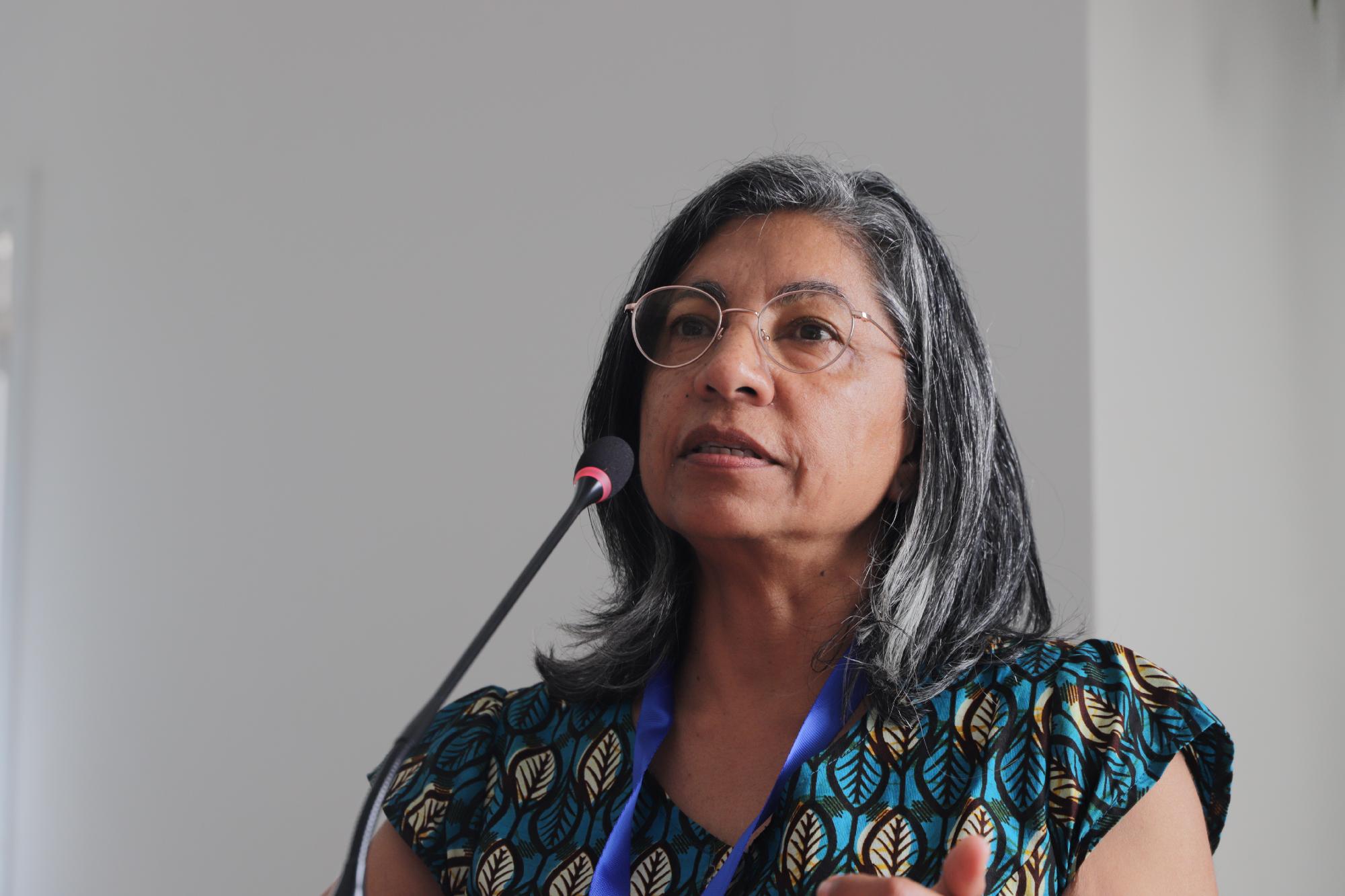
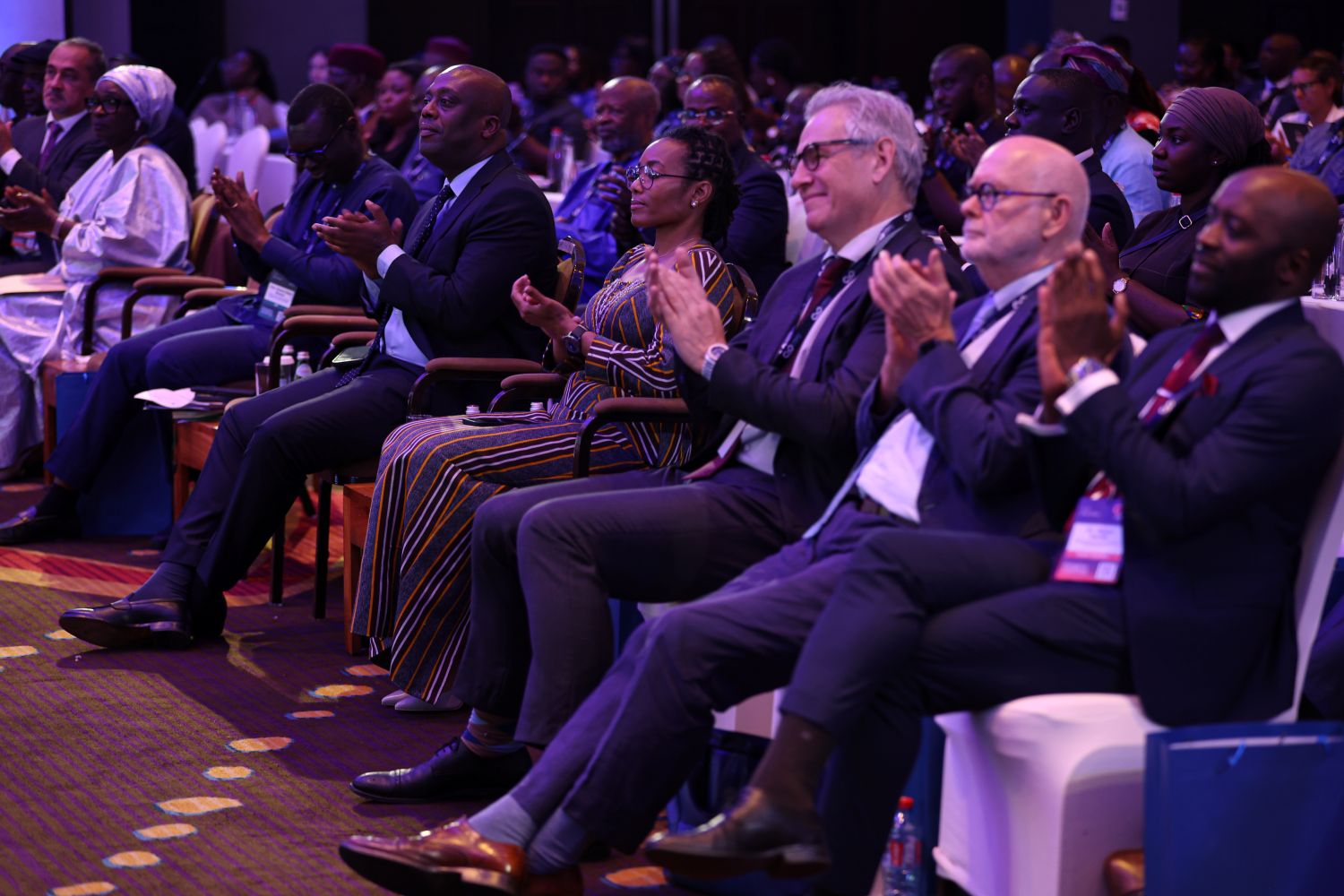
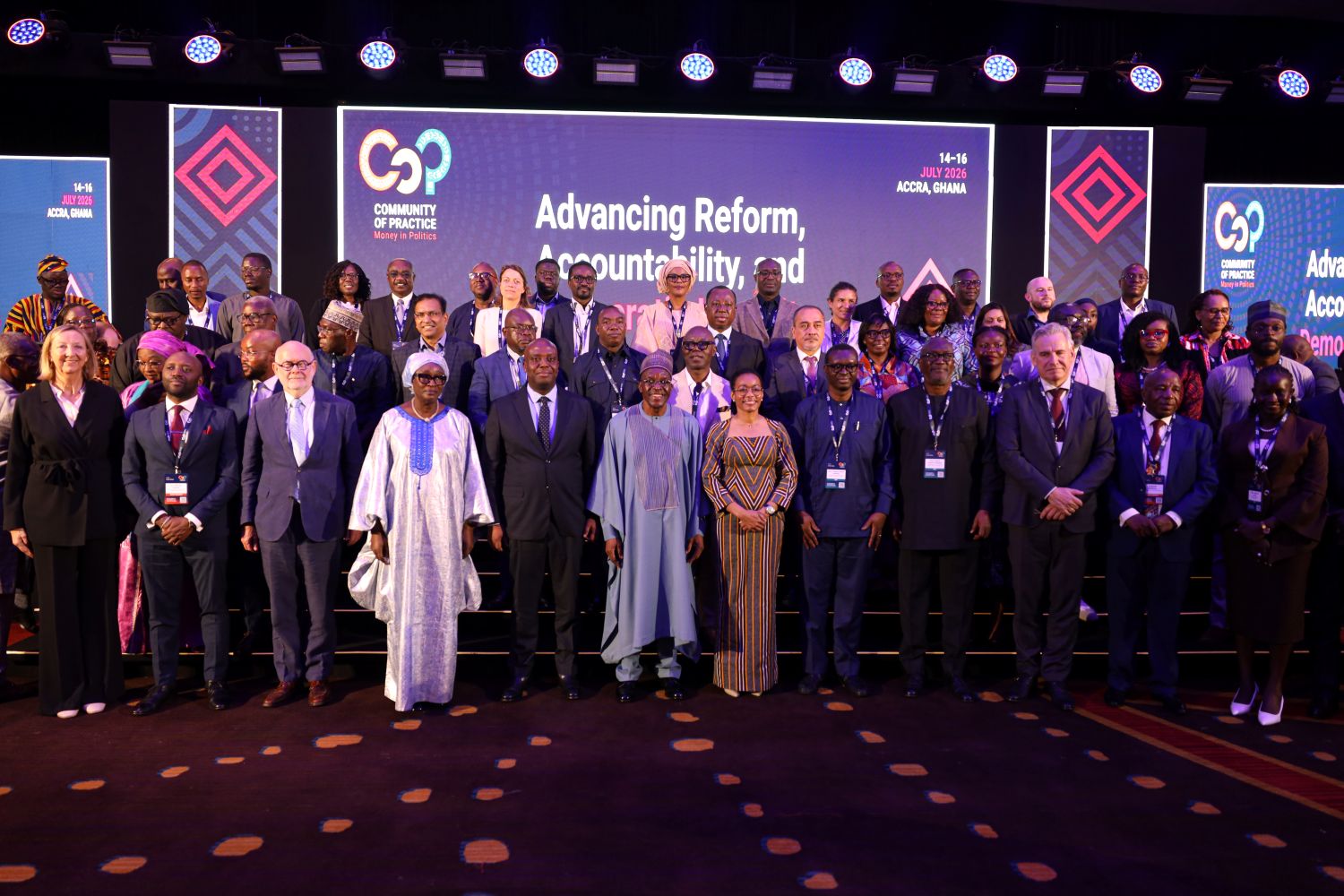
Speaking at a convening on the Financialization of Politics in Africa which opened in Accra, Ghana on Tuesday under the theme Advancing Reform, Transparency, Accountability, and Democratic Integrity, Nowrojee argued that rising political costs and opaque financing systems are making political competition less inclusive.
“For decades, the struggle to strengthen democracy across Africa has focused on constitutions, multiparty elections, and expanding political space,” Nowrojee, the President of the American grantmaking network founded by billionaire business magnate George Soros, said. “But today, we face a challenge that cuts across them all: the growing influence of money in politics.”
She warned that when political funding is hidden, unregulated, or concentrated among a few wealthy actors, democratic competition risks shifting away from ideas and public service toward financial power.
“Political competition becomes less about ideas and public service and more about access to financial resources,” she noted, adding that leaders may become more responsive to financiers than citizens when accountability systems are weakened.
Nowrojee warned that when political funding is hidden, unregulated, or concentrated among a few wealthy actors, democratic competition risks shifting away from ideas and public service toward financial power.
Nowrojee argued that the rising cost of politics across the continent is creating barriers for many citizens, particularly women, young people, rural communities, and those without strong financial networks.
“Democracy becomes less inclusive, less competitive, and less trusted,” she said.
She observed that the influence of money extends beyond elections, shaping public debate, determining who can compete for office, and affecting whose interests are reflected in policymaking.
“Even the strongest constitutions and the most credible elections cannot fully protect democracy if financial power is allowed to capture its institutions,” she added.
The OSF president pointed to countries including Nigeria, Kenya, South Africa, Ghana, and Zimbabwe, where increasingly expensive election campaigns are strengthening the advantage of those with greater wealth and influence.
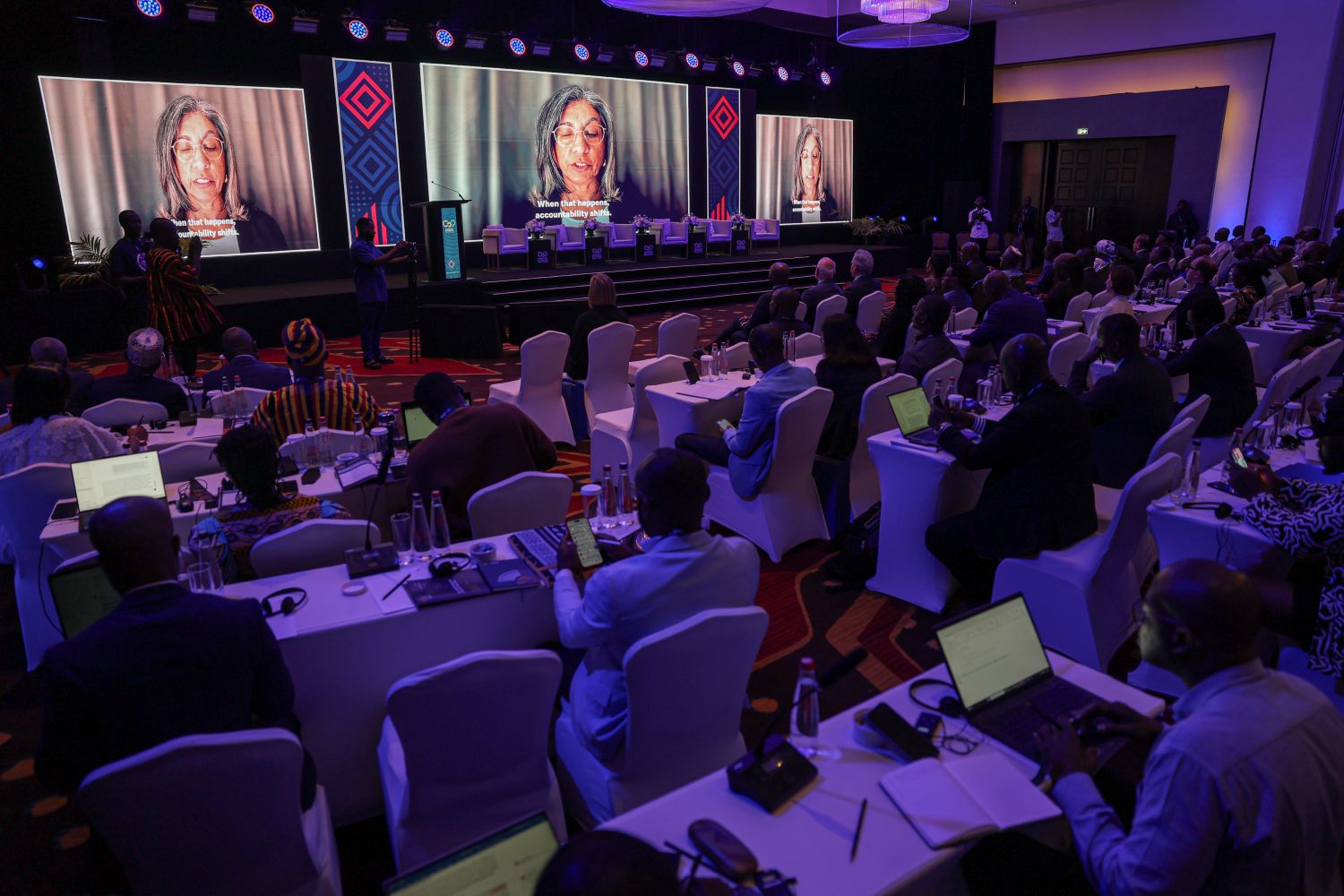
The summit brought together governance experts, parliamentarians, and civil society leaders to address the growing, toxic influence of campaign money and unchecked political financing across the continent
Despite the challenges, Nowrojee highlighted growing momentum for reforms aimed at improving transparency and accountability in political financing.
She pointed to efforts at both the global and continental levels, including the adoption in 2025 of internationally agreed standards for openness in the financing of political parties, candidates, and election campaigns by countries that are party to the UN Convention against Corruption.
She also highlighted ongoing work by the African Union Advisory Board Against Corruption and the Pan-African Parliament to develop a Model Law on Political Financing to help countries strengthen oversight of political funding.
According to Nowrojee, effective reforms should include meaningful disclosure of political funding, fair and transparent public financing systems, stronger oversight mechanisms, independent enforcement, and safeguards against illicit and foreign influence.
“Our goal is not simply to regulate money,” she said. “Our goal is to strengthen the social contract between government and citizens.”
She stressed that political leadership should be earned through public trust rather than financial power, while elections should remain contests of ideas rather than resources.
The OSF president called for greater collaboration among governments, political parties, electoral bodies, anti-corruption agencies, civil society, researchers, the media, and the private sector to address political financing challenges.
She described the Accra meeting as an opportunity to strengthen the Community of Practice on Money in Politics in Africa, advance implementation of the African Union’s Model Law on Political Financing, and deepen regional cooperation on democratic reforms.
“Ultimately, our success will not be measured by the number of laws passed or policies adopted,” Nowrojee said. “Our success will be measured by whether people across Africa believe that their voices matter.”
She concluded by emphasizing that the future of African democracy depends on ensuring public institutions remain accountable to citizens and that opportunities for political leadership are determined not by wealth, but by ideas and commitment to public service.
The High-Level Regional Convening on the Financialization of Politics in Africa is scheduled to close on Thursday, July 16, 2026. Hosted by the African Union Advisory Board Against Corruption (AUABC) and CDD-Ghana, the summit brings together governance experts, parliamentarians, and civil society leaders to address the growing, toxic influence of campaign money and unchecked political financing across the continent.
The Ministry of Finance and Economic Planning welcomed the ranking, describing it as recognition of Rwanda’s efforts to communicate its fiscal and debt position clearly to international investors.
Rwanda was one of only four countries added to the IIF assessment this year, alongside Ivory Coast, the Republic of Congo, and Senegal. Despite being new to the survey, Rwanda was singled out by the IIF as an example of best practice, specifically for maintaining reciprocal links between the websites of its Investor Relations Office, Debt Management Office, Central Bank, and Ministry of Finance, a criterion in which Rwanda was the only country cited across the entire 57-country sample.
Rwanda’s score also outperforms several countries with longer-established investor relations programmes, including Kenya, whose programme has run since 2020, and South Africa, whose programme dates back to 2011. Rwanda’s own sovereign investor relations programme, housed within the Ministry of Finance and Economic Planning, was launched only in 2025.
The country’s strongest showing came in ESG data and policy dissemination, where it scored 3.88 out of 4, among the highest in the entire survey and on par with Türkiye, Indonesia, and Egypt.
Globally, no country achieved a perfect score. The Philippines led the 2026 rankings with 49.3 points, followed by Türkiye and Brazil (48.3 each), Hungary (47.8), Uruguay (47.4), and Indonesia (47.1). Rwanda’s score of 43.4 places it 14th out of the 57 countries assessed worldwide, ahead of established emerging-market issuers such as Chile, Egypt, Poland, and Russia, and within striking distance of the top ten.
According to MINECOFIN’s March 2026 Public Debt Statistical Bulletin, which reflects audited data up to end-December 2025, Rwanda’s total Public and Publicly Guaranteed (PPG) debt stood at 73.6 percent of GDP, down from 74.5 percent in December 2024. The IIF report cites disclosure of debt composition and debt service obligations as core criteria in its transparency scoring, alongside investor outreach and forward-looking policy information.
The IIF assessment, now in its 21st year, evaluates sovereign investor relations and debt transparency practices across 23 criteria, grouped into three components: a headline Investor Relations Country Score, a Debt Transparency Score, and an ESG Data and Policy Dissemination Score. The 2026 edition covered 57 emerging markets and developing economies.
According to the report, countries with stronger investor relations practices tend to secure more stable sovereign credit ratings and lower borrowing costs over time, which the IIF terms the “transparency dividend.” The report notes that participants in this year’s survey averaged a score of 40.5, compared to 25.4 for non-participants, underscoring the value the IIF places on direct engagement with the assessment process.
Regionally, Sub-Saharan Africa recorded one of the lowest median scores among the world’s regions but was one of only two regions, alongside the Middle East and North Africa, to post an improvement relative to 2025, even as Emerging Europe and Latin America saw median scores decline.
Rwanda’s debut score places it ahead of regional peers including Kenya (42.79), Ivory Coast (41.71), Egypt (42.21), Morocco (38.75), Ghana (37.13), and Nigeria (33.63).
The Ministry of Finance and Economic Planning said the ranking signals to global investors that Rwanda is a reliable and transparent sovereign borrower, a distinction it described as a competitive advantage at a time when international capital is becoming increasingly selective.
The Ministry of Finance and Economic Planning welcomed the ranking, describing it as recognition of Rwanda’s efforts to communicate its fiscal and debt position clearly to international investors.
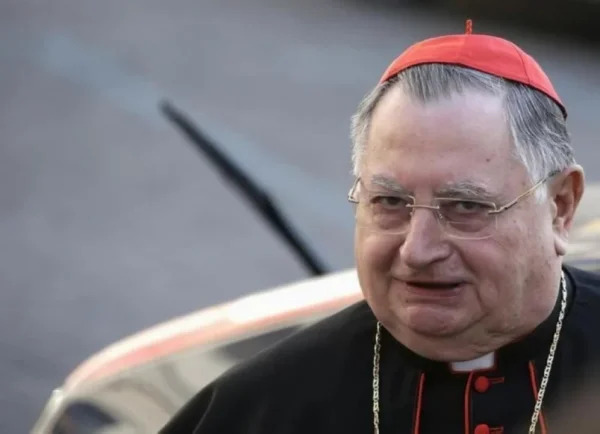
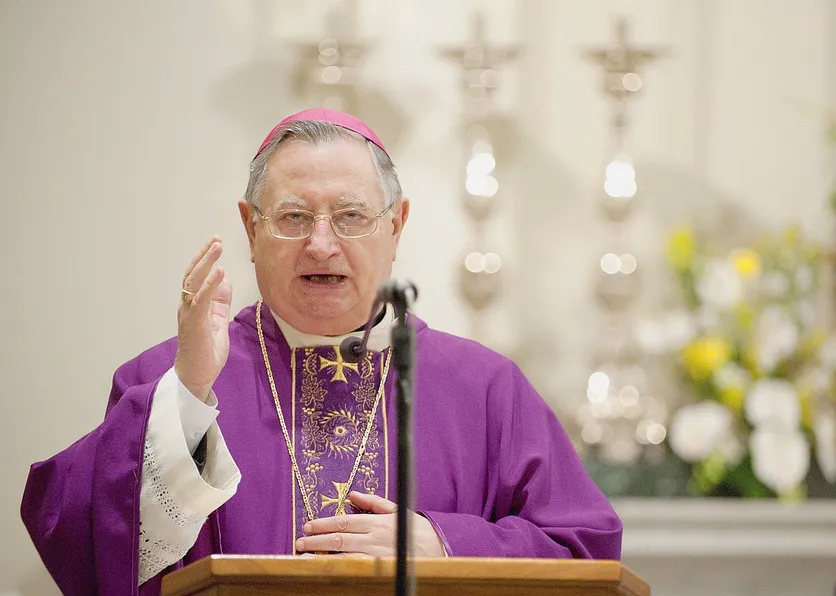
Giuseppe Bertello, who served as the Pope’s envoy to Rwanda from 1991 to 1995, wrote to André Louis, then Secretary General of the Christian Democratic International (IDC) in Belgium, asking the organization to cooperate with the MRND and help it promote what he described as genuine democracy.
In his February 17, 1992 letter, Bertello argued that the MRND was undergoing change and that its younger members deserved support to prepare them for public service.
“As a priest from a family with many members involved in the Christian Democratic International, I would be pleased to see the IDC cooperate with the new MRND in helping it establish genuine democracy and distance itself from the outdated mentality and practices of the former single-party system,” he wrote.
“Otherwise, it risks losing all credibility, which would be deeply regrettable because there are young leaders within the party who deserve support so they can use their talents in the service of the nation. They would benefit from such support.”
Bertello’s appeal came during a defining period in Rwanda’s history. In 1991, President Juvénal Habyarimana accepted the introduction of multiparty politics after growing domestic and international pressure. The move ended the MRND’s status as the country’s only legal political party.
However, the political transition unfolded alongside a war that had begun in October 1990, when the Rwanda Patriotic Army (RPA) launched an armed struggle against Habyarimana’s government. At the same time, peace negotiations were taking place in Arusha, Tanzania, eventually leading to the signing of the Arusha Peace Accords on August 4, 1993.
As new parties emerged, Rwanda’s political landscape became increasingly complex. The MDR, originally founded by Grégoire Kayibanda in 1959, was revived, while parties including the CDR, PL and PSD were also established. The period was marked by intense political competition, but also by the persistence of ethnic divisions that had shaped Rwanda’s politics for decades.
The MRND and CDR, in particular, promoted political positions that were associated with ethnic and regional identity, while extremist elements within the political establishment intensified anti-Tutsi propaganda as the war continued.
During the same period, many young people were recruited into the military to support Habyarimana’s government in its fight against the RPA. The political environment became increasingly polarized, with discrimination and exclusion influencing state institutions and public life.
An IDC document published on February 2, 1992, examining the situation in Rwanda, discussed a statement issued by the Catholic Bishops’ Conference on December 1, 1991, which criticized the government’s handling of the political crisis.
The document argued that the bishops’ criticism was misplaced and pointed to another statement that it said reflected support for the government’s reform process.
“It is only natural that the major reforms being undertaken by the government should receive the support of both the Catholic and Protestant churches. Few expected this to happen,” it stated.
The IDC, which had maintained close ties with Habyarimana’s government, believed that peace could only be achieved if those who had launched the war were defeated. It also expected the MRND to maintain a dominant position in future elections, projecting that the party could win at least 70 percent of parliamentary seats, while opposition parties would secure between 20 and 30 percent.
Bertello’s tenure in Rwanda ended in 1995, after the genocide against the Tutsi in which more than one million people were killed and the collapse of the political order that had existed during his diplomatic mission.
His 1992 letter remains a reflection of how some international actors viewed Rwanda’s political transformation in the years before the genocide and the challenges of interpreting the country’s rapidly changing political landscape at the time.
Giuseppe Bertello, who served as the Pope’s envoy to Rwanda from 1991 to 1995, wrote to André Louis, then Secretary General of the Christian Democratic International (IDC) in Belgium, asking the organization to cooperate with the MRND and help it promote what he described as genuine democracy.
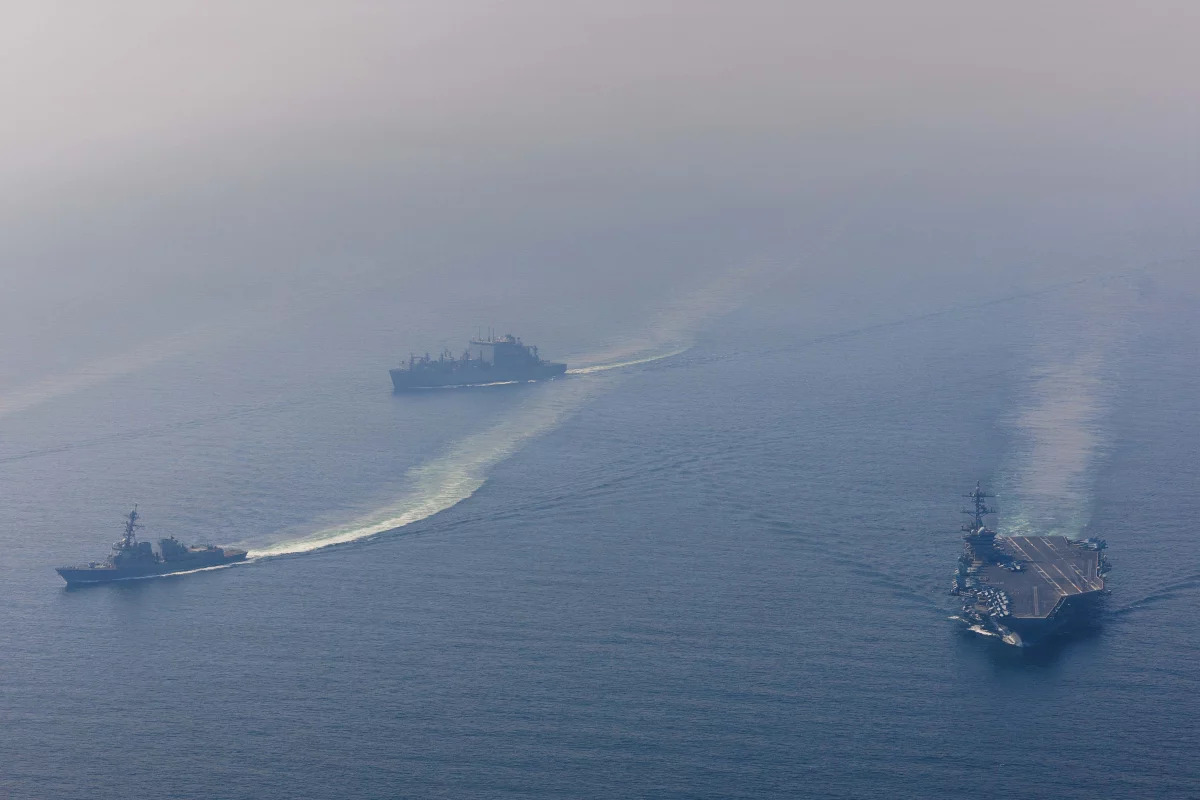
“U.S. forces resumed the naval blockade against vessels transiting to and from Iranian ports and coastal areas today at 4 p.m. Eastern Time,” the U.S. Central Command said in a statement posted on social media platform X.
“There are currently more than 20 U.S. Navy warships and hundreds of military aircraft operating across the Middle East. American forces remain vigilant, lethal, and ready,” it said.
The U.S. forces carried out an additional round of strikes against Iranian targets, an hour before resuming the blockade in the strait, according to the U.S. Central Command.
Earlier on Tuesday, U.S. President Donald Trump said the Strait of Hormuz was open to all ship traffic except for Iran, while the naval blockade will continue.
“We will therefore have a FULL Blockade, but only on Ships coming to and from Iranian ports, or carrying anything have to do with Iranian cargo,” he said in a post on Truth Social.
Fresh U.S. airstrikes and Iranian retaliation have in recent days plunged Washington and Tehran back into open conflict less than a month after they signed a 14-point memorandum of understanding (MoU) aimed at ending the war and paving the way for broader negotiations.
Both sides now accuse the other of violating the agreement first. While neither has formally declared the MoU void, the latest escalation has cast doubt over whether diplomacy can survive another round of fighting.
The U.S. military on Tuesday announced the resumption of the blockade in the Strait of Hormuz.
The reigning European champions booked their place in Sunday’s final in Arlington, Texas, where they will face either England or Argentina, while France must now turn their attention to the third-place playoff.
Didier Deschamps’ side entered the semifinal full of confidence after impressive knockout victories over Morocco, Sweden and Paraguay. Led by captain Kylian Mbappé, France were among the favourites to lift the trophy after another impressive World Cup campaign. However, they found Spain’s disciplined defence difficult to break down as the European champions controlled the contest from start to finish.
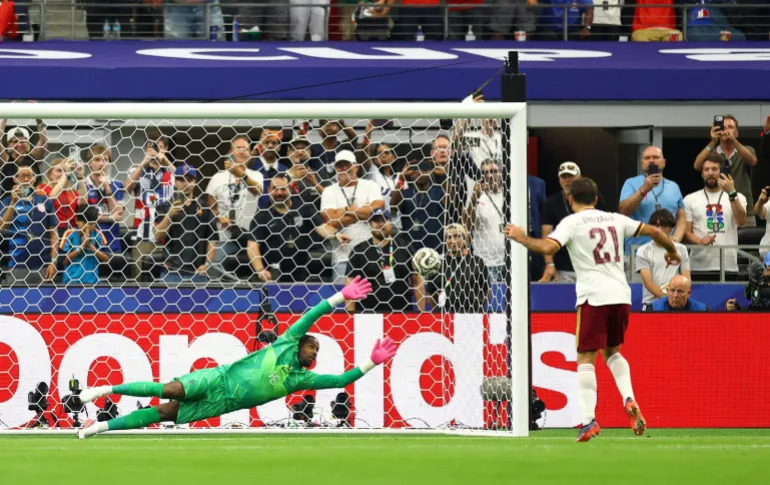
Spain took the lead midway through the first half after Salvadoran referee Ivan Barton awarded a penalty for a foul by France left-back Lucas Digne on teenage winger Lamine Yamal. Mikel Oyarzabal calmly converted the spot kick, beating goalkeeper Mike Maignan to score his fifth goal of the tournament.
France’s problems deepened shortly afterward when defender William Saliba was forced off with a recurrence of a lower back injury, disrupting an already difficult evening for Deschamps’ men.
Les Bleus struggled to create meaningful opportunities throughout the opening half, failing to register a shot on target as Spain dominated possession and dictated the tempo.
Seeking a response after the break, Deschamps introduced Desire Doue in an attempt to inject more attacking energy. But just moments later, Spain doubled their advantage with an excellent team move.
Dani Olmo combined neatly with Pedro Porro, who collected the return pass before calmly slotting the ball past Maignan to make it 2-0 and put Spain firmly in control.
Trailing by two goals, Deschamps introduced Theo Hernandez and Rayan Cherki in search of a comeback. Mbappé, who had inspired France throughout the tournament, was kept largely quiet by Spain’s well-organized defense and was unable to produce the moment of brilliance his side desperately needed.
Spain continued to defend resolutely, frustrating France’s star-studded attack. The European champions have now conceded just one goal throughout the tournament while combining defensive discipline with the creativity of players such as Yamal and Olmo.
The victory sends Spain into their first World Cup final since lifting the trophy in South Africa in 2010. They are now one win away from becoming the first champions of the expanded 48-team FIFA World Cup.
For France, the defeat ends their bid for a third World Cup title and denies Mbappé the opportunity to lead Les Bleus into a third consecutive World Cup final. The Real Madrid forward had once again been central to France’s impressive run, but he and fellow attacking stars Ousmane Dembélé and Michael Olise were effectively neutralised by Spain’s disciplined defensive display.
The defeat also marks the end of Didier Deschamps’ World Cup journey as France coach after 14 years in charge. Despite being eliminated from title contention, Les Bleus will remain in the tournament to contest Saturday’s third-place playoff against the loser of the second semifinal between England and Argentina. The winner of that match will claim the bronze medal.
Speaking after the match, Spain defender Pedro Porro described reaching the final as “a dream come true.”
“We knew that to get close to the final we needed to have the ball. We knew that countering their strengths was key, and we did that. So we’re really happy.”
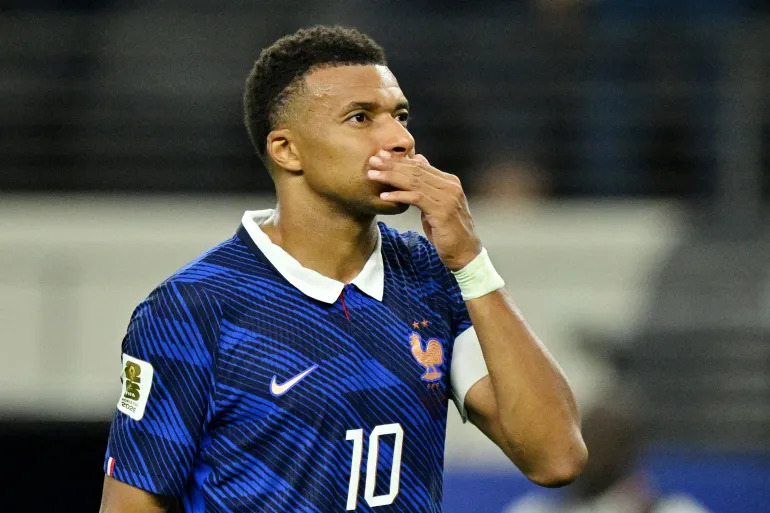
Speaking after the match, Mbappe didn’t hide his frustration at France’s performance in the game.
“I don’t think we played the match we wanted to play – whether tactically, technically, or in terms of our overall performance level,” Mbappe told French broadcaster M6.
“And when you don’t do what you’re supposed to do in a World Cup semifinal, you don’t win.
“Our goal was to press them high up the pitch to prevent them from settling into that slow, controlled rhythm – because when it comes to controlling the game, they are better than us. We failed to do that,” the Real Madrid star added.
While France’s hopes of lifting the trophy are over, Mbappé and his teammates will still have one final opportunity to end their campaign on a positive note in the third-place playoff. The match will also mark France’s final World Cup appearance under Deschamps before a new era is expected to begin, with Zinedine Zidane widely tipped to succeed him as head coach.
Spain, meanwhile, will now focus on Sunday’s final, where they will attempt to win their second World Cup title and their first since 2010.
Pedro Porro scores Spain’s second goal.Oyarzabal scores from the penalty spot. Mbappé looks dejected after France’s 2-0 defeat to Spain.
Both sides now accuse the other of violating the agreement first. While neither has formally declared the MoU void, the latest escalation has cast doubt over whether diplomacy can survive another round of fighting.
Has the MoU collapsed?
The clearest signal yet came from U.S. President Donald Trump, who formally notified Congress in a letter dated Friday that military operations against Iran had resumed under his direction.
In a letter to lawmakers, Trump described the strikes on Iran that began on July 7 as “military action consistent with my responsibility to protect Americans and United States’ interests both at home and abroad.” This notification starts a new 60-day period during which the Trump administration can conduct military operations in the region without congressional approval.
On Monday, Trump said on Truth Social that the United States was “reinstating the Iranian blockade, so named because it is only stopping Iran’s ships or customers from entering or leaving,” and proposed charging a 20 percent fee on cargo transiting the Strait of Hormuz.
However, Tehran insists it is not the side that abandoned the agreement.
Iranian Foreign Ministry spokesman Esmaeil Baghaei said on Monday that the MoU had entered a “crisis phase” because Washington had continuously violated its obligations. He said Iran would follow a principle of “commitment for commitment” and warned that if the United States continues breaching the deal, Iran would no longer see any reason to fulfill its own obligations.
Can diplomacy revive?
Before the latest escalation, the two sides had been using regional mediators to preserve the fragile agreement.
According to Axios, Washington demanded that Iran publicly reaffirm that the Strait of Hormuz remained open and “stop firing on commercial ships,” arguing that Tehran had violated the MoU.
Trump also said last week that the United States had agreed to continue talks with Iran, although he simultaneously declared that the ceasefire was “over.”
Iran denied requesting new negotiations but indicated it remained willing to engage through regional intermediaries, including Qatar, according to Qatar’s Al Jazeera television.
The fighting has nevertheless intensified. The U.S. Central Command (CENTCOM) said its latest wave of strikes against Iran concluded late Monday after strikes on military targets across Iran, including Bushehr, Chah Bahar, Jask, Konarak, Abu Musa, and Bandar Abbas, to “further degrade Iran’s ability to attack commercial shipping.”
Iran has continued missile and drone attacks on U.S. positions and regional targets, including Oman, Bahrain, Jordan and Kuwait.
The Islamic Revolution Guard Corps (IRGC) said Tuesday that it has launched missile and drone attacks on the U.S. Fifth Fleet based in Bahrain. “The retaliatory operation continues,” the statement said.
Who controls Hormuz?
The Strait of Hormuz has once again become the main flashpoint.
Early Sunday, Iran’s IRGC announced that the Strait of Hormuz would remain closed “until further notice” and until “the end of U.S. interference in this region.”
The U.S.-led Joint Maritime Information Center and the U.S. Naval Forces Central Command said Sunday that the southern route remains operational despite Iranian claims, adding that “U.S. forces are prepared to maintain freedom of navigation and safeguard lawful commerce.”
On Monday, CENTCOM announced that it would resume blockading maritime traffic entering and leaving Iranian ports beginning at 4 p.m. ET (2000 GMT) Tuesday.
Baghaei said Sunday that arrangements for the future administration of maritime traffic in the Strait of Hormuz must be made through consultations with Oman.
Those competing visions directly contradict one of the MoU’s central provisions, which envisioned the lifting of the U.S. naval blockade while Iran ensured safe passage for international shipping.
For now, the memorandum has not been formally abandoned. But with military operations expanding, the agreement appears to be surviving more on paper than in practice.
Fresh U.S. airstrikes and Iranian retaliation have plunged Washington and Tehran back into open conflict less than a month after they signed a 14-point memorandum of understanding (MoU) aimed at ending the war and paving the way for broader negotiations.
The update brings the total number of individually identified elephants in Akagera to 115, including 65 females and 50 males. These identified individuals represent approximately 80% of the park’s estimated elephant population, providing valuable insight into the composition, movements, and dynamics of Akagera’s herds.
Individual elephant identification is an important part of Akagera’s long-term conservation efforts, enabling monitoring teams to track individual animals, understand population trends, and support informed conservation and management decisions. Each new identification adds to the growing body of knowledge that helps protect and manage one of Africa’s most iconic species.
Established in 1934, Akagera National Park covers 1,120 square kilometres and is renowned for its diverse wildlife, including the Big Five — lions, leopards, elephants, and buffalo — alongside many other species that contribute to the park’s unique biodiversity.
The park’s remarkable wildlife recovery story has been highlighted by the growth of its lion population, which was revealed in August last year to have increased from just seven individuals to 62 over the past decade. This significant recovery demonstrates the impact of sustained conservation efforts, including improved protection, monitoring, and habitat management.
Additionally, in June last year, Akagera welcomed 70 southern white rhinos translocated from South Africa in a historic cross-continental conservation effort. The arrival significantly strengthened the park’s rhino population and built on the successful reintroduction of 30 white rhinos in 2021.
Together, these milestones reflect the continued success of conservation initiatives at Akagera, where careful monitoring, species reintroductions, and dedicated management are helping restore and safeguard some of Africa’s most iconic wildlife populations.
INDIVIDUAL ELEPHANT IDENTIFICATION UPDATE: The bi-monthly elephant survey was completed, resulting in the addition of six new individuals to the database. Akagera now has 115 individually identified elephants, comprising 65 females and 50 males, representing approximately 80% of… pic.twitter.com/kUCIOVQ1v9
— Akagera National Park (@AkageraPark) July 14, 2026
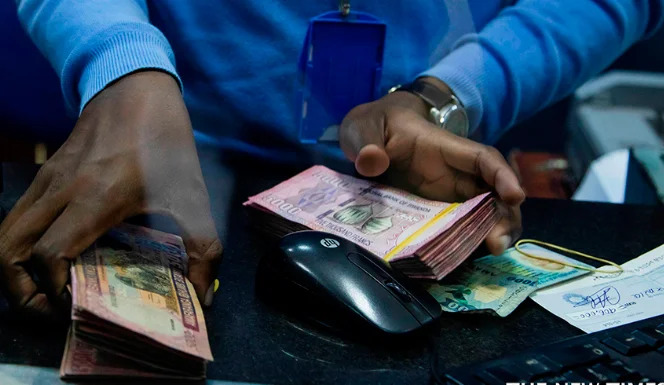
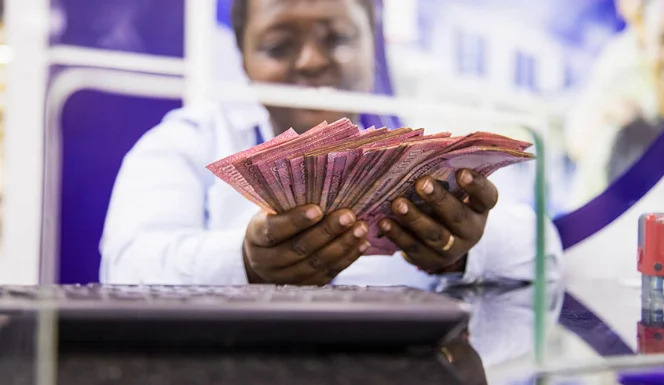
The budget comes as government institutions begin implementing their performance commitments for the 2026/27 financial year. To finance these national priorities, authorities are leaning heavily on domestic revenues. The Rwanda Revenue Authority, led by Commissioner General Ronald Niwenshuti, has set a target of collecting Rwf 4.6 trillion in domestic taxes, while local government taxes are expected to generate Rwf 165.9 billion.
For ordinary Rwandans, the new fiscal year brings several notable changes to the prices of everyday goods and services due to shifting VAT rules, digital taxation measures, and tighter tax enforcement.
Here is a breakdown of how the new budget affects your wallet.
VAT exemption phase-outs on fuel, phones, and tech
For more than 15 years, petroleum products, mobile phones, and other ICT equipment enjoyed VAT exemptions in Rwanda. Under the government’s medium-term revenue strategy, these exemptions officially ended. Consequently, these products now attract the standard 18% Value Added Tax (VAT).
Because VAT is ultimately paid by the consumer, this tax is directly reflected in retail prices. For example, a smartphone or laptop that previously cost Rwf 250,000 may now cost upwards of Rwf 300,000 once VAT and distribution costs are factored in. While the tax on petroleum products feeds into overall transport and distribution costs, the government deployed a subsidy of Rwf 47.7 billion between March and June 2026 to help cushion retail fuel prices and prevent a sharper spike in transport fares.
Online purchases and digital services attract 18% VAT
Under Ministerial Order No. 004/26/10/TC, signed in April 2026, VAT is now officially charged on goods and services bought online, regardless of whether the seller is local or foreign. Foreign platforms selling to Rwandan consumers are legally required to register for VAT in Rwanda or appoint a local representative.
This new rule broadly affects online film and entertainment streaming subscriptions, software downloads, application purchases, cloud storage, and goods ordered from foreign online marketplaces. It also covers distance learning, virtual conferences, and online training programs, unless they are specifically exempt under existing educational laws. If foreign digital companies fail to comply with these rules, local financial institutions are mandated to withhold the 18% VAT during payment processing.
Foreign digital platforms pay a 1.5% digital services tax
On top of VAT, foreign digital companies operating in Rwanda will pay a 1.5% Digital Services Tax (DST) on the local revenues they generate. While this tax is charged directly to the multinational corporations, history shows that platforms frequently pass these operational tax costs down to the final consumer.
Gradual airtime tax increase continues
The excise duty on telecommunications, which includes airtime and mobile data bundles, continues its legislated, step-by-step climb toward 15% by 2027. This fiscal year brings another incremental step, meaning phone calls and data plans will cost slightly more.
Stricter VAT exemptions for local manufacturers
Until recently, industrial machinery and raw materials enjoyed automatic VAT exemptions. Under the April 2026 ministerial order, this tax break is no longer automatic. To qualify, manufacturing, assembling, or mining companies must be registered in Rwanda, demonstrate a direct link between the requested exemptions and their operations, maintain clean records, and prove that the value added to raw materials is at least 30%. If local factories face higher upfront costs, some of that pressure may trickle down to the retail prices of locally made goods.
Motorists: road maintenance levies and annual fees
Motorists face a structured series of levies to maintain the country’s road networks. First, petrol and diesel are subject to a 15% road maintenance levy based on the imported CIF (Cost, Insurance, and Freight) value. Additionally, the strategic fuel storage levy remains active, standing at Rwf 50 per litre, which is an increase from the historical Rwf 32.73.
Vehicle owners must also pay a fixed annual road use charge depending on the class of vehicle. Under this fee structure, passenger cars and Jeeps are charged Rwf 50,000 per year, while pick-ups, microbuses, minibuses, and buses pay Rwf 100,000. Larger transport vehicles face higher rates, with trucks and small trailers paying Rwf 120,000, and large trailers paying Rwf 150,000.
Retained 2025 excise and tourism taxes
Taxes introduced during the previous fiscal year remain in full force. This includes the 3% tourism accommodation levy on hotel and lodging stays, as well as the 0.2% environmental levy on imported goods packaged in plastic materials.
Imported hybrid cars continue to be taxed based on their age, with vehicles under 3 years old taxed at 5%, those aged 3 to 8 years taxed at 10%, and those older than 8 years taxed at 15%. Only hybrid vehicles fully assembled in Rwanda are exempt from this excise tax.
As a small relief, the highly discussed 15% tax on bank and mobile money transaction fees has been deferred and will not take effect until July 1, 2027. Additionally, fully electric vehicles (EVs) remain completely VAT-free until June 30, 2028.
Tighter EBM enforcement and consumer rewards
A major portion of the government’s revenue strategy relies on narrowing the tax gap through better collection rather than creating entirely new taxes. The RRA is heavily enforcing Electronic Billing Machine (EBM) compliance.
To incentivize tax compliance, the RRA continues its Tengamara na TVA program, which has registered over 1 million consumers. Under this initiative, shoppers who request an EBM receipt can receive a 10% cash reward linked to the VAT shown on their receipts. Furthermore, the government is planning reforms to the EBM system that will allow customers to initiate the receipt-generation process themselves, with the seller simply approving it.
Where your money goes
The Rwf 7.8 trillion budget, presented to Parliament by the Minister of Finance and Economic Planning, Yusuf Murangwa, is split into two major spending categories. Recurrent expenditure takes up Rwf 4.8 trillion, or 61.3% of the budget, which covers public sector salaries, administrative running costs, and public service operations. The remaining Rwf 3 trillion, representing 38.7% of the budget, is allocated to development expenditure to fund key infrastructure and development programs.
When looked at through strategic pillars, the economic transformation pillar receives the largest share of the budget at 62.9%, which is equivalent to Rwf 4.9 trillion. This funds agricultural inputs, fertilizer subsidies, electricity grid expansion, and key infrastructure, including Rwf 474.2 billion for the New Kigali International Airport in Bugesera. Meanwhile, the social welfare pillar receives 22%, or Rwf 1.8 trillion, to fund health services, education infrastructure, and community social protection safety nets. The remaining 15.1%, or Rwf 1.2 trillion, is allocated to the governance pillar to cover national security, public administration, and judicial services.
Ultimately, the 2026/27 budget is a delicate balancing act. While everyday digital services, fuel, and imports will cost slightly more, the government is betting that stronger tax compliance and robust domestic revenue collection will successfully fund major projects to drive Rwanda’s long-term economic growth.
For ordinary Rwandans, the new fiscal year brings several notable changes to the prices of everyday goods and services due to shifting VAT rules, digital taxation measures, and tighter tax enforcement.