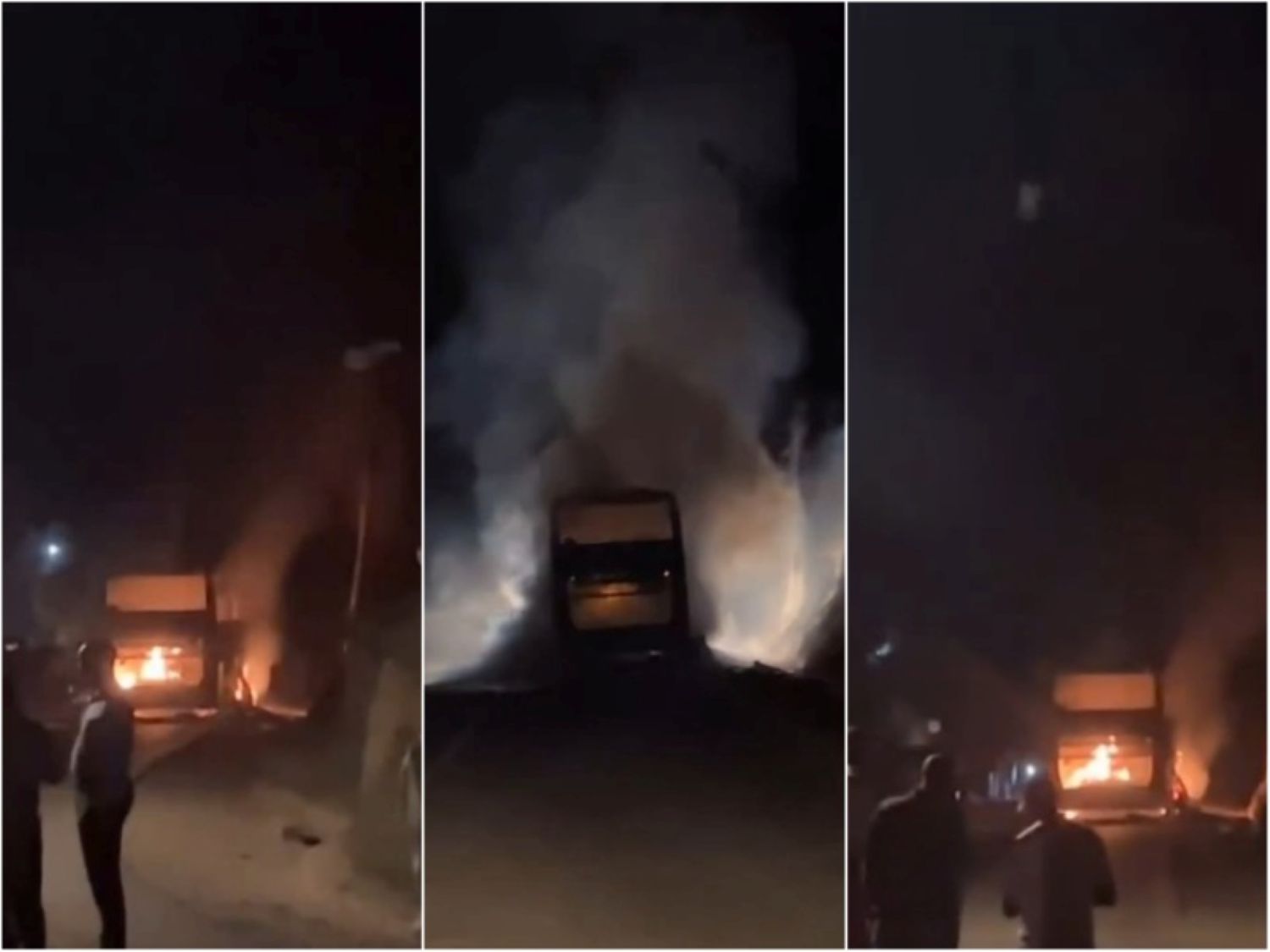
The incident occurred near Nyacyonga, on the outskirts of Kigali. Images and video from the scene showed the bus engulfed in flames, with thick smoke rising above the road as bystanders watched from a distance.
Passengers were able to evacuate the vehicle, and there were no reported fatalities.
Eyewitnesses said the fire completely destroyed the bus and the luggage carried by passengers. The cause of the blaze was not immediately established.
The Trinity Express bus was travelling towards Kigali from Uganda when the incident occurred.
The bus company had not issued a statement regarding the incident as of publication time.
BREAKING: A Trinity bus travelling from Uganda caught fire near Nyacyonga as it was approaching Kigali on Monday evening.
No deaths have been reported, but the bus was completely burnt, along with passengers’ luggage.
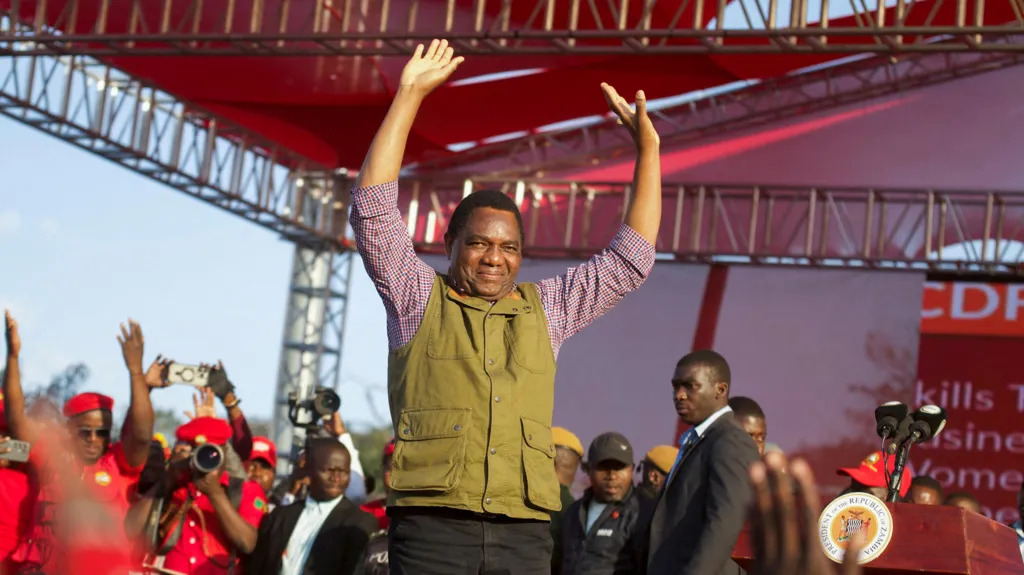
The Electoral Commission of Zambia declared Hichilema president-elect early on Tuesday, after the incumbent won a clear majority over his main challenger, Brian Mundubile, who received about 38% of the vote. The remaining candidates trailed well behind the two leading contenders.
Under Zambia’s electoral system, a presidential candidate who receives more than 50% of the vote wins in the first round without the need for a runoff.
“I therefore declare Hichilema Hakainde S to be president-elect of the Republic of Zambia,” commission chairperson Mwangala Zaloumis said.
Hichilema, 64, said he was “truly humbled by the trust” placed in him and pledged to continue working for citizens who had supported opposition candidates.
“We hear you, and we will continue to work for you,” he said.
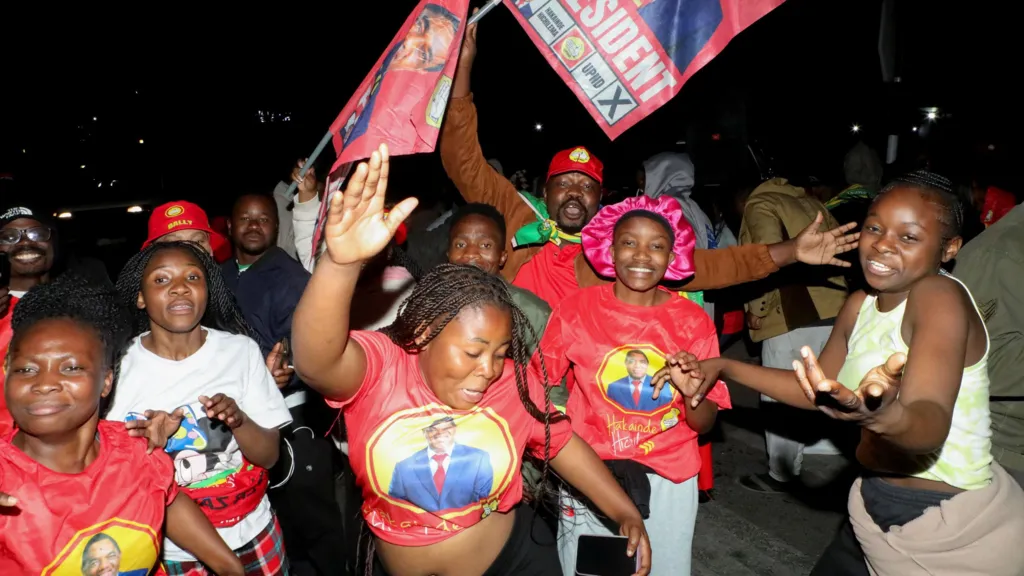
Hundreds of Hichilema supporters gathered in Lusaka following the announcement, wearing the red colours of his United Party for National Development and celebrating with singing, dancing and firecrackers.
The election was, however, marked by allegations of irregularities and tensions between the government and opposition. Mundubile had questioned the results, alleging discrepancies between polling-station records and officially announced figures and calling for an independent investigation. His campaign also raised concerns over events surrounding the vote-counting process.
The electoral commission temporarily suspended the counting of votes a day after polling, citing reports of violence against election officials and the theft of marked ballot papers in some areas. The suspension was lifted later the same day.
The government had also accused opposition figures of involvement in an alleged armed insurrection, claims Mundubile and his National Reconciliation Party for Unity and Prosperity rejected. Eleven people, including senior opposition figures, were arrested in a raid shortly after voting.
International observers described election day as largely peaceful but raised concerns about the wider electoral environment. The European Union observation mission cited late legal changes, restrictions on opposition activity, media access and unequal campaign conditions, saying these factors had affected the fairness of the contest.
Zambia has nevertheless maintained a record of peaceful transfers of presidential power since the return to multiparty democracy in 1991, with successive changes of government taking place through elections.
Hakainde Hichilema’s supporters poured onto the streets to celebrate his victory.
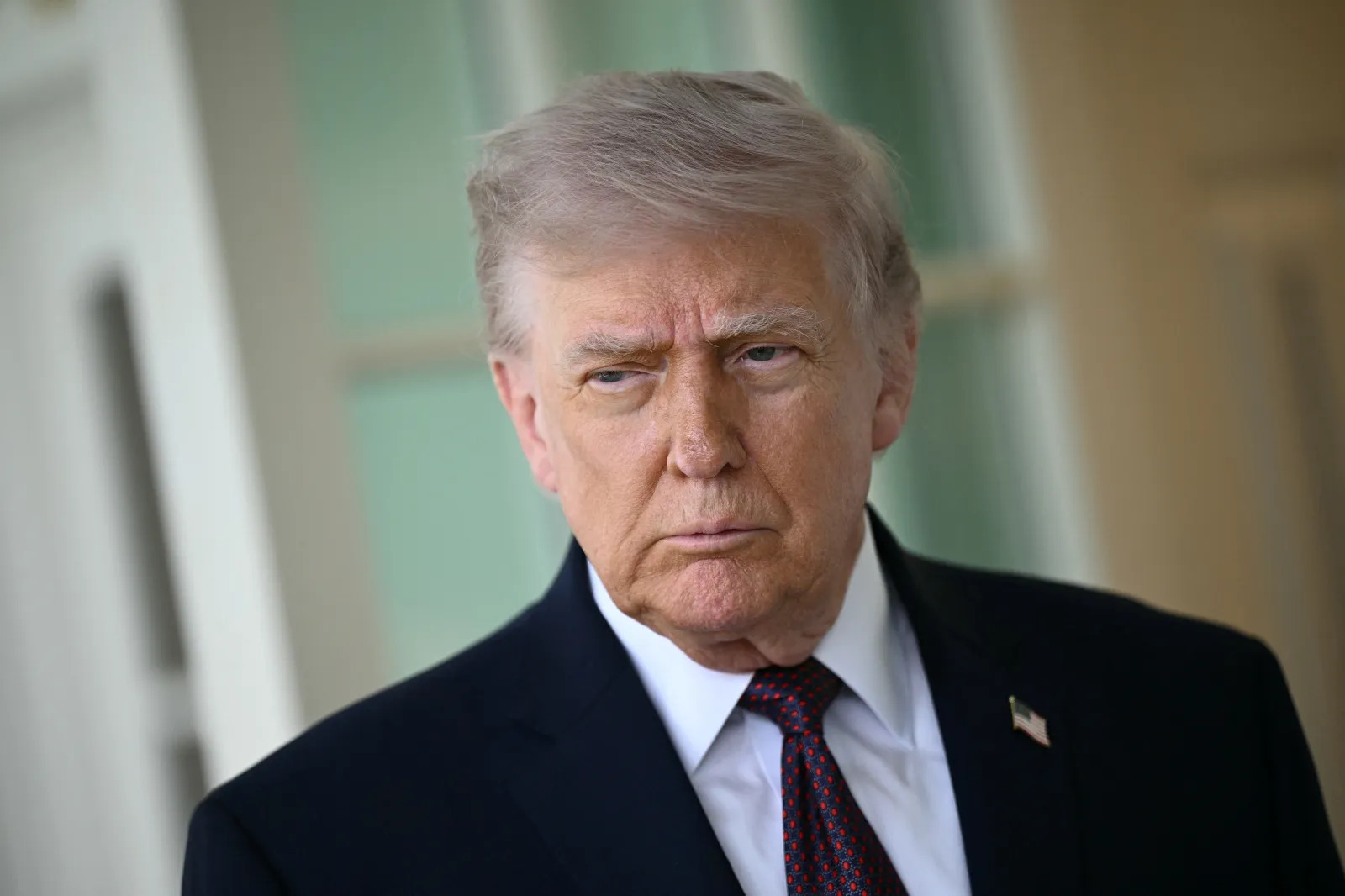
Just 33 percent of respondents in the four-day survey said they approved of Trump’s performance in the White House, while 64 percent disapproved, the poll showed.
It noted that Trump’s approval rating, down from 35 percent in a poll that closed earlier this month and lower than at any point in his current term, “has now tied the lowest level of his prior term reached in December 2017.”
The latest poll was released as a 60-day negotiation period under a U.S.-Iran memorandum of understanding was set to expire Monday, with no progress toward a broader peace agreement between the two sides.
Trump has sought to ease public concerns over high gas prices in recent remarks. At a political rally in Garden City, New York on Friday, Trump said that paying “a tiny little bit more for your gasoline” is worth the cost of ensuring “a very evil country” cannot have a nuclear weapon.
Meanwhile, a Financial Times poll released Sunday showed that 53 percent of U.S. voters said they had become worse off under Trump, amid growing discontent over his handling of the economy and cost of living.
“Inflation is outstripping wage gains and people are having difficulty paying their bills. Many feel they are falling behind and not able to keep up with the cost of food, gas, and healthcare,” Brookings Institution Senior Fellow Darrell West told Xinhua.
U.S. President Donald Trump’s approval rating fell to 33 percent, the lowest level of his presidency, amid public concerns over the U.S. war against Iran, according to a Reuters/Ipsos poll that concluded Monday.
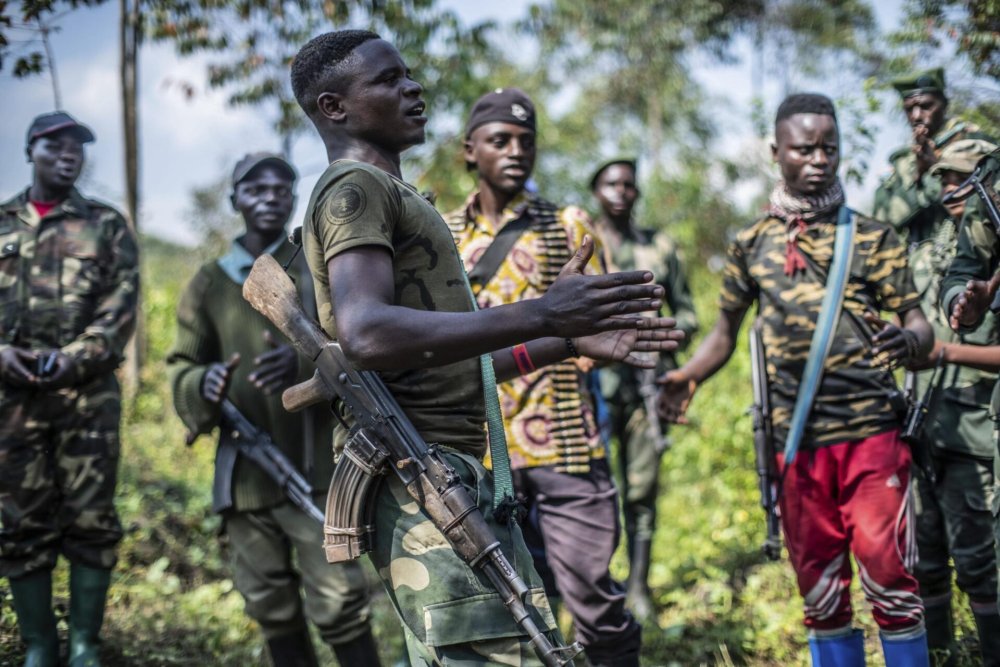
Kinshasa has said it has been holding talks with the FDLR to persuade the group to lay down its weapons. However, the group has reportedly rejected proposals that would see its members return to Rwanda. The DRC has yet to disclose the name of the country that has agreed to receive them.
The decision to keep the country’s identity confidential has raised questions over which nation is prepared to accept members of a group that has been linked to a security crisis in the Great Lakes region for more than three decades.
The FDLR, which is deeply entrenched in eastern DRC, remains a major security concern for the Great Lakes region, including Rwanda. Its history is closely linked to the 1994 Genocide against the Tutsi, in which more than one million people were killed over 100 days.
The group was established by former members of the former Rwandan Armed Forces (ex-FAR) and the Interahamwe militia who were involved in the genocide. Over the years, the FDLR has maintained an armed presence in eastern DRC and has been accused of propagating an ideology of hatred and violence.
The Washington Accords, signed in December 2025, called for the accelerated dismantling of the FDLR. The FDLR subsequently put forward a proposal for voluntary disarmament and demobilisation, which the Congolese government took up in its engagements with regional and international partners. Rwanda rejected the proposal, arguing that it was inconsistent with the commitments made under the Washington agreements.
Floribert Anzuluni, Congo’s minister responsible for regional cooperation, said talks with a country that could receive disarmed FDLR members had reached an advanced stage.
“One country has already given its consent,” Anzuluni told RFI, adding that Kinshasa would announce the country’s identity publicly soon.
Under the DRC’s proposal, FDLR members would first surrender their weapons. Those willing to return to Rwanda would be repatriated, while those unwilling or unable to return would be given the option of relocating to one or more other countries.
But any country considering accepting FDLR members would need to conduct thorough background checks and carefully assess the implications of their admission.
The FDLR is not simply a group of refugees seeking a place to settle. Its history is inseparable from the role played by some of its members in the 1994 Genocide against the Tutsi.
The group’s activities have also had consequences beyond its strongholds in eastern DRC. The region has served as a base from which the FDLR has recruited fighters and conducted operations. The group has also been accused of involvement in the conflict between the Congolese army, FARDC, and the AFC/M23, as well as attacks affecting civilians.
A UN Security Council assessment has attributed serious violations of international law to the FDLR, including killings, injuries, sexual violence and forced displacement. Women and children have been among those affected.
Rwanda has consistently argued that an armed group associated with genocide ideology should not be treated as a legitimate political interlocutor or given a platform for negotiations.
For any country considering accepting FDLR members, the central question is whether relocation would contribute to dismantling the group’s armed structures and ideology, or simply provide it with a new environment in which to operate.
If the receiving country is genuinely committed to supporting peace and stability, accepting disarmed FDLR members should not substitute for efforts to dismantle the group’s military and organisational structures and address the ideology that has sustained it.
The relocation of FDLR members could either form part of a broader effort to resolve a security crisis that has persisted for more than 30 years, or simply change the location and nature of the problem. The country that ultimately accepts them will therefore face an important question: whether it is prepared to assume responsibility for the consequences.
How large is the FDLR?
A July 2026 report by UN experts presents conflicting estimates of the FDLR’s strength.
The FDLR itself claims to have more than 10,000 fighters, nearly half of whom it says are engaged in regular military activities. The FDLR-CRAP faction has separately claimed to have more than 20,000 fighters.
The UN report, however, says those figures are not considered reliable. UN officials and intelligence agencies estimate that the FDLR has between 3,500 and 4,500 fighters.
The Washington Accords put the group’s strength at between 3,000 and 3,500 fighters.
The disparity between the group’s own claims and external estimates underscores the difficulty of establishing the FDLR’s exact military strength, and the challenge facing any effort to disarm, dismantle and relocate its members.
The FDLR militia was established by members of the former Rwandan Armed Forces (ex-FAR)and the Interahamwe militia who were involved in the genocide.
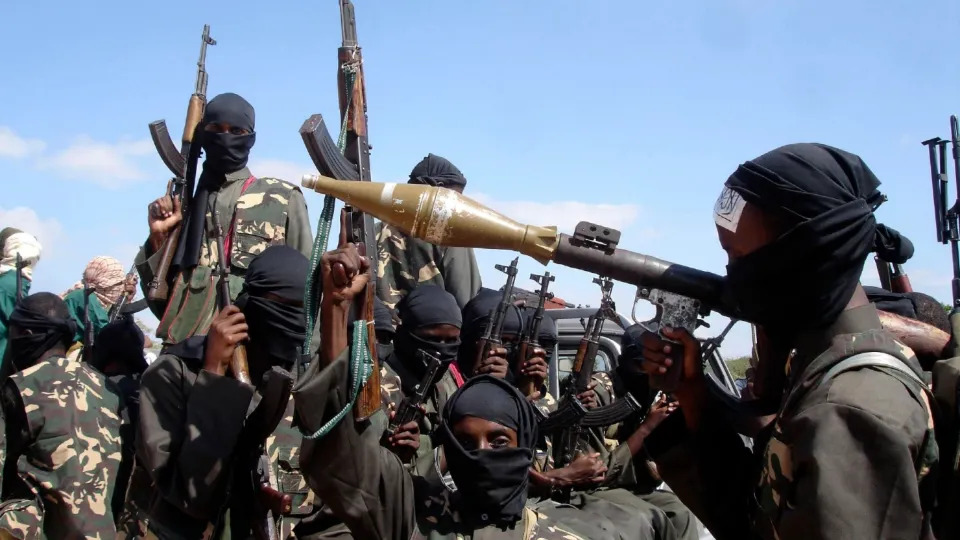
According to the ministry, SNAF positions came under attack at 5 a.m. (0200 GMT) by armed elements using vehicle-borne improvised explosive devices.
The ministry said the attacking force comprised a mix of al-Shabaab militants and militias loyal to the President of Southwest State Abdiaziz Hassan Mohamed Laftagareen.
“SNAF responded professionally and decisively, repelling the attack and thwarting the assailants’ attempt to destabilize the security and stability of Baidoa,” the ministry said in a statement.
Military forces seized weapons and vehicles used in the attack and were conducting clearance operations to secure the city and track down remaining fighters in parts of Baidoa, the statement said.
“The Ministry of Defense will provide the Somali public with further details regarding the attack and the outcome of the operation once it has concluded,” it said.
Somali troops have controlled the city since March, when they seized control of Baidoa and prompted the resignation of Laftagareen.
Residents confirmed that heavy fighting erupted in Baidoa on Monday morning as SNAF forces clashed with armed militias loyal to Laftagareen, alongside al-Shabaab elements.
While local opposition figures claimed to have captured the city, military officials denied the claim and confirmed that security operations remained ongoing.
According to the ministry, SNAF positions came under attack at 5 a.m. (0200 GMT) by armed elements using vehicle-borne improvised explosive devices.
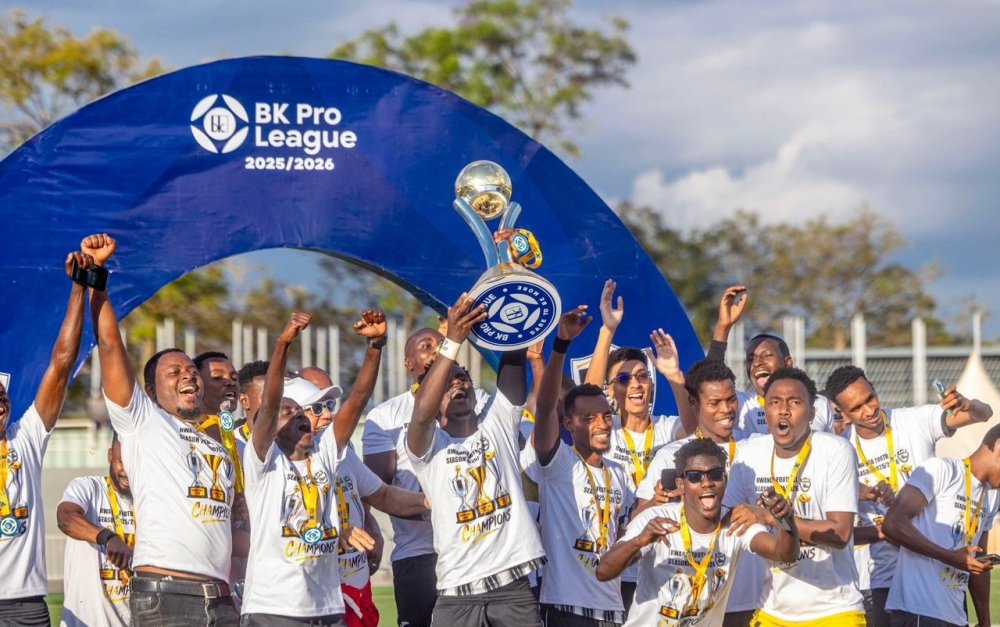
The agreement will make matches from Rwanda’s top division available on Hudl Wyscout, a platform used by scouts, coaches and football professionals for video analysis, player assessment and recruitment.
The partnership announced on Monday, August 17, gives Rwandan clubs and players another avenue for international exposure, while introducing video and performance-analysis tools for technical teams within the league.
“The platform will also provide our technical personnel with detailed video and performance data, helping coaches, analysts and sporting departments make more informed, evidence-based decisions,” said Jules Karangwa, CEO of the Rwanda Premier League.
Rwanda national team head coach Stephen Constantine welcomed the introduction of the platform, pointing to its potential to increase the visibility of local talent.
“Rwanda is rich with untapped talent, and these young athletes deserve to be seen. With this technology, their skills can reach a wider audience, opening doors to opportunities that were previously out of reach,” Constantine said.
Mateo Bourrut Lacouture, Strategic Partnership Manager at Hudl, said the multi-year agreement forms part of the Rwanda Premier League’s wider efforts to use technology and data to improve clubs, support player development and raise the profile of Rwandan football internationally.
The partnership gives the BK Pro League a new connection to the international scouting market, potentially making Rwandan players and clubs more visible to football professionals beyond the country.
The partnership announced on Monday, August 17, gives Rwandan clubs and players another avenue for international exposure, while introducing video and performance-analysis tools for technical teams within the league.
The regional schools tournament has received a major financial boost after the East African Development Bank (EADB) committed $90,000 (about Rwf 132 million) as title sponsor of this year’s games.
The tournament, which is underway in Morogoro, has brought together 413 teams and 5,548 participants from across East Africa competing in 51 sporting disciplines, making it one of the region’s biggest school sports events.
Speaking during the official opening ceremony on Sunday, EADB Country Manager Stephen Wambura said the bank’s support was aimed at investing in young people and promoting sustainable development through sport.
“While our core mandate is financing development projects across key sectors of the economy, we recognize that sustainable development goes beyond infrastructure and enterprises. It also means investing in people, especially young people, who represent the future of our region,” Wambura said.
He said sports sponsorship was part of the bank’s Corporate Social Initiatives agenda, given the role of sport in promoting healthy lifestyles, developing character and creating opportunities for young people.
“Through this sponsorship, we are investing not only in the competition, but in the development of the next generation of East African leaders,” Wambura added.
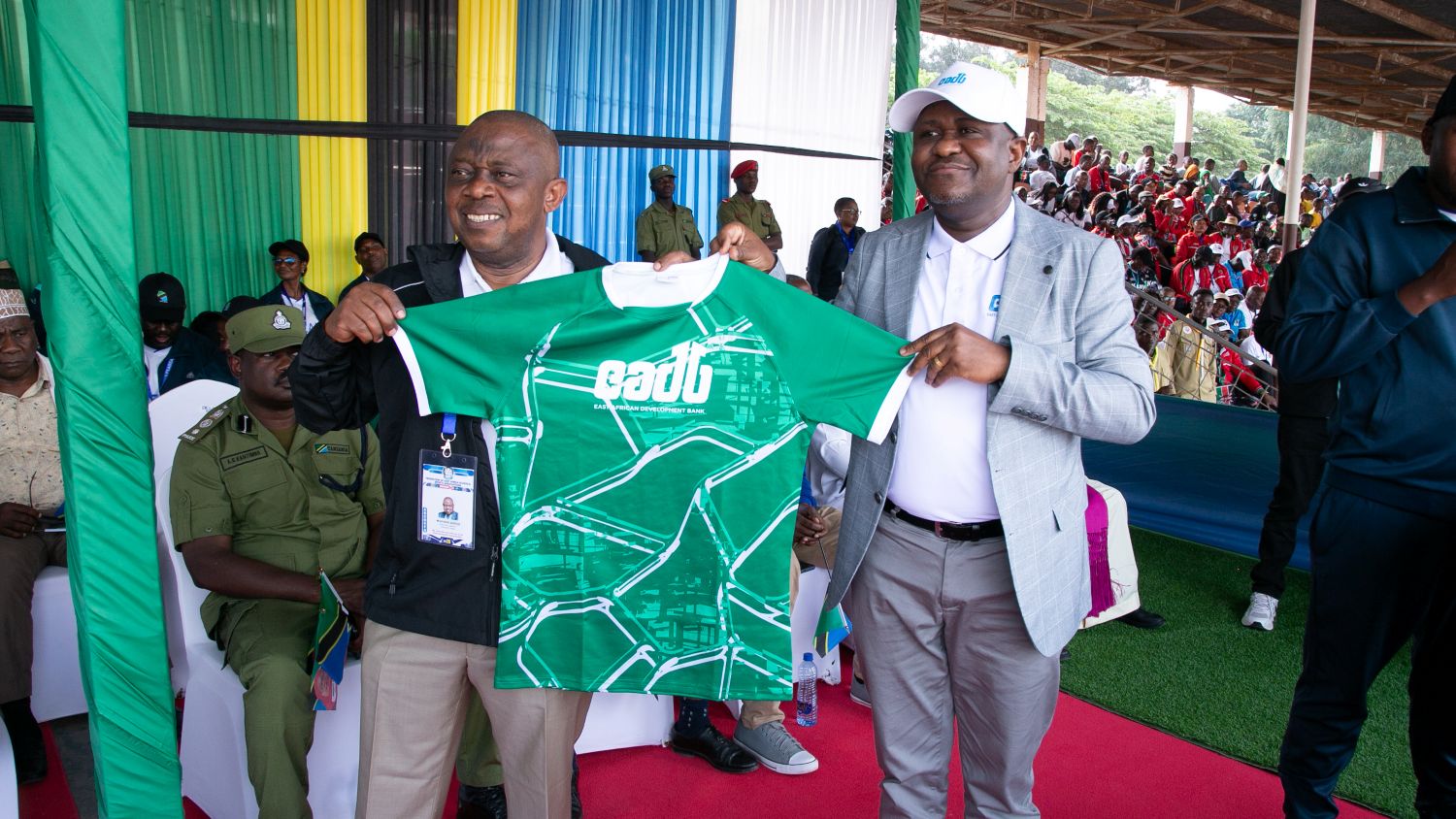
Under the sponsorship, EADB will support the production of medals and trophies for winning teams and provide playing kits for teams competing in the finals.
For Rwanda, the games provide an opportunity for its young athletes to compete against some of the strongest school teams in the region.
In boys’ football, CGF Kigali is representing Rwanda, while PSB Huye is competing in the girls’ category, among other Rwandan teams.
Volleyball is another discipline where Rwanda will be looking for strong results. Nyanza Technical Secondary School (Nyanza TSS) will compete in the boys’ tournament, while GS Indangaburezi will represent the country in the girls’ competition.
Rwanda will also compete in basketball, with ITS Kigali featuring in the boys’ 5×5 category and ESB Kamonyi competing in the girls’ tournament.
In handball, GS Tabagwe will represent Rwanda in the boys’ competition, while Kiziguro Secondary School will compete in the girls’ category.
FEASSA President Justus Mugisha, while lauding the lender’s financial commitment, described this year’s edition as the biggest in the history of the games.
Mugisha said the competition includes primary school pupils under 15, secondary school students under 19 and participants in the special needs education category.
According to Mugisha, the event has more than 6,000 participants, including about 5,000 students, while the overall number of people attending the games, including parents, is expected to exceed 10,000.
The tournament is scheduled to run until August 22, with Rwanda hoping to secure medals across several disciplines while competing for a strong overall performance against the region’s leading school sports programmes.
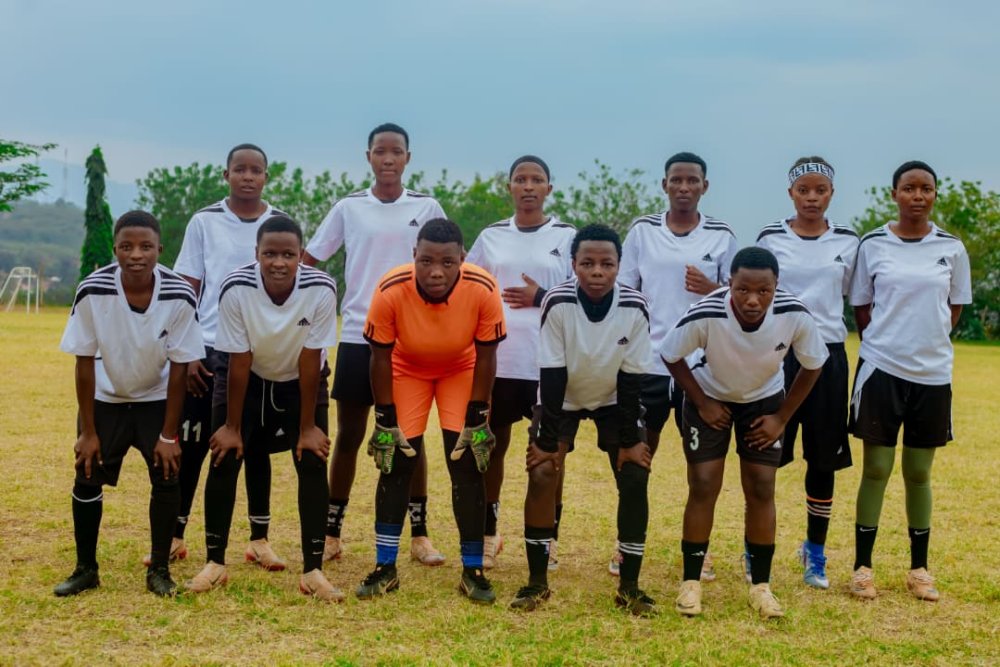
EADB Tanzania Country Manager, Stephen Wambura (Right), officially hands over to FEASSA president, Justus Mugisha, players’ kits that will be donned during the final games. EADB provided the kits as part of the USD 90,000 sponsorship of the games.PSB Huye is among the Rwandan teams in Morogoro for the FEASSA 2026 tournament.
FRSS officials, alongside representatives from MINEDUC and MINISPORTS, are supporting Rwanda’s teams.
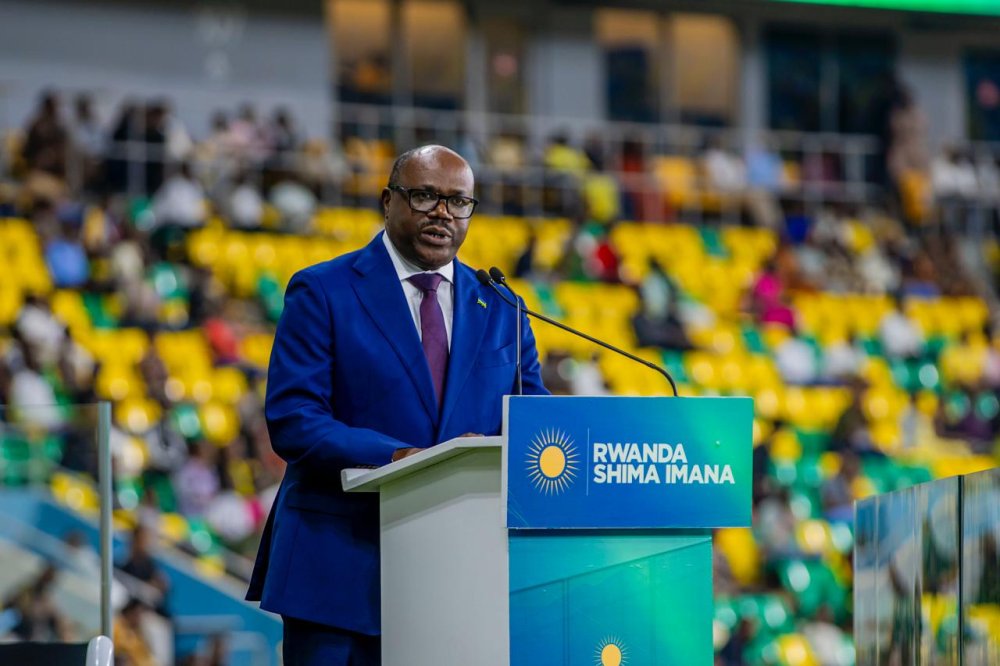
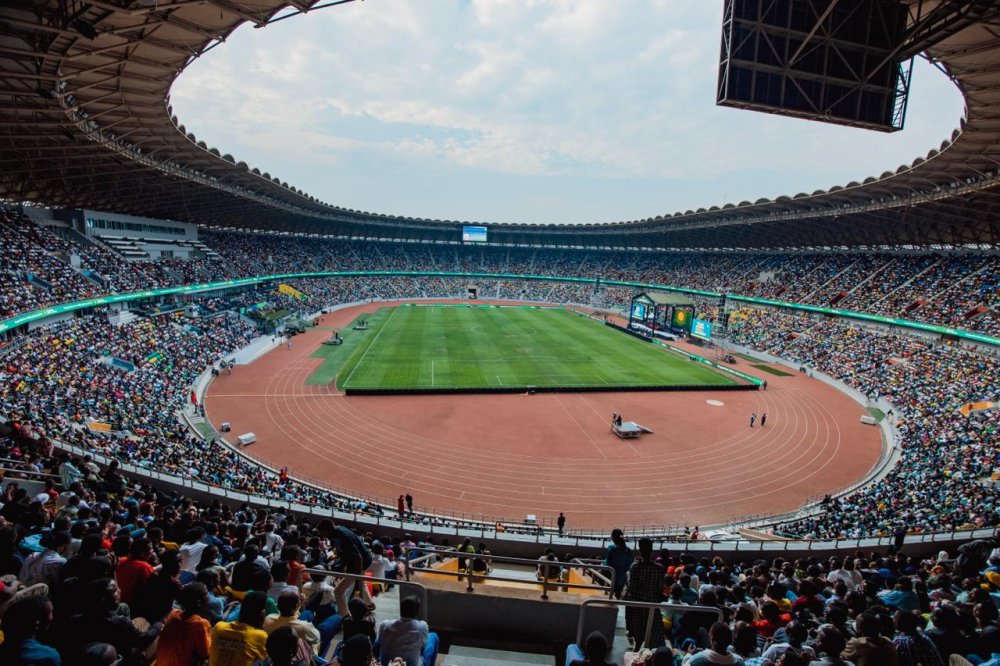
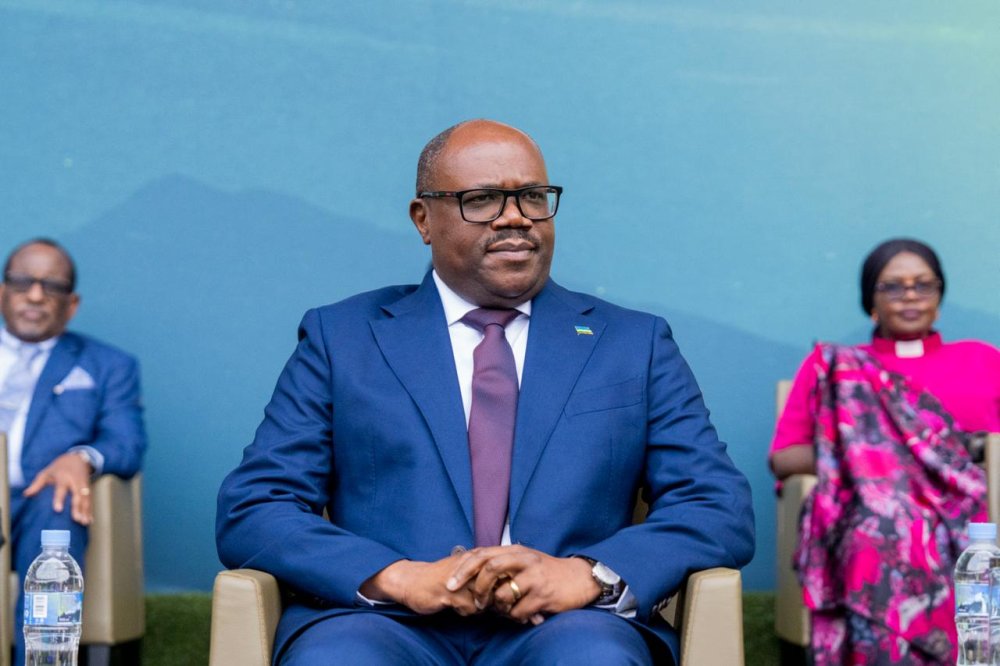
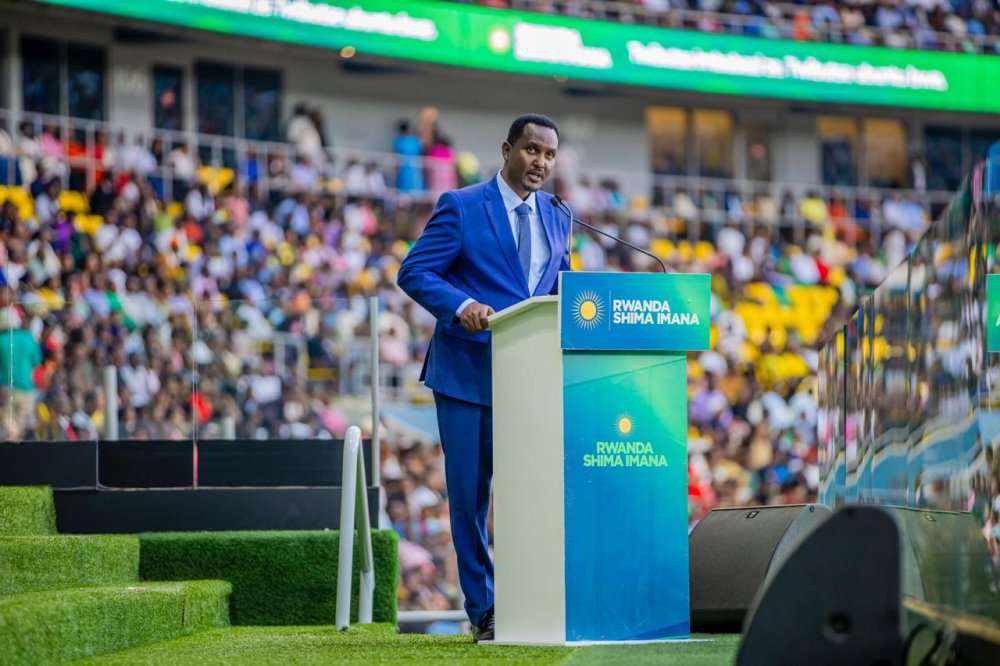
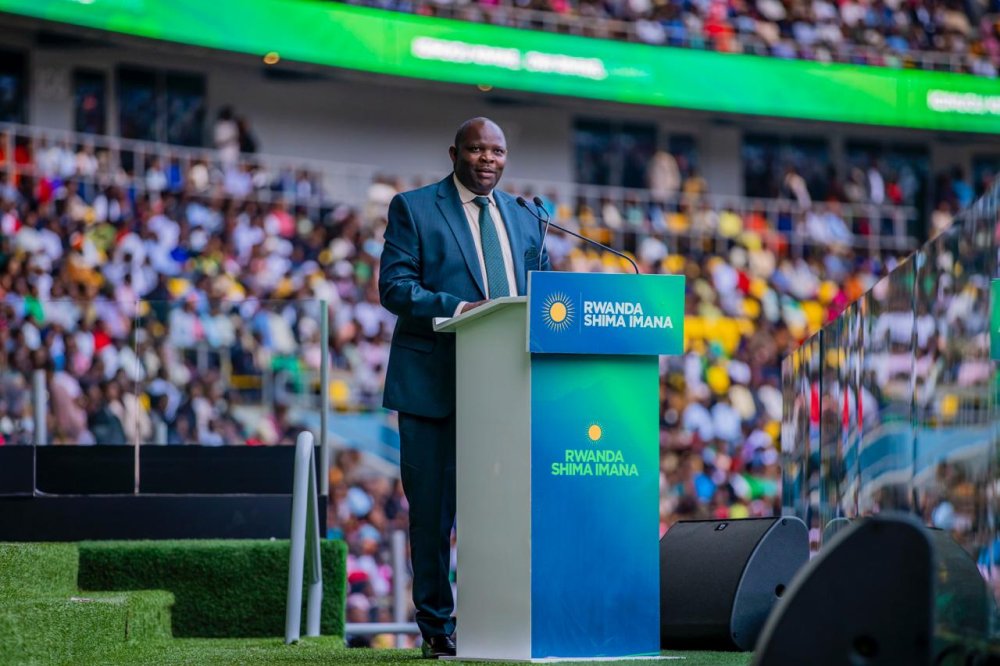
The Prime Minister spoke at the 14th annual Rwanda Shima Imana interfaith gathering at Amahoro Stadium on August 16, 2026.
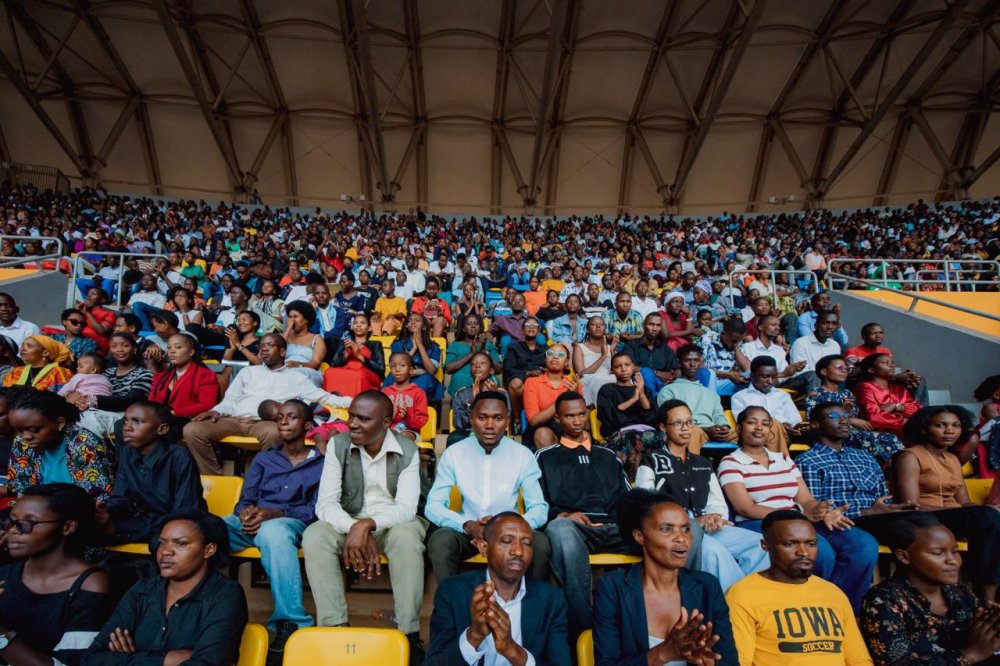
The event brought together Rwandans from across the country, including members of different religious organisations and churches, to pray for the country and thank God for protecting Rwanda and its people.
The gathering also marked 32 years since the 1994 Genocide against the Tutsi was stopped and provided an opportunity to reflect on Rwanda’s progress over the past three decades.
Dr. Nsengiyumva thanked religious organisations and churches for their contribution to Rwanda’s development over the past 32 years, saying their partnership with the government has been important in the country’s transformation.
He said the Rwanda Shima Imana gathering was an opportunity to recognise the contribution, achievements and cooperation between the Government and religious organisations in building the country.
“If the Government had worked alone, what we have achieved and are thanking God for today would not have been possible,” he said.
The Prime Minister said religious organisations have contributed to Rwanda’s development by promoting strong values among citizens, strengthening families, promoting love, unity, peace and forgiveness, encouraging transparency and fostering patriotism.
He also recognised their role in contributing to the national economy, helping heal Rwandans and addressing wounds resulting from the country’s past.
However, he urged religious leaders and churches to maintain their efforts and continue contributing to the country’s development.
“We ask you to continue educating Rwandans about what can help them develop and move out of poverty, while protecting them from people who deceive them and lead them in the wrong direction,” he said.
Dr. Nsengiyumva said Rwanda continues to face challenges related to alcohol abuse and drug use, which particularly affect young people but also concern Rwandans more broadly.
He urged religious organisations to step up efforts to address the problems, saying alcohol abuse and drug use are inconsistent with Rwandan values and Christian values in general, amid a recent nationwide crackdown on toxic liquor that has seen hundreds of manufacturers shut down and dozens of people arrested.
He said the problems not only harm the health of young people but can also contribute to the breakdown of families and trigger conflicts within households.
“As we gather here to thank God, we ask you to continue using your voices to teach the values that should define us as Rwandans and to fight the harmful culture of alcohol abuse that often affects our youth,” he said.
The Prime Minister noted that religious organisations reach large numbers of people, giving them an important role in improving the lives of citizens, as they have done over the past 32 years.
He said the government’s efforts to combat alcohol abuse and drug use are intended to help Rwandans protect the gift of life that God has given them.
“We want all Rwandans to continue protecting the gift of life that God has given us, so that we can also use the strength God has given us to care for our families,” he said.
Jimmy Muyango, head of Peace Plan Rwanda, which organizes Rwanda Shima Imana, and pastor of Potter’s Hand Ministries Church, thanked God for giving Rwandans good leadership that has guided the country on a path of unity and protected it from division.
“It is not something ordinary that God has given us good leadership that loves its people and has transformed the history of this country, leading Rwandans on the path of unity and reconciliation under the leadership of our respected President of the Republic,” he remarked.
Pastor Ndayizeye Isaïe, head of the committee organising the Rwanda Shima gathering, said Rwandans should thank God for the progress the country has made since emerging from the difficult period that characterised its past.
“We should thank God that we have emerged from the darkness marked by a history of division, poverty, conflict, bad leadership, killings and other evils,” he urged.
Amahoro Stadium was packed with Rwandans and their friends who gathered to thank God for the blessings He has bestowed upon the country.
Rwandans turned out in large numbers for the gathering, thanking God for their lives and Rwanda’s progress.Prime Minister Dr. Justin Nsengiyumva joined thousands of Rwandans at the 2026 Rwanda Shima Imana gathering.
Pastor Jimmy Muyango, head of Peace Plan, which organises Rwanda Shima Imana, thanked God for blessing Rwanda with good leadership that has guided the country along the path of unity.
Pastor Ndayizeye Isaïe, head of the committee organising the Rwanda Shima Imana gathering, said Rwandans should thank God for helping the country emerge from its troubled past and earn respect on the global stage.
PM Dr. Nsengiyumva thanked religious organisations and churches for their contribution to Rwanda’s development over the past 32 years, saying their partnership with the government has been important in the country’s transformation.
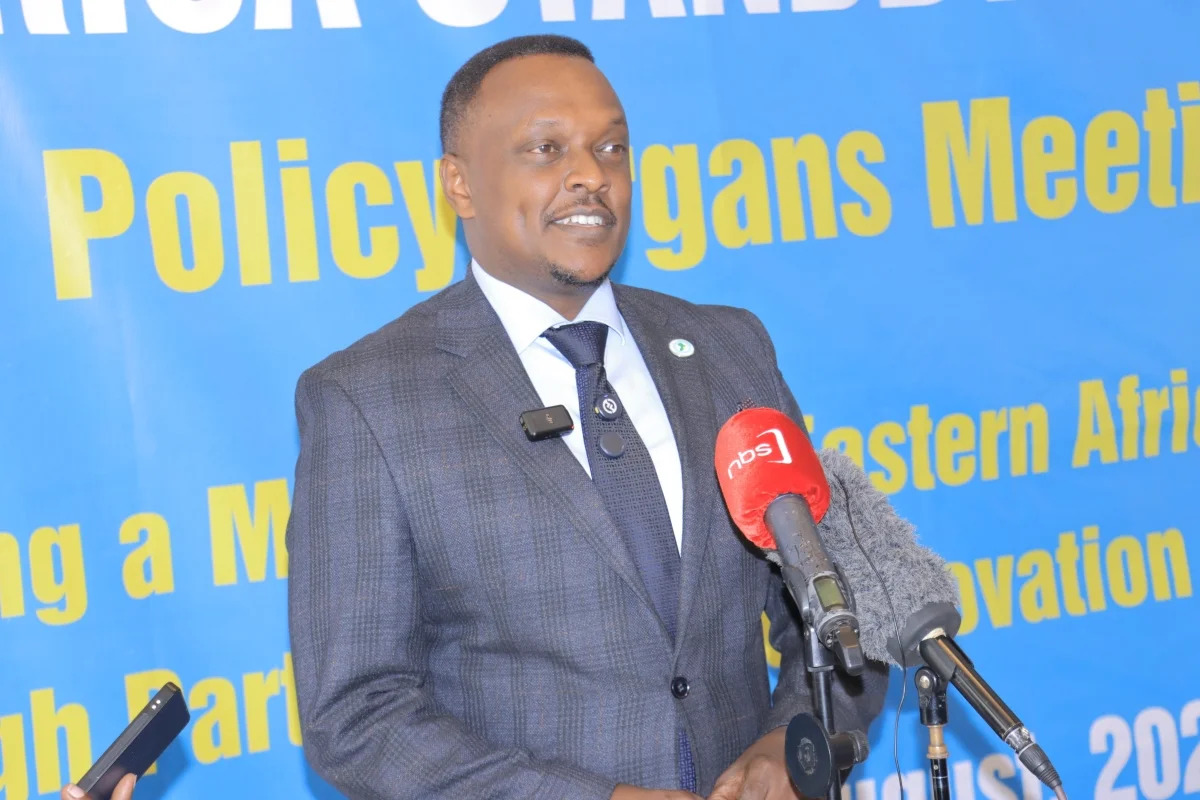
“The most pressing challenges are still terrorism and cross-border crime,” Rwivanga said during an interview with The New Times’ The Context podcast.
The former Rwanda Defence Force (RDF) spokesperson, who took over as Director of the EASF in May, identified Al-Shabaab and other extremist groups among the threats facing the region, noting that insecurity along the eastern coast can disrupt the movement of goods and services.
Regional countries, he argued, need closer cooperation in areas including maritime security and cross-border policing to address threats that transcend national borders.
Testing operational readiness
The EASF has been conducting exercises and force verification missions to ensure member states can deploy the personnel and equipment they have pledged to the regional standby arrangement, Rwivanga explained.
Established in 2004, the EASF is one of the African Union’s five regional standby arrangements. It is mandated to support peace support operations, conflict prevention, crisis response and post-conflict reconstruction in Eastern Africa.
The organisation achieved full operational capability in 2014 after evaluating the forces pledged by member states, according to Rwivanga.
He stressed, however, that readiness is not a one-off process and requires regular exercises and verification.
“We have a checklist to verify the readiness of the forces such that when the need arises for us to engage these forces, we will prove that they are ready for integration,” he noted.
The EASF has conducted command-post, field-training and maritime exercises across member states to strengthen interoperability and ensure that different national forces can operate together.
Rwivanga spoke shortly after a force verification exercise in Uganda, where EASF officials were assessing the country’s pledged capabilities.
Similar verification exercises have been conducted in other member states and will continue as part of the organisation’s readiness programme, he added.
Beyond military threats
While military preparedness remains central to the EASF’s mandate, the organisation is broadening its focus to humanitarian assistance and disaster response, Rwivanga explained.
Member states are increasingly pledging capabilities that can be deployed during natural disasters and other humanitarian emergencies.
Ethiopia has pledged C-130 aircraft for strategic airlift, while Rwanda has committed medical evacuation support and Kenya has pledged air reconnaissance capabilities. Uganda is also expected to contribute search-and-rescue capabilities.
These capabilities could allow the region to respond collectively when a crisis overwhelms the capacity of an individual country, Rwivanga noted.
He pointed to natural disasters and climate-related emergencies as threats that should form part of the region’s broader security preparedness.
“We should not just look at the enemy in the sense of rebel forces,” he said. “You should look at the enemy even within with climate-related issues that could easily spiral out of order.”
Reducing reliance on external support
Rwivanga also highlighted efforts by African countries to increase their financial contributions to continental peace and security initiatives.
Greater African funding, he maintained, would help reduce dependence on external partners and strengthen the region’s ability to respond to crises.
He pointed to increased contributions by Ethiopia and Kenya to the African Union’s peace and security architecture as an indication of growing African ownership.
“At least in our small but very determined way, we are ready to operate even without that external support,” he stated.
The EASF is also seeking greater support from its member states to strengthen its resources and operational capabilities, he added.
Cooperation against cross-border threats
Regional cooperation is essential because terrorism, organised crime and other security threats do not stop at national borders, Rwivanga observed.
He cited joint security engagements between Rwanda and Uganda, as well as Rwanda and Tanzania, as examples of countries working together to address cross-border insecurity.
“Working together helps to deal with all the grey areas, the blind spots along the border,” he said.
He called for stronger cooperation between regional organisations, arguing that economic integration and security cooperation are closely linked.
Disruptions to the movement of goods and services can affect economies on both sides of a border, making security cooperation important not only for defence but also for regional economic activity, he explained.
Ultimately, the EASF’s objective is to ensure that member states are prepared to respond collectively when a crisis emerges.
The organisation is seeking to become more cohesive and better prepared to address both traditional security threats and humanitarian emergencies across the region, Rwivanga stressed.
The former Rwanda Defence Force (RDF) spokesperson, who took over as Director of the EASF in May, identified Al-Shabaab and other extremist groups among the threats facing the region, noting that insecurity along the eastern coast can disrupt the movement of goods and services.
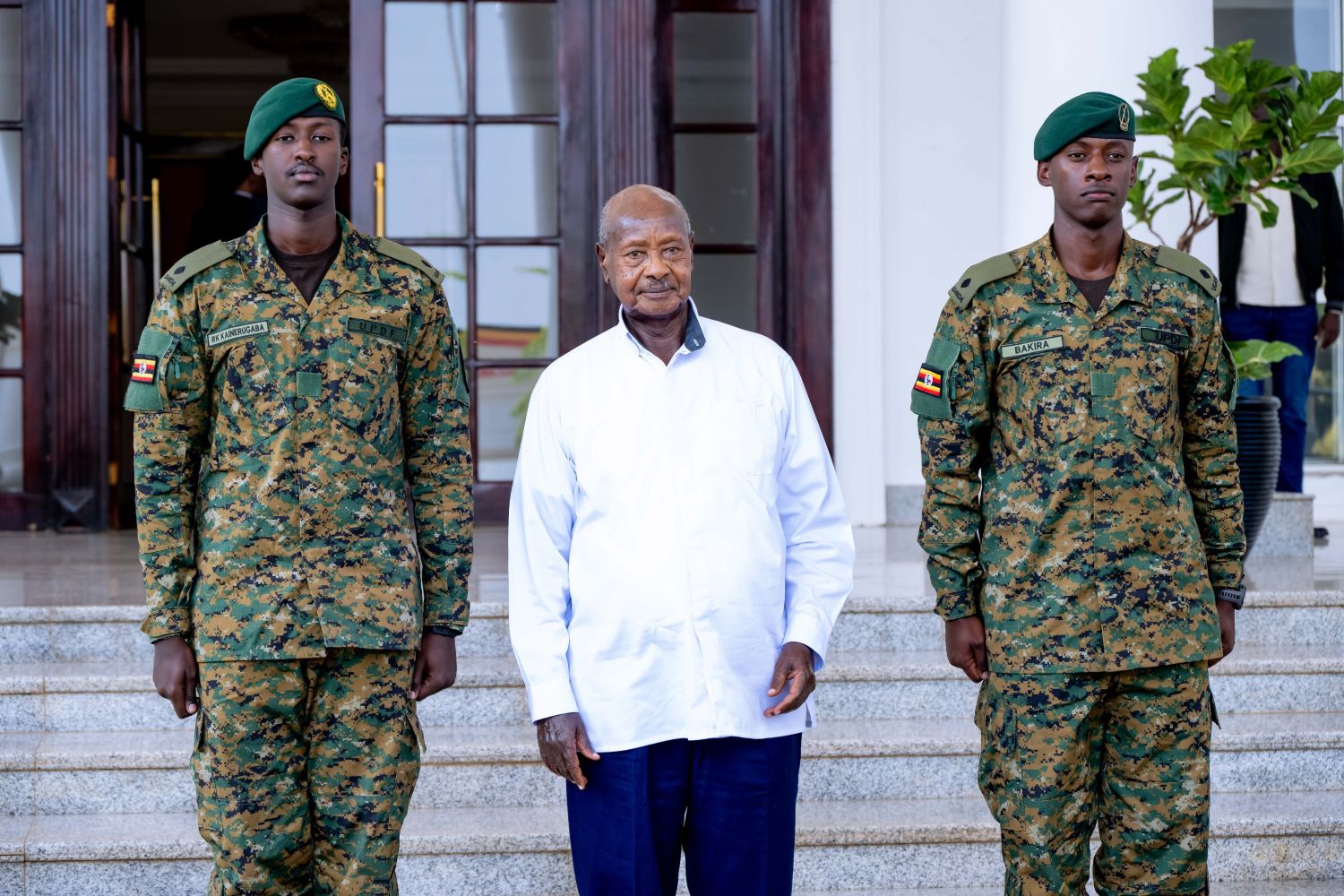
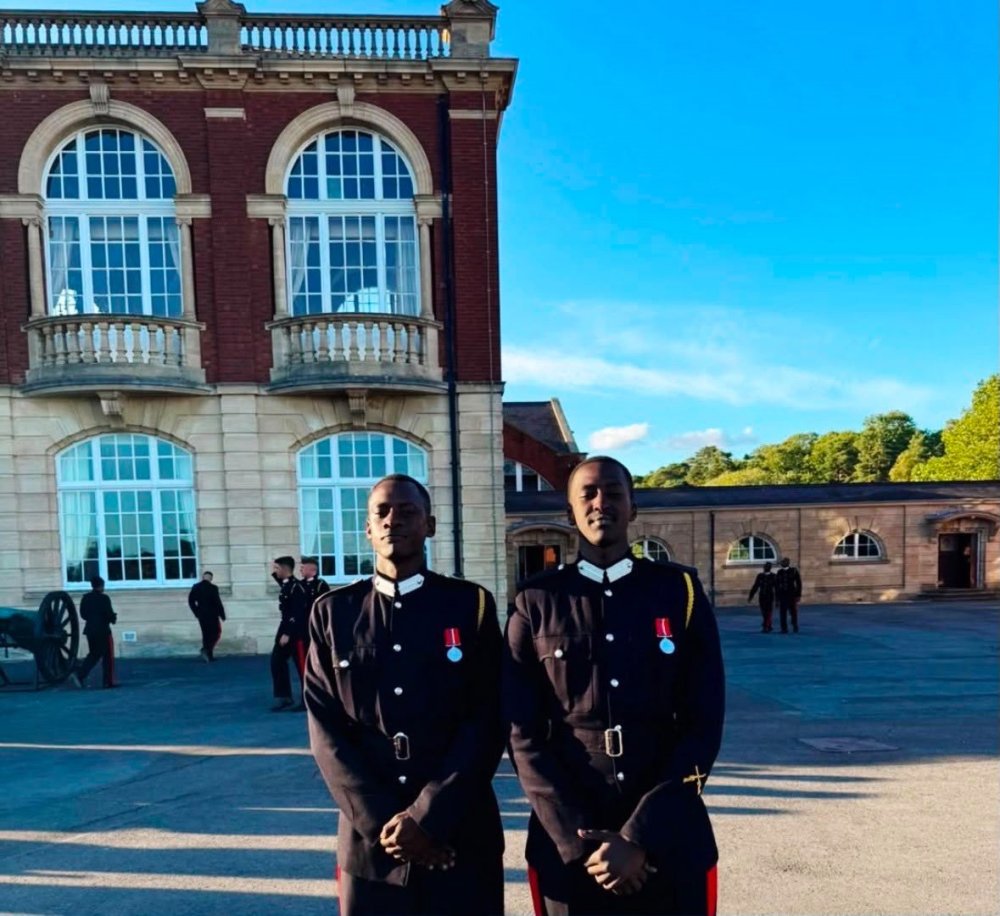
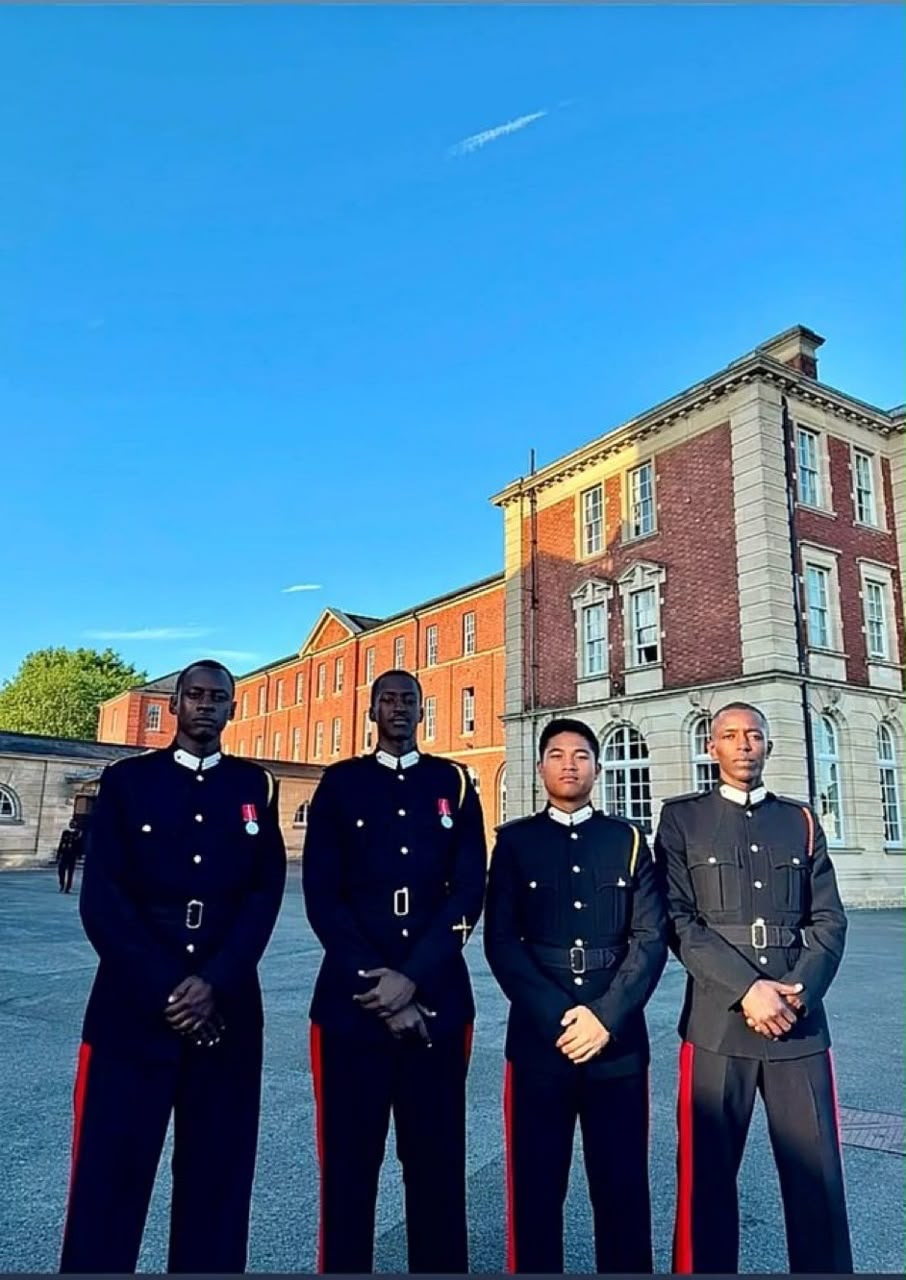
In a social media post on Sunday, Museveni congratulated Ruhamya and fellow Ugandan cadet Bakyira Ruyondo on completing their military training at the prestigious academy.
“Congratulations Ruhamya, congratulations Bakyira,” Museveni said, adding that military service provides young Ugandans with a good foundation.
Ruhamya, the son of UPDF Chief of Defence Forces Gen Muhoozi Kainerugaba, graduated from Sandhurst on Wednesday, August 5, alongside Bakyira and other international cadets.
The training prepares cadets for military leadership, command and operational responsibilities as they begin their careers as officers.
Museveni also congratulated the parents of the two newly commissioned officers and encouraged young Ugandans to consider army service.
“Army service gives you good foundation,” he said.
Ruhamya’s graduation marks another connection between the Kainerugaba family and Sandhurst. His father, Gen Muhoozi, graduated from the academy in 2000 after joining Uganda’s military in 1999 and was commissioned as a Second Lieutenant.
Gen Muhoozi recently shared photographs of Ruhamya during his training at Sandhurst, including a comparison with his own experience at the academy 27 years ago.
Sandhurst, formally known as the Royal Military Academy Sandhurst, trains officers for the British Army as well as military personnel from countries around the world.
Ruhamya now joins the UPDF following his training, alongside other Ugandan officers who have received military training at the British academy.
Ruhamya (second from left) joins a growing number of UPDF officers trained at Sandhurst, The training equips cadets with skills in military leadership, command, and operational planning as they prepare for roles as officers in their respective armed forces.