The South American country’s national airline Boliviana de Aviacion announced the temporary closure of El Alto International Airport following the crash.
No official statement on the crash has been released yet.


The South American country’s national airline Boliviana de Aviacion announced the temporary closure of El Alto International Airport following the crash.
No official statement on the crash has been released yet.


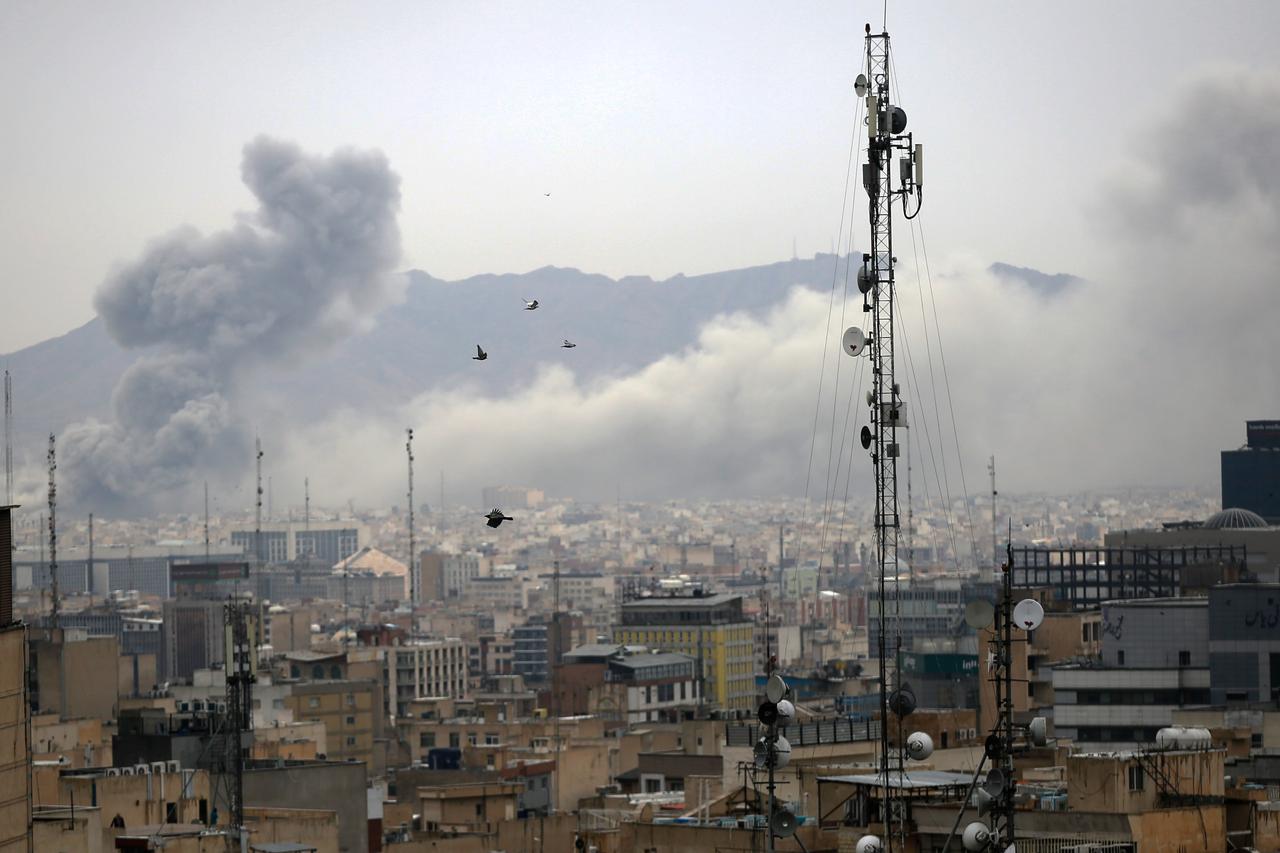
According to reports, plumes of smoke were seen rising from central Tehran following explosions reported near offices associated with Supreme Leader Ali Khamenei. Iranian state television confirmed the blasts without providing details on casualties or damage.
It remains unclear whether Khamenei was present at the time. Iranian authorities subsequently shut down the country’s airspace and issued warnings to pilots as additional explosions were reported across the capital.
Israeli Defence Minister Israel Katz described the strike as an operation aimed at “removing threats,” though he provided few specifics. The Israeli government later identified the offensive as “Operation Lion’s Roar,” underscoring what officials describe as an effort to neutralize security risks tied to Iran’s nuclear programme.
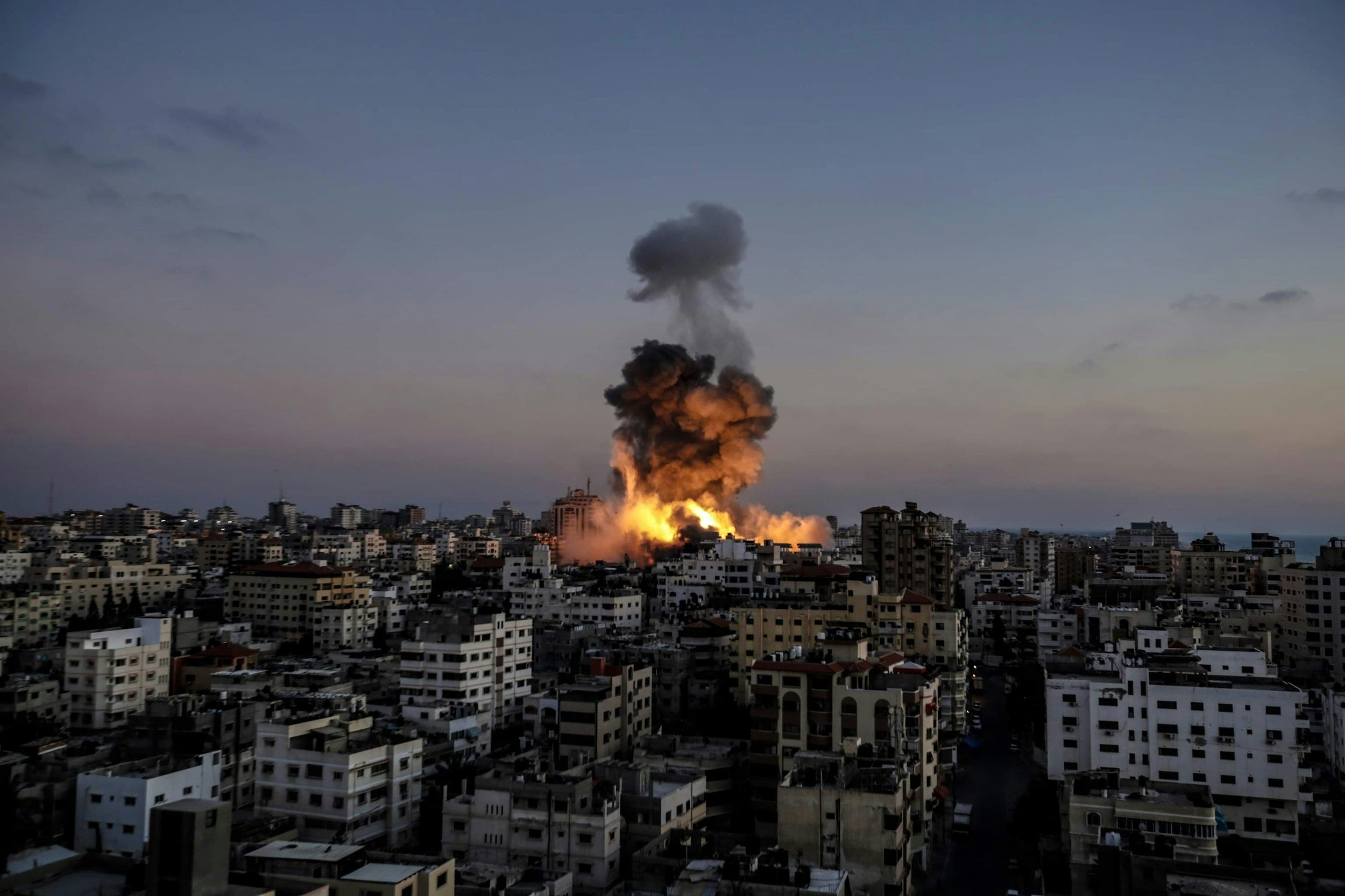
Air raid sirens sounded across Israeli cities, prompting the Israel Defense Forces to issue a proactive alert advising civilians to remain near bomb shelters and avoid non-essential travel.
At Tel Aviv’s international airport, passengers were directed to shelters amid fears of missile retaliation. Air India announced it would suspend flights on one affected route for at least a week as a precaution.
The confrontation has drawn in United States, with President Donald Trump confirming American participation in military operations targeting Iranian facilities.
Washington has also deployed additional fighter jets and naval forces to the region. Trump emphasized the need for what he described as a “meaningful deal” regarding Iran’s nuclear ambitions but acknowledged the seriousness of the unfolding situation.
Israeli Prime Minister Benjamin Netanyahu framed the joint operation with Washington as an effort to remove what he called an “existential threat.” In a public address, he urged Iranians to pursue political change, saying the military action could create conditions for a different future in Iran.
In response, Iranian officials warned of a “crushing” retaliation, signaling the potential for further escalation. Meanwhile, Qatar said its internal security situation remained stable but confirmed it was closely monitoring developments.
Exiled opposition figure Reza Pahlavi also weighed in, claiming the situation could mark a turning point for Iran’s political future.
Saturday’s events mark the latest chapter in decades of confrontation between Iran and the United States, a rivalry rooted in the 1979 Islamic Revolution and intensified by disputes over nuclear development and regional influence.
With airspace closures, military alerts, and diplomatic tensions mounting, the region now faces growing uncertainty as global leaders monitor the risk of broader conflict.


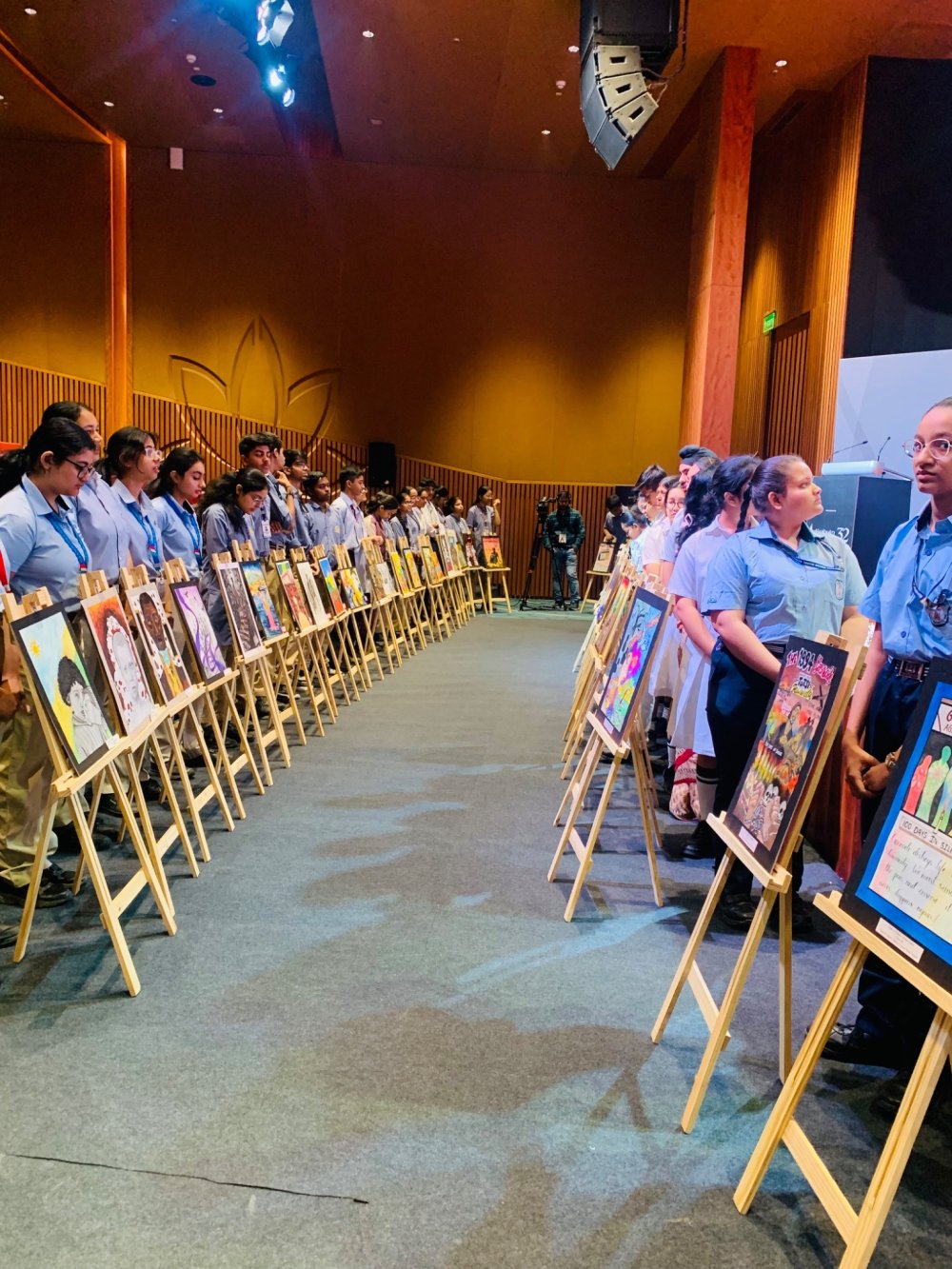
The event, running from 11:00 a.m. to 1:15 p.m., challenged participants to solve complex math problems using only their minds.
Drawing on abacus-based techniques, the young competitors tackled three core segments: listening-based abacus exercises, analytical thinking problems, and high-speed “Math Brain” rounds designed to test concentration, speed, and precision.
Under the theme “Math Without Limits – Beyond the Calculator,” students performed live calculations in front of an audience of parents, teachers, and guests, highlighting noticeable improvements in focus and self-confidence.
All participants were recognized for their efforts: 66 received Certificates of Participation, 48 earned Certificates of Merit, and 3 were awarded Certificates of Excellence. Thirteen standout performers were honored as Best Winners with special recognition.
School leaders shared encouraging messages during the ceremony. The principal of Shenmo Rwanda opened by noting the rapid progress. “In just six months these students have gone from struggling with numbers to solving them in seconds. It shows what the right training can do,” he noted.
Madam Dhanya, Principal of King David Academy, also encouraged students to maintain the momentum. “Keep practising. The focus and confidence you are building now will help you in every subject and every challenge ahead,” she said.
The Director of King David Academy wrapped up the event by addressing the broader school community; “Activities like this prove that abacus training is about more than math – it’s about helping every child reach their full potential.”
Organized by Shenmo Education Rwanda in partnership with King David Academy, the competition forms part of a wider initiative to transform mathematics education in Rwanda through brain-enhancing abacus methods.
Shenmo Education Rwanda specializes in world-class abacus mental math programs that build essential lifelong skills in concentration, memory, and rapid calculation for children.
King David Academy, a forward-thinking institution in Kigali, prioritizes holistic education, innovation, and academic excellence, making it an ideal partner for such skill-building events.


Germany’s Moritz Kretschy continues to hold the yellow jersey, leading the general classification after another consistent performance.
Stage awards highlighted outstanding performances across different categories. The best team award was presented to the NSN Development Team by Inyange Industries. Mike Uwiduhaye of Benediction Banafrica Team received the most combative rider award, presented by Ingufu Gin Ltd.
The best Rwandan rider, recognised by BPR Bank, went to Samuel Niyonkuru (Team Amani). Eritrea’s Amaniel Desta of Team Amani earned both the best African rider award (presented by RwandAir) and the best young African rider award.
The best climber award went to Germany’s Miguel Heidemann (Rembe | rad-net), while the sprint classification was led by Belgium’s Mauro Cuylits (Lotto–Groupe Wanty).
The best young rider award, presented by Prime Insurance, was claimed by Desta Teweldemedhn Amaniel (Team Amani). The stage winner’s prize was presented by Amstel, and the yellow jersey holder continues to be awarded by Visit Rwanda.
The race will continue on Saturday, 28 February, with Stage 7, as riders depart Musanze at 11:00 a.m. heading for Kigali Pele Stadium via Gicumbi, covering 147.2 kilometres.
General classification after Stage 6
1 Kretschy Moritz (NSN Development Team): 17:48:00
2. Adamietz Johannes (Rembe | Rad-Net): +2:02
3. Desta Teweldemedhn Amaniel (Team Amani): + 2:18
4. Marivoet Scholiers Duarte (Lotto – Groupe Wanty): +2:32
5. Zomermaand Jurgen (Development Team Picnic Postnl): +4:07
.
.
.
9. Kudus Merhawi (Eritrea): +4:32
15. Mulueberhan Henok (Eritrea): +4:41
16. Niyonkuru Samuel (Team Amani): +4:59
23. Mugisha Moise (Benediction Banafrica Team): +5:57
25. Muhoza Eric (Team Amani): +8:06
26. Masengesho Vainqueur (Benediction Banafrica Team): +9:07


“This is amazing. I think it’s one of the future technologies for mobility,” Merz said after the experience, commending the close cooperation between German manufacturers and Chinese technology.
Mercedes-Benz has established a comprehensive local footprint and cooperation network spanning its entire industrial chain in China, the company said in a press release on Thursday. Its Chinese R&D team is playing an increasingly crucial role within Mercedes-Benz’s global R&D network, the statement notes.
Merz’s official visit to China took place on Feb. 25 and 26. Visiting companies from both countries and promoting practical cooperation were key items on his Thursday agenda.
Merz arrived in Hangzhou, east China’s Zhejiang Province, on Thursday noon. At Unitree Robotics, he watched humanoid robots performing different tasks and was impressed by their agile movements.
Merz’s visit reflects Germany’s strong interest in China’s technological innovation, said Wang Xingxing, founder and CEO of Unitree, who noted the vast potential of the German market and expressed hope for deeper cooperation in the robotics sector.
Merz also visited Siemens High Voltage Circuit Breaker Co. Ltd., Hangzhou, where he learned about the development of German-funded enterprises in China.
Executives from approximately 30 leading German companies in sectors such as automotives, chemicals, biopharmaceuticals, machinery and the circular economy accompanied Merz on his visit. More than ten commercial agreements were reached, sending a clear signal of deepening pragmatic cooperation.
As his trip concluded, Merz said he was leaving China with deep impressions of the country, and noted that Germany and China enjoy good cooperation and also face challenges that they need to address together.
Click the link below to watch related video


This was emphasized during a visit by Rwanda’s Ambassador to France, François Nkulikiyimfura, who toured the Rwandan pavilion and engaged with exhibitors about the benefits from it.
The ambassador noted that France is a major player in agriculture and livestock, stressing the value of establishing business partnerships. He also assured participants that the Rwandan Embassy would continue to support them in accessing new markets in France.
Amb. Nkulikiyimfura was accompanied by Janet Basiima, the Head of the Export Market Development and Innovation Division at the National Agricultural Export Development Board (NAEB).
Among the exhibitors was Ritha Umutoni, CEO of Rixu Rwanda Coffee, who told IGIHE that participating in such fairs helps promote Rwandan products on international markets.
“Attending is not just about meeting buyers,” she said. “We also engage in planned activities, meeting executives from large importing and exporting companies worldwide. It’s a place to learn, visit other key markets in France, and expand our business ideas and practices.”
Umutoni also praised Rwanda’s governance under President Paul Kagame, saying it enables Rwandans to participate confidently on international platforms.
Stephanie Kayirangwa, Managing Director of Fita Ltd, which grows and exports agricultural products including chili, commended NAEB for facilitating access to the fair and the embassy for ongoing support.
Aloys Rubayiza, Managing Director of Rwanda Mountain Coffee, noted that this was his first time at the show but was impressed by the attention Rwandan products received.
“This was Rwanda’s fifth participation, and we noticed buyers returning for Rwandan coffee and tea because they enjoyed it. It confirmed that our coffee is gaining recognition internationally,” he said.
The fair, held annually at Paris Expo – Porte de Versailles from late February to early March, showcases agricultural and livestock products, related technologies, partnerships, and innovations.
The 2026 edition opened on February 21 with the presence of French President Emmanuel Macron. Rwanda was allocated the seventh pavilion among over 100 participating countries, highlighting its progress in promoting agricultural and livestock exports.
Rwanda was represented by NAEB, the Rwandan Embassy in France, and 15 companies showcasing products such as coffee, tea, honey, and more.
The exhibition provides a valuable platform for farmers, entrepreneurs, and investors to share experiences and explore investment opportunities.
SIA spans nine days and attracts more than 1,000 exhibitors and thousands of visitors. In 2025, over 607,503 people attended the event, making it one of France’s most attended fairs.
The exhibition also features 4,000 animals, including cows, sheep, pigs, and horses.
Agricultural exports continue to grow. In December 2025, Rwanda’s Ministry of Agriculture and Animal Resources reported that exports of these products had generated over $893.1 million.
Under Rwanda’s Second National Strategy for Transformation (NST2), the country aims to increase foreign currency earnings from agricultural exports to $1.5 billion annually by 2029.


To address these challenges, the Government of Rwanda, in partnership with the World Bank, launched the Volcanoes Community Resilience Project (VCRP). The initiative aims to protect vulnerable areas and prevent disasters from undermining local livelihoods.
Valued at more than $300 million (approximately Rwf 435.6 billion), the project is structured around four key components: flood prevention, expansion of the national park, land restoration, and public awareness and capacity building. Together, these efforts seek to improve living conditions for communities in the region.
Flood prevention and environmental restoration
To mitigate flooding, monitoring equipment is being installed along rivers and waterways in the Vunga corridor. About 15 hydrological stations have already been set up to measure water levels, flow speed, and volume — work led by the Rwanda Water Resources Board.
Land restoration activities are being implemented by the Rwanda Environment Management Authority. These include tree planting, construction of radical terraces on steep hillsides, and training for farmers on effective water management in agricultural fields.
The project plans to establish nurseries and carry out afforestation across 1,177 hectares, promote agroforestry on 10,388 hectares, where more than 86,000 trees have already been planted, and restore 2,955 hectares of degraded forest.
Radical terraces will be developed on 12,740 hectares, with 87 hectares already completed. Contour bank terraces are planned for 81,376 hectares, of which 47 hectares have been implemented so far.
In addition, 10,000 household water tanks will be distributed, where 140 have already been provided, alongside 10,000 cows under the Girinka program, with 40 cows delivered to date.
Expansion of Volcanoes National Park
A major component of the project is the expansion of Volcanoes National Park, which alone is expected to cost about $230 million.
Currently covering about 16,000 hectares, the park will expand by 3,740 hectares — a 23% increase — to reduce human-wildlife conflict and strengthen conservation.
The expansion will require the relocation of residents living within and near the new park boundaries. Business owners such as hotel operators will be compensated or supported to operate eco-friendly forest lodges that comply with park conservation standards, including reforestation requirements and strict environmental guidelines.
As part of the first phase, a “Smart Green Village” will be constructed to house 510 families affected by relocation.
Resettled residents are also receiving training in modern agriculture through the Kinigi Horticulture Hub, which includes greenhouses covering 1,250 square meters. Initial crops include pepper, tomatoes, and cucumbers, selected for their strong market demand and profitability. The hub is projected to generate Rwf 45 million annually, with operating costs estimated at Rwf 11 million.
Project scope and implementation
Launched in 2023, the five-year VCRP is scheduled to run until 2028. It is being implemented in disaster-prone districts including Musanze, Burera, Rubavu, Nyabihu, Ngororero, Rutsiro, Gakenke, and Muhanga.
The project is being carried out through collaboration among several national institutions, including the Rwanda Environment Management Authority, Rwanda Water Resources Board, Meteo Rwanda, and the Rwanda Development Board.


In a statement released on Thursday, the park’s management also disclosed that conservation teams successfully fitted GPS collars to three lions and one elephant in February 2026, to enhance real-time monitoring of animal movements.
Seventeen white rhinos and eight black rhinos were also fitted with in-horn VHF transmitters to strengthen protection and tracking. During the same operation, eight black rhinos were safely darted, an achievement that surpassed last year’s total of seven.
The park acknowledged the contribution of Dr. Richard Harvey of Wildscapes Vets, as well as its Conservation & Research, Field Operations, and Law Enforcement teams, and the Rwanda Wildlife Conservation Association for their professionalism in this exercise.
Why contraception for lions
Speaking with IGIHE, park officials explained that animals such as lions live within clearly defined boundaries and cannot easily migrate beyond the protected area.
“A wetland between Rwanda and Tanzania, together with a river that forms a natural border between the two countries, further restricts wildlife movement and dispersal. In such enclosed conditions, when predator populations reproduce successfully in a confined space, careful management is required to maintain ecological balance,” reads a statement shared with IGIHE.
The park explained that in small enclosed protected areas, lions have a significant impact on prey populations.
When lion numbers grow rapidly, prey species may decline, which is why reproduction is managed over longer intervals.
“This can also alter vegetation patterns depending on whether grazing animals decrease or increase in certain areas. Some species may disappear from the ecosystem. Lions themselves may eventually face food shortages, and human-wildlife conflicts near park boundaries could increase.”
Excess lions in enclosed parks cannot naturally relocate elsewhere. Each cub born affects the balance of the ecosystem.
“The objective is not to stop reproduction entirely, but to mimic natural processes that regulate population growth in the wild. Veterinary-administered contraception can delay the age at first birth in females and extend intervals between litters, gradually slowing population growth,” adds the statement.
The lion population in the park has now reached about 70 individuals. In 2015, the Government of Rwanda reintroduced seven lions, including five females, as part of efforts to restore the species in the park.
Established in 1934, the park covers 1,120 square kilometers and is home to some of the world’s most iconic wildlife, including lions, leopards, elephants, rhinos, and buffalo.
Data from African Parks, which manages the park, shows that in 2025 visitor numbers rose to 59,538, generating $5.06 million in revenue.
Of those visitors, 51,769 were paying guests, an 8% increase compared to 2024. Rwandan citizens accounted for 47% of visitors, international tourists for 47%, and foreign residents living in Rwanda for 6%.


While in the coastal city of Pemba, the delegation held a meeting with the Army Commander of the Mozambican Armed Forces (FADM), Major General André Rafael Mahunguane.
The discussions focused on jointly assessing the prevailing security situation in Cabo Delgado and reviewing future operational plans. Both the Rwandan and Mozambican forces reaffirmed their commitment to close cooperation and to working collaboratively towards achieving their shared operational objectives.
The delegation also paid a courtesy visit to the Governor of Cabo Delgado Province, Valige Tauabo. During the engagement, members received a comprehensive briefing on the current security situation in the province.
Discussions centred on ongoing joint operations conducted by the Rwanda Security Forces and Mozambican forces to counter terrorism, as well as on strategies to further strengthen security efforts across the province.
Major General Nyakarundi commended the strong partnership between the Rwandan and Mozambican security forces, noting that their resilience and dedication have significantly contributed to the restoration of peace and stability in Cabo Delgado. He reaffirmed Rwanda’s continued commitment to supporting initiatives aimed at maintaining normalcy throughout the province.
Major General Mahunguane expressed appreciation for the contribution of the Rwanda Security Forces in combating Islamic State-linked terrorists, underscoring the positive impact of the bilateral partnership. Both sides reiterated their shared commitment to promoting peace, stability, and lasting security for the people of Mozambique and the wider region.
Governor Tauabo conveyed gratitude for the steadfast role played by the Rwanda Security Forces in restoring security across the province, as well as for their support in enhancing community welfare through various civil–military cooperation initiatives.
Later in the evening, the ACOS visited Mocímboa da Praia, the headquarters of the Rwanda Security Forces in Cabo Delgado.
Addressing RSF troops comprising RDF and Police personnel, he delivered a message of appreciation from the Commander-in-Chief of the RDF and President of Rwanda, Paul Kagame, commending them for their courage and dedication.
The ACOS urged the troops to remain vigilant, emphasizing that discipline remains fundamental to the success of their mission, which aims to support Mozambican state authority through combat operations and security sector reform initiatives.


This marks a significant step in Rwanda’s broader effort to build a more digital, resilient and inclusive financial system.
The test was conducted in collaboration with commercial banks, payment service providers, financial technology innovators, and various public institutions. According to BNR, the ‘proof of concept’ ran for five months, from May to October 2025.
In a statement, the central bank said the proof of concept phase demonstrated meaningful progress toward a technology-driven financial ecosystem that is accessible to all.
The phase showed that Rwanda’s e-FRW could support fast and secure payments, promote financial innovation, and strengthen the country’s transition toward a cashless and digitally driven economy.
BNR noted that the exercise generated practical insights into the technological infrastructure required to operate the digital currency, user experience considerations, risk management approaches, and key legal and regulatory priorities. A detailed report on the findings is available on the central bank’s website.
Next phase
A broader 12-month pilot phase is planned next. This stage will involve selected groups of diverse users across Kigali, a secondary city, and selected rural areas.
The expansion will prioritize financial inclusion by testing simple channels such as USSD and low-cost devices.
Real-life transactions will be tested in controlled environments in partnership with merchants and other stakeholders.
The program will also involve collaboration with domestic and international institutions to examine interoperability between different payment systems and explore potential cross-border use cases.
BNR stressed that the pilot will be conducted under strict data protection standards and strong cybersecurity safeguards, in close coordination with financial institutions and public authorities. The central bank emphasized that no final decision has yet been made regarding the official issuance of the e-FRW.
“Any decision to introduce CBDC in Rwanda will be informed by evidence gathered from the pilot phase on the outcomes of the expanded pilot, stakeholders feedback, and broader policy and regulatory considerations,” BNR stated.
CBDC as a complementary option to Mobile Money
Ingrid Cyuzuzo, the Manager in charge of Financial Sector Development and Innovation at the National Bank of Rwanda, recently explained that if introduced domestically, the CBDC would hold the same monetary value as existing national currency while expanding digital payment options.
As Rwanda continues to lead in Mobile Money adoption, she said the CBDC could enhance digital payment efficiency and expand use cases, including transactions that currently exceed Mobile Money capabilities.
What a CBDC means
A CBDC is a digital form of currency issued by a country’s central bank. Like physical cash—banknotes and coins—it represents sovereign money, but in digital form. Some models are designed to function even in low-connectivity environments.
BNR believes the introduction of a digital currency could attract new payment innovations to Rwanda’s financial market and simplify money transfers across different regions of the world.
Globally, countries such as Bahamas, Jamaica, and Nigeria have already adopted CBDCs, while more than 130 others are developing or piloting similar systems as part of broader efforts to modernize domestic and international payment ecosystems.