The report shows that divorce-related cases remained the most common category of civil cases, rising from 2,674 cases in 2024/25 to 6,799 in 2025/26.
Of the cases recorded in 2025/26, 5,980 were filed at first-instance courts, a figure the Judiciary says corresponds to the number of families that sought divorce at that level. During the first six months of 2026 alone, courts received 3,620 divorce-related cases.
Other major civil cases included disputes over immovable property, with 1,866 cases; breach of contracts and obligations, 1,081; civil registration matters, 815; and disputes involving movable property, 244.
Meanwhile, data from the National Institute of Statistics of Rwanda (NISR) show that 4,479 divorces were registered in civil records in 2025. Of these, 2,629 involved couples who had obtained divorce through the courts and subsequently registered it.
Kigali recorded the highest number of registered divorces at 1,820, followed by the Southern Province with 920, Eastern Province with 820, Northern Province with 520 and Western Province with 339.
NISR said couples who had been married for five to 14 years accounted for the largest share of divorces recorded in 2025.
Lawyer Marie Louise Mukashema recently told IGIHE that common factors behind rising divorce cases include disagreements between spouses, property-related conflicts and lack of honesty. She said families should play a greater role in resolving marital disputes before couples turn to courts.
“Traditionally, when people got married, it was considered a union between two families. When problems arose, instead of taking them to social media or making them public, they were resolved within the family.
“I think the problem today lies within the family, and parents and children have a major role to play in understanding the value of family as children grow up. That is where the solution lies, because people seeking divorce no longer take such matters to their families as they used to in the past,” she said.
Lawyer Maurice Munyentwari said mutually agreed divorces have also increased, with couples often choosing to separate without disclosing the reasons for their decision. In contested cases, he said, common complaints include domestic conflict, harassment, violence and exclusion from family property.
Rwanda’s 2024 law governing persons and family provides for a Family Council to oversee family welfare, protect members’ interests and help resolve family disputes. However, the ministerial order required to establish its composition, responsibilities and operations has not yet been issued.
Rwanda’s courts received 6,799 divorce cases during the 2025/26 judicial year,
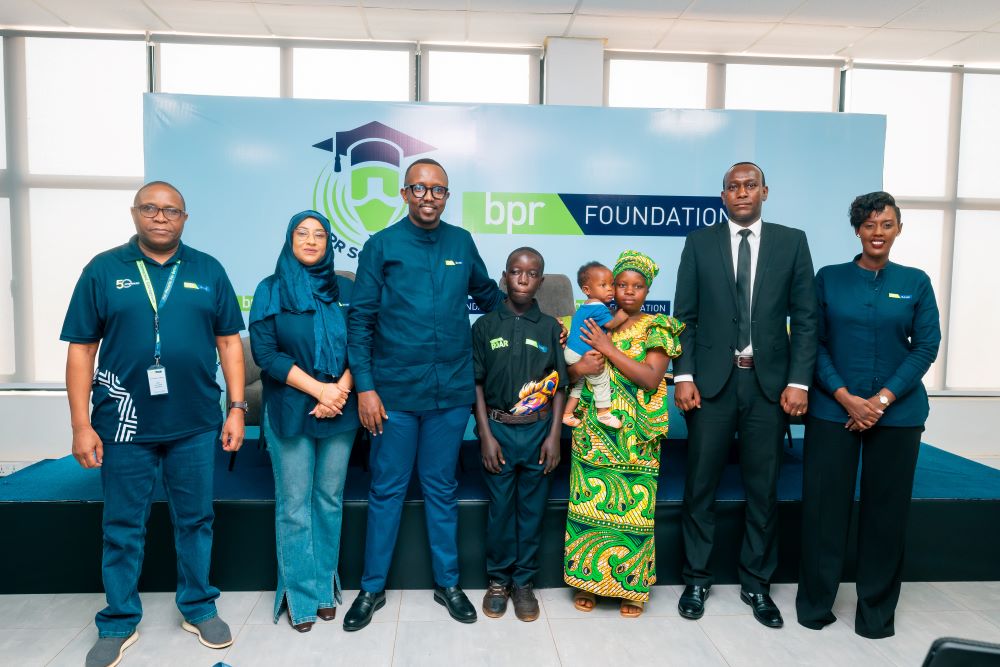
The programme, implemented in partnership with the Ministry of Education (MINEDUC), will support 25 boys and 25 girls selected from different districts across Rwanda.
Under the programme, BPR Bank will support the students throughout their six years of secondary education, from Senior One (S1) through Senior Six (S6), providing essential requirements to help them attend school and complete their studies successfully.
The bank’s management said the initiative seeks to remove financial and socio-economic barriers that prevent students from accessing, continuing and completing their education.
In addition to school materials and other essential requirements, beneficiaries will receive mentorship and guidance to support their academic performance and overall wellbeing. The programme will also help build their confidence, equip them with practical skills and enable them to make informed decisions about their future.
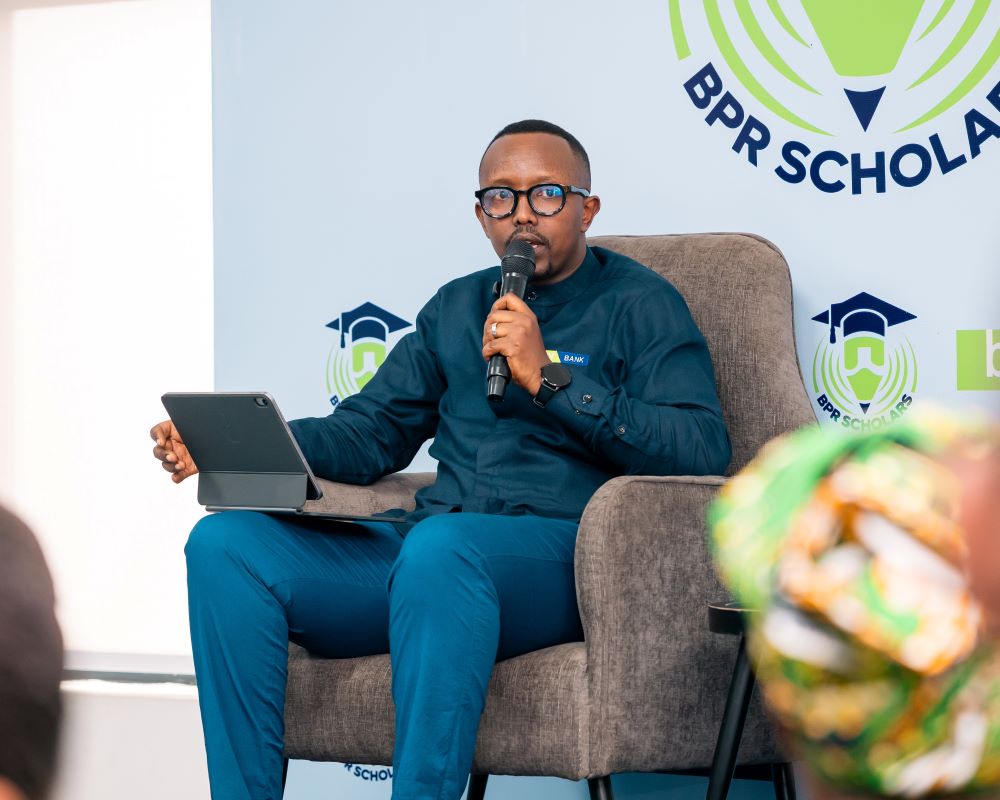
BPR Bank Rwanda PLC Chief Financial Officer, Vincent Ngirikiringo, said every child should have an opportunity to pursue their dreams regardless of their family’s circumstances.
“At BPR Bank, we believe that every child deserves the opportunity to achieve their dreams, regardless of the family they come from. Through the BPR Scholars programme, we are committed to supporting these students throughout their secondary education journey from S1 to S6. We want to remove financial barriers and provide them with the support and mentorship they need to succeed.”
He said the initiative goes beyond providing financial assistance, as the bank intends to accompany the students throughout their six-year journey by helping them set life goals, develop themselves and understand the educational and career opportunities available to them.
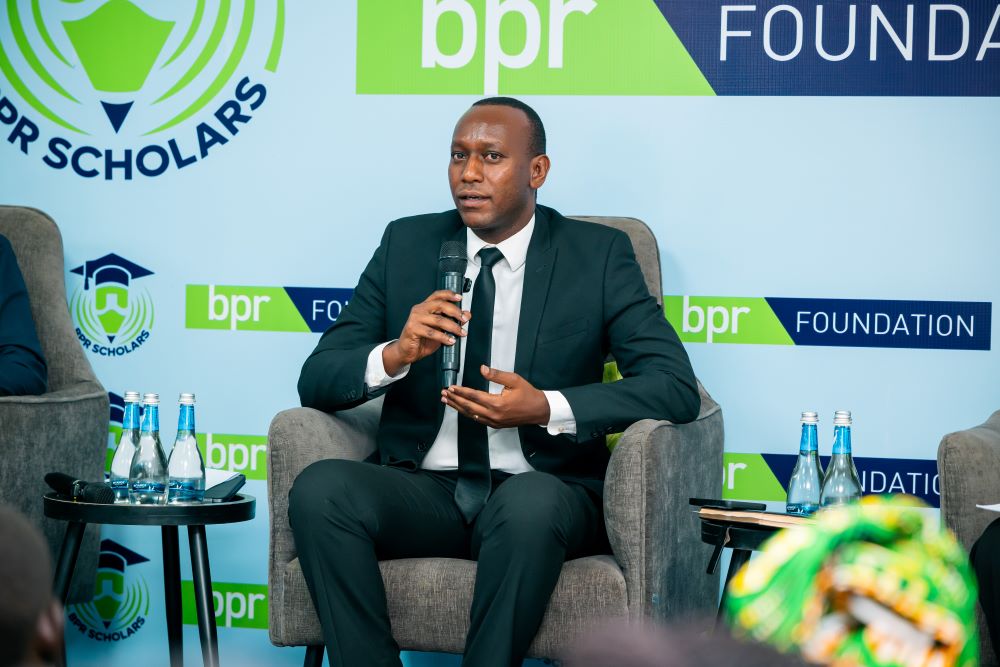
Niyongabo Eric, an official from the Ministry of Education, welcomed the partnership with BPR Bank Rwanda PLC, saying such initiatives contribute to the government’s efforts to improve access to education and address barriers faced by students.
“The latest figures we have show that at least 79 percent of students who pass primary school go on to secondary school, and what we want is for that figure to reach 100 percent. Partnerships with institutions such as BPR help us increase that number, especially because one of the main challenges identified is a lack of financial means.”
Among the beneficiaries is Shema Patrick, who performed well in primary school and was selected for the scholarship. He expressed gratitude to BPR Bank for choosing him and pledged to work hard in his studies.
Shema’s mother, Mukeshimana Vestine, said she initially thought she was being targeted by fraudsters when she received a call informing her that her son had been selected for the scholarship.
“When I was first called and told that they had selected my child to be sponsored, I thought they were scammers and I did not believe it. I only became convinced after they called me again from the bank,” she said.
She thanked BPR Bank for the support, saying paying for her son’s education had been one of the family’s major concerns.
Through the BPR Foundation, the bank invests in initiatives focused on education and the development of small businesses, with the aim of supporting communities and creating opportunities for sustainable social and economic development.
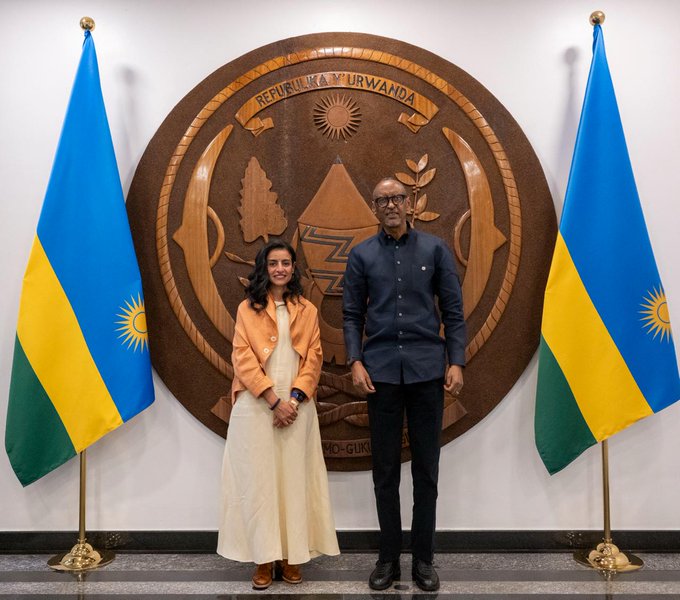
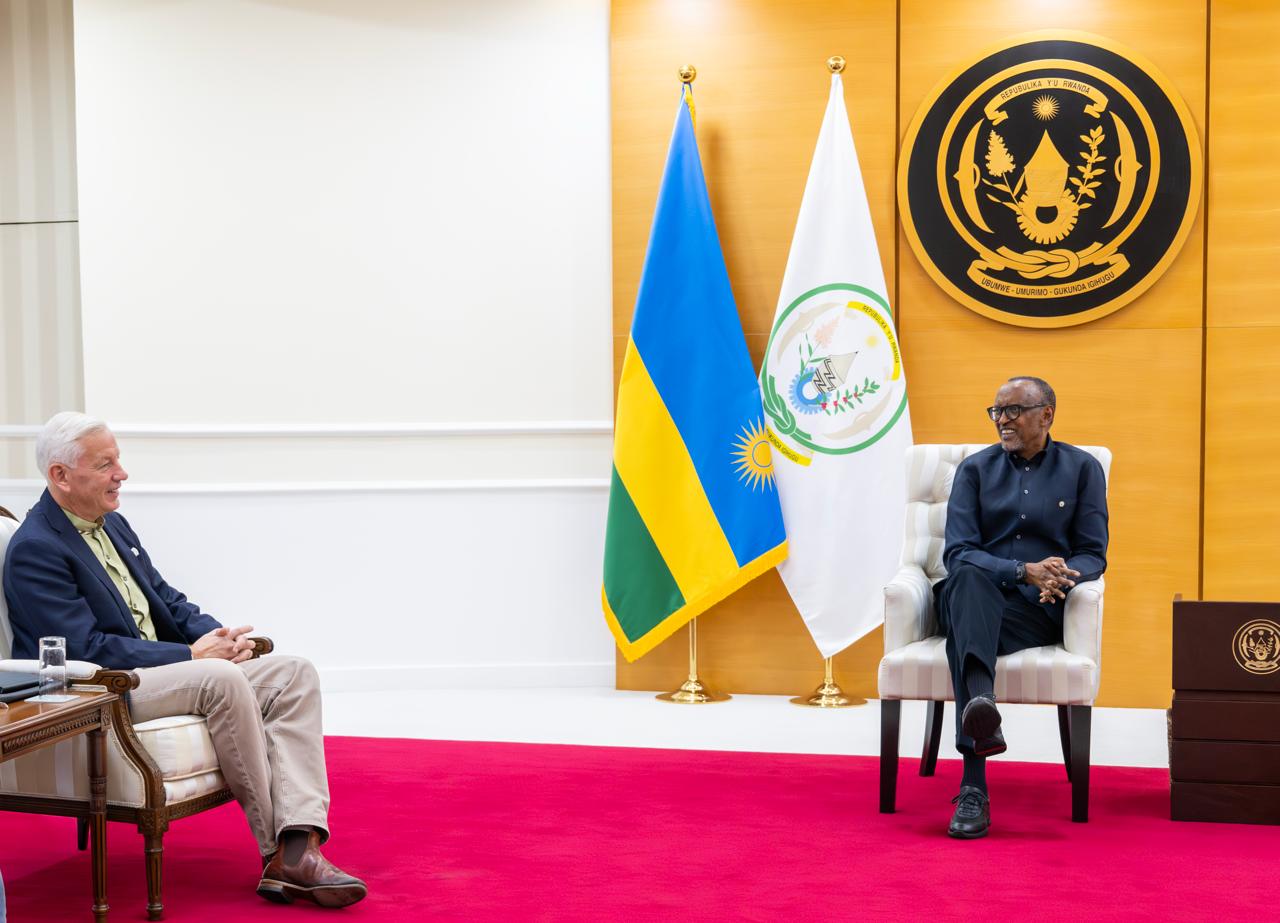
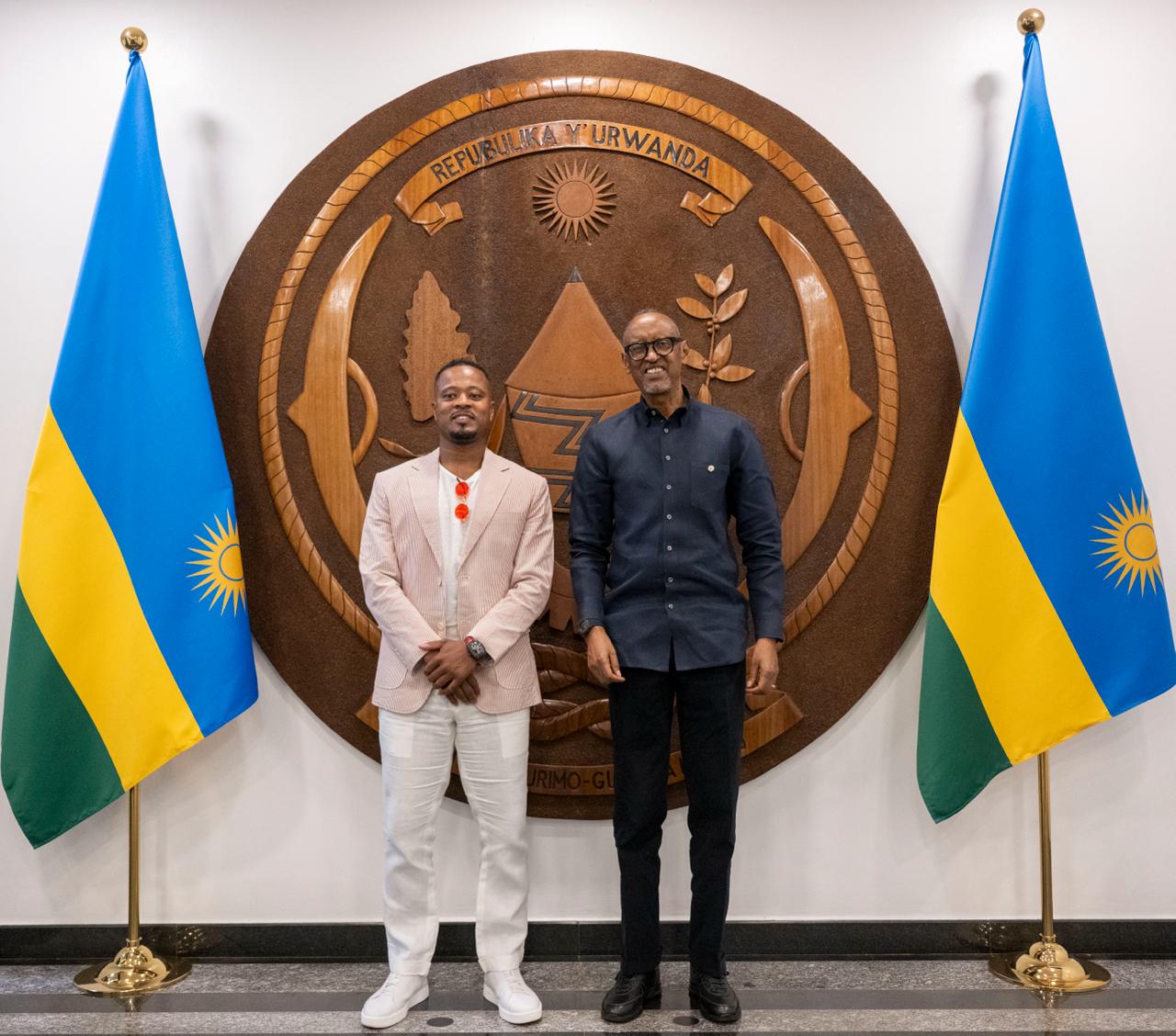
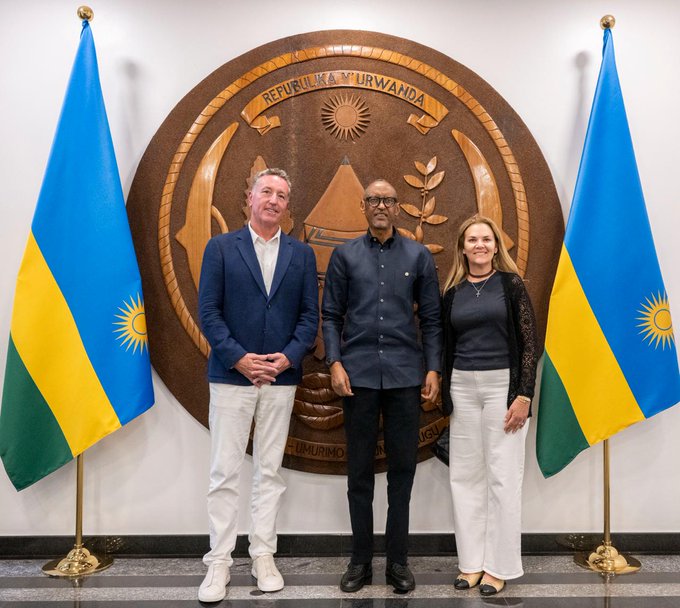
The personalities who met with President Kagame at Urugwiro Village on on Friday include Dominic Barton, Chairman of Rio Tinto and LeapFrog Investments; Shaikha Al Nuwais, Secretary-General of UN Tourism; Paul Danforth, President of CAA Sports; and Patrice Evra, former captain of Manchester United and the France national team.
Barton named a male baby gorilla from the Izuba family Umukondo. The gorilla was born on June 20, 2025, to mother Muhabura. Barton said the name represents a starting point or source, reflecting the role of mountain gorillas in sustaining the wider ecosystem.
Barton is a Canadian business executive who serves as Chairman of Rio Tinto and LeapFrog Investments. He previously served as Global Managing Partner of McKinsey & Company and as Canada’s Ambassador to China.
Shaikha Al Nuwais, who named a female baby gorilla Ishakwe, is the Secretary-General of UN Tourism and the first woman to lead the organisation in its 50-year history.
Ishakwe, which means “determination,” was born to mother Turiho of the Muhoza family. The name also refers to a small drum used to set the rhythm for others, symbolising the ability to make an impact regardless of one’s size or position.
Paul Danforth, President of CAA Sports, named a male baby gorilla Shikama, meaning “stand strong.” The gorilla was born on July 3, 2025, to mother Turimaso of the historic Susa family. Danforth is a global sports executive who previously served as Senior Vice President of Sales for the New York Mets.
Former Manchester United and France captain Patrice Evra named a male baby gorilla Muganura, a name inspired by Umuganura, Rwanda’s traditional harvest and thanksgiving celebration. The gorilla, from the Izuba family, was born on March 20, 2026, to mother Mafubo and is her first infant.
Evra is a former French international who won five Premier League titles and the UEFA Champions League with Manchester United. He earned 81 caps for France and captained both Manchester United and the French national team.
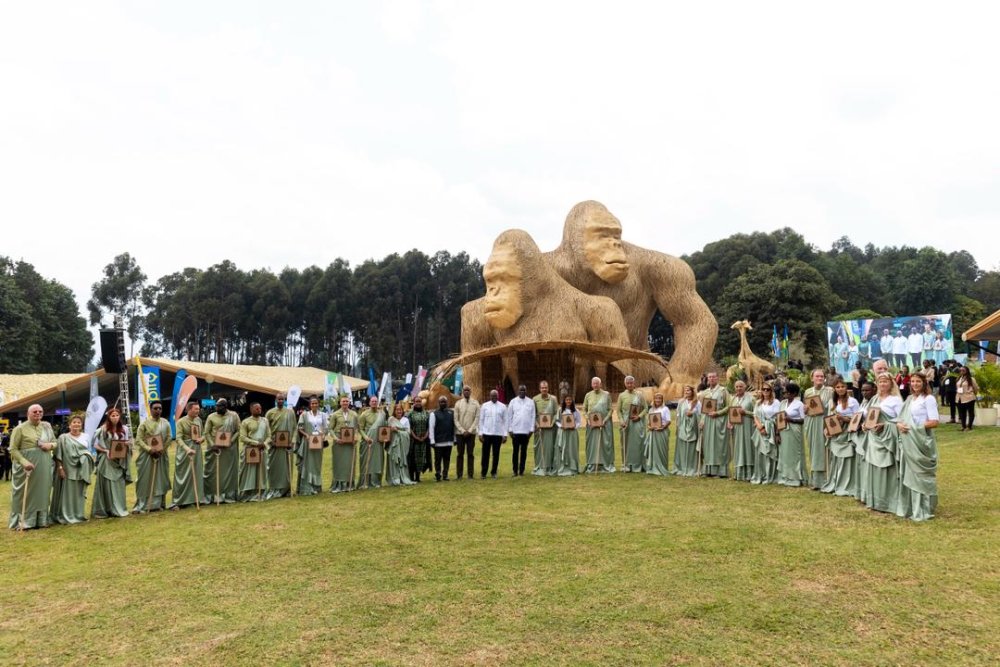
The four personalities were among 22 namers drawn from the worlds of conservation, tourism, business, sport, entertainment, philanthropy and public service. Other namers included Olympic high-jump champion Mutaz Essa Barshim, Atlético de Madrid CEO Miguel Ángel Gil Marín, UCI President David Lappartient, Rwandan gospel singer Israel Mbonyi, filmmaker Marie-Clémentine Dusabejambo and former French international Mamadou Sakho.
The Kinigi ceremony brought together communities, conservationists, government officials, international partners and visitors to celebrate Rwanda’s mountain gorillas and the country’s conservation achievements.
Prime Minister Dr. Justin Nsengiyumva attended as Guest of Honour, alongside former leaders including Botswana’s former President Mokgweetsi Masisi and former Ethiopian Prime Minister Hailemariam Dessalegn.
The event was held at the foothills of Volcanoes National Park, where Rwanda has developed a broader conservation and community-development programme around the protection of the mountain gorilla habitat.
More than 1,060 mountain gorillas now live in the wild across the Virunga Massif and Bwindi ecosystem, making mountain gorillas the only great ape species whose population is continuing to grow.
Kwita Izina also highlights the link between conservation, tourism and the wellbeing of communities living around protected areas. Through Rwanda’s Tourism Revenue Sharing Programme, 10 per cent of national park tourism revenues is reinvested in surrounding communities.
More than Rwf 23 billion has so far supported nearly 1,300 community projects, including schools, health centres, water infrastructure and livelihood initiatives.
This year’s Kwita Izina activities also included the groundbreaking of the Smart Green Village in Kinigi as part of the wider Volcanoes Community Resilience Project.
Rwanda’s long-term plans include expanding Volcanoes National Park by about 3,740 hectares and establishing approximately 6,620 hectares of buffer zones, with the broader programme expected to improve livelihoods for more than 17,000 people.
Kwita Izina, which means “to give a name” in Kinyarwanda, is inspired by the centuries-old Rwandan tradition of naming newborn children in the presence of family and community.
It became an official annual event in 2005 and has since developed into an international platform for celebrating mountain gorilla conservation and recognising the role of communities and partners in protecting their habitat.
With the 22 gorillas named during Friday’s ceremony, the number of mountain gorillas named through Kwita Izina since 2005 reached 460.
President Kagame meets Dominic Barton, Chairman of Rio Tinto and LeapFrog Investments, who named baby gorilla Mukondo during the 21st Kwita Izina ceremony.President Kagame also met with former Manchester United and France captain Patrice Evra. President Kagame meets Paul Danforth, President of CAA Sports, who named baby gorilla ShikamaPresident Kagame met with Shaikha Al Nuwais, Secretary-General of UN Tourism.
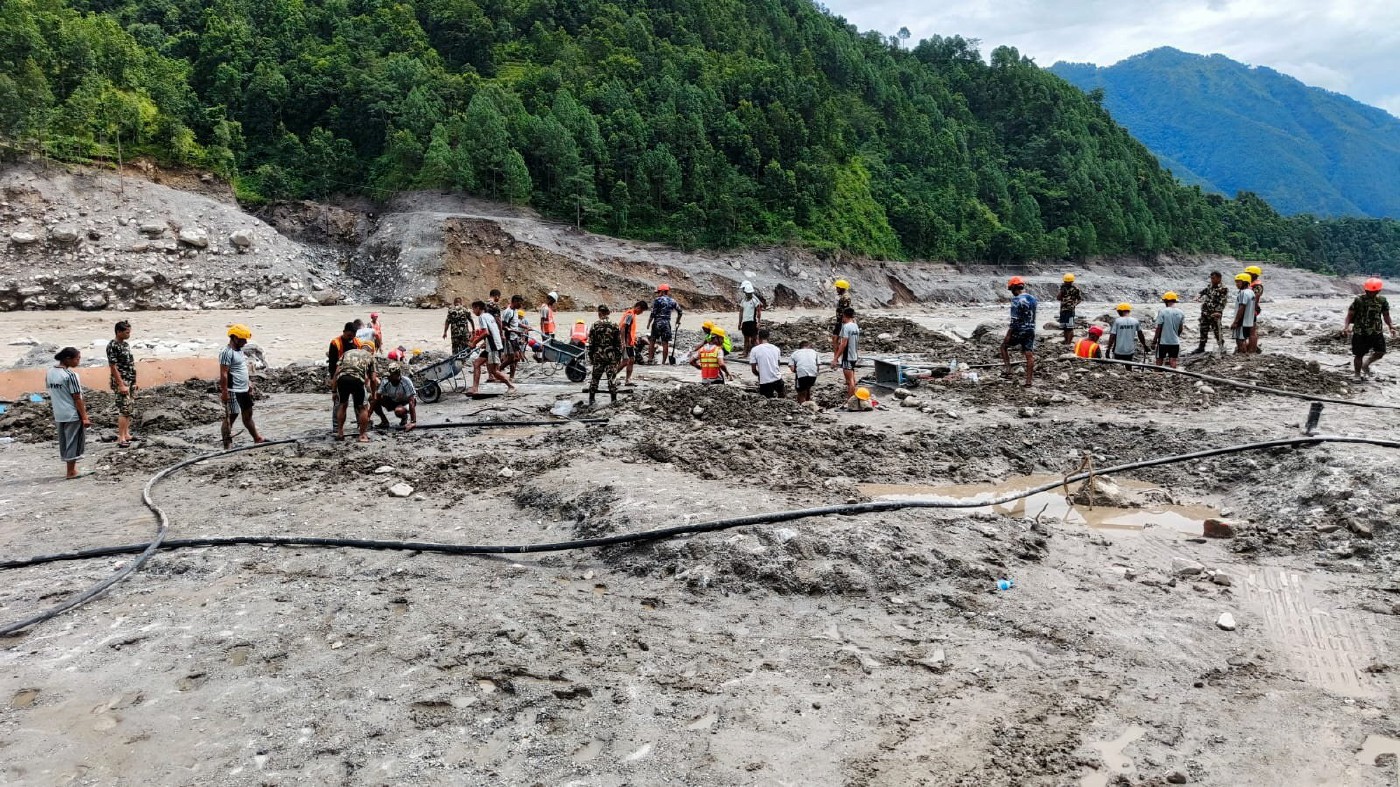
According to the latest details released by police, as many as 1,344 bodies had been recovered by 5 a.m. local time Saturday.
Police said 4,898 people remained out of contact as of Saturday morning, and 8,631 people have been rescued so far, as security agencies continue search and rescue operations in the mudslide-affected areas.
Authorities have also intensified efforts to identify bodies through DNA testing. DNA samples have been collected from 1,260 deceased people and 972 relatives of the deceased, bringing the total number of samples collected to 2,232.
Nepal army soldiers work during a search and rescue operation outside a tunnel near the Hydropower Project sites, following deadly flash floods and mudslides
“We may hit Pickaxe very soon,” Trump told reporters at the White House, referring to the underground facility where Washington says Iran has moved some of its stockpile of highly enriched uranium.
Meanwhile, Trump tried to downplay the conflict with Iran, arguing that it was not a war. “It’s a military conflict, but it’s very intermittent,” Trump said, though he has repeatedly described the conflict as a “war” while avoiding the term at times.
“I call it a military conflict because it’s small potatoes for us. It’s not a big thing,” Trump claimed.
“I would say that it’s intermittent. You know, we do intermittent strikes,” Trump said. “There’s a lot of truth that we’re not fighting right now. There’s no fighting.”
U.S. forces targeted nearly 60 Iranian targets around the Strait of Hormuz this week, including air defense sites, radar systems, mine-laying capabilities and communications facilities, CNN reported.
On Tuesday night, a U.S. strike hit a wedding party in Sirik County in Hormozgan province, killing at least five people and injuring over 60 others, Iranian state media reported.
Trump on Wednesday threatened to launch more strikes on Iran “anytime we want.”
The United States and Israel launched massive military attacks on Iran on Feb. 28, marking the start of a conflict that has killed thousands of people.
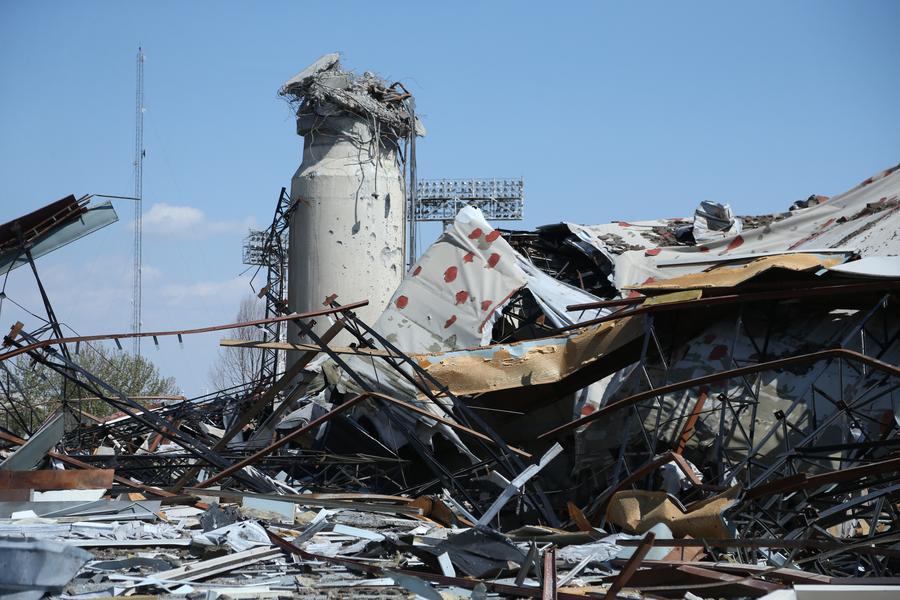
This photo taken on April 3, 2026 shows a view of a destroyed sports stadium inside the Azadi Sports Complex in Tehran, Iran. (Xinhua/Shadati)
The Prime Minister was speaking on Friday, September 4, at the foothills of Volcanoes National Park in Musanze District, where 22 baby mountain gorillas were named, bringing the cumulative number of gorillas named through Kwita Izina since its inception in 2005 to 460.
He said Rwanda’s experience in protecting mountain gorillas demonstrates that conservation cannot be treated separately from human development, as the country seeks to sustain the recovery of a species once pushed close to extinction.
“Protecting nature cannot be separated from improving people’s lives, just as national conservation efforts cannot be separated from international cooperation. Rwanda’s experience here in the Virunga Mountains is tangible proof of this concept,” Dr. Nsengiyumva said.
Kwita Izina is rooted in a Rwandan tradition in which newborn children are named in the presence of family, friends and neighbours as a public welcome and a commitment to their protection and wellbeing.
Dr. Nsengiyumva said the same principle applies to the gorillas, making each name a commitment to safeguard their future.
“We extend that same spirit to the gorillas we have named today, because a name for us is more than a celebration: it is a promise. And the promise we make to these gorillas is that they will have the protection, the habitat and the conditions they need to grow, to thrive and to reproduce,” he said.
The Prime Minister recalled that in the early 1980s, only about 250 mountain gorillas remained in the Virunga Massif, with poaching, habitat loss and social conflicts threatening the species.
Today, more than 1,060 mountain gorillas live in the wild, including more than 600 in the Virunga Massif.
Dr. Nsengiyumva attributed the recovery to decades of conservation work involving rangers, veterinarians, researchers, governments, communities, the private sector and international partners.
“This remarkable recovery did not happen by chance. It was built through the dedication of rangers who walk these mountains daily, the expertise of veterinarians and researchers, strong conservation policy, responsible tourism, and above all, the recognition that no single actor could do this job alone,” he said.
The economic impact of conservation has also extended beyond wildlife protection, with gorilla tourism contributing to jobs, local businesses, investment and livelihood opportunities for communities around the park.
Dr. Nsengiyumva noted that construction of a smart green village was launched the previous week through an investment of more than $49 million to provide 547 households affected by the park’s expansion with modern housing, essential services and sustainable livelihood opportunities.
“This reflects our belief that conservation must advance with human development,” he said.
Rwanda Development Board (RDB) CEO Jean-Guy Afrika echoed the message, describing the growth of the mountain gorilla population as an “extraordinary conservation achievement” while warning that the progress requires sustained investment and cooperation.
“The progress we celebrate today took many years to build. Sustaining it will require continued vigilance, long-term investments and strong partnerships across generations,” Afrika said.
Afrika also linked the Volcanoes National Park expansion to both conservation and community development, saying it would create additional habitat for growing gorilla families while providing neighbouring communities with better housing, infrastructure, services and economic opportunities.
The RDB chief also called on the 22 distinguished namers to use their influence to keep conservation efforts in the global spotlight, saying their role extends beyond the ceremony.
“Today, you have done much more than announce 22 names. Each name gives identity to a gorilla and meaning to its story. Each name reminds us of our shared responsibility to ensure that these gorillas remain safe and that their habitat remains protected,” Afrika said.
The namers included Shaikha Al Nuwais, Secretary-General of UN Tourism, as well as football legends Mamadou Sakho and Patrice Evra.
The business community was represented by Dominic Barton, Chairman of Rio Tinto and LeapFrog Investments, and Miguel Ángel Gil Marín, CEO and majority shareholder of Atlético de Madrid.
David Lappartient, President of the Union Cycliste Internationale (UCI) and a member of the International Olympic Committee (IOC), also took part, alongside Qatar’s Olympic high-jump champion Mutaz Essa Barshim.
The ceremony also brought together figures from the creative and conservation sectors, including award-winning filmmaker Alastair Fothergill, known for productions such as Planet Earth and Blue Planet, and Rwandan gospel singer Israel Mbonyi.
They joined other personalities from conservation, business, entertainment and philanthropy who took part in this year’s ceremony.
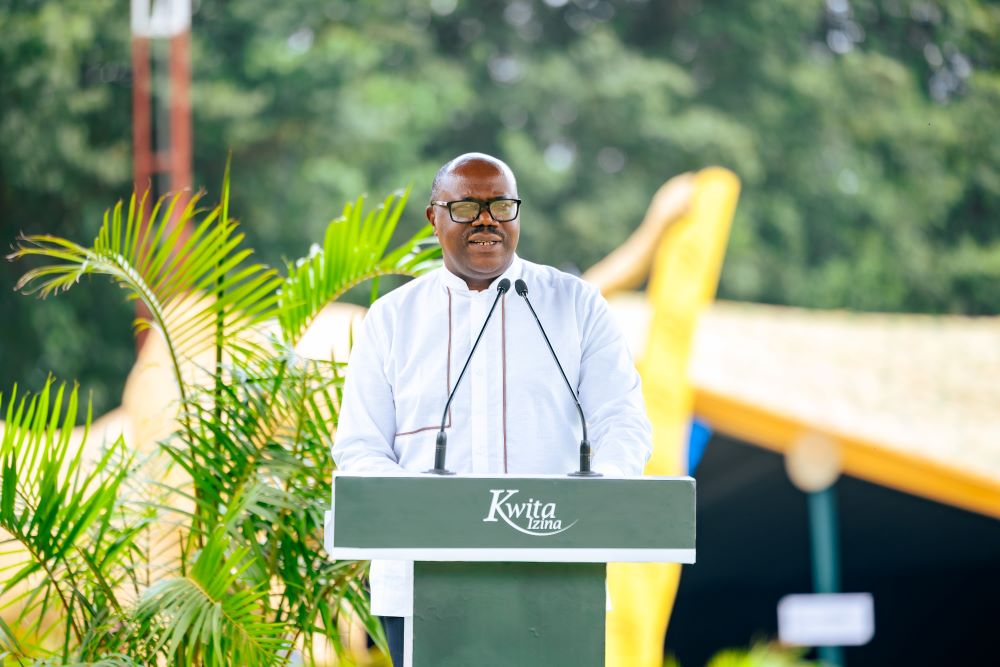
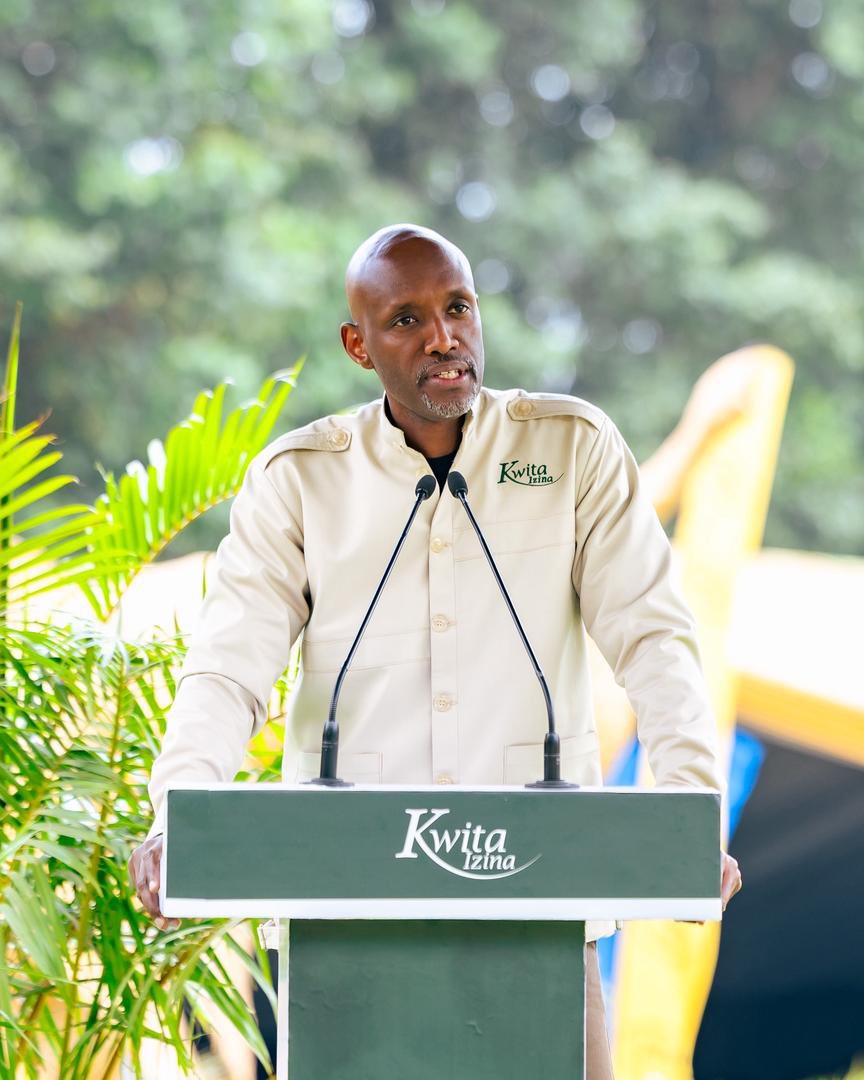
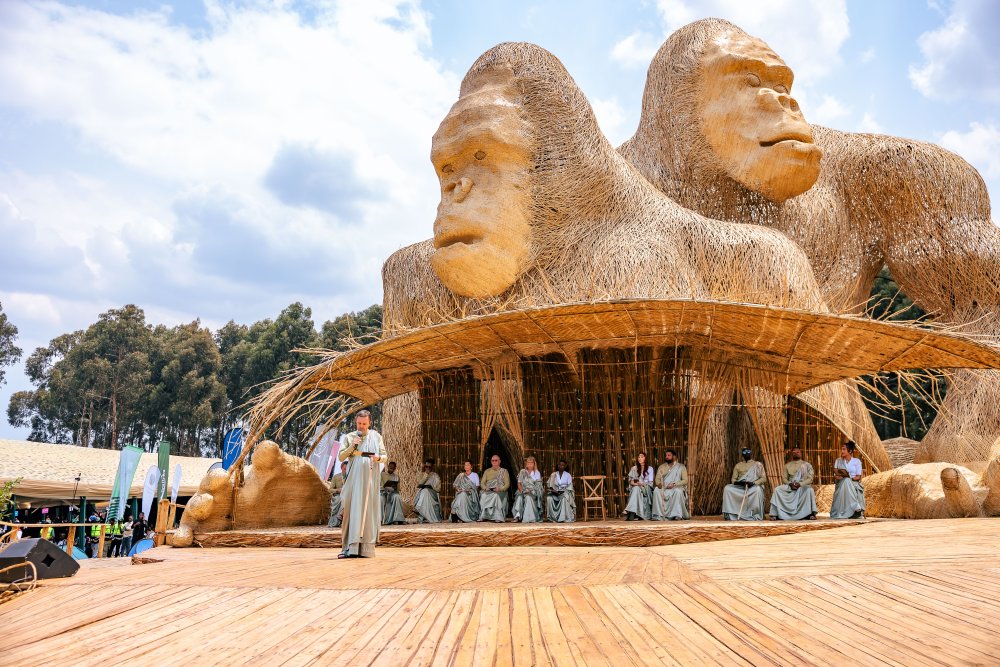
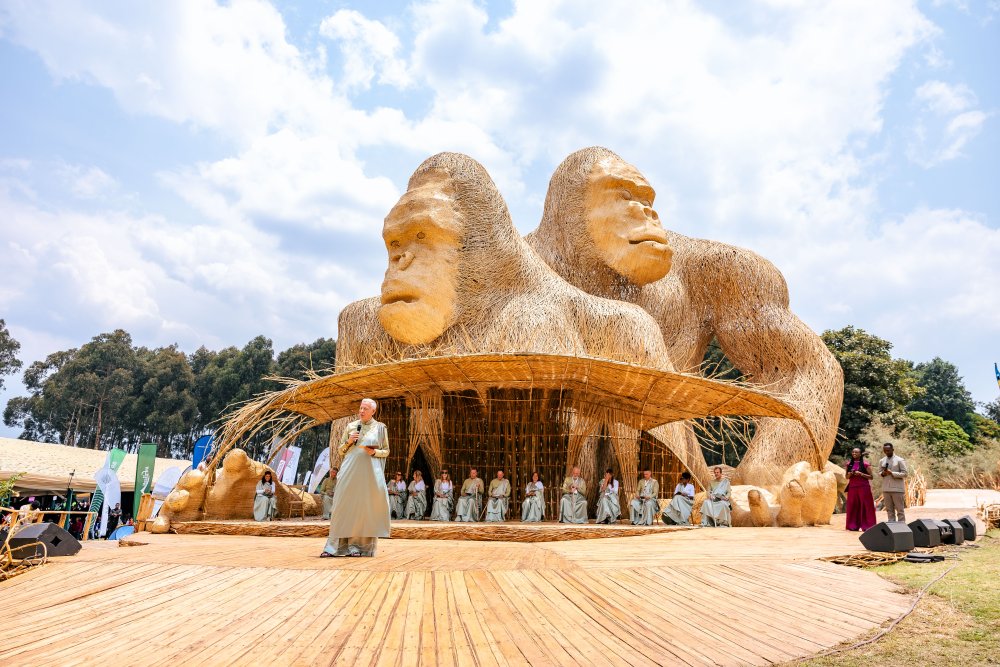
The ceremony welcomed a distinguished group of international personalities from sports, business, conservation, entertainment and philanthropy.Speaking at the 21st Kwita Izina ceremony, Prime Minister Dr. Justin Nsengiyumva linked Rwanda’s conservation progress to human development and community wellbeing.Rwanda Development Board CEO Jean-Guy Afrika called for continued vigilance, long-term investment and strong partnerships to sustain the gains made in mountain gorilla conservation.The 21st Kwita Izina gorilla naming ceremony took place at the foothills of Volcanoes National Park in Musanze District on September 4, 2026.
Xi made the remarks during his talks with Egyptian President Abdel Fattah El-Sisi, while emphasizing China’s support for regional countries in building a new security architecture in the Middle East via upholding a vision of common, comprehensive, cooperative and sustainable security.
Enhancing bilateral exchanges
Noting that Egypt was the first Arab and African nation to establish diplomatic ties with the People’s Republic of China in 1956, Xi said that the older-generation leaders of the two countries led their peoples in striving side by side for national independence and against imperialism and colonialism, forging an unbreakable bond of friendship.
Over the past seven decades, China-Egypt relations have weathered challenges and developed distinctive features of equality and mutual trust, friendship and mutual learning, solidarity and mutual support, as well as win-win cooperation, he said.
Xi said the China-Egypt comprehensive strategic partnership has achieved leapfrog development in recent years under the guidance of the two heads of state. The two sides share similar views and have closely aligned strategies in pursuing development and revitalization, improving people’s well-being, and upholding international fairness and justice, he added.
Xi emphasized that China and Egypt should firmly support each other, maintain the momentum of high-level exchanges, enhance exchanges and cooperation in all fields and at all levels, and strengthen exchanges and mutual learning on governance experience.
Xi said the two sides should promote mutually beneficial cooperation, better align their development strategies, tap the potential for cooperation in traditional fields such as infrastructure development, power, agriculture and communications technology, and foster new highlights of cooperation in green energy, electric vehicles, aerospace, the digital economy and modern agricultural technology.
The two sides should promote people-to-people exchanges, comprehensively expand exchanges and cooperation in culture, education, science and technology, health, sports and other fields, and facilitate personnel exchanges and enhance people-to-people bonds, Xi said.
The two sides should strengthen security cooperation, jointly combat transnational crime, deepen international cooperation in anti-corruption, firmly support each other’s anti-terror efforts, and safeguard their common security, Xi said.
The two sides should strengthen multilateral collaboration, further enhance coordination and cooperation on multilateral platforms such as the United Nations and the BRICS, jointly promote the development of the China-Arab States Cooperation Forum and the Forum on China-Africa Cooperation, jointly oppose unilateralism and acts of bullying, and promote a more just and equitable global governance system, Xi said.
For his part, Sisi welcomed Xi’s historic state visit to Egypt on the occasion of the 70th anniversary of diplomatic ties between the two countries.
Sisi said that since the establishment of diplomatic relations, bilateral ties have developed in a sound and steady manner, and cooperation across various fields has yielded fruitful results.
Egypt firmly adheres to the one-China principle and is committed to further advancing the Egypt-China comprehensive strategic partnership, Sisi added.
Egypt is ready to work with China to deepen cooperation in trade and investment, manufacturing, infrastructure development, finance, science and technology, and new energy, strengthen military and security exchanges, and promote closer people-to-people exchanges, so as to benefit the two peoples and contribute to regional development and prosperity, Sisi said.
Sisi said China, as a permanent member of the UN Security Council, plays an important and constructive role in international affairs. Egypt is ready to strengthen coordination with China at multilateral platforms, jointly address global challenges, and work together to uphold international fairness and justice, he added.
The two heads of state jointly witnessed the signing of multiple cooperation documents on Belt and Road cooperation, artificial intelligence, economic and trade, and industrial and supply chain cooperation.
The two sides also issued a joint statement on further deepening their comprehensive strategic partnership, and signed more than 20 cooperation documents covering such areas as digital economy, science and technology, education, and transportation.
New regional security architecture
In the talks, Xi raised a four-point proposal on building a new security architecture in the Middle East, saying that China supports countries in the region in developing good-neighborly and friendly relations.
To promote common security in the region, Xi said that efforts should be made to foster the internal driving force for common security in the region.
People in the Middle East should remain masters of their own affairs, and external interference should be rejected, Xi said, noting that China supports regional countries in strengthening dialogue on peace and security, exploring the building of a new security architecture for the Middle East, and taking their future into their own hands.
Xi said that a comprehensive approach should be adopted to advance common security in the region and that given the multiple hotspots in the Middle East and their close interconnections, comprehensive solutions should be pursued.
The Palestinian issue remains at the core of the Middle East question and should never be overlooked or marginalized, he added.
The foundation for common security should be strengthened through development, Xi said, noting that lasting peace and stability in the Middle East fundamentally depend on development.
China stands ready to work with Middle East countries to safeguard the security of international shipping lanes, advance development cooperation, promote the convergence of interests of regional countries, gradually enhance mutual trust, and eliminate the root causes of the conflict, he said.
Xi urged that international coordination for common security in the region should be strengthened, and the UN Charter and international law should serve as the fundamental principles for handling Middle East affairs.
The international community, especially external powers, should abandon double standards in the Middle East, respect the sovereignty and territorial integrity of regional countries, and safeguard regional peace and stability, Xi added.
He also urged support for the United Nations’ effective role in Middle East affairs.
Sisi said that Egypt highly appreciates China’s consistent, objective, and impartial stance on the Middle East question, noting that Egypt is committed to promoting de-escalation in the region, resolving conflicts and differences through political means, and advancing regional security and development.
Egypt stands ready to continue strengthening coordination with China to ease tensions in the Middle East, safeguard regional stability, and explore a regional security architecture, Sisi said.
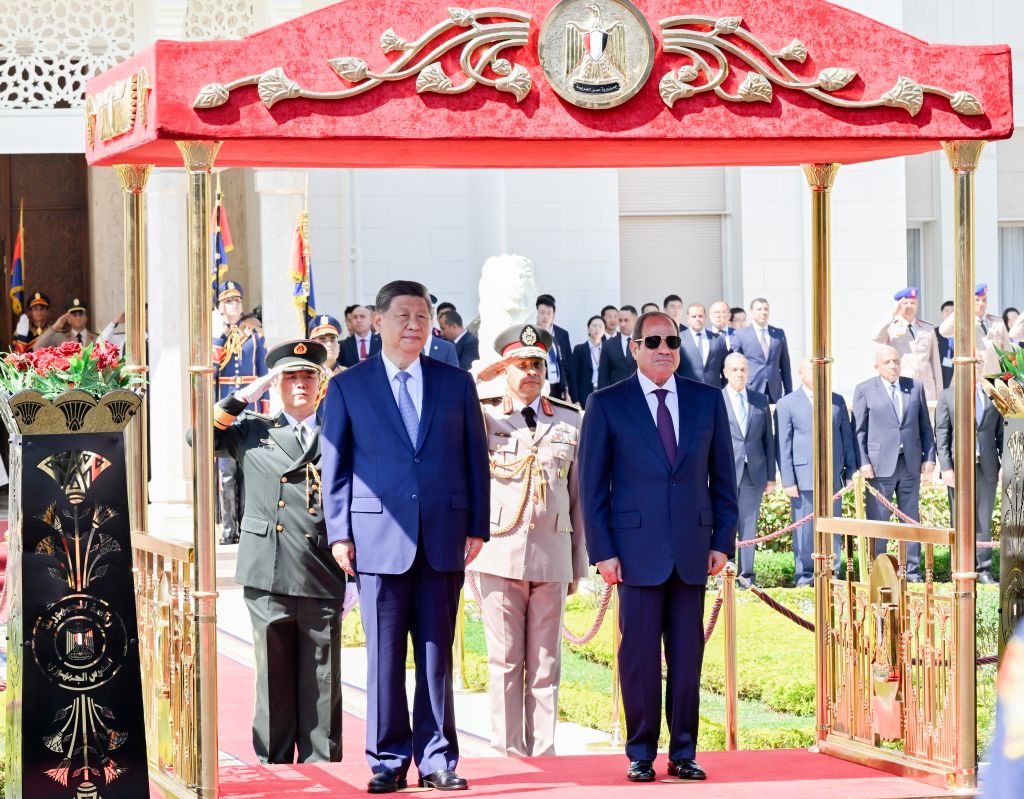
Chinese President Xi Jinping attends a welcome ceremony held by Egyptian President Abdel Fattah El-Sisi prior to their talks in Cairo, Egypt, Sept. 2, 2026. Xi held talks with Egyptian President Abdel Fattah El-Sisi in Cairo on Wednesday. (Xinhua/Shen Hong)
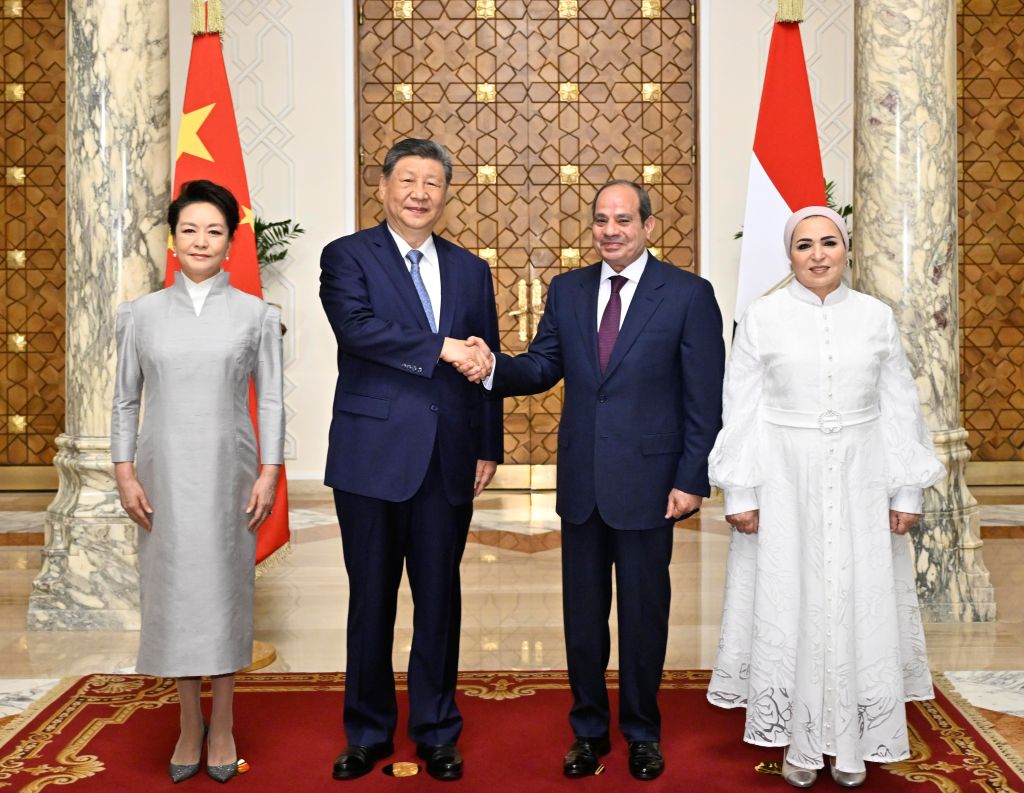
Chinese President Xi Jinping and his wife Peng Liyuan pose for a group photo with Egyptian President Abdel Fattah El-Sisi and his wife Entissar El-Sisi in Cairo, Egypt, Sept. 2, 2026. Xi held talks with Egyptian President Abdel Fattah El-Sisi in Cairo on Wednesday. (Xinhua/Yin Bogu)
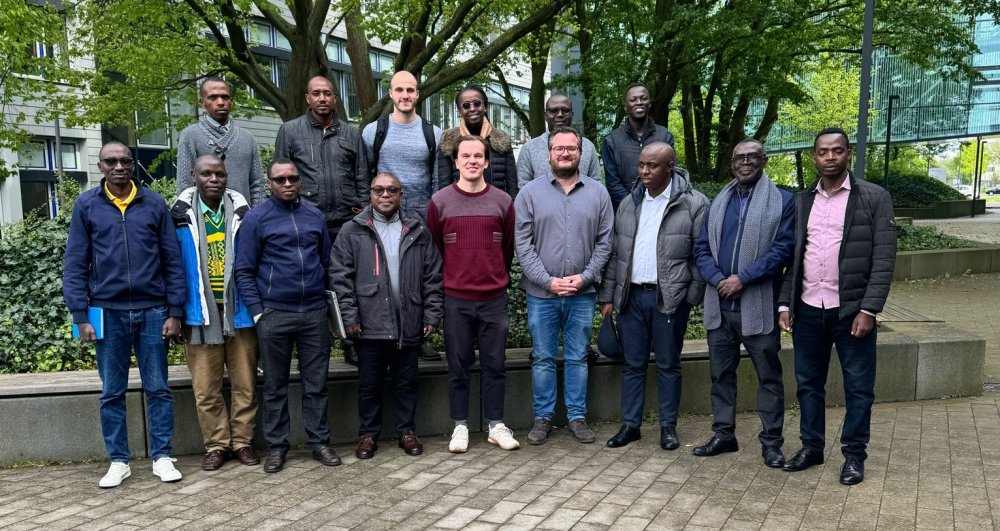
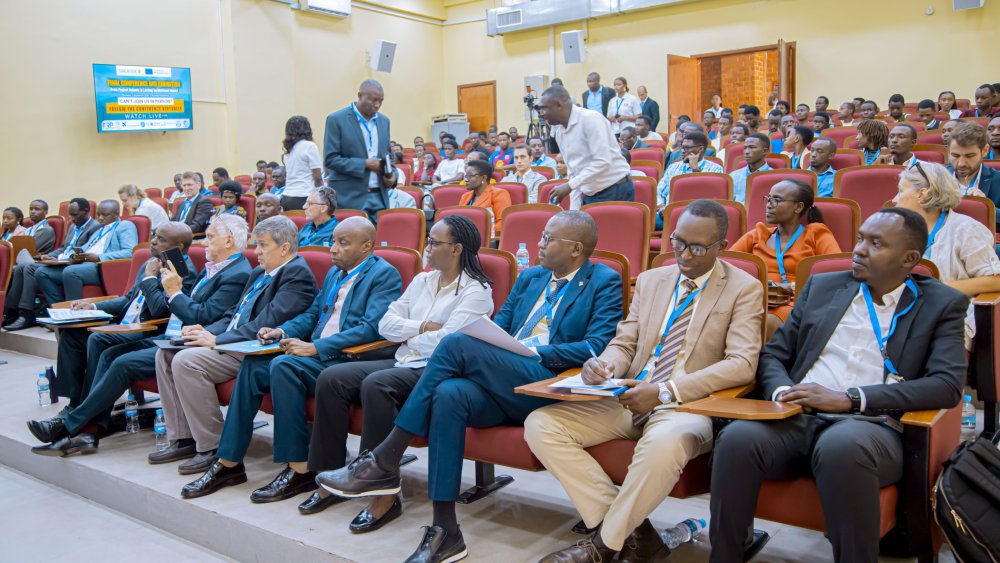
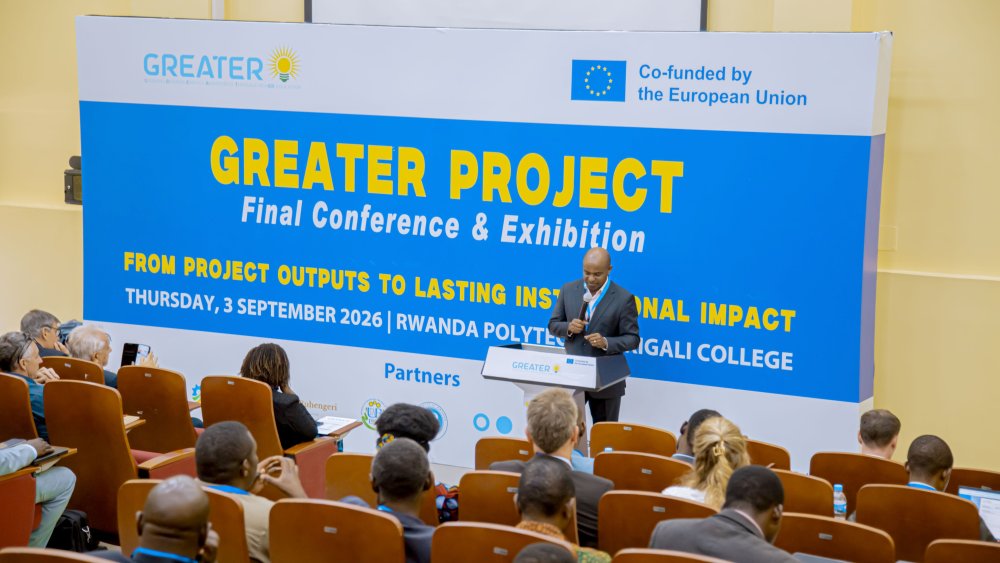
The beneficiaries are from the University of Rwanda, RP Tumba College, INES Ruhengeri and UTAB. They participated in the Growing Rwanda Energy Awareness Through Higher education (GREATER) project, a three-year initiative aimed at promoting the use of renewable energy through education.
The project brought together the four Rwandan institutions and four European higher learning institutions. It facilitated exchanges between lecturers and students, with a particular focus on enabling Rwandan academics and students to learn from European universities with advanced experience in renewable energy.
More than Rwf 1.3 billion was invested in the project, funding activities including renewable energy projects implemented by each participating university in local communities, curriculum development, and exchanges involving lecturers and students.
The initiative supports Rwanda’s target of having renewable energy account for 50% of the country’s electricity by 2050. As part of this broader effort, a study is expected to be completed by the end of 2026 to identify a suitable site for a solar power plant with a planned generation capacity of 200 megawatts.
Speaking during the closing of the GREATER project in Kigali on September 3, 2026, Hategekimana Jean Bosco, a renewable energy lecturer at RP Tumba College, said the knowledge he gained at Hochschule Bonn-Rhein-Sieg in Germany had significantly strengthened his practical skills.
“Together with lecturers from Germany, we learned how to build solar panels from scratch. I can now make one from nothing, complete it and have it generate the electricity I need. We also learned another technology that allows us to monitor how much energy a solar panel is generating in real time without having to physically go to where it is installed,” he said.
Hategekimana said the skills would not only enable him to train students but could also contribute to Rwanda’s efforts to reduce energy costs.
He noted that the institution where he teaches spends about Rwf 4 million a month on electricity, while a renewable energy system could potentially reduce the monthly cost to below Rwf 1 million, depending on the system and its performance.
As part of the project, RP Tumba College also developed an initiative to install solar power systems for residents of Muyanza Model Village in Rulindo District who had struggled to access electricity due to limited financial resources.
The institution plans to extend similar initiatives to other communities to promote the use of renewable energy, which can offer a more affordable alternative to conventional electricity sources.
Eng. Gatabazi Pascal, Chief Technical Adviser at the Ministry of Education, said the government is increasingly focused on the quality of graduates rather than simply increasing the number of people completing university and higher education programmes.
“In the past, we focused on the number of university graduates and wanted that number to increase, but now we need to move from numbers to competence. We want a student who graduates from university to have the skills to work and contribute to the country’s development. This means focusing on programmes that respond to labour market needs, trained lecturers and the necessary equipment,” he said.
the European Coordinator of Growing Rwanda Energy Awareness Through Higher education (GREATER) project
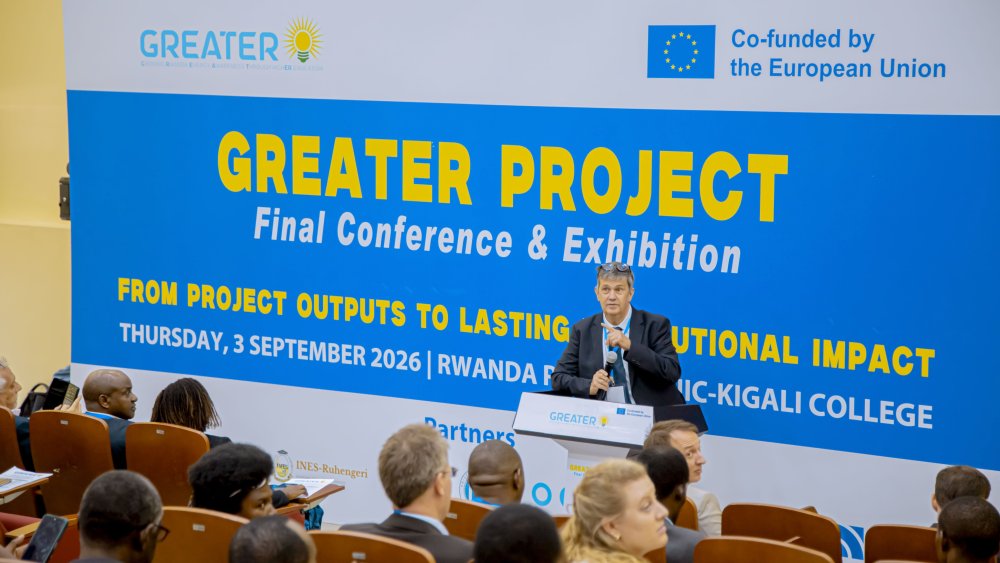
The European Coordinator of GREATER project Prof. Paolo Ciampolini, a lecturer at the University of Parma in Italy, said Rwanda already has a foundation for teaching renewable energy, but the project sought to strengthen the practical component.
He said this would enable students and lecturers to develop and manufacture renewable energy equipment locally, reducing reliance on imports which is more expensive and can become a barrier to its wider adoption.
Twenty lecturers and six students from four Rwandan higher learning institutions have returned from Europe after receiving training in renewable energy under the GREATER project.Prof. Paolo Ciampolini, coordinator of the GREATER project, said the initiative focused on strengthening practical renewable energy skills and reducing reliance on imported equipment.Eng. Gatabazi Pascal, Senior Technical Adviser at the Ministry of Education, said Rwanda is shifting its focus from the number of university graduates to the quality and skills they possess.
The development was confirmed by the Office of the President, Village Urugwiro, on Thursday evening.
The meetings took place on the sidelines of the Africa Food Systems Forum (AFS Forum) 2026, which was held in Kigali and brought together leaders and stakeholders to discuss ways of strengthening Africa’s food systems.
IFAD is a United Nations specialised agency that works with rural communities to address poverty, improve food security and nutrition, and strengthen agricultural productivity and livelihoods.
The organisation focuses on supporting rural people, particularly small-scale farmers and vulnerable communities, to improve their livelihoods, expand businesses and build resilience to challenges affecting their development.
The discussions come as African countries continue to seek ways to transform agriculture, strengthen food production and build more resilient food systems amid changing economic and environmental conditions. With the global population projected to reach about nine billion by 2050, pressure on food systems is expected to increase, making agricultural transformation and food security key priorities for developing countries.
IFAD directs much of its work towards countries and communities where poverty and hunger are most prevalent, supporting rural populations to improve their livelihoods and strengthen their ability to withstand economic, social and environmental challenges.
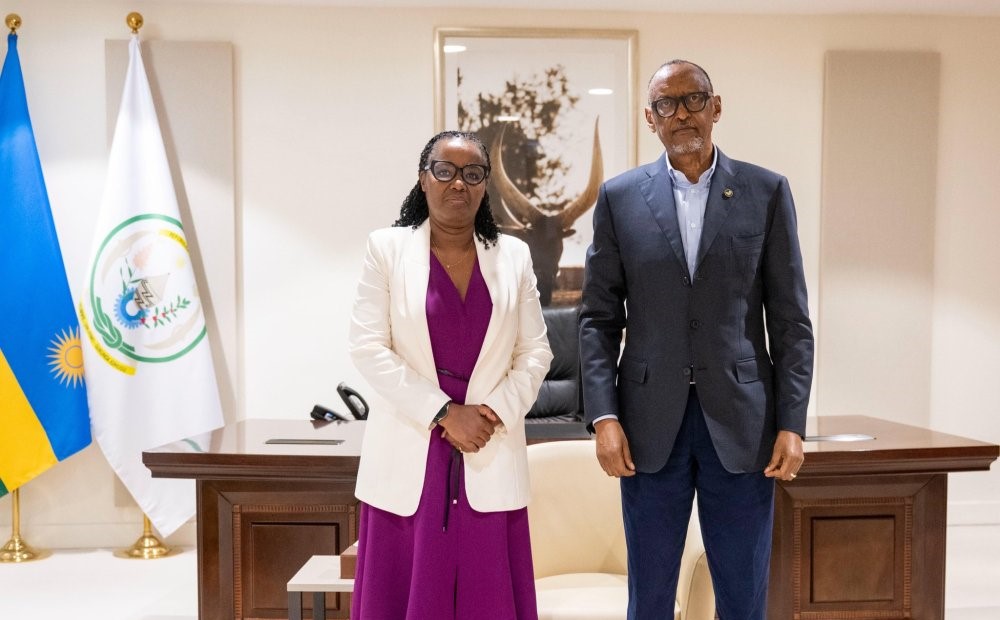
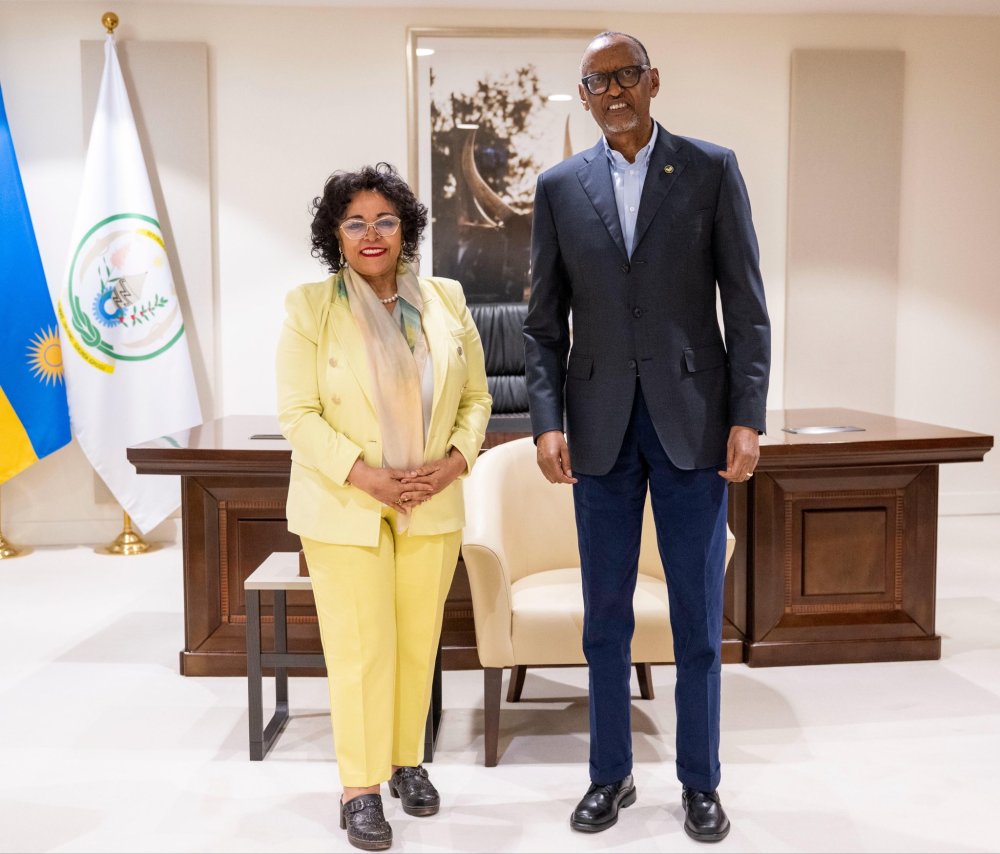
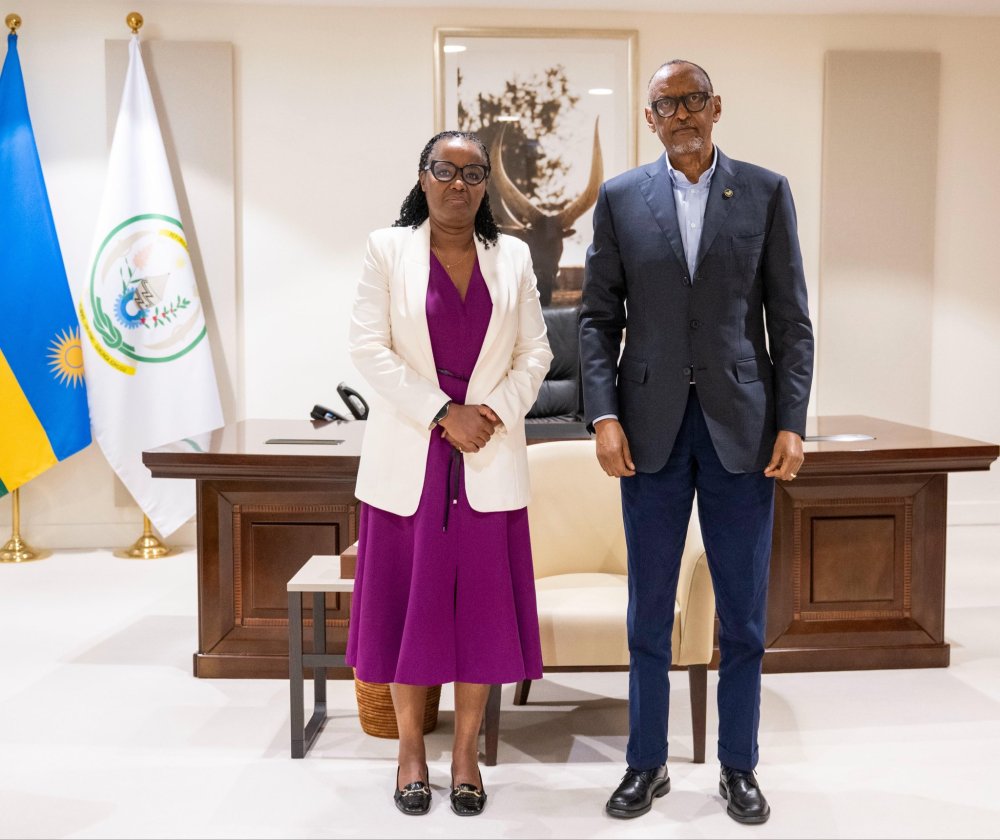
President Kagame held talks with AUDA-NEPAD CEO Nardos Bekele-Thomas on advancing Africa’s agricultural transformation.President Kagame met with IFAD Vice President Dr. Gérardine Mukeshimana on the sidelines of AFS Forum 2026.
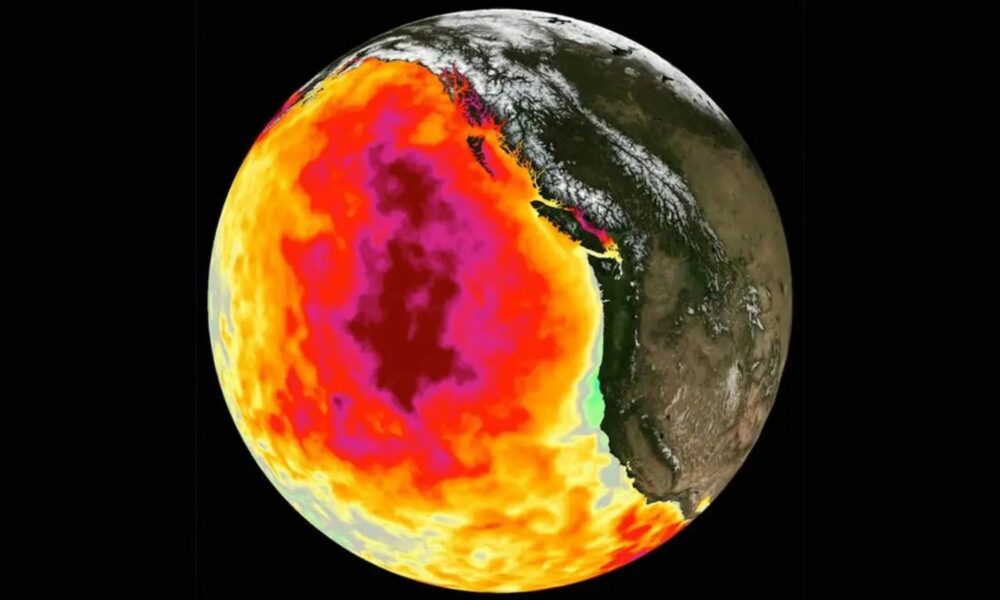
Fueled by exceptionally warm ocean conditions across the tropical Pacific, El Nino is likely to peak towards the end of this year, according to the WMO’s El Nino/La Nina Update. The likelihood that the event will persist through to February 2027 is “nearly 100 percent,” the WMO said.
“El Nino is being supersized before our eyes,” UN Secretary-General Antonio Guterres warned. “Sea surface temperatures are rising, temperatures keep climbing, and the world is in the danger zone of extreme weather.”
On the current trajectory, El Nino “may be stronger than anything since our monitoring began, literally off the charts we have used for the past four decades,” WMO Secretary-General Celeste Saulo told a press conference in Geneva after the release of the Update.
The WMO called on all countries to closely monitor the evolution of the event and respond appropriately. “We are already seeing disruption and devastation from droughts and floods, and we expect these impacts to increase as El Nino intensifies,” said Saulo. “This exceptional El Nino demands exceptional preparation and response.”
El Nino is a natural climate phenomenon characterized by the warming of sea surface temperatures in the central and eastern equatorial Pacific. It typically occurs every two to seven years and lasts about nine to 12 months. Its effects on global temperatures are often most pronounced in the year following its formation.
The WMO noted that a very strong El Nino event increases the likelihood of major changes in rainfall, temperatures and atmospheric circulation across many parts of the world. However, its impacts can vary according to location and season, and can be modified by other climate drivers, including conditions in the Indian and Atlantic Oceans.
Fueled by exceptionally warm ocean conditions across the tropical Pacific, El Nino is likely to peak towards the end of this year, according to the WMO’s El Nino/La Nina Update.