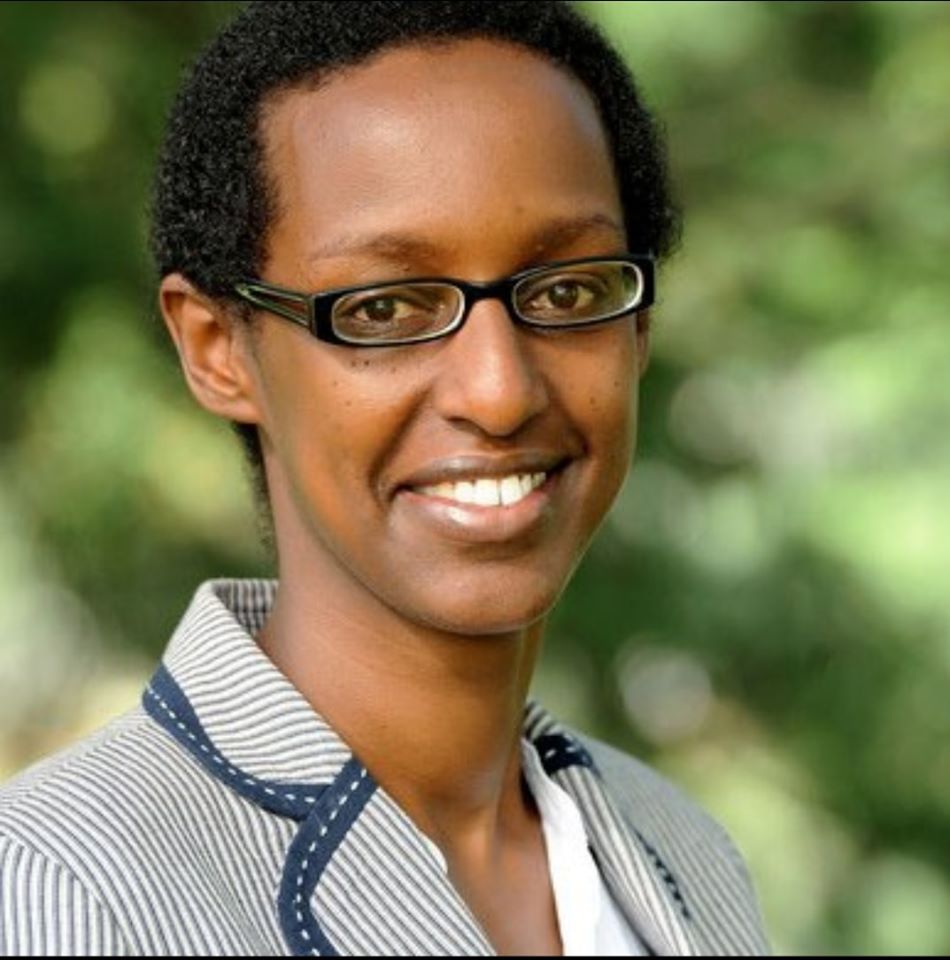
Marie Michelle Umuhoza, Rwanda Investigation Bureau (RIB) spokesperson confirmed the arrest and said that further investigation is being conducted.
“The suspect is currently held at RIB Gisenyi station in Rubavu district while investigation proceeds.”
Article 133 in the Rwandan Constitution states that “any person who is convicted of rape shall be liable to imprisonment for a term of not less than ten years and not more than fifteen years, and a fine of not less than one million Rwandan Francs and not more than two million Rwandan Francs.”
The penal code stipulates 20 to 25 years of imprisonment to defilement convicts. When rape or defilement is done on a minor of less than 14 years old, the penalty is life sentence.
Last week, the National Commission for the Fight Against Genocide (CNLG) published a book titled ‘Jenoside yakorewe Abatutsi mu cyahoze ari commune Cyangugu’ loosely translating to ‘The genocide against Tutsi in former commune Cyangugu.’
The book was released as a result of a research which was conducted by Donatien Nikuze, a genocide scholar under the supervision of Dr. Gasanabo Jean Damascène, Director General of the National Research and Documentation Centre on Genocide at CNLG.
It elaborates on allegations that French military forces worked closely with Interahamwe militia during the genocide, supplied them with weapons and offered them cover, under the United Nations (UN) auspices.
The book also shows that France was not in Rwanda to rescue thousands of Tutsi families who were trapped amidst ruthless and brutal massacres but that they were sent to halt FPR Inkotanyi soldiers which had outstripped the Armed Forces of Rwanda (FAR), the army of the ethnic Hutu-dominated Rwandan regime which executed the genocide.
{{Rape allegations}}
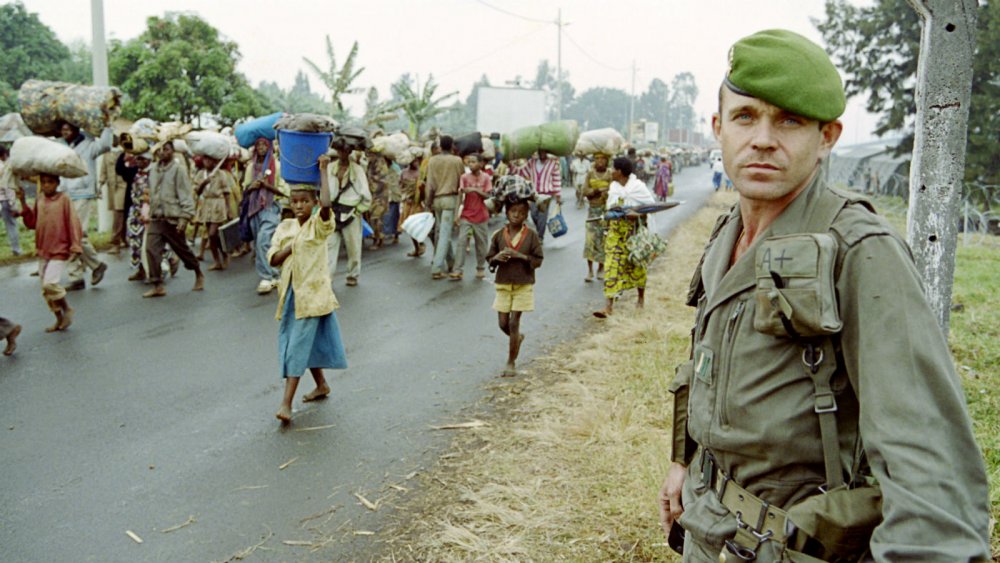
The book shows that French soldiers who were sent in Rwanda for ‘Operation Turquoise’ a French-led military operation in Rwanda in 1994 under the mandate of the United Nations reached former Cyangugu Prefecture and divided into two units.
One unit stayed at Kamembe airport in Cyangugu while the other unit went to Nyarushishi, Bugarama, Ntendenzi and Kirambo sectors. In Nyarushishi, French soldiers patrolled through the camps and a few days later knew which tents sheltered women and girls.
The soldiers then started a rape spree, dragging women and girls from their tents to rape them every day while they were supposed to protect them.
Kambongo Constance who witnessed the atrocities committed by French soldiers in Nyarushishi said “French soldiers would come in the morning, pick women and girls in their tanks and raped them. Later on, we learned that the women and girls were not picked to clean French soldiers’ houses as they lied about but that they were violently raped once they reached French camps.”
Claudine who survived the rape spree in Nyarushishi was 14 years old at the time. She developed post-traumatic stress disorder (PTSD) as a result of rape. Other rape survivors include Mukayiranga Mado, Mukayeze Pascasie, Mukayitesi Jacqueline, Umulisa and girls from Ecole Agricole Et Veterinaire (EAV) Ntedezi.
Page 360 of the book reads “Women and girls were subjected to unimaginable atrocities where French soldiers would insert pepper in their genital parts, force them into oral and anal sex and take naked pictures of their victims. The soldiers would then offer them portions of their field ration to buy their silence.”
The book also shows facts that French soldiers raped women at Kamembe Airport and Kamarampaka stadium.
Habimana Jean Bosco, a genocide convict and former member of the Interahamwe militia worked closely with French soldiers. He said that French soldiers asked him to collect Tutsi women for raping and that he executed their orders because they had supplied him with firearms.
The first time, he brought them Beata, a 15-year old Tutsi girl from Mururu. After they raped her, they ordered the Interahamwe militia not to kill her.
The second victim Habimana brought was 14-year-old Mukasine Florence from Winteko sector, former Bugayi cell whom he found hiding after her entire family was decimated.
On page 361, the book reads “At Kamarampaka stadium, Mukasine was gang-raped to a point she was unable to walk. The soldiers then ordered that she shall not be killed as well.” Habimana said that the soldiers would reward him with food.
Beata and Mukasine were captured as they moved out of Nyarushishi camp to look for food. They were brought to French camps, raped and sent back to Nyarushishi where they fortunately survived the genocide.
Another victim was an unidentified 19-year-old girl whom Habimana brought to a French soldier. After raping her, the soldier denied Habimana a portion of his field ration as it had become the routine. He got angry and threatened he was going to kill the girl. The French soldier was indifferent to the threat and said he did not care at all. Habimana then killed the girl in front of the soldiers and left her corpse lying there.
{{Complicity with killers}}
Bisengimana Elisée who was a teacher at Groupe Scolaire de Gihundwe at the time of the genocide said that the French government was a close ally of the Rwandan regime that planned and perpetrated the mass slaughter of more than a million Tutsi.
In Rusizi, French soldiers collaborated with Interahamwe militia at roadblocks and barricades.
They verified identity cards and those who were identified Tutsi were sent to Interahamwe to be killed. The soldiers also provided firearms and grenades to the killers.
On page 355, the book reads “soldiers sent in the United Nations-sanctioned humanitarian mission in Rwanda in 1994 only offered back up to the killers and pushed further their agenda of totally wiping out the Tutsi minority in complete impunity.”
Sinzabakwira Straton explained that French soldiers also joined the killing spree. In Gasare, former Karengera commune, French soldiers killed Tutsi, packed the corpses inside bags and dumped them in the middle of the Nyungwe forest.
The victims were accused of supporting FPR Inkotanyi. The soldiers helped genocide perpetrators erase evidence of the genocide by picking corpses of Tutsi in Kamembe and dumping them in the Nyungwe forest.
{{Erasing evidence}}
The French government thought the Interahamwe militia to erase all evidence of the genocide. In Cyangugu, French soldiers saw corpses floating in Lake Kivu and alerted the killers that if anyone took a photo of it, it would cost them a lot. Habimana said, “the soldiers instructed us to incise the victims’ bellies and fill them with stones so that they could sink into the lake.” The killers used bayonets to execute the evil plan.
Kayitsinga Abdallah who lived in Kamembe during the genocide explained that not only did the French soldiers participate in the genocide, they also looted processed tea from Shagasha and Gisakura tea factories and exported it to be sold in the Democratic Republic of Congo (DRC).
Ndikubwabo Jean who admitted having been a broker for French soldiers said they also looted cars and sold them in DRC. He was paid between $20 and $30 for each car they sold.
FPR Inkotanyi victory was disadvantageous to the French Government
By July 17th, 1994, FPR Inkotanyi had conquered almost all the country with the exception of the ‘zone humanitaire sure’ (ZHS), a safety zone spreading over former Gikongoro, Cyangugu and Kibuye prefectures where French soldiers had established camps.
The book explains that after realizing that FAR forces were outnumbered on all fronts, French soldiers in ‘Operation Turquoise’ urged génocidaires in Cyangugu to flee the country. French soldiers and government officials patrolled through Cyangugu calling killers to flee Rwanda as soon as they could
.
Bisengimana Elisée said, “they used microphones to call upon all génocidaires in Kamembe to leave the country.”
The message was informing génocidaires that the next day, French soldiers would leave the country and that they would have no protection. “Tomorrow, FPR Inkotanyi will conquer Cyangugu and will kill every Hutu on their way. We urge you all to flee to DRC before the last French soldier leaves Rwanda. You are warned!”
Upon realizing that they would be killed, génocidaires destroyed their houses and moved to Congo in search of permanent asylum.
Surwumwe Bernard, an ex-FAR soldier said that as they fled to Congo, they were shielded all the way by French soldiers.
“When we reached DRC, French soldiers helped us move our weapons across Lake Kivu to Panzi military camp. General Bizimungu and Minister Kambanda later came to see us accompanied by two French soldiers.”
In Panzi Military Camp, FAR soldiers and other génocidaires conspired to come back in Rwanda to finish the ‘job’ they had started and destabilize its security.
Despite independent reports released by the Government of Rwanda and accusing French officials of complicity in the 1994 genocide, France continuously denied playing any role.
Last year, President Macron appointed a panel of experts to investigate France’s actions in Rwanda during the 1994 genocide against Tutsi. He also announced the creation of a judicial unit in charge of prosecuting genocide suspects.
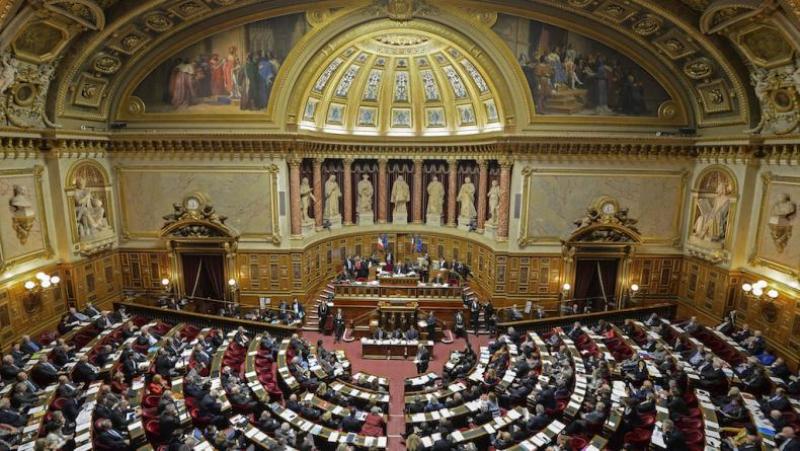
The meeting will be held at the French National Assembly, Palais Bourbon, in Paris under the pretext of studying issues Great Lakes countries are currently facing.
The agenda shows that genocide deniers and other researchers who in the past advanced the double-genocide theory will be invited to freely express their ideologies.
CRF and IBUKA France stated “It is highly inappropriate for a respectable government body to give a platform to genocide deniers and double-genocide theorists especially when France prepares to commemorate the 1994 genocide against Tutsi as stated in Decree No. 2019-435 of May 13th, 2019 that “The 1994 Genocide against Tutsi shall henceforth be observed and commemorated in France every year on April 7th.”
“We demand that senators and the French parliament condemn genocide ideologies and deny support to all forms of hate propaganda.”
The petition condemning the meeting and its agenda has so far been signed by 2693 people of 5000 needed and follows various social media posts urging the French Senate to cancel the meeting.
Some notorious genocide ideologists expected in the meeting include Charles Onana, Judi Rever, Hubert Vedrine, and Vincent Hervouët.
Vedrine is a French Socialist politician and was President Mitterand’s diplomatic and advisor, spokesperson and finally as Secretary General of the French Presidency from 1991 to 1995. Mitterand’s government vehemently supported the 1994 genocide against Tutsi.
Judi Rever is a Canadian freelance print and broadcast journalist. She is the author of many books denying the 1994 genocide against Tutsi as it is the case for Charles Onana.
Vincent Hervouët is a journalist on the LCI channel who is notorious for offering a platform to genocide perpetrators and ideologists.
Organized by Ithraa, Oman’s investment and export development agency, Oman Chamber of Commerce & Industry and Madayn, the high-profile four-day show is designed to boost trade relations between Rwanda and Oman.
The exhibition is expected to showcase a host of leading Omani businesses from food and beverage, plastics, textiles, metals and minerals, construction and logistics.
Mrs Maymuna Al Adawi, Ithraa’s Director for Export Facilitation said: “With its economy expanding by 8.6% in 2018, Rwanda has proven to be an economic role model for the continent, with leading business analysts singling it out as one of the emerging economies to watch for in terms of investment opportunities, value for money and economic growth.”
He added that while many African economies are known for distinct exports or income streams that have remained unchanged for years, Rwanda has chosen a different path by embarking on a concerted effort to diversify exports and revenue streams. “Indeed, this approach has seen services become the leading driver of GDP growth in the past few years, taking over from agriculture. Given the economy’s success, we see multiple opportunities in Rwanda for Omani exporters. It’s clearly an exciting time to be showcasing Oman-made products in this important African market.”
Mr. Ayman Al Hsani, OPEX Committee Head explained that Omani products have built a strong reputation internationally, and given Rwanda’s diversification plans “we’re looking to forge long-term and mutually beneficial trade ties. OPEX is an excellent opportunity for us initiate those connections and take trade partnerships forward. As we’ve seen at recent OPEX shows in Qatar, Saudi Arabia and the UAE I’m confident the Kigali event will deliver positive results for everyone involved.”
OPEX is a trade show designed to promote Omani products exported to over 140 countries. Since its launch in 2012 in Riyadh, Saudi Arabia, OPEX has seen a steady increase in the number of participating companies.
During the exhibition, Rwanda Development Board will organize a special session at the Kigali Convention Centre on Monday 2nd March to present the various business and investment opportunities in Rwanda to key business leaders from Oman.
Besides, B2B meetings between the Omani industries and the investors, business owners and commercial agencies in Rwanda will also take place ion Monday co-hosted and supported by the Rwanda Private Sector Federation (PSF)
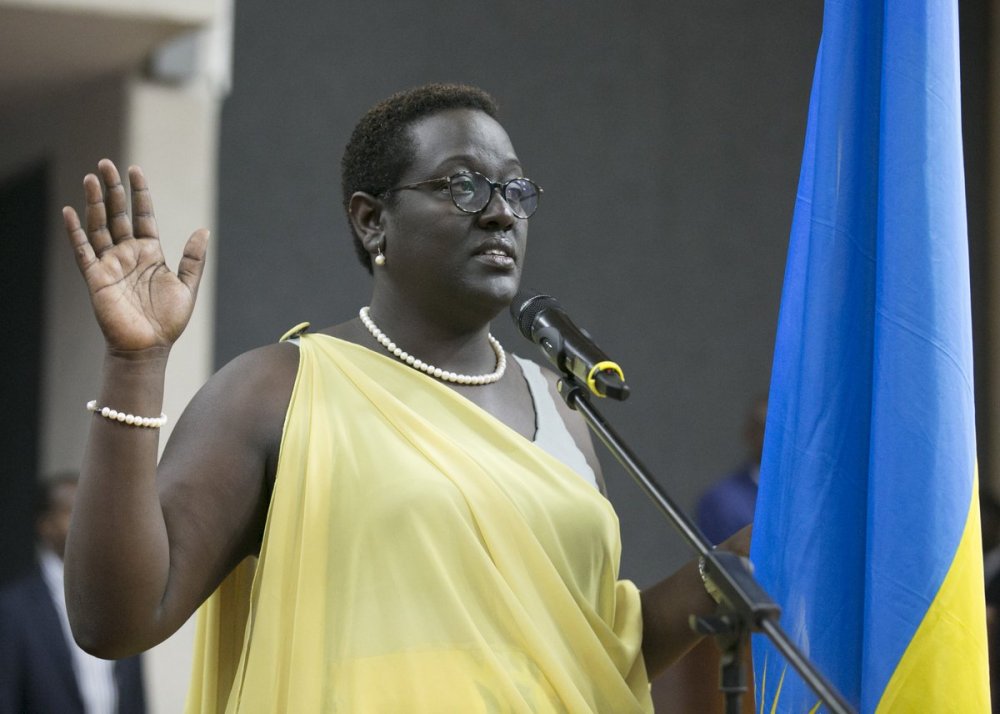
An announcement from the office of the Prime Minister says Dr. Ngamije Daniel has been appointed minister of health, replacing Dr. Diane Gashumba who recently resigned.
Dr. Daniel is a physician and public health specialist. He previously worked for the World Health Organisation in Rwanda. He has 23 years of experience working in the public health sector. Before joining WHO, Dr. Daniel worked for Global Fund as a Coordinator to fight AIDS, TB, and Malaria and worked as coordinator of Single Project Implementation Unit in the Ministry of Health.
Dr. Uwamariya Valentine was named Minister of Education, succeeding Dr. Mutimura Eugène who was appointed Head of Science and Technology Commission.
Dr. Valentine was Deputy Vice-Chancellor in Charge of Training, Institutional Development, and Research at Rwanda Polytechnic, a post she held since 2018. She was also a senior lecturer at University of Rwanda.
Dr. Valentine holds a B.Sc. in Chemistry from former National University of Rwanda (NUR). In 2005, she got her Msc degree in Chemistry from Witwatersrand University (Johannesburg-South Africa). In 2013, she obtained her Ph.D. from UNESCO-IHE and Delft University of Technology (The Netherlands) in Environmental Engineering and Water Technology.
Dr. Valentine has been involved in teaching/research for 18 years at University and served as Dean of the School of Science at the College of Science and Technology, University of Rwanda.
Among other changes made, Dr. Bayisenge Jeannette replaced Nyirahabimana Solina as the Minister of Gender and Family Promotion.
Dr. Bayisenge was the President of the City of Kigali Council and served as Director and a Senior Lecturer at the University of Rwanda, College of Arts and Social Sciences (UR-CASS), Center for Gender Studies.
She has a Doctorate in Social Work from the University of Gothenburg, Sweden; a Master’s degree in Development Cooperation with a specialization in Women and Development obtained from Ewha Woman’s University in Seoul- South Korea and a Bachelor’s degree in Social Work from National University of Rwanda.
In 2004, she was a lecturer at the University of Rwanda, with her research interest being in the areas of gender and development and women and children’s rights.
Dr. Jeannette also held other such important positions as being the director of the National Women’s Council, the Chairperson of Gasabo District Council, and being on the board of directors of LODA (Local Administrative Entities Development Agency) and NIDA (National Identification Agency).
Mpambara Inès was named Minister in charge of cabinet affairs in the office of the Prime Minister. She replaces Marie Solange Kayisire who was appointed Minister in Charge of Emergency Management, replacing Germaine Kamayirese.
Previously Inès worked as Director of Cabinet in the Office of the President and director of the school of journalism and communication at the National University of Rwanda.
Tushabe Richard was appointed Minister of State in the Ministry of Finance and Economic Planning in Charge of the National Treasury. He was formerly the Director of Rwanda Social Security Board (RSSB), a position he held after being at the helm of as the Commissioner General of Rwanda Revenue Authority.
Nyirahabimana Solina who was the minister of Gender and Family Promotion was named Minister of State in Charge of Constitution and Legal Affairs in the Ministry of Justice, replacing Evode Uwizeyimana who recently resigned.
Lt Col Dr. Mpunga Tharcisse who was Director General of Butaro Hospital was appointed Minister of State In charge of Primary Health Care replacing Dr. Patrick Ndimubanzi.
Twagirayezu Gaspard was named Minister of State in Ministry of Education in charge of Primary and Secondary Education, replacing Dr. Isaac Munyakazi who resigned.
Irere Claudette was appointed Minister of State in the Ministry of Education in Charge Technical and Vocational Education and Training. She was the permanent Secretary at the Ministry of ICT and Innovation nd had been kLab General Manager till 2015. She holds a Msc. in Computer Engineering from Oklahoma Christian University and a Bsc. in Computer Science from the National University of Rwanda.
Rugira Amandin was appointed Rwanda’s ambassador to Zambia while Dr. Sebashongore Dieudonne was made Rwanda’s ambassador to Belgium.
Rugemanshuro Regis was appointed Director General of RSSB. He was the Chief Digital Officer in BK Group Plc.
Regis did his high school studies in Minor Seminary of Karubanda, did his undergraduate studies at Misericordia University in Pennsylvania, the same university from which he did his graduate studies.
He served in the United States consulting for the global Tech giants such as Hewlett Packard (HP) as a Program Manager and later with Accenture PLC in Seattle, Washington. During his time there, his main clients included Microsoft and T-Mobile.
The president also appointed Dr. Ndimubanzi Patrick as the Executive Secretary of the Human Resources for Health Secretariat, a new office.
Iradukunda Yves was appointed Permanent Secretary in the Ministry of ICT and Innovation while Gacandaga Jean Marie was made Deputy Director General in Charge of Fund Management in RSSB.
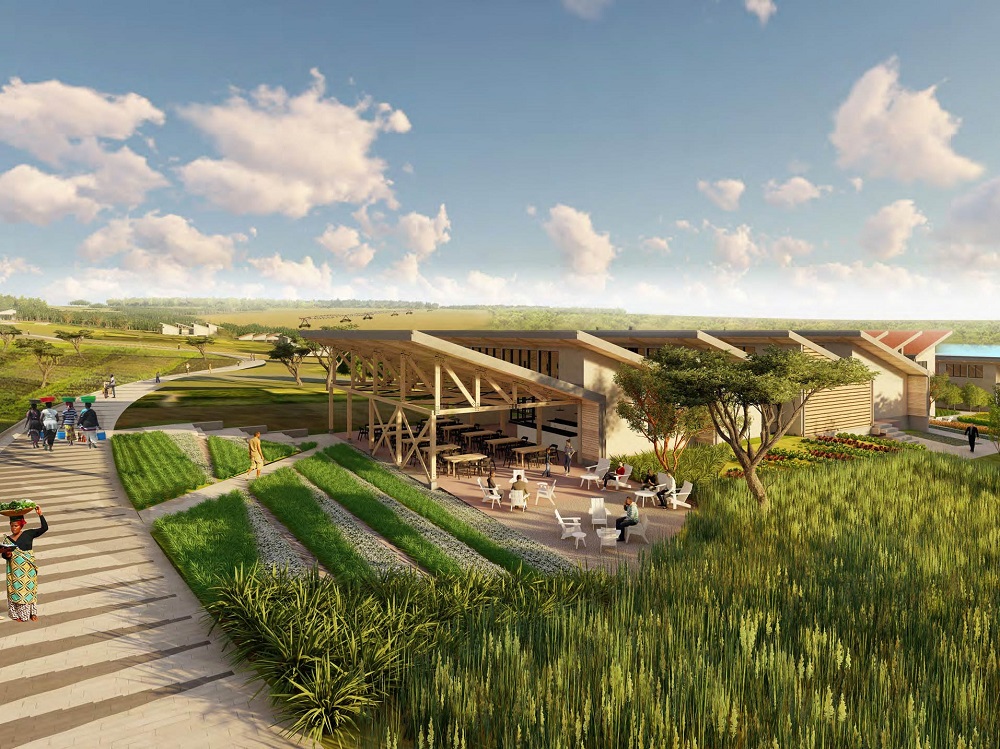
Registration starts on February 26th, 2020 and will close March 25th, 2020. Apply Now!
Applicants must be willing to focus on development strategies and agricultural practices that encourage inclusive rural growth and to work with local farmers, industry, and authorities to implement those practices.
Requirements include being a Rwandan national, demonstrating leadership and entrepreneurship skills, being fluent in English, and having completed high school in 2019 with not less than a note of 40 for those who sat for Rwanda Education Board (REB) national examinations and 36 for those who sat for Workforce Development Authority (WDA) examinations.
Applicants who are accepted receive a full, three-year scholarship covering school fees, insurance, accommodations, and meals.
RICA staff stated that they are looking for innovative students who have a passion for agriculture. Graduates are expected to identify solutions and leverage technology to put to maximum use of the available land resources in Rwanda.
Students in the three-year program earn a Bachelor’s degree in Conservation Agriculture and can specialize in enterprises such as Animal Production, Crop Production, Mechanization and Food Processing.
RICA’s curriculum is designed to support students in learning, conducting experiments and practicing theories at different scales — from smallholder farming to irrigated/mechanized agriculture. Students are also taught leadership, entrepreneurship, and networking skills. RICA has the particularity of offering English-only lessons compared to other agriculture programs in different universities in Africa.
For more information, visit RICA website www.rica.rw, their Instagram @rica_rwanda and Facebook page at facebook.com/rica.education.rw or send an email to admissions@rica.rw
RICA operates as a partnership between the Government of Rwanda, the Howard G. Buffett Foundation and the University of Nebraska-Lincoln.
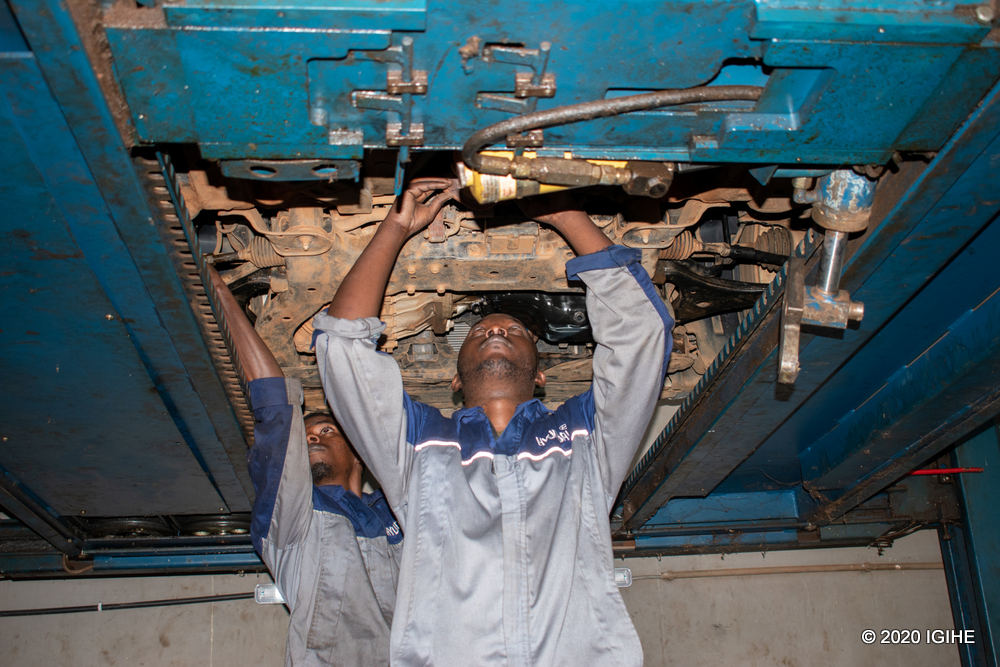
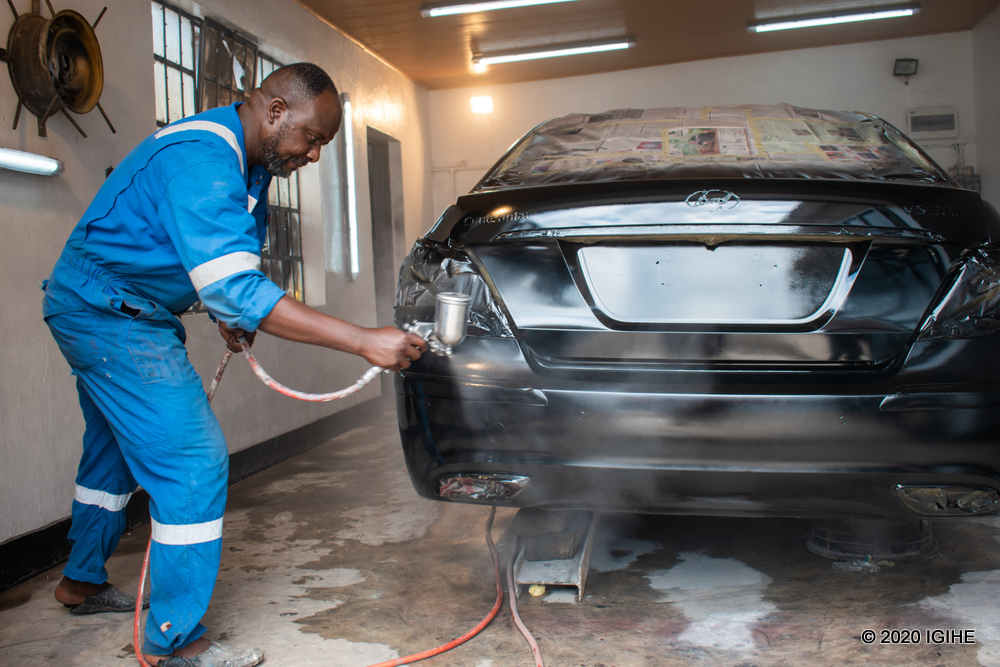
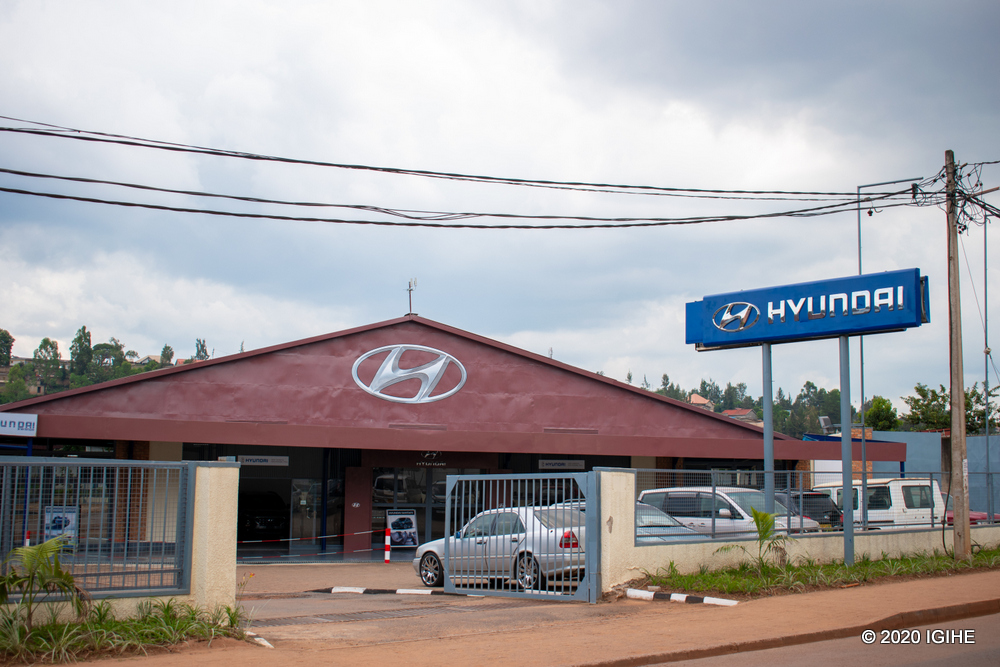
The technical testing and repairs will be done at the Hyundai Garage in Gikondo-Magerwa, KN 6, Ave Magerwa Road.
In order to avoid queues at the garage, customers that want to take their vehicles for the overhaul can call (+250) 786131 279, 0788873366 or 0788868099 for an appointment.
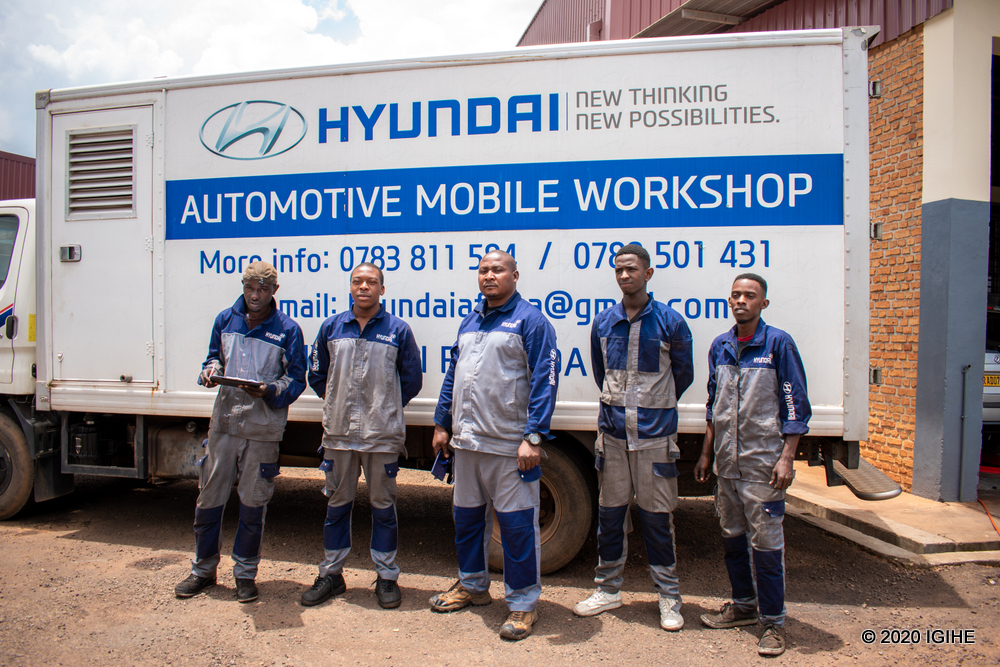
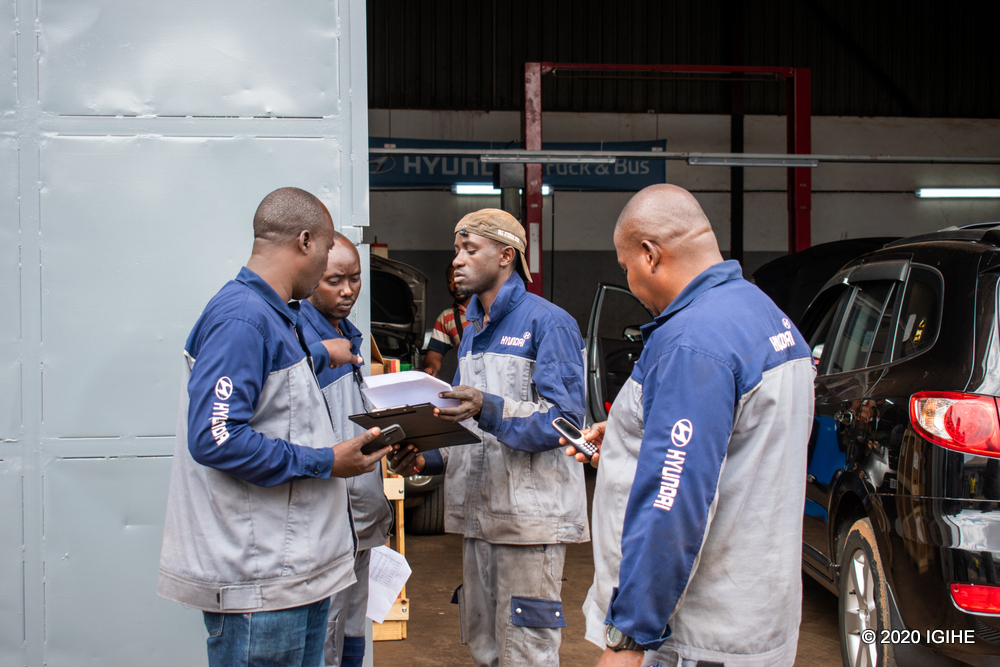
Hyundai-Rwanda has announced that the overhauling will be done by experts who will provide information and advice on vehicle handling. New spare parts will also be available for purchase at the garage at a good cost.
The Hyundai-Rwanda technical director, Tierry Fifield, has told IGIHE that the objective of the free technical test is to meet customers’ mechanical needs of customers’ vehicles.
“Our aim is meeting customer satisfaction. We will give them information about the Hyundai old models and current models. We will also check their vehicles and give technical advise accordingly.”
Hyundai-Rwanda is a branch of Hyundai Motors with headquarters in Seoul, South Korea, founded in 1967 but opened shop in Rwanda in 2012.
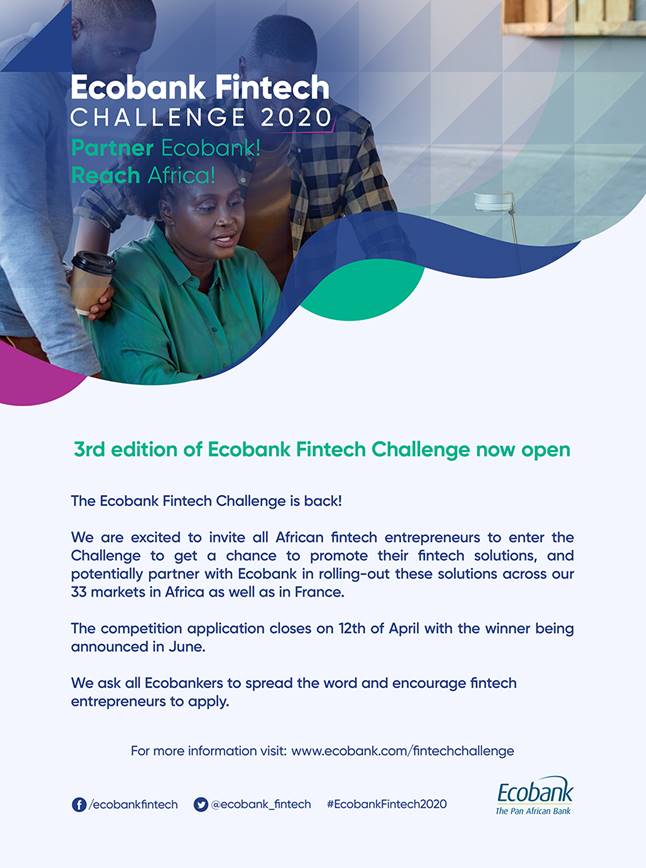
Ecobank welcomes submissions from all start-ups and developers in any of Africa’s 54 countries to enter its 2020 Ecobank Fintech Challenge at https://www.ecobank.com/Fintechchallenge
All Finalists will be inducted as Ecobank Fintech Fellows, participate in a business boot camp followed by an Awards and Innovation Fair at the headquarters of the Ecobank Group in Lomé, Togo in June 2020.
Ecobank Group Executive, Operations & Technology, Eddy Ogbogu noted that “As a banking group we continue to be amazed at the many ways in which fintech are transforming banking across Africa. We look forward to the new innovations and partnership opportunities that will come with the 2020 edition.”
Fellows will qualify to explore the following opportunities including:
-* Multinational product roll-out: an opportunity to pursue integration with Ecobank and potentially launch products in Ecobank’s Pan African footprint
-* Service provider partnerships. Ecobank may select start-ups as a pan-African service partner within the bank’s ecosystem.
-* Access to Ecobank’s Pan-African Banking Sandbox: Fellows will be given access to Ecobank’s APIs to test and improve their products for the pan-African market.
-* Mentoring and networking support in the network of global and African partners of the Group.
Ecobank Senior Fintech Advisor, Djiba Diallo said “The Ecobank Fintech Challenge and fellowship have been improved upon to create even additional value for Ecobank and the Fintechs. We took feedback from the past editions and one of the major innovation this year is the opportunity for shortlisted Fintech’s to access our APIs through our Pan African Sandbox.”
Ecobank Fintech Challenge was designed in partnership with the advisory firm Konfidants and is supported by several partners across Africa and globally. Applications for the competition will close on the 12th of April, 2020.
More information on the competition, benefits, and how to apply can be found on the competition’s website at https://www.ecobank.com/Fintechchallenge
He said it should instead be a good time for Uganda to make amends and end tensions with Rwanda.
“The time for Kigaki to obtain all they want should be now when President Museveni is interested in the votes and heading to the elections.”
Currently, progress is being made on both parts to solve the conflicts with the mediation of President Tshisekedi of the Democratic Republic of Congo (DRC) and President Lourenço of Angola.
After the fourth quadripartite summit which was held at Gatuna/Katuna border on February 21st, 2020, Uganda was given a month to verify all allegations that Rwanda dissidents and armed group operate on its territory and if found accurate, taking actions to stop those groups and prevent the situation from every happening again.
The summit agreed that if the resolutions taken are implemented, the Ad Hoc Comission between Uganda and Rwanda will convene at Gatuna/Katuna border within 15 days for the solemn reopening of borders and normalization of the movement of people and goods.
Closing borders caused unimaginable loss to Ugandans especially in trade and Ugandans kept urging President Museveni to take actions and find a quick remedy to solve tensions with Rwanda.
Mbidde said that it is a good time for Museveni to act right in a bid to rally support ahead of 2021 elections.
On his way back from the fourth quadripartite summit, President Museveni told swarms of supporters at Gatuna/Katuna border that the root of the conflict was within the government of Rwanda.
“We are not in any way responsible of creating Rwanda dissidents. There are internal conflicts within the government of Rwanda which they have failed to solve and gradually created enemies who fled to South Africa. Not Uganda.”
“I take this time to express sincere solidarity with the people who were affected by the closure of Katuna border. We are doing our best to make the situation better and sooner or later, you will all realize NRM has Ugandan people in its best interests,” Museveni was quoted.
However, Museveni’s propaganda was condemned given that he is notorious for rallying Rwanda dissidents and supporting them in their agenda of destabilizing Rwanda’s security. He has in the past years succeeded in executing vile conspiracies against Rwanda with the support of Kayumba Nyamwasa and Patrick Karegeya who founded the Rwandan National Congress (RNC).
Mbidde explained that there are no leadership issues in Rwanda and that all the propaganda against Rwanda is promoted by people who are not even in the country to witness the strides Rwanda is making.
Rwanda accuses Uganda of supporting terrorist and armed groups including RNC, FDLR and RUD Urunana and allowing them to freely operate on Ugandan territory.
Uganda also allows the armed groups to recruit new members, torture those who refuse to join with the complicity of Uganda government officials such as Philemon Mateke, Minister of State for Regional Affairs.
Mbidde said that “Ugandans will not support terrorist conspiracies against Rwanda.”
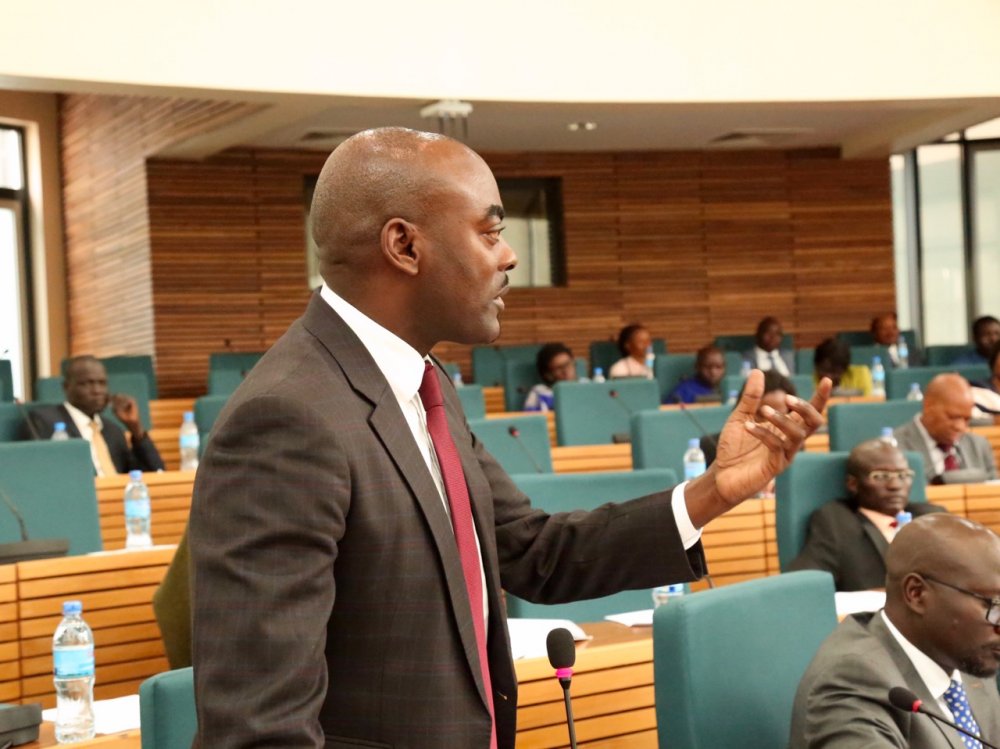
Yusuf Serunkuma, a Ugandan and an expert in historical studies and political economy said that the East African Legislative Assembly (EALA) should do its part to solve the tensions between Rwanda and Uganda.
However, Mbidde replied that it is not in EALA responsibilities to solve conflicts between member countries of the EAC.
“The main objective of EALA is to promote regional integration, establishing a common market and constructing a powerful and sustainable EA economic and political bloc.”
Mukasa Mbidde: The time for Kigali to obtain all they want should be now when President Museveni is interested in the votes and heading to the elections.#NBSMorningBreeze#NBSUpdates
SKOL Brewery Brand Manager, Emilienne Benurugo said that the race is going smoothly so far.
“We are ready to keep serving SKOL beverages to cycling supporters and make this competition more lively. We have also prepared talent shows and competitions where winners are rewarded with bicycles.”
It is expected that by the end of ‘Tour du Rwanda 2020’ which will last for 8 days, SKOL will have given out 14 sports bicycles.
SKOL Rwanda has been at the forefront in supporting cycling in Rwanda. Since July 2018, SKOL supports young cyclists to advance in their careers by sending them for training in Belgium.
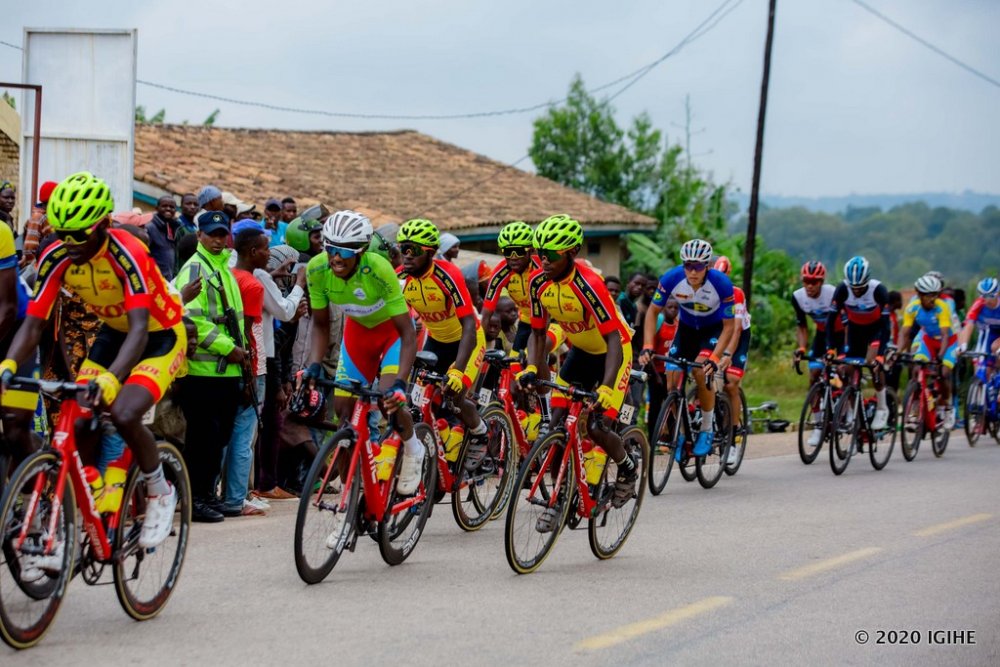
SKOL Brewery recently partnered with cycling icon Adrien Niyonshuti to launch a joint team called Skol Adrien Cycling Academy (SACA) which is currently competing in ‘Tour du Rwanda 2020’.
Two stages have so far been completed. The first stage kicked off on Sunday, February 23rd from Kigali to Rwamagana and saw Yevgeniy Fedorov, a Kazakh cyclist winning the yellow jersey.
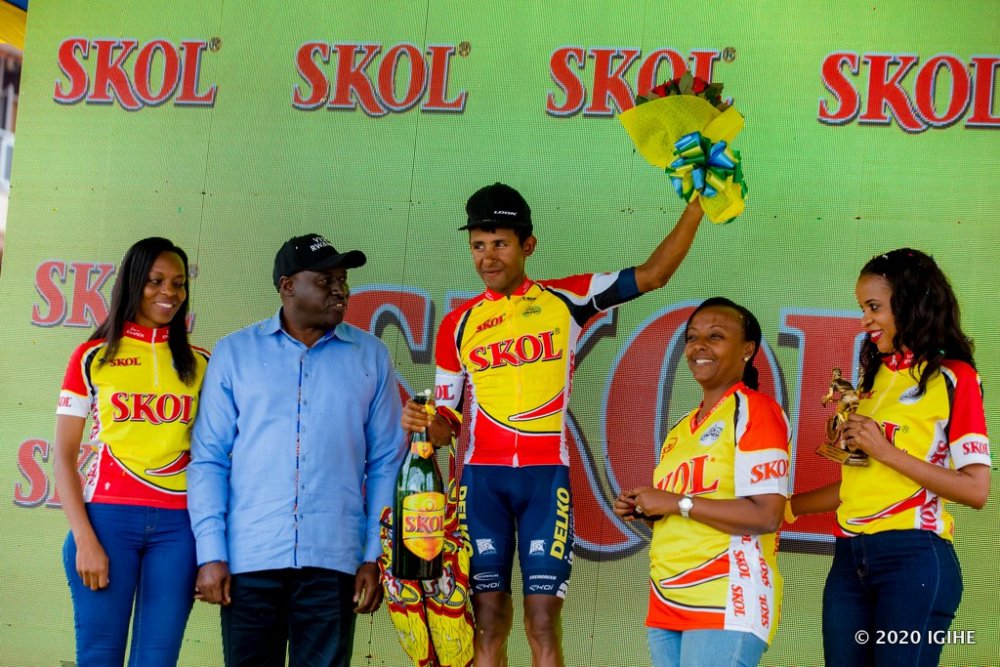
The second stage kicked off at MIC shopping mall heading to Huye; Ethiopian Mulu Kinfe Hailemichael outrun his counterparts, winning the stage.
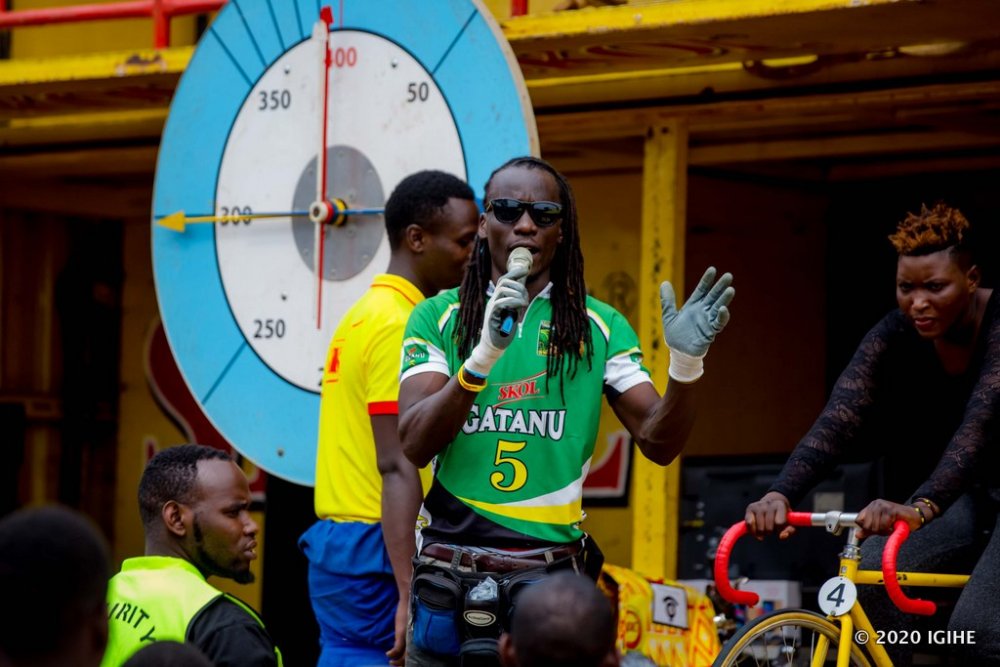
During the second stage, SKOL held mini-cycling competitions and awarded the winners their own bicycles.
Hakorishaka Jean Claude, a resident of Ndora sector, Gisagara District won the competition and went home with a brand new bicycle. He expressed his contentment saying “I am very passionate about cycling and if I ever get a chance to exercise as a professional or race for a cycling team, I will not hesitate to go.”
Hakorishaka said that winning a bicycle will allow him to do more training and improve his skills in cycling. “I used a ballon bike to exercise but the new bike I won is more adequate for steep slopes and has more speed.”