According to sources, the man was estranged with her wife Rebecca Umumararungu who had left two children sired together.
A domestic servant at their home said that Nshimiyimana took his life as he returned home on Tuesday and found the two children taken away by her wife.
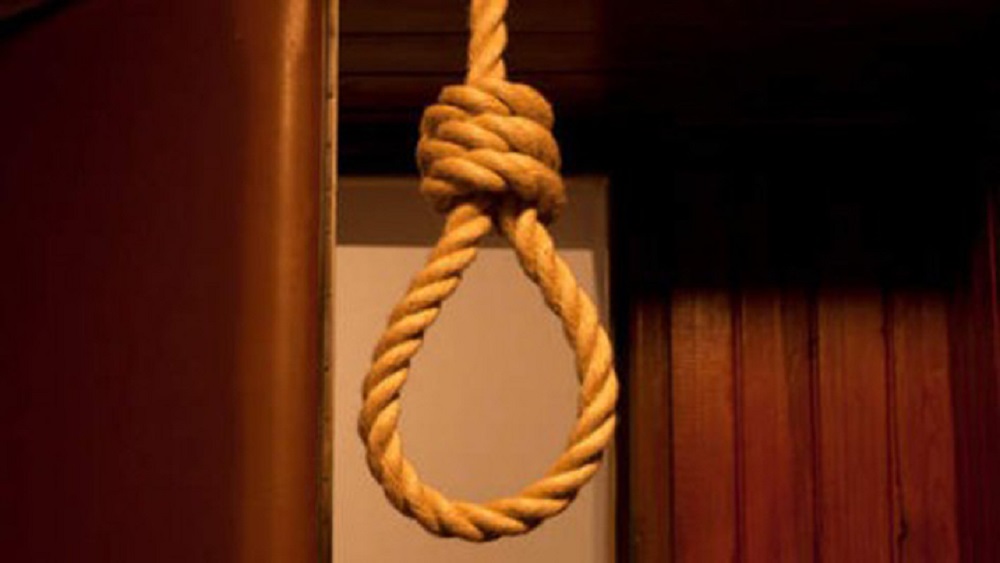
The man is believed to have climbed onto the top of an avocado tree and hang himself with a rope. The domestic worker alerted residents to rescue the hanging man but it was too late to save his life.
Speaking to IGIHE, the executive secretary of Nyamata sector, Innocent Mushenyi attributed the man’s suicide to estrangement with his wife.
“The cause is not yet established but he had persistent conflicts with his wife that was no longer reported to officials,” he said.
Mushenyi appealed to residents to report domestic conflicts on time and take part in Government’s programs including parents’ forum where various issues are collectively addressed.
The Pick-up vehicle, RAB 384Y was intercepted on Monday in Runda Sector, Kamonyi district with three sacks of poultry meat while the motorcycle registration number RE 581E was intercepted in Sheri cell, Rugarika sector transporting 75kgs of pork.
The driver and rider identified as Albert Nzabagerageza, 46, and Theoneste Uwamahoro, 26, respectively, were taken into custody.
The Ministerial Order n°013/11.30 of 18/11/2010 on transport and trade of meat, particularly article 2 stipulates that “…the transport of fresh chilled or frozen meat for food purpose shall be carried in such a manner to not be seen from outside. The meat shall be properly covered and protected against the sun, rain mud, dust, and flies.”
Article 3 of the same order states that the motor-vehicle transportation of fresh, chilled or frozen, non-packed meat shall use closed vans, separate from the driver, internally covered with galvanized brass or any other stainless material.
The acting District Police Commander for Kamonyi, Chief Inspector of Police (CIP) Gaspard Ndayisaba said that the motorcyclist was at the time transporting pork to someone at Giti cy’Inyoni from Gacurabwenge Sector.
The vehicle was also transporting poultry to Kigali from Musambira Sector, he added.
“A concerned resident called the Police at about 9:30am about a motorcycle, which was transporting untested pork, as a prerequisite. Indeed, when it was tested by veterinary personnel they found it had gone bad and not for human consumption. The poultry meat had also gone bad,” CIP Ndayisaba said. The vet ordered for immediate burial of the pork and chicken meat.
While thanking those who informed the Police about the “illegal and harmful acts”, the DPC advised the general public against “unhealthy and unlawful transportation of meat” and called for real time information sharing on anyone, who breaks such health standards.
IGIHE has learned that the launch was successfully completed using the H-2B rocket.
A press conference with RURA, the Ministry of ICT and Innovation and Japan embassy in Rwanda is scheduled next week to provide details about RWASAT-1 launch into space.
‘RWASAT I’ is expected to be used in agriculture monitoring aligning with the country’s vision to prioritize technology.
The project to acquire the satellite was implemented in collaboration with the Government of Rwanda and Japan through Tokyo University.
The project was designed to have the first institution in Rwanda helping to reduce expenses spent on obtaining data from foreign satellites.
In December 2018, three Rwandans went to Japan to work on the project and acquire knowledge that would lead into making their own satellite and giving technical services for ‘RWASAT-1’.
‘RWASAT I’ was exhibited for the first time at Kigali Convention Center on the sidelines of the 5th edition of Transform Africa Summit in May 2019.
RWASAT I project was designed two years ago.
The satellite has two major duties of collecting data from the earth. The satellite is made with advanced technology enabling it to record data even from remote areas without phone network.
It is equipped with a small technology device that can test the quantity of water, warmth, humidity among other climate measurements.
Among others, taken measurements can be synchronized and combined into the device before sending them using weak signal.
The satellite has the capacity to monitor different directions using its two cameras that can capture pictures on Rwanda’s earth.
The satellite weighs 3.8 Kgs.
Gaspard Twagirayezu, Science and Technology Knowledge Transfer Analyst at the National Commission of Science and Technology (NCST) who was in Japan during the construction of the satellite previously told the media that the target is to have more satellites made in Rwanda.
“Many parts of a satellite can be made in Rwanda but there are some parts involved in testing it that require firms and laboratories not available here in Rwanda. Otherwise, other parts can be made in Rwanda,” he said.
“This is what we are assessing in coming days so that large parts of coming satellites can be made in Rwanda and conduct other tests abroad,” added Twagirayezu.
Based on experience acquired from Japan and his colleagues, Twagirayezu said that Rwandans will be able to build own satellite starting from scratch.
At the time, Takayoshi Fukuyo, advisor at Japan’s National Space Policy Secretariat said that Tokyo University has a partnership with Tumba College of Science and Technology where Rwandans will be trained on monitoring data provided by satellites.
“The idea doesn’t end with making the satellite only. It is crucial to building the capacity of people who can monitor and use this technology,” he revealed.
A team of 15 Rwandans was involved in making RWASAT-1.
RWASAT I is the second satellite Rwanda launches in the space following the launch of ‘Icyerekezo’ satellite on 28th February 2019 expected to expand internet access in rural areas.
It was launched by the Government of Rwanda in collaboration with OneWeb.
It is in this regard that the Government of Chad looks to borrow Rwanda’s best practice in Public Financial Management especially the automation of public financial management processes.
According to a statement from MINECOFIN, the cooperation is motivated by the desire to establish a framework of strengthening technical and human capacities in order to achieve better governance of public finances and will focus on the following fundamental areas:
• Reform of public financial management
• Development and implementation of the integrated system of public financial management
• Taxation (Taxes and Customs)
• Management of the State Staff and the Salary Mass
• Investments
• Any other area that the two Parties will agree upon.
The statement further reads that the two parties undertake to exchange technical resources and experts in the field to support the other party in the development of the Integrated Financial Management Information System and its implementation.
As part of this Memorandum, the development and implementation of Integrated Financial Management Information System (IFMIS) will be coordinated by the Rwanda Cooperation Initiative and will be tasked with assisting Chad in the implementation of IFMIS.
The remains were found yesterday in Nyarucyamo II village, Gahogo cell, Nyamabuye sector of Muhanga district.
Diggers immediately alerted officials who rushed to the place.
The mayor of Muhanga district, Jacqueline Kayitare has told IGIHE that they joined them to search for more remains.
“There is evidence that more victims were dumped there based on pieces of clothing and detached remains exhumed,” he said.
Nyamabuye sector officials have revealed that the search for more remains is continued as well as talking to survivors to establish the truth about numbers of genocide victims that might have been dumped at the place.
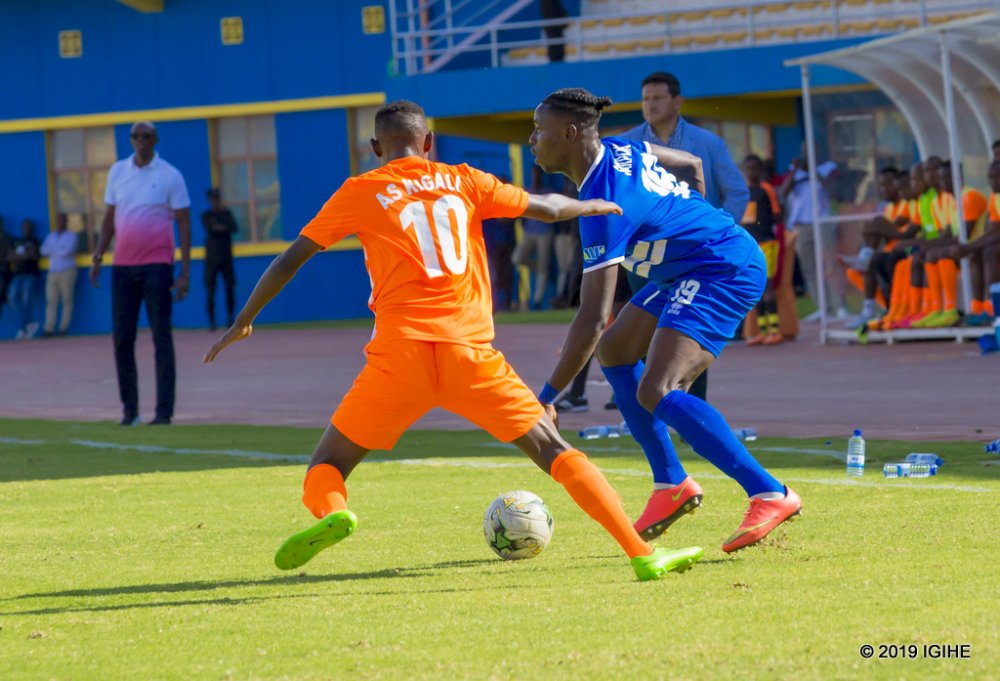
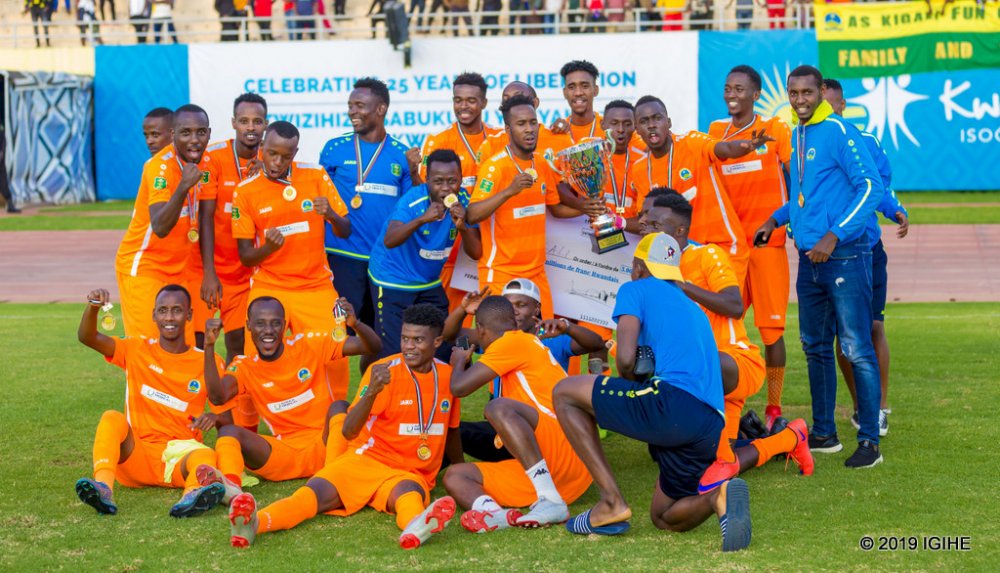
Following a 2-all draw in normal time, AS Kigali won their maiden title through penalties where they recorded a 3-1 win.
Rayon Sports took an early lead thanks to a 29th-minute own goal from Bishira Latif who failed to clear a pass from Iradukunda Eric, only for the ball to go past his goalkeeper onto the goal post.
AS Kigali forward, Ssentongo Farouq Saifi equalized for the Kigali City-sponsored side in the 31st minute before Gabonese import Allongo Martel Mba Rick doubled the lead six minutes later.
Rayon Sports managed to secure the equalizer in the dying minutes of additional time through Rutanga Eric who struck a header past Ndayishimiye following a good cross from Mugisha Gilbert to force the match to be decided on penalties.
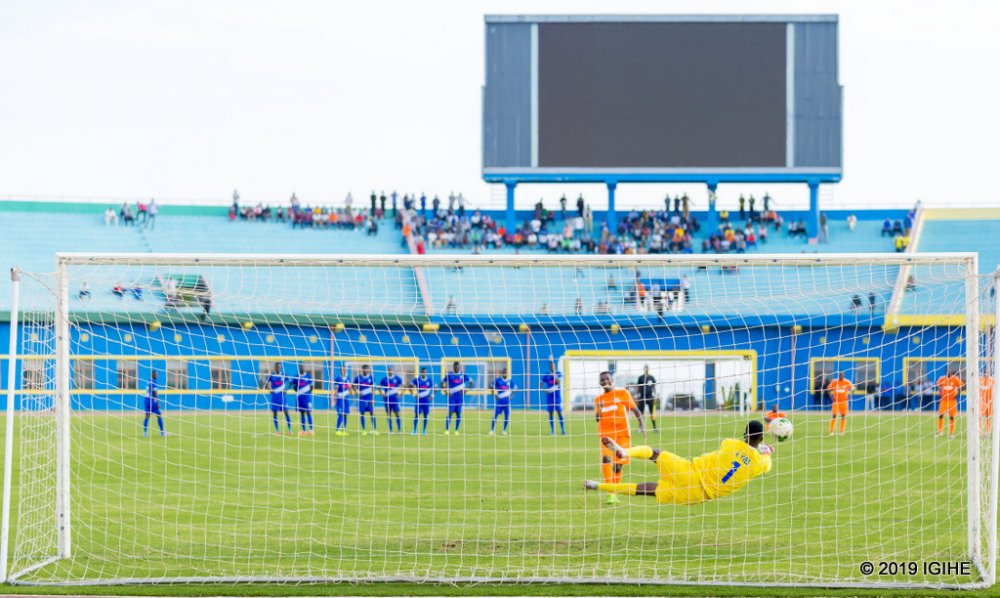
In Penalties, AS Kigali emerged the winner following a 3-1 win with Ntamahanga Tumaine, Haruna Niyonzima and Fosso Raymond converting their spot kicks for AS Kigali while Benedata Janvier missed his penalty.
AS Kigali goalie Ndayishimiye Eric played a vital role in the goalposts as he denied Rayon Sport’s attempts taken by Michael Sarpong, Yannick Bizimana and Mugisha Gilbert leaving Rugwiro Herve as the only player who converted his penalty.
Following the victory, AS Kigali were handed the trophy and a dummy cheque of Rwf. 5 million worth of cash prize.
The Super Cup Match was a curtain-raiser for the 2019/20 league season that kicks on October 4 with Super and Peace Cup holders AS Kigali will host record champions APR FC at Stade de Kigali at 15h00.
Defending champions Rayon Sports FC will begin their title defense away to newly-promoted side Gasogi United at Stade de Kigali on October 5, 2019.
The other games scheduled on matchday one include Bugesera FC hosting Heroes FC at Bugesera Stadium, Etincelles FC host SC Kiyovu at Stade Umuganda, Mukura VS hosts Espoir FC at Stade Umuganda, all set to be played on October 5, 2019.
On October 6, Marines Fc hosts Gicumbi FC at Stade Umuganda, Musanze FC will be away to AS Muhanga at Stade Muhanga while Sunrise FC plays away to Police Fc at Stade de Kigali.
It is said that the husband committed suicide yesterday after strangling his wife dead.
Burera district vice mayor for economic affairs, Joseph Munyaneza has told IGIHE that they learned about the bad news and rushed to their home where they found the man hanging on a rope with the wife’s body straddled on the bed.
He explained that the household had cases of domestic conflicts emanating from the husband’s huge debts used outside the family interests.
“The family had rampant disputes. Sector officials had summoned them twice to mend their relations. Precursors showed the man was positively changing. Investigations are underway to confirm if the woman was killed by her husband,” he said.
Munyaneza called on residents to prevent domestic conflicts to deter similar incidents.
The currency notes in the denominations of US$100 were recovered on Sunday from Patrick Ishimwe, 27, and Theogene Kagiraneza, 21, who were handed over to Rwanda Investigation Bureau (RIB) at Kacyiru station.
Chief Inspector of Police (CIP) Marie-Gorrette Umutesi, the Police spokesperson for the City of Kigali, said that the duo was identified after they attempted to pay their bill at a bar where they were having drinks.
“Ishimwe and Kagiraneza were having drinks together at a bar located in Kacyiru Sector; they approached the counter to inquire if they can pay in dollars which were granted, instead they paid a fake note of US$100, fortunate enough the bar management observed that the note was fake and called the Police,” she said.
“Private security personnel at the bar apprehended them as they waited for the arrival of the Police. When officers searched them they recovered other seven counterfeit dollar notes in the denominations of US$100; they were immediately taken into custody for the alleged crime,” CIP Umutesi added.
According to the article 269 of the law determining offenses and penalties in general, specifies that “any person who, fraudulently counterfeits, falsifies coins or banknotes which are legal tender in Rwanda or one who introduces or issues in Rwanda such effects or notes with the knowledge that they are forged or falsified, commits an offense.”
Upon conviction, the offender is liable to imprisonment for a term of not less than five years and not more than seven years.
The article further states that “any person who knowingly acquires or receives coins or notes knowing that it is falsified, even if he or she is not one of counterfeiters or importers of such monies commits an offense. Upon conviction, he/she is liable to imprisonment for a term not less than one year and not more than three years.”
CIP Umutesi called for vigilance and timely information sharing on people, who either counterfeits or circulates fake currencies.
Gishwati-Mukura National Park was formed by the law Nº. 45/2015 of 15 October 2015 and gazetted on 01 February 2016.
RDB has appointed a chief park warden who will be assisted by 25 park rangers.
In addition, RDB is working on a multi-phased conservation and tourism management program with Imizi, a subsidiary of Wilderness Safaris, a conservation organization with a presence in seven African countries, to develop and operate an exclusive chimpanzee and primate trekking experience under the Wilderness Safaris brand.
RDB will oversee ecology and conservation initiatives including ranger presence, law enforcement, science, engagement of community cooperatives, human-wildlife conflict resolution, research, and monitoring.
Speaking during the handover ceremony at the Ministry of Environment in Kigali, Minister Vincent Biruta said the objective for the Gishwati-Mukura National Park has always been to restore it after large parts were cleared before and after the 1994 Genocide against the Tutsi resulting from human settlement, agricultural practices, and illegal mining.
“I commend the efforts made by different stakeholders whose work has led to the status we celebrate today. These partners include the Association Rwandaise des Ecologists (ARECO), the Albertine Rift Conservation Society (ARCOS) and Forest of Hope. They have all played a significant role and supported the work done by the government to restore and revitalize this regionally important biodiversity hotspot,” he noted.
On her part, the RDB Chief Tourism Officer, Belise Kariza observed that the ceremony marks a new step on the conservation agenda of the country.
“We believe that conservation is not only important to preserve our natural heritage for future generations, but also because of the role it plays in developing tourism as a pillar of the economy. Following the gazetting of Gishwati-Mukura National Park, I am proud to note that 8.9% of Rwanda’s national territory is protected as national parks,” she noted.
Kariza further explained that the new project in Gishwati-Mukura National Park is expected to offer another unique world-class tourist experience and draw even more visitors in Rwanda.
“The Gishwati-Mukura National Park chimpanzee and primate trekking experience will be one more great reason to visit Rwanda,” she said.
The increase of the human population in the 20th century led to the human pressures on mountain forests in Rwanda. By 1984, the mountain forest covered less than 7% of Rwanda’s area
The remaining forest area is entirely confined to five insular patches (Nyungwe, Cyamudongo, Mukura, Gishwati and Volcanoes National Park) scattered along the Congo Nile Divide and completely surrounded by areas of intensively cultivated croplands.
The area Gishwati and Mukura natural forests area was protected since colonial time by the Ordinance of Rwanda-Urundi (O.R.U) No 83/Bis/Agri of 12/12/1933 creating forest reserve in Gisenyi. Its borders were set by the “Ordonnance du Roi” Nº 52/114 of 25th October 1951 and it was estimated to cover 250,000 hectares. The law was modified by the Presidential decree Nº 494 of 09 October 1981 creating pasture land and Pine plantation of 100 square kilometers inside Gishwati.
A huge part of Gishwati Forest was cleared after the 1994 Genocide against the Tutsis and cultivated for cultivation and resettlement leaving, only 600 hectares of the forest, a loss of 99.4%.
In 1999, different decisions were taken in the framework of protecting the natural environment and wildlife in the Gishwati area. These decisions included the relocation of all self-settled families (in 1999), redistribution of Gishwati range-land (in 2007 and 2008) and evacuation of families living in high risk areas (in 2010) out of Gishwati followed by plantation of forests in high sensitive zone and demarcation and plantation of buffer zone around the remaining Gishwati natural forest.
The remaining part of the Gishwati Natural Forest was managed by the Great Ape Conservation Project (GACP) from 2007 to 2011. At the end of its term, the Forest of Hope Association (FHA) was created to continue the protection activities.
The other side Mukura natural forest faced the same challenges of deforestation for settlement and pastoralism of returnees after the 1994 Genocide against the Tutsi.
Different interventions involving the local administrations (Districts), Wildlife Conservation Society (WCS), Association Rwandaise des Ecologists (ARECO) and Albertine Rift Conservation Society (ARCOS) have worked towards restoration of the remaining part of Mukura Natural Forest.
Since 2014, the two natural forests, Gishwati and Mukura, and their surrounding area have been in the process of being restored under the World Bank project Landscape Approach to Forest Restoration and Conservation (LAFREC) administered through the Rwanda Environment Management Authority (REMA).
The LAFREC project was established to work concurrently in the three major elements of the landscape – rehabilitating forests and biodiversity within the Gishwati and Mukura Forest Reserves, enhancing sustainable land management in the agricultural lands between them, and introducing sylvo-pastoral approaches in the rangelands of the central former Gishwati Reserve.
These interventions were synergistic, enhancing biological connectivity at the landscape level and have enabled the park to gain strong potential for global recognition as a UNESCO Biosphere Reserve and longer-term re-orientation of the local economy towards nature-based tourism.
A nomination file was submitted to UNESCO for Gishwati-Mukura Landscape to be recognized as a Biosphere Reserve.
The Gishwati-Mukura National Park today is composed of the Gishwati Natural Forest with an area of 1,439.72 hectares and Mukura Natural forest with an area of 1,987.74 hectares and a buffer zone for this National Park covering the surface of 992.48 hectares.
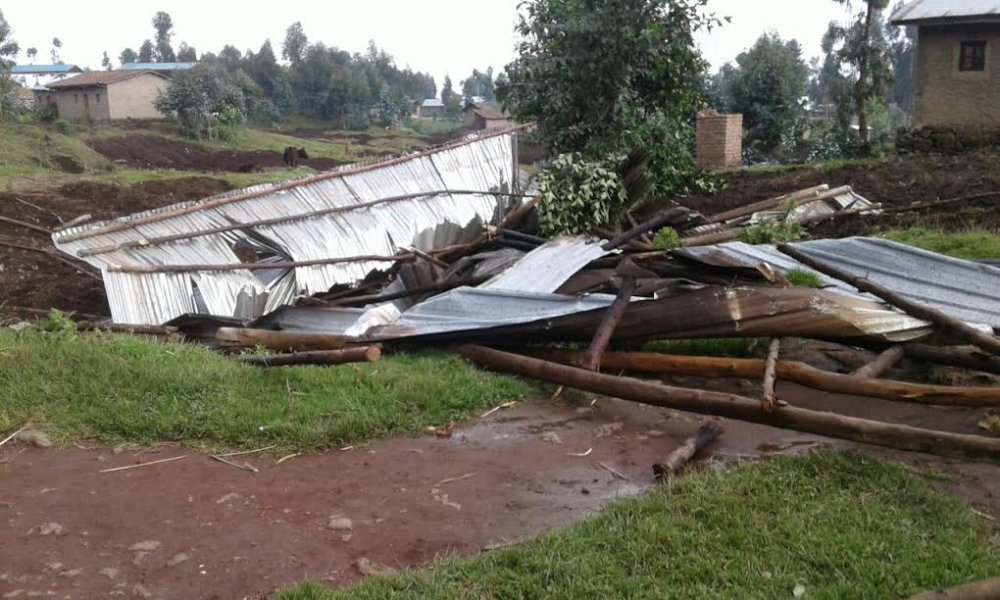
Statistics released by the Ministry during a press conference held today indicate that more disasters left more than 177 people injured and 4095 houses destroyed.
Among others, disasters took lives of 167 livestock, destroyed 163 classrooms, one health center, six roads, 49 churches, 11 bridges, 15 administrative offices, three water distribution lines, 60 electricity distribution lines, three markets, and one factory.
Rwamagana district had the largest number of residents who died of disasters totaling 15 followed by Ngororero with eight people while Rusizi, Kirehe and Nyanza districts recorded a big number of injuries.
Kirehe district has the largest number of destroyed houses accounting to 1946, followed by Ngororero with 222. Kirehe also recorded the largest portion of destroyed arable land totaling to 5477.5 hectares followed by Ruhango with 202 destroyed hectares.
Landslides, floods, lightning among other disasters took lives of over 200 last year, destroyed infrastructure, killed livestock and crops among other ravages.
MINEMA has recently announced preparations of advanced mechanisms to forecast and alert people from disaster-prone zones to flee before.
During these rainy seasons, MINEMA appeals to the public to take possible measures counteracting disasters by clearing and building waterways, digging ditches, strengthening roofs lest they are shattered by the wind, check the robustness of houses and relocate from risky zones among others.