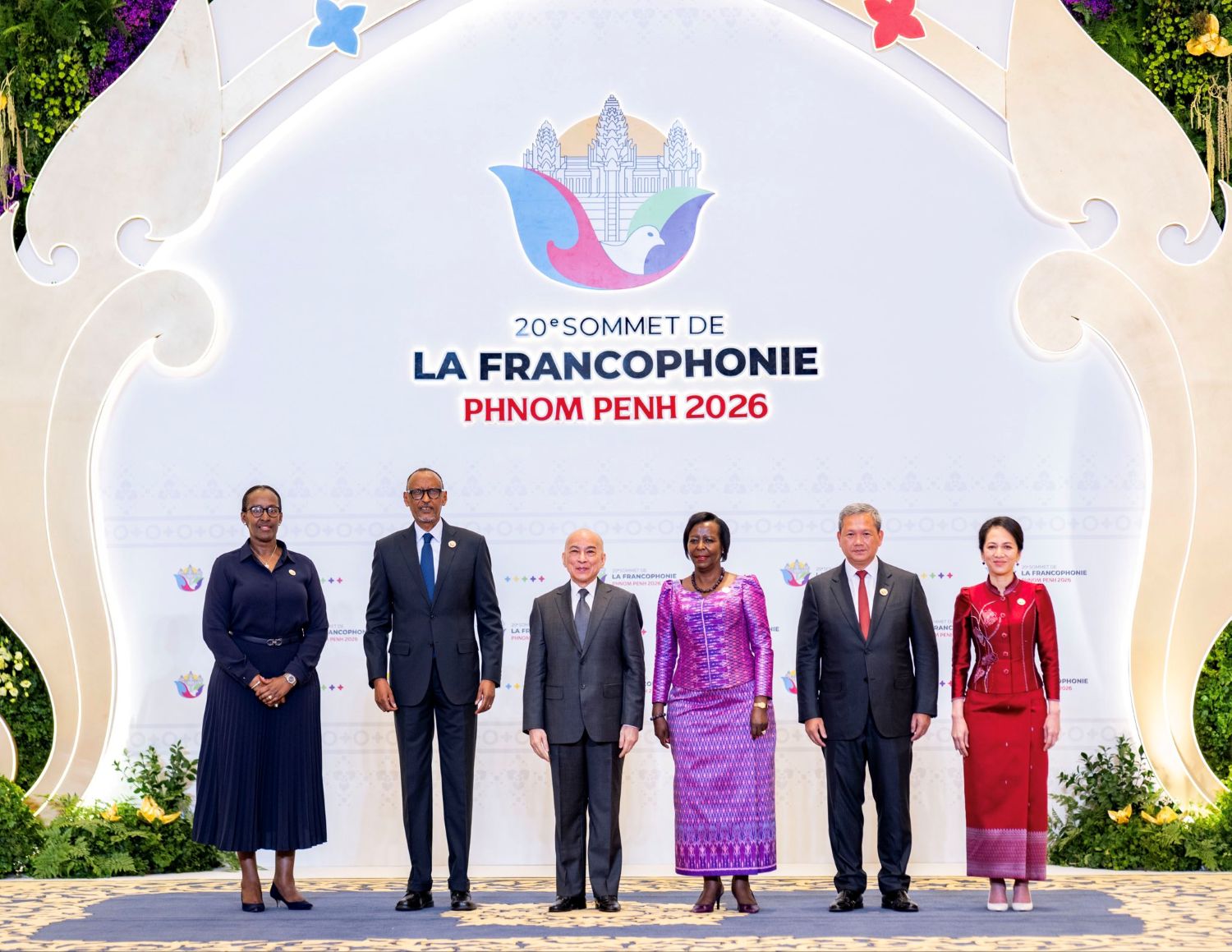
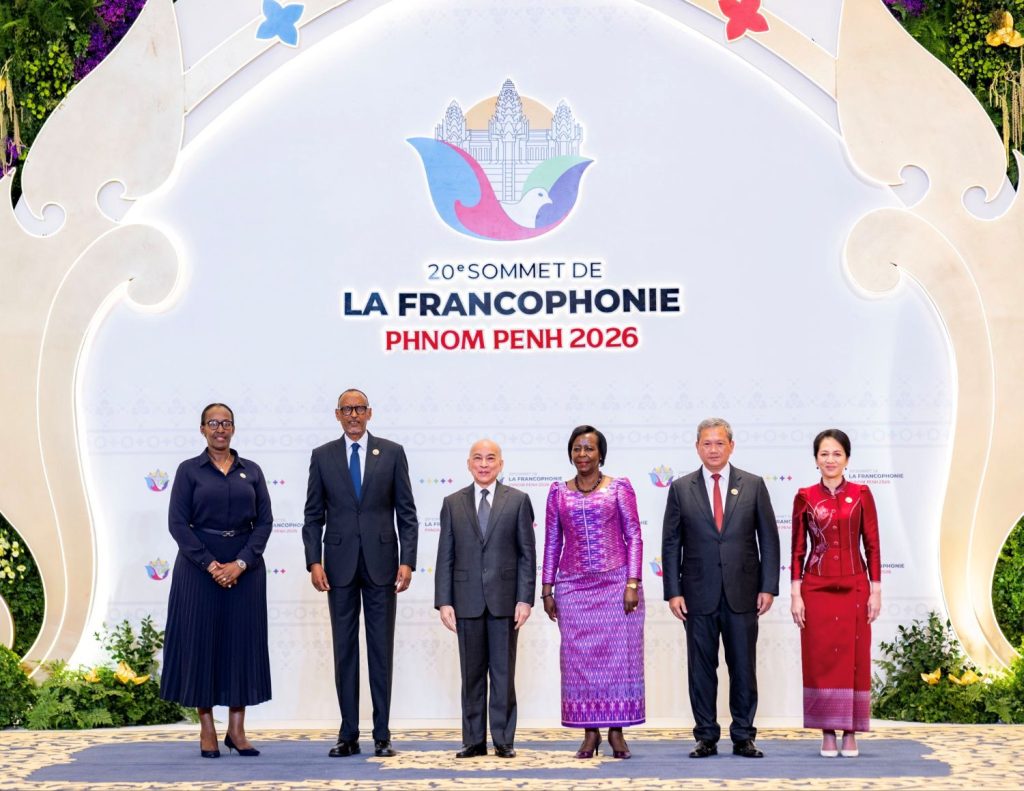
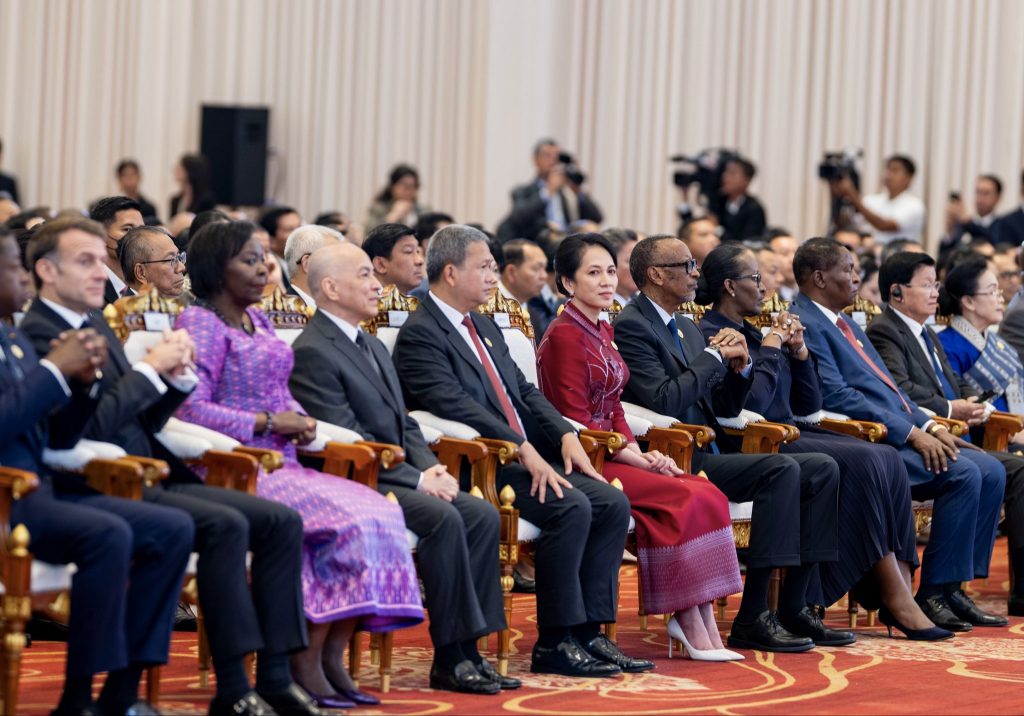
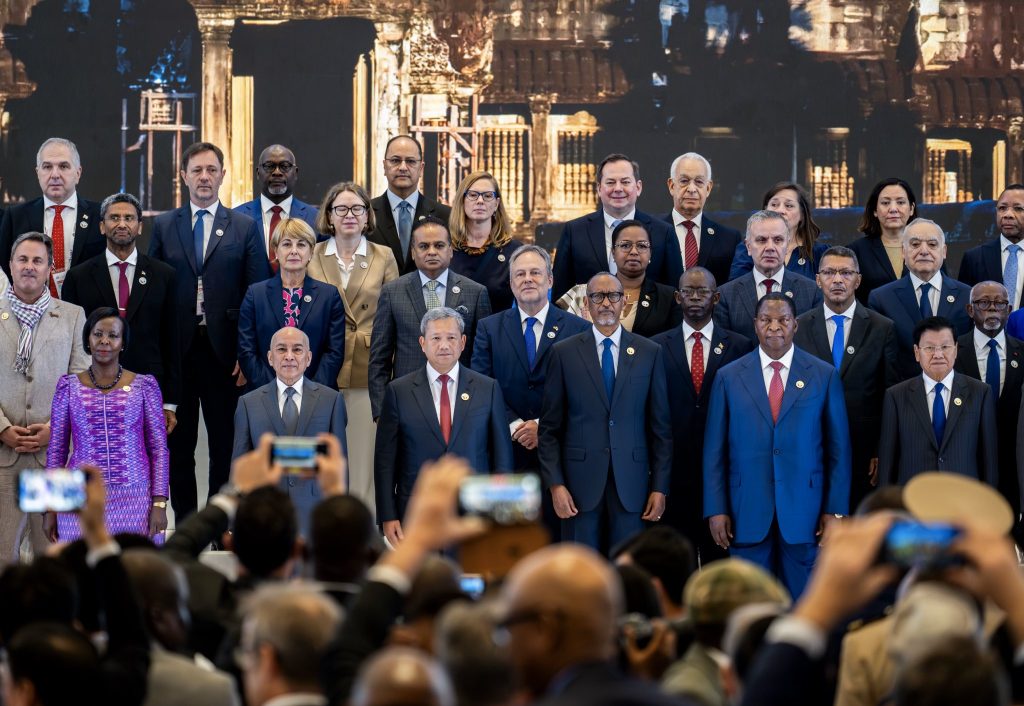
The summit opened at the Chroy Changvar International Convention and Exhibition Centre on Sunday, November 15, with 23 heads of state attending, while other countries were represented by their heads of government.
Those present included Cambodia’s King Norodom Sihamoni, Prime Minister Hun Manet, French President Emmanuel Macron and Secretary-General of the International Organisation of La Francophonie (OIF), Louise Mushikiwabo.
The meeting comes ahead of the November 16 election of the next Secretary-General, in which Mushikiwabo is seeking a third consecutive four-year term.
In her opening address, Mushikiwabo described the Francophonie as an important platform for international political engagement, drawing strength from the geographical and cultural diversity of its members.
She cautioned against turning the organisation into an alliance where members must adopt identical positions on international issues or allowing bilateral disputes to undermine its unity.
“The International Organisation of the Francophonie is not a defensive alliance. The fact that its members are united does not mean that they must have the same perceptions or make the same decisions on every issue,” she said.
She added that the organisation’s strength lies in enabling members to identify shared interests, cooperate on equal terms and turn their differences into collective strength.
Her remarks come amid diplomatic tensions over her re-election bid, following reports that France had asked Rwanda to withdraw her candidacy in favour of former Romanian Prime Minister Dacian Cioloș.
Rwanda’s Minister of Foreign Affairs and International Cooperation, Olivier Nduhungirehe, confirmed that France had made the request but rejected the suggestion that Rwanda should comply.
Speaking to Rwanda Broadcasting Agency (RBA), he maintained that Rwanda has the sovereign right to nominate its candidate.
“Rwanda is not a country that takes orders from another country, no matter how wealthy that country may be. No country has the right to tell another country that has nominated a candidate to withdraw that candidate,” he said.
Nduhungirehe added that member states should first seek consensus but proceed to an election if they fail to agree.
“Those days when one country thought it could make decisions for everyone in the Francophonie are over,” he said.
According to Jeune Afrique, Macron sent President Kagame a message on the night of November 12, proposing that Rwanda, the Democratic Republic of Congo (DRC) and Mauritania withdraw their candidates to leave Cioloș as the sole contender.
The discussions followed a threat by the DRC to leave the organisation if Mushikiwabo secured another term. Kinshasa had nominated Juliana Amato Lumumba but subsequently issued statements indicating a possible withdrawal and support for Cioloș. The statements differed on whether the decision had been formally agreed upon.
Under OIF rules revised in 2022, member states must first seek consensus on the appointment. If they fail, the Secretary-General is elected through a secret ballot, with the candidate receiving the highest number of votes declared the winner. Only the organisation’s 53 full members can vote, although the OIF has 90 members and governments in total, including associate members and observers.
Macron, addressing the summit, called for the Francophonie to strengthen its role in international affairs, describing the French language as an instrument of dialogue, closer relations and respect for international law. He also urged members to avoid divisions and pursue consensus through constructive discussions based on shared interests.
Francophone investments triple in five years
Beyond the leadership contest, the summit is taking place amid growing economic activity across French-speaking countries.
An OIF economic report indicates that investment in Francophone countries reached $301 billion in 2025, up from $96 billion in 2020, representing more than a threefold increase.
The investments contributed to the creation of 212,000 jobs, the highest level recorded in the report. About a third came from companies already operating in French-speaking countries that reinvested in their domestic markets or expanded into other member states.
Examples include a factory in Morocco specialising in the repair and maintenance of Airbus aircraft engines by French group Safran, a household appliance factory in Senegal established by Egyptian company Siltal, and the expansion of a cement plant in Gabon by Moroccan group Ciments d’Afrique.
The organisation nevertheless identified regulatory challenges and investment risks as obstacles preventing some countries from fully benefiting from the opportunities.
At the opening, Mushikiwabo also drew parallels between Rwanda and Cambodia, noting that both countries endured devastating periods of conflict and genocide before embarking on reconstruction.
She recalled Cambodia’s recovery following the Paris Peace Agreements and Rwanda’s rebuilding after the 1994 Genocide against the Tutsi, highlighting their shared experiences of resilience.
King Norodom Sihamoni praised Mushikiwabo’s leadership, citing her integrity and commitment, while she also highlighted OIF efforts to address crises in Haiti and Lebanon through engagement with international institutions.
The November 16 election will be an important moment for Rwanda, which has maintained its support for Mushikiwabo’s candidacy. A victory would give her a third four-year term, extending Rwanda’s leadership contribution to the Francophonie and reinforcing the country’s position in an organisation whose membership spans 90 countries and governments.
Leave a Reply