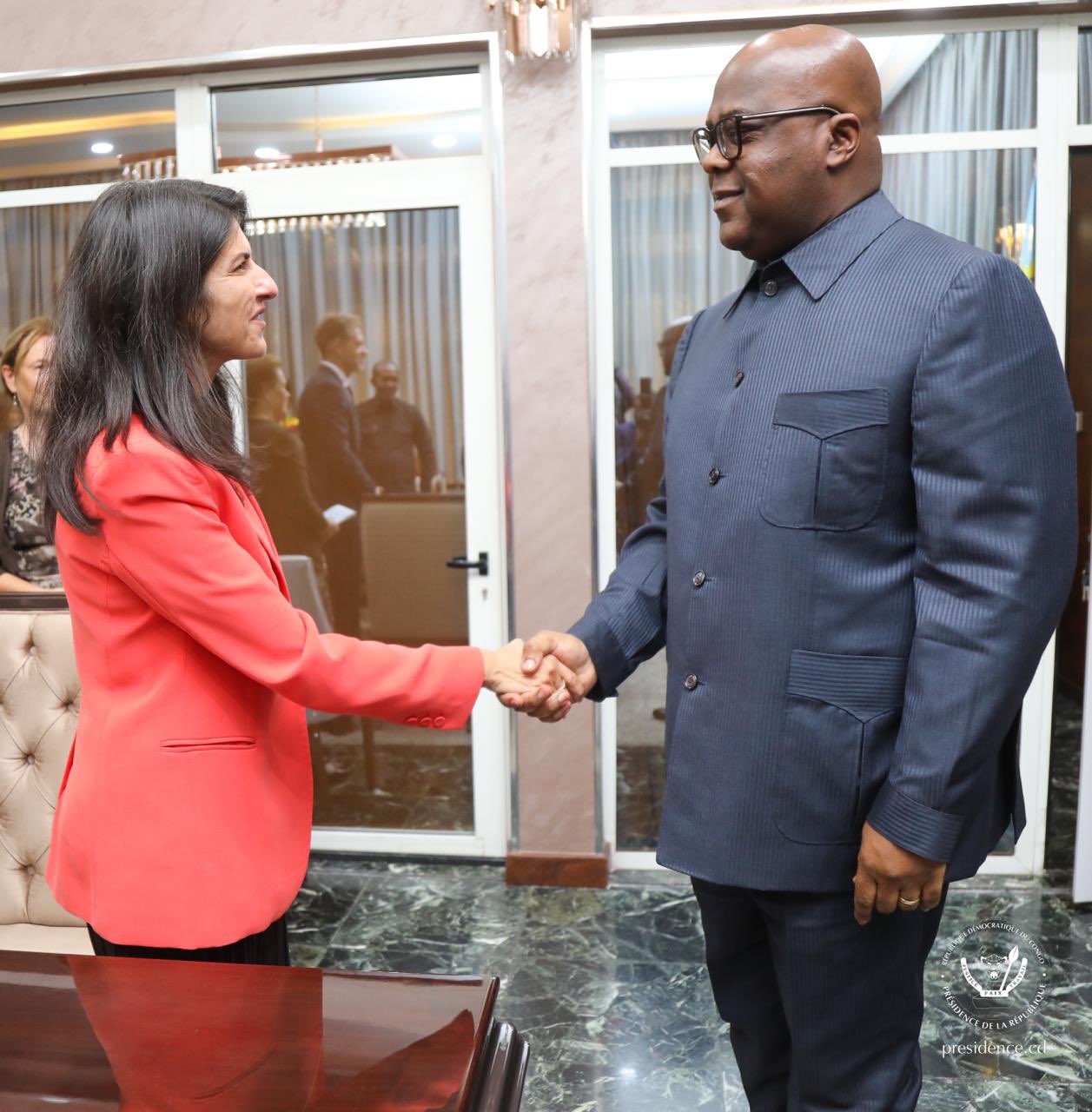
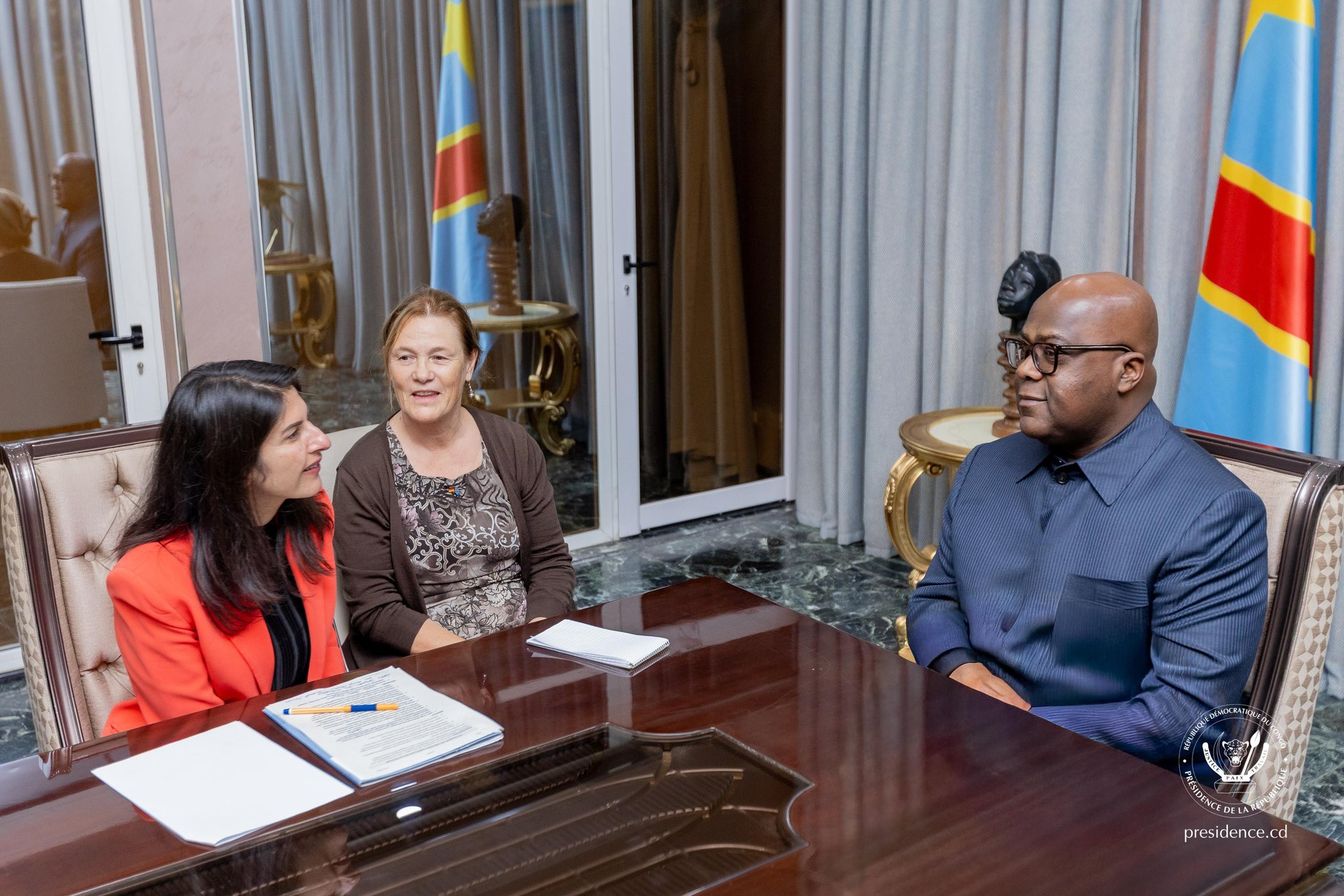
The proposal was made by Serap Güler, Germany’s Deputy Minister for Foreign Affairs, during a meeting with DRC President Félix-Antoine Tshisekedi Tshilombo at the Cité de l’Union africaine on Saturday, October 24, 2026.
According to a statement issued by the DRC Presidency, the discussions focused on restoring peace in the Great Lakes region and strengthening cooperation between Kinshasa and Berlin.
During the meeting, Güler said Berlin’s neutral position could help advance peace efforts.
“I proposed to President Félix Tshisekedi that Germany, which maintains a neutral position, serve as a mediator to convey clear messages and help advance the peace processes,” she said.
The proposal comes amid ongoing diplomatic efforts to resolve the conflict in eastern DRC, with the United States and Qatar facilitating separate initiatives aimed at addressing tensions between Rwanda and the DRC.
It remains unclear whether Germany has formally approached Rwanda about its proposed role in the mediation efforts.
The long-running conflict in eastern DRC remains a major source of tensions between Rwanda and the DRC.
The roots of the dispute are linked to security challenges that followed the 1994 Genocide against the Tutsi in Rwanda, when members of the former Rwandan government forces and the Interahamwe militia, which participated in the genocide, fled to Zaire, present-day DRC.
Some of those who fled later contributed to the formation of the Democratic Forces for the Liberation of Rwanda (FDLR), an armed group that has operated in eastern DRC for decades. Rwanda maintains that the group, which includes individuals implicated in the Genocide against the Tutsi, continues to pose a security threat.
The Congolese government, meanwhile, accuses Rwanda of supporting the M23 rebel movement, which resumed fighting in late 2021 after years of relative inactivity. Rwanda denies supporting the group and maintains that the security threat posed by the FDLR must be addressed to achieve lasting regional stability.
M23 says it is fighting for the rights of communities in eastern DRC, particularly Kinyarwanda-speaking populations, who it says have faced discrimination, exclusion and insecurity.
The conflict escalated in early 2025 when the Alliance Fleuve Congo (AFC)/M23 coalition captured Goma, the capital of North Kivu Province, in January before advancing into Bukavu, the capital of South Kivu Province, in February.
The military advances further strained relations between Kigali and Kinshasa, with the DRC continuing to accuse Rwanda of providing military support to AFC/M23. Rwanda rejects the allegations and maintains that addressing the FDLR threat is essential to resolving the region’s security crisis.
The AFC/M23 coalition recently announced its reorganisation into the Front for the Refoundation of the Nation (FRN), naming former DRC President Joseph Kabila as its leader.
The movement appointed former AFC coordinator Corneille Nangaa, M23 political leader Bertrand Bisimwa and M23 military commander Major-General Sultani Makenga as vice-presidents, bringing the coalition’s political and military leadership under a new structure as it seeks to consolidate its political position and advance its stated objectives in the DRC.
Leave a Reply