The newly identified species, Yuezhuornis yangyuanensis, lived during the Late Jurassic period, approximately 150 million to 148 million years ago.
Researchers say its unusual combination of bird-like bones and features associated with predatory dinosaurs provides evidence that early bird evolution followed more diverse paths than scientists had understood.
The fossil was discovered in the Zhenghe Fauna, a fossil-rich area in Fujian Province, by researchers from the Institute of Vertebrate Paleontology and Paleoanthropology of the Chinese Academy of Sciences and the Fujian Institute of Geological Sciences.
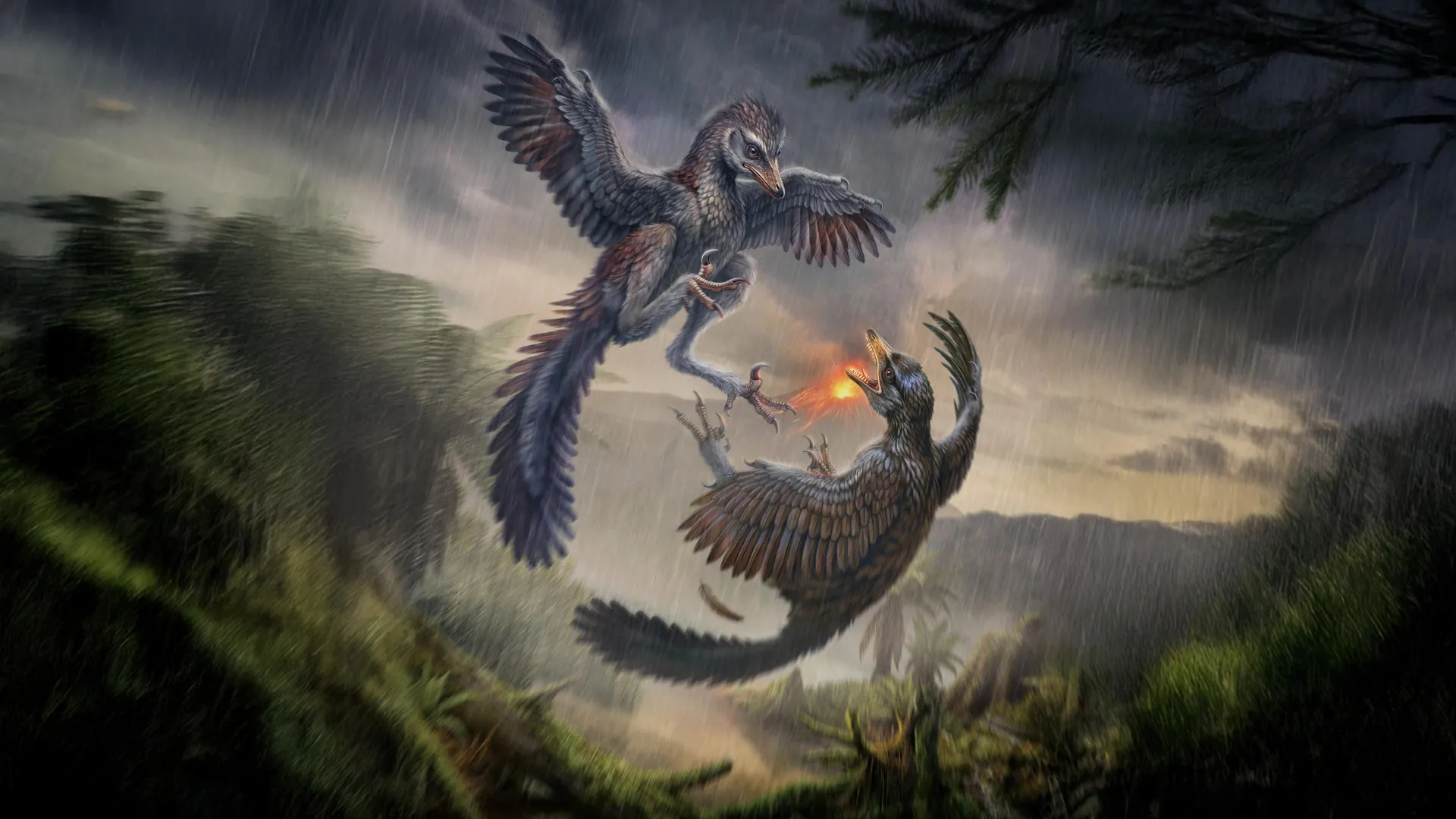
According to a study published in the journal Nature, the crow-sized animal had closely spaced, serrated teeth resembling those of small meat-eating dinosaurs.
It also possessed a curved, sickle-shaped claw on its second toe, a feature associated with predatory dinosaur groups closely related to birds.
“When we examined Yuezhuornis, we were struck by its extraordinary mix of features,” said Min Wang, the study’s corresponding author.
“It possesses bird-like pelvic and hindlimb structures yet retains the specialized predatory foot and teeth of a small meat-eating dinosaur. It shows us that early bird evolution was far more complicated than we previously realized,” Wang added.
Researchers analysed the fossil’s skeletal proportions and compared them with those of other prehistoric animals to determine how it may have moved.
The results showed that its limb proportions resembled those of modern ground-dwelling birds and certain prehistoric relatives of birds.
This suggests that Yuezhuornis was adapted to life on the ground and was probably unable to fly.
The researchers describe the species as the earliest known example of a bird lineage losing its ability to fly, indicating that flightlessness emerged among early birds much earlier than previously recognised.
To establish its evolutionary position, scientists used two analytical methods to compare anatomical characteristics and estimate relationships among prehistoric species.
Both approaches placed Yuezhuornis within Avialae, the evolutionary group that includes modern birds and their closest extinct relatives.
The findings suggest that early birds were not simply evolving towards increasingly efficient flight. Instead, different species were adapting to distinct environments and lifestyles, including those suited to life on land.
Researchers say further discoveries from the Zhenghe fossil deposits could help clarify how early birds diversified and developed the wide range of forms seen throughout their evolutionary history.
Leave a Reply