The patient, a Kenyan man who had lived in the Democratic Republic of Congo (DRC) for several years, travelled from the DRC through Uganda before arriving in Nairobi on October 3. He went directly to hospital after reaching the Kenyan capital and died on Monday.
Kenya’s Health Ministry and international health agencies are now tracing people who had contact with him, including relatives, health workers and passengers who travelled on the same flight.
WHO Representative to Kenya Dr Neema Rusibamayila Kimambo said about 10 of the patient’s relatives had been identified and placed under quarantine. Twenty-one health workers who treated him, as well as laboratory staff and others, have also been contacted.
Authorities are working with the airline to trace about 23 passengers and four crew members who were on the flight from Entebbe to Nairobi.
The Africa Centres for Disease Control and Prevention (Africa CDC) is also supporting the investigation, amid questions about how the patient travelled through several locations while reportedly sick for about a month without being detected.
Africa CDC Director General Jean Kaseya told the BBC that the patient travelled from Buta in northern DRC to Kisangani, flew to Beni, then travelled by road to Uganda before flying to Nairobi.
“What symptoms was he presenting with? Why was he not detected?” Kaseya asked.
Kenya’s health ministry official Patrick Amoth said the patient may have taken medication that masked his symptoms during screening. Uganda’s health ministry has also said the man had a normal temperature when he departed the country and spent less than 24 hours there.
Kaseya said temperature checks alone were not sufficient to detect Ebola because medication can suppress fever, while rapid diagnostic testing is not currently available at border points.
Kenyan doctors have also raised concerns about screening at border crossings and the country’s main airport, with Dr Dennis Miskellah of the Kenya Medical Practitioners, Pharmacists and Dentists Union describing lapses in the system.
Kenyan authorities have intensified surveillance at airports and border crossings and say the country is prepared to detect, isolate and manage suspected cases. More than 650,000 travellers have been screened and 267 samples tested, according to the presidency.
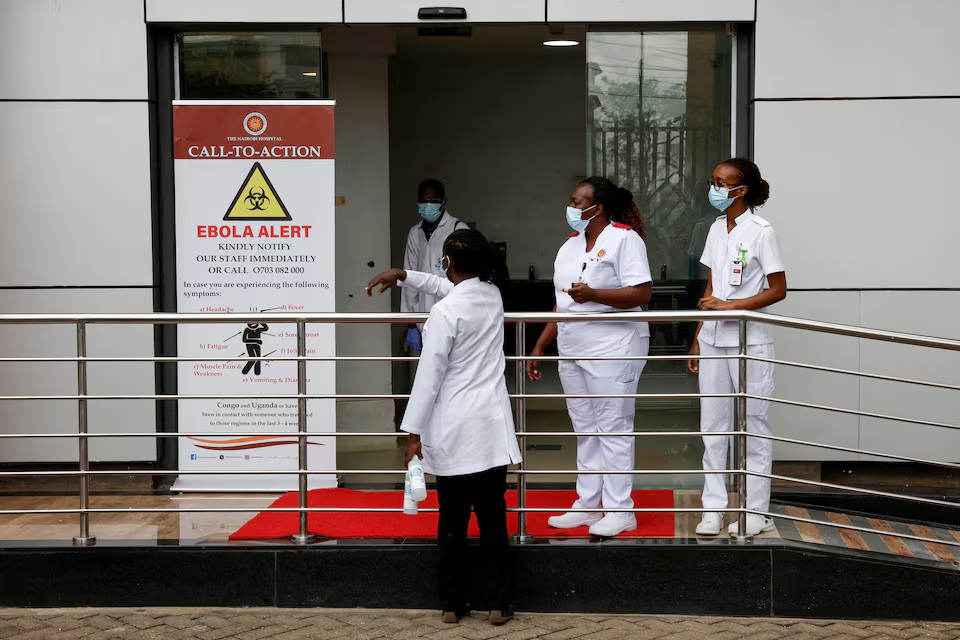
Four hospitals have been designated to manage Ebola patients, including Nairobi Hospital, where the first patient died.
WHO has urged people not to panic, stressing that Ebola spreads through contact with bodily fluids from an infected person. Dr Kimambo said the coming days would be critical, with authorities focusing on identifying and quarantining contacts to prevent community transmission.
The current outbreak in the DRC involves the Bundibugyo species of Ebola, a relatively rare strain with no licensed vaccine or treatment specifically targeting it. As of October 5, the DRC had recorded 8,665 confirmed cases and 4,178 deaths.
Leave a Reply