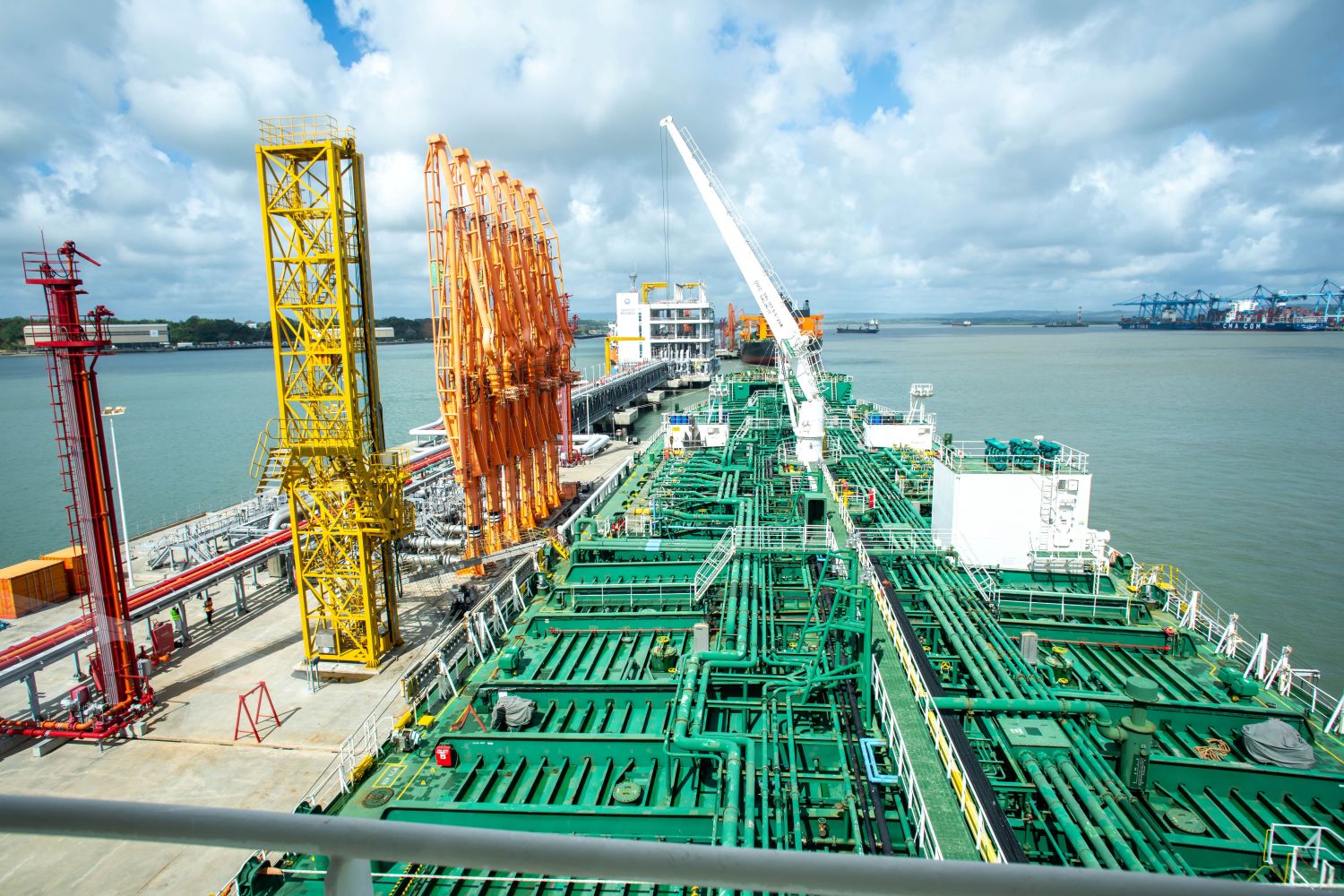
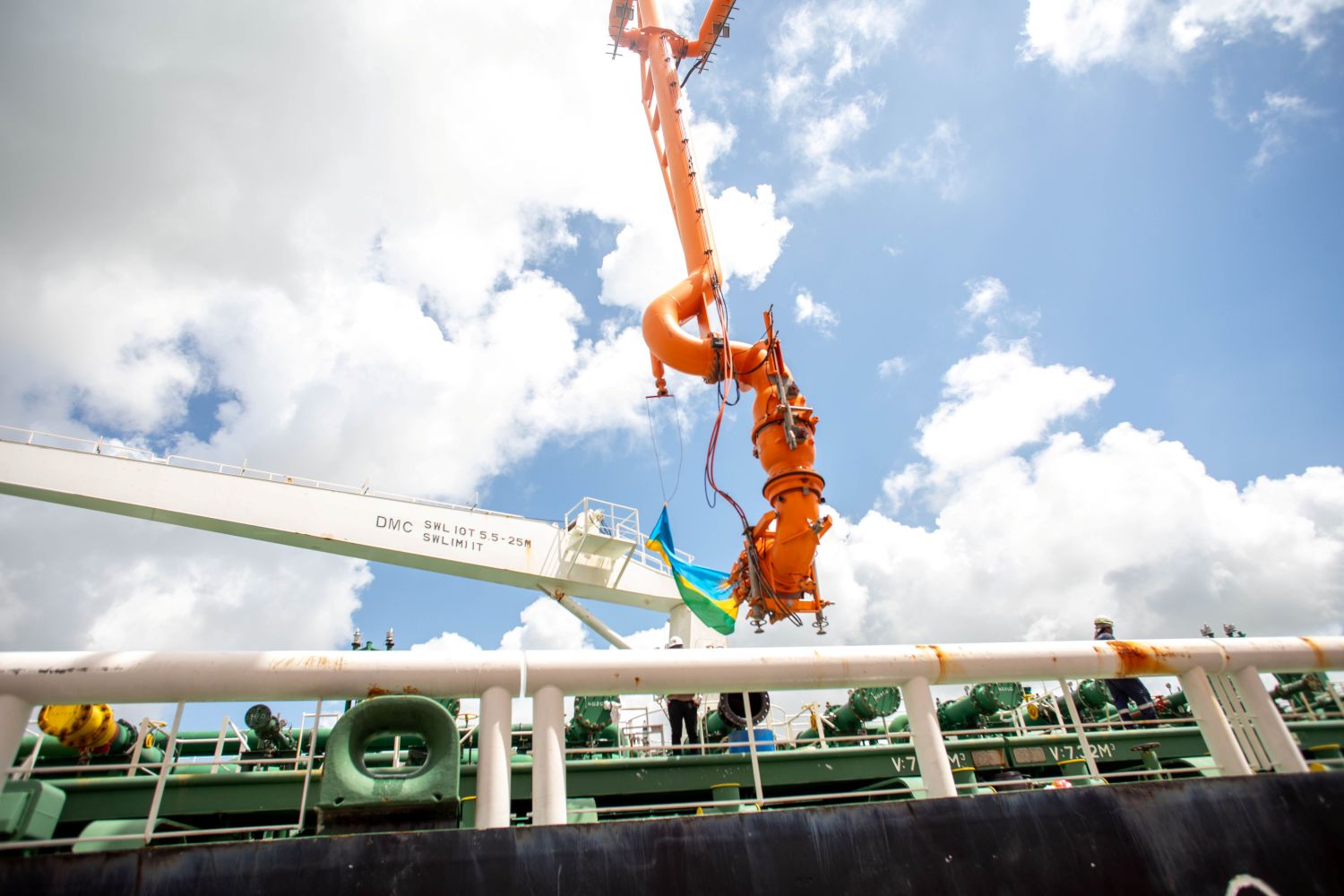
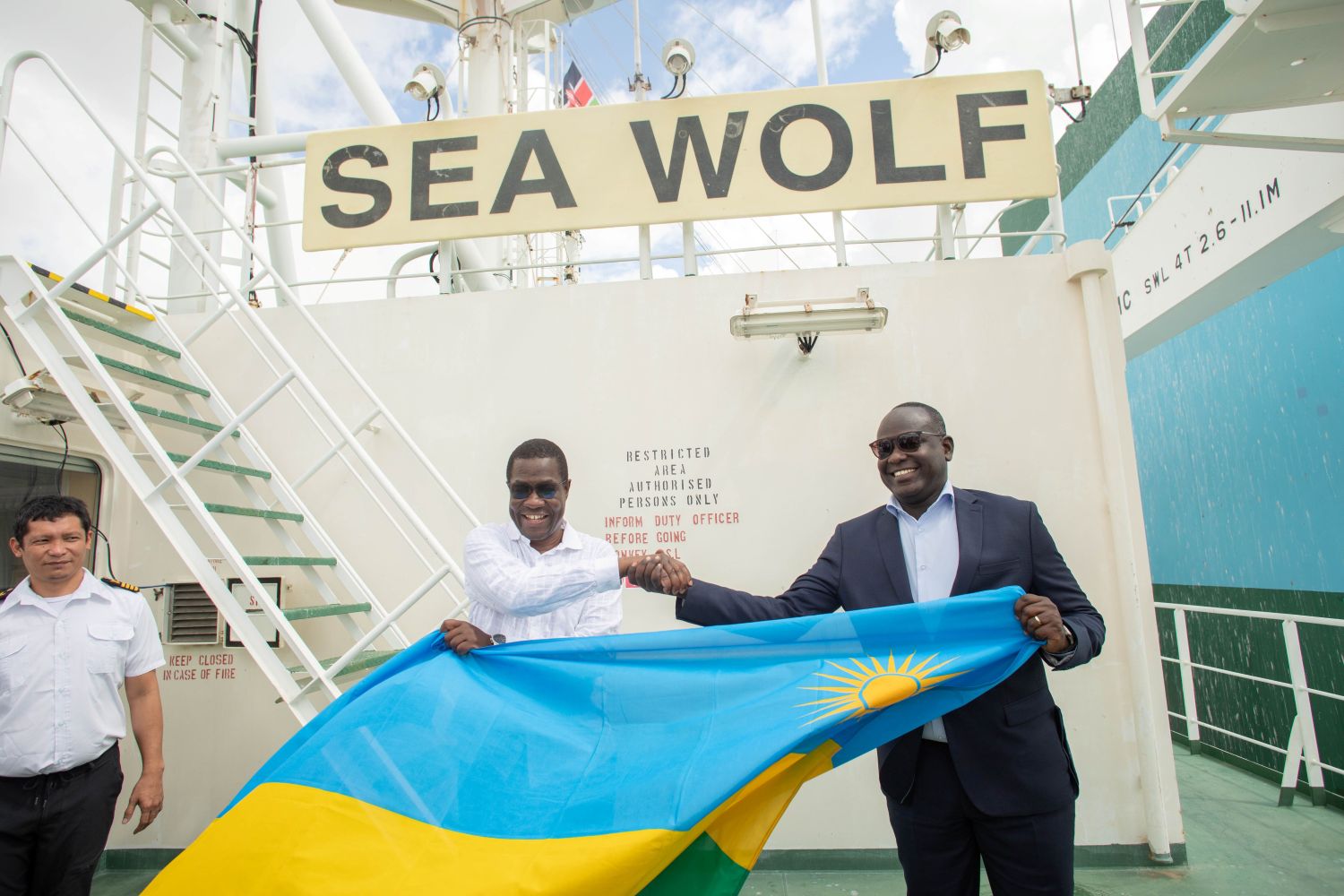
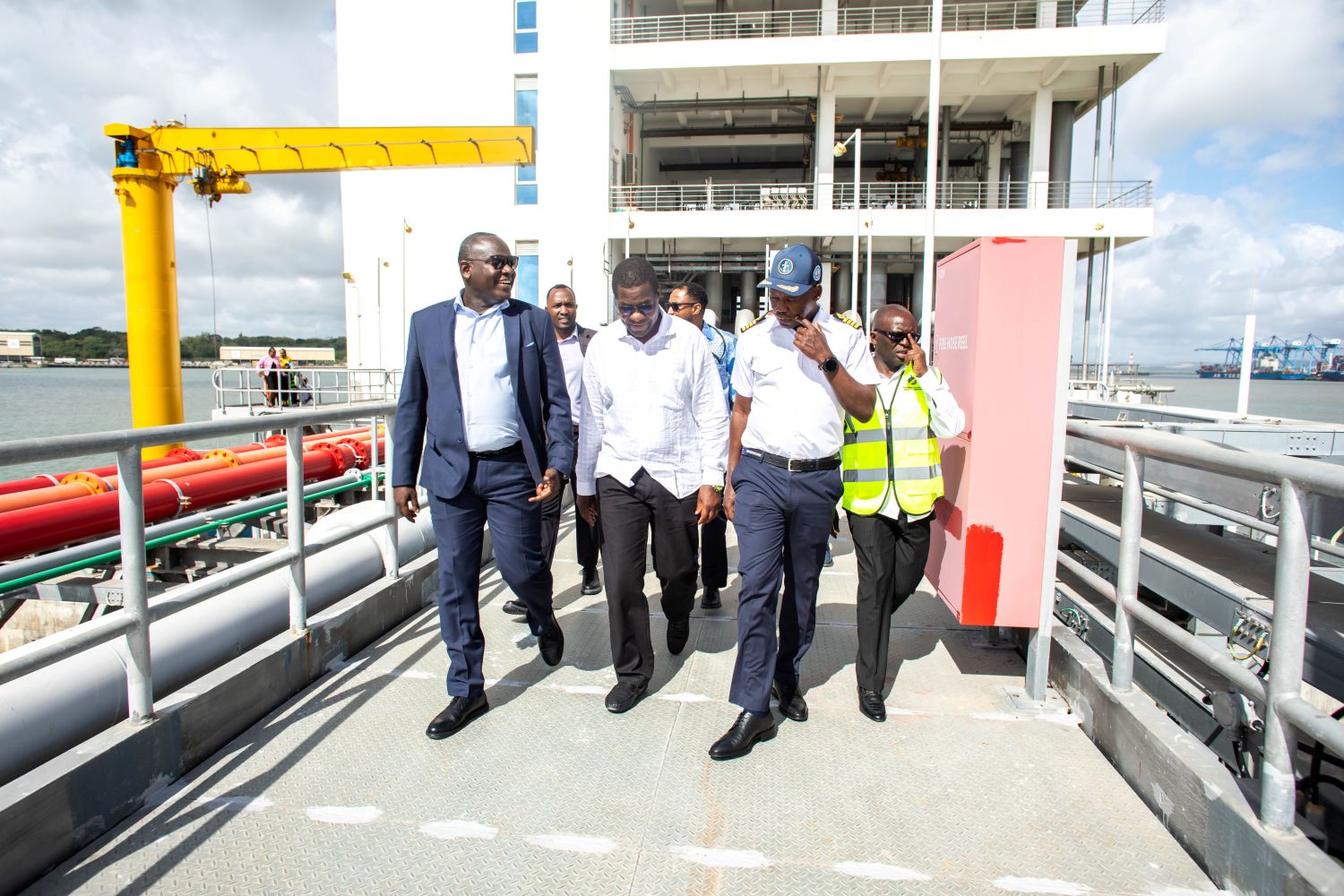
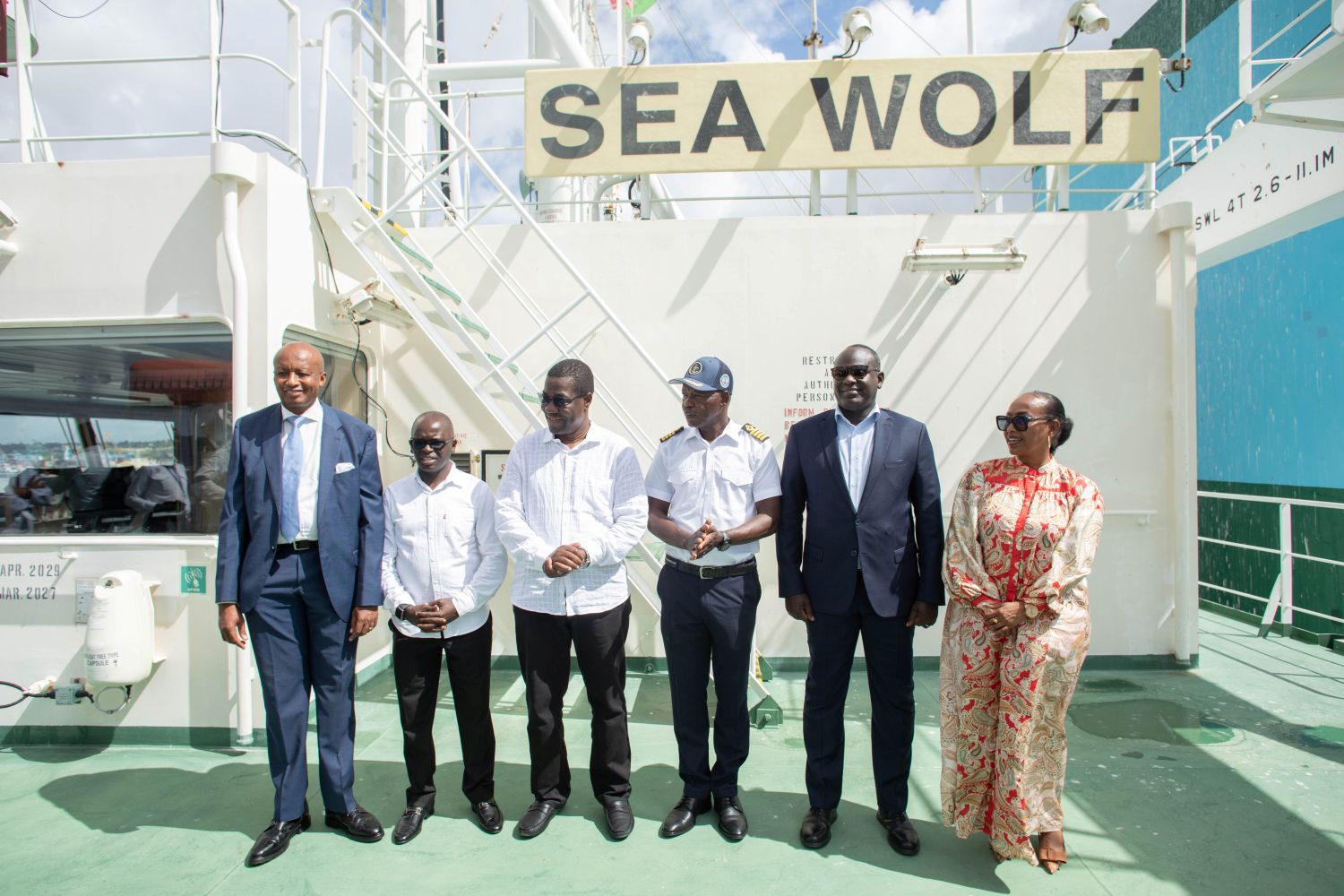
The MT Sea Wolf arrived at Kenya Pipeline Company’s Kipevu Oil Terminal 2 on Tuesday, September 29, carrying 40,000 metric tonnes of refined petroleum products for the Rwanda National Energy Company (RNEC).
The cargo is the first shipment under a framework agreed by the governments of Rwanda and Kenya to facilitate direct government-to-government petroleum imports through Kenya.
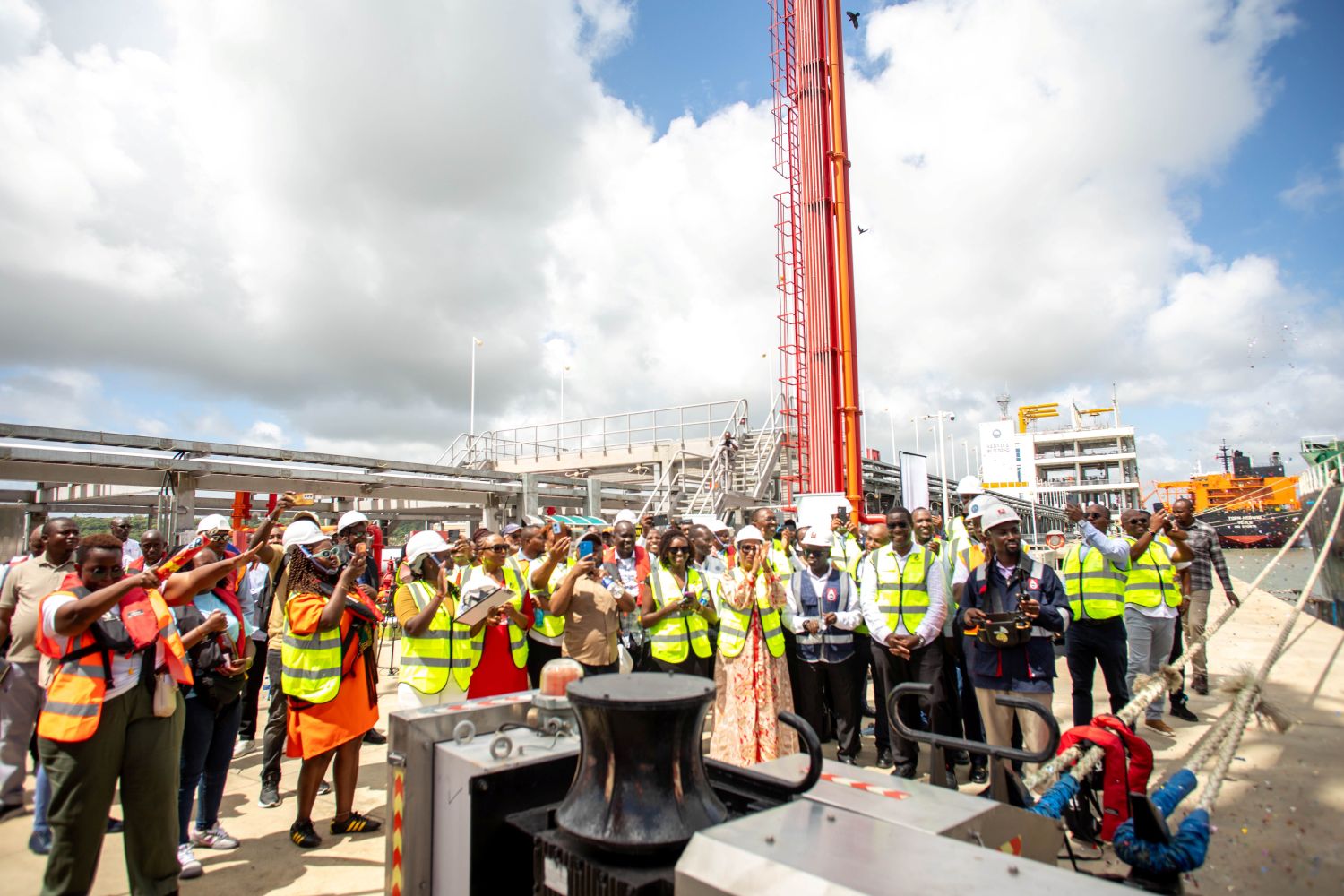
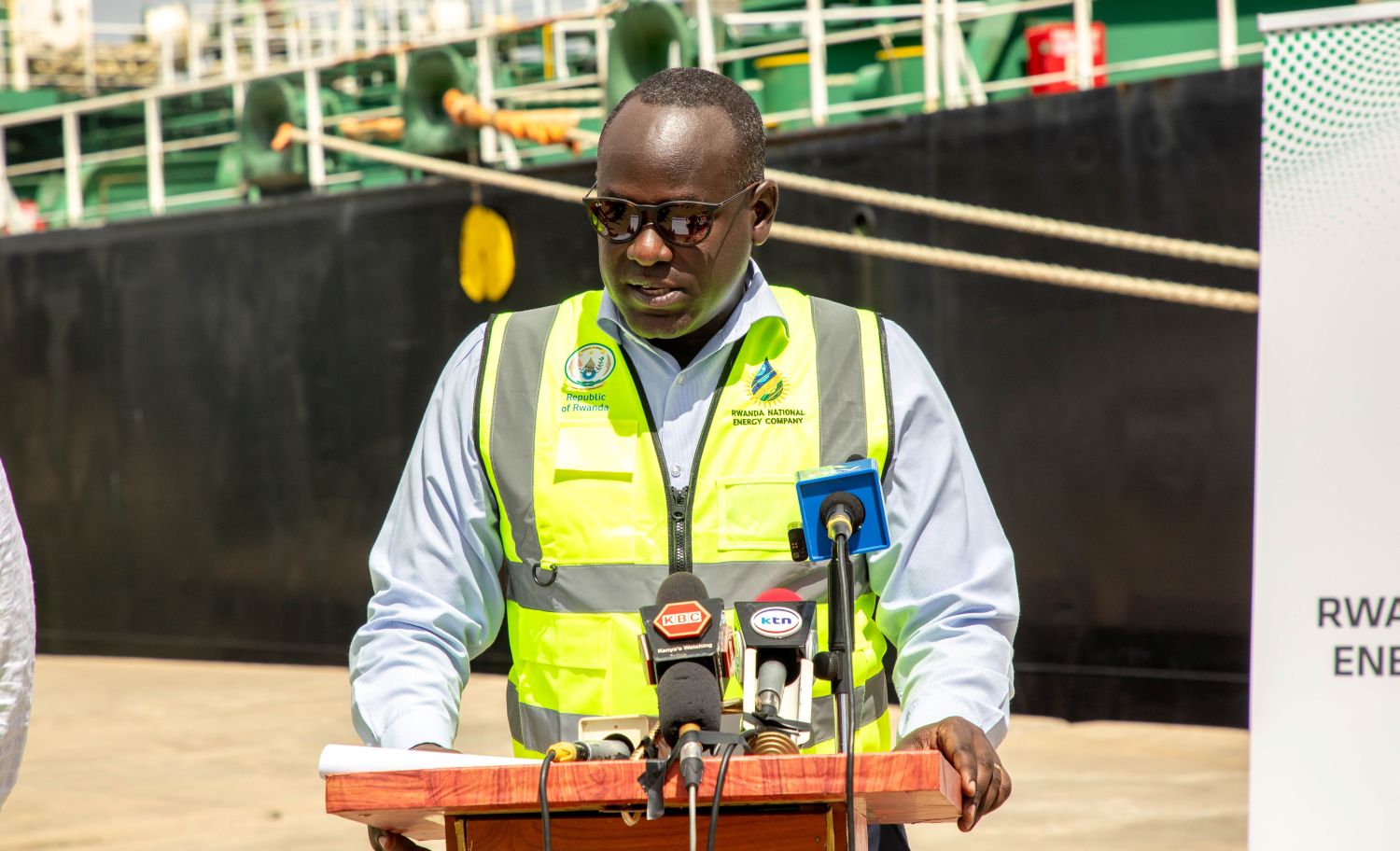
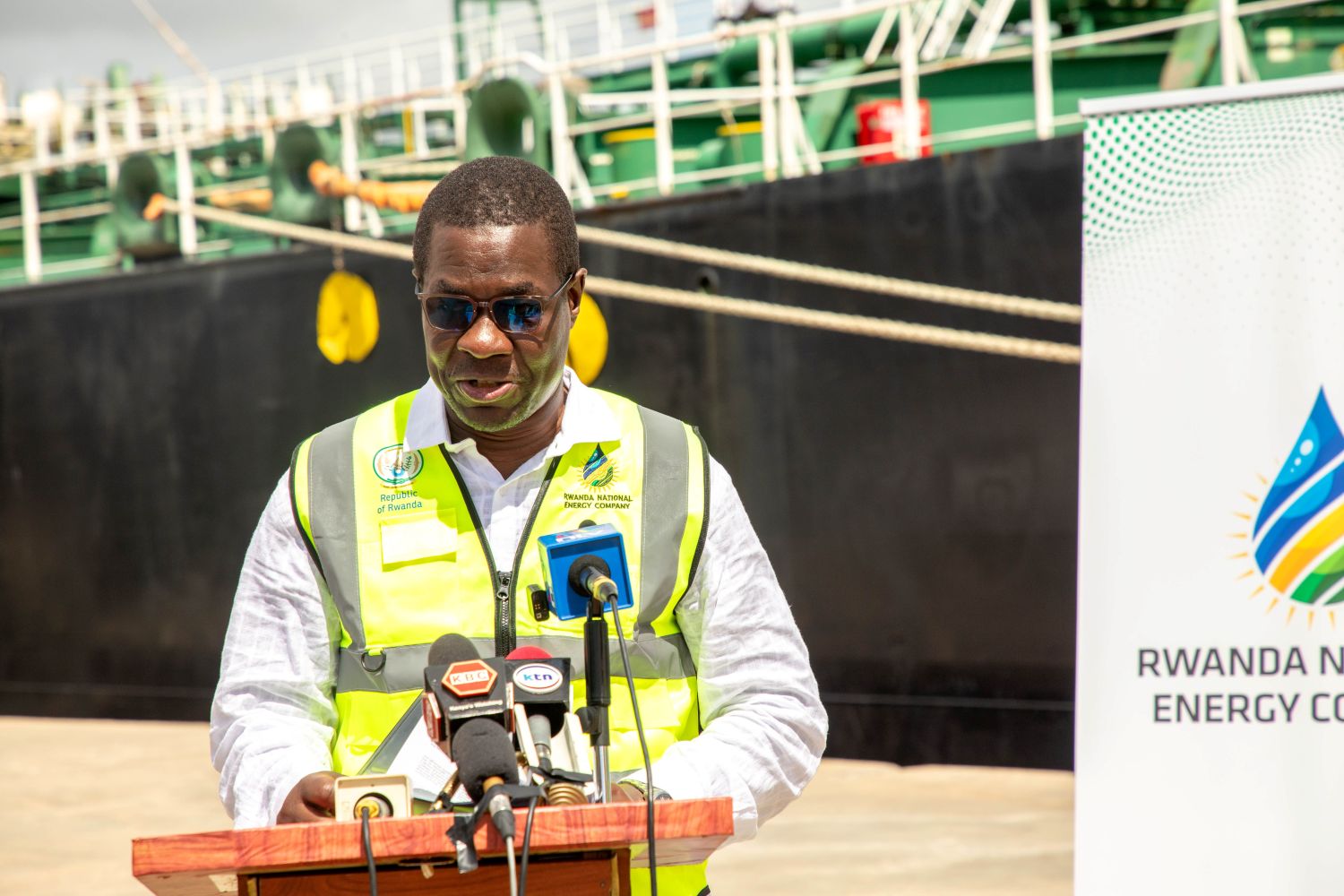
Kenya’s Cabinet Secretary for Energy and Petroleum, James Opiyo Wandayi, and Rwanda’s Minister of State in the Ministry of Infrastructure, Armand Zingiro, presided over the ceremony to formally flag in the vessel and activate the route.
“MT Sea Wolf’s arrival, carrying the Rwanda National Energy Company’s maiden cargo of 40,000 metric tonnes of refined petroleum products, close to a full month’s consumption for Rwanda, confirms that Kenya is ready to be Rwanda’s gateway to the world energy markets,” Wandayi said.
The framework is based on a Memorandum of Understanding signed by Kenya’s Ministry of Energy and Petroleum and Rwanda’s Ministry of Trade and Industry on June 29, 2026.
It also includes a Tripartite Agreement involving the two ministries and RNEC, as well as a Transport and Storage Agreement between Kenya Pipeline Company and RNEC covering the transportation, storage, scheduling and handling of Rwanda-bound petroleum products.
Zingiro said the arrangement would help Rwanda diversify its fuel import routes and reduce exposure to disruptions affecting international shipping and global oil markets.
“Rwanda is a landlocked country that imports all of its petroleum products,” Zingiro said. “Our Government’s response has been deliberate, to diversify our import routes and reduce our exposure to any single corridor or supplier.”
The Kenya arrangement will allow Rwanda to use the country’s port, pipeline and storage infrastructure to move petroleum products from Mombasa towards the Rwandan market, while supporting the expansion of Rwanda’s strategic fuel reserves.
For Kenya, the deal is expected to increase petroleum volumes transported through the Northern Corridor. Wandayi said the framework could grow volumes destined for Rwanda through the corridor tenfold over the coming years.
He described the arrangement as a long-term partnership that would strengthen Kenya’s role as a regional logistics and energy transit hub.
The two governments said the deal supports regional integration under the East African Community and the African Continental Free Trade Area, while improving supply-chain efficiency and strengthening energy security.
Kenya also plans to provide Rwanda with additional supply options in the future, including finished petroleum products from the planned Lamu refinery, according to Wandayi.
The Mombasa arrangement complements Rwanda’s other new petroleum supply route through Tanzania’s Port of Tanga. In July, a 40,000-tonne shipment arrived at Tanga under an agreement between RNEC and Gulf Bulk Petroleum Tanzania, marking the start of another direct fuel import corridor for Rwanda.
The two routes are part of Rwanda’s strategy to diversify petroleum supply and reduce reliance on a single import corridor.


Leave a Reply