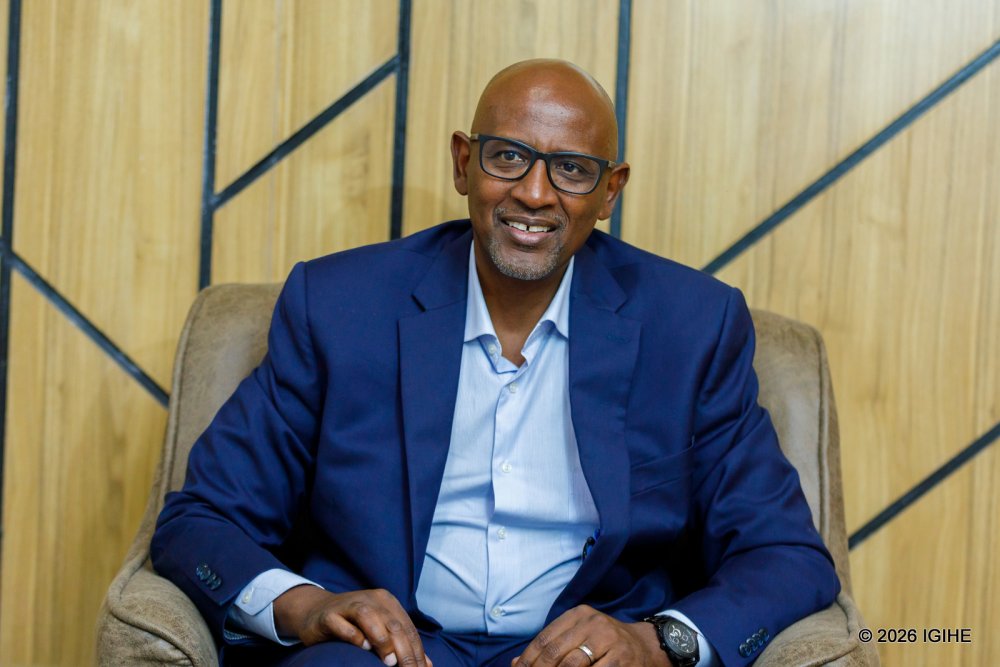
In an interview with IGIHE, Nsengimana said improving the quality of education remains his main priority after two years at the Ministry of Education, building on efforts that have expanded access to schooling.
“Improving the quality of education is the area in which I have committed myself to delivering results,” he said.
Among the changes introduced are adjustments to the curriculum in the first three years of primary school, new Learning Pathways in secondary education and efforts to improve how examination results are communicated.
The ministry is also working to reduce repetition. Nsengimana said the repetition rate among pupils in the first three years of primary school has fallen from about 30% to 20% following the introduction of a programme designed to improve learning outcomes.
Teachers given two years to improve English
English remains a major concern because it is the language of instruction in Rwanda’s schools. Nsengimana said teachers must improve their proficiency to ensure they can effectively teach the subjects assigned to them.
“We found that many teachers were not at the level they should be,” he said, explaining that a two-year programme was introduced last year to improve teachers’ English skills.
He warned that the requirement would have consequences for those who fail to improve.
“Within those two years, we hope that all of them will know English, but those who do not may lose their jobs,” Nsengimana said.
The ministry is also raising the academic qualifications of primary school teachers, with plans to move them progressively from secondary-school level to university-level qualifications.
No repeat cheating arrangement
The minister also defended the decision to allow 7,188 students whose national examinations were compromised by adults to retake the tests.
He said the students had been cheated by adults responsible for administering and protecting the examinations, rather than initiating the malpractice themselves.
“We found that these children were cheated by adults, and those adults are being prosecuted because they betrayed these children,” he said.
Nsengimana said punishing thousands of students by making them repeat an academic year would have been unfair, while allowing them another opportunity to sit the examination would enable them to continue with their education.
However, he stressed that the decision should not be interpreted as setting a precedent.
“This is the first and the last time this will be done,” he said. “Next time, if it happens, the regulations will be followed.”
More than 99% of the affected students reportedly sat the retake examination. Their results are expected on September 11, allowing them to join their colleagues by September 14.
Tackling overcrowding, mathematics and discipline
Nsengimana acknowledged that overcrowded classrooms remain a challenge to education quality. Between 2017 and 2024, the government built 27,500 classrooms, but the ministry continues to add more as resources become available.
“There is no other solution than building classrooms,” he said, adding that in some schools with more than 60 pupils in a classroom, two teachers have been assigned to work together.
He also pointed to improvement in mathematics results, which rose from 23% last year to 50% this year. However, he said the figure was still far from satisfactory.
“I don’t believe that mathematics is too difficult,” he said, arguing that greater attention should be paid to how it is taught and learned.
The new school year also brings stronger expectations on discipline. Students involved in fighting, alcohol, drugs and other prohibited behaviour will face disciplinary measures.
Nsengimana urged parents, teachers and school leaders to reinforce discipline, saying a small number of students should not undermine an entire school.
The ministry has also changed the structure of the school day, seeking to reduce prolonged classroom learning and increase practical activities.
“For example, if you are learning about Rwandan culture, you can go outside, dance and practise it,” he explained, arguing that students learn better when they actively engage with what they are studying.
Rwanda also participated in the Programme for International Student Assessment (PISA) for the first time in 2025, with more than 7,000 15-year-old students assessed on their ability to apply knowledge in real-life situations.
Nsengimana said such assessments will help Rwanda understand whether students are simply memorising information or genuinely understanding and applying what they learn.
“Our goal is to build a knowledge-based economy,” he said.
Leave a Reply