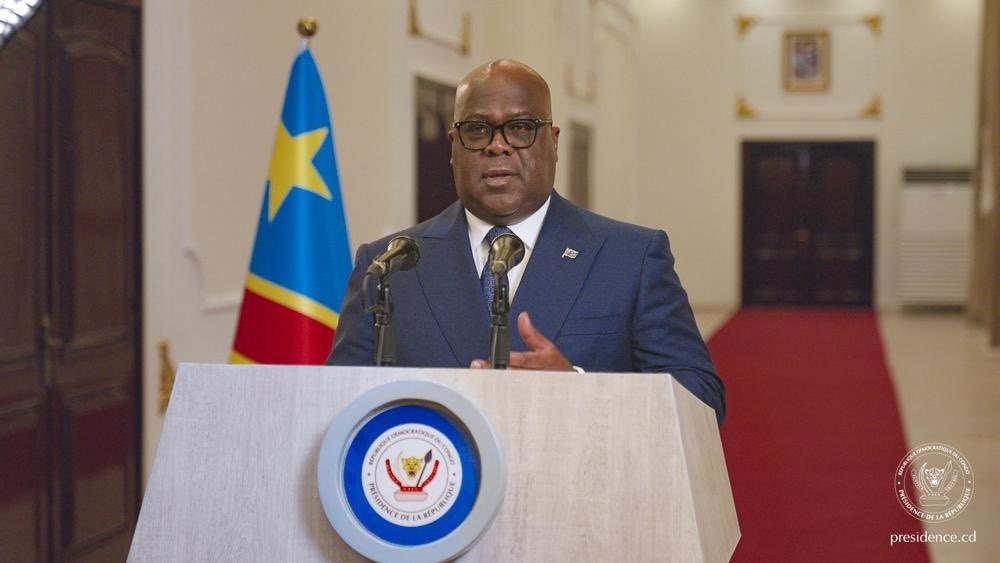
In an address to the nation on August 27, Tshisekedi announced the launch of what he described as an inter-Congolese dialogue aimed at addressing longstanding political challenges, insecurity and divisions, while laying the groundwork for governance reforms.
The process will begin with consultations in the DRC’s 26 provinces before culminating in national-level talks in Kinshasa. Citizens, local authorities, political parties, civil society organisations, traditional and religious leaders and other stakeholders are expected to contribute.
Tshisekedi said the dialogue should produce a “National Pact for Peace, Unity and State Reform”, along with mechanisms to ensure that its resolutions are implemented, unlike previous initiatives that ended without meaningful follow-up.
AFC/M23 kept out
Despite presenting the initiative as a national process for addressing the country’s challenges, Tshisekedi made clear that it would not include the AFC/M23 coalition or other actors he accused of challenging the state through armed action.
He insisted that the national dialogue would not replace the Doha talks, which are focused on resolving the conflict in eastern DRC, arguing that issues related to armed groups, including a ceasefire and disarmament, should be dealt with through that separate process.
“No one can take part in the national dialogue while carrying weapons against the country. No weapon can give its holder greater rights than those granted to a citizen through elections. No military victory can be converted into political legitimacy,” Tshisekedi said.
He said those who have taken control of national territory by force, established what he described as illegal administrations or acted in the interests of foreign powers would be excluded from the talks.
While Tshisekedi said those who renounce violence and respect the law could be allowed to rejoin the national community, he maintained that peace should not mean impunity for those responsible for serious crimes.
Critics question inclusivity
The president’s approach has revived concerns among religious leaders, politicians and other observers who argue that a dialogue meant to address the country’s political and security crisis cannot afford to leave out actors with a direct stake in it.
The Catholic Church and other religious leaders have repeatedly called for an inclusive dialogue bringing together the country’s key political and armed actors, arguing that the DRC’s history has shown the limits of peace processes that exclude major parties.
The National Episcopal Conference of Congo (CENCO) has been among those pushing for broader talks, including the participation of representatives of AFC/M23, Thomas Lubanga’s CRP movement and former President Joseph Kabila.
The Kinshasa government has rejected those calls.
Critics argue that excluding such actors risks turning Tshisekedi’s dialogue into a forum for those already aligned with the political order rather than a genuine attempt to confront the forces driving the country’s crises.
They also warn that sidelining armed groups from one political process while fighting continues in the east may do little to address the realities on the ground, particularly as AFC/M23 controls significant parts of North and South Kivu.
Three months to find answers
The dialogue is expected to last no more than three months, starting with provincial consultations before moving to national-level discussions in Kinshasa.
Participants are expected to include representatives of young people, women, workers, farmers, researchers, the private sector and the Congolese diaspora. Tshisekedi has also called on religious leaders and churches to support the initiative.
But the process begins at a time when the country remains deeply divided, and the conflict in eastern DRC continues, raising questions about whether a dialogue that excludes some of the country’s most consequential actors can produce the unity and lasting peace it promises.
Leave a Reply