The Rwanda Development Board (RDB) has announced that more than 30 experts from different countries have begun studying how two proposed parks could be established: a national park covering islands on Lake Kivu and another encompassing the Rugezi Wetland and Lakes Burera and Ruhondo.
The development comes more than a year after RDB Deputy Chief Executive Officer Juliana Kangeli Muganza told senators that Rwanda planned to establish an island national park by 2028.
If the plans are implemented, Rwanda would have six national parks, adding the two proposed parks to Volcanoes National Park, Akagera National Park and Nyungwe National Park, as well as other protected and tourism areas.
The new parks could also contribute to Rwanda’s ambition of increasing tourism revenues to $1.1 billion by 2029, up from $645 million generated in 2024.
Lake Kivu’s islands
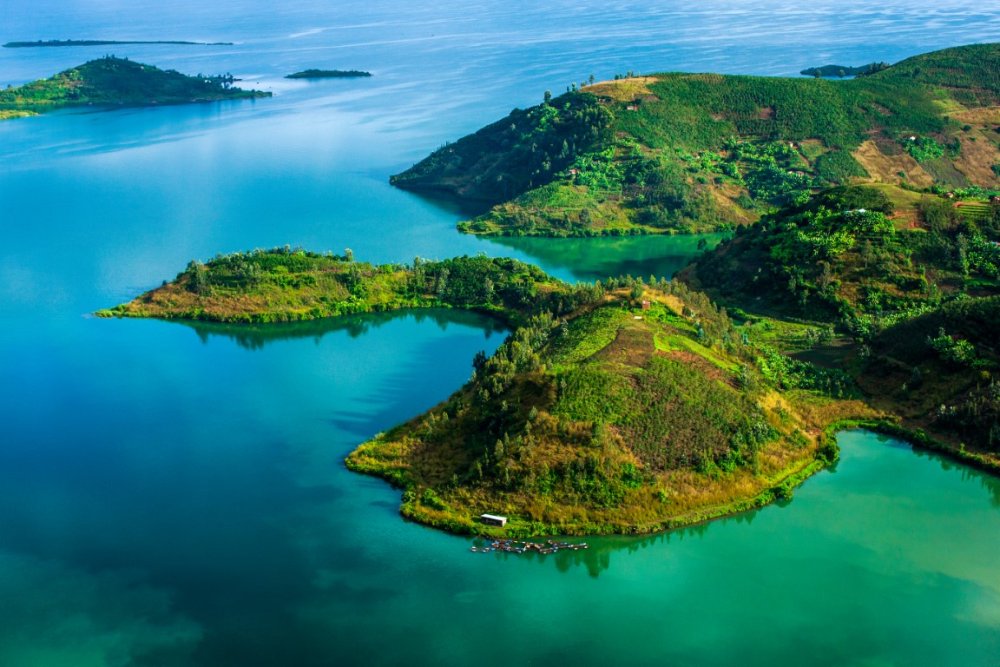
Lake Kivu has 113 islands, including 42 in Rutsiro District. Some of the islands have historical and cultural features that could attract tourists, while others are inhabited or used for activities such as agriculture.
Dr Deo Ruhagaze, Deputy Director of the Rwanda Wildlife Conservation Association (RWCA), said the organisation welcomed the government’s plan to establish island parks and decided to support the feasibility study.
“These will be two separate parks: the Rugezi Wetland and the islands in Lakes Burera and Ruhondo, and the islands in Lake Kivu. Today, we have a team of more than 30 experts studying how the project could be implemented,” he said.
The team includes experts in business, biodiversity, community livelihoods and economics. They are working alongside representatives from the Rwanda Environment Management Authority (REMA), Rwanda Forestry Authority (RFA), Water and Sanitation Corporation (WASAC), RDB and Rwanda Water Resources Board (RWB).
Experts back the island park
Dr Ange Imanishimwe, founder of BIOCOOR, an organisation that has contributed to biodiversity conservation in Rwanda for 14 years, said some Lake Kivu islands have faced increasing human pressure because they lack a clear management framework.
He said designating them as a national park would establish clearer rules for their conservation and sustainable use.
“If the islands in Lake Kivu were brought together under a national park, they would be better protected because there would be clear regulations and a framework for how they could be sustainably used,” Imanishimwe said.
He added that the absence of a clear tourism framework means the country is not benefiting fully from visitors to the islands.
A national park designation, he said, would also help protect vegetation and trees on the islands, which could contribute to reducing greenhouse gas emissions.
Prof Elias Bizuru, a lecturer at the University of Rwanda and biodiversity expert, said research conducted on the Lake Kivu islands had identified species that are not found elsewhere.
“Lake Kivu has 28 fish species and also contains endemic species. Turning it into a national park would bring tourism benefits, biodiversity conservation benefits, benefits for communities and benefits for the country,” he told IGIHE.
Tourism operators also expect the designation to increase visitor numbers.
Niyomugabo Moise, head of a cooperative of 40 members offering tours on Lake Kivu, said they can receive about 1,000 tourists a month during peak periods, around 70% of them from outside Africa. During slower periods, the cooperative receives about 300 visitors a month.
He said tourists are interested in exploring Lake Kivu, its biodiversity and its islands.
“If the Lake Kivu islands become a national park, it would help us grow because, as we have seen elsewhere, parks work with communities. Designating the islands as a park would increase the number of visitors because they would receive greater promotion,” Niyomugabo said.
Do the proposed areas meet the requirements?
Establishing a new national park in Rwanda involves six stages.
The process begins with identifying an area that could qualify as a national park and formally notifying landowners of the proposal. This is followed by environmental and social impact assessments, consideration of any objections or appeals, establishment of the park’s boundaries, and finally the formal designation and establishment of the park in accordance with Article 10 of Law Nº 14/2023 governing national parks and natural areas.
Frank Dushimimana, an RDB official in charge of wildlife conservation and protected areas, said the study of the proposed Lake Kivu island park began about four months ago.
“The study has started, and in the coming days they will also reach out to communities so that the study is guided by what is appropriate for residents,” he said.
The involvement of communities is expected to be an important part of determining how the proposed parks would be managed and how surrounding populations could benefit from conservation and tourism activities.
The uniqueness of Rugezi, Ruhondo and Burera
The second proposed national park would bring together Rugezi Wetland and Lakes Burera and Ruhondo.
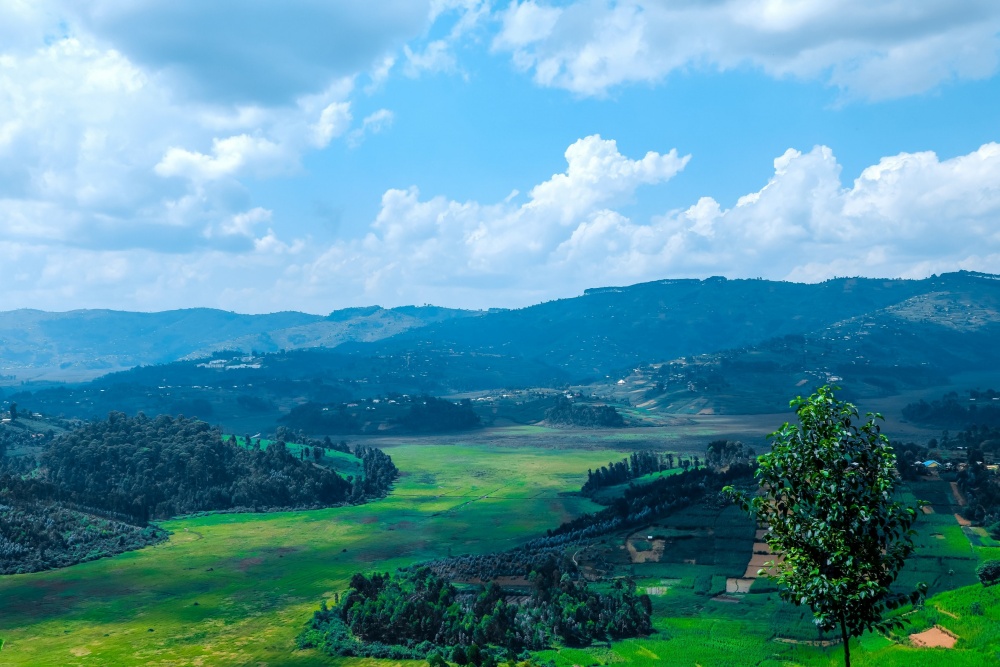
Rugezi is a large high-altitude wetland covering about 6,735 hectares in Burera and Gicumbi districts in northern Rwanda. It lies at an elevation of about 2,100 metres above sea level and is an important source of water flowing towards the Nile River.
The wetland is a major source of water for the Northern Province and also supplies water used by the Ntaruka hydropower plant.
Dr Ruhagaze said the proposed park would have a particular conservation value because Rugezi is home to about half of Rwanda’s population of grey crowned cranes.
The cranes lay their eggs in protected areas of the wetland where there is limited human disturbance. Their population in Rugezi has increased significantly over the past decade, from 71 birds in 2015 to 378.
“If Rugezi, Burera and Ruhondo become a national park, it would contribute to conserving the biodiversity found in the wetland and particularly on the islands of Lakes Burera and Ruhondo, including the grey crowned cranes and the many reptiles found there,” Ruhagaze said.
Lake Burera and Lake Ruhondo, often described as twin lakes, are already among Rwanda’s major natural attractions. Lake Burera alone has nine islands.
Leave a Reply