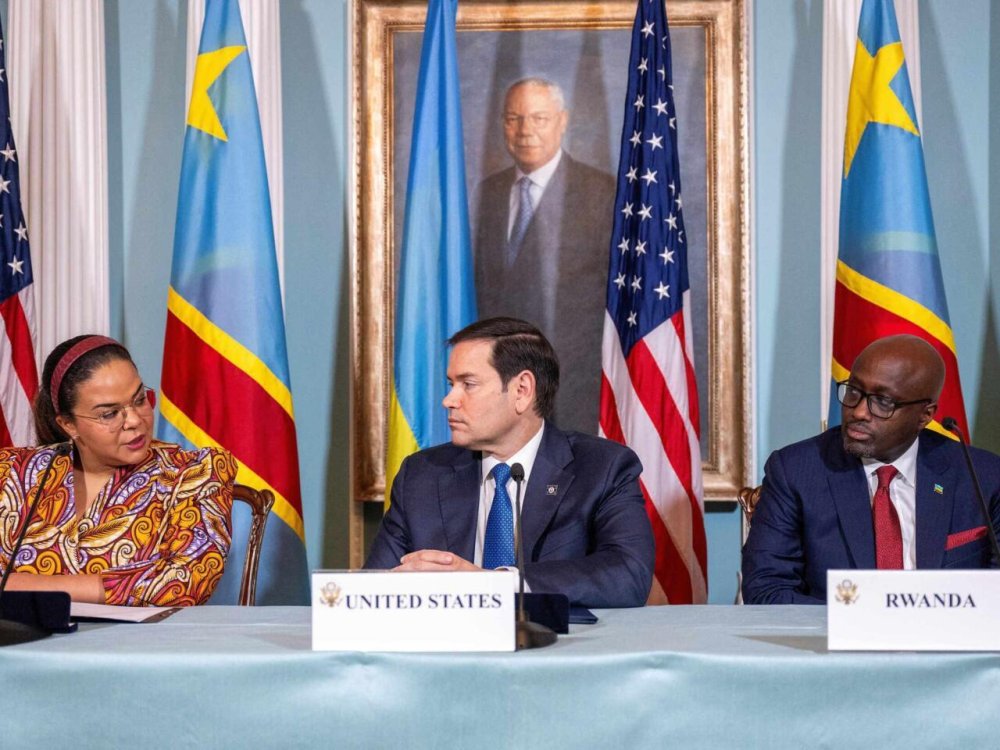
The International Contact Group (ICG) for the Great Lakes region said Kinshasa must ensure that its recently announced disarmament and demobilization arrangement with the militia group is implemented in accordance with obligations under the Washington Agreement signed in June last year and the subsequent CONOPS agreement on the lifting of Rwanda’s defensive measures.
The ICG, chaired by France and comprising the United States, Belgium, Canada, Denmark, the European Union, France, Germany, the Netherlands, Sweden, Switzerland and the United Kingdom, urged the Congolese authorities to immediately develop an operational plan and a realistic timeline for the “effective FDLR neutralization.”
The call comes after the Congolese government announced on July 28 that the FDLR had formally accepted and signed a protocol for voluntary disarmament, demobilization and cantonment.
The ICG stressed that any continued colocation or operational collaboration between Congolese forces and elements of the FDLR would be “fundamentally at odds” with the commitments made in the Washington Accords.
The firm statement comes amid reports that the FDLR group has continued to coordinate militarily with forces fighting the AFC/M23 coalition in North and South Kivu.
The ICG has called on the Congolese government to ensure that the neutralisation protocol is actually implemented and to clarify the mechanisms for combating impunity referred to in the agreement.
It also urged Kinshasa to work with MONUSCO, the UN peacekeeping mission in the DRC, as a key partner in carrying out the process.
The Washington Agreement has placed the dismantling of the militia group formed by individuals involved in the 1994 Genocide against the Tutsi among the key security commitments linked to broader efforts to end tensions between Rwanda and the DRC.
Rwanda has consistently maintained that the FDLR must be dismantled rather than accommodated, and has rejected the arrangement announced by Kinshasa on the grounds that it does not provide for the kind of alternative process proposed by the DRC.
According to Congolese authorities, the arrangement provides for fighters to surrender their weapons, move to secured transit centres and eventually be reintegrated into civilian life.
The FDLR has also proposed that fighters who do not want to return to Rwanda be assisted in resettling in third countries.
In a recent interview with BBC Gahuza, FDLR political spokesperson Cure Ngoma acknowledged that no timeline had been established for disarmament and reintegration.
Ngoma said the FDLR had conditions that it wanted addressed first, including guarantees for the security and dignity of people it describes as Rwandan refugees living in the DRC.
He further said the FDLR’s objective, after those issues were resolved, would be to participate in Rwanda’s political process.
That position has been rejected by Rwanda.
Foreign Minister Olivier Nduhungirehe has dismissed the idea of voluntary dissolution and insisted that no political platform can be opened to the FDLR.
He has maintained that the group must be dismantled as stipulated in the Washington Agreement and that its fighters should be repatriated to Rwanda without additional conditions.
The ICG’s latest statement effectively reinforces the centrality of that agreement, putting the focus back on whether the DRC’s actions will fulfil or undermine the commitments made in Washington.
The group said it was ready to welcome concrete steps by either the DRC or Rwanda to advance the peace process, but urged all parties to the Washington Accords and Doha Framework to implement the commitments they have already undertaken.
It also called on the African Union and other mediation efforts to continue pushing the parties towards implementation.
The group also welcomed the prisoner exchange agreement between the DRC and the AFC/M23 rebel coalition, describing it as an important confidence-building measure, and commended the International Committee of the Red Cross for facilitating a recent transfer of individuals released by Congolese authorities.
Leave a Reply