Implementation means verifiable dismantlement, not theatre.
To understand why Rwanda’s position admits no softening, one must first be honest about what the FDLR is — because the entire case for “dialogue” rests on misdescribing it.
A project, not a party
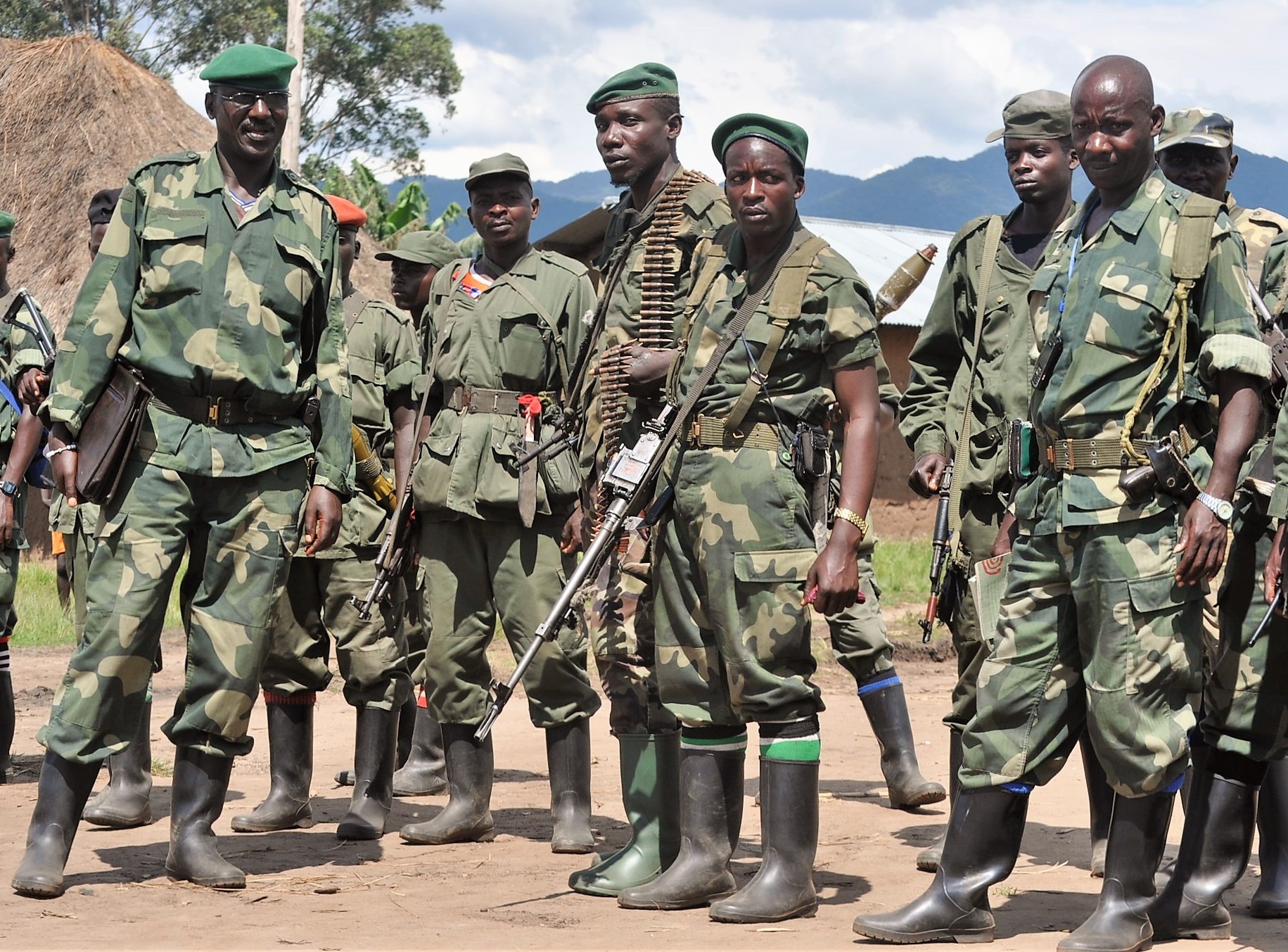
The FDLR is not a rebel movement with grievances that negotiation could address. It is the organisational afterlife of the 1994 Genocide against the Tutsi. Founded in 2000 in the forests of eastern DR Congo, it gathered up the remnants of the ex-FAR — the army that planned and executed the genocide — and the Interahamwe militia that carried out the killing hill by hill. Its founding cadres did not flee Rwanda as dissidents; they fled as perpetrators, taking their command structures, their weapons and their ideology with them.
That ideology has never been retired. Senior FDLR officers have declared, repeatedly and on the record, that their return to Rwanda is conditioned on the country being “cleansed” of its Tutsi population. This is not an accusation inferred from conduct; it is the group’s own stated horizon. An organisation whose political programme is the completion of a genocide does not have a negotiating position. It has a confession.
Dialogue, in any meaningful sense, requires a shared floor: each party recognises the other’s right to exist. The FDLR’s foundational premise is the denial of exactly that right to an entire people. You cannot split the difference with extermination. There is no halfway point between a population living and a population erased, and any mediator who pretends otherwise is not advancing peace — he is laundering genocide ideology into the vocabulary of politics.
The victims Kinshasa forgets are its own
Here is the element too often missing from this debate: the FDLR’s longest-suffering victims, after the Tutsi of Rwanda, are the Congolese themselves. For a quarter of a century this militia has fed on eastern DR Congo, taxing its minerals, burning its villages, and punishing its civilians for every military setback. United Nations investigators have documented its massacres of Congolese villagers and its campaigns of mass rape in the Kivus. UN Group of Experts reporting has likewise detailed the FDLR’s embedding within Congolese armed structures and its battlefield cooperation with Wazalendo militias, the very integration that makes announcements of “voluntary disarmament” ring hollow while its fighters remain on active front lines.
A Congolese official who offers the FDLR a seat at a political table is not merely offending Rwanda. He is telling the survivors of the militia’s Congolese atrocities that the men who did it have been promoted from criminals to counterparts.
Nor has the menace stayed on one side of the border. Over the years the FDLR has run incursions into Rwanda’s Western Province and been linked to grenade attacks that killed and maimed civilians in Kigali, each operation an attempt to export terror into a country that has spent three decades rebuilding itself from mass graves.
The law has already spoken
The second missing element is this: the question of what the FDLR is has already been answered, not by Kigali, but by the world’s courts and councils. The group and its leaders have sat under UN Security Council sanctions for some two decades. The International Criminal Court issued an arrest warrant for its supreme commander, Sylvestre Mudacumura, for war crimes. A German court in Stuttgart convicted its president, Ignace Murwanashyaka, for atrocities his organisation committed — a genocidaire leadership run, for years, from European soil, prosecuted under universal jurisdiction.
This is the legal reality a “political dialogue” would have to overturn. Negotiation confers standing; that is its nature. To seat the FDLR at a table is to walk back, by protocol, what sanctions committees, prosecutors and judges established by evidence: that this is not a political actor but a criminal enterprise animated by the gravest crime in international law.
The door that is already open
The third missing element demolishes the claim that Rwanda’s refusal leaves the FDLR’s fighters no way out. It leaves them exactly one, and thousands have taken it.
For more than twenty years, Rwanda has operated one of the most extensive demobilisation and reintegration programmes on the continent. Rank-and-file combatants who lay down their arms are received at the Mutobo demobilisation centre in Musanze, rehabilitated, and returned to their communities; many thousands of former fighters from armed groups in the DR Congo, the FDLR chief among them, have come home this way, alongside family members who followed them out of the forest. They were not negotiated with. They were welcomed, as individuals renouncing a criminal project, not as delegates of it.
That distinction is the whole argument. Disarmament, demobilisation and reintegration is a door for men. A political dialogue is a platform for an ideology. Rwanda has held the first open for two decades and will keep it open. The second it will never build, because the “cause” the FDLR’s leadership would bring to any table is the unfinished business of 1994.
What Washington actually requires
Which brings us back to the present moment. The peace framework the DR Congo and Rwanda signed in Washington in 2025 does not speak of accommodating the FDLR; it obligates its neutralisation, under a concept of operations both governments endorsed — irreversible, verifiable, and measured in dismantled command structures, not press conferences. A signed protocol with a militia that remains interwoven with the Congolese army and active in ongoing fighting is not neutralisation. It is choreography, and everyone in the region can tell the difference between a militia being dismantled and a militia being rebranded.
For that is the tactical truth beneath the diplomatic language: as military pressure and international scrutiny have shrunk its space, the FDLR has reached for the oldest trick of cornered armed movements — the costume change. Yesterday’s genocidaires present themselves as today’s “political opposition in exile,” hoping the world’s memory is shorter than its outrage. The rebranding must fail, and be seen to fail, because the precedent at stake reaches far beyond the Great Lakes. If an organisation founded on extermination can wait out the world and be repackaged as a dialogue partner, then every génocidaire on earth has been handed a strategy: survive, relocate, rename, negotiate.
The seat that is reserved
Rwanda’s three decades of recovery were built on a covenant with its dead and its survivors: unity, accountability, and the refusal to barter either. To trade that covenant for the political blackmail of a genocidal militia would betray more than a million victims of the Genocide against the Tutsi and gamble the security of the millions now living in the peace they were denied.
So let the record state Rwanda’s position without varnish. For fighters who abandon the FDLR, the road home through demobilisation remains open, as it has been for twenty years. For the organisation and the leaders who carry its exterminationist charter, there will be no concessions, no false symmetry, and no chair — not in Kigali, not in Kinshasa, not in any capital that takes the word “genocide” seriously.
A seat is, in fact, reserved for them. It is in the dock, facing their judges. It is the only table at which the FDLR has ever had anything legitimate to say.
Leave a Reply