At the centre of this transformation is the Rwanda Institute for Conservation Agriculture (RICA), which is helping build the knowledge and skills needed to move the approach from research and demonstration plots into farming communities across the country.
Through its role in a four-year Conservation Agriculture (CA) mainstreaming and scaling-up project worth $5 million, RICA is training agricultural professionals who will support farmers in adopting practices designed to protect soil while improving yields.
The project, implemented jointly by the Ministry of Agriculture and Animal Resources (MINAGRI), the Rwanda Agriculture and Animal Resources Development Board (RAB) and RICA, aims to integrate conservation agriculture into Rwanda’s agricultural extension system ahead of a nationwide rollout starting with the 2027A agricultural season.
Rather than training every farmer directly, RICA is focusing on strengthening the capacity of the people who work closest with farmers, including district agronomists, agricultural extension officers, environmental officers, Crop Intensification Programme focal persons and young agricultural professionals.
So far, 168 agricultural officers have been trained, while 889 technicians are expected to receive training before the start of the 2027A season.
On July 22, 2026, RICA hosted a two-day training session for 52 young agricultural professionals from districts across the country at its campus in Bugesera, equipping them with practical knowledge they will later transfer to farming communities.
Learning before teaching
At RICA, conservation agriculture training goes beyond classroom lessons.
Trainees are taken through demonstration plots where they observe the difference between conventional farming methods and conservation agriculture practices.
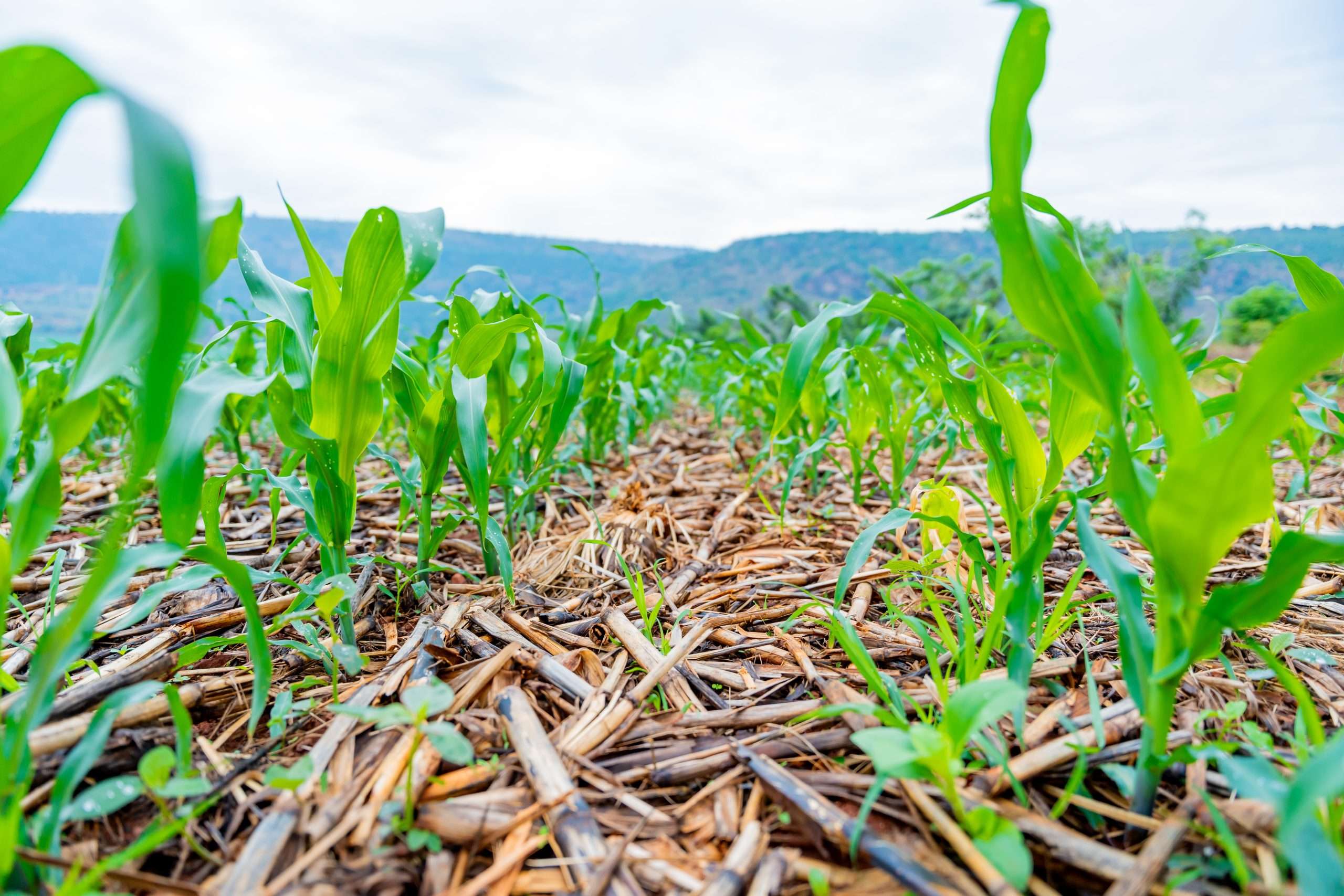
Plots managed through conventional tillage show how repeated soil disturbance can contribute to erosion and nutrient loss, while conservation agriculture plots demonstrate how minimum tillage, soil cover and crop diversification help restore soil health over time.
For RICA, the goal is not only to introduce new farming techniques but also to change long-established perceptions among farmers about what makes a productive field.
For generations, many farmers have considered a well-prepared field to be one that is deeply tilled, free of weeds and cleared of all crop residues after harvest.
However, agricultural experts warn that such practices can gradually damage soil quality, reduce moisture retention and lower productivity.
Heavy rains can wash away exposed topsoil, while uncovered land loses moisture quickly under intense sunlight. Over time, farmers may be forced to invest more in fertilisers and other inputs while getting lower returns.
Dr. Léonce Harerimana, Director of Extension and Irrigation and Water Management Lecturer at RICA, said the institution’s mission is to promote farming methods that protect Rwanda’s limited agricultural land while increasing production.
“As an institution dedicated to conservation agriculture, climate resilience and sustainable farming on small pieces of land, we promote minimum tillage, permanent soil cover, crop rotation, quality seed use, efficient irrigation and fertiliser management,” he said.
“Our mission is to ensure these practices go beyond the campus. We want farmers across Rwanda to embrace conservation agriculture because it protects the soil while improving productivity.”
Changing farming mindsets
Harerimana said one of the biggest challenges is changing traditional beliefs around farming practices.
He explained that excessive ploughing and removing crop residues from fields can negatively affect soil health.
“Sometimes we dig too deeply because that is what we have always done. But excessive tillage makes the soil more vulnerable to erosion. Many farmers also believe that a clean field is a good field, so they remove every residue after harvesting. Yet those residues are exactly what help protect the soil and improve its fertility as they decompose into organic matter with time,” he said.
Under conservation agriculture, farmers are encouraged to leave crop residues on the soil surface, where they act as natural mulch, helping retain moisture, reduce weed growth and restore organic matter.
The approach also promotes efficient use of fertilisers instead of simply increasing the quantity applied.
“Sometimes farmers apply more fertiliser thinking it will increase production. But what matters is applying the right quantity in the right way while maintaining healthy soils,” Harerimana said.
Protecting soil, increasing yields
According to Dr. Christian Nkurunziza, Conservation Agriculture Promotion Project Manager at MINAGRI, the approach is built around three main principles: minimum soil disturbance, permanent soil cover and crop diversification.
“Conservation agriculture is a type of farming that protects the soil through minimum tillage, recycles nutrients through crop residues, and protects crops by maintaining soil cover. As a result, plants grow under more favourable conditions, and agricultural production naturally increases,” he said.
The benefits of conservation agriculture are already reflected in research findings.
Nkurunziza said maize yields under conservation agriculture can increase by about 40 per cent, while bean production can rise by approximately 70 per cent.
RICA also highlights that maize production can reach up to seven tonnes per hectare when farmers combine conservation agriculture practices with quality seeds, compared with less than two tonnes on degraded soils.
For beans, conserved land can produce more than 1.6 tonnes per hectare, while poorly managed soils may produce below 500 kilogrammes per hectare.
Nkurunziza said protecting soil is becoming increasingly important because Rwanda’s available agricultural land is limited.
“Today, the amount of land available for farming is not increasing, but we want the same land to produce more. Without protecting it, soil would lose its natural qualities. In the past, farmers could leave fields fallow, but that is no longer possible because land must be cultivated every season,” he said.
Taking lessons to farming communities
Among those preparing to take conservation agriculture knowledge to farmers is Vivine Umubyeyi, a young agricultural professional who will work under MINAGRI in Kirehe District.
She said the training changed her understanding of farming and equipped her with skills to help farmers adopt new practices.
“I acquired training in conservation agriculture and I understand how it works and how it can positively affect farmers’ yields while protecting our soils. I will use these skills to help farmers practice conservation agriculture. Most importantly, I want them to understand why these methods work so they willingly adopt them,” she said.
Another trainee, Eric Uwitoze from Ruhango District, said the programme helped him understand the importance of practices such as crop rotation in reducing crop diseases and improving productivity.
He added that conservation agriculture could also help farmers reduce unnecessary costs by improving soil quality and efficiency.
Scaling up across Rwanda
The initiative will initially focus on Rwanda’s major food production areas and districts where land consolidation farming is practised.
It will start with 100,000 hectares during the 2027A agricultural season, expand to 150,000 hectares in the following season and eventually reach 600,000 hectares by 2029.
Priority crops include maize, beans, Irish potatoes and soybeans.
The programme is aligned with Rwanda’s Fifth Strategic Plan for Agriculture Transformation (PSTA 5), which seeks to improve productivity while ensuring sustainable management of natural resources.
As Rwanda’s population continues to grow while farmland remains limited, RICA says conservation agriculture will be critical in ensuring that the country produces more food without exhausting the soil that supports agriculture.
Leave a Reply