The case accuses Rwanda of deploying troops on Congolese territory over the past 30 years and violating several international conventions, including the 1948 Genocide Convention, conventions against torture and racial discrimination, and those protecting women’s rights.
Through its Minister of Justice and Attorney General, Guillaume Ngefa, the DRC government asked the ICJ to formally declare that Rwanda was responsible for these alleged violations.
These are serious allegations that deserve careful judicial examination. However, the political motivations behind the lawsuit also warrant scrutiny.
By taking Rwanda to The Hague, analysts say, Kinshasa is not only pursuing legal action but also advancing a broader political strategy aimed at portraying Rwanda as the principal culprit while diverting attention from the DRC government’s own role in the conflict, particularly its collaboration with armed groups operating in eastern DRC.
The proceedings are therefore likely to be more than a legal dispute. They also represent a contest over international perception, responsibility, and accountability under international law.
The issue is not that the DRC has chosen to seek justice through international courts, every sovereign state has that right. Rather, the concern lies in what Kinshasa chooses to emphasize and what it chooses to ignore.
The ICJ case and the battle over responsibility
While asking the international community to examine its accusations against Rwanda, the Congolese government has largely overlooked allegations concerning its own cooperation with the Democratic Forces for the Liberation of Rwanda (FDLR), an armed group founded by individuals responsible for the 1994 Genocide against the Tutsi, as well as its collaboration with the Wazalendo coalition of militias and the use of foreign mercenaries.
The FDLR is not an ordinary armed group. It was established by former members of the Rwandan Armed Forces and Interahamwe militia who fled to the DRC after participating in the 1994 Genocide against the Tutsi.
FDLR ties raise questions over Kinshasa’s accusations
For years, the group has been accused of ethnic killings, rape, child recruitment, and numerous other serious human rights violations. It is also under sanctions imposed by both the United Nations and the United States.
A UN Group of Experts report published in late June 2026 concluded that the FDLR continues to pose a major threat to peace and security in eastern DRC and the wider region, while rebuilding its capabilities with support from the Kinshasa government.
The FDLR itself claims to have more than 10,000 fighters, with nearly half actively engaged in military operations. The group’s special force unit (CRAP) claims to have more than 20,000 combatants.
However, UN experts and intelligence assessments estimate that the FDLR has between 3,500 and 4,500 fighters, while the Washington Peace Agreement estimated the group’s strength at between 3,000 and 3,500.
In June 2025, the Rwanda Defence Force stated that the FDLR had between 7,000 and 10,000 fighters at the time and noted that the group routinely blends into civilian populations when anticipating military operations.
Despite these assessments, the Kinshasa government has continued to regard the FDLR not as a terrorist organization to be dismantled but as a key military partner in its campaign against AFC/M23.
The June 2026 UN Group of Experts report on the DRC found that the Congolese government continued to use Wazalendo militias as auxiliary forces while maintaining cooperation with the FDLR despite previous commitments to dismantle the group.
According to the report, FDLR fighters and Wazalendo militias operated alongside the Armed Forces of the DRC (FARDC) on several front lines.
UN investigators also documented continued financial and logistical support for these groups, including substantial monthly payments channelled through provincial authorities.
Congolese military aircraft reportedly transported uniforms, weapons, ammunition, and food supplies to FDLR positions on multiple occasions, while the FARDC provided air support during joint operations.
The report further cited government and military officials who allegedly assured FDLR leaders that their cooperation would continue because the group remained strategically important in the fight against AFC/M23.
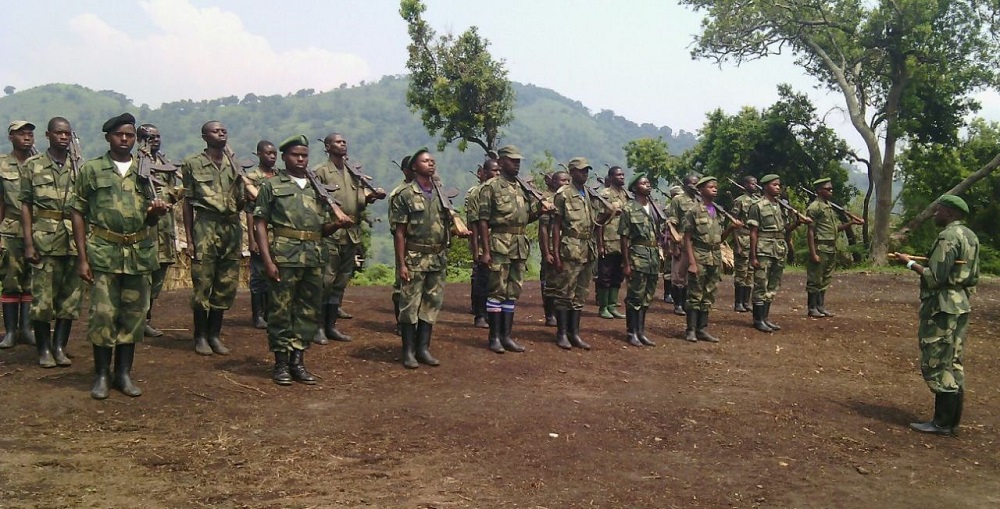
Retired Colonel Augustin Nshimiyimana, commonly known as “Bora” and a former senior FDLR commander, recently claimed that cooperation between the DRC government and the FDLR remains active, noting that several senior FDLR figures now occupy positions within the FARDC command structure in Kinshasa.
A government that claims to be committed to combating genocide-related crimes struggles to maintain credibility while working alongside an armed group established by individuals implicated in genocide.
Similarly, the DRC faces questions about presenting itself before an international court as a defender of Congolese civilians while supporting armed groups that have been accused of targeting the same civilians.
For Rwanda, the continued presence of the FDLR near its borders represents a serious national security concern rooted in the legacy of the 1994 Genocide against the Tutsi and the genocidal ideology the group continues to promote.
This explains why Kigali views continued cooperation with the FDLR as a significant regional security threat.
Hate speech and ethnic tensions deepen the regional crisis
The consequences of that alliance have been particularly severe for Congolese Tutsi communities, who have increasingly been portrayed as foreigners, spies, or proxies for Rwanda.
Political rhetoric has frequently conflated Rwanda, AFC/M23, Congolese Tutsi communities, and Kinyarwanda-speaking Congolese into a single perceived enemy.
In 2023, former minister and Member of Parliament Justin Bitakwira appeared on television portraying Tutsi and Banyamulenge communities as foreigners and enemies. His remarks were followed by violence and the displacement of civilians.
UN experts warned that his statements risked inciting discrimination, hatred, and violence. The 2026 UN report also linked him to efforts to coordinate recruitment into Wazalendo militias.
UN reports have documented the displacement of thousands of Congolese Tutsi fleeing attacks by Wazalendo militias and the FDLR.
In one incident, the armed groups burned the village of Nturo in Masisi Territory, North Kivu Province. Videos circulated online celebrating the destruction of Tutsi homes.
Although Rwanda is frequently associated with the AFC/M23 conflict, the country maintains that it is not behind the crisis.
Instead, the country voiced concerns over the continuing threat posed by the FDLR, whose stated objective remains to destabilize Rwanda.
Human Rights Watch has also documented killings, beatings, looting, and other abuses committed by Wazalendo militias backed by Kinshasa, targeting civilians on the basis of their ethnicity.
Amnesty International has similarly reported that the Congolese government’s failure to address hate speech directed at Banyamulenge and other Congolese Tutsi has fostered a climate of impunity.
Such rhetoric has also reached the country’s highest security institutions. In December 2025, then FARDC spokesperson Maj. Gen. Sylvain Ekenge appeared on national television making derogatory remarks about Tutsi women, urging Congolese men not to marry them and suggesting such marriages could provide a pathway for enemies to infiltrate the country.
For a senior military official to make such statements on state television illustrated how deeply ethnic hostility had penetrated state institutions.
During armed conflict, hate speech is far from trivial. When political or military leaders repeatedly associate a particular ethnic community with treason or disloyalty, they create conditions that can facilitate discrimination, arbitrary detention, forced displacement, and violence against that population.
From a political perspective, the DRC’s case before the ICJ also serves a domestic purpose.
It reframes the country’s complex security crisis as the result of foreign aggression, directing both domestic and international attention toward Rwanda rather than toward longstanding challenges within the DRC itself, including corruption, weaknesses within the national army, poor governance, support for armed groups, and the promotion of ethnic divisions.
If Kinshasa truly wants justice, it should first end its cooperation with the FDLR, dismantle networks supporting armed groups, prosecute officials spreading ethnic hatred, and protect Congolese Tutsi who are treated as foreigners.
The government should also allow independent investigations into alleged crimes committed by FARDC forces and their Wazalendo allies.
Otherwise, the DRC’s case before the International Court of Justice could be seen as a way of diverting attention rather than a genuine pursuit of justice.
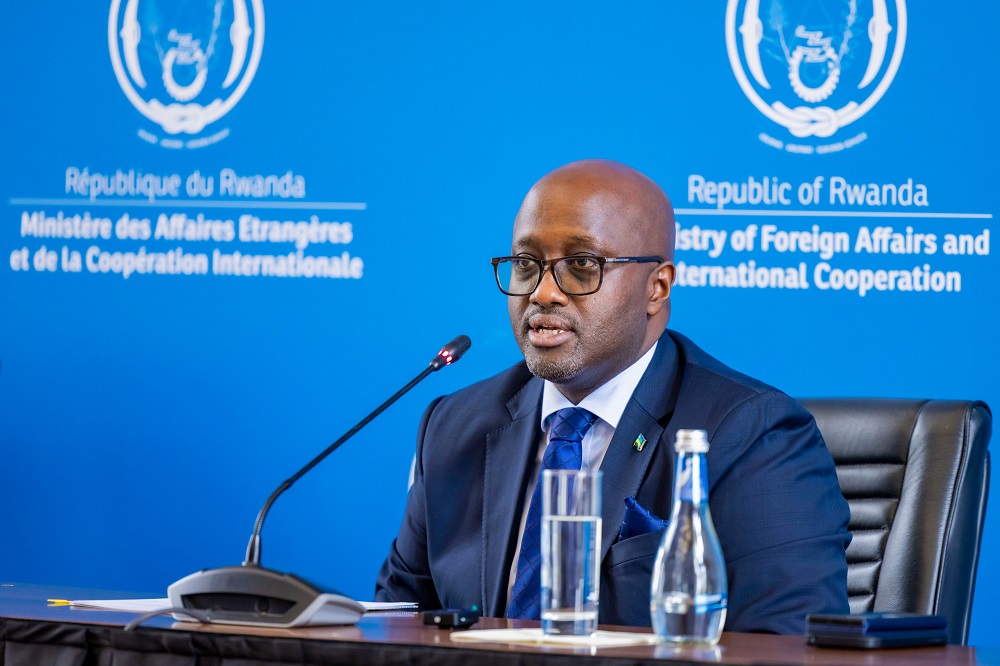
Rwanda’s Minister of Foreign Affairs and International Cooperation, Ambassador Olivier Nduhungirehe, has criticised the case filed by the DRC government before the ICJ.
Speaking to France 24 journalist Marc Perelman in a recent interview, Minister Nduhungirehe dismissed the move as “a political manoeuvre” by the Government of DRC which is collaborating with the FDLR genocidal group.
“First, who collaborates with the genocidal force? It is the Congolese government. Second, who is shelling the civilian population? It is the government of Tshisekedi. who is fueling hate speech against the Congolese Tutsi? There are people linked to Tshisekedi including former spokesperson of the army Maj. Gen. Sylvain Ekenge”
Leave a Reply