
The report, covering calendar year 2025, provides the company’s first comprehensive account of its environmental, social and economic footprint and establishes a baseline against which future progress will be measured. As it expands across the continent, Spiro projects that its electric mobility ecosystem will help avoid approximately 700,000 tonnes of CO₂ emissions annually by 2030.
The report comes as African countries, including Rwanda, continue to accelerate the transition to electric mobility in a bid to cut emissions, reduce fuel costs and build cleaner transport systems.
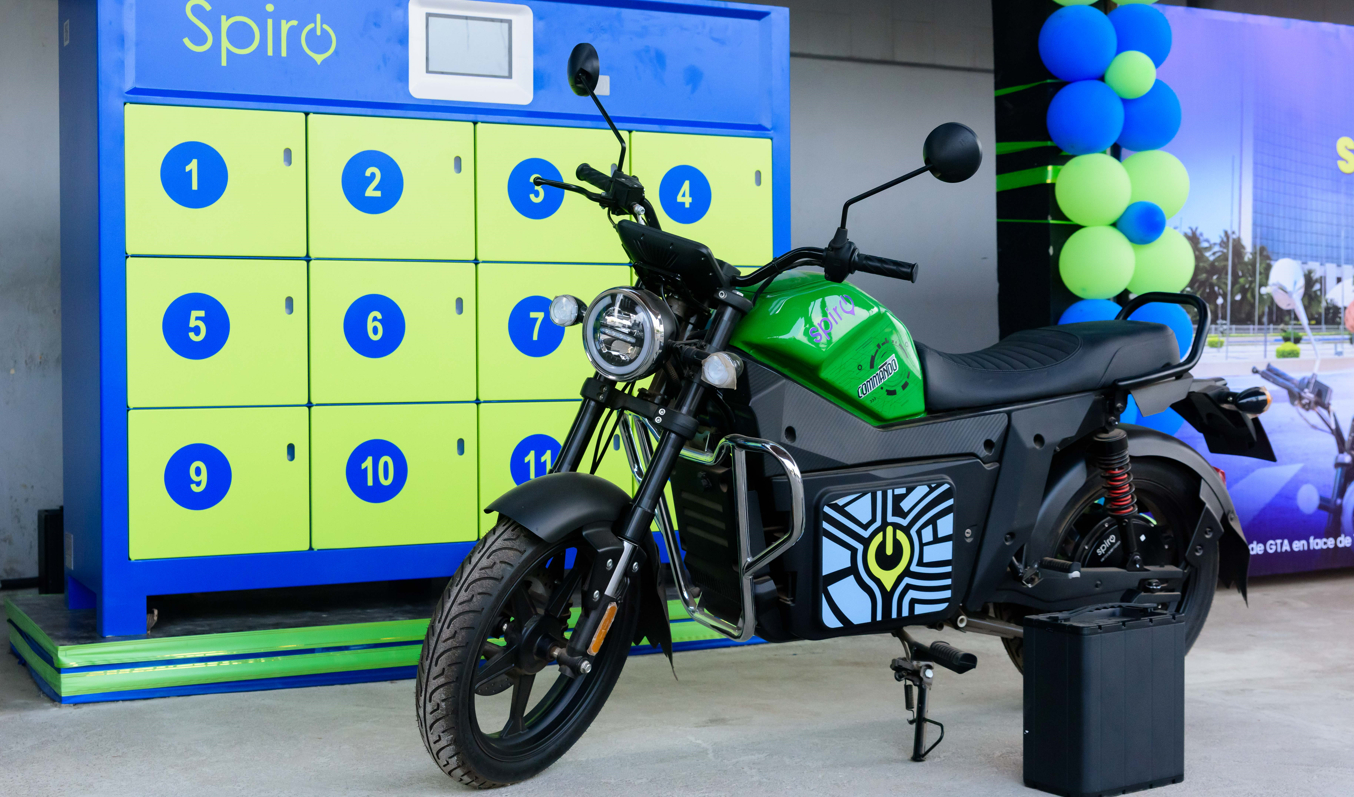
Spiro now operates more than 100,000 electric motorcycles across Africa, supported by more than 2,500 battery-swapping stations and over 30 million battery swaps completed to date, making it the continent’s largest electric two-wheeler and battery-swapping network.
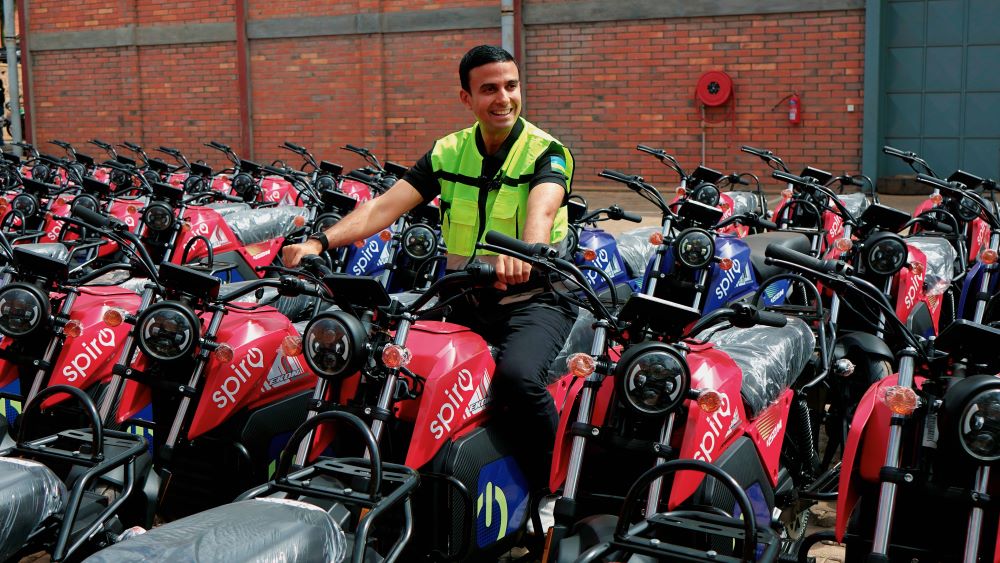
Rwanda remains Spiro’s largest market among its six African operations, with 22,000 electric motorcycles on the road and more than 600 battery-swapping stations, ahead of Uganda, which has 16,000 motorcycles and more than 300 stations, and Kenya, with 14,000 motorcycles and over 300 stations. The company also operates one of its four vehicle assembly facilities in Rwanda, alongside plants in Uganda, Kenya and Nigeria.
Highlighting the significance of the report, Imtinen Hamlaoui, Head of ESG and Sustainability at Spiro, said the company has completed its first end-to-end greenhouse gas inventory covering Scope 1, Scope 2 and Scope 3 emissions across its operations and value chain.
“By establishing our first comprehensive ESG baseline, including Scope 1, 2 and 3 emissions, we are creating the foundations needed to track progress, set measurable targets and strengthen transparency as Spiro continues to scale across Africa,” she said.
“Sustainability is not a standalone initiative. It is integrated into how we operate, innovate and create long-term value.”
To further reduce its environmental footprint, Spiro is evaluating the deployment of 80-125 kVA on-site solar installations at selected battery-swapping stations to reduce dependence on national grids. The company also reported that smart energy management initiatives at its assembly facilities have already delivered an estimated 15-25% reduction in energy consumption.
Beyond climate goals, the report highlights Spiro’s investment in skills
development. Through the Spiro Academy, the company trained more than 4,000 people across Africa in 2025 in areas including electric vehicle maintenance, battery management and technical operations. The company also cited Africa’s first women electric motorcycle assembly line as part of its efforts to promote workforce inclusion and local industrial growth.

On the economic front, Spiro affirmed that commercial riders using Spiro motorcycles reduce their operating costs by 70-80% compared with petrol-powered alternatives, while benefiting from lower maintenance costs and reduced exposure to fuel price volatility.
Group Chief Executive Officer Anant Badjatya said sustainability will continue to shape the company’s expansion strategy across the continent.
“This report reflects how far Spiro has come, not only in terms of growth, but in our ability to measure and improve our impact. As we expand across Africa, sustainability will remain a core business driver, shaping how we invest, manufacture, innovate and partner for the long term,” he said.
Rwanda’s operations employed 51 permanent staff and supported a further 1,147 workers during 2025, contributing to Spiro’s group-wide workforce of 6,298 employees. The company said it continues to work closely with the Government of Rwanda in supporting the country’s shift from petrol-powered motorcycles to electric mobility.
During the year, Spiro also received several industry recognitions, including the E-Mobility Award from Brands & Beyond, AA Kenya’s EV Champion of the Year award, and recognition in Uganda for innovation in electric mobility. The company was also named a finalist for the Milken-Motsepe Prize in AI & Manufacturing for its work in localising and automating vehicle assembly across Uganda, Kenya, Rwanda and Nigeria.
Reflecting on the company’s long-term vision, founder Gagan Gupta said sustainability has been embedded in Spiro’s mission from the outset.
“Having grown up in India, I have witnessed firsthand the impact of vehicle emissions on public health and urban environments. At Spiro, our responsibility as founders is not only to scale innovation, but to ensure that the systems we build endure economically, socially and environmentally for generations to come,” he said.
The sustainability report was developed with reference to the Global Reporting Initiative’s sustainability standards and will serve as the foundation for Spiro’s annual sustainability disclosures. The company is also registered on the Science Based Targets initiative platform as it works to align its emissions reduction pathway with internationally recognised climate benchmarks.
The report marks Spiro’s first comprehensive public assessment of its environmental, social and economic performance and establishes the benchmark against which the company says it will measure its progress as it continues expanding electric mobility across Africa.
Leave a Reply