The summit, which began on July 10, 2016, brought together African leaders in Kigali, with high-level meetings scheduled for July 17 and 18. About 35 presidents had confirmed their participation.
However, as Rwanda prepared to welcome the continent’s leaders, it found itself at the centre of a diplomatic storm involving debates from The Hague in the Netherlands, Khartoum in Sudan and Kigali.
At the heart of the controversy was one question: Would Rwanda arrest Sudanese President Omar al-Bashir and hand him over to the International Criminal Court (ICC)?
Bashir had been invited to the AU Summit as the leader of a member state.
At the same time, he had been wanted by the ICC for seven years over allegations of war crimes, crimes against humanity and genocide-related charges linked to the conflict in Sudan’s Darfur region.
On July 14, 2016, just days before the summit, the Rwandan government confirmed that it had received a request from the ICC asking it to arrest Bashir if he entered the country.
Bashir’s international legal troubles
Omar Hassan Ahmad al-Bashir, a former military officer, seized power in Sudan in 1989 after overthrowing Prime Minister Sadiq al-Mahdi’s government. He became president in 1993 and remained in power until he was removed in 2019.
His name became widely associated with international justice proceedings following the outbreak of conflict in Darfur in 2003.
On July 14, 2008, ICC prosecutors accused Bashir of playing a role in a campaign targeting the Fur, Masalit and Zaghawa communities through killings, sexual violence and forced displacement.
The ICC issued its first arrest warrant against him on March 4, 2009, containing charges of crimes against humanity, including murder, extermination, forcible transfer, torture and rape. He was also accused of war crimes, including attacks against civilians and pillaging.
At the time, judges said there was insufficient evidence to charge him with genocide.
A second arrest warrant was issued on July 12, 2010, adding three genocide charges. Bashir became the first sitting head of state to be wanted by the ICC.
Although Sudan was not a signatory to the Rome Statute that established the ICC and did not recognize the court’s jurisdiction, the UN Security Council had referred the Darfur situation to the ICC.
From then on, every foreign trip by Bashir became a potential diplomatic challenge for the countries he visited.
South Africa’s failed attempt to detain Bashir
The pressure on Rwanda was intensified by events in South Africa a year earlier.
In June 2015, Bashir travelled to South Africa to attend an AU summit. South Africa was a signatory to the Rome Statute, meaning it had an obligation to arrest individuals wanted by the ICC who entered its territory.
A South African court ordered that Bashir should not leave the country while it considered whether he should be arrested and transferred to The Hague.
However, Bashir’s aircraft later departed and returned him to Khartoum after the South African government allowed him to leave, despite the court order.
The incident triggered international criticism. The ICC and human rights groups accused South Africa of failing to meet its obligations, while some African leaders argued that Bashir enjoyed immunity as a sitting head of state attending an AU meeting.
This raised concerns over whether Rwanda would face a similar situation when hosting the 2016 AU Summit.
Kagame sets Rwanda’s position
Before the ICC sent its request, President Paul Kagame had already indicated that Bashir would be welcomed if invited by the AU.
Speaking to journalists on May 13, 2016, Kagame said Rwanda would receive any leader invited by the continental organisation.
He stressed that Rwanda, as the host country, had a responsibility to welcome AU invitees and noted that Rwanda was not party to the Rome Statute.
Rwanda rejects ICC request
On July 14, 2016, then Foreign Affairs Minister Louise Mushikiwabo revealed that the ICC had formally requested Rwanda to arrest Bashir two days earlier.
She said Rwanda did not have the legal authority to detain him and that all leaders invited by the AU would be welcomed and protected.
Mushikiwabo added that Rwanda was not bound by the ICC request because it had not signed the Rome Statute.
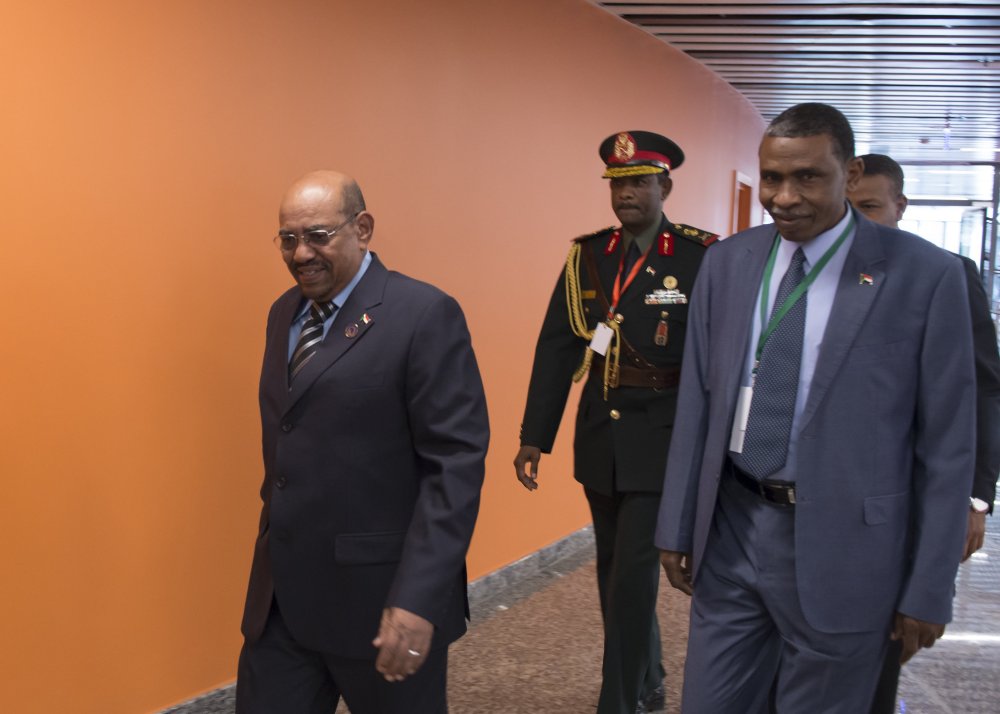
Following Rwanda’s position, Bashir arrived in Kigali on Saturday, July 16, 2016, where he was received by then Minister of Internal Security Sheikh Musa Fazil Harerimana.
Mushikiwabo said Rwanda did not support impunity but believed that the ICC’s operations had become influenced by politics.
She argued that African leaders attending AU activities should be granted immunity while serving in office, citing AU positions submitted to the UN Security Council.
She also questioned why, after years of ICC operations, most individuals prosecuted by the court were Africans.
Bashir was eventually removed from power on April 11, 2019, following months of protests that began in December 2018 over rising living costs, poverty and his three-decade rule.
The military overthrew him, detained him and later placed him in Kober Prison in Khartoum.
His removal ended one of Africa’s longest presidential tenures and marked a new chapter in Sudan’s turbulent political history.
Leave a Reply