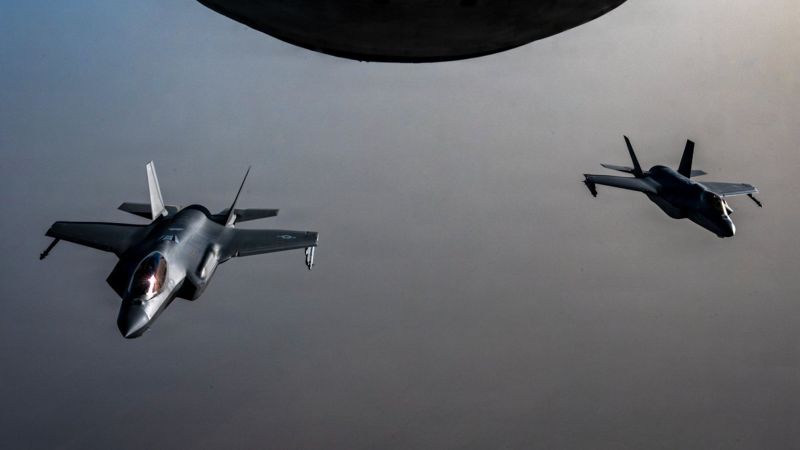
“Earlier today, U.S. forces in the Middle East shot down two Iranian one-way attack drones that threatened international maritime traffic in the Strait of Hormuz,” the U.S. Central Command (CENTCOM) said on X.
Shipping traffic through the Strait of Hormuz has been largely blocked by Iran since February 28 2026, when the United States and Israel launched air strikes against Iran. In retaliation, Iran launched missile and drone attacks on Israel, U.S. military bases in the region, and U.S.-allied Gulf states. The Iranian Revolutionary Guard Corps issued warnings forbidding passage through the strait, boarded and attacked merchant ships, and laid sea mines in the waterway.
The collapse in traffic has been swift and severe. As of March 10, the number of ships transiting the strait dropped from 129 per day to just 4, a fall of 97%. As of May, more than 1,550 commercial vessels were stranded and 22,500 mariners trapped in and around the strait. All major carriers, including Maersk, CMA CGM, MSC, and Hapag-Lloyd, have suspended transits. As of June 6, the strait remains effectively closed.
The war has produced the largest disruption to the global oil market in history, according to the IEA. Cumulative oil supply losses from Middle East producers now exceed one billion barrels, with more than 14 million barrels per day of oil production shut in. LNG supplies from Qatar and the UAE have been reduced by over 300 million cubic metres per day since March 1, and the Ras Laffan facility in Qatar, the largest liquefaction facility in the world, has been offline since it was attacked on March 2.
The cost to Rwanda
Rwanda is feeling the crisis directly. Diesel prices in Rwanda were revised upward by Rwf 722 on Friday to retail at Rwf 2,927 per litre in the latest review. Petrol remains unchanged at Rwf 2,938.
Prime Minister Justin Nsengiyumva told the media on Saturday that Rwanda is subsidising 18% of diesel costs to cushion consumers against global shocks. Without this support, pump prices would hit Rwf 3,581 instead of the Rwf 2,927 recently set by the Rwanda Utilities Regulatory Agency (RURA).
The pain extends beyond the fuel pump. One third of global seaborne trade in fertilisers passes through the Strait of Hormuz, and several African countries are heavily dependent on those imports. Energy-importing economies in Africa are feeling the strain from higher import bills on top of already limited fiscal space, and low-income countries are especially at risk of food insecurity.
The latest drone incident underlines how far the crisis is from resolution. The two countries have been engaged in indirect talks, but those negotiations have yet to halt military exchanges. While Saudi Arabia and the UAE have successfully redirected some exports to terminals outside the strait, mounting supply losses are depleting global oil inventories at a record pace.
Leave a Reply