In 1993, during a meeting with senior members of his government, Mitterrand reportedly argued that France should continue supplying weapons to the former Rwandan Armed Forces (Ex-FAR), insisting that a victory by the Rwanda Patriotic Army (RPA) forces of the FPR would not serve French interests.
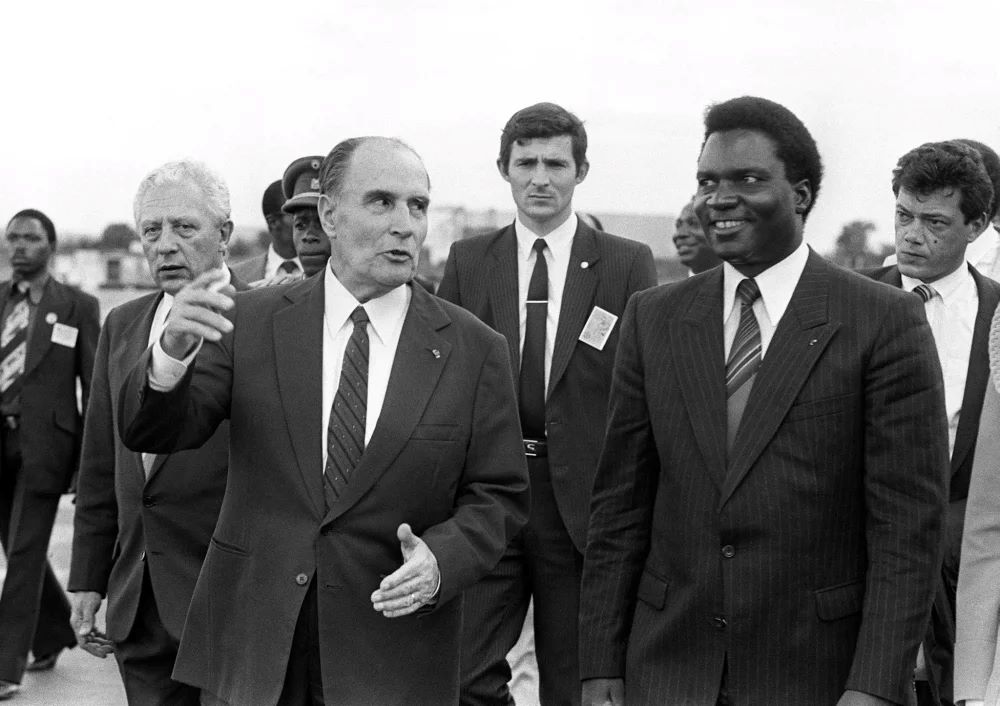
Habyarimana’s government relied heavily on France, particularly during Mitterrand’s presidency, when France provided military training and weapons to Rwanda’s armed forces.
According to records from a special council meeting held on March 3, 1993, attended by President Mitterrand, the Prime Minister, the Ministers of Foreign Affairs, Defence and Cooperation, alongside senior military officials, discussions focused on the ongoing war in Rwanda.
Marcel Debargue, then Minister for Cooperation, who had just returned from Uganda and Rwanda, told the meeting that Habyarimana had been misinformed and was facing serious difficulties.
He explained that the Rwandan army was fighting in a disorganised manner. As RPA troops advanced toward Byumba, Belgium was already preparing to evacuate its citizens, raising concerns over where French troops stationed in Rwanda would reposition themselves.
He stressed that the Rwandan army was fighting in a disorganised manner, to the extent that RPA troops’ attack on Byumba, would push Belgium to evacuate its nationals, leaving uncertainty over where the French troops stationed in Rwanda would be redeployed.
At a time when discussions had begun around deploying United Nations peacekeepers to Rwanda, Mitterrand reportedly said it would be preferable for French troops to withdraw before they were reduced to mere spectators while incoming international forces would later be celebrated as heroes.
Mitterrand reportedly stated: “We have no interest in seeing the Tutsis take large territories quickly. We must buy time, delay them through every possible diplomatic channel, and continue supporting the Rwandan army by supplying all the weapons it needs.”
France continued maintaining troops in Rwanda through various military operations officially presented as missions aimed at protecting French nationals living in the country.
Mitterrand’s hostility toward the Tutsi was not new. On October 17, 1990, he reportedly said that even if the rebels of the FPR won militarily, Hutu populations in Rwanda and neighbouring countries would eventually unite to overthrow them.
The French-established Turquoise Zone in Gikongoro later became an escape corridor for Interahamwe militia members and FAR soldiers fleeing into Zaire, now the Democratic Republic of the Congo, where they reorganised with the aim of regaining power.
Several former officials linked to the previous regime were also granted refuge in France, where some continue to live to this day.
Leave a Reply