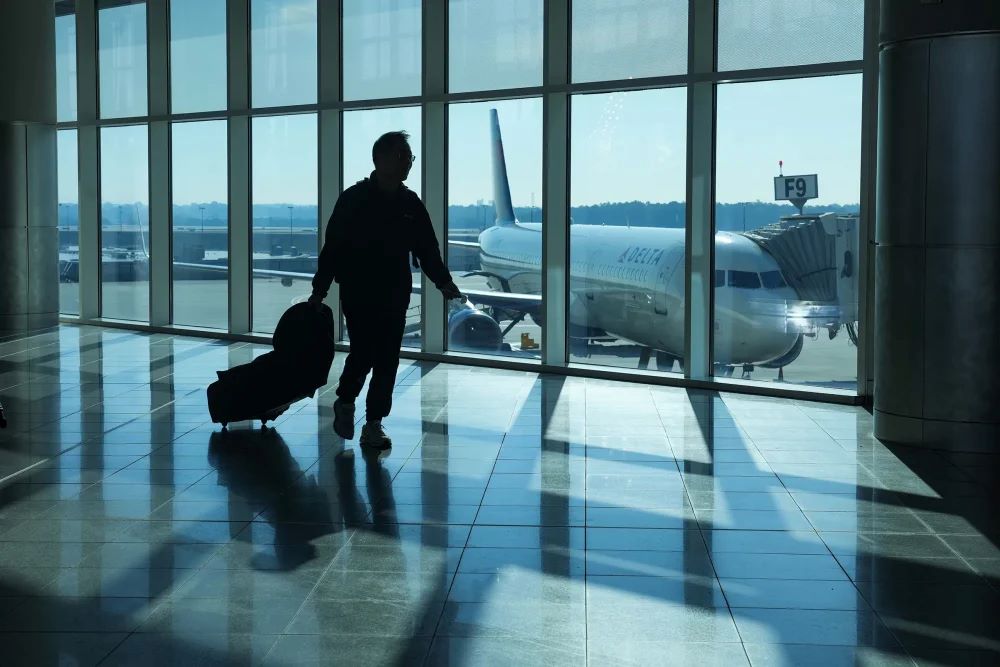
While the effects have already been visible in road transport and commodity prices, the aviation sector has also come under pressure, triggering sharp increases in airline ticket prices and affecting both travellers and businesses that depend on international movement.
At the centre of the crisis is aviation fuel, commonly known as Jet A1, which remains one of the biggest operational costs for airlines worldwide.
Jet A1 accounts for between 20% and 25% of total airline operating expenses. On long-haul international routes, fuel often becomes the single largest cost. As fuel prices rise, airlines are left with little choice but to increase ticket fares.
Before tensions escalated into conflict, aviation fuel in the United States was selling at around $2.50 per gallon. Within days following the attacks on Iran, the price had jumped to more than $4.56 per gallon.
Overall, the war pushed jet fuel prices up by nearly 82%, rising from around $0.66 per litre to almost $1.27 per litre.
On the global market, the price per barrel of aviation fuel increased from between $85 and $90 before the conflict to between $150 and $200 within a matter of weeks.
The consequences quickly became visible across the airline industry. On February 27, 2026, a day before the conflict intensified, filling the tank of a Boeing 737-800 at major airports in the United States cost roughly $17,000. Less than a week later, the same aircraft required more than $27,000 for a full tank.
For airlines that already operate on narrow profit margins, the increase has created serious financial pressure.
One of the clearest examples has been seen on the busy New York–Los Angeles route, one of the most travelled domestic air corridors in the United States. In the previous year alone, about 3.4 million passengers travelled the route through JFK Airport.
Before the conflict, towards the end of February 2026, a ticket on the route cost around $167. By March 2026, fares had risen to nearly $414.
International routes have also been affected. Flights between New York and London, for example, recorded steep increases. At the end of February 2026, Delta’s cheapest fare on the route stood at $285, but by mid-March it had climbed to $553.
Rwandan travel agencies feel the pressure
Travel agencies in Rwanda say the rising cost of petroleum products has significantly affected their operations, especially as ticket prices continue to rise on major international routes.
Keza Teta, who works in the airline ticketing business, said flights to China, a destination frequently visited by Rwandan traders sourcing goods, have become much more expensive.
“Previously, someone could get a ticket to China for around $500, but now prices range from $800 to $1,000, and in some cases even reach $2,000 depending on the arrangements,” she said.
She added that ticket prices to Tanzania, another common destination for travellers, have also increased sharply. A return ticket that once cost around $300 now goes for nearly $500.
Mukamisha Sirikare Paula, Managing Director of Learn Horizon Travel, said the increase in fares has led to a sharp drop in customer numbers.
“In the past, we could receive up to eight customers in a single week, but now we can spend two weeks seeing only one person travelling to China,” she said.
Patrick Nshuti, an employee at Delight Travel, said their agency previously received more than 10 customers per week, but business has slowed considerably because of the rising ticket costs.
Importers who rely on international travel for business operations say they are also suffering losses. Some have suspended activities while others have reduced the quantity of goods they import.
Manishimwe Jean de Dieu, owner of Yoos Group Ltd, a company that imports electric bicycles from China, compared the current situation to the Covid-19 period when travel costs also surged dramatically.
“The increase in airline ticket prices is becoming similar to what happened during Covid-19. Before the conflict, we could book a ticket to China for around $650, but now prices have reached nearly $1,200,” he said.
He recalled that during the Covid-19 pandemic, ticket prices climbed to almost $2,000, severely affecting businesses dependent on international trade.
“The last time ticket prices increased this much was during Covid-19 when they reached $2,000. So seeing them approach $1,500 again shows how serious the situation has become,” he added.
Gasana Tito, who operates an import and export business, said the volume of goods being imported has dropped significantly because many clients have temporarily suspended their activities.
Airlines introduce new measures
Beyond increasing ticket prices, airlines around the world have also introduced additional measures aimed at coping with the rising cost of fuel.
Baggage fees have gone up, with several airlines reversing earlier decisions that had reduced or eliminated luggage charges.
Many international carriers have also introduced special fuel surcharges on tickets, making passengers directly absorb part of the rising petroleum costs.
Some airlines have gone as far as suspending routes altogether in an effort to reduce fuel consumption. Air Canada, for instance, suspended flights to New York as part of cost-cutting measures.
Globally, thousands of flights have been removed from airline schedules since the conflict escalated.
Following February 28, 2026, more than 20,000 flights were cancelled within the first days of the crisis, leaving over one million passengers stranded worldwide.
By March 5 and 6, barely a week after the conflict began, the number of cancelled flights had surpassed 23,000 globally.
Of the 51,600 flights that had been scheduled to depart from or arrive in the Middle East after February 28, more than half had already been cancelled by March 6.
On one of the peak disruption days, nearly 7% of all flights worldwide were cancelled, representing 7,049 cancelled flights out of 104,618 scheduled flights globally.
Leave a Reply