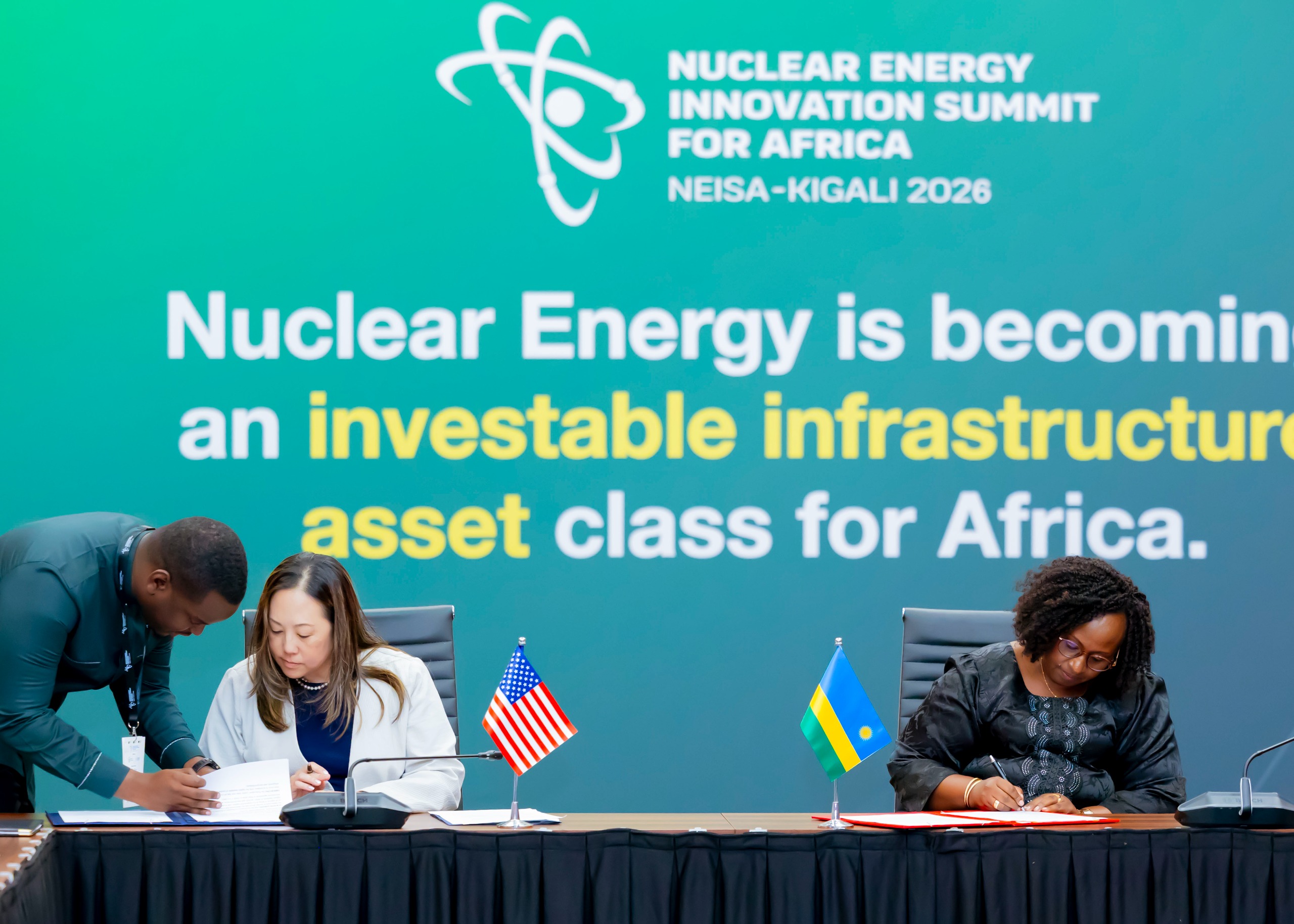
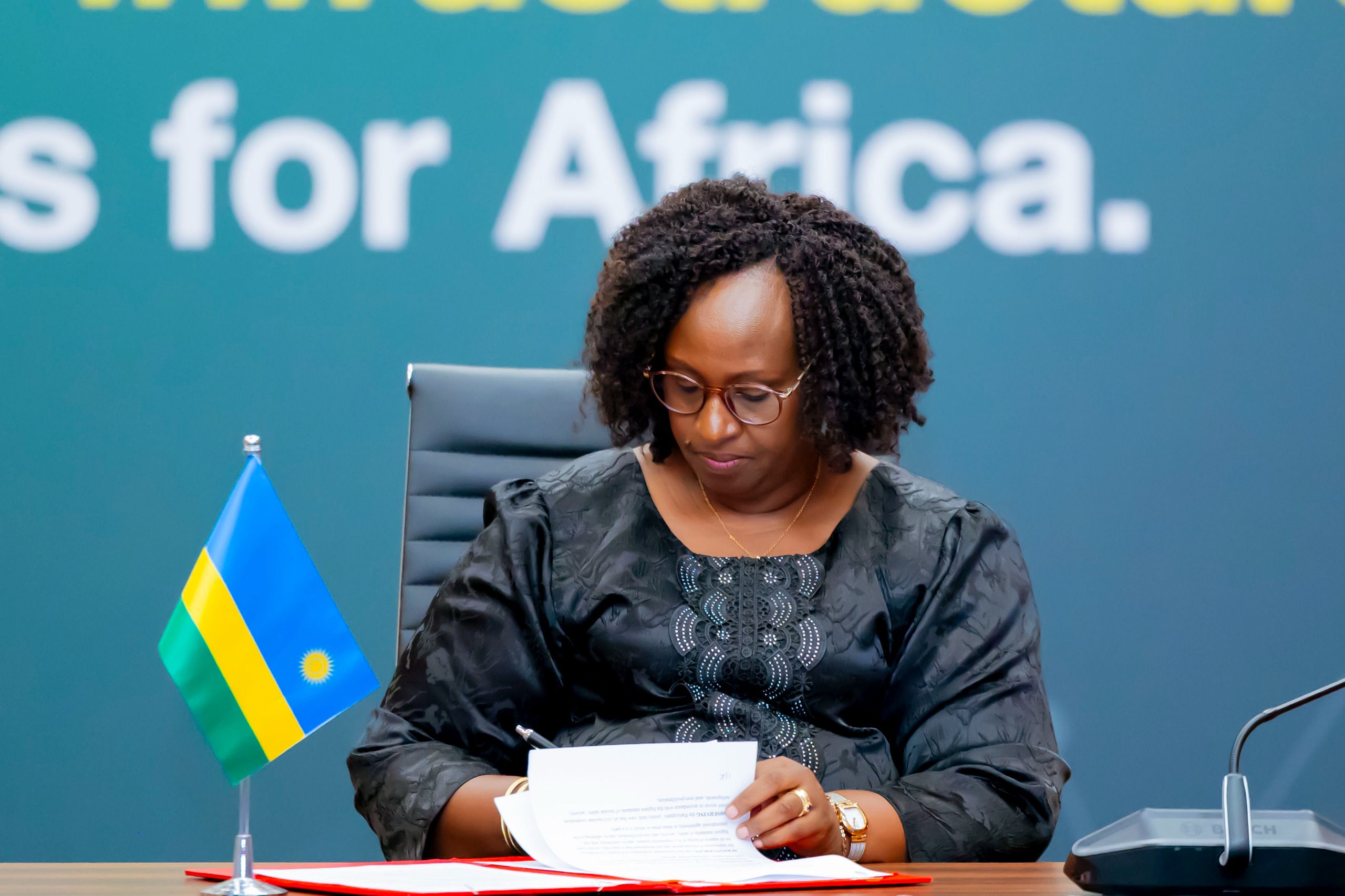
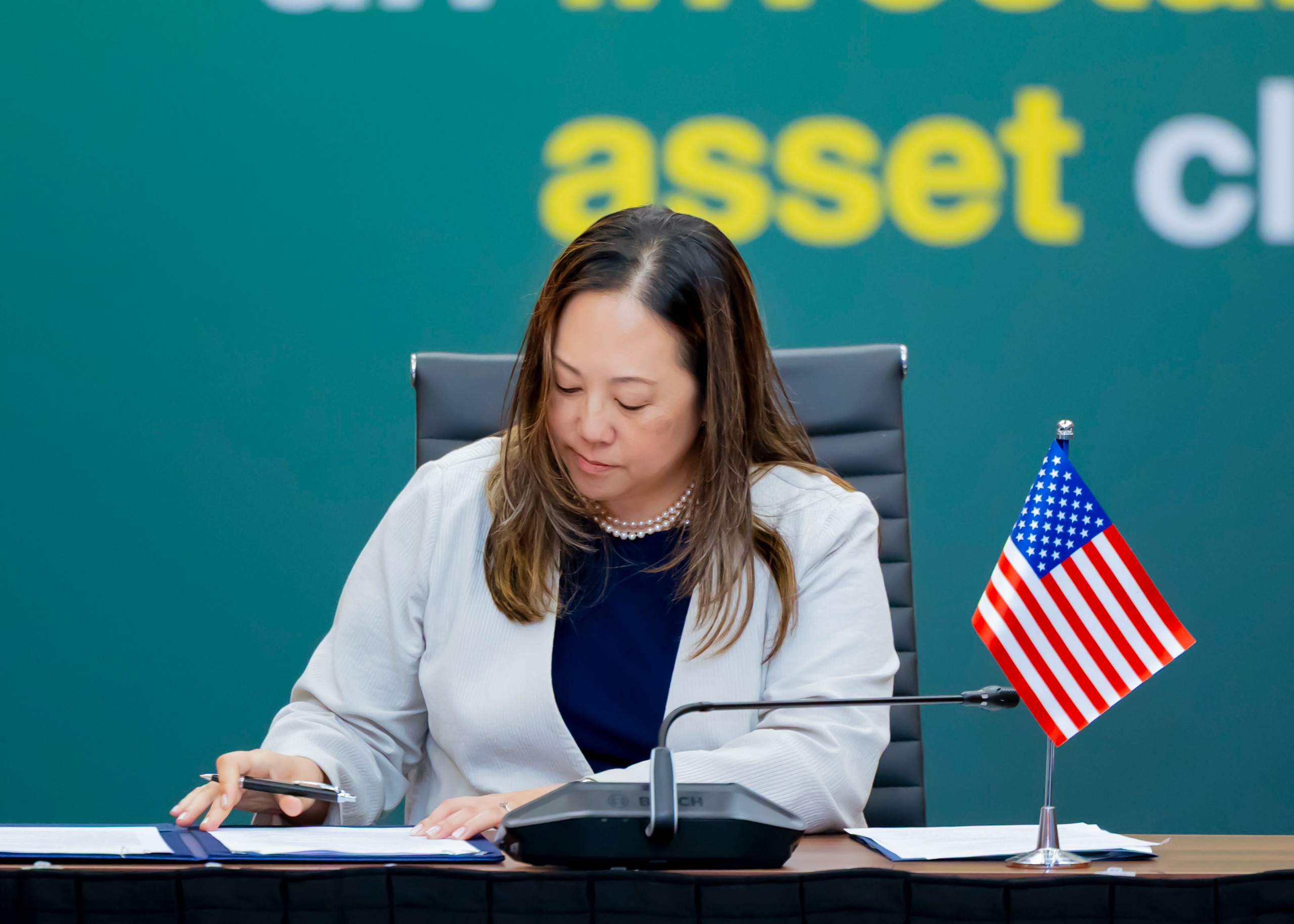
The agreement was signed on the sidelines of the Nuclear Energy Innovation Summit for Africa (NEISA) in Kigali on Tuesday by Rwanda’s Minister of State for Foreign Affairs and International Cooperation, Dr. Usta Kayitesi, and Renee Sonderman, Acting Principal Deputy Assistant Secretary in the U.S. State Department’s Bureau of Arms Control and Nonproliferation.
The MoU establishes a framework for cooperation in the peaceful use of nuclear energy, including regulatory capacity building, workforce development, scientific research, and the future deployment of advanced nuclear technologies such as small modular reactors (SMRs).
Speaking at the signing ceremony, Dr. Usta Kayitesi said the agreement reflects Rwanda’s commitment to diversifying its energy mix in line with the country’s Vision 2050 development agenda.
“Today, we are pleased to further deepen this cooperation into the field of peaceful nuclear energy where the United States is a world leader,” she said.
“Nuclear energy is a key component of Rwanda’s long-term energy strategy and broader national development ambitions. In line with Vision 2050, Rwanda aims to significantly diversify and expand its energy mix to meet the growing demand of consumers and industries alike.”
Kayitesi noted that under the framework, both countries intend to strengthen collaboration in nuclear energy development while promoting the highest standards of safety, security, and non-proliferation.
“I would like to reaffirm that today’s signing is a meaningful step forward in strengthening and structuring our cooperation in nuclear fields and in advancing the broader Rwanda-U.S. partnership in two new and strategic frontiers,” she added.
Renee Sonderman described the agreement as a key milestone in expanding bilateral cooperation on peaceful nuclear energy.
“This memorandum demonstrates our joint commitment on deepening bilateral
cooperation between the United States and Rwanda on the peaceful uses of nuclear energy and provides a key framework for enhancing cooperation between our governments in this strategically important area,” she said.
Sonderman praised Rwanda’s efforts to advance nuclear energy planning and highlighted the country’s interest in deploying SMR technology to meet growing energy demand and improve energy security.
“I’m very excited by the deliberate and serious approach that Rwanda is taking to facilitate the rapid deployment of small modular reactor technology,” she said.
She added that the United States is seeking to expand civil nuclear partnerships across Africa while positioning American companies to export advanced nuclear technologies to trusted international partners.
The MoU signing coincided with another major agreement announced during the summit between the Rwanda Atomic Energy Board (RAEB) and U.S.-based Holtec International.
The two parties signed a Comprehensive Development Agreement aimed at advancing the deployment of Holtec’s SMR-300 small modular nuclear reactors in Rwanda.
The agreement was signed by Dr. Fidele Ndahayo, CEO of RAEB, and Rafael Marin, Director of Holtec Europe.
Under the framework, Holtec and Rwanda will conduct technical cooperation activities including site assessments, feasibility studies, and data collection related to the potential deployment of SMR-300 reactors in Rwanda.
Officials said the project could eventually support up to approximately 5 GW of nuclear generation capacity to strengthen Rwanda’s long-term energy security and provide carbon-free baseload electricity.
“Through this agreement, Holtec and RAEB will work together to deploy SMR-300 units in Rwanda,” Rafael Marin said, adding that the initiative could position Rwanda as a pioneer of SMR deployment in Africa.
Dr. Ndahayo said Rwanda remains committed to introducing nuclear power by the early 2030s and views the partnership as part of a structured process toward future deployment.
At the summit, President Paul Kagame reiterated Rwanda’s commitment to integrating nuclear energy into its national energy strategy, saying the country remains on track to operationalise nuclear energy infrastructure in the early 2030s.
“We intend to have nuclear energy operational by the early 2030s. This assessment confirms that we are on track,” Kagame said after receiving the International Atomic Energy Agency’s Phase I Integrated Nuclear Infrastructure Review report from IAEA Director General Rafael Mariano Grossi.
Rwanda’s energy roadmap includes plans to expand electricity generation capacity significantly over the coming decades, with nuclear energy expected to complement renewable sources by providing stable and reliable power for industrialisation and economic transformation.
The Nuclear Energy Innovation Summit for Africa brought together African leaders, regulators, industry experts, and international partners to discuss investment opportunities and cooperation in nuclear energy development, amid growing continental interest in small modular reactor technology.

Leave a Reply