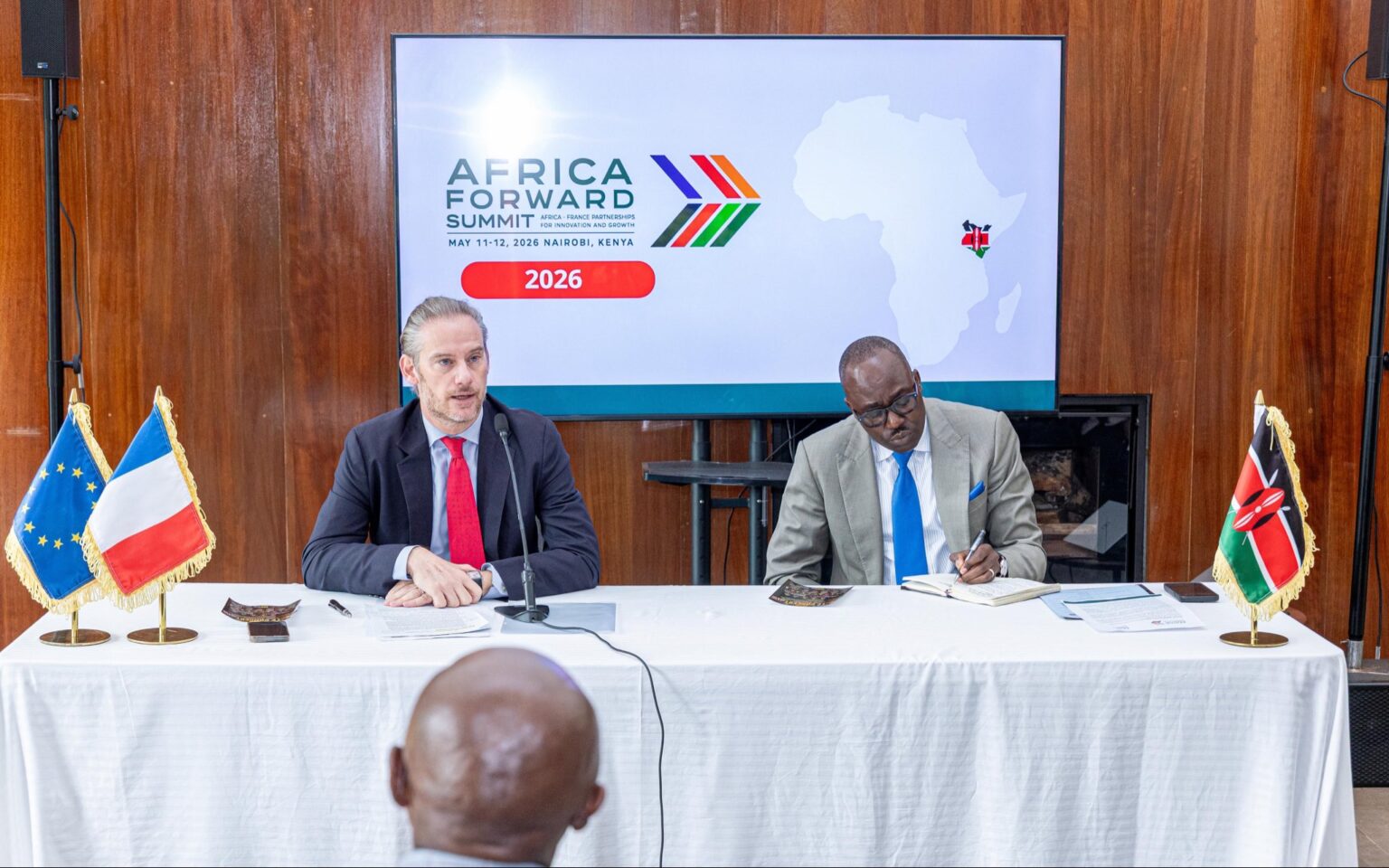
Addressing foreign journalists via videoconference on Wednesday, May 6, Robert outlined the priorities of the summit, which will take place on May 11–12 at the Kenyatta International Convention Centre (KICC) and the University of Nairobi, co-hosted by Kenya and France.
The summit, which marks the first time such a high-level gathering is held in an English-speaking African nation, will host leaders from 30 African nations and over 2,000 CEOs, alongside youth leaders and development partners.
The forum aims to pivot away from the legacy of donor-recipient aid, moving beyond traditional diplomatic engagement to focus on “bankable investments”, projects designed to be commercially viable and attractive to private capital rather than reliant on state grants.
Investment, youth and technology at the centre
Robert said the summit will focus heavily on investment and financing mechanisms for African economies, bringing together governments, private sector actors, and financial institutions, including African multilateral banks and global partners such as the World Bank and the African Development Bank.
“The first priority is how to stimulate investment and improve financing for African economies through concrete results,” he said, adding that the private sector will play a central role in shaping outcomes.
Youth engagement will also be a key feature of the summit. Around 500 young leaders from across Africa are expected to take part in a dedicated dialogue with President Emmanuel Macron and Kenyan President William Ruto.
Discussions will focus on artificial intelligence, technology, and the role of young Africans in global decision-making.
The summit will also include roundtables on artificial intelligence, agriculture, health, rural development, and energy access, reflecting what organizers describe as a “results-driven development agenda.”
Rwanda is expected to feature prominently in the discussions on artificial intelligence, with President Paul Kagame set to co-chair a high-level roundtable on AI, underscoring the country’s growing role as a continental leader in digital innovation and technology-driven development.
The cultural and creative industries will also receive attention, with internationally recognised Rwandan artist Sherrie Silver expected to participate in discussions highlighting the role of African creativity in economic transformation and youth empowerment.
Culture, sports and creative industries as economic drivers
Robert highlighted culture and sports as emerging pillars of economic cooperation between Africa and France, describing them as “business tools” for inclusion and development.
France, he said, has increasingly supported cultural and creative industries in Africa since 2017, helping to connect African entrepreneurs with French companies and expand cultural production across the continent.
He pointed to the expansion of African content production through media partnerships, including the acquisition of MultiChoice by French media group Canal+, which he said would strengthen the distribution of African creative content both within Africa and in France.
Sport was also presented as a key development tool, with France positioning major international sporting events, including the 2024 Olympics, as part of a broader strategy. Upcoming African sporting events such as the Africa Cup of Nations in East Africa and the Youth Olympic Games in Senegal were cited as examples of growing sports diplomacy and economic opportunity.
Restitution and historical cooperation
The briefing also addressed cultural restitution, a sensitive but central theme in France’s Africa policy.
Robert said France had changed its legislation to allow the return of cultural artefacts and human remains that were proven to have been taken illegally during the colonial period. He cited previous restitutions to countries including Benin, Senegal, Côte d’Ivoire and Madagascar, and said similar requests continue to be processed where legal conditions are met.
He added that France’s approach has influenced similar restitution policies in other European countries.
Peace, security and African-led solutions
On security issues, Robert said France supports African-led solutions to regional conflicts, including ongoing mediation efforts in the Great Lakes region, Sudan and Somalia.
“We are not in the front seat; we are there to support,” he said, emphasising coordination with African Union-led initiatives and international partners.
Responding to questions about France’s evolving role in Africa, Robert stressed that the new approach is based on reciprocity and “win-win partnerships.”
“There is no free lunch. We are there to promote mutual interests and balanced cooperation,” he said, adding that African countries increasingly choose partners based on value, investment quality, and development impact.
The Africa Forward Summit is being positioned by its organisers as a shift away from traditional donor-recipient dynamics toward a unified African market approach, engaging both Anglophone and Francophone countries as part of a single economic space of 1.5 billion people.
According to the summit communiqué, the event will aim to address shared challenges, including food security, digital competitiveness, energy access, health systems, and connectivity, while strengthening Africa’s role in global decision-making structures.
A high-level youth and cultural programme, including a closing concert in partnership with Trace TV, will conclude the summit, showcasing African music and creative industries as part of what organisers describe as Africa’s growing global cultural influence.
Leave a Reply