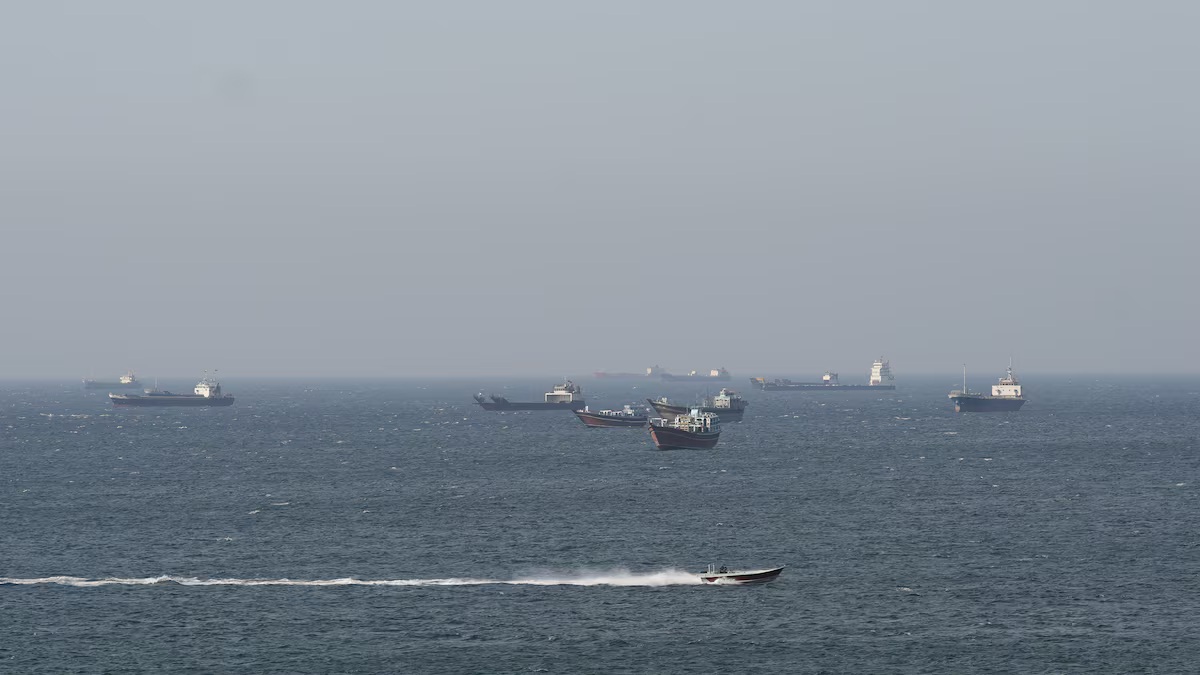
The U.S. “will actively pursue any Iranian-flagged vessel or any vessel attempting to provide material support to Iran,” Dan Caine, chairman of the Joint Chiefs of Staff, said Thursday.
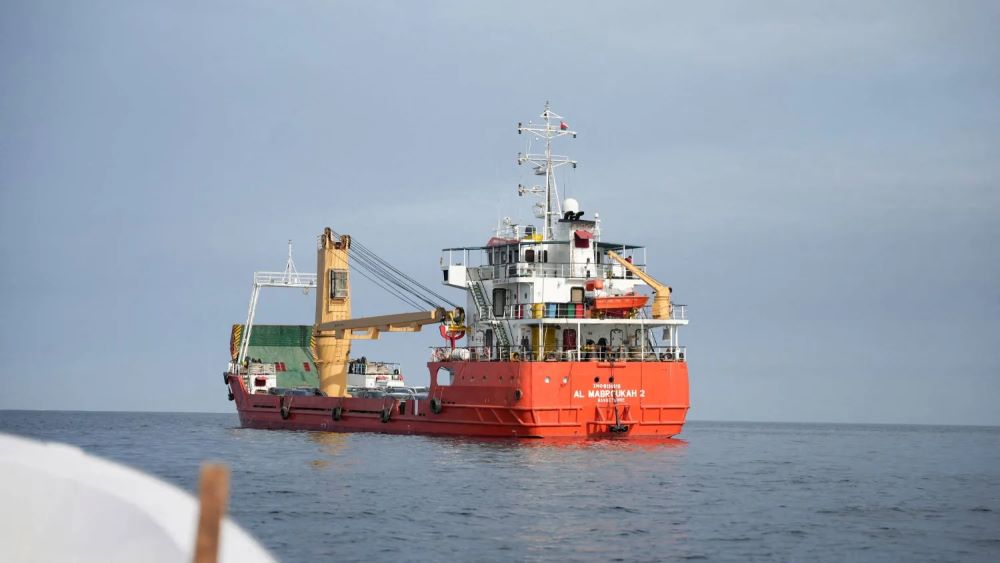
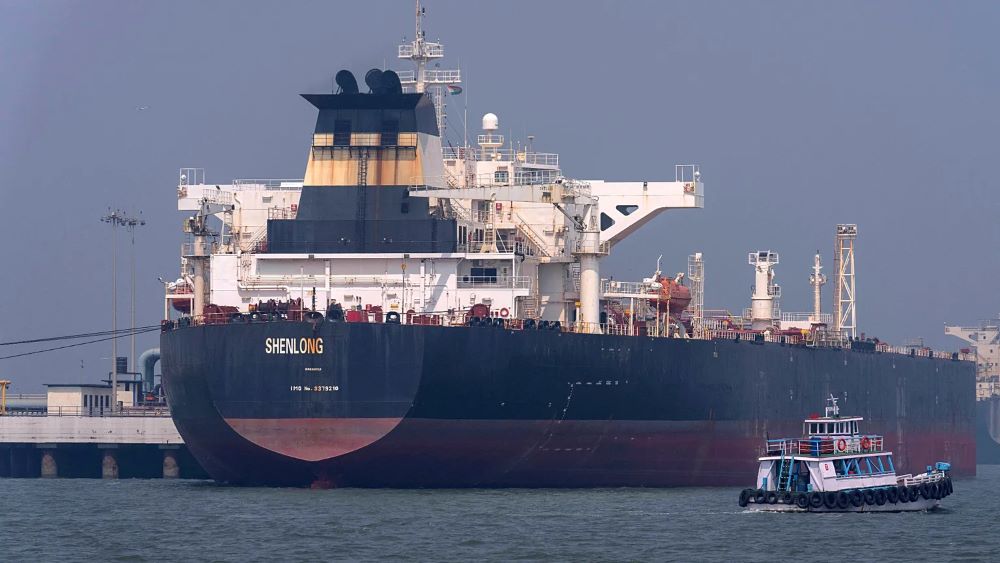
The move will enable the U.S. to take control of Iran-linked vessels around the world, including ships carrying Iranian oil that are already sailing outside the Persian Gulf and those carrying arms that could support Tehran, the report said.
The operation would be carried out in part by the U.S. Indo-Pacific Command, according to Caine.
It marks a new phase of the U.S. pressure campaign against Tehran, dubbed “Economic Fury” by the Trump administration, aiming to maximize economic pressure on the Middle Eastern country as a temporary ceasefire between the two sides is set to expire next week.
U.S. President Donald Trump is optimistic that the naval blockade, combined with measures imposed under “Economic Fury,” “will help facilitate a peace deal,” White House spokeswoman Anna Kelly was quoted as saying.
The U.S. “will actively pursue any Iranian-flagged vessel or any vessel attempting to provide material support to Iran,” Dan Caine, chairman of the Joint Chiefs of Staff, said Thursday.
Baghaei, speaking on state-run IRIB television, said that recent public statements by Foreign Minister Seyed Abbas Araghchi were made within the framework of the ceasefire between Iran and the United States announced on April 8, not as signals of a new diplomatic opening.
Earlier Friday, Araghchi said the Strait of Hormuz would remain “completely open” to commercial shipping for the duration of the current truce between Iran and the United States.
Baghaei moved to clarify the foreign minister’s position, saying that following a ceasefire in Lebanon on Friday, Tehran chose to apply safe-passage conditions outlined in its agreement with Washington to vessels transiting the strait.
“We have reached no new agreement,” he said. “The ceasefire agreement is the one announced on April 8.”
He accused the United States of failing, from the outset of the truce, to honor a commitment to extend its terms to Lebanon, a provision Iran insists was included in the April 8 agreement. Washington and Jerusalem have rejected that characterization.
Baghaei also warned that Iran would take “countermeasures” if a United States naval blockade of the Strait of Hormuz persisted. He said no talks on extending the ceasefire had taken place, and that mediation efforts led by Pakistan remained focused on ending the conflict and protecting Iran’s interests.
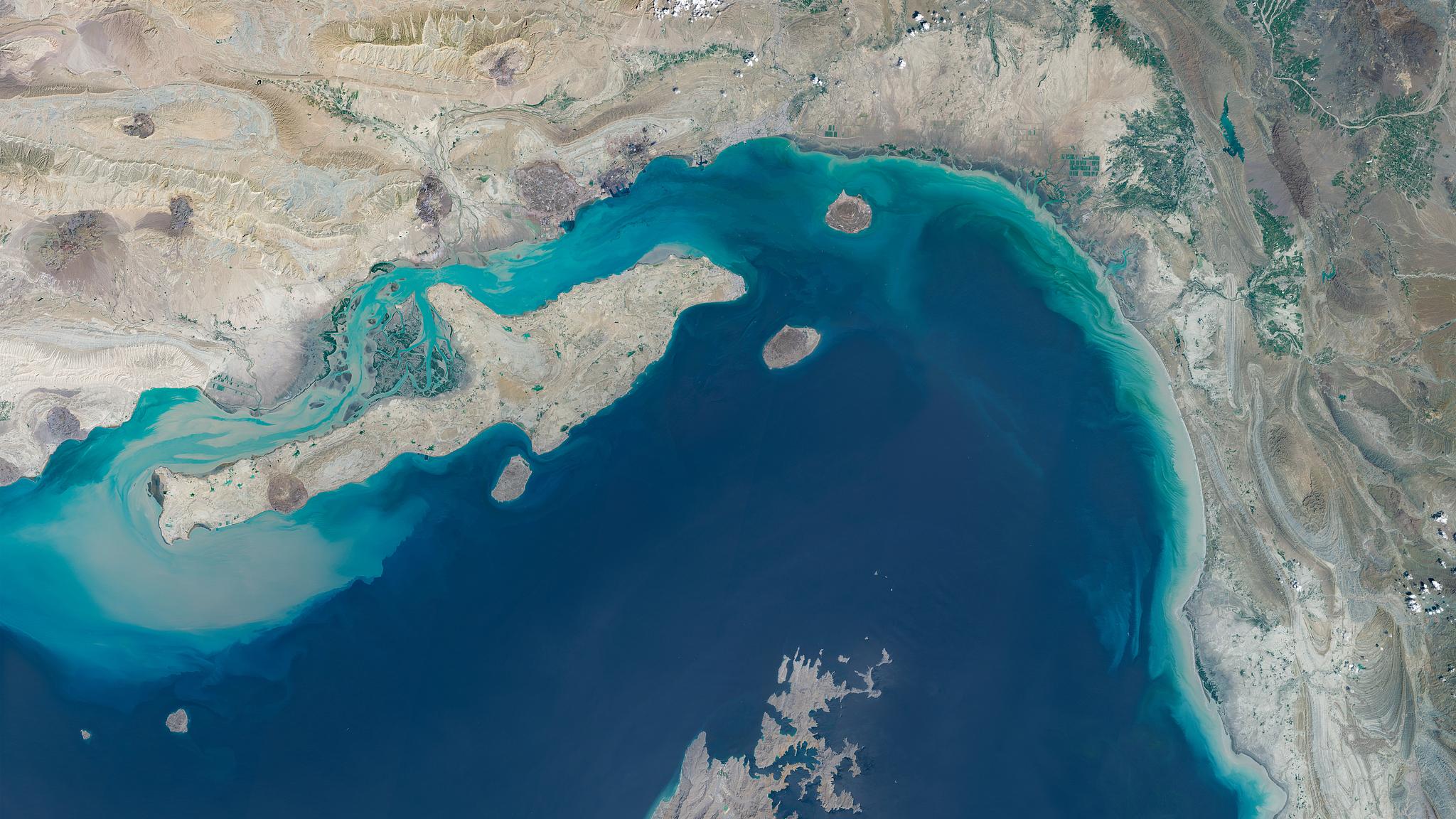
Iran tightened its grip on the strait beginning Feb. 28, when it barred safe passage to vessels belonging to or affiliated with Israel and the United States following joint strikes on Iranian territory.
The United States subsequently imposed its own blockade, preventing ships traveling to and from Iranian ports from transiting the waterway after peace negotiations in Islamabad collapsed over the weekend.
Axios reported Friday, citing people familiar with the talks, that a second round of United States-Iran negotiations is expected to take place in Pakistan this weekend, most likely on Sunday.
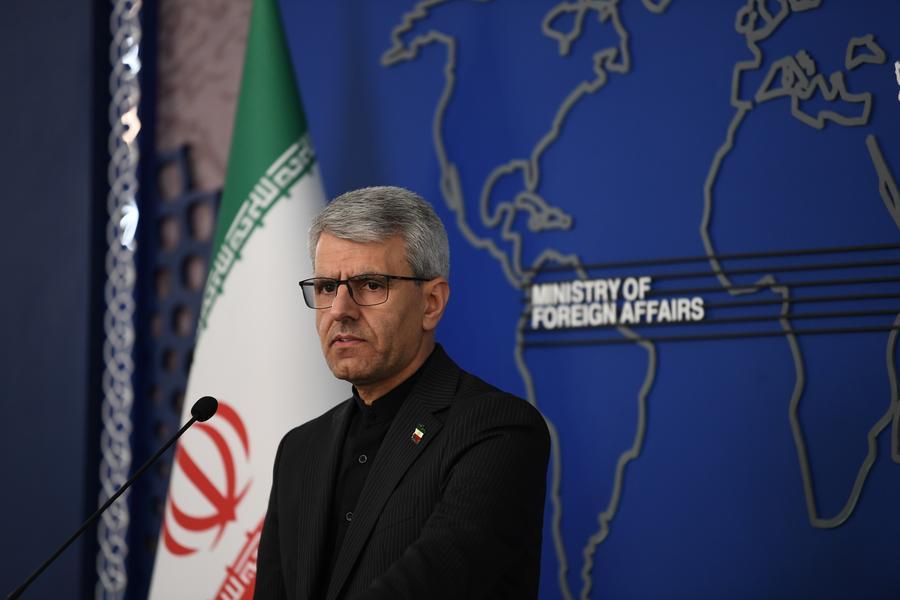
Iranian Foreign Ministry spokesman Esmaeil Baghaei speaks at a weekly press conference in Tehran, Iran, April 6, 2026.
In late March, the relatively unknown Chinese motorcycle maker ZXMOTO clinched back-to-back titles in the World Supersport category at the Portuguese round of the Superbike World Championship, breaking a decades-long monopoly held by established global brands.
Hailed by international media as a testament to China’s manufacturing strength and comprehensive local supply chain, the victory highlights a larger reality: as global economic turbulence intensifies, China’s manufacturing sector is proving its resilience and capacity for high-quality growth.
From big to strong
Having maintained its position as the world’s largest manufacturing hub for 16 consecutive years, China has fortified its key industrial and supply chains to become more resilient, providing strong support for weathering major risks.
The country’s 15th Five-Year Plan (2026-2030) has made moving faster to boost its strength in manufacturing a central task, calling for maintaining a reasonable share of manufacturing in the economy and building a modern industrial system led by advanced manufacturing.
According to the Ministry of Industry and Information Technology, during the 2026-2030 period, the country will shore up weak links, strengthen competitive edges and seize early-mover advantages, with the goal of moving from key breakthroughs to all-round advantages.
Xin Yongfei, an expert with the China Academy of Information and Communications Technology, noted that China’s manufacturing sector already has the scale and innovation foundation.
During the 15th Five-Year Plan period, he said, maintaining strategic focus and concentrating on crucial areas will allow China to leap from “following” to “running alongside” and even “leading,” laying a solid foundation for basically achieving new industrialization.
Local governments have also rolled out concrete plans: Hunan Province in central China will implement landmark projects for an advanced manufacturing highland, Shanghai in east China aims to build the “Made in Shanghai” brand, and southwest China’s Chongqing Municipality is pushing to become a strong manufacturing city.
Core-reshaping innovation
In Beijing’s Yizhuang District, also known as E-town, humanoid robots can be seen training for a half-marathon. Many of them can now run at speeds of up to six meters per second, rivaling the pace of professional athletes.
This leap mirrors a broader push toward higher-end, smarter and greener manufacturing. The 15th Five-Year Plan outlines a series of concrete steps: improving manufacturing quality, boosting the resilience of industrial and supply chains, and achieving breakthroughs in core technologies.
One telling example is the recent release of China’s domestically developed T1200-grade ultra-high-strength carbon fiber, now the strongest industrially produced carbon fiber in the world.
“Thanks to this technological breakthrough, our domestically produced large aircraft will be lighter, deep-space exploration can go farther, and new energy vehicles will have longer range. It provides a stronger ‘skeleton’ for future industries,” said Chen Qiufei, the R&D lead.
Meanwhile, companies are shifting from selling hardware to offering integrated solutions. DJI, known for its drones, now provides agricultural plant protection solutions, with related service revenue accounting for more than 30 percent of its total.
Similarly, Chinese battery maker Sunwoda has built a six-dimensional maglev production line and a digital twin system to improve its own manufacturing efficiency, and is now exporting smart manufacturing solutions to others.
The results are visible in the data. In the first two months of 2026, the value-added output of high-tech manufacturing enterprises grew 13.1 percent year on year, while that of equipment manufacturing rose 9.3 percent.
The “AI plus manufacturing” initiative has been implemented, with the adoption rate of AI technology among major manufacturing firms exceeding 30 percent. Meanwhile, more than 8,300 green factories have been established nationwide.
More open landscape
At the same time, China’s manufacturing sector is opening up further. In Zhanjiang, south China’s Guangdong Province, German chemicals giant BASF’s massive production complex, known as a Verbund site, has started production, marking the largest single investment project wholly owned by a German enterprise in China.
Thousands of miles away in Tatabanya, Hungary, Chinese heavy machinery manufacturer Zoomlion’s first European smart factory has opened, providing a stable and efficient product supply and better localized services for European customers.
All foreign investment restrictions in the manufacturing sector have been lifted in China. In the first two months of this year, China’s exports of high-tech and high-value-added mechanical and electrical products reached 2.89 trillion yuan (about 418.9 billion U.S. dollars), up 24.3 percent year on year.
As China navigates an increasingly volatile world, its manufacturing sector is actively integrating into global markets, offering vast cooperation opportunities for the world.
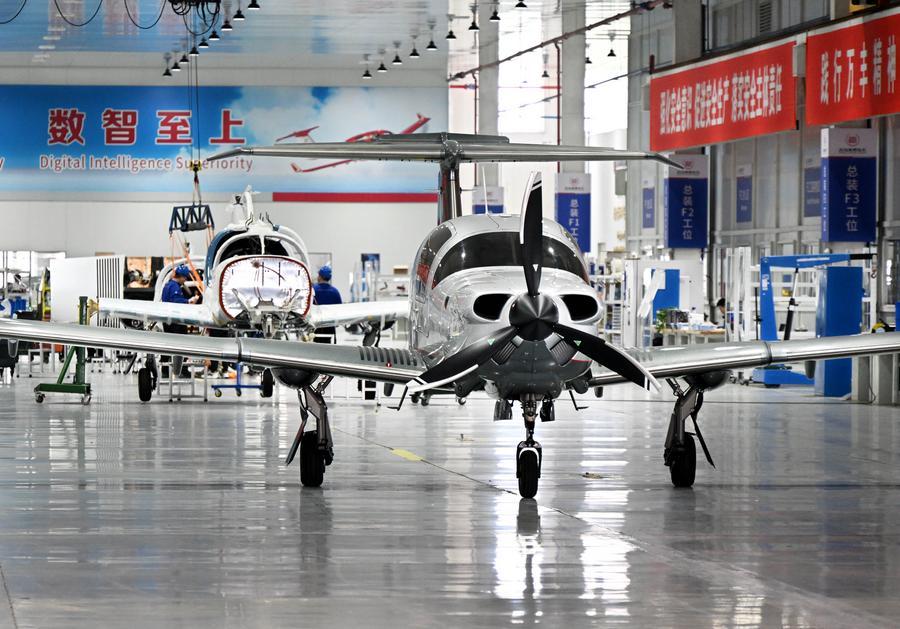
This photo taken on April 2, 2026 shows a view inside an aircraft manufacturing workshop of Wanfeng Auto Holding Group in Laixi City, east China’s Shandong Province.
Running from April 13 to 18 in Haikou, capital of China’s island province of Hainan, the annual expo is showcasing premium global products and facilitating cooperation between international brands and local partners.
Despite the diversity of their product categories ranging from health, food and cosmetics to art, exhibitors share a common goal: to expand their presence in China.
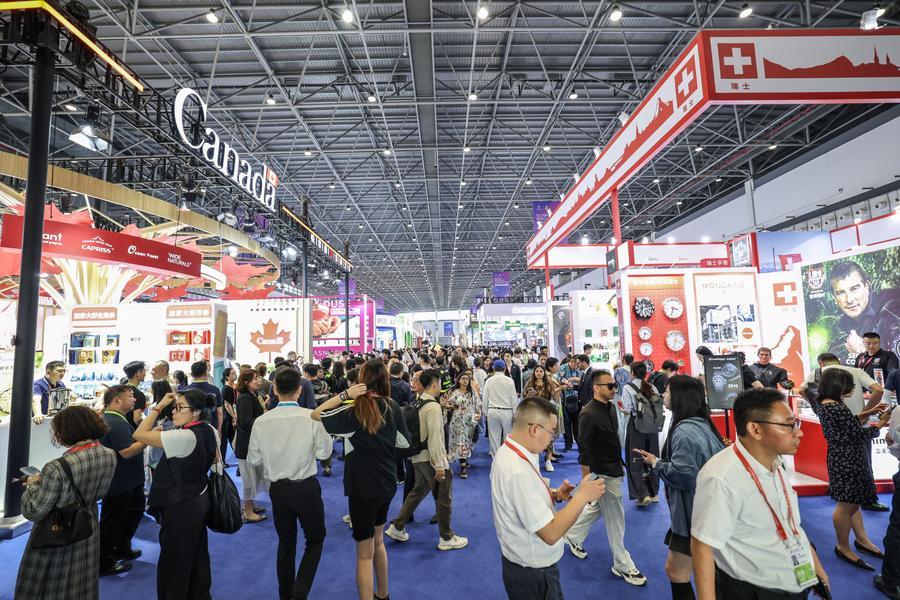
As this year’s guest country of honor, Canada has brought its largest-ever delegation, with around 40 companies participating. A highlight among its premium offerings is a wide range of natural, health-boosting products.
Among the companies is Canada Royal Milk (CRM), a powder formula producer based in Ontario. The company is leveraging the expo to capitalize on China’s huge market potential, driven by its large population and consumption upgrading.
Reago Li, the China region general distributor for the Canadian brand, told Xinhua that at this year’s expo, the company is highlighting Capriss, a goat milk powder brand under CRM that targets adult consumers, particularly those aged 45 and above.
According to Li, compared to cow milk, goat milk has smaller fat molecules, making it easier to digest and more friendly for people with lactose intolerance.
Since its debut in the Chinese market in 2023, Capriss has expanded its sales and built a growing presence in local supermarkets and shopping malls. It has also established a sales channel on a popular online pharmacy platform in the country, Li said.
Next to Li’s booth, DPA is displaying seal oil soft capsules, an Omega-3 health supplement. Song Bingbing, the brand’s chief nutritionist, said that five consecutive years of participation in the expo has helped the Canadian brand gain growing market recognition, with its products now sold in over 5,000 retail stores nationwide.
Explaining the Chinese market’s strategic importance, Song said there is a shift in the country from a treatment-centered approach to one centered on chronic disease management, and that the product aligns well with growing health management needs, such as weight management and cardiovascular and cerebrovascular health. “With a large population base, the Chinese market is a top priority.”
Li echoed this sentiment, categorizing China’s consumer market as top-tier in both scale and quality. “Indispensable” was his word for the market, expressing the Canadian brand’s confidence in competing for a share in it.
The information provided by the two exhibitors has offered a clear lens into how increasingly important the Chinese market is becoming for global companies. Further evidence of their eagerness to explore this market is inside the hall, where live-streamers are invited to promote premium products to online audiences, and hired staff are hospitably offering samples of delicacies to visitors and inquirers — from butter on biscuits from Ireland, wine from France, to ginseng tea from Canada.
The numbers tell the same story. International exhibits accounted for 65 percent of the total this year, up 20 percentage points from last year, according to expo data. Meanwhile, the number of professional buyers is expected to reach 65,000, a 10-percent rise from the previous edition, said Lu Min, director of the Hainan provincial bureau of international economic development.
While the convergence of global brands demonstrates their continued interest, the market’s diversity, speed and complexity are also prompting them to refine their marketing strategies, pricing and product design in response to rapidly evolving consumer preferences. In a recent commentary, the Macau Post Daily noted that rather than simply a question of scale or growth, the Chinese market is where global companies’ strategies get tested and refined.
Chen Lifen, a researcher at the Development Research Center of the State Council, said China’s consumer market is seeing increasingly pronounced trends toward smarter, greener and higher-quality consumption upgrades. Chen noted that the expo has built an efficient and convenient channel for high-quality global consumer goods to enter the domestic market, and injected new momentum into expanding and upgrading consumption while unlocking the potential of China’s mega-market.
Since its launch in 2021, the CICPE has become an important platform for multinationals to stay abreast of consumer trends in China, with over 3,800 enterprises and more than 12,000 brands from 92 countries and regions participating in the past five editions.
People visit the sixth China International Consumer Products Expo in Haikou, south China’s Hainan Province, April 13, 2026.
In exercising its veto on April 7 on the draft resolution submitted by Bahrain on behalf of Gulf states, China upheld international fairness and justice, defended the purposes and principles of the UN Charter and prevented the conflict from expanding further. The veto also created favorable conditions for achieving a temporary ceasefire and launching dialogue and negotiations, said Fu Cong, China’s permanent representative to the United Nations.
“China’s vote represents a choice responsible for peace and for the people of the region. It stands on the right side of history and will stand the test of history,” he told a UN General Assembly meeting on the use of veto in the Security Council.
China attached great importance to the draft resolution and fully understood the Gulf states’ major concerns. At the same time, Security Council actions should be aimed at de-escalation. They must not provide a veneer of legitimacy for unauthorized military operations or authorize the use of force, let alone further exacerbate tensions and add fuel to the fire, thereby leading to an escalation of the conflict, said Fu.
“China does not go along with Iran’s attacks on Gulf states. China believes that the passage and safety of a strait used for international navigation should be safeguarded. We call on Iran to take proactive measures to restore normal navigation in the Strait of Hormuz at an early date,” said Fu.
“Meanwhile, the ramped-up military deployment and targeted blockade by the United States constitute a dangerous and irresponsible move. The issue of navigation in the Strait of Hormuz is a spillover effect of the conflict in Iran. Only a complete ceasefire can fundamentally create conditions for easing the situation,” he said.
China welcomes the announcement of a ceasefire agreement by the relevant parties and supports all efforts conducive to ending the conflict. The U.S.-Iran negotiations in Pakistan mark a step in the right direction toward de-escalation, Fu said.
“The relevant parties should adhere to the ceasefire agreement, stick to the direction of dialogue and peace talks, stay committed to resolving disputes through political and diplomatic means, and take concrete actions to de-escalate regional tensions,” he said.
The international community, he said, should continue to intensify efforts to promote peace talks and unequivocally oppose any actions that undermine the ceasefire or escalate confrontation.
All parties should also earnestly respect Lebanon’s sovereignty, security and territorial integrity, and prevent the escalation of the situation in Lebanon from undermining the ceasefire arrangement, Fu said.
As a sincere friend and strategic partner of countries in the Middle East, China is closely following the regional situation, maintaining an objective and impartial position, and has been engaged in intensive mediation with all parties to actively promote peace talks, he said.
China stands ready to continue facilitating de-escalation, promoting the improvement of relations between regional countries, and playing a constructive role in ultimately achieving enduring peace and stability in the Middle East, he said.
China has called on Iran to take proactive measures to restore normal navigation in the Strait of Hormuz at an early date.
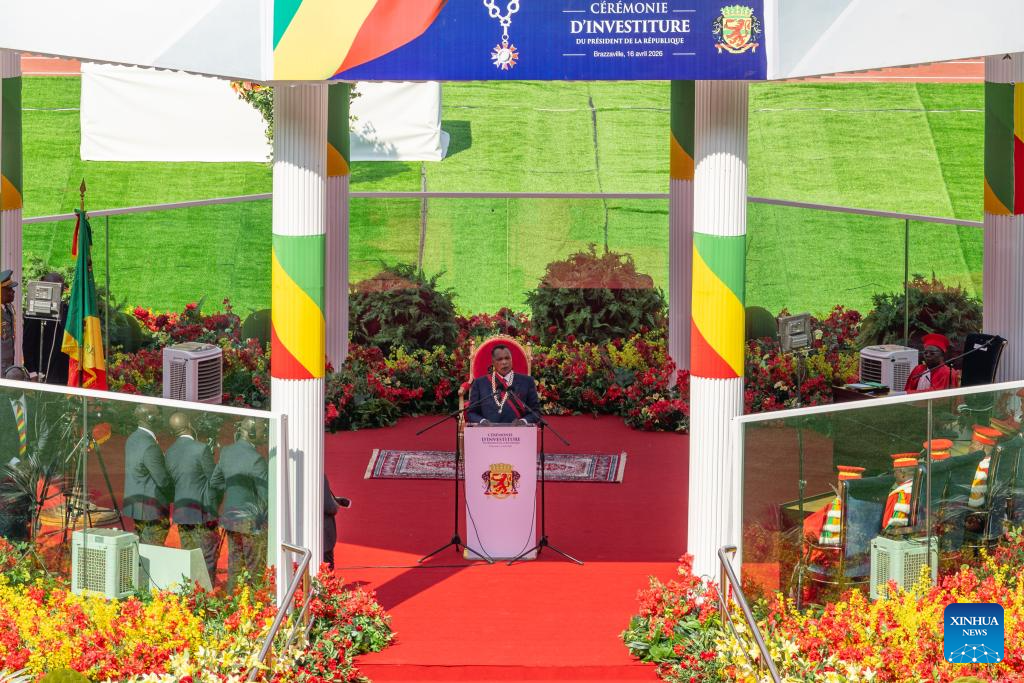
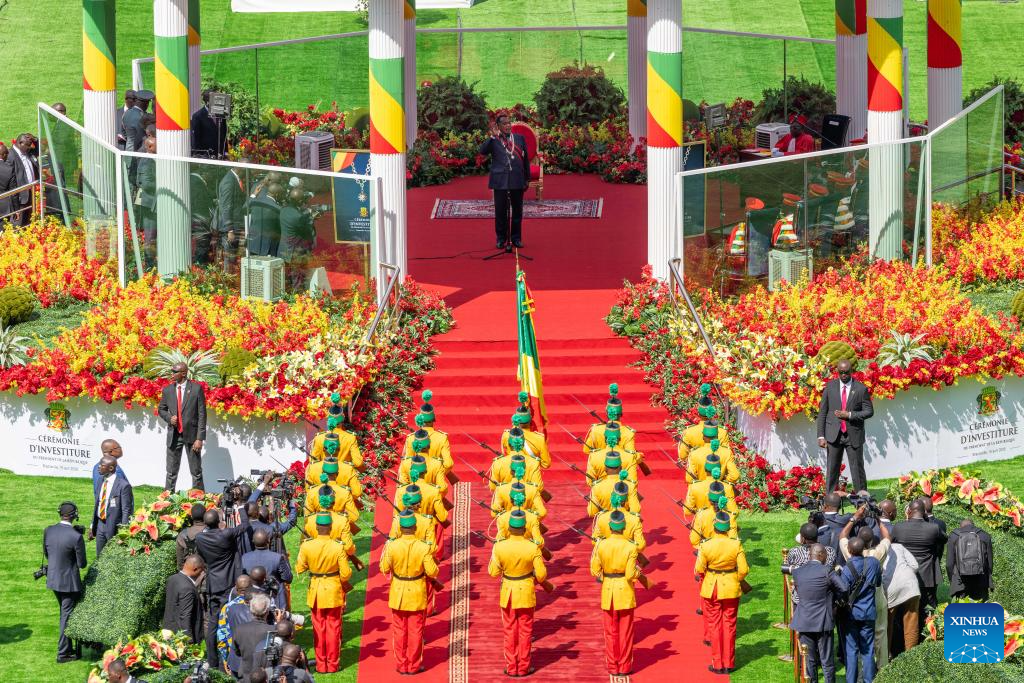
The ceremony took place at Kintele Stadium in the northern suburbs of Brazzaville, the capital city, in the presence of several African heads of state.
In his inaugural address, Sassou Nguesso pledged to implement his development programme, titled “Accelerating the March Toward Development,” with a focus on economic diversification and modernization, agricultural mechanization, infrastructure development, education, youth training, and improvements to the health system.
He said peace, stability and infrastructure development would be the priorities of his new mandate.
The president also called on Congolese citizens to promote Pan-Africanism and strengthen regional integration, while reaffirming his support for initiatives aimed at advancing Africa’s economic development.
President of the Republic of the Congo Denis Sassou Nguesso takes the oath of office during his inauguration ceremony at Kintele Stadium in the northern suburbs of Brazzaville, the Republic of the Congo, April 16, 2026.
Wadagni secured victory in the first round of voting held on April 12, defeating his moderate opposition rival, former culture minister Paul Hounkpe, who obtained 5.73 percent of the vote.
The Constitutional Court, Benin’s highest authority on electoral disputes, said Wadagni and his running mate Mariam Chabi Talata won 4,575,449 votes, while Hounkpe and Rock Judicael Hounwanou received 278,297 votes. Talata will serve as vice president.
The court said that more than 7.89 million voters were registered nationwide, with over 4.85 million casting ballots, representing a turnout rate of 63.57 percent.
Preliminary results released on Monday by the Autonomous National Electoral Commission had already indicated a decisive lead for Wadagni, who secured 94.05 percent of the vote.
Wadagni, 49, previously worked at Deloitte before entering government after Patrice Talon’s election in 2016. He has since served as minister of economy and finance, was reappointed in 2021, and later promoted to senior minister, playing a central role in implementing Talon’s economic policies.
Under Benin’s electoral code, the president and vice president are elected by direct universal suffrage for a seven-year term.
Romuald Wadagni has won Benin’s presidential election with 94.27 percent of valid votes.
According to the World Travel & Tourism Council (WTTC), the sector performed strongly worldwide in 2025, with global growth reaching 4.1 percent. However, the story was very different for North America, which was the slowest-growing region globally, rising just 1.0%, and by only 0.9% in the U.S.
Despite an increase of 80 million international travelers globally, fewer chose the United States. Visitor numbers to the country dropped by 5.5 percent compared to 2024, while international spending declined by 4.6 percent to $176 billion.
Still, the U.S. remains dominant, contributing $2.63 trillion to global GDP and supporting 20.4 million jobs in 2025. Domestic travel spending also stayed strong, reaching $1.54 trillion.
WTTC President and CEO Gloria Guevara said, “The United States remains the largest Travel & Tourism market in the world and has an amazing foundation. To avoid losing its leadership position the U.S. must invest in promoting its attractiveness… change perception and position the U.S. as a welcoming destination.”
The report highlights a major opportunity ahead, as the U.S. prepares to co-host global football events in 2026, expected to attract about 1.24 million international visitors.
Meanwhile, countries in Asia-Pacific, led by China, are rapidly expanding. China’s tourism sector grew by 9.9 percent, contributing $1.75 trillion to GDP.
Jason Wynn noted, “the U.S. Travel & Tourism sector continues to demonstrate remarkable resilience… With the U.S. set to host a series of global events through 2028, we have an extraordinary opportunity to welcome new visitors.”
WTTC says future growth will depend on stronger promotion, investment, and improving the country’s global image.
The United States remained the largest Travel & Tourism market in the world in 2025 but is losing market share according to the World Travel & Tourism Council’s (WTTC) latest Economic Impact Research.
The platform, called Carrot Intelligence, uses one of the largest private datasets in the field, covering information from 195 countries.
Unlike many AI systems that rely on general data, this platform is built from real clinical and financial records gathered over the past decade.
Carrot says this allows it to offer more personalized support based on each individual’s medical history, location, and personal goals.
The company has already supported millions of users and processed over $1 billion in claims, forming the backbone of the new system. According to Carrot’s founder and CEO, Tammy Sun, the goal is to ensure AI in healthcare is reliable, evidence-based, and focused on real outcomes.
Carrot Intelligence is behind several new tools, including a program aimed at reducing high-risk pregnancies and a system that detects errors and fraud in medical billing.
The platform can also step in earlier, helping people explore less invasive fertility options before turning to treatments like In Vitro Fertilization (IVF).
In a recent survey, 89 percent of women said they would prefer alternatives to IVF, highlighting the need for earlier guidance. The platform responds by offering timely advice tailored to each stage of a person’s journey.
Importantly, Carrot says human clinicians remain in control of care decisions, with AI supporting rather than replacing them.
Carrot has introduced a new artificial intelligence platform designed to improve how people access and experience care.
Zimbabwean President Emmerson Mnangagwa presided over the handover ceremony at State House, attended by South African Minister of Sport, Arts and Culture Gayton McKenzie, and Zimbabwean government officials.
Mnangagwa hailed the repatriation as a triumph of Pan-African solidarity and a decisive step toward addressing historical colonial injustices. He emphasized that reclaiming such artifacts is essential for restoring the nation’s cultural identity and rectifying the “salient testament” of past plunder.
“For far too long, this vital piece of our national soul and dignity resided in a foreign land… My government will continue to ensure that Zimbabwe’s rich heritage is freed from the hostage in foreign museums, public spaces and private galleries,” the president said.
For his part, McKenzie described the return as a significant historical milestone, expressing his hope that the eight ancestors would finally find peace in their native soil and that the day’s events would help in the long journey of restoring Zimbabwe’s national wholeness.
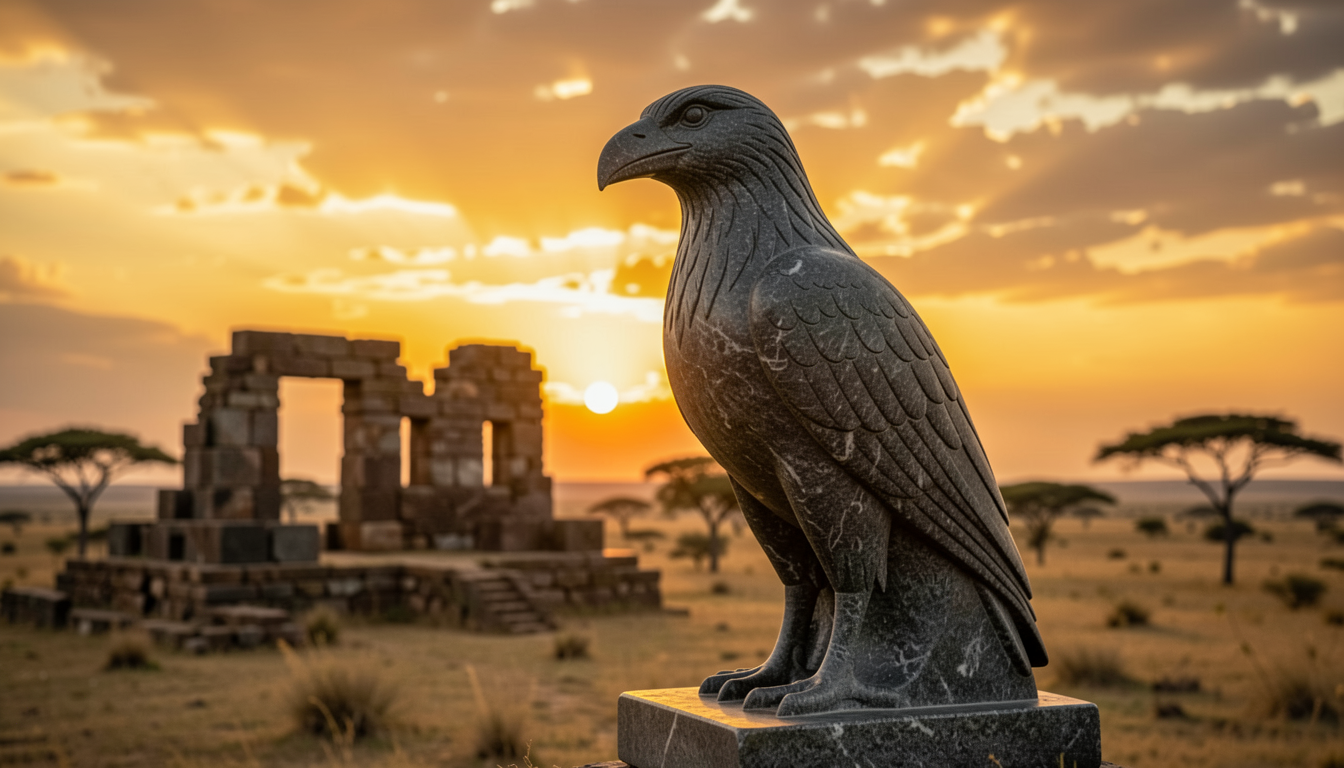
The Zimbabwe Bird, known in the Shona language as Chapungu, is a national emblem and symbol associated with the country’s cultural and historical identity, and is featured in the national flag, coat of arms and currency.
Carved from soapstone, this specific artifact was the first of eight carvings looted from the ruins of Great Zimbabwe — the Iron Age capital located in the country’s southeast — and later sold to Cecil John Rhodes, then the prime minister of the Cape Colony, in the 1890s.
The eight ancestral human remains were collected from Zimbabwe — then known as Southern Rhodesia — during the late 19th and early 20th centuries. They were acquired by colonial officials, medical practitioners and researchers, and donated to what became the Iziko South African Museum as scientific specimens.
Zimbabwe on Wednesday welcomed the return of a centuries-old “Zimbabwe Bird” stone sculpture and eight ancestral remains from South Africa.