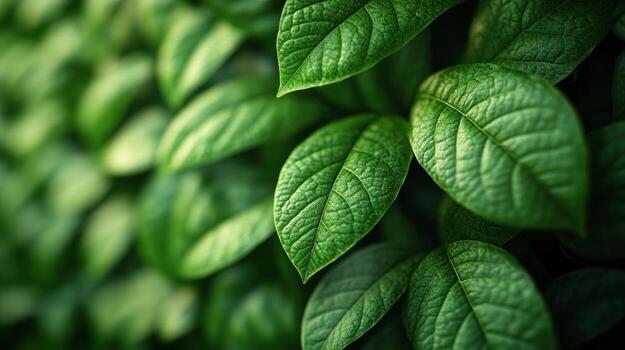
This process, known as foliar uptake, appears to be especially important in dry and dusty environments where soil nutrients are limited. Scientists say it could help plants survive in harsh conditions that were previously not well understood.
“Plants are not like animals; they cannot move,” said Anton Lokshin, a plant biologist at Ben Gurion University of the Negev. “So they have to have strategies to absorb food and nutrients from the environment.”
To test this, researchers studied three plant species in Israel’s Judean Hills, a region regularly exposed to dust from the Sahara and Arabian deserts. Some plants were treated with volcanic dust on their leaves, while others were left untreated for comparison.
The results showed that plants exposed to dust had higher levels of key nutrients, including iron, manganese, nickel, and copper, in their shoots. These are important elements for growth and survival.
However, nutrient levels in the roots remained largely unchanged, even when dust was added to the soil. Scientists explain this is because nutrients in soil are often quickly taken up by microorganisms or locked in minerals, making them harder for plants to access.
Leaves, on the other hand, provide a more open pathway. They can release natural compounds that help dissolve dust particles and allow nutrients to be absorbed more easily.
The findings suggest that airborne dust may be a more important nutrient source for plants than previously thought, particularly in arid regions.
Leave a Reply