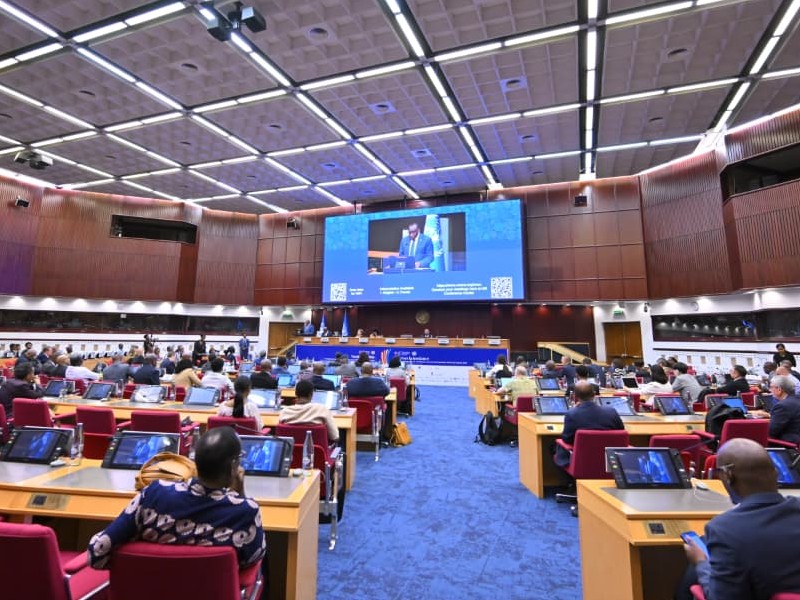
They made the call during the eighth African Science, Technology and Innovation (STI) Forum, held by the United Nations Economic Commission for Africa (UNECA) from Sunday to Monday in the Ethiopian capital of Addis Ababa.
Ugandan Minister of Science, Technology and Innovation Monica Musenero Masanza stressed the need for concerted continental efforts on STI as a central pillar to Africa’s socio-economic transformation, industrialization, value addition, and job creation.
“There is no question that STI is an essential ingredient for our nations and continent to move forward,” said Masanza. “We need to work jointly to scale practical projects. Africa does not lack ideas and strategies. Africa lacks execution at scale.”
The forum brought together African ministers responsible for STI, representatives of the African Union and various United Nations agencies, as well as private sector leaders and academia.
Noting that Africa continues to face significant digital and innovation gaps despite the opportunities presented by emerging technologies, UNECA Executive Secretary Claver Gatete emphasized that Africa must act with “urgency, coordination and ambition” to harness STI as drivers of economic transformation, inclusion and sustainable development.
“For Africa, the margin for delay has disappeared. The cost of inaction is rising. The choices we make today will determine whether we catch the next wave of global transformation, or miss it entirely,” Gatete said.
Gatete outlined five strategic priorities for Africa to turn innovation into a broad-based transformation, which include aligning STI with Africa’s economic transformation agenda, accelerating investment in digital public infrastructure, building future-ready skills at scale, deepening regional and continental coordination, as well as securing reliable, affordable and sustainable energy to power Africa’s digital transformation.
The forum brought together African ministers responsible for STI, representatives of the African Union and various United Nations agencies, as well as private sector leaders and academia.
He made the remarks during a media discussion focused on ongoing changes in public transport across the city.
Currently, the City of Kigali has introduced dedicated bus lanes for public transport, while encouraging private car owners to opt for buses instead.
This move aims to improve fuel efficiency amid ongoing tensions in the Middle East, reduce traffic congestion, and speed up travel.
However, one of the major concerns raised by commuters is the lack of reliable, real-time information about buses. Many passengers spend long periods waiting at bus stops, sometimes only for buses to arrive already full.
To address this, the new technology is expected to provide accurate, real-time updates on bus locations and available seats.
Rukera explained that although the system is already in use, it has not yet been officially launched as it is still undergoing testing.
“We have started using this technology, but we have not yet introduced it to the public because it is still being tested. As you know, with technology, you first test it thoroughly before presenting it,” he said.
He added that out of the 320 buses currently operating in Kigali, the system can already track their locations and monitor how they are being driven.
The next step is to integrate artificial intelligence capable of counting passengers on board and providing real-time updates.
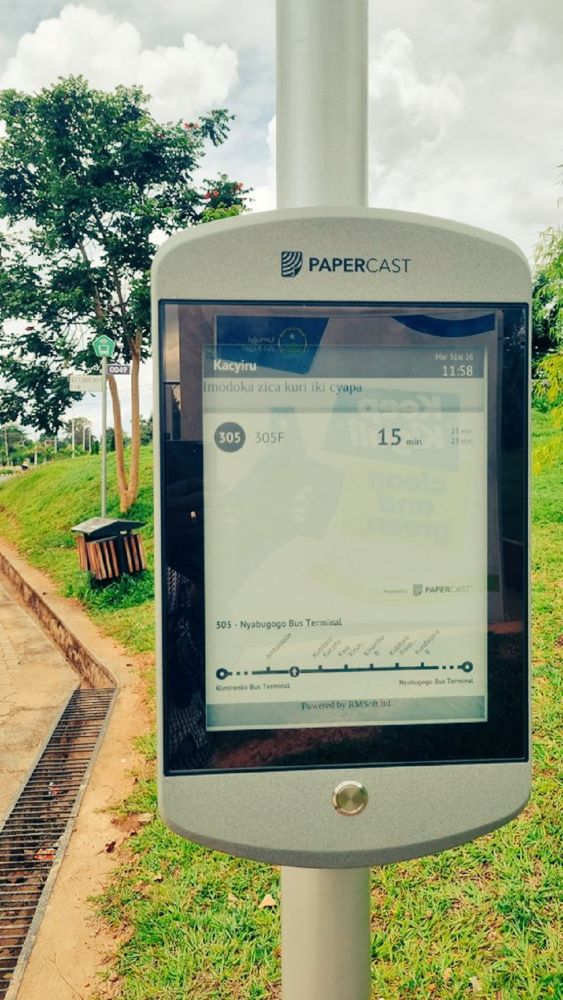
Rukera also revealed that on routes such as Rwandex toward Sonatubes and Kacyiru, some bus stops are already equipped with smart displays showing estimated arrival times and passenger capacity.
“This is a project we have been working on for about six months. We started with existing systems that allow us to track bus movements and schedules, as well as monitor drivers. Our goal is to extend this information to passengers, not only at bus stops but also to those at home through a mobile application,” he explained.
He further noted that Rwanda is collaborating with the navigation platform Waze, allowing even those without the dedicated app to access nearby bus stop information via the internet, making it easier to plan their journeys.
Transport analyst Prof. Egide Karuranga, who also participated in the discussion, emphasized that adopting such technology will significantly improve public transport services.
He explained that passengers will be able to check, for example, if a bus scheduled for noon is delayed until 12:15, see that it will arrive in five minutes, and know whether seats are available before it arrives.
Karuranga added that such systems could also be expanded to better serve vulnerable groups, such as pregnant women and people with disabilities, by helping them decide whether to board a bus or wait for one with available seating.
He also pointed out the need to reduce the number of pedestrian crossings that cause buses to stop frequently, noting that this contributes to delays and increases the risk of accidents.
“Public transport is essential because it supports all aspects of sustainable development, from the economy to technology,” he said.
Karuranga further highlighted that traffic congestion, largely driven by the use of private cars, has a significant economic cost. He estimated that if a person spends one hour in traffic daily, it amounts to about 320 hours per year, equivalent to roughly 40 working days lost. When multiplied across many people, this has a serious impact on the national economy.
Kigali City spokesperson Emma Claudine Ntirenganya also encouraged residents to embrace public transport, noting that while it is not mandatory to leave private cars at home, doing so benefits both individuals and the country.
“When you choose to take a bus and leave your car at home, it is not just a personal benefit; it also serves the national interest, especially in these times, because it helps extend the country’s fuel reserves,” she said.
The ongoing efforts reflect Rwanda’s broader push to modernize public transport and promote more efficient, sustainable urban mobility in Kigali.
Rwanda has rolled out smart technology to help passengers track bus movements in real timeKigali residents are encouraged to use public busesDedicated bus lanes expected to improve traffic flow and public transport efficiencySome parking spaces for private cars have been removed to promote the use of busesSignposts indicating bus-only lanes have been installed in several areas.
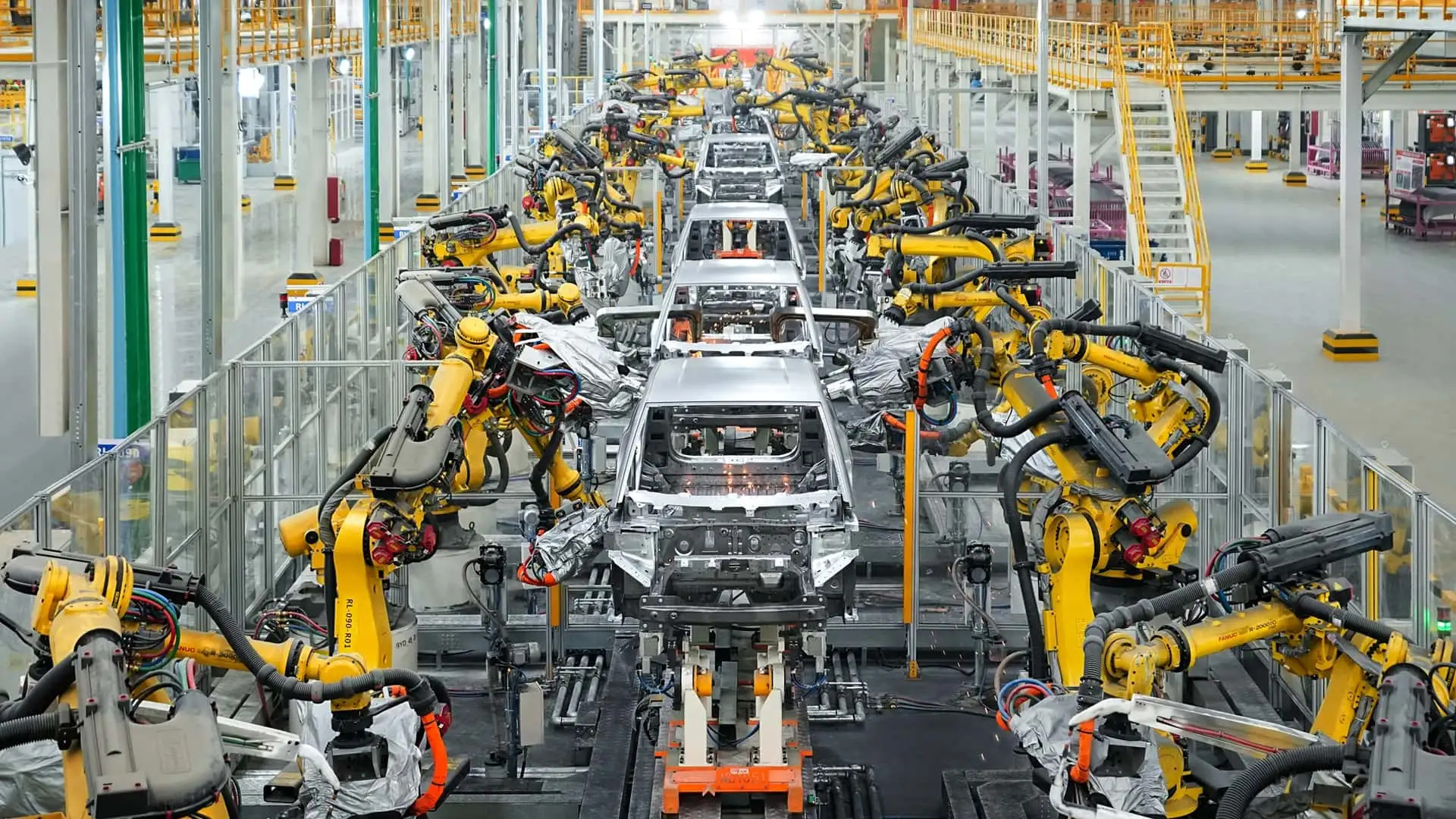
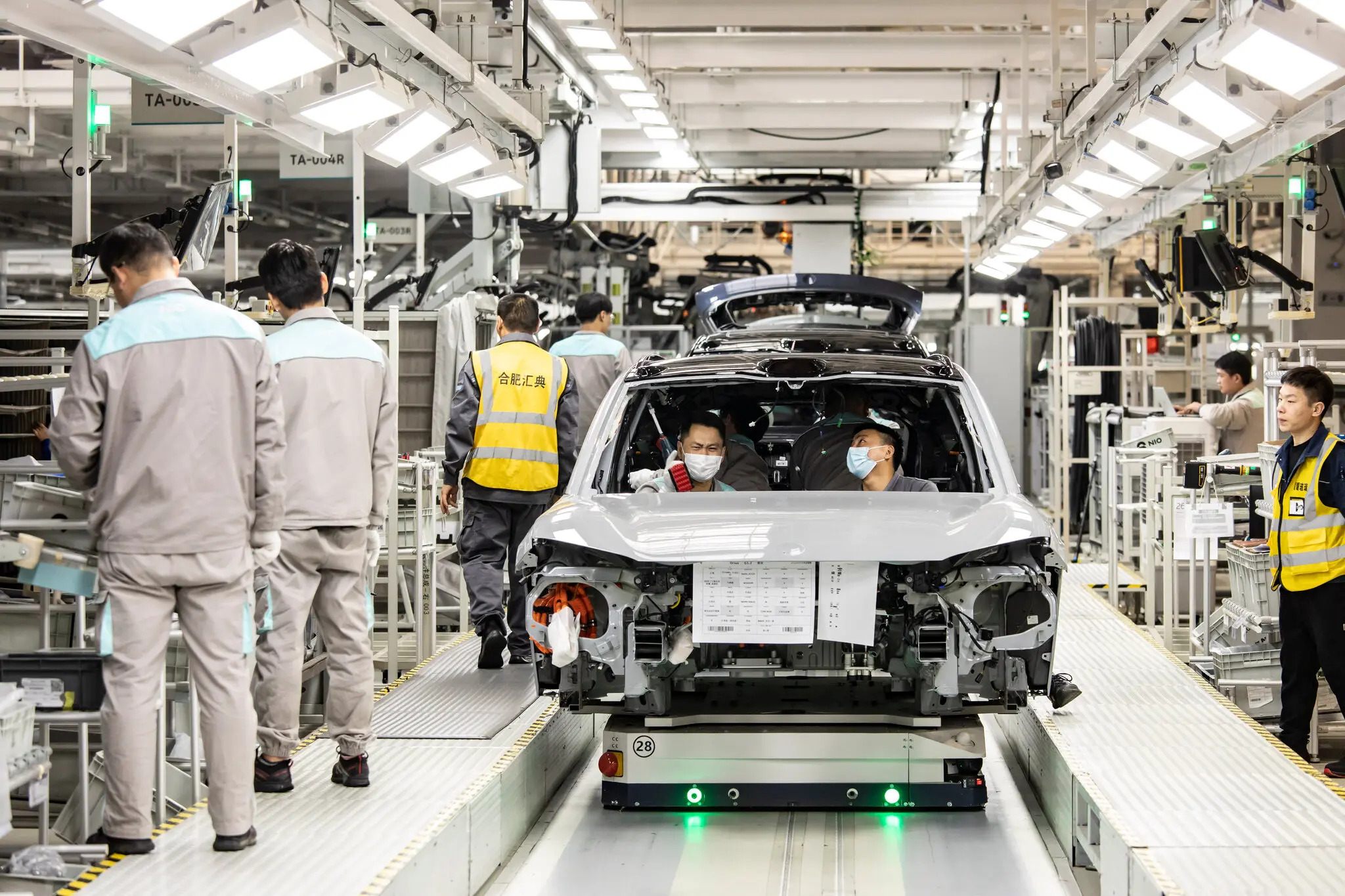
Looking across rows of robotic arms operating with minimal human intervention, he remarked: “We have no chance against this.”
The statement was more than corporate humility. It was a recognition that the global automotive order, long dominated by Detroit, Tokyo, and Stuttgart, is being fundamentally reshaped by China.
For decades, legacy automakers such as Toyota, Ford Motor Company, Honda, Volkswagen, and BMW set the pace of the global industry. Today, Chinese manufacturers like BYD, Xiaomi, XPeng, and Geely are changing the rules entirely.
The pressure is so intense that executives across the world are no longer speaking in terms of competition but survival.
Robotic arms assemble cars in the production line for Leapmotor’s electric vehicles at a factory in Jinhua, Zhejiang province, China.
The rise of “China Speed”
For years, developing a new vehicle model, from concept to showroom, typically took between five and seven years.
Today, Chinese EV makers are compressing that cycle to less than 24 months. This pace, often referred to as “China Speed,” is not simply about faster production. It reflects a deeper shift in how vehicles are designed and sold.
At the 2026 Auto China exhibition in Beijing, Chinese firms showcased vehicles that looked less like traditional cars and more like fully connected digital platforms.
BYD’s latest battery technology now allows some flagship models to reach near-full charge in under ten minutes, significantly reducing one of the biggest barriers to EV adoption: charging anxiety.
Meanwhile, Xiaomi’s SU7 has become one of the most talked-about vehicles in the industry. Jim Farley, CEO of Ford, publicly said he imported one to the United States and drove it for months, describing it as “fantastic.”
The car’s appeal lies not just in design, but in software integration, artificial intelligence, seamless connectivity, and a user experience that many traditional manufacturers are struggling to match.
Chinese firms also benefit from vertical integration, controlling everything from battery supply chains and mineral sourcing to vehicle software and assembly. That allows them to produce advanced EVs at prices many Western manufacturers cannot compete with profitably.
Japan’s warning signs
The concern is especially visible in Japan.
In March 2026, Toyota CEO Koji Sato warned hundreds of suppliers that unless the company adapted quickly, “we will not survive.”
For the world’s largest automaker, the challenge is not quality, it is speed.
Toyota’s long-standing philosophy of kaizen, or continuous improvement, is now being tested by the aggressive pace of Chinese competitors. The company has even begun reconsidering strict production standards on non-visible parts to improve speed and reduce costs.
“This is not a drill,” Sato told partners. “It is a difficult battle for the future of our industry.”
China’s electric vehicle market is the world’s largest and fastest-growing.
America’s growing concern
In the United States, the tone is equally serious.
Ford’s Jim Farley recently warned that China’s manufacturing capacity, estimated at more than 50 million vehicles annually, is large enough to supply the entire U.S. market and still have millions left over.
“They could put us all out of business,” he said.
For Farley, the issue is not only about competition but also about jobs and industrial survival. If U.S. automakers fail to compete, the country risks losing the manufacturing backbone that has supported its middle class for generations.
Ford is now betting heavily on a lower-cost EV strategy, including plans for a more affordable electric pickup platform capable of competing with Chinese pricing.
Rwanda is already seeing the shift
While the global debate often focuses on Beijing, Detroit, and Tokyo, the effects of China’s automotive rise are already visible in Rwanda.
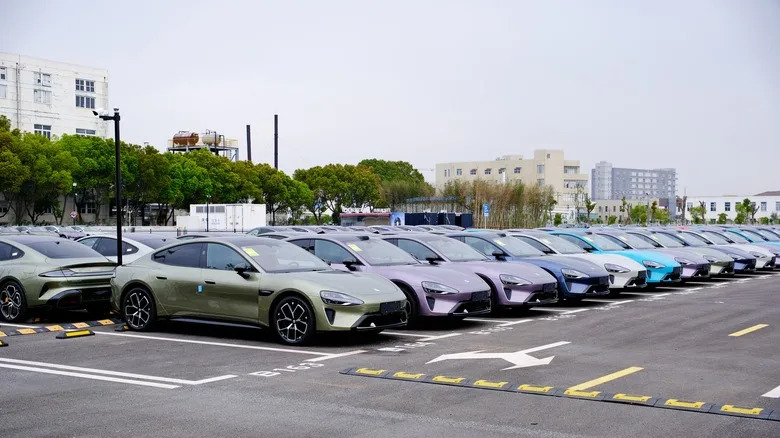
As of early 2026, Rwanda has recorded a sharp increase in electric vehicles, with rising number of fully electric cars operating in the country, many of them from Chinese brands such as BYD, Dongfeng, and Yutong.
Data from the Rwanda Revenue Authority (RRA) show that the combined number of electric and hybrid vehicles reached 7,172 in 2024. Official data also indicates that hybrids account for a significant share of low-emission vehicle imports, estimated at about 43 percent.
Electric buses have become increasingly visible in public transport across Kigali, while thousands of electric motorcycles are also entering the market as the country pushes for cleaner mobility solutions.
Chinese brands are playing a major role in that transition.
Popular EV models such as the BYD Atto 3 and Dolphin, alongside Dongfeng vehicles and Yutong buses, are becoming more common, often imported through dealers such as China Electric Vehicle Rwanda (CEVR). Charging infrastructure has also expanded rapidly.
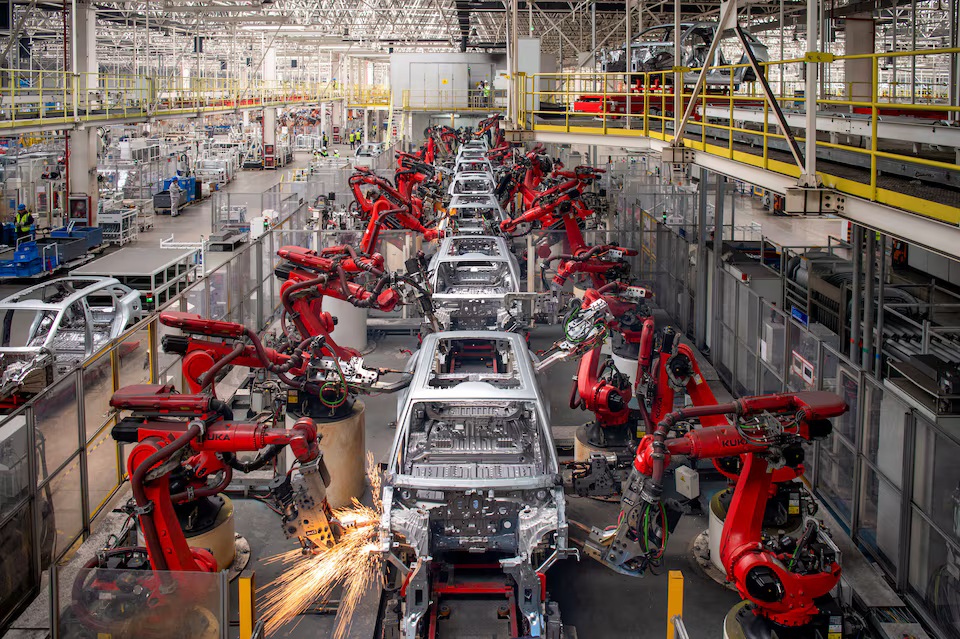
A BYD assembly line.
Financial institutions are also adjusting. Equity Bank Rwanda has partnered with Chinese EV dealers, including CEVR, to provide financing options aimed at making electric vehicle ownership more accessible.
Government incentives, including VAT exemptions on EVs, batteries, spare parts, and charging equipment, have further accelerated adoption.
The momentum is also attracting larger industrial ambitions.
On April 23, 2026, President Paul Kagame received Xu Hui, head of Rich Resource International Investments, alongside senior leadership from Chery Holding at Urugwiro Village.
Discussions focused on potential investment opportunities, including plans to establish an electric vehicle assembly plant in Rwanda, an initiative that aligns with the country’s broader strategy to expand industrialisation and position itself as a regional hub for e-mobility.
The Ministry of Infrastructure recently also mandated that all public institutions ensure at least 30% of newly purchased vehicles are fully electric (EVs), effective April 2026. This initiative aims to reduce fossil fuel dependency, cut greenhouse gas emissions, and promote sustainable, clean mobility.
The end of legacy advantage
The concern expressed by executives in Japan, Europe, and the United States reflects a simple reality that history is no longer enough.
A century-old badge no longer guarantees relevance when consumers are prioritising battery performance, software experience, and affordability.
And as Rwanda’s own EV market shows, this transformation is no longer confined to major global economies. It is reshaping mobility choices, investment priorities, and industrial strategies across Africa as well.
The question is no longer whether Chinese companies will disrupt the global car market. They already have. The real question is which of the old giants will adapt fast enough to survive.
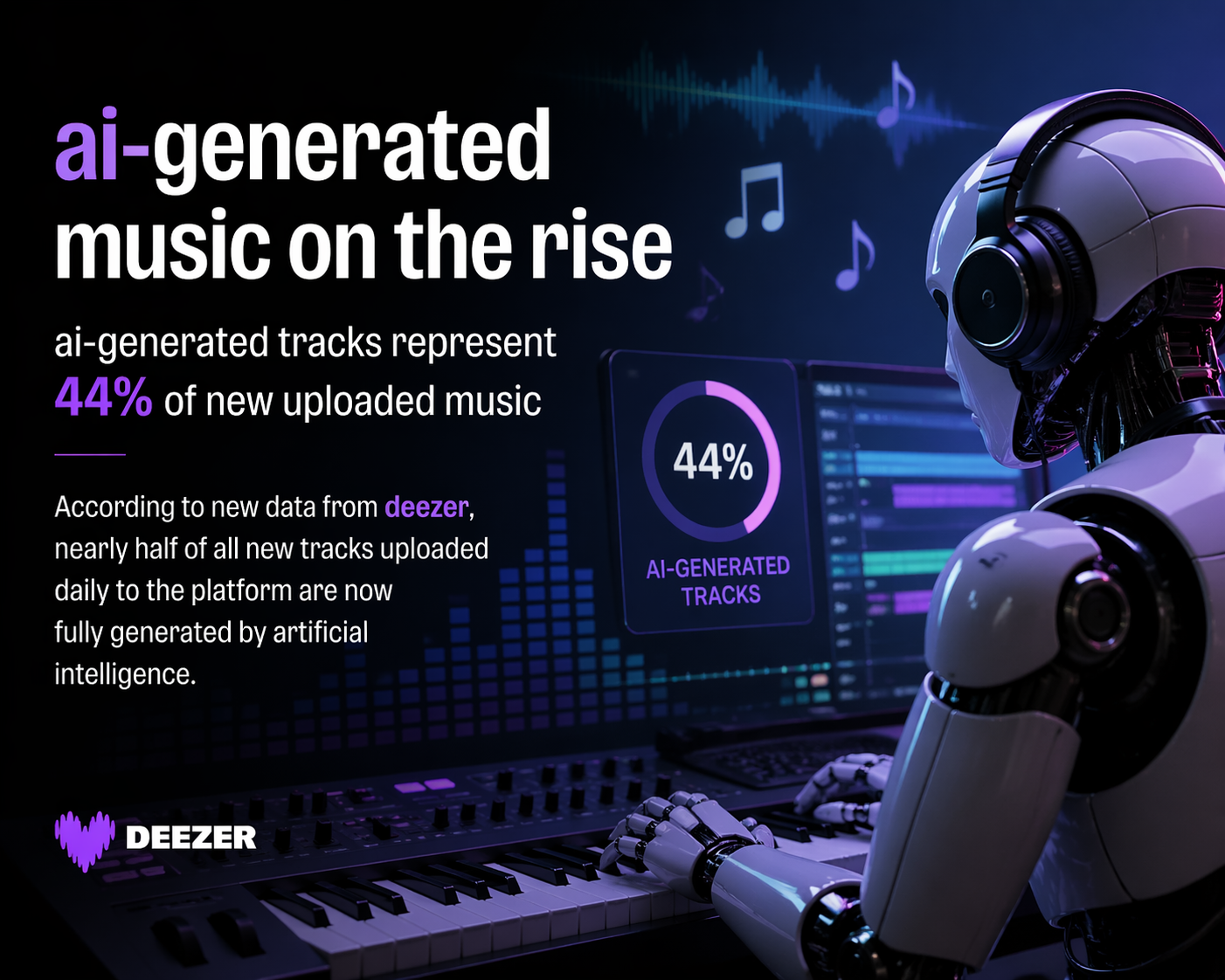
Deezer now receives about 75,000 AI‑generated tracks daily, which adds up to more than 2 million new synthetic songs each month. Despite these huge numbers, most of this music doesn’t actually get played by listeners only about 1 to 3 percent of total streams come from AI‑created songs, thanks to Deezer’s efforts to limit their visibility.
Deezer says it is the only major streaming platform in the world that transparently tags AI‑generated music, clearly marking songs created by artificial intelligence so users know what they’re listening to. The company also excludes these tracks from recommendation algorithms and has even stopped storing high‑resolution versions of them to reduce their spread.
“AI‑generated music is now far from a marginal phenomenon and as daily deliveries keep increasing, we hope the whole music ecosystem will join us in taking action to help safeguard artists’ rights and promote transparency for fans,” said Alexis Lanternier, CEO of Deezer. He explained that the platform’s unique detection technology has helped identify and tag millions of AI‑created songs while protecting the overall listening experience for users.
Deezer first launched its AI detection tool in January 2025, and since then the number of flagged AI tracks has grown rapidly, rising from just 10,000 per day to 75,000 per day now. The company is even licensing its AI detection technology to others in the music industry, in hopes that more streaming services will adopt clear labeling and responsible handling of AI‑created content.
Although AI music accounts for a large portion of uploads, it remains a small part of what people actually listen to because of Deezer’s moderation and tagging measures. Many of the plays on AI‑generated tracks are also identified as fraudulent, meaning they don’t generate royalty payments for creators, a key step in protecting human artists and ensuring fair compensation.
This surge in AI‑generated music highlights both the power and the challenges of artificial intelligence in creative industries. Deezer’s approach aims to strike a balance between innovation and fairness, giving listeners transparency and supporting artists in a rapidly evolving digital landscape.
AI-generated tracks soar to 44% of all new music on Deezer.
Meta had a global workforce of 78,865 employees as of Dec. 31, 2025, according to its annual report, meaning the latest move would affect roughly 8,000 jobs.
In its latest annual report and earnings materials, Meta said it remains focused on “operating efficiently” while investing heavily in AI and infrastructure.
The company said it expects 2026 capital expenditures to be in the range of 115 billion to 135 billion U.S. dollars, with the year-on-year increase driven by investments supporting its Meta Superintelligence Labs efforts and core business.
According to media reports citing an internal memo, Microsoft’s chief people officer Amy Coleman introduced a one-time voluntary retirement program for a small percentage of the company’s long-serving U.S. employees, a move that reports say could cover thousands of U.S. employees.
As of June 30, 2025, Microsoft employed approximately 228,000 people on a full-time basis, including 125,000 in the United States, according to its annual report.
The company has also been spending aggressively on AI infrastructure. In its fiscal 2026 second-quarter earnings call in January, Microsoft said capital expenditures reached 37.5 billion dollars in the quarter, with roughly two-thirds of that spending going to short-lived assets, primarily GPUs and CPUs.
The moves underscore how major U.S. technology companies are continuing to adjust their workforce structures and cost bases while pouring more resources into AI-related infrastructure, products and technical talent.
In its latest annual report and earnings materials, Meta said it remains focused on “operating efficiently” while investing heavily in AI and infrastructure.
This process, known as foliar uptake, appears to be especially important in dry and dusty environments where soil nutrients are limited. Scientists say it could help plants survive in harsh conditions that were previously not well understood.
“Plants are not like animals; they cannot move,” said Anton Lokshin, a plant biologist at Ben Gurion University of the Negev. “So they have to have strategies to absorb food and nutrients from the environment.”
To test this, researchers studied three plant species in Israel’s Judean Hills, a region regularly exposed to dust from the Sahara and Arabian deserts. Some plants were treated with volcanic dust on their leaves, while others were left untreated for comparison.
The results showed that plants exposed to dust had higher levels of key nutrients, including iron, manganese, nickel, and copper, in their shoots. These are important elements for growth and survival.
However, nutrient levels in the roots remained largely unchanged, even when dust was added to the soil. Scientists explain this is because nutrients in soil are often quickly taken up by microorganisms or locked in minerals, making them harder for plants to access.
Leaves, on the other hand, provide a more open pathway. They can release natural compounds that help dissolve dust particles and allow nutrients to be absorbed more easily.
The findings suggest that airborne dust may be a more important nutrient source for plants than previously thought, particularly in arid regions.
Greek sage plants (Salvia fruticosa, shown) had their leaves dusted with mineral powder to show that plants can feed on the dust that settles on them.
The messaging service, owned by Meta Platforms, is trialling a plan called WhatsApp Plus, similar in concept to subscription offerings on platforms like Instagram and Snapchat, where users pay for enhanced customisation rather than core functionality improvements.
The company confirmed the test in a statement to TechCrunch, describing WhatsApp Plus as an optional subscription designed to give users “more ways to organise and personalise their experience.”
“Premium features include expanded pinned chats, custom lists, new chat themes, and more,” a Meta spokesperson said. “We’re starting with a small test to gather feedback and ensure we’re building something people find genuinely valuable.”
Mostly cosmetic upgrades
Early details show that WhatsApp Plus is heavily centred on personalisation. Users would be able to access custom icons, themes, wallpapers, ringtones, and exclusive stickers. However, these upgrades do not significantly change the core messaging experience.
One of the more functional additions is the ability to pin up to 20 chats, compared to the current free-tier limit of three. Users may also be able to apply themes and notification tones across chat lists for a more customised interface.
Pricing has not been confirmed for African markets, including Rwanda, while early reports suggest it could be around €2.49 (approximately Rwf 4,300 ) per month in Europe.
Limited rollout and platform scope
The feature is currently being rolled out to a small number of Android users, with iOS support expected at a later stage. It is also limited to the standard WhatsApp Messenger app and does not extend to WhatsApp Business.
Meta emphasised that the subscription will not affect the core WhatsApp experience for non-paying users.
“The WhatsApp you know and rely on remains free, simple, reliable, private messaging and calling,” the company noted in its FAQ. “This subscription does not change your core experience.”
Part of a broader monetisation push
The test comes as Meta continues expanding paid features across its apps. The company has already explored similar subscription models under branding like Instagram Plus, focusing on exclusive social and customisation tools.
More broadly, Meta has been strengthening its monetisation strategy across messaging services. WhatsApp revenue has grown significantly in recent years, driven by business messaging and click-to-WhatsApp advertising tools. The company has previously said WhatsApp now generates over $2 billion in annualised revenue.
While WhatsApp Plus is still in early testing and limited to a small user base, it signals Meta’s ongoing effort to diversify revenue without disrupting the app’s free core messaging service.
For now, the experiment appears focused on one question: how much users are willing to pay just to make WhatsApp look and feel different.
The messaging service, owned by Meta Platforms, is trialling a plan called WhatsApp Plus, similar in concept to subscription offerings on platforms like Instagram and Snapchat, where users pay for enhanced customisation rather than core functionality improvements.
The change will take effect on September 1, 2026, marking the end of one of the most consequential leadership periods in the tech giant’s history. Cook will remain CEO until then to oversee a smooth handover before assuming a more strategic position focused on governance and engagement with policymakers.
John Ternus, Apple’s senior vice president of hardware engineering, has been appointed as Cook’s successor. The appointment, approved unanimously by Apple’s board, makes Ternus the company’s next chief executive and signals the first leadership change since Cook succeeded Steve Jobs in 2011.
Apple said the transition reflects long-term succession planning rather than a dramatic strategic shift, with continuity expected across its core operations and business model.
A defining Cook era
Cook, only the second CEO in Apple’s history, took over following Steve Jobs’ resignation in 2011. Over his tenure, Apple evolved into one of the world’s most valuable companies, expanding its reach to more than 200 countries and territories and growing its active device base to over 2.5 billion.
Under his leadership, Apple’s market value surged from around $350 billion to approximately $4 trillion, while annual revenue rose from $108 billion in fiscal 2011 to more than $416 billion in fiscal 2025.
Cook is widely credited with strengthening Apple’s global supply chain, scaling its operations, and reshaping its business model through a major shift toward services. Products such as iCloud, Apple Music, Apple TV, and Apple Pay helped build a services division generating over $100 billion annually, providing stable, high-margin revenue beyond hardware sales.
Apple also expanded into new product categories, including the Apple Watch, AirPods, and Apple Vision Pro during his tenure, while increasing its retail footprint to more than 500 stores globally. The company also reported a significant reduction in its carbon footprint, cutting emissions by more than 60% compared to 2015 levels.
Ternus takes over as Apple’s hardware leader
John Ternus, who has spent more than two decades at Apple, brings a deeply technical and engineering-focused background to the top role. Joining the company in 2001, he rose through the hardware engineering ranks before becoming vice president in 2013 and joining the executive team in 2021.
Ternus has overseen development across Apple’s major product lines, including the iPhone, iPad, Mac, Apple Watch, and AirPods. He has also been associated with key innovations in materials, durability, and performance.
Recent product milestones under his leadership include the MacBook Neo and the iPhone Air, as well as improvements to AirPods featuring advanced noise cancellation technology. Apple also credits him with driving efforts in sustainability, including the use of recycled materials and extended product durability.
His appointment is widely viewed as a move toward reinforcing Apple’s engineering and product-led culture.
Balancing services growth with product innovation
Ternus takes over at a time when Apple faces growing pressure to accelerate innovation. While Cook’s tenure transformed Apple into a services-powered ecosystem, critics have argued that the company has recently relied on incremental product updates compared to earlier breakthrough eras.
At the same time, competitors such as Google and Microsoft are advancing rapidly in artificial intelligence, intensifying pressure on Apple to respond more aggressively in the AI space. The company is reportedly exploring partnerships, including integrating Google’s Gemini model into its next-generation Siri assistant.
Slower consumer upgrade cycles and global supply chain risks also present challenges. Apple has already begun diversifying manufacturing away from China to markets such as Vietnam in response to geopolitical uncertainty.
Analysts expect Ternus to emphasise hardware innovation while maintaining Apple’s highly profitable services ecosystem, striking a balance between product reinvigoration and stable recurring revenue.
Cook described the transition as “the greatest privilege of my life,” while praising Ternus as a leader with a strong engineering mindset. Ternus, in turn, expressed gratitude for the opportunity and pledged to build on Apple’s long-standing values.
As Apple prepares for this leadership shift, the company enters a new chapter shaped by continuity at the top, but with renewed expectations around innovation in an increasingly competitive global tech landscape.
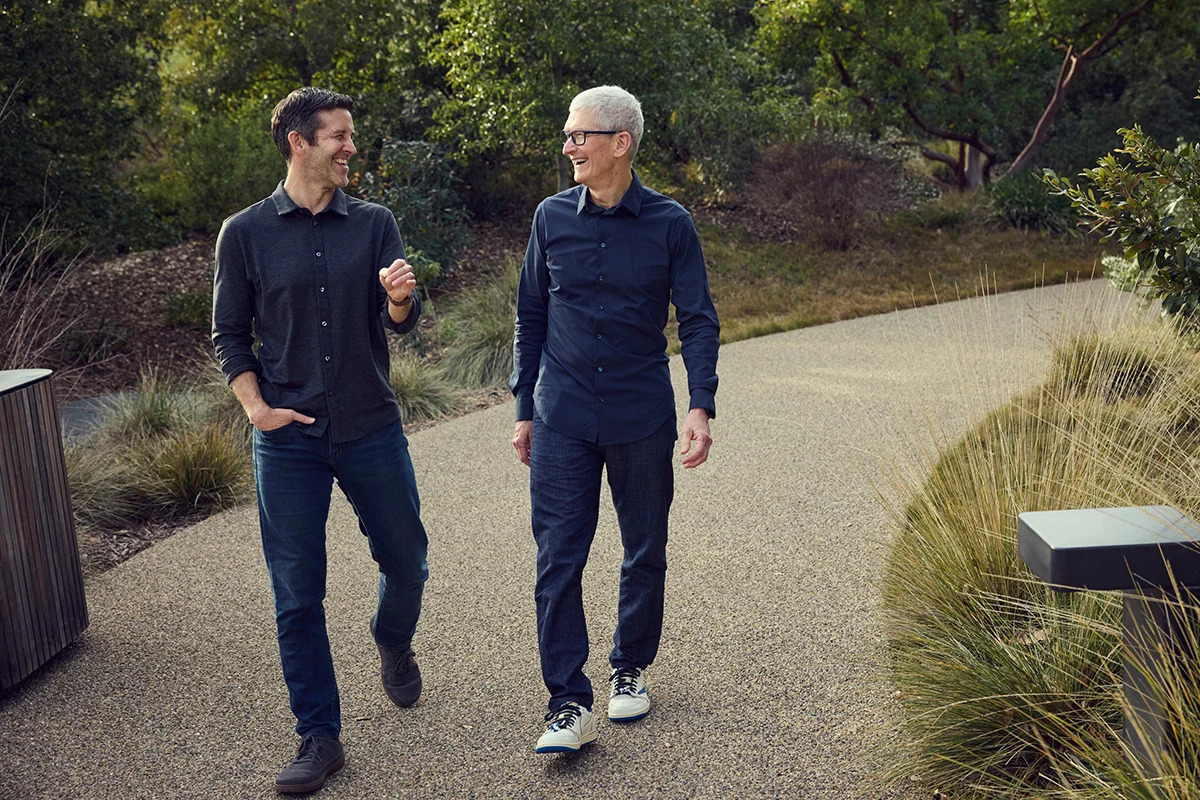
Tim Cook (right) and John Ternus at Apple Park. Apple has appointed Senior Vice President of Hardware Engineering John Ternus as CEO effective September 1, 2026. The board is handing the 25-year company veteran control of Apple as Tim Cook exits the top operating role after 15 years.
Lithium is the lightweight metal that powers many technologies we use every day, especially lithium‑ion batteries in phones, laptops, and electric vehicles.
These batteries are essential for moving toward cleaner energy sources like solar and wind. But as demand grows for electric cars and renewable energy storage, finding enough lithium in ways that don’t harm the environment has become a big challenge.
Traditionally, lithium comes from specific types of rocks and materials like volcanic clay or pegmatites. Mining these sources can be expensive and can have negative ecological effects.
That’s why scientists are now looking at unconventional sources including rocks and even leftover industrial waste that used to be considered worthless.
A research team led by scientists at West Virginia University studied a rock type called shale, which formed about 380 million years ago in the Appalachian region of the United States.
Within this shale, they found lithium inside pyrite crystals an unexpected place to find it. Pyrite is famous for its metallic look but was never known to contain lithium before.
This discovery surprised researchers because previous studies had rarely connected lithium with sulfur‑rich minerals like pyrite. Now, it opens up a new possibility: if lithium can be found in shale and similar rocks, then large amounts of lithium might exist in places we didn’t know to look before.
The implications are exciting. If these findings hold true across more locations, scientists might be able to extract lithium from old rocks or even from materials left over from past mining activity.
Doing this would reduce the need to dig new lithium mines, helping to protect the environment and support the rapidly growing demand for batteries.
However, researchers emphasize that this study is still in the early stages. The current results are based on samples from one specific area, and more research is needed to know if the same patterns occur elsewhere.
Even so, this discovery offers a hopeful glimpse into a more sustainable way to power the future without relying entirely on new mining projects.
Scientists uncover hidden lithium in fool’s gold, offering new possibilities for clean energy.
The platform, called Carrot Intelligence, uses one of the largest private datasets in the field, covering information from 195 countries.
Unlike many AI systems that rely on general data, this platform is built from real clinical and financial records gathered over the past decade.
Carrot says this allows it to offer more personalized support based on each individual’s medical history, location, and personal goals.
The company has already supported millions of users and processed over $1 billion in claims, forming the backbone of the new system. According to Carrot’s founder and CEO, Tammy Sun, the goal is to ensure AI in healthcare is reliable, evidence-based, and focused on real outcomes.
Carrot Intelligence is behind several new tools, including a program aimed at reducing high-risk pregnancies and a system that detects errors and fraud in medical billing.
The platform can also step in earlier, helping people explore less invasive fertility options before turning to treatments like In Vitro Fertilization (IVF).
In a recent survey, 89 percent of women said they would prefer alternatives to IVF, highlighting the need for earlier guidance. The platform responds by offering timely advice tailored to each stage of a person’s journey.
Importantly, Carrot says human clinicians remain in control of care decisions, with AI supporting rather than replacing them.
Carrot has introduced a new artificial intelligence platform designed to improve how people access and experience care.