Around 300 million years ago, Earth looked very different. The continents were joined into a supercontinent called Pangaea, and vast swampy forests covered much of the land.
During this time, many animals and plants thrived in the high‑oxygen environment and among them were insects with astonishingly large bodies.
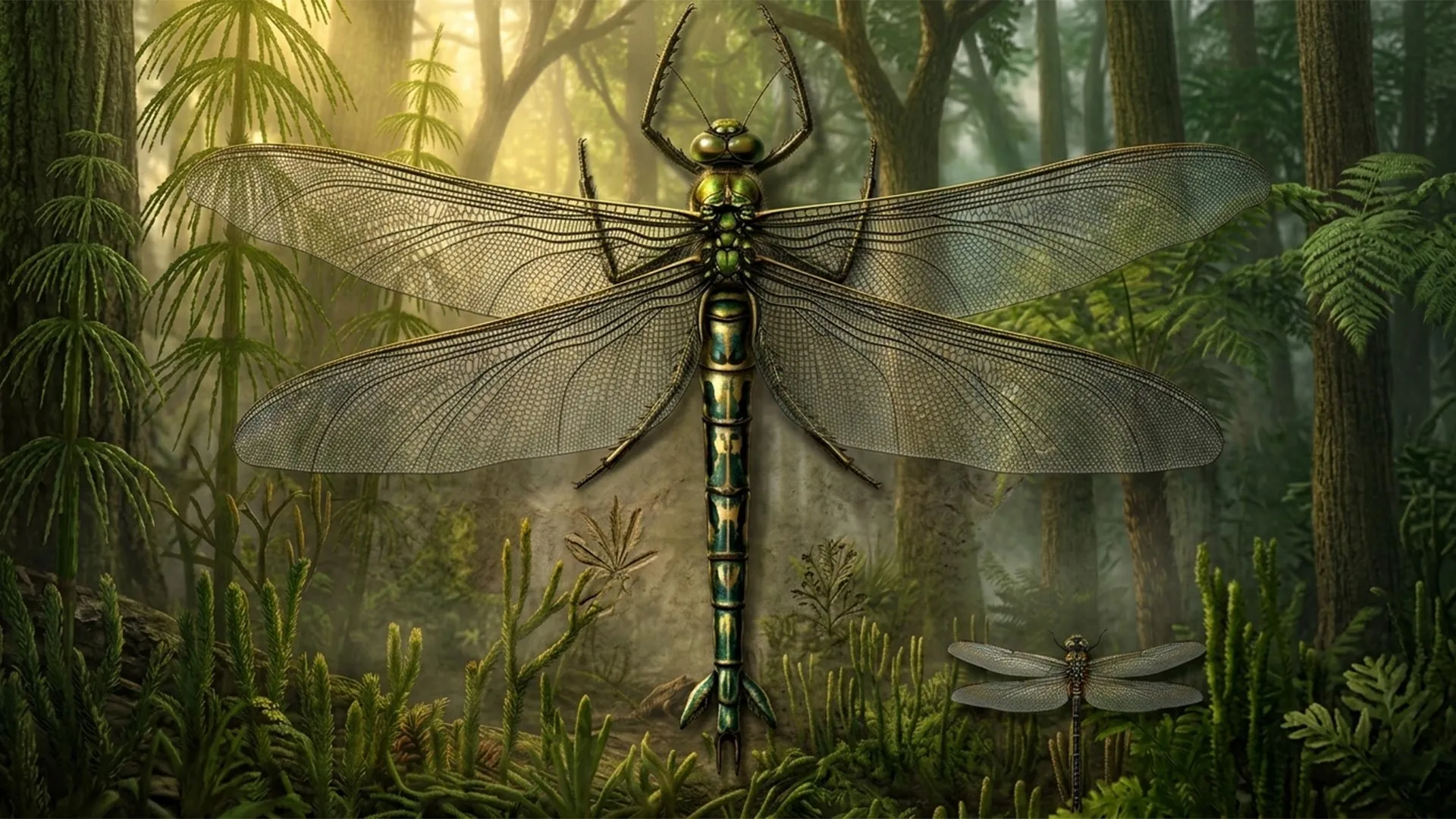
Some of these creatures, often called griffinflies, were dragonfly-like insects with wingspans reaching about 70 centimeters (27 inches) far larger than any flying insect alive today.
Insects don’t breathe like humans do. Instead of lungs, they rely on a complex network of tubes called the tracheal system, which carries oxygen directly to their muscles and tissues.
At the tiny ends of these tubes are structures called tracheoles, where oxygen enters the cells. Scientists once thought that bigger bodies needed much more oxygen and that only an oxygen‑rich atmosphere could support such huge insects.
However, in the new study published in the journal Nature, researchers used advanced electron microscopy to examine how insect body size relates to the space occupied by tracheoles in flight muscles.
They found that even in very large insects, tracheoles make up a surprisingly small portion, often only about 1% or less of the flight muscle volume. That tiny proportion suggests that oxygen delivery through the tracheal system wasn’t a limiting factor in how large insects could grow.
Because tracheoles take up so little space, insects could theoretically increase the number of these tubes without facing serious physical constraints.
In comparison, animals like birds and mammals depend on networks of tiny blood vessels (capillaries) that take up much more space in muscle tissue. This difference further supports the idea that oxygen levels weren’t the main barrier to giant insect size.
These findings don’t completely rule out oxygen’s influence on insect evolution, but they do show that the old explanation was too simple.
Scientists now need to explore other possibilities that might explain why insects grew so large in the past and why such giants no longer exist today.
Possible ideas include changes in predators, environmental conditions, or the inherent limitations of insect body structures.
Leave a Reply