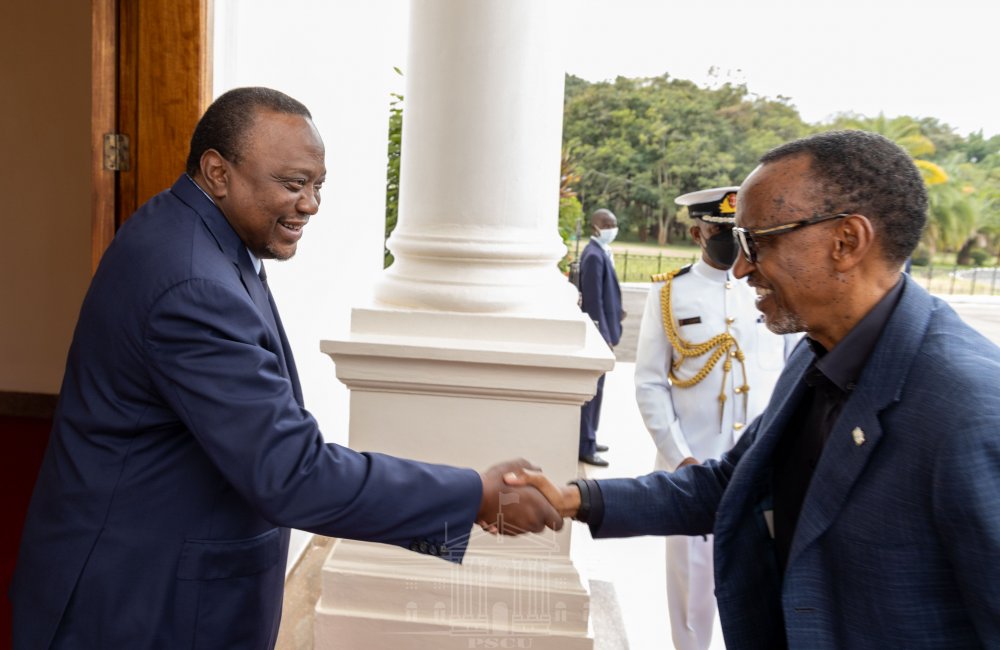
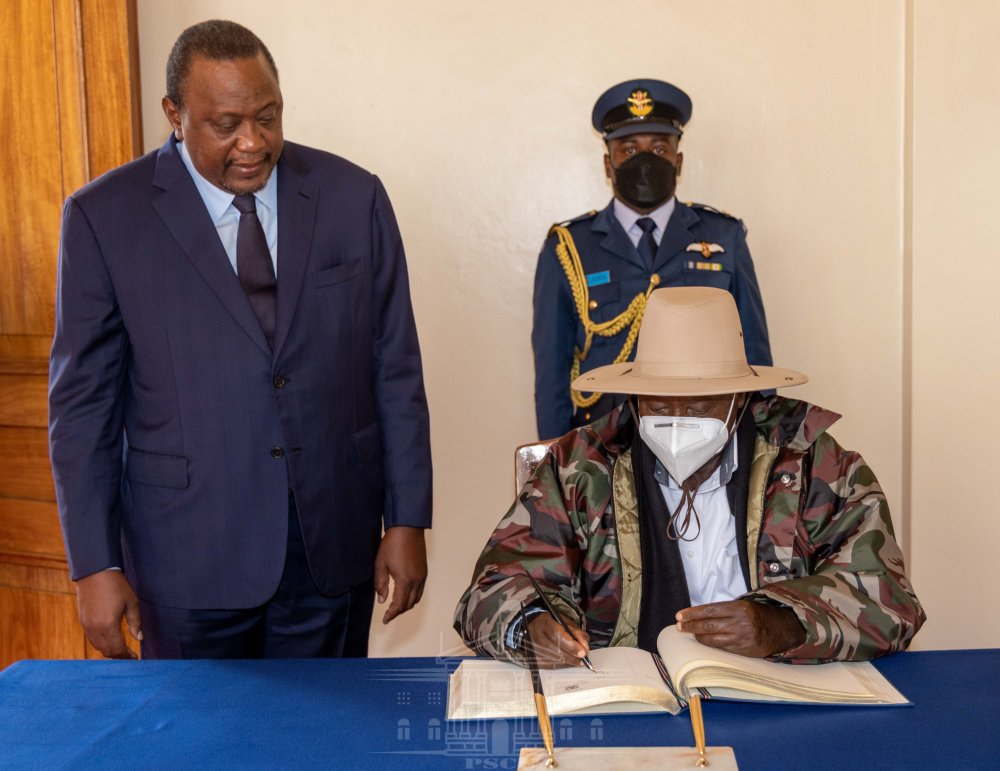
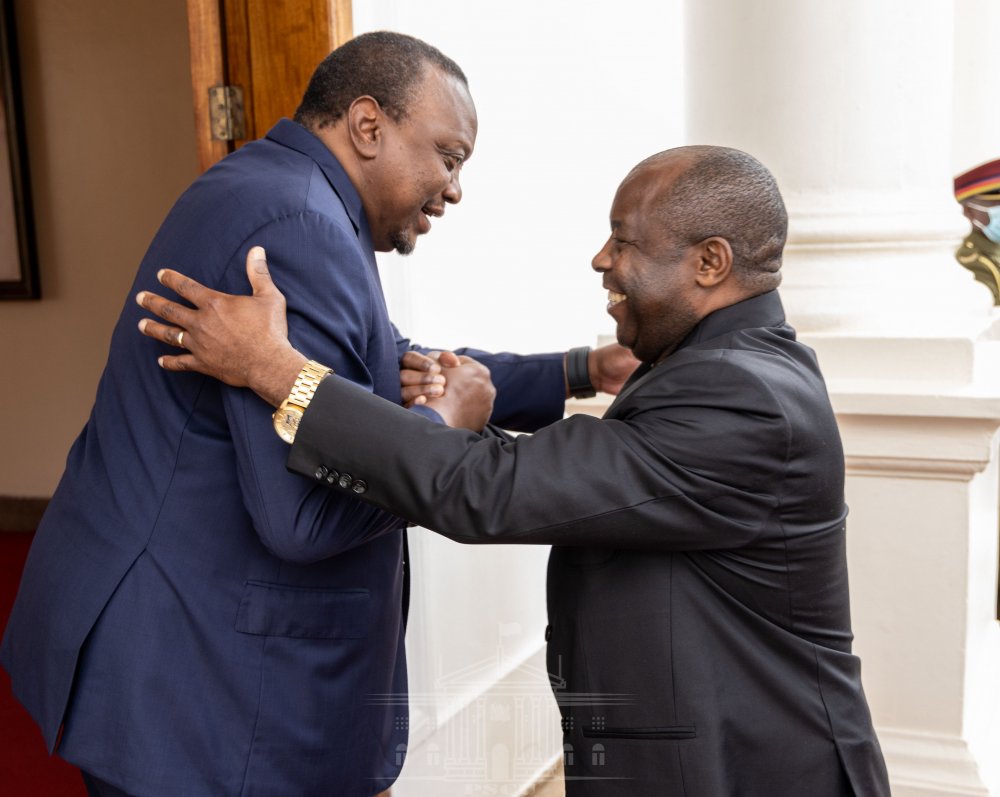
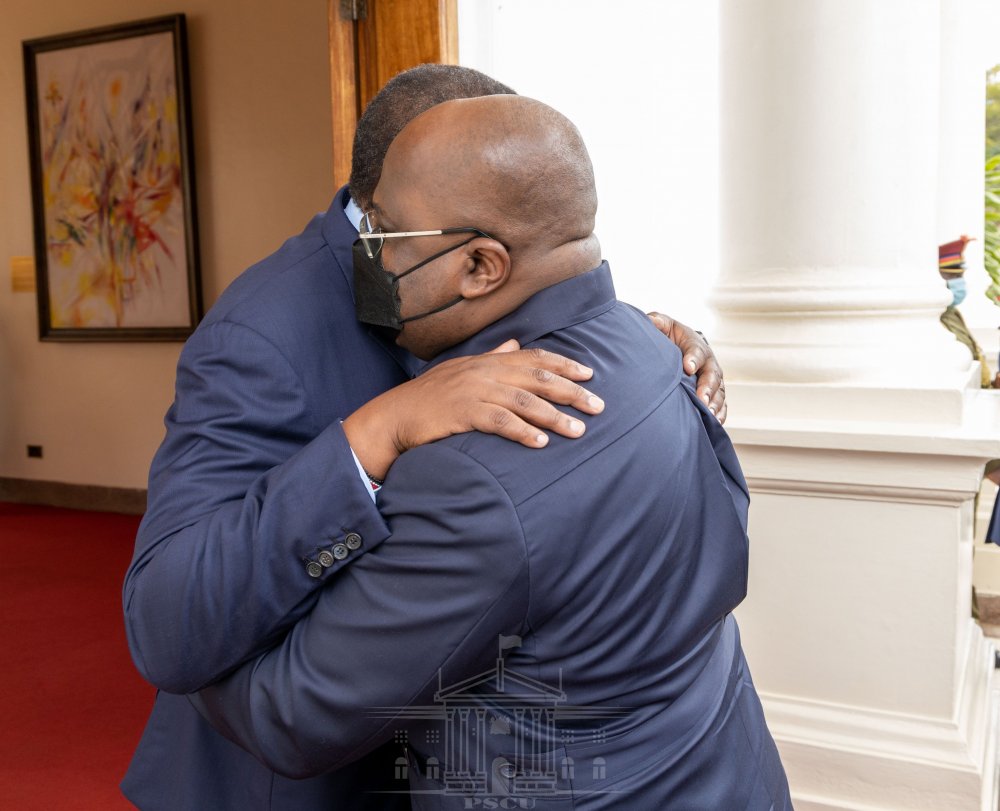
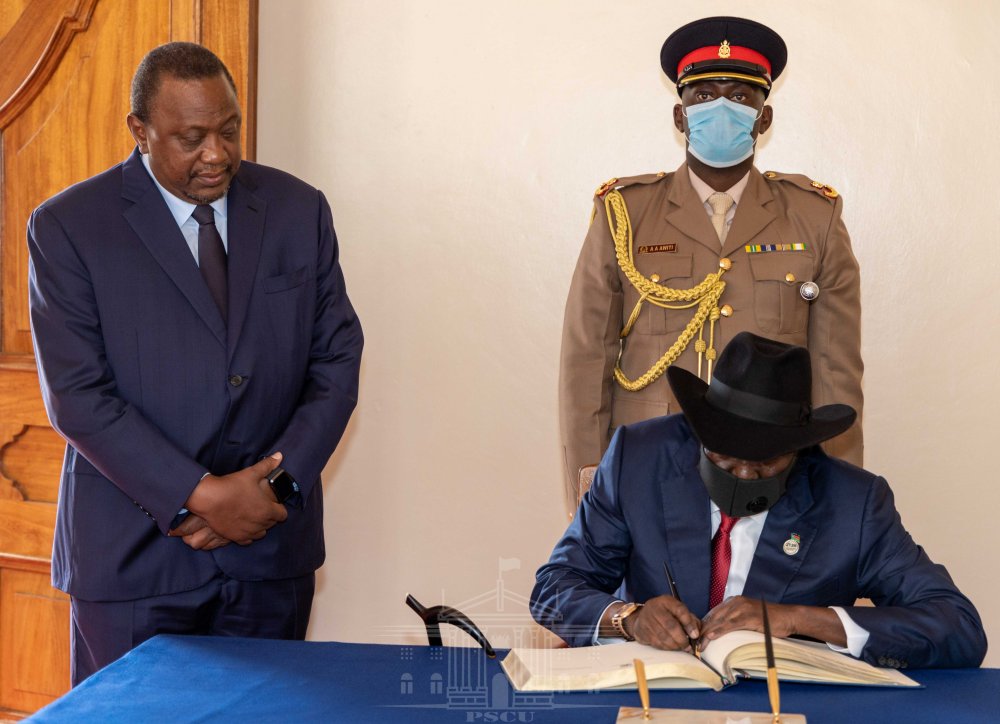
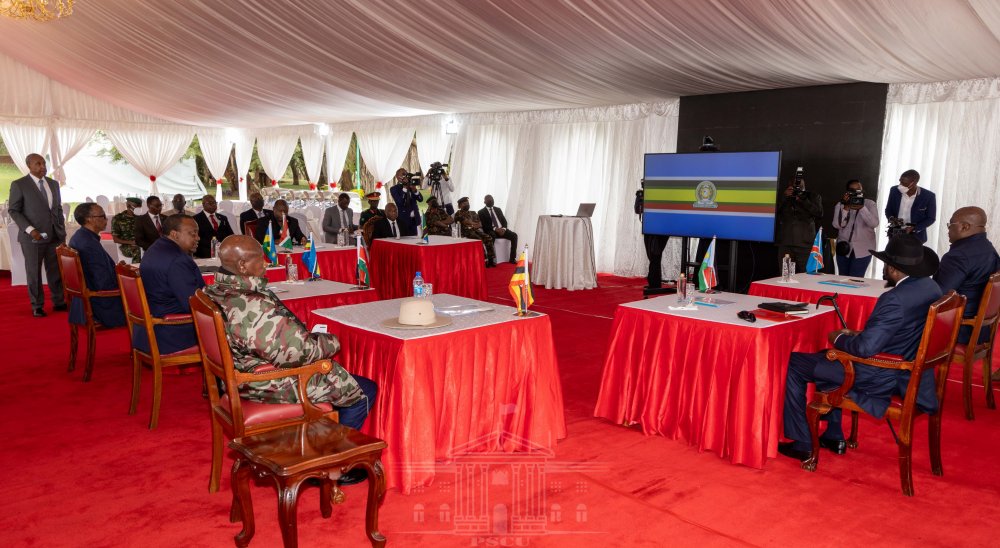
The meeting is expected to resolve on the deployment of join regional force to restore peace in eastern DRC as requested by Kenyatta who is the incumbent Chairperson of East African Community (EAC).
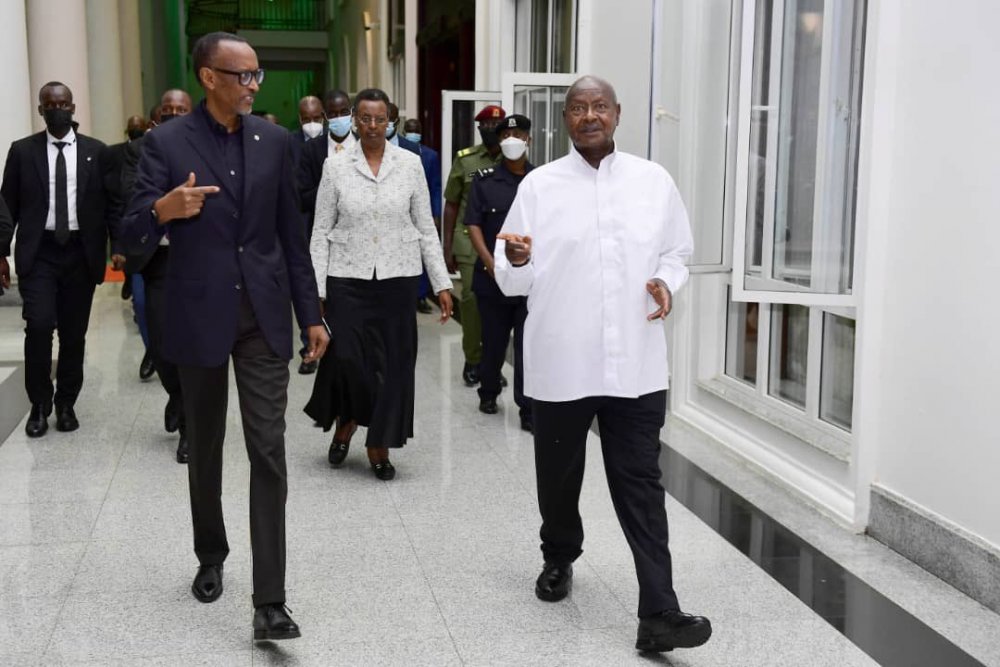
Rwanda’s Presidency has revealed that Kagame attended the conclave on the security situation in eastern DRC along with Presidents Yoweri Museveni of Uganda, Evariste Ndayishimiye of Burundi, Salva Kiir Mayardit of South Sudan and Felix Tshisekedi of DRC.
Tanzanian President, Samia Suluhu Hassan has been represented by her country’s ambassador to Kenya, John Stephen Simbachawene.
The meeting takes place at a time when tensions continue to escalate between Rwanda and DRC.
The latter accuses Rwanda of supporting M23 rebel group in its clashes with Congolese Army (FARDC) but Rwanda has repeatedly refuted the allegations.
Kenyatta recently called for urgent deployment of regional force to fight rebel groups based in eastern DRC.
Rwanda says that it is willing to contribute to the joint operation but DRC boycotted the support insisting that it doesn’t want Rwandan troops to participate.
The Commonwealth Youth for Sustainable Urbanisation (CYSU) network will use an evidenced-based approach and work collaboratively to address the challenges affecting health, trade, the economy, the environment, and youth employment in cities and human settlements throughout the Commonwealth.
CYSU is the 13th youth network to be set up through the Commonwealth Youth Programme. Supported by the Commonwealth Secretariat for the past 40 years, the youth networks cover various issues and empower those aged 18-29 to make their voices heard by giving them opportunities to shape the future they want to see.
Its launch coincides with the announcement of and first meeting of the newly formed Clean and Sustainable Energy Action Group. A joint effort between members of the CYSU and the Commonwealth Sustainable Energy Transition (CSET) Agenda, its focus will be on scaling up youth-led solutions for clean and sustainable energy and creating a platform for engaging young people in the global discourse on the energy transition.
The CSET will look to help Commonwealth nations with the transition to low carbon energy systems and the achievement of SDGs – in particular SDG 7 on access to affordable, reliable, and sustainable energy. It is anchored on three key pillars – Inclusive Transition; Technology and Innovation; and Enabling Frameworks and is implemented through targeted approaches including member-led Action Groups.
Both groups were profiled on the second day of the Commonwealth Youth Forum, where 350 youth leaders have gathered to share ideas and generate recommendations for improving youth prospects to be taken forward to the Heads of Government meeting on Saturday.
Young people who meet the criteria are encouraged to express their interest in joining the CYSU and the new CSET Youth Action Group through this Google [{form}}->https://forms.office.com/pages/responsepage.aspx?id=mRTmJ64SAUS_ZINLGcmfWade3uA46ltJghvgksv7xc9UNlRCTzQ3TjdOVVZJUDgwR0xZTVZBRVNVTy4u].
The competition to design the CYSU logo was launched and interested participants are encouraged to submit their designs, find out more information [{{here}}->https://docs.google.com/document/d/13whTjOHrOcAR_EYrtqyTslfhl2iROkeW/edit]. A £200 prize is on offer.
The CYSU network is the result of a commitment for increased youth involvement in development reached at the 2018 Commonwealth Heads of Government (CHOGM) meeting in London.
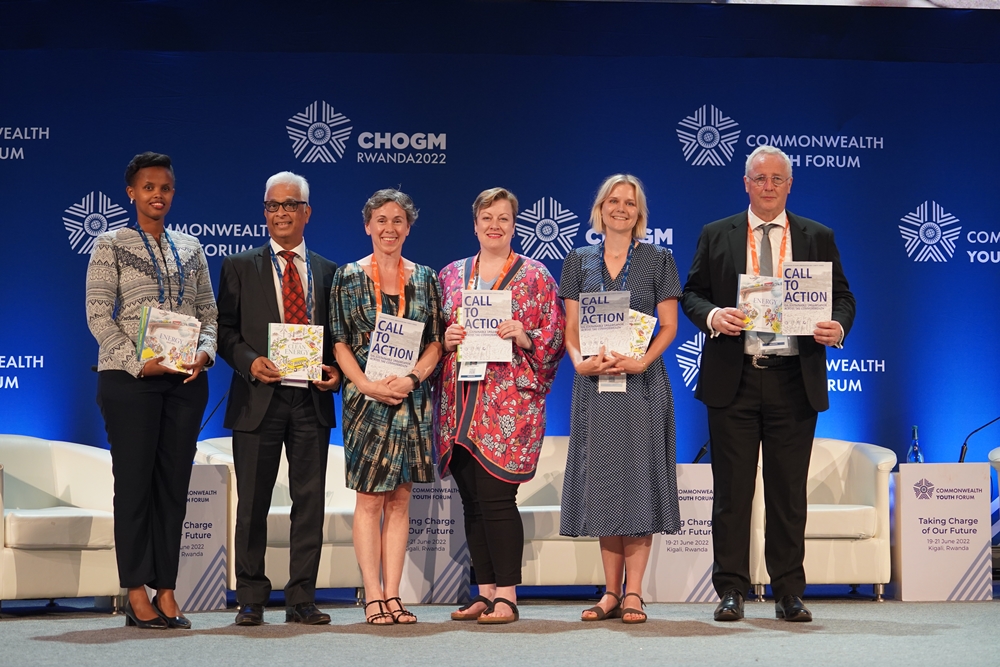
It also forms part of the response to a Commonwealth-wide Call to Action on Sustainable Urbanisation, launched in 2021 by the Commonwealth Sustainable Cities Initiative (a multidisciplinary group of comprising of the Association of Commonwealth Universities, the Commonwealth Association of Architects, the Commonwealth Association of Planners and the Commonwealth Local Government Forum supported by the Government of Rwanda and The Prince’s Foundation).
Layne Robinson, Head of Social Policy Development at the Secretariat, said: “With populations booming – and more and more young people living in cities and towns – it has never been more important to look at the world around us and to think about how it can better serve future generations.
“This is a fantastic opportunity for candidates with a passion for sustainable development to have an impact on the world they see around them.”
The Commonwealth Heads of Government Meeting 2022 takes place from 20-25 June 2022, in Kigali, Rwanda under the theme “Delivering a Common Future: Connecting, Innovating, Transforming”.
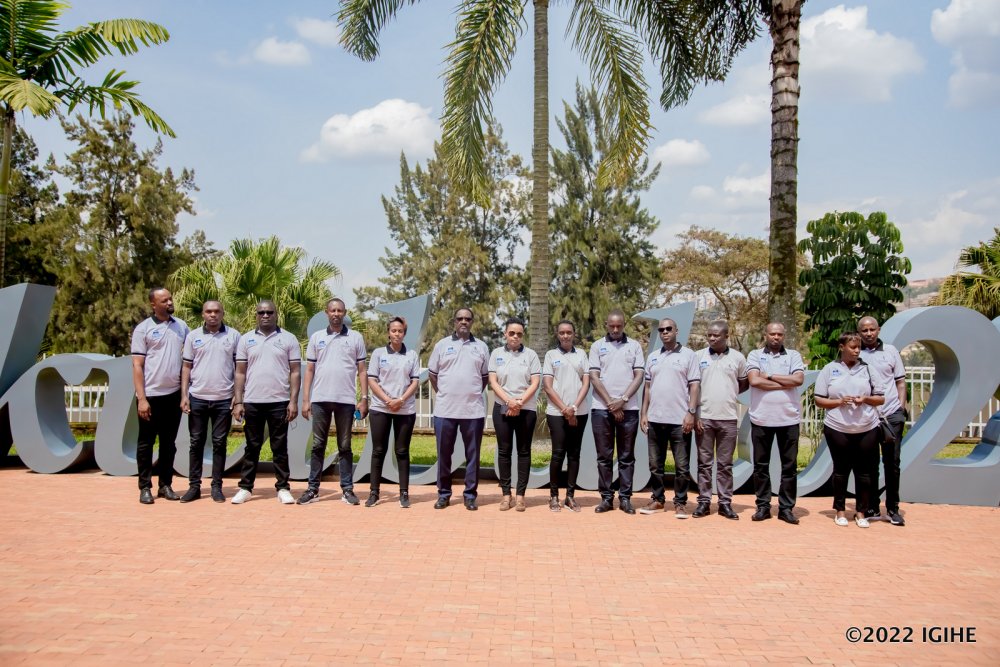
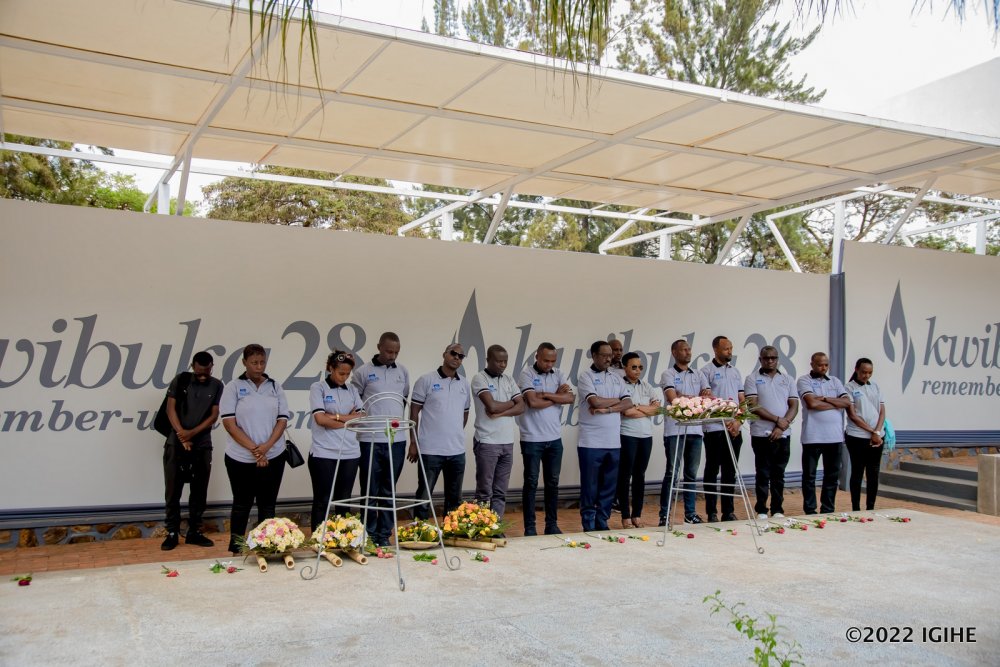
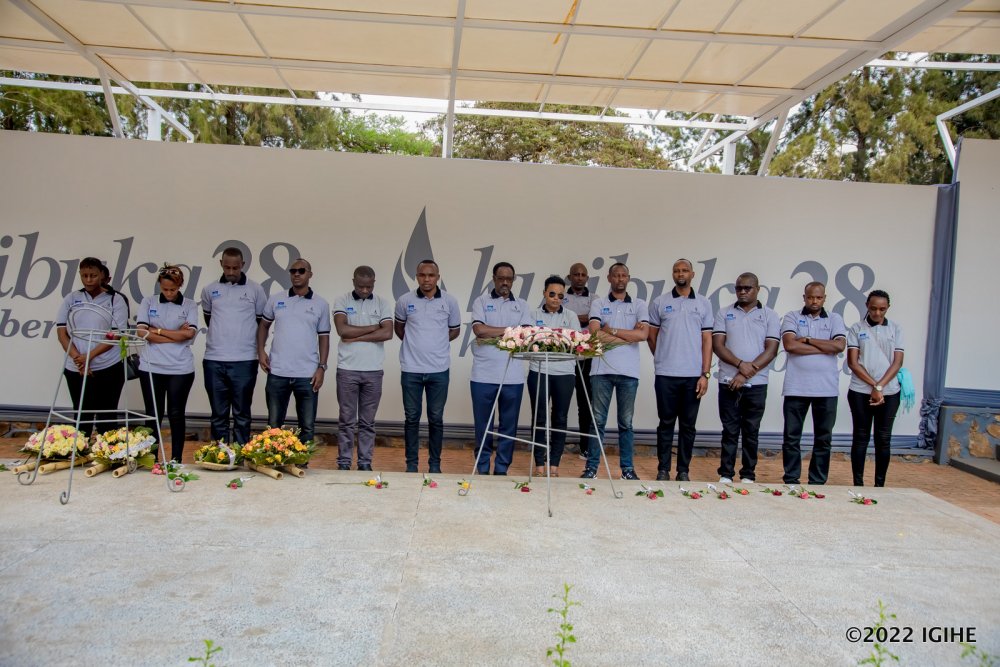
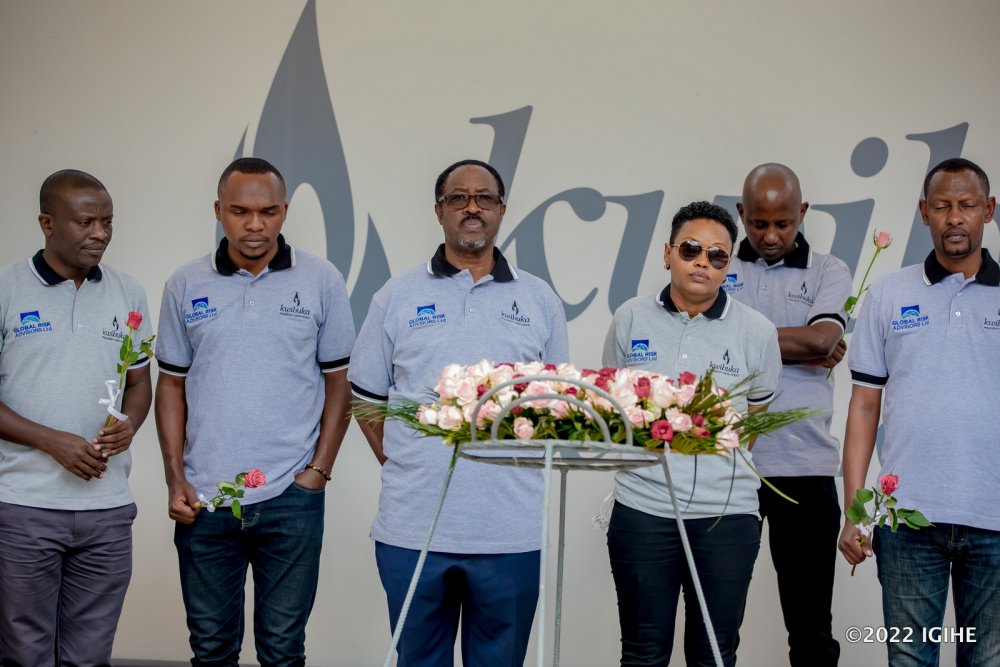
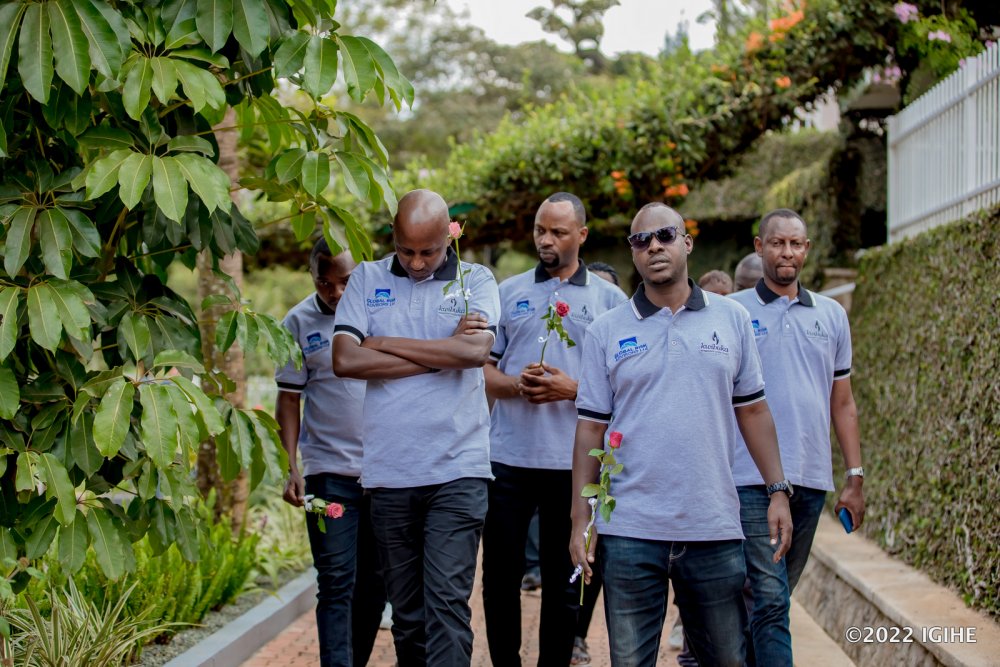
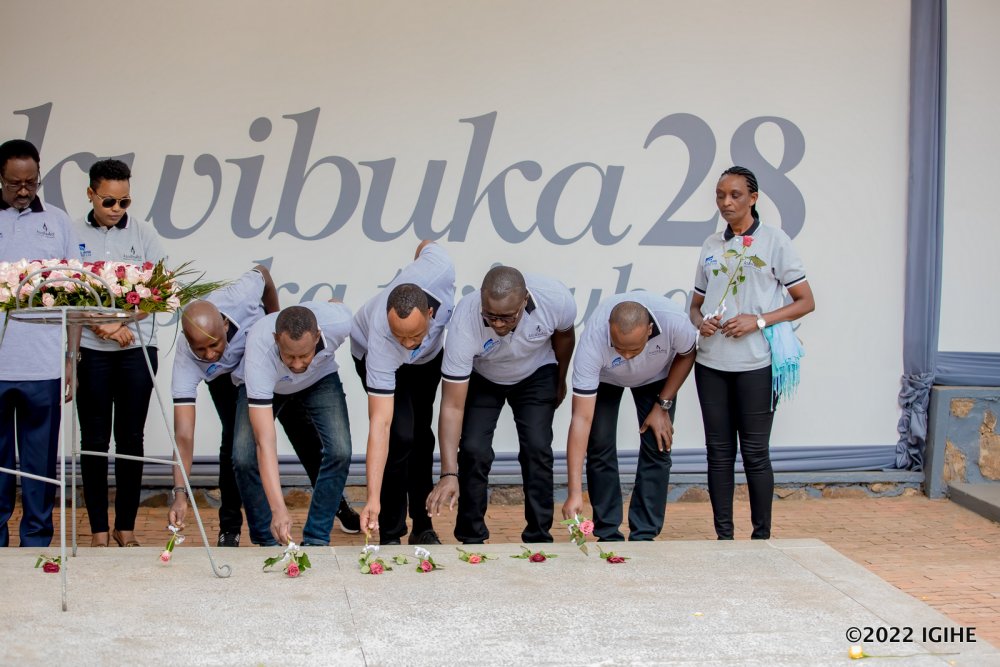
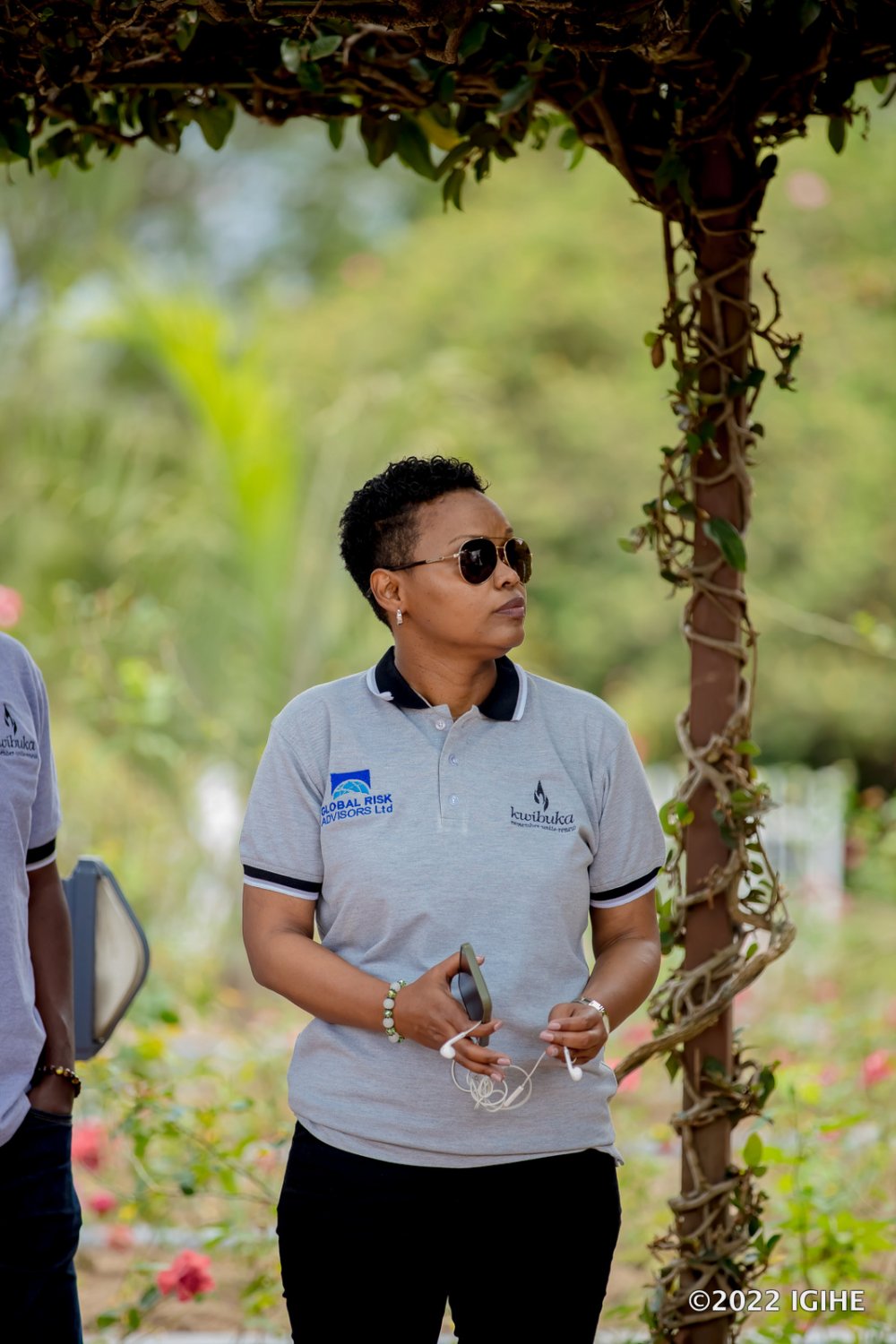
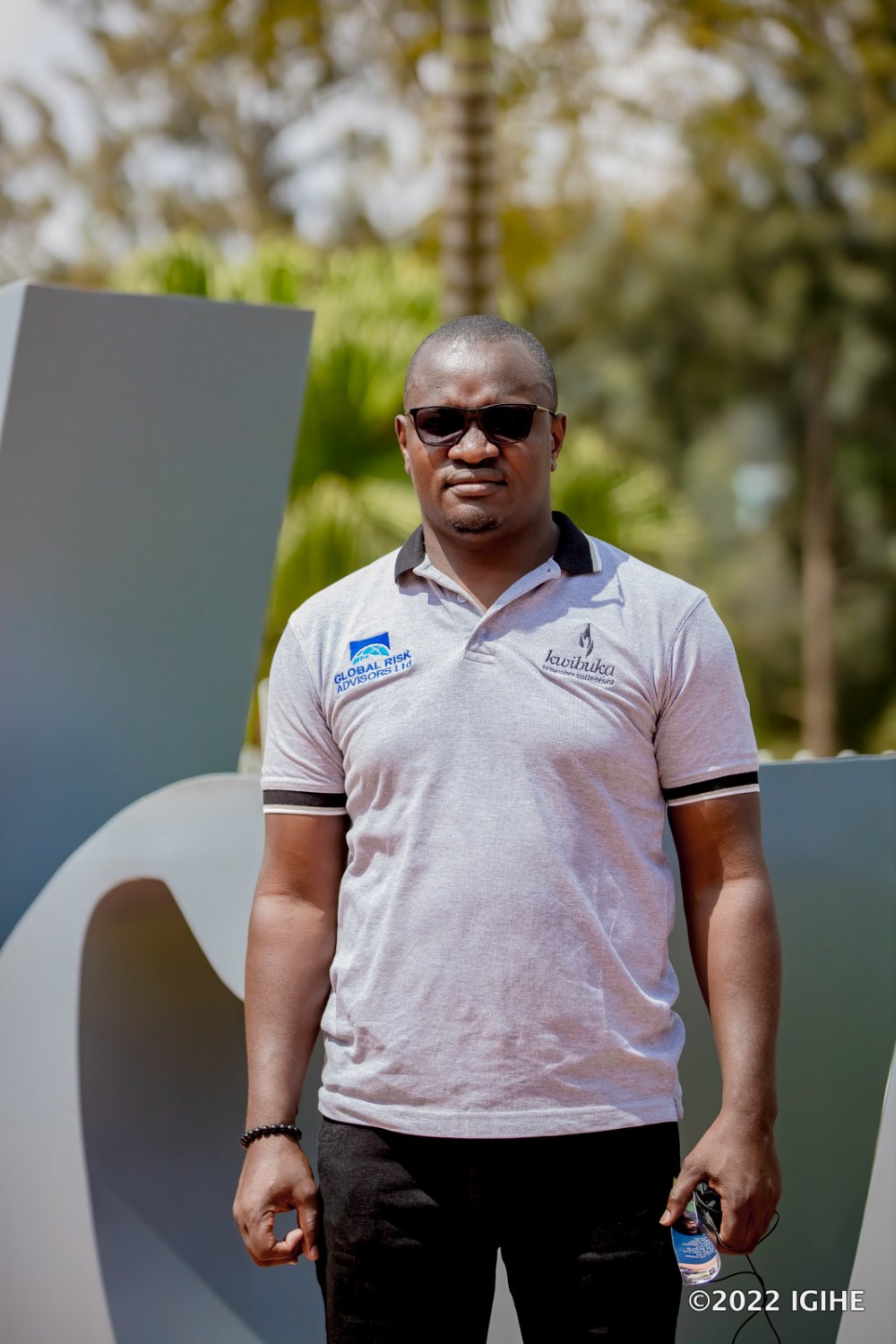
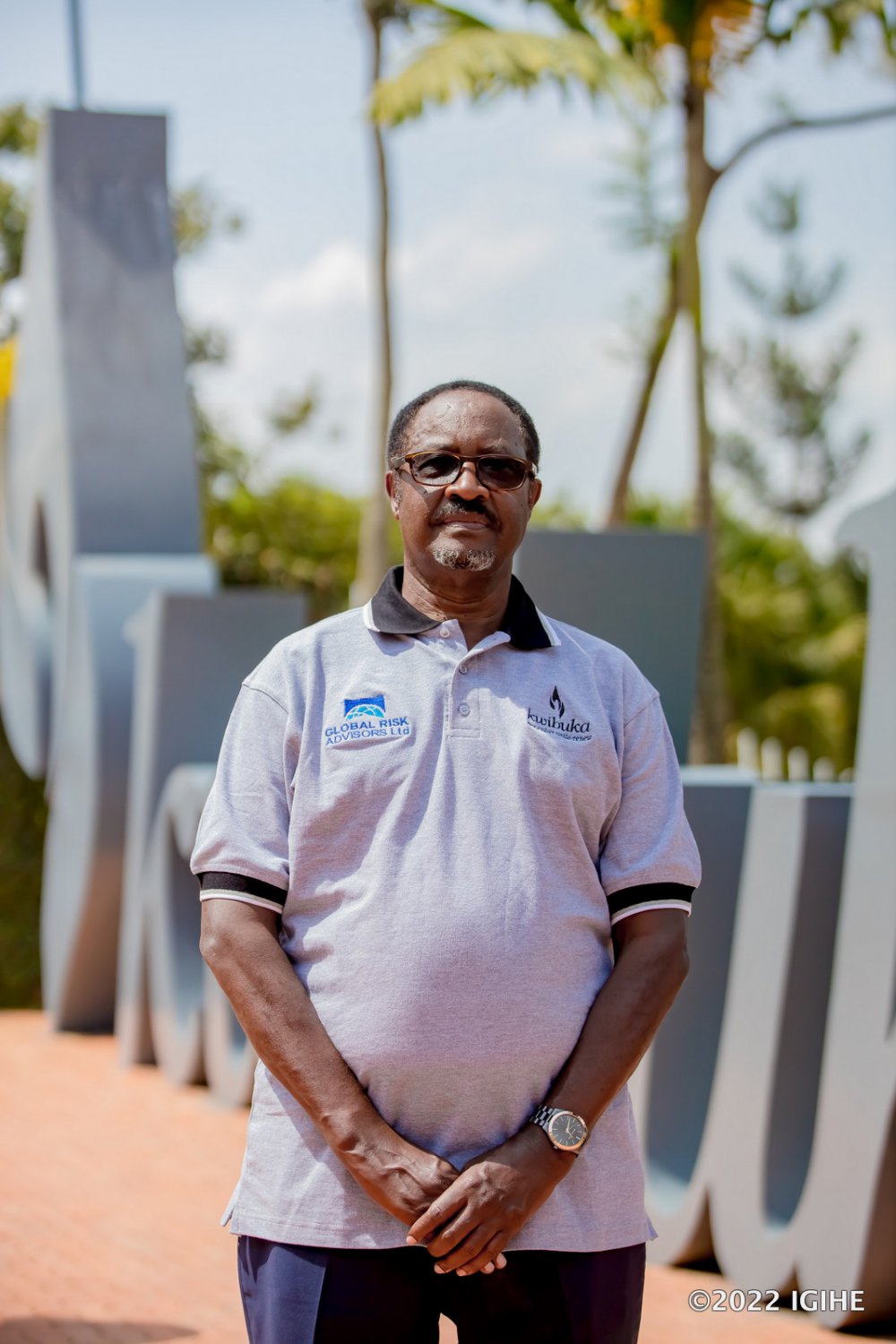
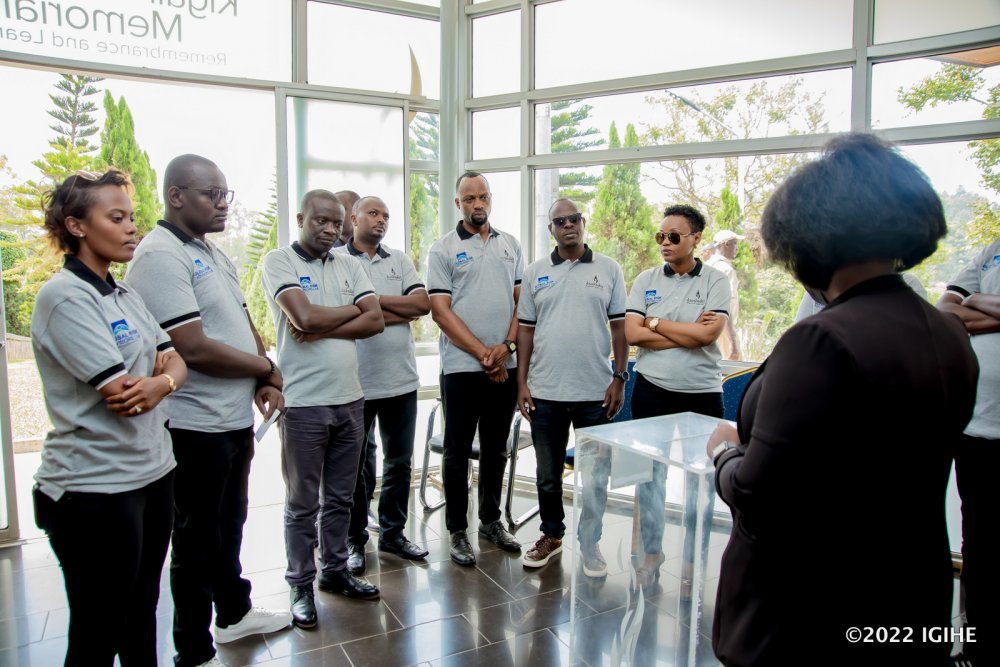
Commenting on the visit held on Friday; Titien Muberangabo, the Chief Executive Officer of Global Risk Advisors Ltd has said that the company organizes similar event every year to help employees learn from the country’s dark history.
“It is an annual event to learn more about the Genocide against Tutsi and recommit our role to resist Genocide denial and trivialization,” he said.
Muberangabo said that such event should remind employees to always play their role to prevent reoccurrence of Genocide.
He encouraged other private institutions to take the lead in helping their staff to learn from history of Genocide against Tutsi.
“We encourage them to help employees learn from history of Genocide against Tutsi. We have to reflect on this history and remain united for the common goal. As people sharing the same history, having a common understanding helps us to move forward together and fast track envisioned national development,” noted Muberangabo.
He highlighted that commemorating is a way of honouring fallen victims and thanked the President of the Republic for his visionary leadership that has seen the country moving fast along the resilience journey and restoring unity among Rwandans.
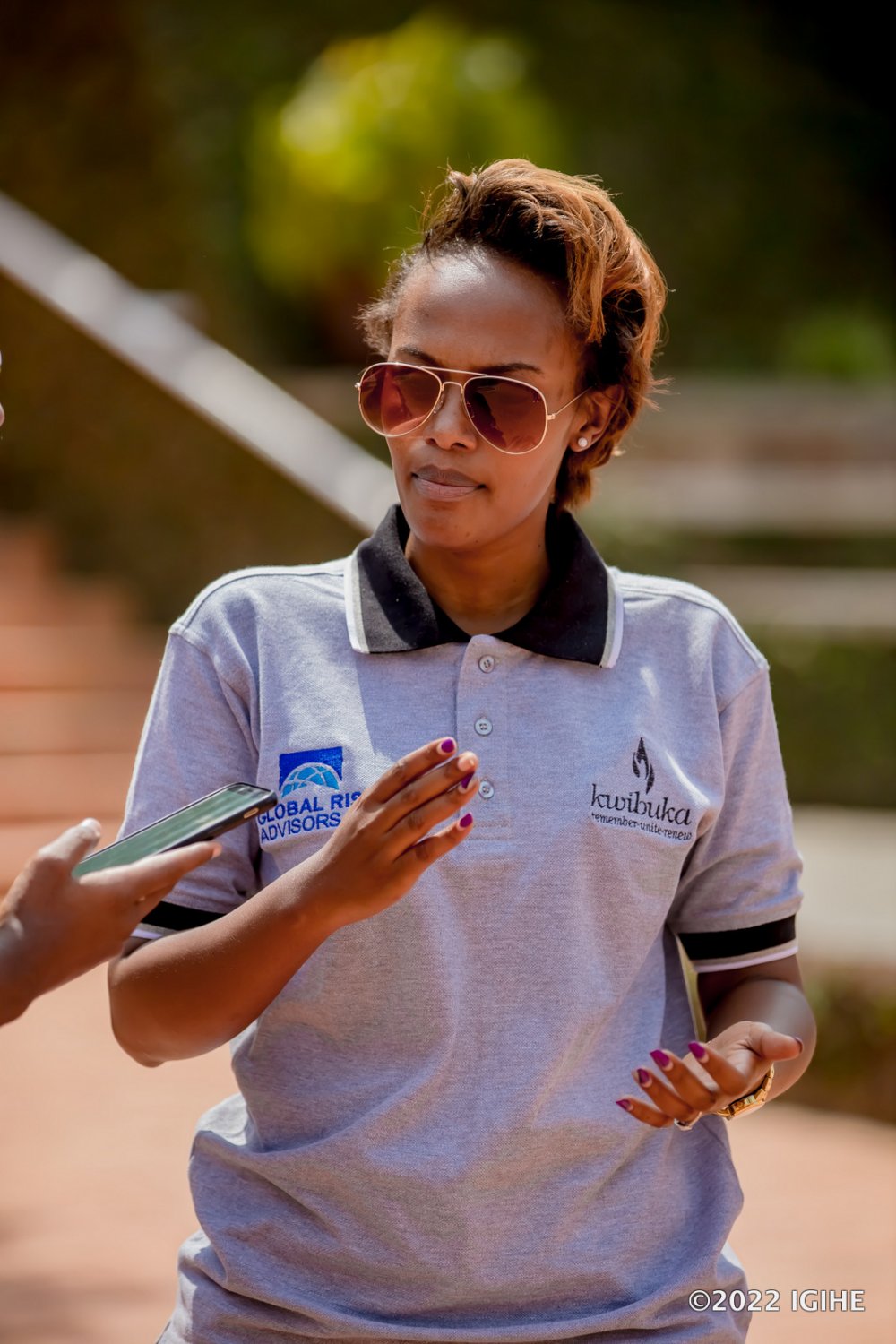
Justus O. Oricho, a Kenyan working with Global Risk Advisors Ltd revealed that he was moved by the ordeal Tutsis endured during the Genocide.
As he said, what he witnessed at the memorial left him reflecting on the extent at which hatred is destructive to humanity and dreadful experiences victims went through.
Considering Rwanda’s gains; Oricho urged other African countries to learn from the country’s model of conflict resolution which he believed might be a solution to achieve sustainable peace on the continent.
Global Risk Advisors Ltd is an insurance services broker which started operations in 2013 after obtaining licensing from the National Bank of Rwanda.
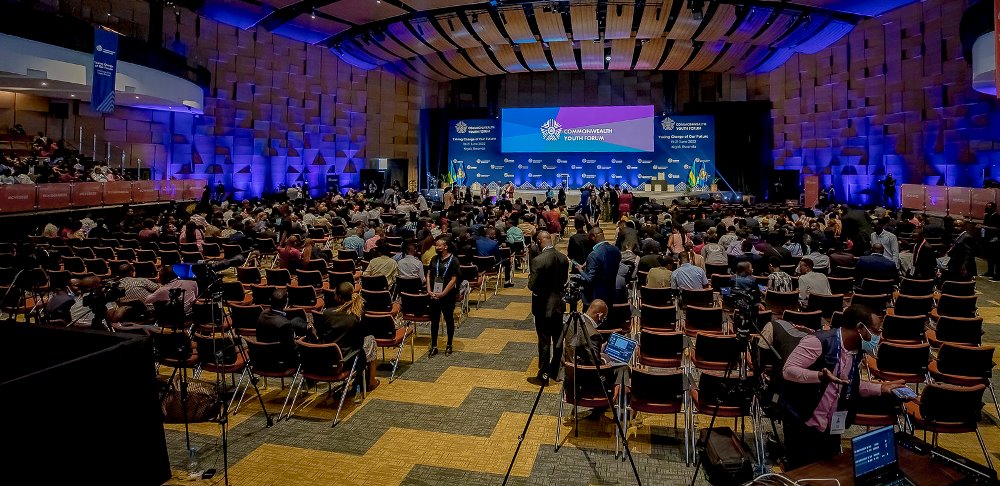
Hundreds of youth from all corners of the Commonwealth came together for the opening of the Commonwealth Youth Forum (CYF) in Kigali on 19th June 2022, which kicked off with an electrifying and inspiring performance from the Rwandan performing arts and media company, Mashirika.
Held ahead of the main Commonwealth Heads of Government Meeting (CHOGM), the three-day forum is a unique opportunity for young leaders to bring policy recommendations to their governments – asserting their role in shaping the future of the Commonwealth.
This year’s forum focuses on the adverse impacts of climate change, conflict and Covid-19, which disproportionately hit young people by cutting employment, training and education opportunities. Approximately 60 per cent of the unemployed in Commonwealth countries are young people. With the World Bank warning of a looming global recession, it has never been more important to ensure that young people are prioritised in Commonwealth policies.
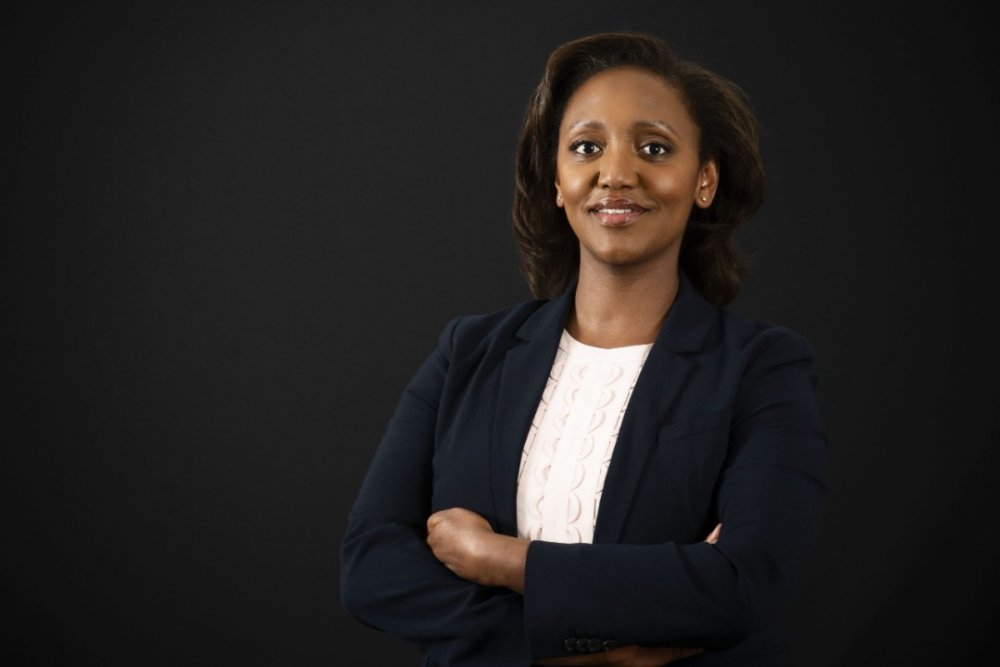
Speaking during the opening ceremony, Chair of the CYF taskforce and Chair of the Rwanda National Youth Council, Alodie Iradukunda (pictured below), said: “As the Chairperson of the Rwandan National Youth Council, I have had the opportunity to witness the will and drive that young people have in building our future. I am in awe of the spirit of service and duty that prevailed more than ever throughout the COVID-19 crisis.
Young people across the Commonwealth played an integral role in the handling of this crisis, demonstrating yet again the great value that lies within the drive and brilliance of young people. I am here to reassure our leaders that we have not waited to be called upon. We understand what is at stake when it comes to the numerous issues that our world faces today.”
The newly appointed Chair of the Commonwealth Youth Council, Kim Allen said: “Today’s challenges and issues are more complex than decades ago. The world is slowly coming out of the pandemic, a crisis that affected our lives in many ways. Climate change, loss of biodiversity, hate and discrimination, economic turmoil resulting in high unemployment rates, the digital divide, mental health, inequalities in education and health, conflicts, and political instability, to name a few, all happen due to human actions and certain situations beyond our control.
Amid these challenges arise the opportunities to create a positive change. Fellow youth delegates and partners, your creativity, skill sets and abilities are needed to drive the change we want. Now is the time to act. We have to progress the efforts taken in the past through strategic and transformational approaches.”
Delivering the keynote address at the opening ceremony, Rwanda’s Minister of Youth and Culture, Rosemary Mbabazi, praised the commitment, ingenuity, and hard work of the youth.
“I encourage you to build networks that will turn into the markets needed for your innovations, create innovations that responds to and solves challenges for our communities. I am sure you will leave here with more knowledge and transformed mindsets,” she said.
Also speaking at the opening ceremony Commonwealth Deputy Secretary-General, Dr. Arjoon Suddhoo repeated the call for young people to be included in policy decisions across the Commonwealth.
“Given the huge potential and ingenious proclivity of our young people, we simply cannot afford to exclude young people from the development agenda or equate youthfulness with inexperience and ignorance. This dangerous and damaging discrimination will hold all of us back from achieving our full potential,” he noted.
During the forum young people will agree to a set of policy recommendations which will be recorded and presented to Heads of Government in a Youth Declaration on the final day of the forum. They will also have an opportunity to meet heads of governments during an intergenerational dialogue.
This year’s forum will address thematic areas such as governance and the rule of law, technology, skills, innovation, sustainability, health and trade. It will also include the launch of an historic collaboration between the Commonwealth and the world’s largest youth organisations to create the ‘Commonwealth Alliance for Quality Youth Leadership’.
This meeting supported by the Government of Rwanda and co-ordinated by an International Youth Task Force, made up of 21 young people from around the Commonwealth, co-chaired by Darrion Narine of Trinidad and Tobago and Alodie Iradukunda of Rwanda. It is supported by the Commonwealth Secretariat and the Government of Rwanda.
The Commonwealth Heads of Government Meeting 2022 takes place from 20-25 June 2022, in Kigali, Rwanda under the theme “Delivering a Common Future: Connecting, Innovating, Transforming”.
Commonwealth leaders will travel to Rwanda to reaffirm their common values and agree actions and policies to improve the lives of all their citizens. Decisions taken at CHOGM also guide the work programme of the Commonwealth Secretariat.
The official opening of CHOGM takes place on Friday 24 June and is followed by the main high-level meetings of Heads on Friday 24 to Saturday 25 June. These events are proceeded by four forums, ministerial meetings, side events and other activities.
The CYF is one of the four forums which have taken place in the margins of CHOGM since 1998. Young people will focus on the data provided by the Youth Development Index (YDI) Report, a Commonwealth tool which helps us to monitor changes in the situation of young people; recognise their contributions to the world; and support them as we all pursue the Sustainable Development Goals (SDGs).
Meetings begin in Kigali, the capital of Rwanda on Sunday 19 June with four forums – covering youth, women, business and civil society – culminating with the official Retreat for leaders at the Intare Conference Arena on Saturday 25 June. At the Leaders Retreat – unique to the Commonwealth – Heads of Government meet privately to discuss collaboration on global and Commonwealth priorities.
Commenting on the development; Commonwealth Secretary-General, Patricia Scotland said: “Since the last time the Commonwealth family came together for CHOGM in 2018, the onset of COVID-19, new and ongoing conflicts, and the accelerated impact of climate change have fundamentally altered the global landscape and tested our resilience.
This succession of events has changed lives, livelihoods, communities and economies. We know that in times of crises, the poor and most vulnerable are disproportionately affected. Many development gains, likewise, have been thrown off track, while others have regressed.
“That’s why with eight years to go until the Sustainable Development Goals ‘endgame,’ leaders at CHOGM are committed to harnessing lessons learned, working together and taking inspiration from the innovative solutions that we’ve seen emerge over the past few years.
“The Commonwealth is a bedrock for member states, rooted in a shared history, collective aspirations and progressive solutions. At a time when multilateralism is under serious strain, CHOGM offers a vital forum to deliver the objectives of member states and an opportunity to draw upon all the talents of the member states to deliver a smarter, more resilient, prosperous, confident and sustainable Commonwealth.”
A Ministerial Meeting for the Commonwealth’s 32 Small Island Developing States is scheduled for Wednesday 22 June at which economic vulnerability, climate action and access to finance and debt sustainability are expected to top the agenda. The Commonwealth has a long history championing the needs of Small States, which face unique challenges related to climate change and external economic shocks.
The Commonwealth Ministerial Action Group – which assesses countries at risk of breaching fundamental political values , will also meet on 22 June.
On Thursday 23rd June, Foreign Ministers will convene ahead of the main CHOGM sessions to review the leaders’ agenda and receive outcomes from the four forums for consideration by Heads. The traditional Commonwealth Sports Breakfast, also on Thursday 23 June, will showcase preparations for the Birmingham 2022 Commonwealth Games, which begin on 28 July.
Several side meetings will take place during CHOGM and cover topics including violence against women and girls, climate change, access to justice and sustainable ocean protection and economic development.
The formal Opening Ceremony takes place on Friday 24 June at the Kigali Convention Centre and is followed by closed-door Executive Sessions at which leaders will consider a range of topical issues including post COVID-19 economic recovery, debt sustainability, climate change, trade and food security.
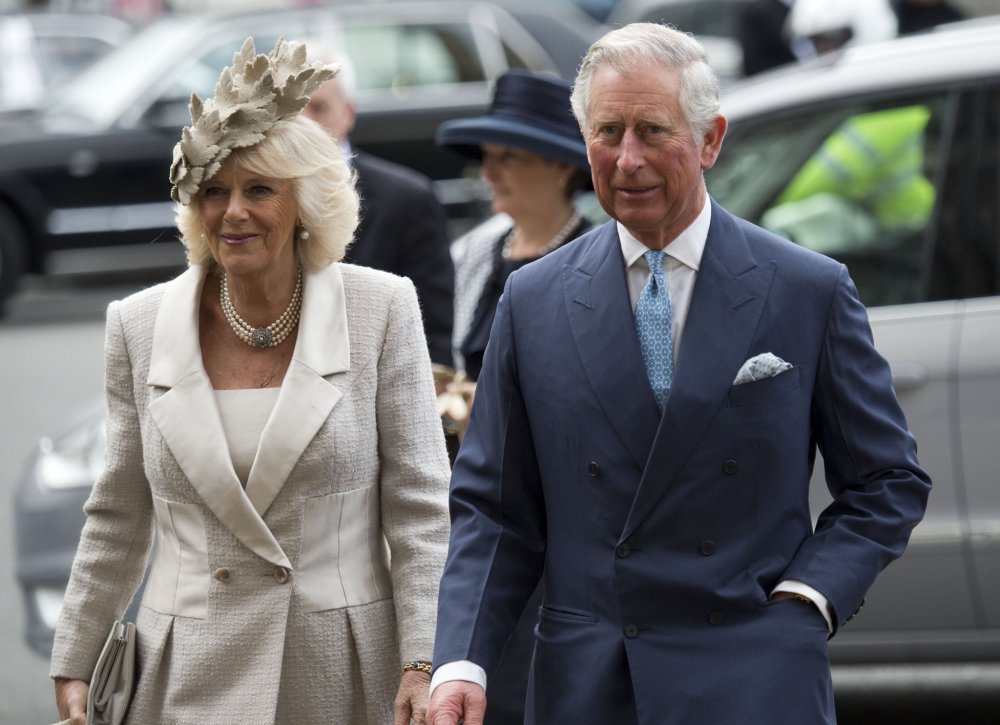
The Women’s, Youth, People and Business Forums will run concurrently at different venues in Kigali. Participants will include Commonwealth leaders, government ministers, members of the British royal family, senior UN figures, business leaders, civil society activists and literary figures.
The Women’s Forum will explore the Commonwealth’s role in achieving gender equality in line with UN aspirations and the crucial role women have to play in politics, business and peace building. The theme for 2022 is ‘Delivering a Common Future: Transforming for Gender Equality’.
The Youth Forum, held under the theme ‘Taking Charge of Our Future’ will bring 350 young people together to network, exchange ideas, build skills, and generate solutions to the most pressing youth-related challenges. These priorities will be cemented in a Youth Declaration at the end of the three-day event and will be presented to leaders The six-point plan will be implemented by the Commonwealth Youth Council and youth-led organisations across the Commonwealth.
The People’s Forum is the single largest gathering of civil society representatives in the Commonwealth. It is aimed at discussing solutions and building solidarity around some of the most pressing issues facing Commonwealth people, from the COVID-19 pandemic to the climate crisis. This year’s forum will address the theme: Our Health, Our Planet, Our Future.
The Business Forum is a unique platform for dialogue, bringing together business and government leaders from across the Commonwealth. Hosted as a partnership between the Commonwealth Enterprise and Investment Council (CWEIC) and the Government of Rwanda, the Forum will discuss a range of issues affecting businesses across the Commonwealth with a focus on ‘A Global Reset’, dealing with the impact of the pandemic and the Commonwealth’s role in rebuilding and reinvigorating the global economy.
CHOGM 2022 was originally due to take place in 2020 but has twice been postponed due to COVID-19. The last country to host CHOGM in 2018 was the UK and the host country for CHOGM 2024 will be announced at this week’s summit.
These activities carried out on Sunday 18th June 2022, were also meant to celebrate the International Day of the African Child in South Sudan. They included general cleaning, tree planting and donation of scholastic materials to the pupils at the primary school.
On 16th June 2022, Rwandan peacekeepers also provided free medical services to pupils at Green Sudd Nursery and Primary School in Juba Town.
In his remarks, senior mission representative from Rwanda, Col Frederic Itangayenda said that the activity was meant to support schools and encourage students who dropped out school to resume studies.
The Juba County commissioner, Hon Engr Joseph Richard Wani thanked Rwandan peacekeepers and Rwandan community in South Sudan for the support extended to the local community and urged the peacekeepers to keep up such activities.
The statement released by Rwanda National Police (RNP) reads that the incident took place on Saturday 18th June 2022.
“This Saturday afternoon at around 14:00 hours, armed thugs, suspected to be remnants of FLN operating from across the border, shot at a public passenger bus on the Nyamagabe – Rusizi road in Nyungwe forest, Nyamagabe District,” reads part of the statement.
The statement further reads that the assailants killed the bus driver, one passenger and injured six other passengers who were evacuated to Kigeme Hospital and teh University Teaching Hospital of Butare (CHUB) for medical attention.
“The Rwanda National Police intervened minutes into the incident. The assailants are being tracked down,” add the statement.
IGIHE has learnt that the killed driver is identified as Ibrahim Issa working with Rwanda Inter-Link Transport Company (RITCO).
The declaration has been communicated through a statement released by the Ministry of Communication and Media dated 17th June 2022.
Tshisekedi files the accusations following a High Defence Council on Wednesday this week which resolved to revoke all agreements signed with Rwanda.
Tensions between Rwanda and DRC escalated after the resurgence of M23 rebel group in clashes with Congolese Military (FARDC).
DRC has been accusing Rwanda of supporting the rebel group but Rwanda repeatedly refuted the allegations maintaining that it has no interest in destabilizing the neighbouring country’s security.
M23 recently captured Bunagana town at the border with Uganda and continues to advance towards Rutshuru.
Tshisekedi has said that the situation continues to worsen because Rwanda wants to occupy its land and exploit minerals.
“The security situation in east of the country continues to deteriorate, and fundamentally because Rwanda seeks to occupy our land, rich in gold, coltan and cobalt, for own exploitation and profit,” he said.
Tshisekedi also called on UK Prime Minister, Boris Johnson to exert pressure on Rwanda to withdraw troops from DRC.
Meanwhile, M23 recently denied having any connections with Rwanda highlighting that some of weapons used during the battle have been bought from FARDC soldiers while others were kept in their hideouts long ago.
The Government of Rwanda has reiterated commitment to engage in discussions aimed at mending relations with DRC.
On Wednesday15th June 2022, Kenyan President Uhuru Kenyatta who is the incumbent Chairperson of EAC called for urgent deployment of a joint regional force to disarm rebel groups and restore peace in eastern part of DRC as agreed during the Second Regional Heads of State Conclave on DRC in Kenya in April this year.
Following the request, DRC released a statement welcoming the decision but boycotted the intervention from Rwanda.
“The Government of DRC said it welcomed the proposal made yesterday by the President of Kenya, Uhuru Kenyatta of deploying a new regional military force led by the East African Community to enforce peace in the provinces targeted by M23 and Rwanda, but insist they will not accept the participation of Rwanda in this joint force,” reads part of the statement.
DRC makes the statement at a time when Rwanda reiterated willingness to provide troops to support peace operations under the joint regional force.
Speaking to the media on Friday; Prof. Manasseh Nshuti, Rwanda’s State Minister for EAC Affairs said that the deployment of a joint force resulted from agreements between heads of state.
He explained that Rwanda is a member of EAC committed to maintain with security in the region and ready to send forces to restore peace under the joint operation.
The decision to establish a regional force was arrived at in April when Kenyatta hosted the leaders of Uganda, Burundi, Rwanda, and the DRC in Nairobi to discuss the crisis.
The regional commanders of the seven-nation EAC bloc are expected to meet on Sunday 19th June 2022 to finalize preparations for the deployment of the joint force.
The East African Regional Force will be deployed to the Ituri, North Kivu, and South Kivu provinces.
Kenyatta said the regional force will work alongside local provincial authorities and in close coordination with the United Nations Organization Stabilization Mission in the Democratic Republic of the Congo (MONUSCO) to disarm anyone carrying illegal firearms.
The women have also hailed the support from KOICA-UPG Kira Wigire, which supported them to graduate from poverty in one year and half.
KOICA-Ultra Poor Graduation Project (UPG) Kira Wigire is a project of Korea International Cooperation Agency (KOICA), implemented by World Vision. It seeks to uplift women-headed households from poverty.
The appreciation was made at a Behavioral Change Campaign and Annual Stakeholders meeting held early this week.
The event was meant to celebrate achievements with the women who were supported, and take stock of the progress of the KOICA UPG, a three-year project that has been under implementation since March 2021.
In March last year, World Vision selected women-headed households under extreme poverty to benefit from the project.
The women, who had little hope for the future were trained on best farming techniques and encouraged to create saving groups.
To pave the way for a better future, World Vision rented a farmland for each selected women heading households to grow fruits and vegetables. World Vision also provided them with seeds and farming equipment including hoes, watering cans, rakes and plastic containers to collect the harvest.
Angelique Mukabalisa had started negotiations to be hired as a domestic servant by the time ‘Kira Wigire’ project was introduced. After training on best farming techniques, she stared growing fruits and vegetables which helped her to join saving groups.
The woman living in Mushubati Sector, efficiently utilized earnings from her farming activities and bought seven goats at different times. She later sold them and bought a cow.
“I harvest enough for home consumption and make surplus for market. I also earn profits from sales of agriculture yields bought from other farmers. This has helped me to save at least Rwf 5,000 every week. The total amount of my savings has reached Rwf 120,000 and plan to continue doing so to pave the way for a brighter tomorrow,” Mukabalisa.
The project has also provided financial support. Eugenie Nzamukosha from was living in a dilapidated house constructed of bricks without doors. Her children rarely went to school, as they could not get food often.
The mother of seven once received a total amount of Rwf 70,000 as financial support allocated to members of her household for two months.
She used the money to start a business of selling bananas. Nzamukosha would buy a bunch of green bananas at Rwf 5,000, which generated Rwf 3,000 in profits. The mother used the money to meet household needs and make savings.
As her group shared members’ savings, Nzamukosha received Rwf 120, 000 that she used along with Rwf 80,000 from agricultural produce, to buy a cow. She has since bought another cow, making it three.
“I was hit hard and could not afford paying for Mutuelle de Santé before receiving the support. However, my life has changed for good. I have already paid next year’s subscription for the community health based insurance, for all household members,” she revealed.
Nzamukosha has become food secure and ably caters for children’s school fees and other scholastic materials. She has renovated her house and bought small livestock including goats and pigs.
Jacques Nyabyenda, one of the extension workers under ‘Kira Wigire’ disclosed that the women heading households, have saved more than Rwf 25 million, since the beginning of this project.
Of the 300 households; 40 have bought cows, 59 have bought farmlands, 71 bought goats, 48 have pigs, 2 bought sewing machines, one bough a bicycle to carry agricultural yields while 109 families rented farmlands.
Raymond Uwiragiye, the Representative of World Vision in Rutsiro and Ngororero has said that the project seeks, among other things, to eliminate stunting, transform citizens’ mindsets so that they can work hard to overcome poverty.
“We want to see transformation respective communities, transform people’s mindsets and empower them on how it is possible to graduate from poverty,” he said.
Jean Baptiste Uwihanganye, a member of Rutsiro District advisory council, who represented the mayor at the event, said that the impact of the project among beneficiaries is self-evident. He revealed that they have become smart citizens currently as they willingly participate in government’s programs, subscribe for Mutuelle de Santé, provide contributions in Ejo Heza saving scheme.
The US$1,345,000 project is rolled out in 2 out of 13 sectors of Rustiro District.