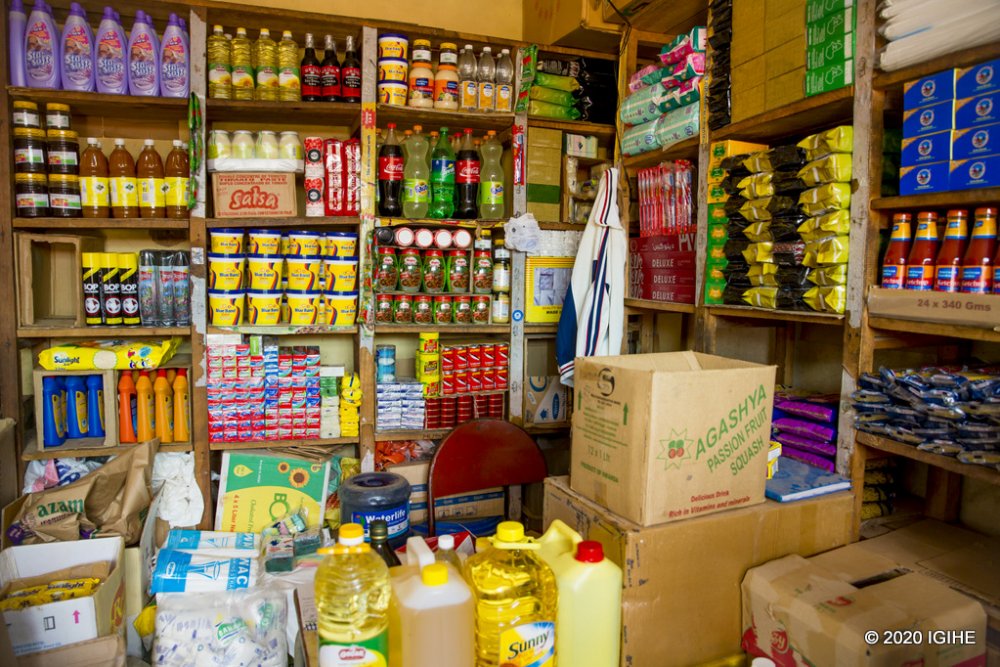
The Urban CPI is considered as the headline index for monetary policy purposes. In addition, select detailed item indices are published for items judged to be important or experiencing extreme price movement.
Figures released today show that the Urban CPI increased by 15.6 percent on annual basis (July 2022 and July 2021) and increased by 1.7 percent on monthly basis (July 2022 to June 2022). The annual average inflation rate between July 2022 and July 2021 was 5.9 percent.
Food and non-alcoholic beverages increased by 28.6 percent, ‘Housing water, electricity, gas and other fuels’ increased by 7.5 percent, Transport increased by 12.4 percent while Restaurants and Hotels increased by 17.2 percent.
The CPI for July 2022 increased by 1.7 percent compared to June 2022. Food and nonalcoholic beverages increased by 2.9 percent.
Meanwhile, Rural CPI increased by 22.5 percent on annual basis from and increased by 3.5 percent on monthly basis from 17.9 % of the previous month.
NISR has also revealed that the overall Rwanda CPI increased by 19.6 percent on annual basis and increased by 2.7 percent on monthly basis.
Apart from Rwanda, prices continue to soar on the international market, mainly due to the war between Russia and Ukraine and hiked transport cost.
The Ministry of Infrastructure recently announced revised fuel prices where a liter of diesel is set at Rwf1607 while petrol costs Rwf1609 per liter. The fuel prices revised every two months depending on price changes on the international market will go into effect for two months from 8th August 2022.
The rise in fuel prices saw the cost of diesel increasing by Rwf104 from Rwf1503 while the price of petrol rose by Rwf149 from Rwf1460.
Speaking to RTV on Sunday, the Minister of Infrastructure, Dr. Ernest Nsabimana revealed that the prices would have gone much higher hadn’t it been the government’s subsidy program.
He said that government injected almost Rwf10 billion to subsidize prices.
It is said that the young man stabbed his parents’ necks on 6th August 2022.
Sources reveal that he was shot dead on Tuesday 9th August 2022 attempting to escape law enforcers on the way to a place where he had hidden the knife used to kill his parents. He was shot on the head and leg.
Police Spokesperson in Western Province, CIP Mucyo Rukundo has told IGIHE that police personnel shot the young man after declining to obey warning shots.
“As he went to show law enforcers the place where he had hidden the knife used to kill parents, the young man escaped on the way. Police personnel fired a bullet into the sky to stop him but he neglected the warning. He was then shot,” he said.
CIP Rukundo urged the general public to abide by laws and shun violence.
Nzanywayimana killed his parents in Gakomeye Village of Kigarama Cell in the evening of 6th August 2022.
His sister Dative Nyirahaguma testified that the young man had been threatening his parents via phone calls that he would kill them over rejecting his plan to sell inherited land.
Nzanywayimana lived in Kanombe of Kigali City from where he went to kill his parents in Nyamasheke.
After committing the murder, the young man escaped and later arrested in Karengera , Kirimbi Sector on the following day. He has been detained at Ntendezi Station prior to his death.
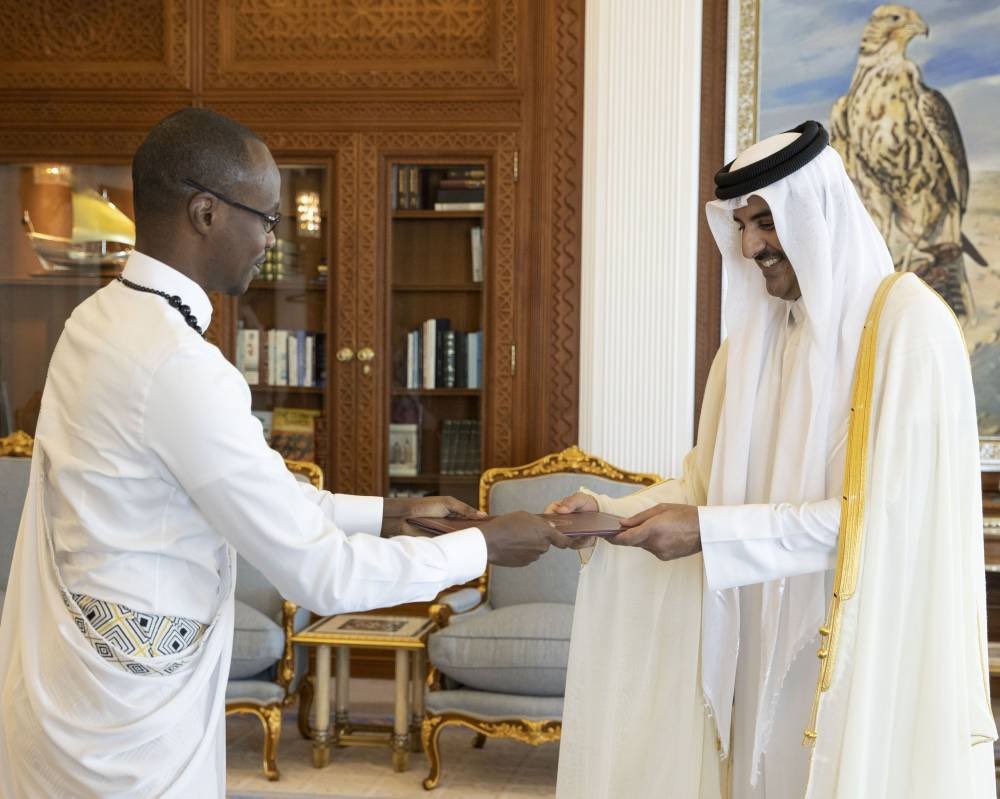
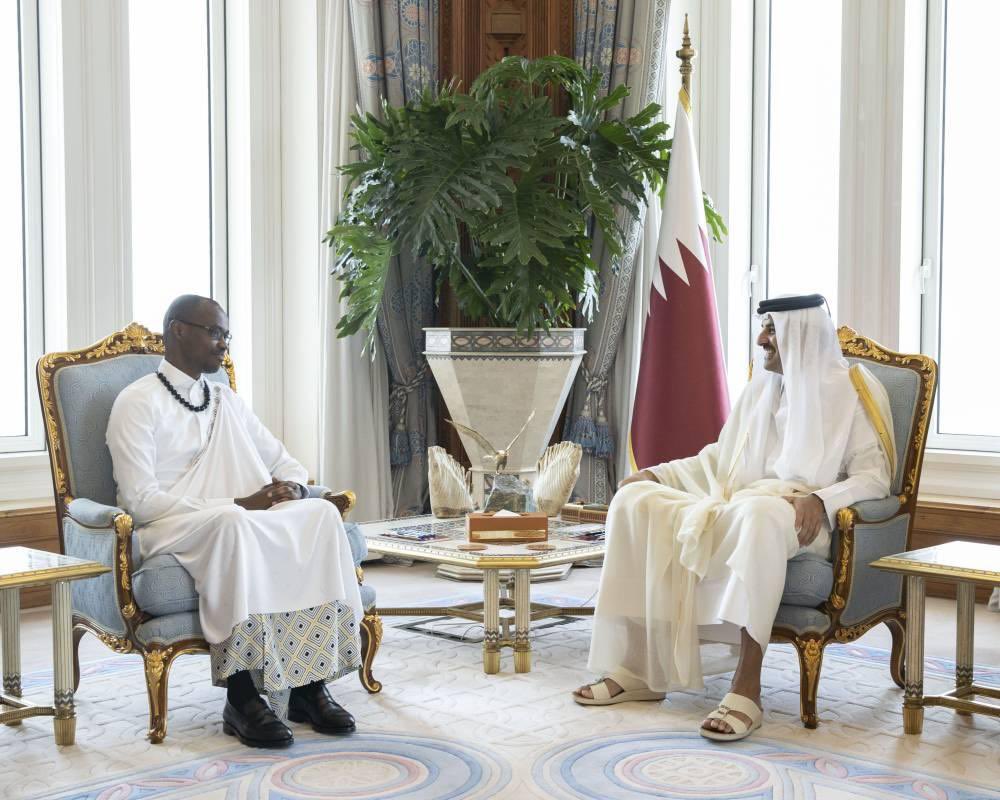
The Emir of Qatar, Sheikh Tamim bin Hamad Al Thani received the letters of credence from Amb Kayinamura on Tuesday 9th August 2022.
After presenting letters of credence, Amb. Marara expressed willingness to take bilateral ties to greater heights.
“A distinct honor it was to present my letters of credence to His Highness the Amir of the State of Qatar, Sheikh Tamim bin Hamad Al Thani. An opportunity for me to express my commitment to keep nurturing an already excellent Rwanda and Qatar relationship,” he said.
Amb. Marara was posted to Qatar in April this year. He previously represented Rwanda’s interests in Canada.
Rwanda and Qatar enjoy existing bilateral relations in different areas strengthened by the signing of cooperation agreements.
In April 2019; the Emir of Qatar, Sheikh Tamim bin Hamad Al Thani came to Rwanda for two-day working visit.
At the time, both heads of states also visited Akagera National Park which is home to the big five animals.
During his stay in Rwanda, President Kagame and Sheikh Tamim bin Hamad Al Thani the Emir of Qatar witnessed the signing ceremony of four agreements meant to promote various development sectors between both countries.
These include 4 agreements in sectors of culture, sports, tourism and business events and aviation travel and logistics.
They were added to existing ones signed in Doha, Qatar when President Kagame visited the country at the end of 2018. These were related to air service transport services, promoting and protecting joint investment and cooperation in trade and technical areas among others.
In May 2017, Rwanda and Qatar signed agreements in diplomatic cooperation.
On 26th May 2015, both countries signed cooperation agreements to fight against drug abuse on the sidelines of Qatar International Anti-Drug Forum held in Doha.
Among others, Qatar’s interests in Rwanda include a 60% stake in Bugesera International Airport, currently under construction and a 49% stake in RwandAir.
On Wednesday 14th July 2021, Qatar inaugurated a new embassy building located in Kimihurura, Kigali City.
The embassy’s former office was located at the opposite side of Kigali Marriot Hotel in Nyarugenge district.
At the time, Rwanda’s Minister of Foreign Affairs, Dr. Vincent Biruta said that the launch of the new embassy is another milestone to deepen bilateral relations further.
The platform will soon allow people to control who can see when they’re online, prevent others from taking screenshots of certain messages, and leave groups without notifying entire channels.
WhatsApp has more than 2 billion users globally, and is owned by Facebook (FB) parent Meta. Announcing the changes on Facebook and Instagram, CEO Mark Zuckerberg said the company would “keep building new ways to protect your messages and keep them as private and secure as face-to-face conversations.”
WhatsApp has long touted its use of end-to-end encryption, which means only the sender and recipient of a message can see its contents. And like other private messaging platforms, it already allows users to send messages that disappear after set periods of time.
However, last year, WhatsApp was heavily scrutinized after an update to its terms of service.
At the time, many users expressed concerns about a section of WhatsApp’s privacy policy that detailed what is shared with parent company Facebook, which has a troubled reputation when it comes to protecting user data.
The update sent some people flocking to Signal, another popular encrypted messaging platform.
Facebook tried to dispel confusion over the policy, saying that its data sharing practices were not new and did not “impact how people communicate privately with friends or family.”
Now, two of the new features being introduced on WhatsApp — which will let you choose who can see when you’re active, and to leave groups silently — will start rolling out to all WhatsApp users this month.
The screenshot blocking tool, which will be made available on messages intended to be viewed just once, is still being tested and will be made available later, according to WhatsApp.
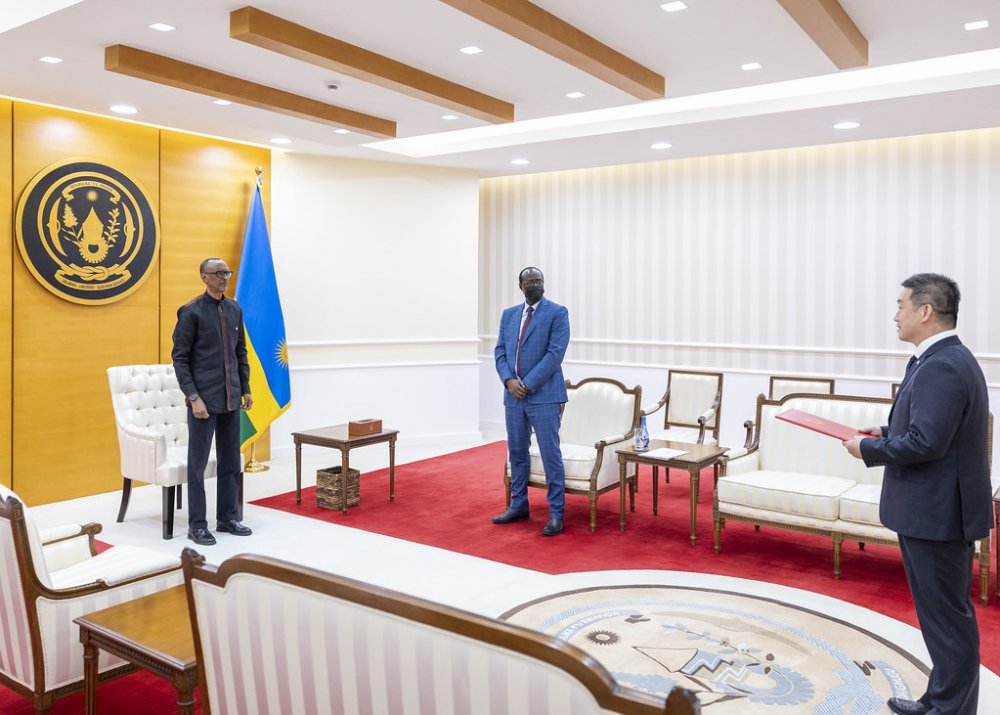
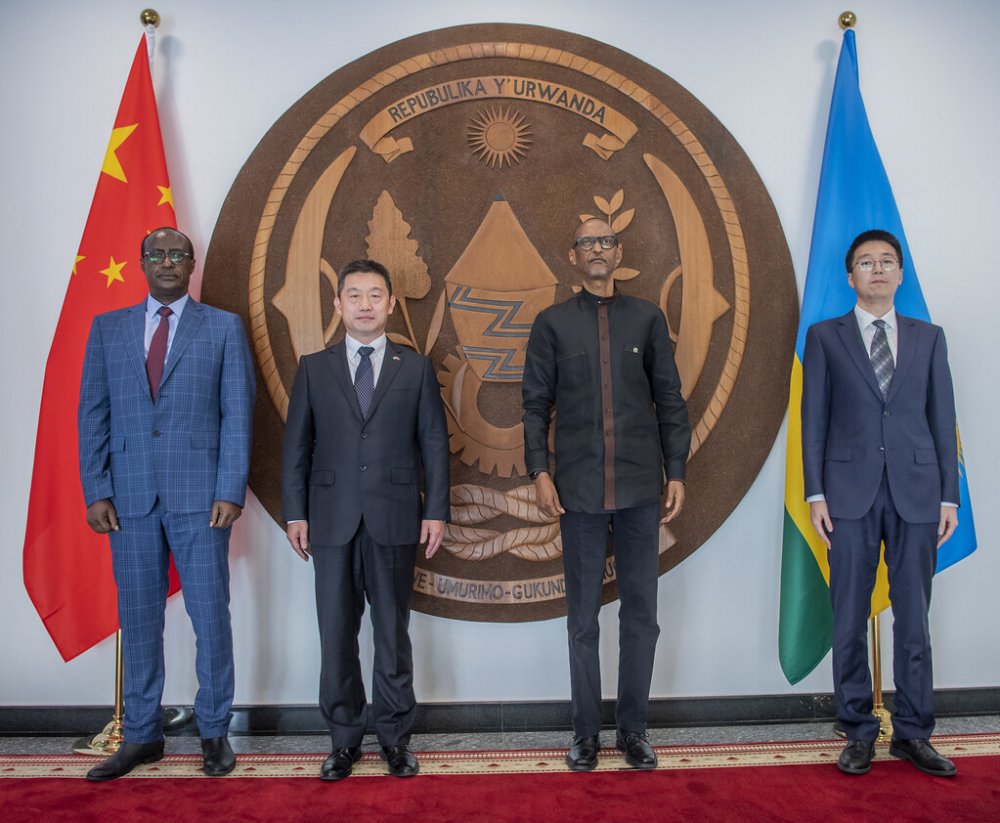
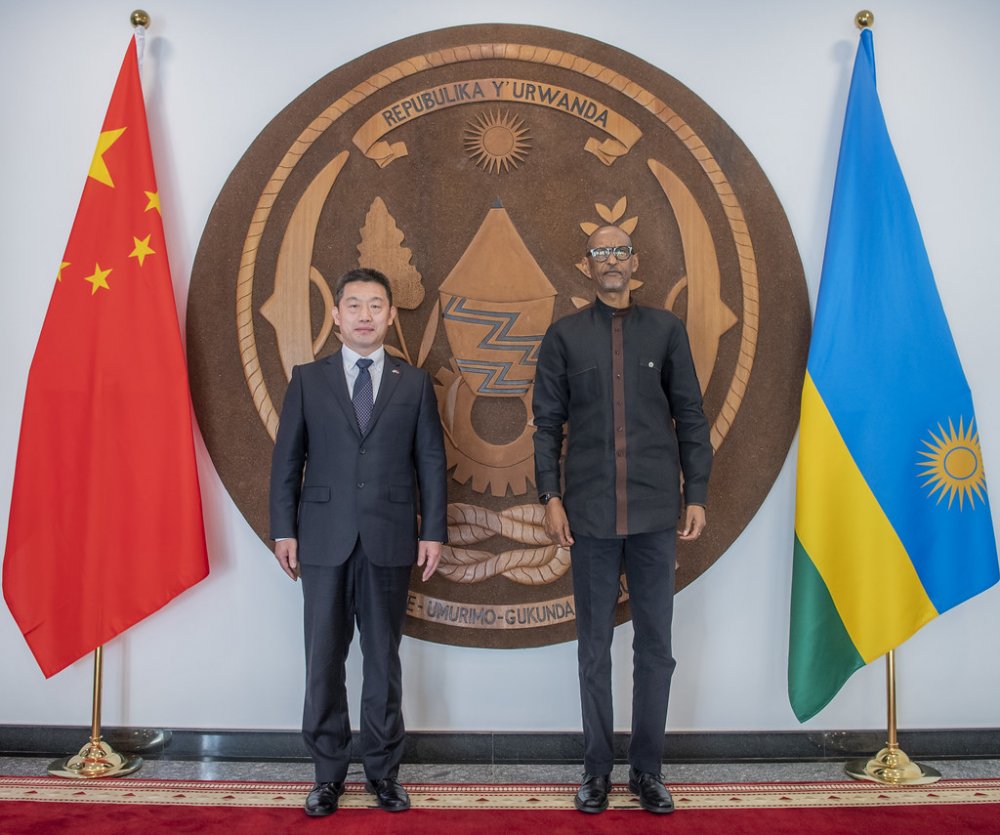
Amb. Wang Xuekun said that he is honoured to represent his country to Rwanda and reiterated commitment to deepen bilateral cooperation and friendship.
“Since the establishment of our bilateral ties, our bilateral cooperation and friendship have grown at faster pace. In recent years, the exchange between President Kagame and Xi Jinping have brought our bilateral relations to a new stage. We look forward to working together to promote our bilateral political trust and promote the mutual beneficial cooperation.
Rwanda and China started bilateral ties only after a decade of Rwanda’s Independence from Belgium.
Since 1971 and more particularly after the 1994 Genocide against the Tutsi in Rwanda, the two countries have worked closely to strategically develop their political and socio-economic ties.
China has greatly contributed to the development of Rwanda in key sectors ranging from investment, infrastructure, Information and Communication Technology (ICT), to mining, health, agriculture, defense and security.
Among others, China currently ranks among the top investors in Rwanda which has created thousands of jobs in different sectors.
In addition to traditional cooperation areas, the two countries enjoy cooperation in e-commerce, trade in high-quality agricultural produce, as well as combating the COVID-19 pandemic.
Rwanda’s coffee beans are popular on China’s e-commerce platforms.
Rwanda became the first African country to export dried chili to China. Figures released last year show that some 50,000 tons of dried chili were expected to be exported to China in 5 years.
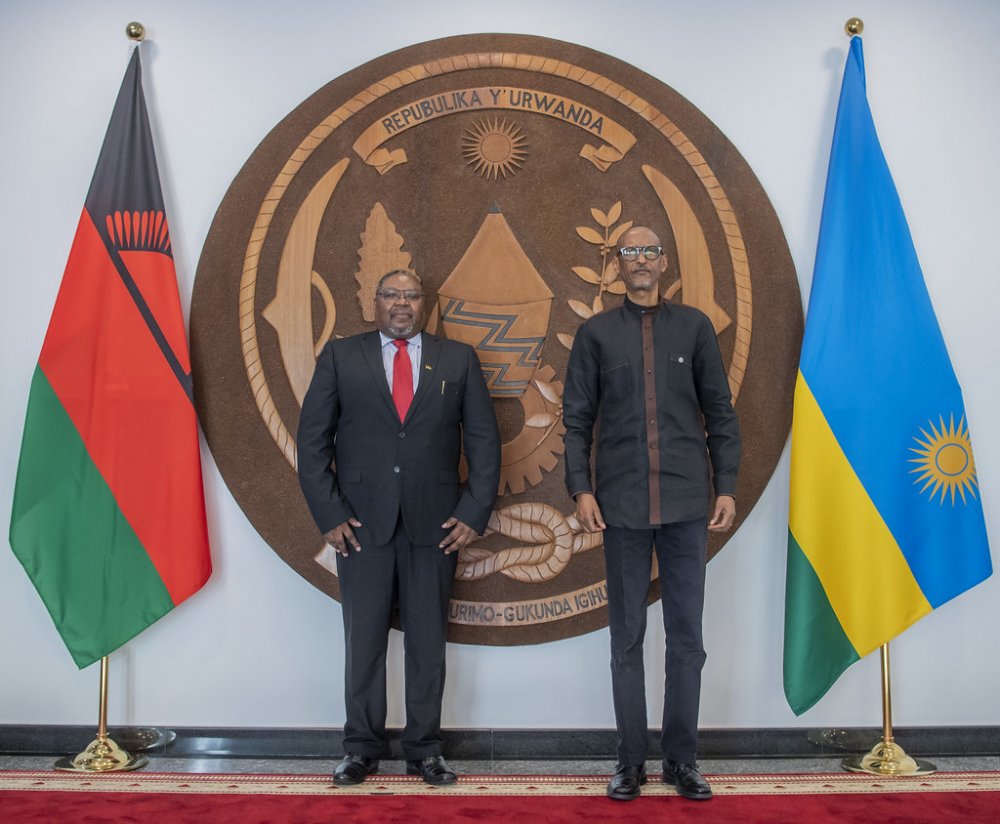
Meanwhile, Amb. Andrew Zumbe of Malawi who also presented credentials to President Kagame said that more efforts will be expended to promote trade for the benefits of both countries’ people.
“I am here to learn what Rwanda is doing right. Rwanda is at the stage where we want to be. So, I will do my best to learn and advise my government what we must do. Besides, there is a lot we can do together like trade and tourism,” he said.
“We need to end this idea that we need to get visas to go to Malawi or come to Rwanda. I think Rwanda has done that and Malawi needs to do the same. Apart from that, there are things to do with the youth and women to empower people,” added Zumbe.
Rwanda and Malawi enjoy cooperation in different areas. In 2021, Rwanda National Police (RNP) and Malawi Police Service (MPS) signed an extradition treaty that will see both countries exchanging suspected criminals to face justice.
FDLR was established by remnant masterminds of the 1994 Genocide against the Tutsi.
The Congolese Minister of Communication and Government Spokesperson, Patrick Muyaya has welcomed the report considering it a success in diplomacy because it contains findings in favour of his country’s allegations that Rwandan soldiers are present in DRC.
In late May and early June 2022, the report indicates that RDF conducted operations against rebel groups including FDLR-FOCA and RUD Urunana near Kibumba, in the area between the Nyamulagira and Nyiragongo volcanoes, and against Collectif des mouvements pour le changement /Forces de Défense du Peuple (CMC/FDP) in the areas around Rugari and Rumangabo.
Even though DRC welcomed most of its findings, the report which has not yet been officially published validates several concerns voiced by the Government of Rwanda including the collaboration between FARDC and FDLR.
{{Collaboration between FARDC and armed groups}}
From the last months of 2021, M23 rebel group continued to intensify operations against Congolese Army demanding the government to respect signed peace accords.
Instead of implementing signed accords, FARDC attacked M23 which responded and quelled the government’s army from different bases and seized Bunagana town at DRC’s border with Uganda.
For the past four months, M23 continued to accuse Congolese Army of attacking its bases in collaboration with different armed groups including FDLR.
The collaboration was also confirmed by the Government of Rwanda.
The report of UN Group of Experts reads that some armed groups gathered in Pinga, an area situated between Walikale and Masisi territories in North Kivu on 8th and 9th May 2022 where they forged a coalition.
Initially planned to define the armed groups’ position in relation to the Nairobi process, the report says, the coalition rather took a stand against M23.
The meeting brought together rival armed groups including the Nduma défense du Congo-Rénové (NDC-R) faction of sanctioned individual Guidon Mwisa Shimiray, the Alliance des patriotes pour un Congo libre et souverain (APCLS) represented by Janvier Karairi Buingo, the CMC/FDP led by Dominique Ndaruhuste alias Domi, and the Nyatura-Abazungu (Alliance of Congolese Nationalists for the Defense of Human Rights/ Alliance des forces pour la défense du peuple -ANCDH/AFDP) led by Jean-Marie Bonane.
“Although they do not appear on the outcome documents of the Pinga meeting, the Group was informed that FDLR Colonel Silencieux and FDLR Colonel Potifaro were also present. The Pinga meeting was also attended by FARDC Colonel Salomon Tokolonga [3411th regiment], in charge of operations and military intelligence who can be identified in the pictures of the meeting,” reads part of the report.
It further indicates that two major decisions were taken during the Pinga meeting.
Firstly, it was agreed that, under the agreed truce, armed groups would refrain from attacking each other. Secondly, it was decided to create a coalition to join forces with the FARDC to fight against M23 and its allies. According to witnesses who attended the meeting, armed groups leaders proposed to mobilise close to 600 combatants to support the FARDC under an armed fight qualified as “self-defence”.
“The presence of FARDC Colonel Tokolonga can be interpreted, at least, as an apparent endorsement by some FARDC members of the armed groups’ coalition and the official recognition of the cooperation of some FARDC members with this coalition. The Group met Colonel Tokolonga in Rugari on 7 June 2022, and notes that his hierarchy said it was unaware of the reasons for his prolonged stay in Rugari, a known FDLR and CMC/FDP stronghold, as also observed by the Group,” added the report.
Colonel Tokolonga is a former commander of Mai Mai armed group.
{{Support from FARDC}}
In several documents, videos and audio messages reportedly analysed by the Group, armed group leaders announced the mobilisation of their combatants in the fight against M23. For instance, in three videos of 21st June 2022, CMC/FDP spokesperson Jules Mulumba, surrounded by many armed combatants, expressed CMC/FDP readiness to fight against M23, Rwandan and Ugandan forces, and criticized the DRC Government and MONUSCO for still labelling CMC/FDP as “a negative force”.
The report reads that armed groups’ leaders, combatants and ex-combatants confirmed to the Group their involvement – either alone or jointly with some FARDC soldiers – in the fighting against M23.
“For example, ex-combatants and armed groups leaders reported to the Group that CMC/FDP, APCLS and FDLR combatants fought alongside some FARDC members around Bambu and Rugari in late May and early June 2022,” reads the report in part.
As the report goes, when the FARDC camp in Rumangabo was captured by M23 on 25th May 2022, armed groups’ combatants backed by some FARDC members launched a counterattack on 26th May 2022.
Several sources reported to have seen a group of 150 to 200 FDLR combatants close to the camp in Rumangabo a few hours before the counterattack. Else, the Group of Experts revealed that a video filmed on 26th May 2022 shows a group of armed groups’ combatants in the camp in Rumangabo and chanting slogans.
Moreover, during a meeting with the Group, the CMC/FDP spokesperson claimed victory in the counterattack on the camp in Rumangabo and told the Group that CMC/FDP and FDLR had continued to engage against M23/ARC soldiers in the area around Rumangabo and Rugari.
The Group observed armed groups combatants alongside some FARDC members in the Rumangabo camp on 9th June 2022.
Several ex-combatants and combatants, civil society sources and local authorities reported that following the Pinga meeting, members of the coalition of armed groups received weapons and ammunition from some FARDC members on several occasions.
One eyewitness, civil society actors and one source close to NDC-R Guidon faction informed the Group that, on 30th May 2022, a certain “General” Kassie from APCLS met with a commander of the 34016th regiment in Kitchanga, and received arms and ammunition as well as food stuff.
Another combatant said that his Mai Mai group had received weapons but that the FARDC colonel who had handed over the weapons and ammunition alleged that they had to be returned to the FARDC once M23/ARC was defeated.
“Local authorities, civil society sources, eyewitnesses and DRC security forces attested that since late May 2022, FDLR combatants in and around Rugari were better equipped and wore newly received uniforms,” adds the report.
{{Rockets shelled in Musanze}}
On 23rd May 2022, the Rwandan Government reported cross-border shelling by the FARDC on its territory in Kinigi and Nyange sectors of Musanze district, and in Gahunga sector Burera district. The Expanded Joint Verification Mechanism (EJVM) reported a total of eight 122 mm rockets shelled on Rwandan territory, seriously injuring two civilians and damaging infrastructure.
The EJVM is a mechanism of the International Conference of the Great Lakes Region (ICGLR) composed of military officers from the 12 member countries that is charged with monitoring and verification of border violations between DRC and neighbouring countries.
The report has however indicated that the EJVM which conducted onsite investigations, could not establish the origin of the artillery shelling.
“According to three independent sources, two of whom with close ties to armed groups active in Rutshuru territory, Colonel Ruvugayimikore Protogène, alias Ruhinda, of FDLR ordered the shelling of Rwandan villages by his troops,” reads an extract from the report.
When contacted by the Group, the report says, the FDLR spokesperson denied the group’s involvement in the shelling.
The group of experts disclosed that it continued its investigations to identify the origin of the artillery shelling which hit Musanze and Burera districts, as well as those
responsible for ordering or executing the shelling.
“The Group notes that the FARDC has 122 mm capability, but that this type of artillery ammunition has not yet been documented by the Group with FDLR,” reveals the report.
{{Denouncing collaboration with FDLR}}
Armed groups involvement, in particular FDLR participation, in operations against M23 was denounced. In a letter dated 6th June 2022 to the Special Representative of the United Nations Secretary General (SRSG) in the DRC and Head of the United Nations Organization Stabilization Mission in the Democratic Republic of the Congo (MONUSCO), Ms. Bintou Keita, M23 president Bertrand Bisimwa denounced the participation of FDLR in the fight with FARDC. On several occasions, the Rwandan Government also accused the FARDC of using FDLR as a proxy.
The FARDC spokesperson of the military governor of North Kivu, General Ekenge, told the Group that the FARDC did not rely on armed groups when fighting against M23 even though he acknowledged that the FARDC faced challenges in mobilising its troops to the adequate level. Likewise, the Sokola II spokesperson in Kiwanja, Rutshuru territory, refuted the M23 claims that the FARDC used proxies.
“However, in late May and early June 2022, Brigadier-General Peter Cirimwami told to reliable sources of the Group that, de facto, the FARDC fought shoulder to shoulder with armed groups against M23,” adds the report.
In a statement of 12th May 2022, President Tshisekedi explicitly denounced the possibility of the FARDC using armed groups as proxies and said, “we do not extinguish fire by throwing oil on it”.
On 6 July 2022, following persistent allegations of the FARDC using local armed groups as proxies in Rutshuru territory, General Cirimwami was reassigned to Ituri province and replaced by General Clément Bitangalo.
{{Hate speeches}}
Since the intensification of M23 operations, the group of experts documented a worrying proliferation of xenophobic and hate speech and discourses inciting discrimination, hostility and violence targeting Rwandophone populations, in particular the Banyamulenge and Tutsi communities, leading at times to acts of violence against members of these communities.
Part of such acts pointed out by the report is a speech in front of his officers on 25th May 2022 where the North Kivu Deputy Police Commissioner, General Aba Van Ang, encouraged civilians to take up machetes to defend Goma against the enemy. Justin Bitakwira Bihona-Hayi, a former national minister and president of the Alliance pour la République et la conscience nationale (ARCN) political party called for every Congolese to stand up against the enemy and for the DRC Government to identify “infiltrators”.
The members of the Banyamulenge and Tutsi communities interviewed by the Group in North Kivu and South Kivu reported that, based on their perceived morphology and language, they were repeatedly told by various individuals, including some FARDC members, that they were not DRC citizens, that they were M23 members or supporting the M23 or Rwanda, and that they should return to Rwanda.
Sometimes, they were also threatened to be cut with machetes.
{{Will Nairobi Process materialize?}}
Recently, it was agreed that joint forces from the East African Community (EAC) will be deployed to disarm armed groups in DRC.
The troops will be deployed to North Kivu, South Kivu, Iruri and Uele provinces.
The report indicates that Tanzania has declined to take part in the force while the DRC authorities requested that Rwanda deploy within its own borders only.
Even though the Government of the DRC expressed, in principle, its support to the planned deployment of the regional force on its territory, several DRC political actors, civil society organizations and armed groups reacted to the planned deployment of the regional force with concern and skepticism.
In the aftermath of M23 taking control of Bunagana, the speaker of the DRC parliament, Christophe Mboso, called for the suspension of the military cooperation with Uganda. FARDC and military intelligence sources pointed to the lack of support to the FARDC from the UPDF when M23 took control of Bunagana questioning the commitment of the Government of Uganda to peace in the DRC.
On 13th June 2022, the Government of the DRC froze bilateral relations with Rwanda.
Some civil society actors have outrightly rejected the planned deployment while others asked for the withdrawal from the regional force of some countries, including Rwanda, Uganda and Burundi.
Some civil society actors as well as political and FARDC sources stressed that the three countries have a record of involvement in proxy wars in the DRC and have had for decades contributed to the chronic instability in the DRC.
Meanwhile, Congolese have been staging protests demanding MONUSCO to leave the country over failure to restore peace despite its presence for 20 years.
The trade fair runs from 26th July 2022 to 16th August 2022. according to statistics from Rwanda’s Private Sector Federation (PSF), between 8000 and 10000 people visit Gikondo Expo grounds daily.
Considering the fact that the youth comprise a big number of the daily visitors, health organizations took advantage of the ongoing exhibition to increase AIDS prevention measures.
AIDS HealthCare Foundation (AHF Rwanda), a non-government organization announced the first week of expo saw more than 79000 condoms being distributed freely among the visitors.
Narcisse Nteziryayo, Prevention Programs Manager at AHF Rwanda said that with the help of the Ministry of Health, they have put up more measures to ensure that EXPO visitors are free from unprotected sex.
“We cannot lag behind when it comes to AIDS prevention in a country where more than 200 000 people lives with AIDS. We are ready to prevent that such number may increase,” he said.
AHF expects that during the second and the third weeks of EXPO, more 120 000 and 150 000 condoms will be distributed respectively.
Mugisha Musa from Muhima commended the work being done to protect the lives of those who attend EXPO 2022.
“As the youth, whenever you feel that you need to have sex, you can’t risk your lives doing it unprotected. You should rush here and grab one or two packs of condoms”, he said.
Besides giving free condoms, more emphasis is being drawn on raising prevention awareness campaign among women.
Figures show that number of women with AIDS in Rwanda account for a triple of men tested positive.
“The two little angels enjoying their time together,” he tweeted.
The picture posted on Twitter shows his first granddaughter holding the recently born baby.
The Head of State has two grandchildren born to his daughter, Ange Kagame.
Ange Kagame was married to Ndengeyingoma in July 2019. The couple was blessed with the first child born on 19th July 2020.
In July this year, they gave birth to the second child. The news was made public by President Kagame through a photo posted on his Twitter handle.
In 2020, President Kagame said that having a grandchild is very delightful.
Speaking to the national broadcaster in September 2020, the Head of State revealed that he was enjoying the promotion from being a father to being a grandfather.
“The Security Council needs to do some deep thinking in helping Africa achieve lasting peace,” Zhang told a Security Council open debate convened by China on the theme “Peace and security in Africa: capacity-building for sustaining peace.”
Considering China’s own development experience, experience from China-Africa cooperation, and the historical lessons from all over the world, China believes that to help Africa achieve long-term stability, it is imperative to make sustained and increased investments, have long-term thinking, and build a strong foundation for Africa to strengthen its own development capacity and improve its resilience to external shocks, he said.
“In this regard, capacity building is the most crucial part,” Zhang noted.
The envoy urged support for African countries in strengthening governance capacity. “To enhance government capacity, we need to maintain the right direction and respect the independently chosen development pathway and social system by their peoples.”
There should be no political conditions attached to aid, nor should there be interference in internal affairs of African countries, or to replace the role of local governments, he said.
For post-conflict countries, Zhang emphasized the need to support the newly established governments in exercising state authority, instead of endless criticism and fault-finding, let alone attempt of “democratic transformation” and arbitrary use of sanctions for exerting pressure.
It is important to support African countries in improving security sectors’ capacity to perform their duties. Heeding the complaints of African countries, it is necessary to conduct comprehensive reviews of some of the peacekeeping operations deployed by UN in Africa, and reform practices that do not fit the situation on the ground, he said.
Arms embargoes imposed by the Security Council on countries such as Sudan, South Sudan, Somalia and the Democratic Republic of the Congo have a negative impact on capacity building of security sectors in these countries, and need to be adjusted and lifted in time. The funding of the African Union-led peace operations has been a persistent difficulty, which calls for a solution, he said.
Zhang underscored the need to support African countries in improving their sustainable development capacities.
At present, the African continent is beset with economic, financial, food, energy and other challenges. These are related to a turbulent international situation, but the underlying cause is the unjust and unfair international economic order.
African countries have expressed strong wishes for the unfair treatment to end, and the international community has the obligation to support them by helping Africa industrialize, accelerate infrastructure modernization, achieve financial autonomy, and increase economic independence, he said.
“Developed countries should honor their commitments on climate financing as soon as possible, and make up for what they owed to Africa in history,” he stressed.
Zhang also called for efforts to support African countries in building a bigger talent pool. “The international community should help African countries train more talents based on the urgent needs in reconstruction and social and economic development. There is a particular need to encourage countries affected by conflict to enhance policy support and resource input for youth and children, and expand special assistance in development and education.”