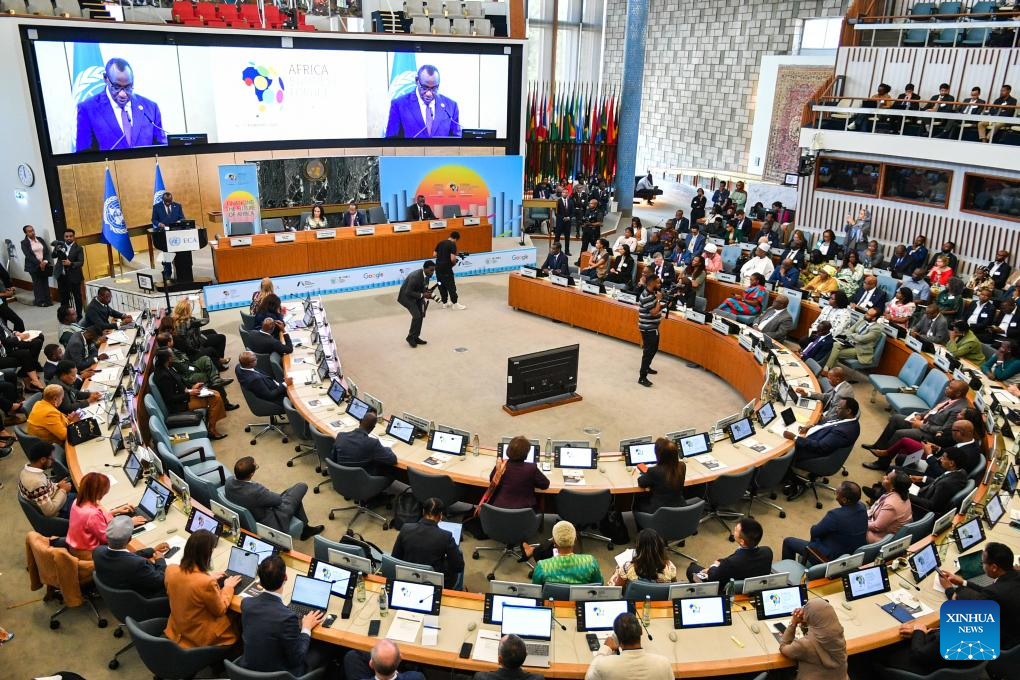
The urgent call came at the 9th Africa Business Forum 2026, the continent’s flagship business gathering, which opened Monday at the UN Conference Center in Addis Ababa, Ethiopia’s capital, under the theme “Financing the Future of Africa: Jobs, Innovation and Creative Capital.”
The two-day forum, convened annually by the UN Economic Commission for Africa (UNECA) in collaboration with the African Union (AU) and other partners, is a premier platform for high-level engagement among African heads of state, private sector leaders, and investors.
This year’s forum centered on fostering partnerships and leveraging blended finance to advance Africa’s youth economy.
Addressing the forum, Ethiopian President Taye Atske Selassie emphasized the crucial importance of harnessing the potential of Africa’s youth. Noting that the AU’s 50-year continental development blueprint, Agenda 2063, designates the youth as the primary drivers of Africa’s renaissance, he said with over 70 percent of the continent’s population under the age of 30, Africa is yet to exploit its “immense” demographic potential.
“During this decade, 362 million youngsters entered the working age population. However, our current job market can only provide jobs to 161 million people,” Atske Selassie said. “This demographic reality can become Africa’s greatest strength if we succeed in turning our youth into productive capital and our innovation into scalable enterprises.”
Experts and policymakers at the forum stressed that while global capital has become more selective, Africa’s demographic and market fundamentals make it an “irresistible frontier.” They highlighted the need to address the existing gap between available funds and viable projects.
Emphasizing that transformation is already underway in multiple sectors across Africa, with the continent beginning to export value, not just commodities, UNECA Executive Secretary Claver Gatete said that despite these successes, the pace of transformation remains below potential.
“Africa faces a huge infrastructure financing gap and further loses billions annually to illicit financial flows. Even so, the continent holds over 1.1 trillion U.S. dollars of domestic institutional capital in pension funds, insurance pools, and sovereign assets. The paradox, therefore, is not a lack of capital, but the lack of mechanisms that connect capital to bankable projects,” he said.
Gatete proposed four strategic measures for collective action. These include scaling up domestic capital and deploying innovative financing instruments, stronger credit ratings and more credible African capital markets, full implementation of the African Continental Free Trade Area, and investing decisively in innovation, skills, and data systems.
This photo taken on Feb. 16, 2026 shows a scene of the 9th Africa Business Forum 2026 at the UN Conference Center in Addis Ababa, Ethiopia.
The decision on Sunday “could lead to the dispossession of Palestinians of their property and risks expanding Israeli control over land in the area,” said a statement issued by spokesperson Stephane Dujarric.
Such measures, including Israel’s continued presence in the occupied Palestinian territory, “are not only destabilizing but, as recalled by the International Court of Justice, unlawful,” it added.
The UN chief called on the Israeli government to immediately reverse these measures, and again warned that the current trajectory on the ground is eroding the prospect for the two-state solution, the statement said.
Guterres reiterated that all Israeli settlements in the occupied West Bank, including East Jerusalem, and the regime associated with them, have no legal validity and are in flagrant violation of international law and relevant UN resolutions.
“The Secretary-General calls on all parties to preserve the only path to lasting peace, a negotiated two-State solution, in line with relevant Security Council resolutions and international law,” the statement said.
UN Secretary-General Antonio Guterres on Monday condemned the Israeli government’s decision to resume land registration procedures in Area C of the occupied West Bank.
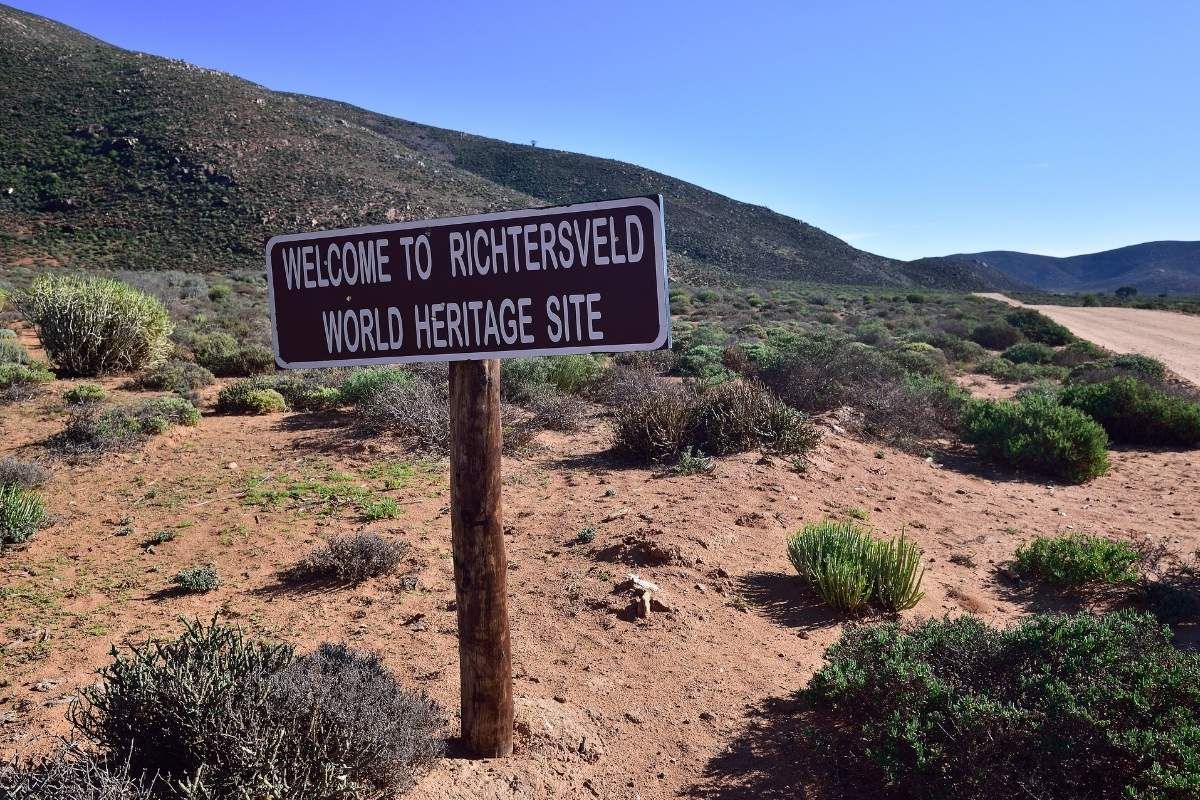
According to SA News, the discovery was made by Dr. Massimo Meregalli from Italy and Dr. Roman Borovec from the Czech Republic.
These respected entomologists recently published their research on flightless weevils found in remote parts of the park. These tiny insects live in the soil, hidden under shrubs, and mostly come out at night, making them very hard to find and study. Therefore, their discovery required meticulous fieldwork in the Richtersveld’s challenging environment.
SA News quoted a statement by South African National Parks (SANParks) as saying, “With the support and guidance of Richtersveld National Park Nursery Curator Pieter van Wyk, the researchers explored the remote Armmanshoek Valley, an area not previously surveyed for soil insects.”
“Their efforts resulted in the identification of multiple new species, further confirming the Richtersveld as a hotspot of endemism and scientific importance,” it said.
To honor the park’s importance for conservation and SANParks’ support for research, the scientists named a newly found group and species “Richtersveldiella sanparkensis.”
This is the first insect species to be officially named after SANParks and Richtersveld National Park. The researchers have also previously honored the local culture by naming other groups, Khoisan and Nama, recognizing the long history of connection between the communities and this unique land.
“These discoveries highlight the importance of continued scientific exploration within protected areas and reinforce SANParks’ commitment to conserving not only iconic wildlife and landscapes, but also the often-overlooked species that form the foundation of healthy ecosystems,” SANParks said.
“The naming of Richtersveldiella sanparkensis stands as a lasting scientific tribute to the Richtersveld and SANParks’ ongoing dedication to biodiversity conservation,” it added.
To honor the park’s importance for conservation and SANParks’ support for research, the scientists named a newly found group and species “Richtersveldiella sanparkensis.”
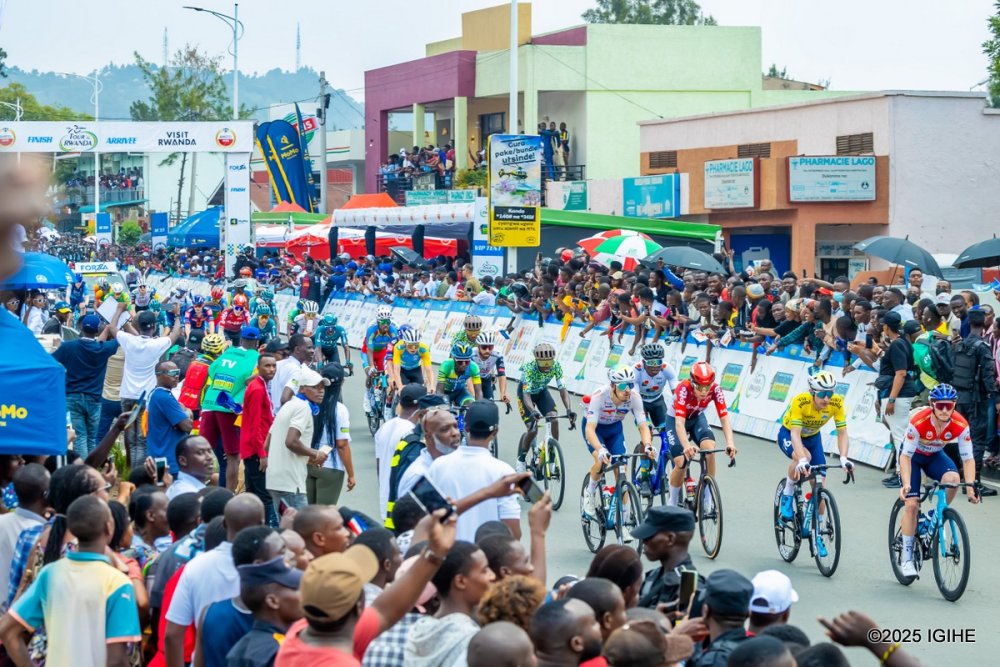
Over the years, BRALIRWA’s involvement in Tour du Rwanda has evolved beyond sponsorship, becoming an integral part of the race’s identity and fan experience.
For the 2026 edition, scheduled to take place from February 22 to March 1, the leading beverage company will participate through its premium beer brand Amstel, which has long been a Gold Sponsor of the race for several consecutive years.
Celebrating performance and authenticity
At the heart of BRALIRWA’s Tour du Rwanda engagement is Amstel 100% PURE MALT, a brand whose values of authenticity, craftsmanship, and consistency align naturally with the discipline and endurance of professional cycling.
As part of its sponsorship, Amstel will once again award the daily stage winners, a tradition that has become a defining moment of each racing day, celebrating excellence, resilience, and achievement on Rwanda’s demanding routes.
Beyond the competitive aspect, BRALIRWA continues to elevate the Tour du Rwanda experience for fans by hosting After-Race Experiences at stage finishes. These moments bring spectators together to celebrate the day’s racing, reinforcing Tour du Rwanda as not just a sporting competition, but a shared national celebration.
Bringing fans closer
In line with its commitment to shared moments and friendship, BRALIRWA, through Amstel, will actively participate in the Tour du Rwanda Social Ride, a unique experience allowing cycling enthusiasts to ride selected race routes ahead of the professional peloton.
The Social Rides will take place on February 26 and March 1, 2026, with participants standing a chance to win exciting rewards. Across the two rides, four sports bicycles—two per ride—will be given away, alongside branded goodies and prizes, making the experience both inclusive and rewarding for cycling fans across the country.
BRALIRWA’s presence will further extend to the Tour du Rwanda Festivals, which will be hosted in four locations nationwide, including: Kigali, Huye, Rubavu, and Musanze.
At each festival stop, Amstel will add to the excitement by giving away one sports bicycle per festival, reinforcing its support for grassroots cycling enthusiasm while celebrating the diverse communities that make Tour du Rwanda a truly national event.
Responsible celebration at the core
As a leading beverage company, BRALIRWA has stated that all Amstel activities during the upcoming Tour du Rwanda 2026 will follow regulatory requirements and responsible drinking guidelines.
Alcoholic beverages will not be sold to persons under 18 or to pregnant women. The company also emphasizes the messages “Drink Responsibly” and “Don’t Drink and Drive,” highlighting its commitment to public safety and responsible consumption.
BRALIRWA’s partnership with Tour du Rwanda continues to blend world-class cycling, fan engagement, and responsible brand leadership, cementing Tour du Rwanda as a celebration that extends far beyond the race itself.
As part of its sponsorship, Amstel will once again award the daily stage winners. BRALIRWA, through Amstel, will actively participate in the Tour du Rwanda Social Ride, a unique experience allowing cycling enthusiasts to ride selected race routes ahead of the professional peloton.
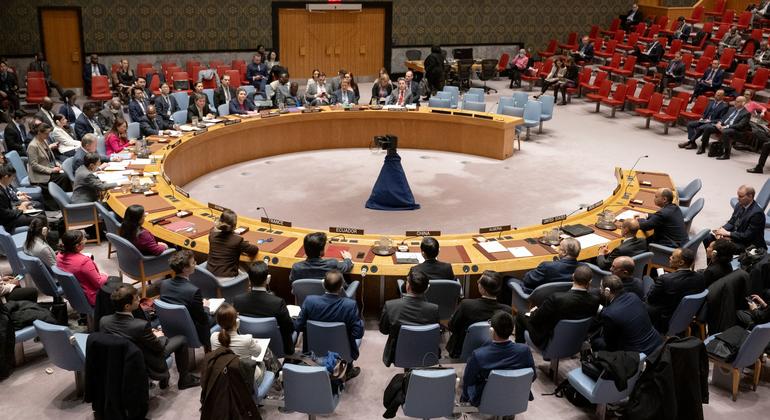
In a press statement, the members of the Security Council expressed grave concern at escalating violence in the states of Jonglei, Eastern Equatoria and throughout the country, emphasizing that under international law, individuals who order the commission of war crimes may be held accountable.
They expressed their full support for the UN Mission in South Sudan (UNMISS), and stressed that continued constructive cooperation between the host government and UNMISS is essential to sustaining peace and stability, facilitating safe and timely humanitarian access and ensuring the protection of civilians.
While reaffirming their commitment to supporting South Sudan’s peace process and working in partnership with the transitional government to achieve lasting peace and stability in the region, the members of the council called on South Sudanese leaders to engage in genuine inter-party dialogue about potential changes to the 2018 peace agreement, through an inclusive and transparent process.
They also reaffirmed their strong commitment to the sovereignty, independence, territorial integrity and national unity of South Sudan.
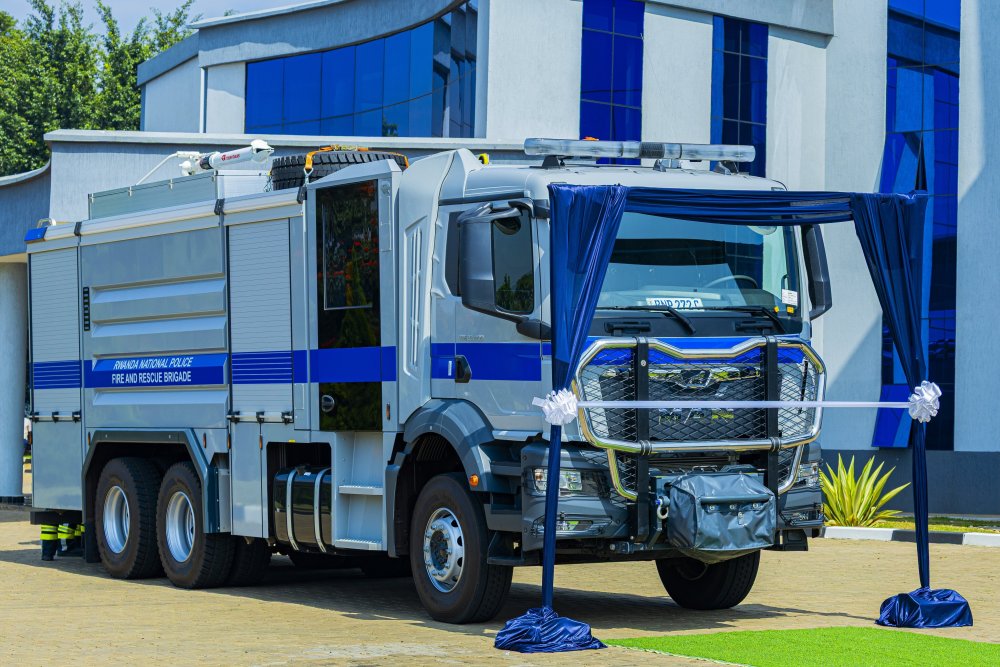
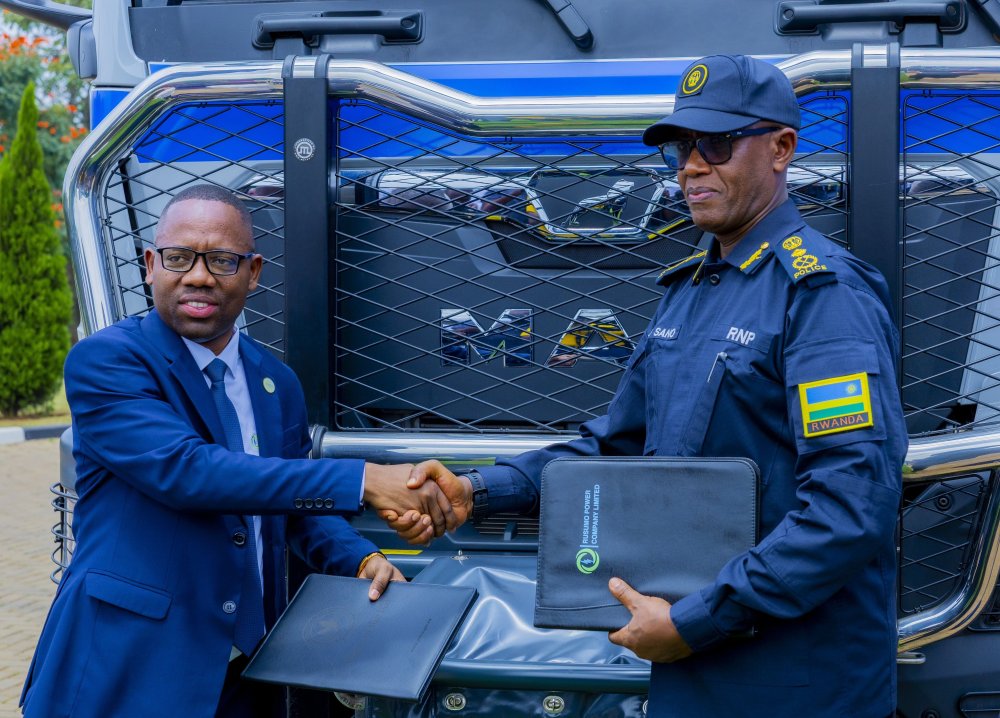
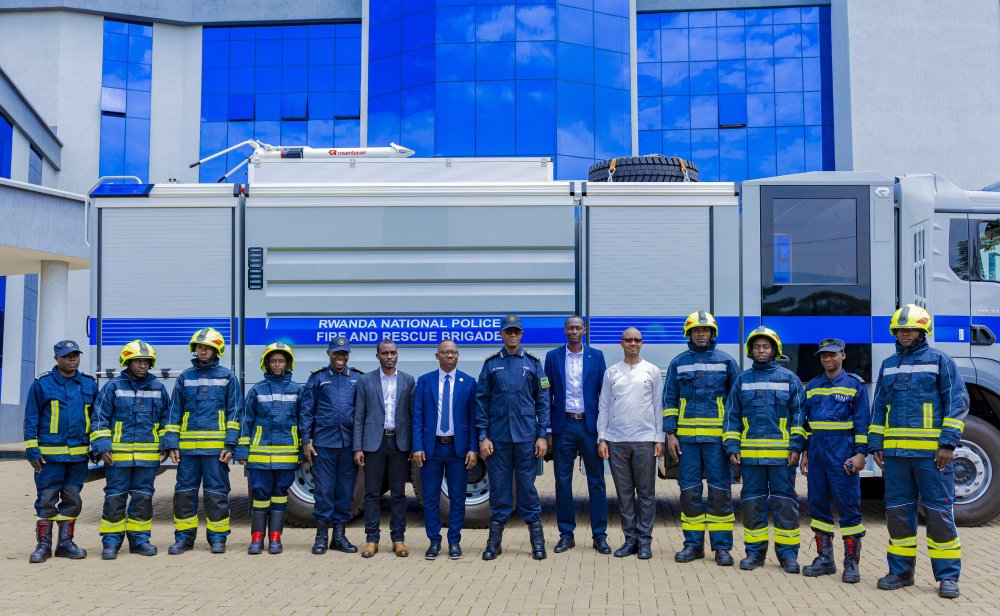
The vehicle was handed over to the Rwanda National Police at its headquarters in Kigali on February 13, 2026. The ceremony was attended by the leadership of Rusumo Power Company Limited (RPC Ltd), senior RNP officials, and other distinguished guests.
The donated unit is a MAN Model TGS 31.400 firefighting truck equipped with modern firefighting systems, capable of responding to incidents in standard environments as well as high-rise buildings. It is valued at €759,100 (over Rwf 1.3 billion).
Eric Mpayimana, head of RPC Ltd, said the donation reflects the company’s commitment to supporting communities beyond its core mandate of electricity generation.
“We chose to donate fire trucks to the countries where our power plant supplies electricity, including Burundi and Tanzania, and now Rwanda. This is part of our commitment to providing assistance in case of fire outbreaks so that they can effectively combat fires,” Mpayimana explained.
He added that this donation complements other projects that RPC Ltd is involved in, including building markets, youth centers, and hospitals, which contribute to connecting the people of these three countries.
ACP Boniface Rutikanga, the spokesperson for RNP, emphasized that the truck is a significant contribution to ensuring the safety of people and property, as the existing firefighting vehicles were insufficient.
“This donation increases our capabilities, as we aim to have such vehicles in more locations. The reason for this is the growth of infrastructure, urban expansion, and the increasing need for emergency services. We anticipate more trucks like this as we continue to improve our resources,” ACP Rutikanga said.
He also noted that the donation shows RPC’s awareness of the potential dangers associated with electricity when used improperly.
“RPC provides electricity to homes, but when used incorrectly, it can result in fires. Receiving this firefighting truck means they are also considering the safety of those who will use this electricity in case of accidents,” ACP Rutikanga added.
Rangira Bruno, the Mayor of Kirehe District, where the power plant is located, highlighted that the donation of the fire truck is another important step in RPC Ltd’s ongoing partnership with the government to support the welfare of the community.
The meeting comes as diplomatic efforts intensify to stabilize the country’s volatile east.
Van de Perre arrived on Thursday in the capital of North Kivu province aboard a helicopter, landing at Goma’s airport since the seizure of the city by the rebel group in January 2025 amid deteriorating security conditions. Her visit comes as part of efforts to operationalize a ceasefire monitoring mechanism envisaged within the broader regional peace architecture.
Following talks with Corneille Nangaa, leader of the Congo River Alliance (AFC), a politico-military coalition allied with the M23, the UN official said discussions focused on “the concrete implementation of the ceasefire monitoring and verification mechanism in line with the agreement signed by the AFC/M23 and the government of the DRC” under the Doha process.
“It is essential that commitments made in this agreement quickly translate into clear, credible and verifiable operational arrangements on the ground,” she said, adding that MONUSCO is mandated by the UN Security Council to support the implementation of a permanent ceasefire and to participate in verification efforts.
She noted that MONUSCO’s support would be provided gradually, depending on confirmed security arrangements and guarantees for UN personnel and assets, stressing that the mission’s actions would remain strictly within its Security Council mandate.
Speaking to the press on behalf of the AFC/M23, the group’s senior official Benjamin Mbonimpa welcomed MONUSCO’s role, saying it was expected to support the process “with logistical assistance” within the ceasefire verification framework. Mbonimpa noted that UN personnel would enjoy full security in areas under AFC/M23 control, while declining responsibility for areas outside its control.
Mbonimpa also said the group had “not been informed or invited” regarding the ceasefire proposed by Angola as part of regional mediation efforts, while accusing Kinshasa of repeated ceasefire violations on the ground.
In a separate statement released Friday, the Congolese presidency said to have accepted the principle of a ceasefire proposed by Angola, “in a spirit of responsibility and de-escalation” to pursue a peaceful resolution to the conflict, reaffirming Kinshasa’s commitment to regional stability and a return to lasting peace.
Angola, which has served as a key mediator in the DRC crisis since 2022, proposed late Wednesday that a ceasefire between the Congolese government and the M23 rebel group take effect on Feb. 18. The proposed date remains contingent on a public declaration of acceptance by the parties, according to Angolan authorities.
However, Kinshasa has yet to clarify whether it agrees to the proposed date for the ceasefire to take effect.
The M23 seized the eastern city of Goma in January 2025 and Bukavu, the capital of South Kivu Province, the following month.
In recent weeks, clashes have been reported near the town of Minembwe in South Kivu, according to local sources.
In a statement issued on February 13, 2026, the presidency of the Democratic Republic of the Congo said the ceasefire requires both the government and the AFC/M23 coalition to remain in their current positions, halt reinforcements in conflict zones, refrain from repositioning forces for attacks, and stop receiving external support.
The presidency warned that attempts to expand positions or any actions violating the ceasefire monitoring framework, established under an agreement signed in Doha, Qatar on October 15, 2025, would undermine progress already made.
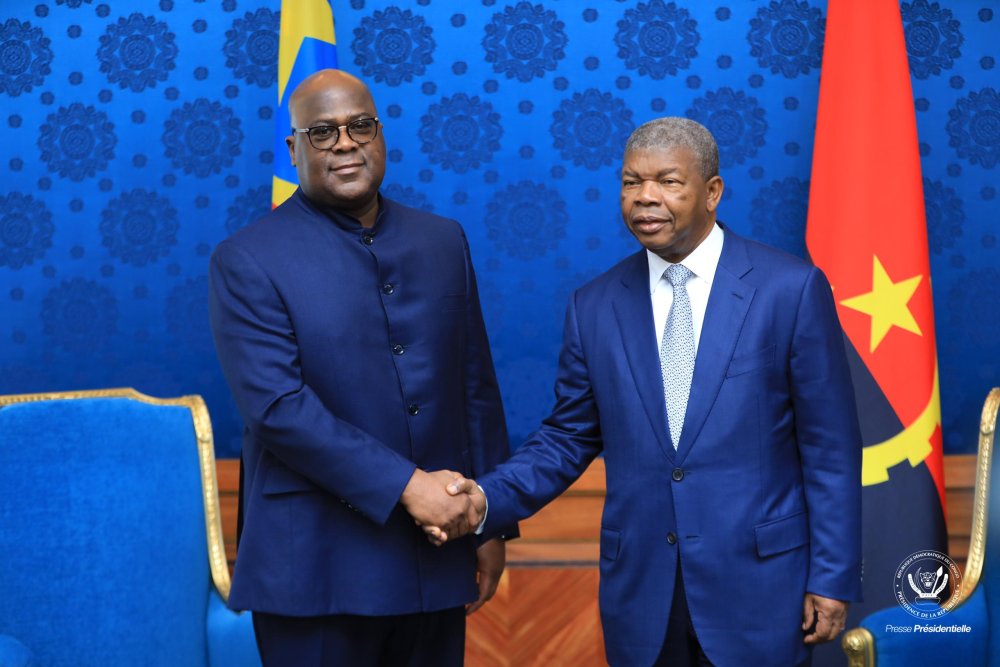
The Angola government proposed that the ceasefire take effect on February 18, two days after Lourenço hosted Tshisekedi alongside mediators appointed by the African Union, including Faure Essozimna Gnassingbé and former Nigerian president Olusegun Obasanjo.
Despite Tshisekedi’s acceptance, the Congolese government has previously been accused of violating ceasefires agreed with the AFC/M23 coalition and breaching signed peace accords, often intensifying military operations to retake lost territory.
Each time Congolese forces reportedly broke ceasefire terms, AFC/M23, citing its principle of “eliminating threats at their source”, responded with force and captured additional areas, including the cities of Goma and Bukavu, among other strategic locations.
On February 12, Olivier Nduhungirehe, Rwanda’s Minister of Foreign Affairs and International Cooperation, expressed skepticism about the Democratic Republic of Congo’s (DRC) willingness to honor a new ceasefire proposed by Angola, noting that Kinshasa has so far shown no political will.
“We can stack peace agreements or ceasefire declarations endlessly, but as long as Kinshasa shows no political will to stop its air and artillery attacks, as long as President Tshisekedi remains fixated on impossible military solution, and as long as the international community continues to turn a blind eye to Kinshasa’s actions, which violate all these agreements, it will be in vain,” he shared on X.
The AFC/M23 coalition has not yet commented on Angola’s ceasefire proposal, though it has repeatedly stated that political dialogue is the only viable path to ending the conflict in eastern DRC.
His policies on trade, foreign aid, and immigration have cast a long shadow over the summit’s discussions, leading analysts to describe him as the “elephant in the room” amid efforts by African leaders to find balance in their global engagements.
Although President Trump did not travel to the summit, leaders from all member states are acutely aware of how his administration’s actions have shifted the landscape of U.S. Africa relations.
Under Trump’s leadership, the United States has moved away from traditional broad‑based foreign aid programs toward a more transactional, bilateral approach.
This means that instead of large multilateral development projects involving many countries, Washington increasingly focuses on individual deals with selected nations that offer strategic or economic advantages.
Speaking to Al Jazeera, experts note that this approach has created uncertainty among African leaders.
“There has been a perceptible shift away from broad multilateral engagement toward a more security‑ and deal‑focused approach,” said Carlos Lopes, a politics professor at the University of Cape Town.
As a result, many African states are pursuing closer ties with other global powers including China, Europe, and Middle Eastern partners to avoid over‑dependence on Washington.
One of the more controversial aspects of recent U.S. policy has been cuts to foreign assistance. Historically, the United States has been a major donor to health and development programs across Africa, including initiatives focused on combating HIV/AIDS and improving maternal and child health.
Trump’s budgetary decisions have significantly reduced funding, prompting concern from civil society and public health experts across the continent.
Economically, Trump’s administration also imposed tariffs on imports from several African countries in previous years, affecting key export markets and increasing pressure on nations that rely on trade with the United States. These trade policies, paired with slower aid flows, have pushed African leaders to seek alternative trading partners and development models.
At past AU Summits, representatives have been working to strike a calculated equilibrium between engaging with the United States and deepening ties with other international partners.
Analysts believe that African diplomats will emphasize “strategic ambiguity” engaging the U.S. where beneficial while also strengthening relationships with China, the European Union, and intra‑African bodies such as the African Continental Free Trade Area (AfCFTA).
Launched on the sidelines of the 39th AU Summit in Addis Ababa on Thursday, February 12, the platforms, BiasharaLink and Deal House, seek to close what officials described as Africa’s long-standing “execution gap,” where trade opportunities are identified but rarely converted into completed transactions.
The initiative, spearheaded by Kenya’s Ministry of Foreign and Diaspora Affairs in partnership with Real Sources Africa and Equity Group Holdings, positions diplomatic missions as structured commercial pipelines rather than traditional liaison offices.
{{Turning diplomacy into delivery
}}
Speaking at the launch, Kenya’s Prime Cabinet Secretary and Foreign Affairs Minister, Musalia Mudavadi, said the platforms introduce a new model of economic diplomacy anchored in systems, accountability and measurable outcomes.
“BiasharaLink and Deal House represent a new model of economic diplomacy; one that is results-oriented,” Mudavadi said. “It provides a common platform for capturing and organising opportunity. It connects opportunity to execution. Together, the platforms turn diplomacy into delivery.”
Mudavadi noted that while Africa has made significant progress in negotiating trade frameworks, including the AfCFTA, traders and investors still face stalled transactions, fragmented information and weak follow-through.
“This is not a question of political will or commitment,” he said. “It is a failure of systems.”
The new platforms aim to institutionalise how embassies capture, track and convert trade and investment leads, ensuring continuity beyond individual diplomatic postings and creating a structured pipeline from inquiry to execution.
{{Closing the trade execution gap
}}
According to Real Sources Africa founder and CEO, Felix Chege, Kenyan embassies collect an average of 3,500 trade inquiries per month, yet fewer than one percent historically translate into closed deals.
“Our embassies are centres of trust,” Chege said. “But they lacked the infrastructure to transmit inquiries to the right businesses and execute them efficiently.”
BiasharaLink functions as the intake and structuring layer, enabling diplomatic missions, exporters and investors to digitally capture, validate and monitor trade leads. It distinguishes between exploratory inquiries and transaction-ready buyers, supported by due diligence processes and “deal stewards” trained to guide transactions.
Deal House serves as the execution engine, where validated opportunities are matched with counterparties, supported with documentation, and connected to payment and financing solutions. The system integrates escrow mechanisms and trade finance tools to reduce risk for both buyers and sellers.
Chege described the model as “capture, validate and close,” adding that the goal is to build a continental infrastructure leveraging embassy credibility to drive trade, investment and financing.
{{Finance as the lubrication layer
}}
James Mwangi, Group CEO of Equity Group Holdings, framed the initiative as a bridge between policy ambition and commercial reality.
“For years, Africa has had policy frameworks without flow of goods and services,” Mwangi said. “What we are witnessing is a partnership between government and private sector to create an infrastructure that enables people to walk, ride and drive on a trade superhighway.”
He described the platform as “visa-free,” compressing time and distance by connecting buyers and sellers digitally, while reducing reliance on costly physical travel and fragmented networks.
Equity will provide the financing layer, including trade finance, guarantees and payment solutions, to ensure that structured deals become bankable transactions.
“It’s not enough to have a pipeline,” Mwangi said. “You must lubricate the platform by having finance accessible.”
He added that the platform creates equal access for SMEs, women and youth entrepreneurs, reducing gatekeeping and embedding trust through government-backed verification via diplomatic missions.
{{AfCFTA enters implementation phase
}}
The launch comes as the AfCFTA Secretariat prepares for the adoption of remaining legal instruments under the trade pact.
AfCFTA Secretary-General Wamkele Mene said the agreement now provides the regulatory certainty needed to unlock intra-African trade, but warned that execution remains the central challenge.
“In a world moving toward fragmentation and protectionism, Africa is moving in the opposite direction,” Mene said. “We have no alternative but to succeed; we have to build a very strong domestic market.”
He highlighted the AfCFTA’s protocols on digital trade and on women and youth in trade as forward-looking instruments that align with Kenya’s digital approach.
With a market of 1.4 billion people and a combined GDP of $3.4 trillion, Mene said the opportunity is unprecedented, but only if SMEs and young entrepreneurs can access structured trade systems.
The initiative has also received backing from development partners supporting AfCFTA implementation. Mathias Kamp, Regional Director of Konrad-Adenauer-Stiftung, said the launch marks a critical step toward unlocking the bloc’s trade potential.
“The AfCFTA needs to move to the next level. Five years on, the potential remains untapped. I’m convinced that what we are launching today will be a significant step forward in unlocking trade,” he said.
{{From diplomatic hubs to economic hubs
}}
Kenya’s government says the initiative forms part of a broader shift in its foreign policy, which now prioritises commercial diplomacy and diaspora investment.
Mudavadi noted that Kenya recently secured parliamentary endorsement of its updated foreign policy framework, reinforcing predictability and credibility in its external engagements.
“Our diplomatic missions are among Africa’s most valuable assets. They are trusted institutions that already facilitate trade and investment, but today’s economy requires structured pipelines, reliable data, verified partners, and access to finance,” he said.
Officials stressed that while the system begins with Kenya’s 70 diplomatic missions, its ambition is continental, with an invitation extended to other African countries to adopt or integrate into the model.
“The success of this initiative,” Mudavadi said, “will be measured in completed deals, jobs created and enterprises grown. Africa’s next chapter must be written in performance, not promises.”