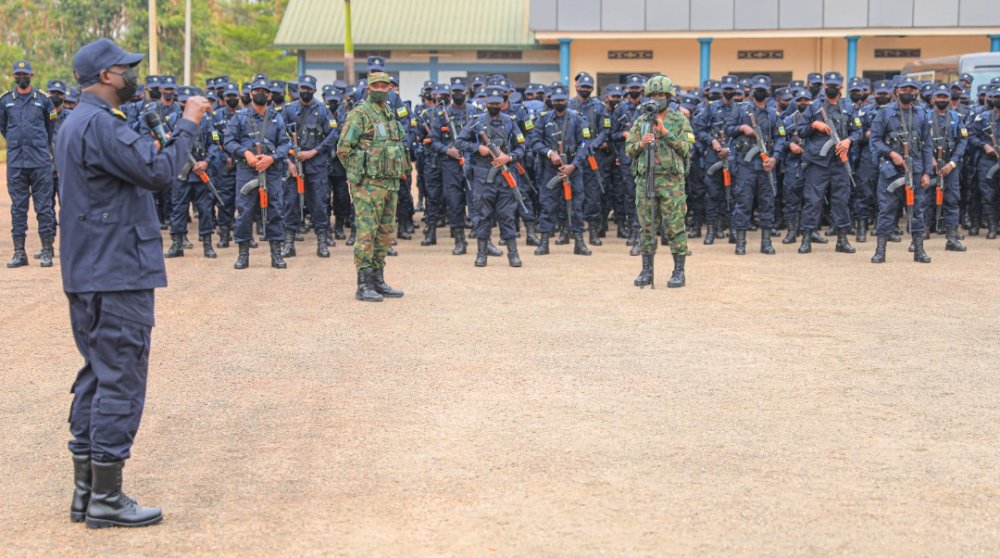
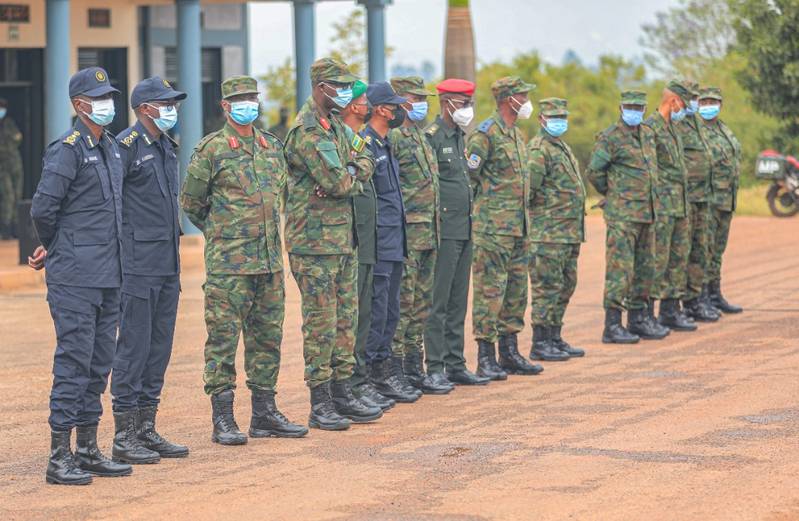
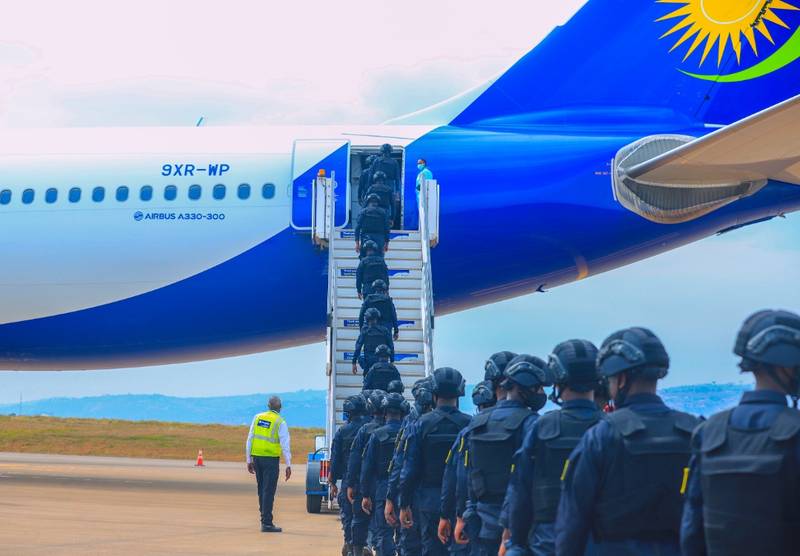
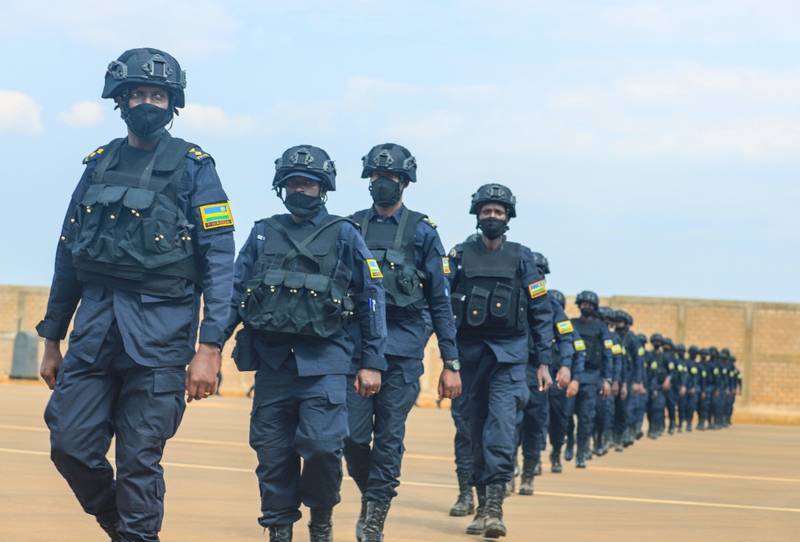
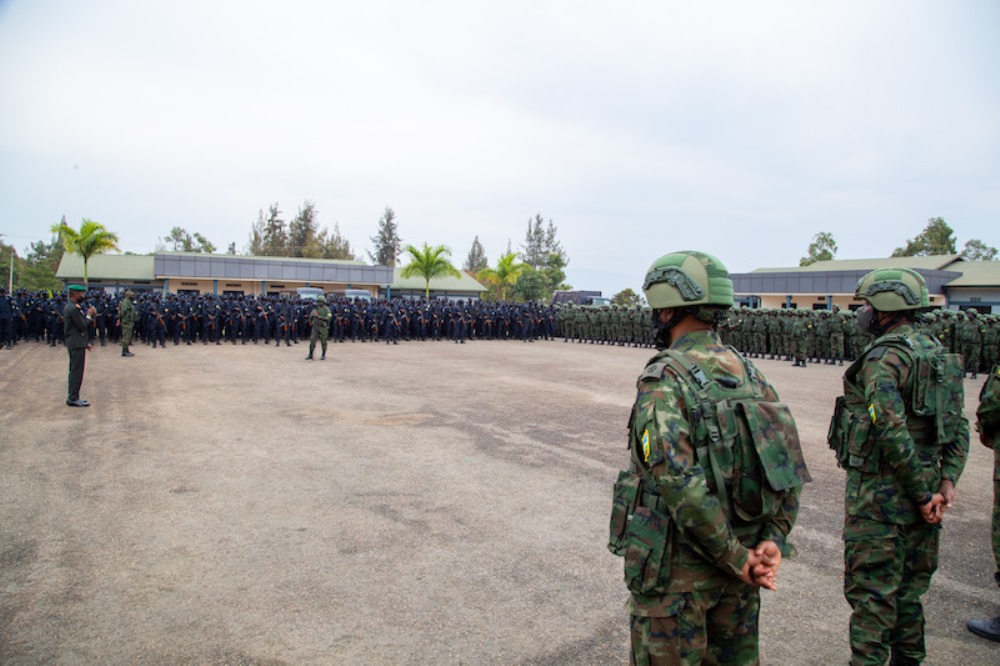
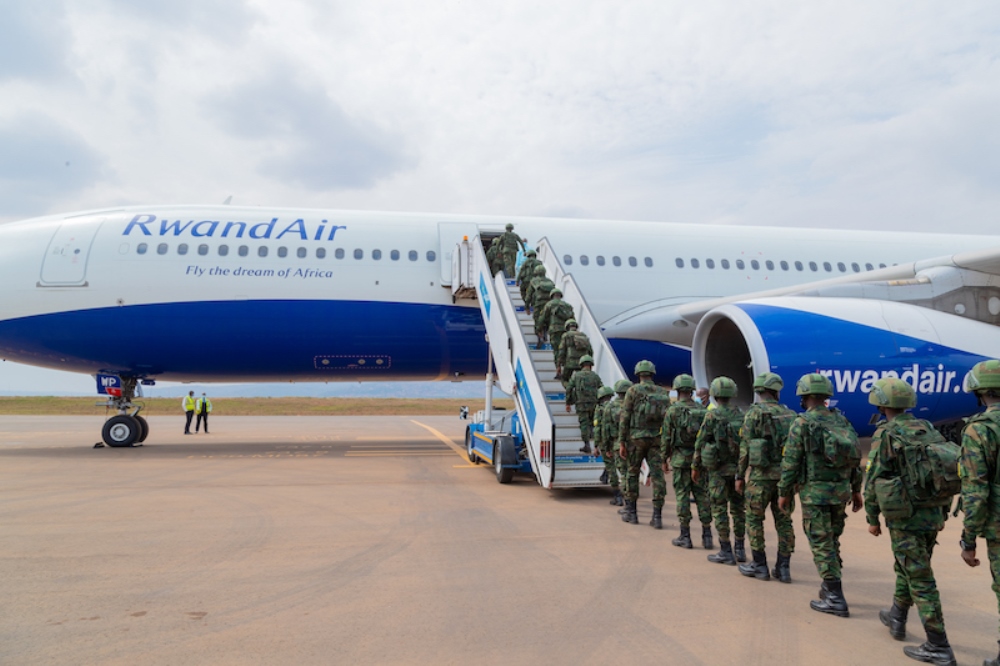
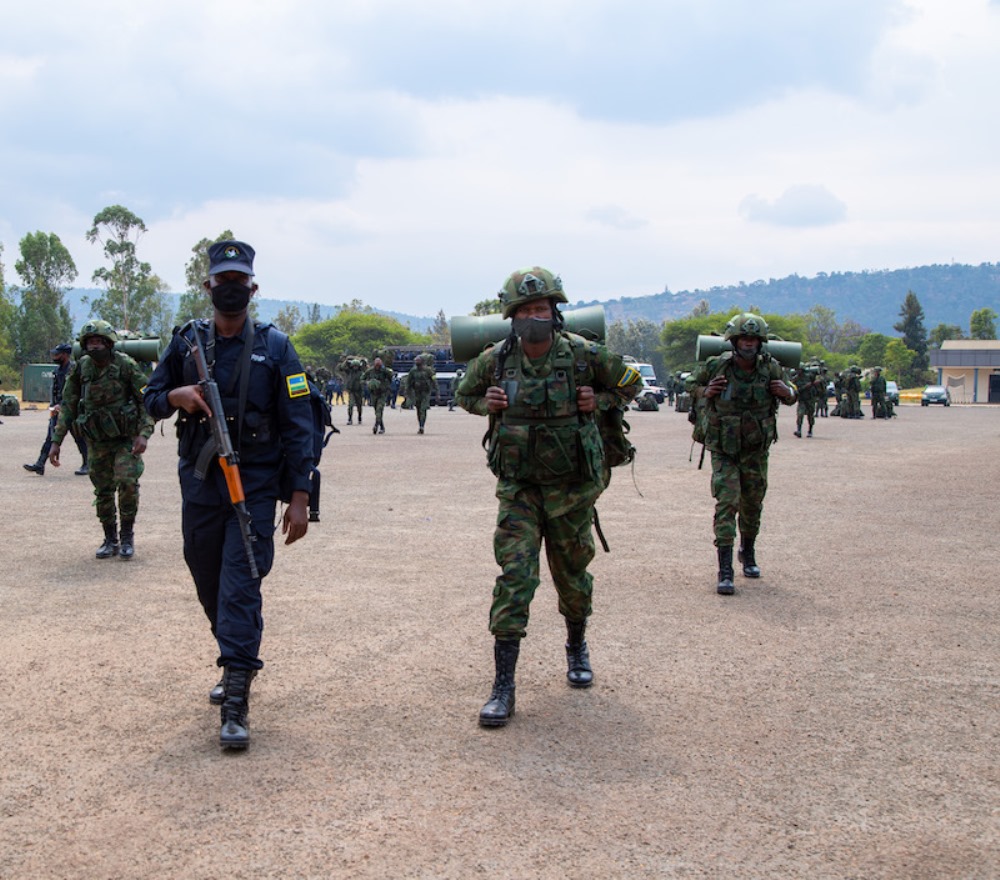
The statement released by the Government of Rwanda today reads that the deployment is a response to the request of the Government of Mozambique.
The Joint Force will work closely with Mozambique Armed Defence Forces (FADM) and forces from the Southern African Development Community (SADC) in designated sectors of responsibility.
The Rwandan contingent will support efforts to restore Mozambican state authority by conducting combat and security operations, as well as stabilisation and security-sector reform (SSR).
“This deployment is based on the good bilateral relations between the Republic of Rwanda and the Republic of Mozambique, following the signing of several agreements between the two countries in 2018, and is grounded in Rwanda’s commitment to the Responsibility to Protect (R2P) doctrine and the 2015 Kigali Principles on the Protection of Civilians,” reads part of the statement.
{{Background}}
-* Beginning in October 2017, armed extremists linked to the Islamic State of Iraq and the Levant (ISIL) launched an insurgency in the Cabo Delgado region of Mozambique.
-* The group sometimes calls themselves al-Shabaab, although they do not have known links with the Somali al-Shabaab.
-* Mozambique Defence Armed Forces have been battling the extremists. Many civilians have been displaced by the fighting.
-* The militants have launched attacks, and in August 2020 seized the port town of Mocimboa da Praia.
-* Over fifty people were beheaded by terrorists in the province in April 2020 and a similar number in November 2020.
-* In September 2020, the ISIL insurgents captured Vamizi Island in the Indian Ocean.
-* On 24 March 2021, the militants seized Palma, murdering dozens of civilians displacing more than 35,000 of the town’s 75,000 residents.
He was appearing on the national broadcaster on Thursday to shed light on status of COVID-19 pandemic.
“The Government is making possible efforts to get vaccines. In the meantime, people are encouraged to continue adhering to instituted containment measures,” he said.
Dr. Ngamije explained that Rwanda awaits 3,500,000 vaccines to be acquired through existing partnership with Pfizer-BioNTech.
He said that delivery of these vaccines which started last week continues until December 2021.
“We have started receiving some of these vaccine doses but we are undergoing discussions to have remaining doses delivered sooner as per existing agreements,” he revealed.
“We also have agreements to receive over 2,100,000 vaccines from Johnson & Johnson, vaccine producer. We are waiting for confirmation of delivery dates but all expected doses won’t arrive before December,” added Dr. Ngamije.
Rwanda is planning to spend over Rwf4 billion to import oxygen plants to increase local production in response to the recent spike in coronavirus infections leading to hospitalisation.
Previously, Rwanda had seven oxygen plants with the capacity to produce 230 (50 liters each) cylinders per day and 7000 cylinders of oxygen per month.
Rwanda has so far vaccinated 392,003 people and targets to cover 60% of its population by June 2022.
He made the revelation on Thursday evening appearing on national broadcaster.
“Conducted sample tests prove empirical symptoms that Delta variant of COVID-19 has emerged in Rwanda. Even health workers following up patients closely reveal that newly infected people are showing severe symptoms than the ones experienced before. Some of the patients are reporting with severe headache, general fatigue and difficulties in breathing. They are all vital signs of the Delta variant,” said Dr. Ngamije.
According to the World Health Organization (WHO), the first case of Delta variant was confirmed in India. The Coronavirus variant is said to be highly contagious than other variants including ‘Alpha’ that was detected for the first time in the United Kingdom, ‘Beta’ found in South Africa and ‘Gamma’ confirmed in Brasilia.
Health reports show that Delta variant is currently the most contagious version of the coronavirus worldwide as it spreads about 225% faster than the original version of the virus.
On 29th May 2021, Rwanda recorded 14 new cases and zero death. At the time, the country had registered 26,892 total infections and 352 COVID-19 related deaths since the pandemic emerged on 14th March 2020.
As new infections decreased, the country lifted some restrictions allowing wedding receptions and reopening of other activities.
On 7th June, Rwanda experienced a wave of new infections hitting 62 in one day and subsequently increased to 127 on 11th June and 622 on 21st June 2021.
Since then, new infections continued to rise on daily basis hitting over 700 and 900 cases.
The wave saw the country registering 18.147 new cases and 155 deaths in 39 days.
The suspects arrested on Wednesday, July 7, are identified as Jean Pierre Niyoyita, 28 and Fred Ntambara, 48.
The Police spokesperson for the Western region, Chief Inspector of Police (CIP) Bonaventure Twizere Karekezi said that the impersonators were defrauding traders through threats and intimidation.
He added that they were demanding Rwf100, 000 from business people.
“They were guising as members of security organs enforcing the government directives on preventing the spread of Covid-19, and were threatening traders with arrests unless they give them money.
By the time of arrest, they had already defrauded three people of Rwf50,000, who were operating bars in Bwishyura Village, Nyarusazi Cell, Bwishyura Sector,” said CIP Karekezi.
The duo was also in the process of fleecing two other people of Rwf40, 000.
The suspects were handed over to RIB at Bwishyura station for further investigation.
Article 281 of law determining offences and penalties in general states that any person, who claims to be attached to a legally regulated profession, a certificate, an official diploma or any other entitlements granted by a competent authority to a person meeting requirements set by a competent authority, commits an offence.
Upon conviction, he/she is liable to an imprisonment for a term of not less than one (1) month and less than six (6) months and a fine of not less than Rwf500,000 and not more than Rwf1 million.
In article 279, it partly states that any person who without tittle usurps public, civil or military functions or poses the acts of one these functions or falsely attributes to himself/herself the quality of a public official… commits an offence.
Upon conviction, the offender faces between two and three years in prison, and a fine of not more than Rwf300,000 but not more than Rwf500, 000.
In article 174, any person who by deception, obtains another person’s property, whole or part of his/her finance by use of false names or qualifications or who offers positive promises or who threatens of future misfortunes, commits an offence.
Upon conviction, the offender is liable to imprisonment of not less than two years and not more than three years and a fine of between Rwf3 million and Rwf5 million.
The statement released last night shows that 911 people have caught the virus out of 8350 sample tests while 984 recovered.
The majority of new cases were found in Kigali: 326, Rubavu: 70 and Nyamagabe: 63.
Rwanda confirmed the first Coronavirus case on 14th March 2020. Since then, 45 950 people have been tested positive of whom 30 191 recovered, 15 238 are active cases, 71 are critically ill while 521 have succumbed to the virus.
A total of 392, 077 people have been vaccinated since Rwanda began countrywide inoculation programme on 5th March 2021.
Coronavirus symptoms include coughing, flu, and difficulty in breathing. The virus is said to be transmitted through the mucous membranes of the respiratory tract.
Rwandans are urged to adhere to COVID-19 health guidelines, washing hands frequently using soaps and safe water, wearing face masks and respecting social distancing.
The goods which include those that were banned in Rwanda, were seized from two smugglers identified as Jean Pierre Uwiringiyimana, 29 and Victor Kageruka, 24, who were also taken into custody.
Among the intercepted goods include 11 cartons of non-biodegradable polythene bags, 42 pieces of movit lotion, 24 weighing scales, 51 rolls of electric cables and 33 packets of Supermatch cigarette.
The Southern region Police spokesperson, Superintendent of Police (SP) Theobald Kanamugire said that the goods were sneaked into Rwanda from Burundi.
“Police acted on a tip-off from residents that Uwiringiyimana and Kageruka would be smuggling good into the country from Burundi. On Wednesday at about 4pm, they crossed into Rwanda on a motorcycle with a sack of electric cables called Senegal, which are banned in Rwanda,” said Kanamugire.
Police officers, he added, trailed them to a house located in Uwimpundu Village, Muhembe Cell in Karama Sector where all the goods were recovered and the two suspects taken into custody.
The suspects disclosed that they intended to smuggle the goods to Muhanga town to supply one of their customers.
SP Kanamugire commended residents for sharing information leading to the arrest of the suspects.
He also warned against “unnecessary and cross-border movements” which leads to the spread of Covid-19.
The suspects were handed over to RIB at Huye station for further legal process.
Under article 199 of the East African Community Management Act, which is also applicable in Rwanda, seized smuggled goods and an automobile used in smuggling are auctioned, and the driver is fined of US$5000.
{{Tax fraud}}
A taxpayer, who commits fraud, is subject to an administrative fine of one hundred percent (100%) of the evaded tax.
Manufacturing, use, importation or sale of plastic carry bags and single-use plastic items are prohibited under article 3 of law N° 17/2019 of 10/08/2019 relating to the prohibition of manufacturing, importation, use, and sale of plastic carry bags and single-use plastic items in Rwanda.
In article 10, any person, who imports plastic carry bags and single-use plastic items is liable to the dispossession of those plastic carry bags and such items, and to an administrative fine equivalent to ten times the value of those plastic carry bags and single-use plastic items.
In article 11, a wholesaler of plastic carry bags and single use plastic items is liable to an administrative fine of Rwf700, 000 and dispossession of those plastic carry bags and such items.
In article 12, a retailer of plastic carry bags and single-use plastic items is liable to an administrative fine of Rwf300, 000 and dispossession of those plastic carry bags.
The extraordinary summit of heads of state of December 5, 2020, adopted the instruments marking the launch of reforms, and, officially, the AfCFTA project agreement is now implemented from January 1, 2021, for countries that have already ratified.
Under the AfCFTA, the states that have ratified the agreement will agree to strongly liberalize their trade. The products of these lines (90% of tariff lines) are treated as non-sensitive and will have to be liberalized over a period of 10 years for the least developed countries (LDCs) and of 5 years for the other countries. Customs duties applicable to products on tariff lines considered sensitive (7%) will be subject to tariff dismantling of 13 years for LDCs and 10 years for other countries. And 3% of tariff lines are excluded from tariff commitments. They will not be liberalized.
According to experts, the AfCFTA does not plan to suppress the achievements of the regional economic communities. In the case of the EAC of which Burundi is a part, there are certain commitments that must be negotiated as a block rather than just one country. “At the EAC level, we have set up a customs union with a common external tariff. To do this, we need to submit bulk pricing offers. As a result, such offers have already been submitted to the AfCFTA secretariat,” notes Chrysologue Mutwa, Director General of Commerce.
{{The background}}
The initiative to create a free trade area in Africa dates from the 1960s. Indeed, Kwame Nkrumah, the first Ghanaian president spoke in his book (Africa must unite) (Africa must unite) of (Union of African States), and the adoption of a common economic strategy in 1963. The Organization of African Unity (OAU) also was created 1963, but the ideas and the will were not shared.
As supporters of federalism such as Kwame Nkrumah and those inspired by an (Africa of States) with Senegalese President Léopord Sedar Senghor at the head split, the OAU eventually became an organization with the goal of cooperation and the idea of integration was put aside.
In 1980, the Lagos Plan of Action for the Economic Development of Africa, known as the Lagos Plan of Action, was developed to find solutions to issues relating to the continent’s self-sufficiency.
Africa was facing a crisis due to global economic shocks, such as the 1973 oil crisis and the Lagos plan of action came as a response to the structural adjustment programs of the World Bank (WB) and the International Monetary Fund (IMF). Despite the Lagos Action Plan, the African continent continued to experience growing economies in debt.
{{The Abuja Treaty spells out a gradual and phased regional integration ː}}
– The first phase IS to strengthen the existing regional economic communities (RECs) and encourage the creation of other communities over a period of five years;
– The second phase would be to eliminate tariff and non-tariff barriers in the trade of RECs over a period of eight years:
– The third phase is the creation of free trade areas, and customs unions by and in the RECs over a period of ten years; The fourth step would be the creation of an African common market,
– The fifth step would be the creation of a monetary union with a single currency and a Pan-African parliament in four years;
– Finally, over a period of five years, the free movement of people, goods and capital must be concretized followed by an African monetary fund. Based on the Abuja Treaty, the integration process is expected to be completed in 2028.
Meanwhile, the Abuja Treaty has encouraged the creation of several RECs. More than fourteen RECs are recognized by the United Nations Economic Commission for Africa including the Southern African Development Community (SADC), the Common Market for Eastern and Southern Africa (in English Common Market for Eastern and Southern Africa COMESA), and the Economic Community of West African States (ECOWAS) among others.
The continent’s integration project remained on the table of African leaders, with the arrival of the African Union (AU) in 2002. In October 2008, leaders of SADC, COMESA, and EAC announced the start of discussions on a tripartite free trade agreement.
The tripartite thus became a launching pad for the African Continental Free Trade Area (ZLECAF) and on June 15, 2015 in Johannesburg, South Africa, discussions began and the AU SE summit focused on a single point which is intra-African trade. In January 2015, the continent set a new goal, in line with its integration project (Agenda 2063).
The latter remains the strategic framework for the socio-economic transformation of the continent over the next fifty years and is titled (Africa We Want). Among the major projects of the program are the creation of the African Continental Free Trade Area, the African passport and the free movement of people demonstrate this Pan-African desire to unite, a will, and a vision that dates back a century. It was in January that the President of Niger, Mahamadou Issoufou, was tasked by his peers to lead and complete the process of negotiations on the ZLECAF project.
Rwanda Patriotic Army (RPA) started the liberation struggle on 1st October 1990, considered the foundation for Rwanda’s transformational journey.
With dedication to common cause to reinstate dignity for Rwandans deprived of their rights, RPA soldiers including men and women endured tough days and nights and selflessly kept soldiering on until the liberation of Rwanda on 1st July 2021.
In the aftermath of the 1994 Genocide against the Tutsi and the Liberation war, Rwandans made good choices guided by the philosophy of working together, promoting accountability and thinking big towards a shared vision to make Rwanda a peaceful, united, prosperous and self-reliant nation.
Even though the country won the battle, Rwandans still have a journey ahead to eradicate poverty, strive for self-reliance and consolidate gains.
As the country continues to put in place different measures to spur social-economic transformations along the resilience journey, Rwanda Defence Force (RDF) formerly RPA has not been left behind supporting the cause.
Beyond protecting national integrity and sovereignty, RDF has been for the past 27 years walking with Rwandans along the development journey implementing a number of development projects across the country through strong collaboration with different institutions.
Some of most recent projects include infrastructures built across the country ranging from health centers, schools, bridges, roads and providing decent shelters for vulnerable residents completed at over Rwf75 billion in the fiscal year 2020/21, as per figures from the Ministry of Defense (MoD).
During implementation of these projects to advance national development and uplift citizens’ wellbeing, RDF partnered with different Government institutions including the Ministry of Health, Ministry of Education, Ministry of Infrastructure, Ministry of ICT, Ministry of Trade and Industry, Ministry of Agriculture and Rwanda Environment Management Authority among others.
{{Hospitals, roads and bridges}}
Nyabikenke is among areas of Muhanga district where residents struggle to access health services. To find a durable solution, the Government of Rwanda started building a hospital at district level in 2013.
Later on, the contractor abandoned the project in 2014. Construction activities were put to a standstill until 2018 when the project was handed over Reserve Forces.
Currently, the hospital has reached final phases and expected to be inaugurated in the near future.
Upon completion, the hospital will give relief to Nyabikenke residents who used to seek services from Ruli and Kabgayi hospitals respectively in Gakenke and Muhanga districts.
Nyabikenke Hospital will be completed at Rwf9 billion.
In 2020/21 fiscal year, RDF also built two health centers in Karongi and Rusizi districts completed at a cost of Rwf715, 534,598.
Three more health posts worth Rwf232, 612,287 were also constructed in the districts of Gicumbi, Gasabo and Gakenke in the same year.
Other projects completed by RDF in 2020/21 include maternity wards in Nyarugenge and Rulindo worth Rwf185, 871,954 and a pediatric clinic worth Rwf17, 432,189 in Kamonyi district.
In partnership with other institutions, RDF also built 705 for survivors of the 1994 Genocide against Tutsi worth Rwf8, 995, 733,407 in 25 districts across the country and handed over 59 houses to families of retired soldiers disabled during the Liberation Struggle completed at Rwf947, 613,913.
In Nyagatare district, RDF constructed 33-kilometer long water supply system at Rwf803, 340,612 to address water shortage.
In the education sector, RDF built eight Vocation Training Schools and one Integrated Polytechnic Regional Centre (IPRC) worth Rwf11, 959,579,397 in the districts of Burera, Gicumbi, Nyagatare, Rulindo and Huye.
Among others, RDF rehabilitated, built four bridges in Bugesera and Nyabihu districts at Rwf402, 087,820 and constructed 187.965-kilometer roads completed at Rwf11, 784,788,025.
{{Model villages }}
In 2020/21, RDF constructed two Integrated Development Program (IDP) Model Villages respectively in Kinigi sector, Musanze district and Kinihira at Rwf27, 294,379,418.
They were an addition to other model villages including Kaduha, Mukuyu and Mugina in the respective districts of Nyamagabe, Gasabo district and Kamonyi.
These model villages built for vulnerable residents have basic infrastructures including health centers, schools, roads and electricity among others.
Resettled residents also benefit from other projects including livestock farming, poultry to prevent malnutrition and spur their economic growth.
The Government of Rwanda has been inaugurating model villages since 2016 in context of liberation anniversary.
So far, 82 model villages have been constructed across the country. Five of them including Rweru, Kazirankara-Nyundo, Horezo-Kanyenyeri, Karama and Gishuro were officially inaugurated by President Paul Kagame.
Rwanda celebrates Liberation Day every year on 4th July 2021.
The event was recently held in the State of Indiana, in South Bend city, where many Rwandans from different neighboring states like Michigan, Illinois, Ohio, and Tennessee came to celebrate together.
Nxumalo Ruhaya, the President of Rwandan Community Abroad (RCA) in Midwest welcomed participants and thanked the Embassy for sending Lt Col Raoul Bazatoha to grace the event.
Ruhaya also reminded Rwandans to uphold the legacy of men and women of RPA Inkotanyi who sacrificed their lives to free the nation everyone is proud to call home.
Lt Col Raoul Bazatoha, Defense Attaché to the Embassy of the Republic of Rwanda, who was among guests of honor reminded Rwandans of the history and long journey to liberate Rwanda from regimes that ruled since 1959 with ideologies of division and conquer, ethnic privileges, and discrimination and exclusion which led to the 1994 Genocide against Tutsi.
He shared the heroism of the Commander-in-Chief of Rwanda Defence Force (RDF), President Paul Kagame who led the battle with a great vision to liberate the country and build a Rwanda without discriminations of any kind.
Lt Col Bazatoha also reminded Rwandans the country’s liberation was through a great sacrifice guided by a vision of a better society.
“Our liberation was earned and therefore sustainable. The complete liberation is to have urgency and be able to defend our dignity as Rwandans and as Africans. The potential strength we have together is greater than the sum of riches if we are divided,” he said.
Paying tribute to the men and women and all unsung heroes who died while stopping the genocide against Tutsi, Lt Col Bazatoha thanked Rwandans who helped during the liberation struggle. He pointed out great examples of citizens who contributed in different ways helping RPA soldiers to locate the enemy and fund raising from Diaspora among others. Lt Col Bazatoha urged Rwandans to stand united if they are to attain desired transformations.
“Our liberation continues now with efforts to become a knowledge driven and a self-reliance nation. We will achieve that through economic liberation and full participation of its people,” he stressed.
Lt Col Bazatoha urged the youth on patriotism and encouraged them to use their talents, education, expertise and experiences gained to build a better Rwanda.
Grace Mutesi, 24, Elyse Iradukunda, 21, and Jean De Dieu Uzabintwari, 27, were arrested on Tuesday, July 6, in connection with transferring Frw300, 000 from the Mobile Money account of one Daniel Hategekimana.
The money was allegedly wired by the trio to other mobile accounts on June 24, when the victim was having drinks in Urwuri bar owned by Jean De Dieu Nzabarushimana located in Agahenerezo Village, Rukira Cell, Huye Sector.
Mutesi is a bartender at Urwuri bar while Iradukunda and Uzabintwari also friends to Mutesi, were clients at the bar.
The Police spokesperson for the Southern region, Superintendent of Police (SP) Theobald Kanamugire said that the case involves fraud, violation of the government Covid-19 prevention directives and rape.
“Nzabarushimana was operating a bar and bars are still closed, but the bar was als operating even in curfew hours–9:30pm. Secondly, the three people connived to obtain Hategekimana’s Mobile Money account PIN and stole his money after he got drunk.
Another serious case that is still under investigation involves Uzabintwari, who allegedly raped a woman later that night as he was returning home,” said SP Kanamugire.
The owner of the bar, Nzabarushimana was also located and arrested for violating the government directives.
Although the suspects admitted to stealing the money from the mobile account, they said that it was less than what Hategekimana claimed.
Mutesi, one of the suspects and an attendant at the bar told the Police that Hategekimana had accumulated a bill of Rwf39,000. In the process of clearing the bill, Mutesi managed to obtain the PIN which she shared with Iradukunda and Uzabintwari.
According to Mutesi, she wired Rwf50, 000 from Hategekimana’s Mobile Money account, Iradukunda stole Rwf15, 000 while Uzabintwari admitted to transferring Rwf160, 000.
SP Kanamugire advised the public to hide and guard their banking particulars to prevent such fraud or theft.
The suspects were handed over to RIB at Huye station for further legal process in the theft and rape cases.
Article 134 of the law relating to offences and penalties in general, states that any person, who is convicted of rape is liable to imprisonment for a term of not less than 10 years but not more than 15 years and a fine of not less than Frw1 million but not more than Rwf2 million.
Anyone convicted for fraud under article 174, faces between two and three years in prison and a fine of between Rwf3 million and Frw5 million.