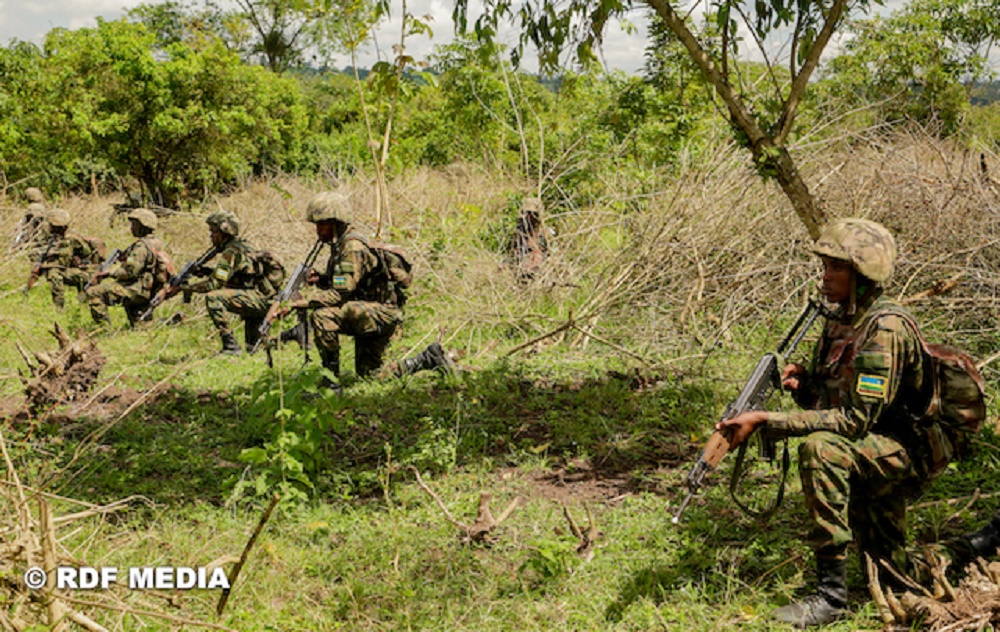
As RDF explained, the soldier crossed from the side of Bugeshi sector in Rubavu district.
The statement released on Tuesday 19th October reads that RDF continues to maintain good relations with Congolese army, FARDC.
“On 18th Oct 2021, Rwanda security forces pursued smugglers who crossed the Rwanda-DRC border at Hehu Cell, Bugeshi Sector, Rubavu District. Rwandan law enforcement forces unintentionally crossed a few meters into the DRC while pursuing the smugglers who were carrying unidentified packages and believed to have been armed. The RDF and FARDC maintain good relations and continue to collaborate on security matters,” reads the statement.
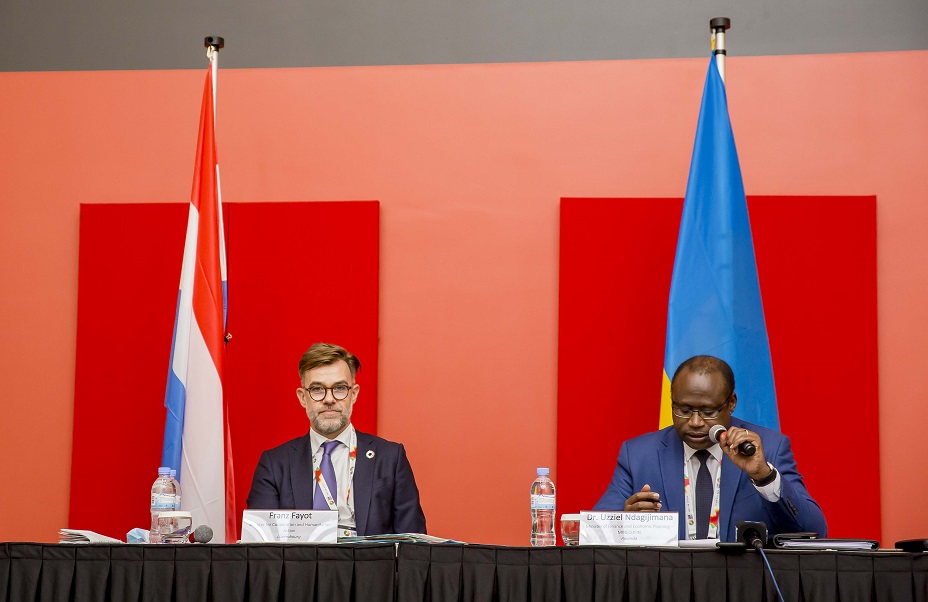
The signing parties will work together with the aim to support Rwanda in further developing the Kigali International Financial Centre (KIFC), ranked 5th in Africa by the Global Financial Centre Index, considering the universally recognized expertise of Luxembourg’s financial ecosystem.
Speaking at the event, Minister Ndagijimana said that Rwanda established the Kigali International Financial Centre four years ago to increase the value addition of the financial services in the Rwandan economy and to make Rwanda an attractive investment destination, with opportunities to expand investments from Rwanda to Africa and beyond.
He highlighted that signed agreement tare meant to support Rwanda’s ambitions to become a financial hub.
“The partnership milestone that we’ve just signed will support our ambition of becoming a preferred Pan-African International Financial Centre which is in line with our aspiration of becoming a middle-income country by 2035 and a high-income country by 2050,” he said.
The Luxembourgish Minister for Development Cooperation and Humanitarian Affairs, Franz Fayot pointed out the signing of the memorandum begins a new chapter in both countries’ relations.
“Rwanda’s interest in sustainable finance and fintech reflects our priorities too. It is important that we build together and channel more finance in development cooperation, combating climate change and other areas that require financing,” he noted.
The implementing agencies are Rwanda Finance Limited, the agency tasked with developing Kigali International Financial Centre and Lux-Development S.A., Luxembourg’s development cooperation agency.
Strategic areas of cooperation are defined within the agreement, and these are: capacity building and talent development; development of sustainable finance in Rwanda; enabling a fintech ecosystem in Rwanda; and setting up a marketplace for impact investing in Rwanda.
Nick Barigye, the CEO of Rwanda Finance Limited (RFL), the agency mandated to promote the KIFC stressed that becoming a preferred centre for international investments in Africa requires strategic partnerships and welcomed the opportunity to draw on the expertise of Luxembourg’s financial ecosystem, to further develop Kigali International Financial Centre’s niche areas in sustainable finance and fintech.
“Upskilling financial sector professionals to efficiently serve global investors and financial institutions is a key feature of an attractive financial services hub and one of the pillars KIFC is looking to strengthen, through our cooperation with Luxembourg,” he said.
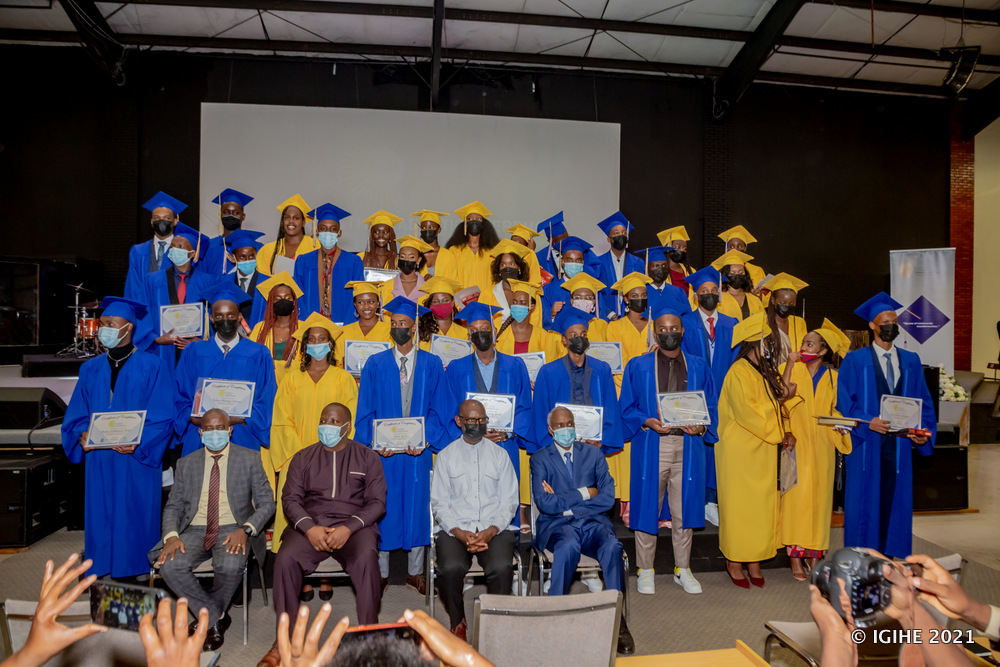
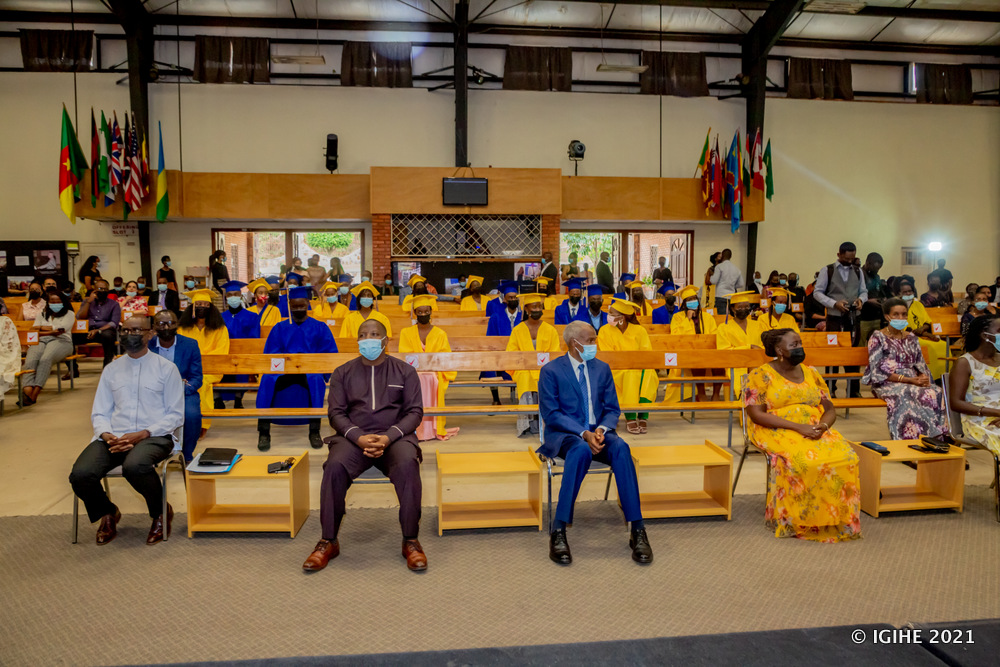
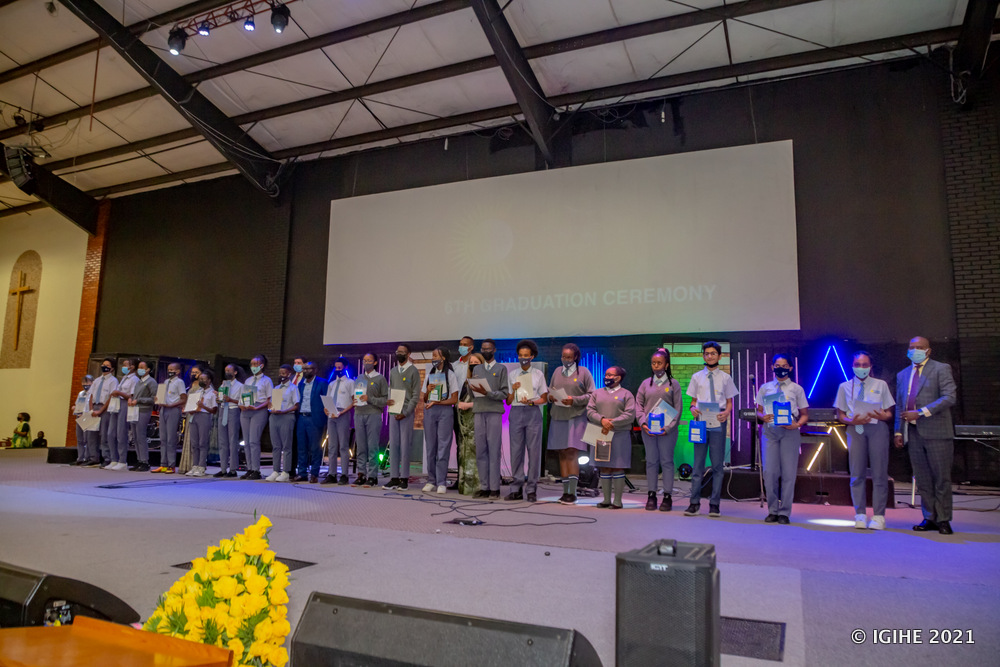
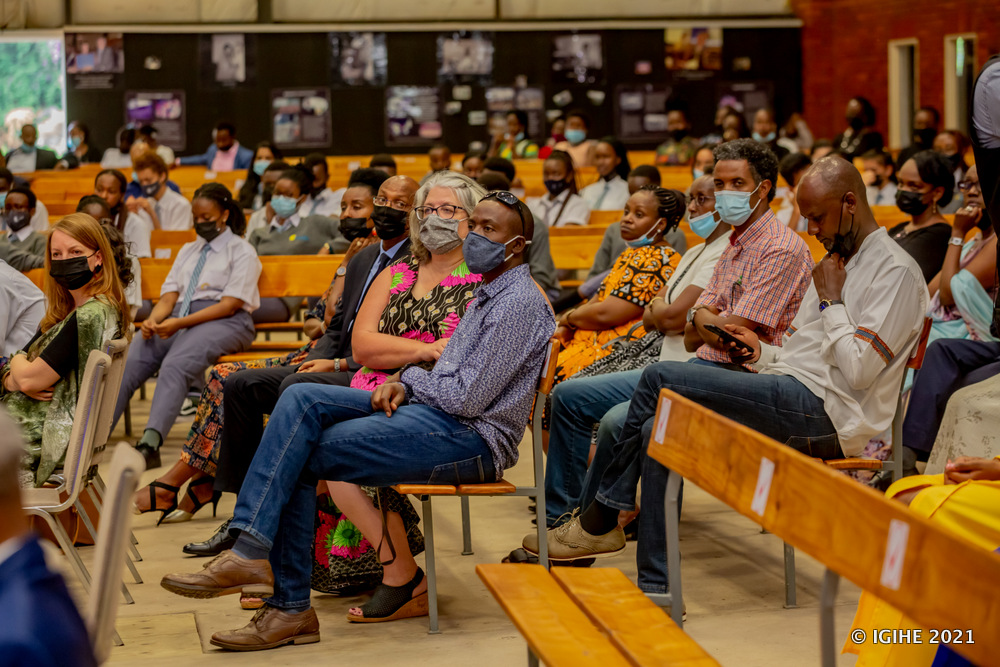
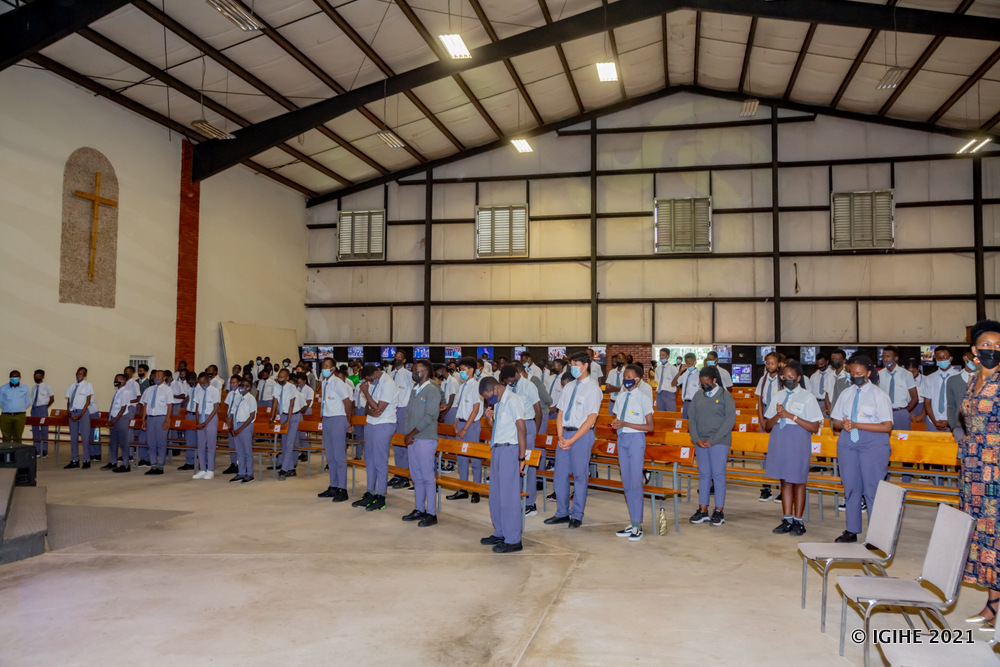
The 45 graduates including 25 girls and 20 boys received certificates during a ceremony that took place on 14th October 2021.
They graduated from various combinations including sciences, technology and mathematics among others.
The school also offers courses to learners from nursery and primary school.
During the ceremony, the school also awarded 58 learners from primary and secondary education who exhibited excellent performance during international exams. They received different prizes including laptops and certificates of recognition.
Speaking on behalf of their colleagues; Vanessa Kaliza Uwase who graduated from the combination of Mathematics, Chemistry and Biology (MCB) and Samuel Ndagijimana, a graduate from the combination of History Economy and Geography (HEG) narrated how they went through difficult times due to COVID-19 pandemic which prompted the school to shift to virtual classes.
“It was a cumbersome situation but we overcome hard times with the support of educators who walked with us day to day to attend online classes until we successfully completed courses,” said Ndagijimana.
Speaking to IGIHE, the Principal of Wellspring Academy, Stephen Rudakemwa thanked God for having capacitated them to keep soldiering on until students graduated despite challenging times went through.
“Today, we are thankful to Almighty because our students have successfully completed secondary education amidst mishaps brought by the pandemic,” he said.
Rudakemwa revealed that the school also takes pride for continued progress to meet its objectives.
“There are several achievements inducing pride as Wellspring Academy is instilling Godly values. God is helping us to meet objectives with which the school was established. We have to be thankful to God because students graduate with excellent performance and high standard of discipline,” he noted.
Rudakemwa expressed optimism that acquired knowledge will be applied efficiently to bring positive changes to their respective community.
He also urged parents to remain closer to their children because the journey to upbring them properly is ongoing.
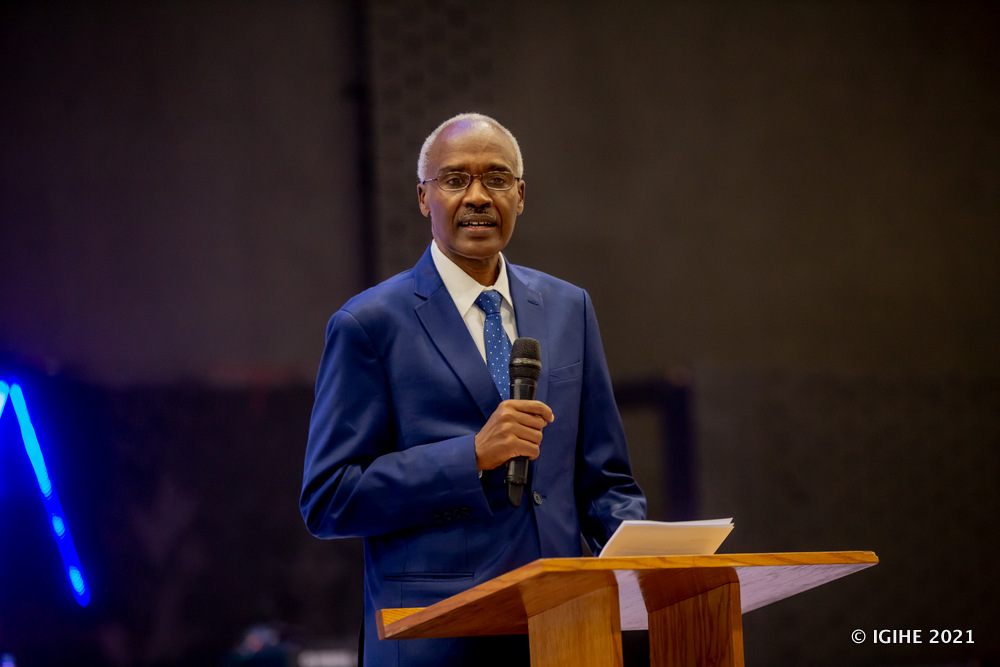
Dr. Charles Murigande who was the guest of honour congratulated graduates, parents, school management and other employees for their commitment to support students along their intellectual journey.
He also reminded parents to take care of their children as they begin a new walk of life.
“Their education doesn’t end today. It is the beginning because they need to pursue studies at university and rise through other higher levels of education. Parents have to stay close to them so they can uphold Rwandan values,” noted Dr. Murigande.
The Board of Directors at Wellspring Academy, Lambert Bariho reminded graduates to uphold Christian values acquainted from the school.
Established in 2007, Wellspring Academy is an international Christian school that was created with a vision of producing a new generation of Servant leaders to bless Rwanda and display the best of Rwanda to the world.
The School located in Nyarutarama, Gasabo district of Kigali City, has a nursery school, primary as well as a secondary school.
It offers courses under Cambridge international program.
Graduates have been pursuing studies in the United States of America, Canada and Rwanda among others.
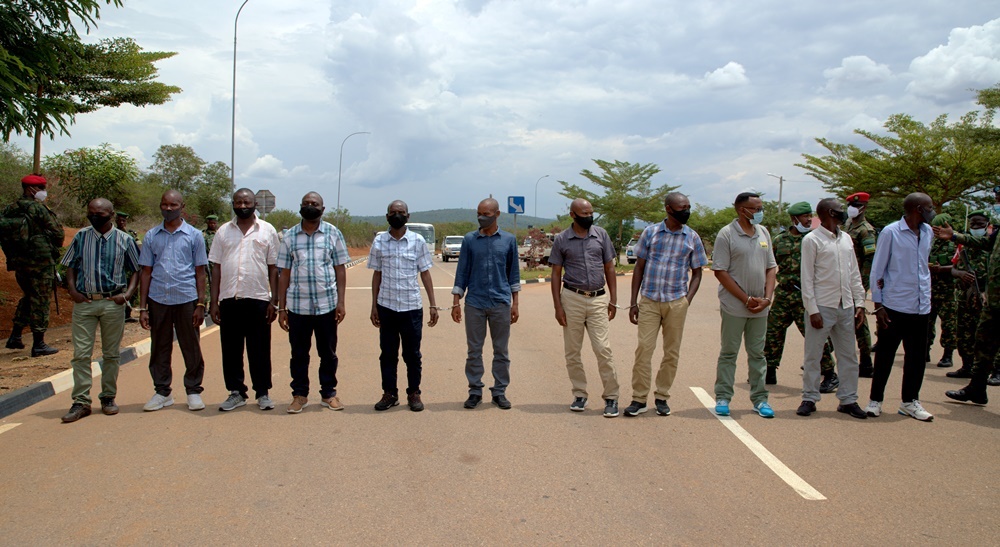
The captives handover ceremony took place on Tuesday 19th October at at Nemba One Stop Border Post separating Rwanda and Burundi in Bugesera district, Eastern Province through the Expanded Joint Verification Mechanism (EJVM).
Burundi was represented by the Chief of Military Intelligence, Col Ernest Musaba while Rwanda was represented by the Head Defence Intelligence, Brig Gen Vincent Nyakarundi.
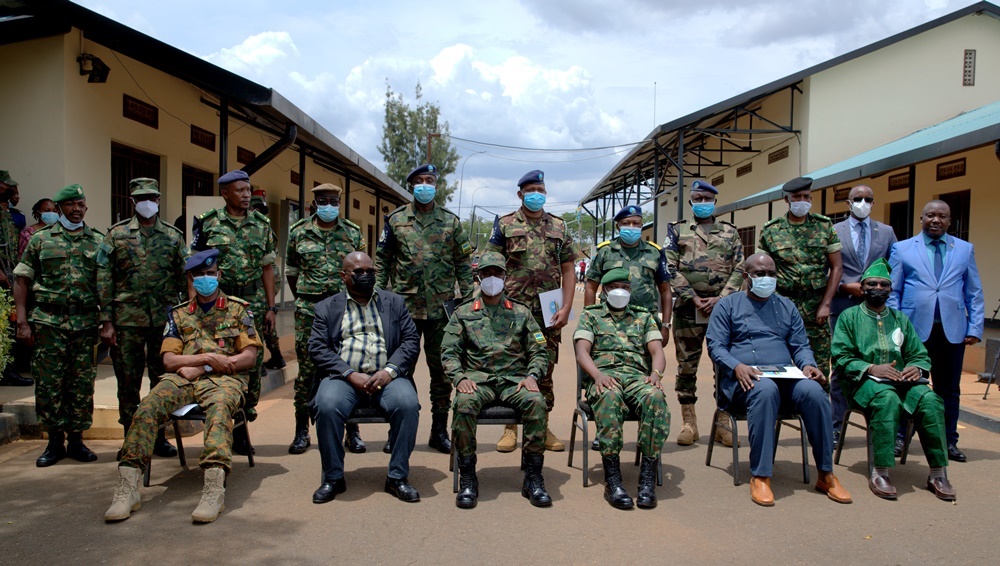
The ceremony was witnessed by ICGLR, AU and UN representatives and facilitated by the EJVM.
The EJVM Deputy Commander, Col Khalid. M Ahmed said the initiative is a sign of renewed friendship and cooperation between the two countries.
‘’It is my hope that this gesture will go a long with cementing bilateral and diplomatic ties between Burundi and Rwanda, the two ICGLR member states and is a sign of renewed friendship and cooperation between them,’’ he noted.
Both sides, Burundi and Rwandan Heads of Military and Defence Intelligence said that they were delighted with the current efforts and collaboration aimed at contributing to normalisation of bilateral relations between the two countries and that more needs to be done in this direction.
The deportation follows recent events where Burundi and Rwanda have been exchanging criminals arrested in each of the two countries since July 2021.
Initially, Rwanda repatriated over 19 of RED-Tabara to Burundi. They had been arrested in Nyungwe National Park last year. RED-Tabara is an armed group hostile to the Burundian government.
On 6th August 2021, Burundi also sent home seven Rwandans arrested after illegally crossing to the country. The handover of these Rwandans took place in Remera cell, Ruheru sector of Nyaruguru district, Southern Province.
In the same month, Rwanda deported two Burundian men suspected of theft crimes committed at home land.
Since 2018, FLN rebel group plotted attacks in the Southern and Western Provinces maneuvering through Burundi.
Even though Rwanda Defence Force (RDF) repulsed the attacks, strong collaboration is paramount between the two neighboring countries to tighten security and work together for mutual benefits.
The exchange of criminals is considered a great milestone in the process of restoring both countries’ relations that worsened since 2015.
In 2015, a group of Burundian soldiers attempted to overthrow the then President Pierre Nkurunziza but the plan was nullified. Since then, Burundi has been accusing Rwanda of accommodating suspects behind the failed coup plot.
Rwanda has however been insisting that the individuals are considered as refugees who must be protected against deportation by international laws and accused Burundi of supporting rebel groups intending to destabilize national security.
The political mishap later halted cooperation and free movements between both countries.
Despite misunderstandings and long period of political tensions that ruined both countries’ relations, the situation is gradually improving and promising to bring the situation back to normal.
His arrest was announced on 31st August 2020, forty five days after Rusesabagina appeared in discussions with allies of his political party dubbed Rwanda Movement for Democratic Change (MRCD) to give details on the rationale behind its creation.
Rusesabagina, 67, was paraded before the media, two days after he was arrested in Rwanda where he arrived tricked by his friend Bishop Constantin Niyomwungere who had lied to him that they were heading to Burundi to engage with different church leaders as they boarded a private jet.
Rusesabagina had last seen Rwanda in 2004 prior to his arrest.
As he was paraded before the media, Rwanda Investigation Bureau (RIB) explained that Rusesabagina faced different charges including terrorism.
He was arrested following enough evidences proving his implication in the creation of National Liberation Front (FLN) rebel group; including details disclosed during discussions with allies before his arrest. Appearing in court, he also admitted to have sponsored the armed group with contribution worth Euro 20,000.
During interrogation at RIB, the man had revealed that he was not sure of the exact amount contributed but admitted to have provided approximately Euro 300,000 to support the rebel group which plotted attacks that claimed lives of innocent civilians and destroyed several properties in Southern Province.
His direct involvement in the activities of FLN is no brainer considering gathered evidences made public and the talk he delivered on 16th July 2020, forty five days before finding himself behind bars.
At the time, Rusesabagina gave deeper explanations on the creation of MRCD.
The discussion which lasted for two hours and 38 seconds was attended by MRCD members. Its footages were later uploaded on the party’s YouTube channel by one, Espérance Mukashema who headed Radio Ubumwe sponsored by Paul Rusesabagina.
Apearing in court, Rusesabagina himself admitted to have paid Mukashema. The woman, who passed on, used to receive US$300 per month.
Following his arrest, the video was deleted from the MRCD YouTube channel in what seemed to tamper with evidences.
An extract of the video that lasts for four minutes and 50 seconds shows Rusesabagina replying to Faustin Twagiramungu who also owns a political party dubbed ‘RDI Rwanda Rwiza’ on the foundation of FLN and its objectives.
“We created MRCD in November 2016. It was a coalition of two political parties including CNRD-Ubwiyunge and PDR-Ihumure. At the time, CNRD was led by Wilson Irategeka and and PDR-Ihumure led by me. After long negotiations, we set five pillars under one platform,” he said.
“The first pillar is what is being carried out by our soldiers. The second was diplomacy, the third was mobilization, the fourth was communication and the fifth was finance,” added Rusesabagina.
In his explanations, Rusesabagina used the word ‘Isambu’ translated as arable land, a figurative word with which the context was well known among his supporters.
During interrogations, Rusesabagina explained that they used figurative language to talk about their activities where the word ‘abahinzi’ (farmers) was used in place of fighters, ‘amasuka’ (hoes) was used to mean guns, utubuyenge (pebbles) to mean bullets while the word ‘umurima’ or ‘isambu’(arable land) was used to mean battleground.
After forming the coalition of PDR Ihumure, CNRD-Ubwiyunge and establishing their philosophies, the two political parties sought more support.
“We worked together and, in the end of 2017, our brothers from Rwanda Revolutionary Movement (RRM) led by Callixte Nsabimana wanted to join us to become a platform bringing together three parties,” said Rusesabagina.
“After long discussions, RRM was accepted in March 2018, and we were successful in our executions. That is when we started asking ourselves the name we will give our soldiers. Since May 2018, our boys were named FLN and that is why FLN does not belong to PDR, CNRD or RRM, it is under MRCD. We called them FLN because RRM brought its soldiers as well which meant we had to get an inclusive name,” added Rusesabagina.
He explained that the coalition birthed MRCD/FLN because soldiers belonged to the three parties until they allowed RDI Rwanda Rwiza formed by Faustin Twagiramungu on 18th June 2019, to join the platform.
At the time, the rebel group had started attempts to threaten Rwanda’s security plotting different attacks.
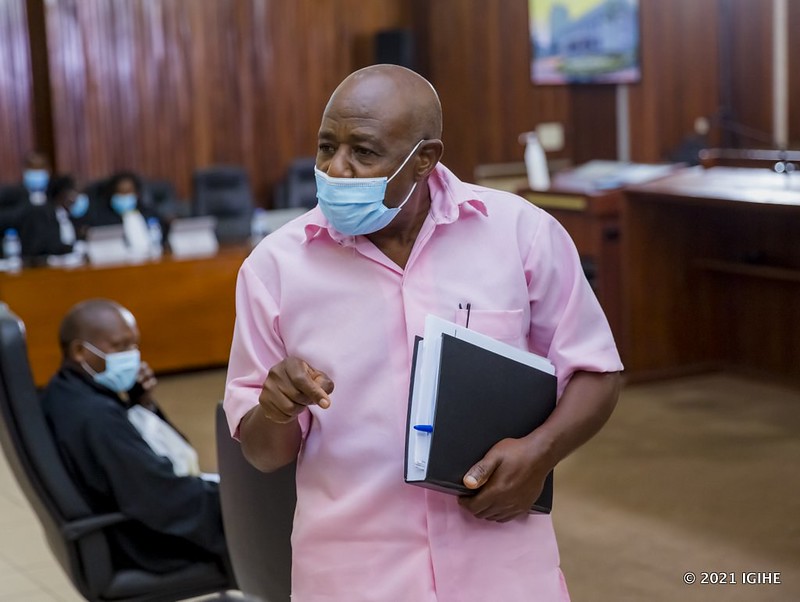
Rusesabagina was brought to the High Court Chamber for International Crimes along with 20 co-accused MRCD/FLN combatants.
The suspects faced charges including the formation of an irregular armed group, membership of a terrorist group, financing terrorism, murder as an act of terrorism, arson as an act of terrorism, attempted murder as an act of terrorism, and assault and battery as an act of terrorism.
The crimes were committed since 2018 when MRDC/FLN combatants plotted attacks to Rwanda which claimed lives of nine innocent residents in the Southern Province.
They left many others gravely injured, and caused significant material and economic damage in South-West Rwanda.
The court handed 25-year sentence to Rusesabagina and 20-year jail term to Callixte Nsabimana alias Sankara, the former spokesperson for the terror group after they were found guilty of terrorism charges.
The young Rwandans arrived at Kotoka International Airport in Ghana on Monday 17th October 2021. During their week-long stay in Ghana, the youth will also attend YouthConnekt Africa Summit scheduled between 20th and 22nd October 2021.
They will also explore business opportunities in Ghana, interact with fellow entrepreneurs and seek together how to market their products at the global market.
Rwanda’s ambassador to Ghana, Dr. Aissa Kirabo Kacyira has said that the business trip is significant to the recovery of businesses affected by COVID-19 pandemic.
“Covid-19 pandemic has largely shaken businesses but we have embarked on the journey towards recovery. We are glad to be organizing programs aimed at supporting businesses particularly SMEs and helping them to expand footprints and benefit from the African Continental Free Trade Area [AfCFTA],” he said.
The tour was organized by the Ministry of Youth and Culture in partnership with Rwanda’s Embassy in Ghana, the United Nations Development Programme (UNDP) and Korea International Cooperation Agency (KOICA).
The young entrepreneurs have businesses from different fields including, Agro-Processing, ICT, tourism and Cultural Creative arts.
The business trip follows the first batch of 50 entrepreneurs who went to Kenya for similar tour in 2019.
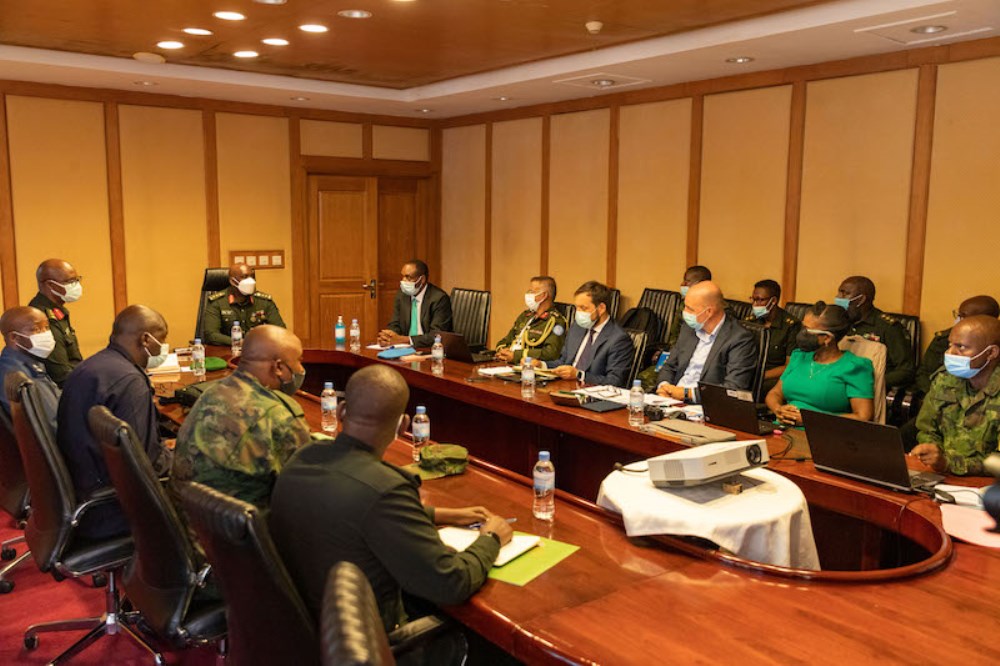
Michael Mulinge Kitivi, the head of the delegation and Director of Uniformed Capability Support Division at UN Headquarters, said that they are working with Rwandan counterparts to collect and verify data that will be reviewed by the UN General Assembly and it will inform the General Assembly on its decision to increase troop allowances.
“Rwanda is a major troop contributing country that is why it fits in the criteria of the countries that we need to get data from,” he said adding that they will collect data from ten countries and Rwanda was the first country they are visiting.
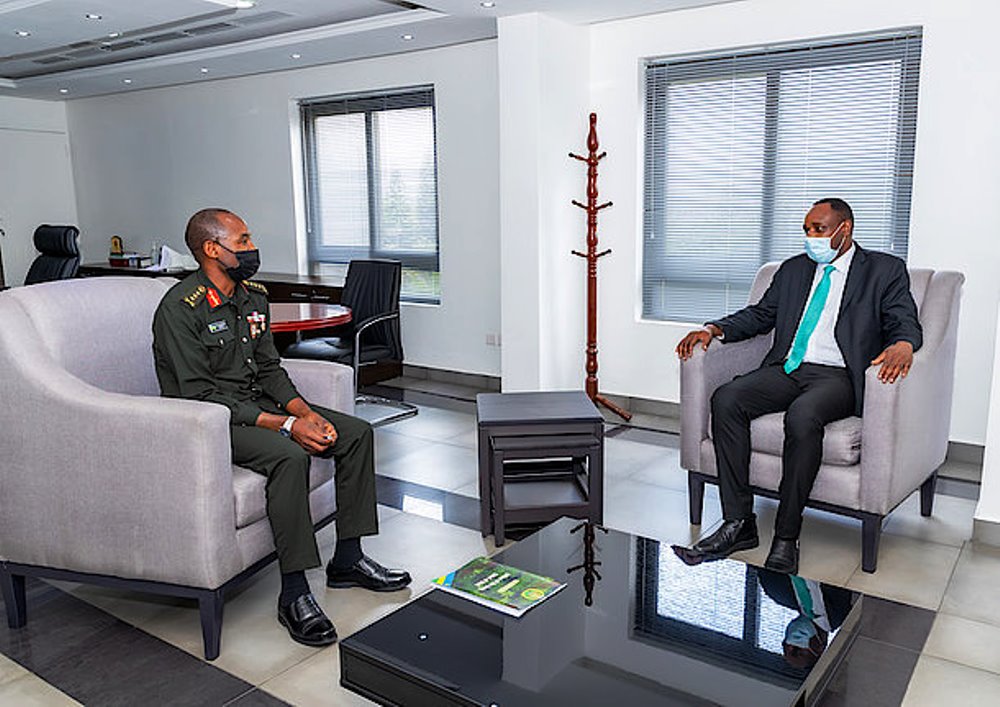
Mr Mulinge Kitivi and delegation were received today at RDF Headquarters, Kimihurura.
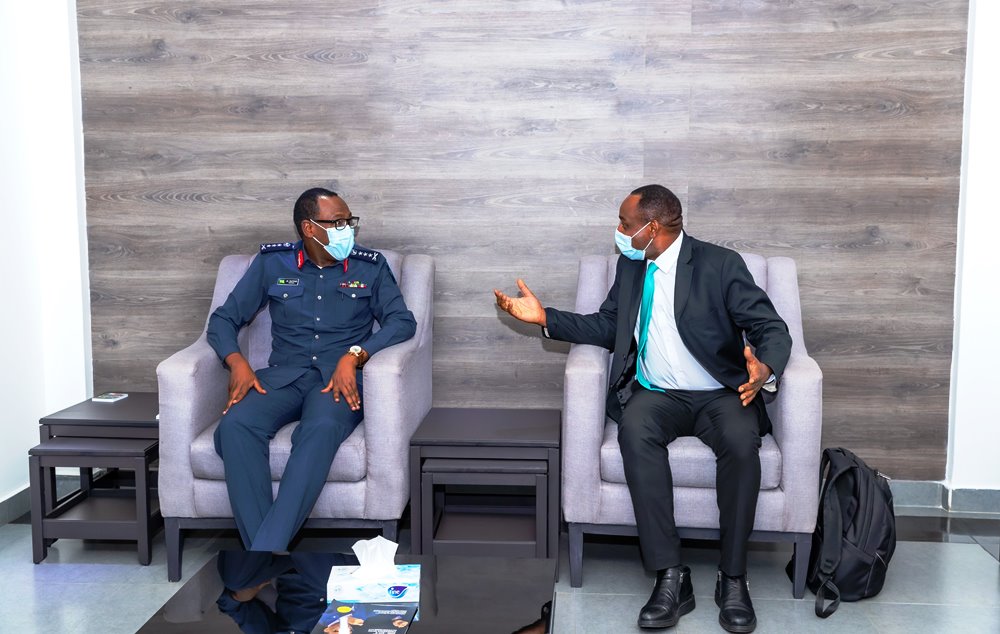
Mulinge also held discussions separately with the RDF Army Chief of Staff, Lt Gen Mubarakh Muganga and the Air Force Chief of Staff, Lt Gen J Jacques Mupenzi.
Jean Paul Sekanabo alias Gisenyi, 30, and Paulin Habuhazi, 23, were apprehended red-handed distilling kanyanga in Samuduha Village, Gifumba Cell, Nyamabuye Sector.
According to Superintendent of Police (SP) Theobald Kanamugire, the Police spokesperson for the Southern region, said that both suspects hail from Gahogo Cell also in Muhanga.
“Residents in Gifumba reported that Sekanabo and Habuhazi were distilling and selling kanyanga in the Sekanabo’s sister’s house located in Samuduha Village.
An operation was swiftly conducted at the same house where the duo was arrested red-handed distilling the crude gin in the kitchen,” SP Kanamugire said.
He added that Police also seized 18 litres of kanyanga, which they had already produced as well as assorted equipment and raw materials, which they were using to distill the illicit gin.
The spokesperson thanked the residents for the community policing spirit against illicit drinks.
The suspects were handed over to RIB at Nyamabuye station for further legal process.
Kanyanga is classified as simple narcotic drugs by the Ministerial order Nº 001/MoH/2019 of 04/03/2019 establishing the list of narcotic drugs and their categorisation.
Article 263 of law No. 68/2018 of 30/08/2018 determining offenses and penalties in general states that any person, who unlawfully produces, transforms, transports, stores, gives to another or who sells narcotic drugs and psychotropic substances, commits an offence.
Upon conviction for “simple drugs” the offender faces between seven and ten years in prison and a fine of Rwf5 million to Rwf10 million.
The statement released last night by the Ministry of Health also shows that 36 people have caught the virus out of 6811 sample tests.
The majority of new cases were found in Ngororero: 7, Kigali City: 6, Gakenke: 4 Karongi: 3, Kayonza: 3, Musanze: 3 and Nyagatare district: 2 while each of the districts of Gicumbi, Gisagara, Huye, Ngoma, Nyamasheke, Rubavu, Rusizi and Rwamagana recorded one new case.
The Ministry has revealed that the remaining districts registered zero new cases.
The decrease in new infections is largely attributed to ongoing COVID-19 preventive measures and ramped up mass vaccination efforts.
As of today, a total of 1,733,550 people have been fully vaccinated while 3,177,390 received the first dose of COVID-19 since Rwanda began countrywide inoculation program on 5th March 2021.
Coronavirus symptoms include coughing, flu, and difficulty in breathing. The virus is said to be transmitted through the mucous membranes of the respiratory tract.
Rwandans are urged to adhere to COVID-19 health guidelines, washing hands frequently using soaps and safe water, wearing face masks and respecting social distancing.
The platform that counts 76 members in 26 countries will bring together the region’s actors on land governance, including rural communities and women, to explore opportunities, and design new ways of addressing land-based communal violence, famine and climate change.
Protecting women’s land rights is a top priority for Africa and the world. “We work for half of the world’s population, which are women; where land rights are respected, women’s income goes up 3.8 times higher, and everybody benefits including households,” Mike Taylor, ILC Director said from Rome.
The Forum will provide an opportunity to assess the strength of partnerships in the face of emerging needs in people-centred land governance.
“The 2021 Forum will strengthen existing partnerships on land rights. We will introduce our national platforms, drivers of the SDGs at the country level, through a multistakeholder approach,” Audace Kubwimana, ILC Africa Regional Coordinator said.
The African Union declared the Year 2021 as “The AU Year of the Arts, Culture and Heritage: Levers for Building the Africa We Want”. Land is part of Africa’s cultural heritage. Africa’s art and cultural heritage will help forge regional cooperation and foster innovative and bold solutions to regain the drawbacks from COVID-19.
“Demographic changes and conflict on the continent are making us re-think how land can be better used, leveraging our cultural identity, to advance the progress of Member States,” said Dr. Janet Edeme, Head of the African Union Commission’s Department of Agriculture, Rural Development, Blue Economy and Sustainable Development.
“For us land is more than an economic resource; it is part of our history. The African Union Commission hopes that our collaboration with International Land Coalition in Africa will help realise the Africa We Want.”
Regional Economic Communities play their role in advancing the AU’s mandate on land governance. The Intergovernmental Authority for Development (IGAD) has been walking the road with ILC to guarantee people-centred land governance, but more remains to be done.
“The IGAD region is the most conflict-prone region of Africa, with high levels of land degradation and climate change. We want to use the two most important resources we have which is land, on the one hand, and people, on the other, to improve the standard of living of the people in the IGAD region,” Esther Obaikol, Land Governance Expert at IGAD said.
Indigenous Peoples have been experiencing intensive land grabbing over the past few years. According to activist Amina Amharech, policies based on colonial laws do not respect the rights of indigenous peoples.
Today just 1% of land is occupied by Indigenous Peoples in the world. Farming activities for Indigenous Peoples do not go beyond 2 hectares. They cannot realise the SDGs with this. I am hoping that the Forum will also address this.”
With the murder of Joannah Stutchbury, the plight of environmental and land defenders became a burning issue.
“Through Natural Justice, ILC Africa has set up the African Environmental Defenders Fund, a platform that enables defenders to highlight their plight and receive support. The same applies to communities as they strive to defend themselves. It is the only such resource on the continent today,” said Samuel Nguiffo, representing ILC Africa members.
ILC Africa’s broader work extends to participatory rangelands management, youth access to land, family farming, data development in the land sector, ecosystems, food systems, to name but a few.
ILC Africa also said that this year’s Forum will be a pre-event of the 2021 Conference on Land Policy in Africa.